Termination Release
What this document covers
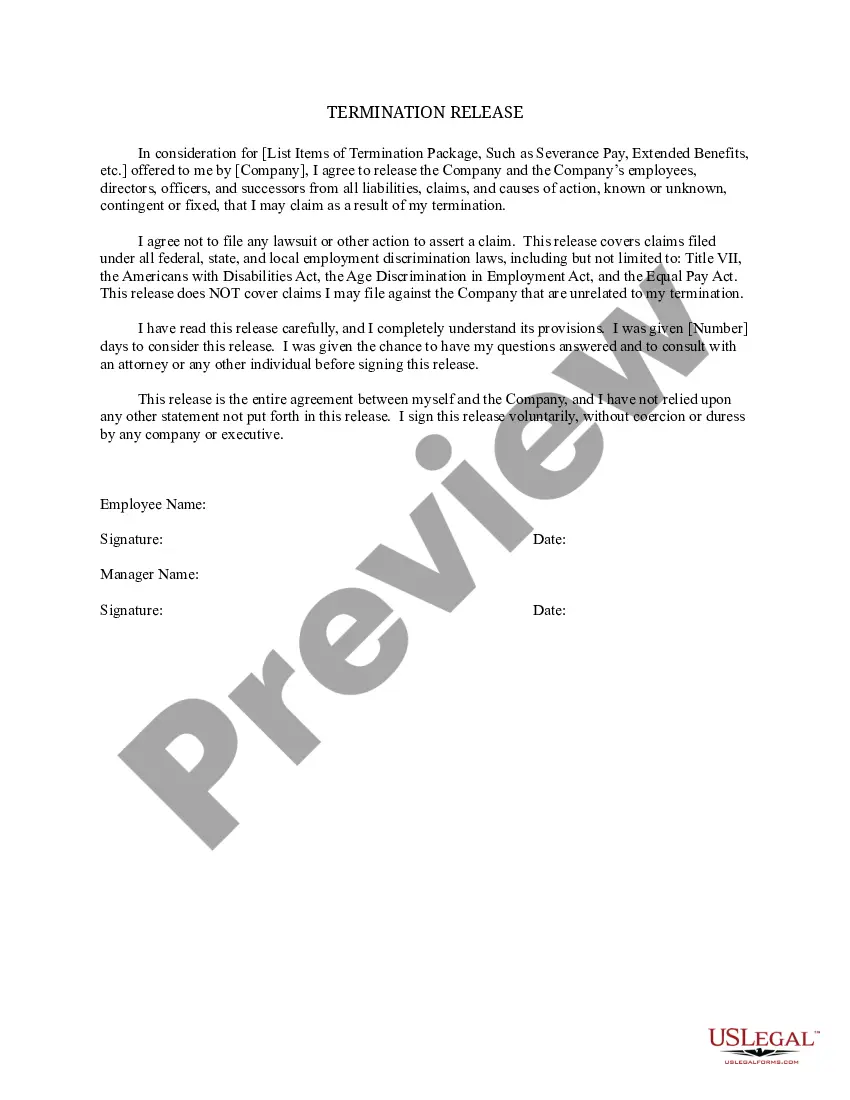
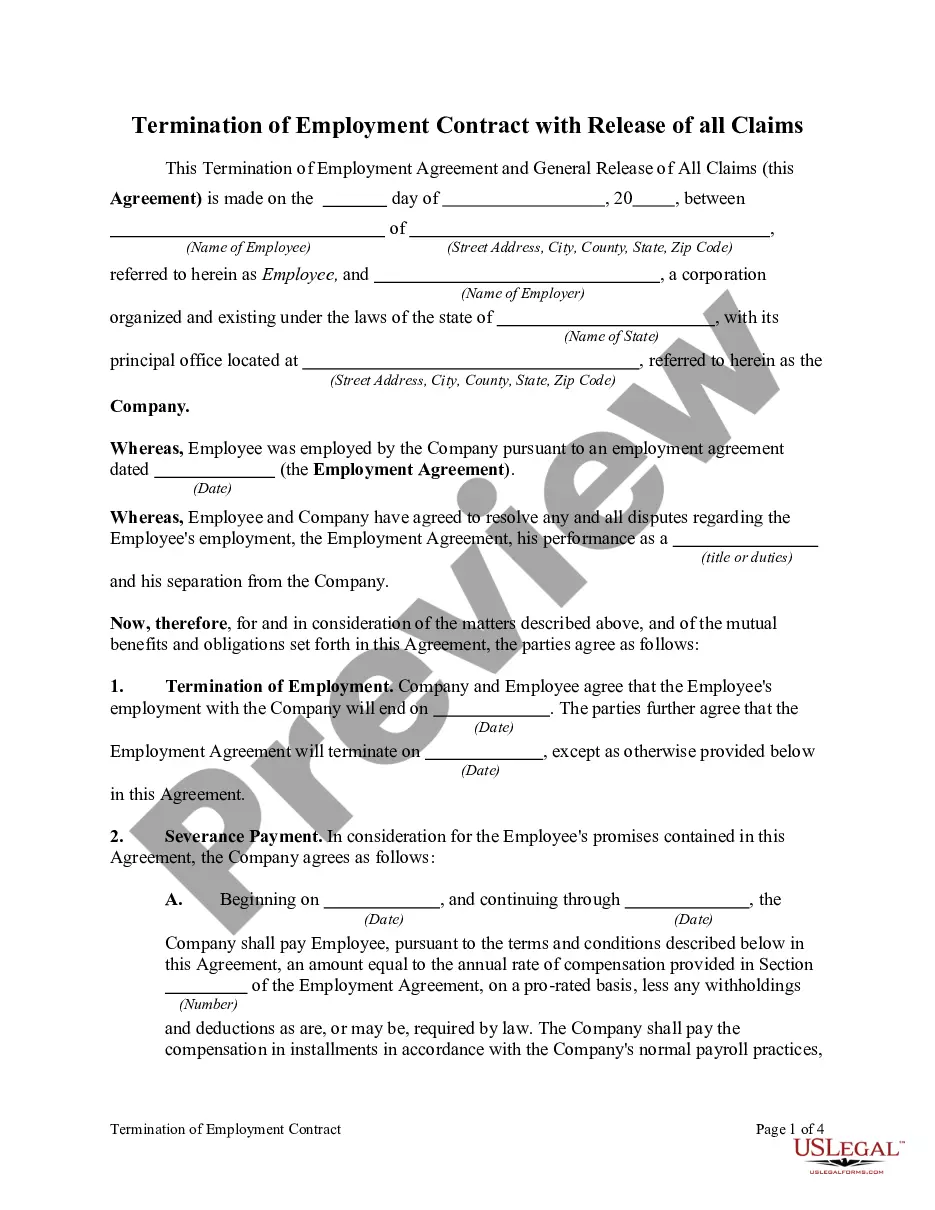
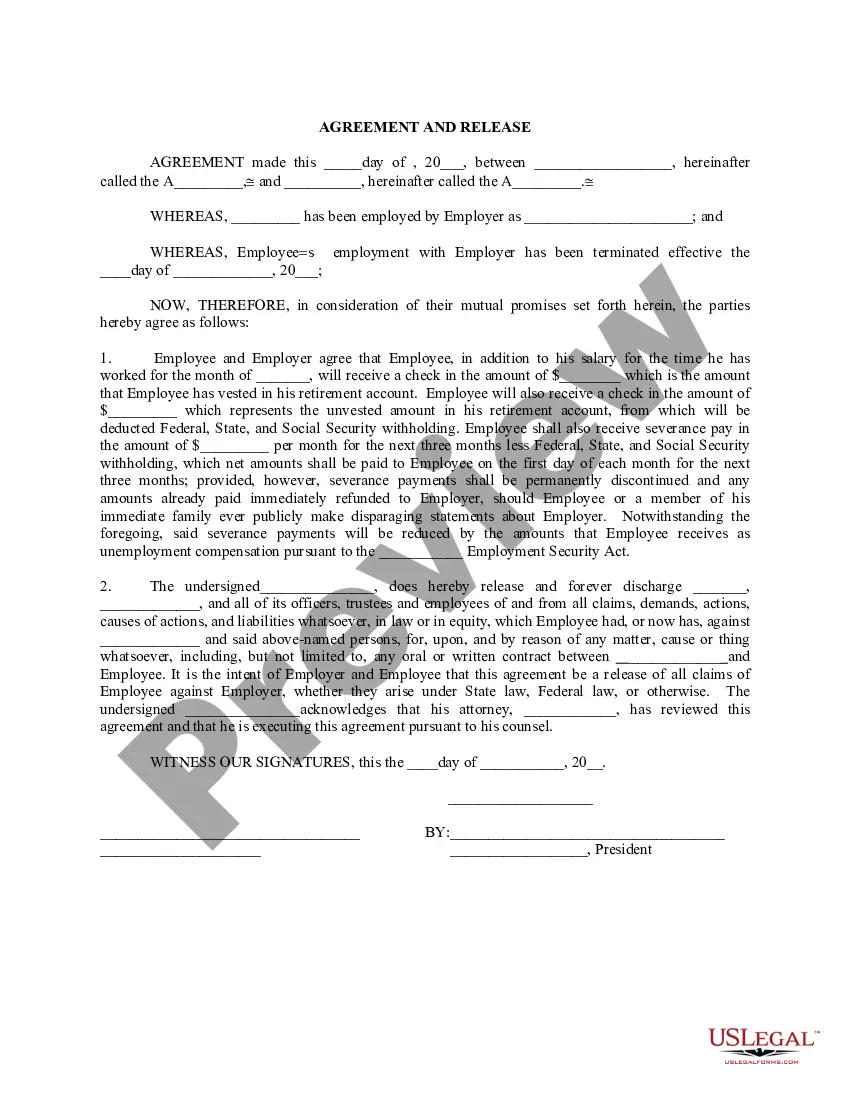
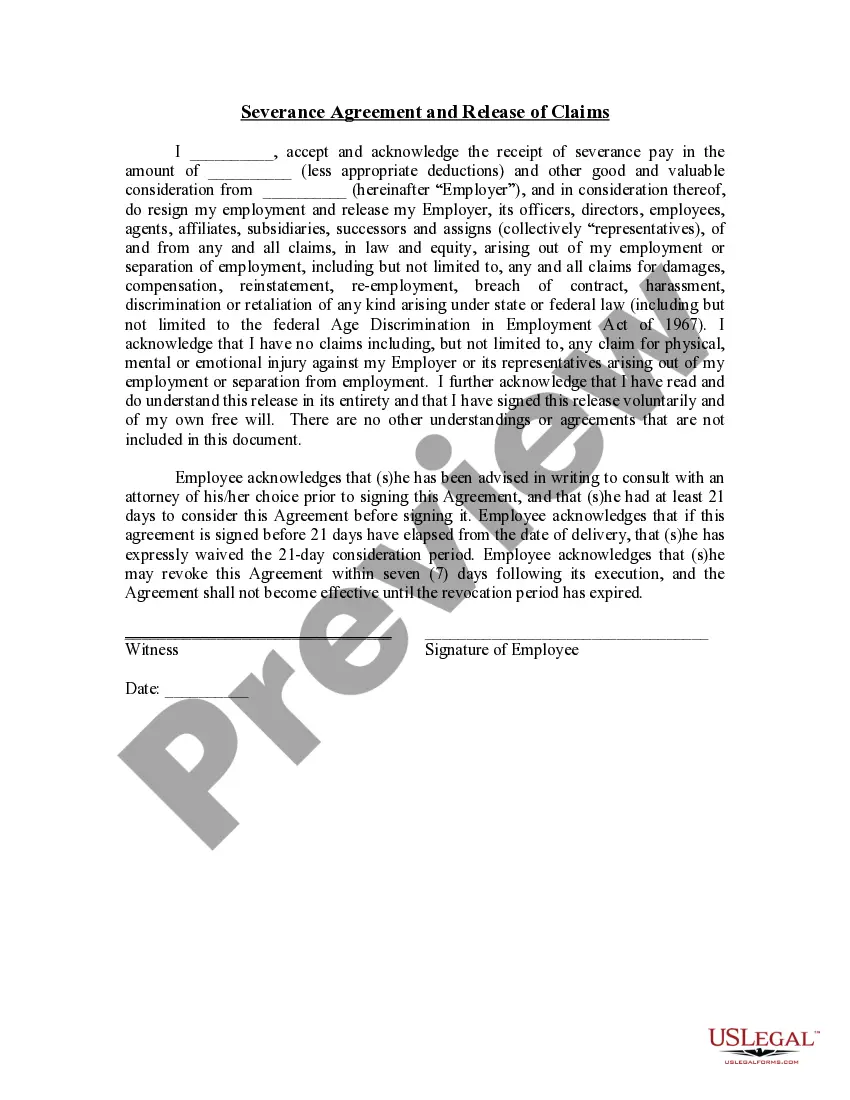
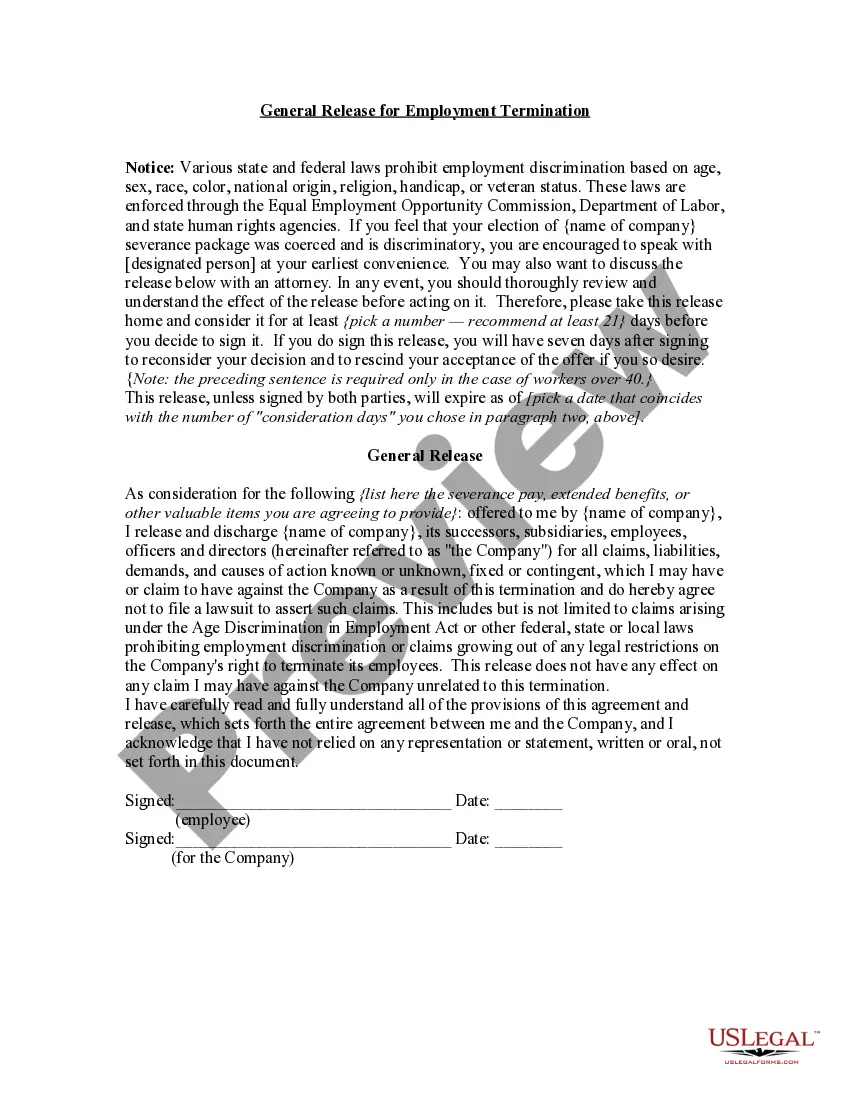
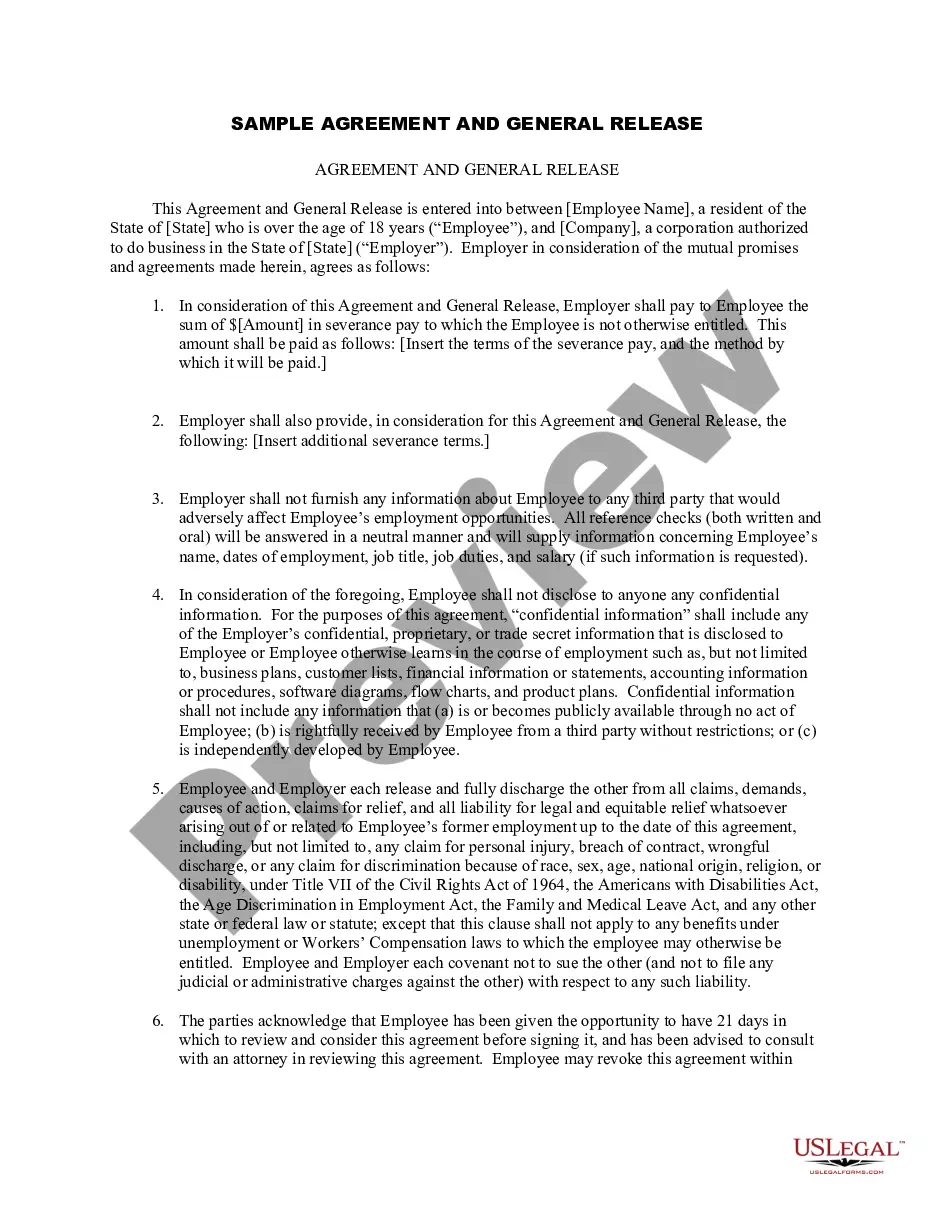
The Termination Release is a legal document that releases an employer from any liabilities or claims that an employee may assert as a result of their termination. This form helps to clarify the rights of both parties and ensures that the employee does not pursue legal action against the company or its representatives regarding matters covered in this release. It differs from other termination-related documents by specifically outlining the release of claims against the employer.
Key parts of this document
- Employee information: details about the individual being terminated.
- Termination package details: specifies any severance or benefits being provided.
- Release of claims: outlines the scope of claims being released, including references to applicable employment laws.
- Consultation opportunity: states the time allowed for the employee to review the release and seek legal advice.
- Signature lines: designated areas for both employee and employer signatures, along with dates.
Situations where this form applies
This form should be used when an employee is being terminated from their position and the employer wishes to ensure that they are released from any potential legal claims associated with the termination. It's particularly useful in scenarios involving layoffs, resignations, or mutual separations where severance benefits are provided. The release protects the employer from future legal actions by the departing employee.
Who should use this form
- Employers looking to formalize the termination process and protect themselves legally.
- Employees who are receiving benefits or severance and want to acknowledge the conditions of their departure.
- Human resources professionals seeking to maintain compliance with employment laws during terminations.
Steps to complete this form
- Identify the parties involved: Fill in the names and details of the employee and the employer.
- Specify the termination package: Clearly outline any items or benefits included in the termination agreement.
- Review the release sections: Carefully read the clauses that describe the rights and claims being released.
- Consult with legal counsel if necessary: Ensure that any questions about the release are addressed before signing.
- Sign and date the document: Obtain signatures from both the employee and a company representative, along with appropriate dates.
Is notarization required?
This form does not typically require notarization unless specified by local law. However, having the document notarized can add an extra layer of validation and is recommended in some situations.
Get your form ready online
Our built-in tools help you complete, sign, share, and store your documents in one place.
Make edits, fill in missing information, and update formatting in US Legal Forms—just like you would in MS Word.
Download a copy, print it, send it by email, or mail it via USPS—whatever works best for your next step.
Sign and collect signatures with our SignNow integration. Send to multiple recipients, set reminders, and more. Go Premium to unlock E-Sign.
If this form requires notarization, complete it online through a secure video call—no need to meet a notary in person or wait for an appointment.
We protect your documents and personal data by following strict security and privacy standards.

Make edits, fill in missing information, and update formatting in US Legal Forms—just like you would in MS Word.

Download a copy, print it, send it by email, or mail it via USPS—whatever works best for your next step.

Sign and collect signatures with our SignNow integration. Send to multiple recipients, set reminders, and more. Go Premium to unlock E-Sign.

If this form requires notarization, complete it online through a secure video call—no need to meet a notary in person or wait for an appointment.

We protect your documents and personal data by following strict security and privacy standards.
Avoid these common issues
- Neglecting to read the release thoroughly before signing.
- Failing to consult with an attorney, particularly regarding rights under employment laws.
- Not specifying the benefits being provided in the termination package.
- Skipping signature lines or dates, which can render the document invalid.
Why complete this form online
- Convenience: Complete and download the form from anywhere, at any time.
- Editability: Easily fill in required fields and adjust content as necessary.
- Streamlined process: Minimize paperwork hassles with a digital format.
- Legal compliance: Ensure that the form meets current legal standards as drafted by licensed attorneys.
Legal use & context
- This form serves as a legally binding agreement that protects the employer from litigation after an employee's termination.
- It is advisable to consult legal counsel to confirm that the release language adequately protects both parties.
Summary of main points
- The Termination Release is crucial for both employers and employees to prevent future disputes.
- Ensure that all parties understand the terms before signing to avoid misunderstandings.
- Consult state-specific laws to ensure compliance when using this form.
Looking for another form?


Form popularity
FAQ
State labor law in Karnataka The employee must be given a notice period of at least 30 days. Employees terminated for misconduct can be terminated immediately without any compensation or notice.
What are release forms? As the photo at the top of this post so snarkily illustrates, release forms are essentially pieces of paper that serve to legally cover your butt. By signing a general talent release form, the signer: Waives their right to approve or disapprove of the finished product.
Definitions. What is a release agreement? A release agreement is an enforceable promise not to proceed with a legal claim in exchange for money or other compensation. Essentially, a party (the releasee) gives money or other consideration to a second party (the releasor).
A release is an agreement not to sue; it waives your right to sue and company and "releases" your employer from legal liability for claims you may have against it.Or, in a broad release, you might waive your right to sue over any and all claims arising out of your employment.
Employee termination means the end of employment of a worker with a company. A departure, as such, has many causes and types.
Being fired means that the company ended your employment for reasons specific to you. This may also be referred to as terminated by some companies. Getting laid off is different, and means that the company eliminated your position for strategic or financial reasons and not through any fault of yours.
A general release is a document in which one person releases another from any claims or threats of lawsuits.Generally, releases are effective to eliminate all claims you may have up until the time of the release.
Termination of employment refers to the end of an employee's work with a company. An employee may be terminated from a job of their own free will or following a decision made by the employer.
Whether your reasons for firing an employee are based on work performance, due to an economic layoff, or for another reason, following the proper termination procedures goes a long way in avoiding legal issues. Avoid firing someone on the spot, and use severance and release agreements to limit your liability.