Planning and Conducting the Interview
About this form
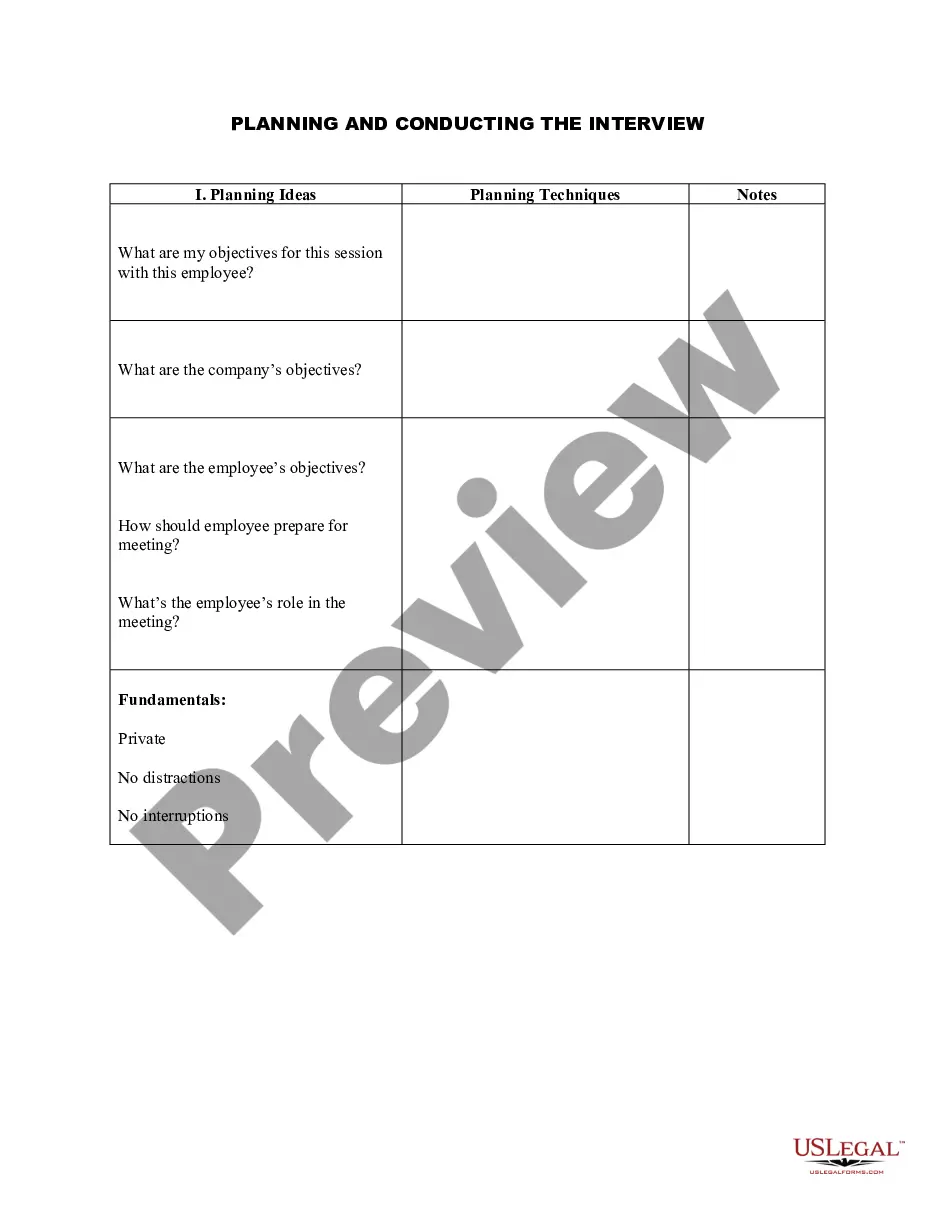
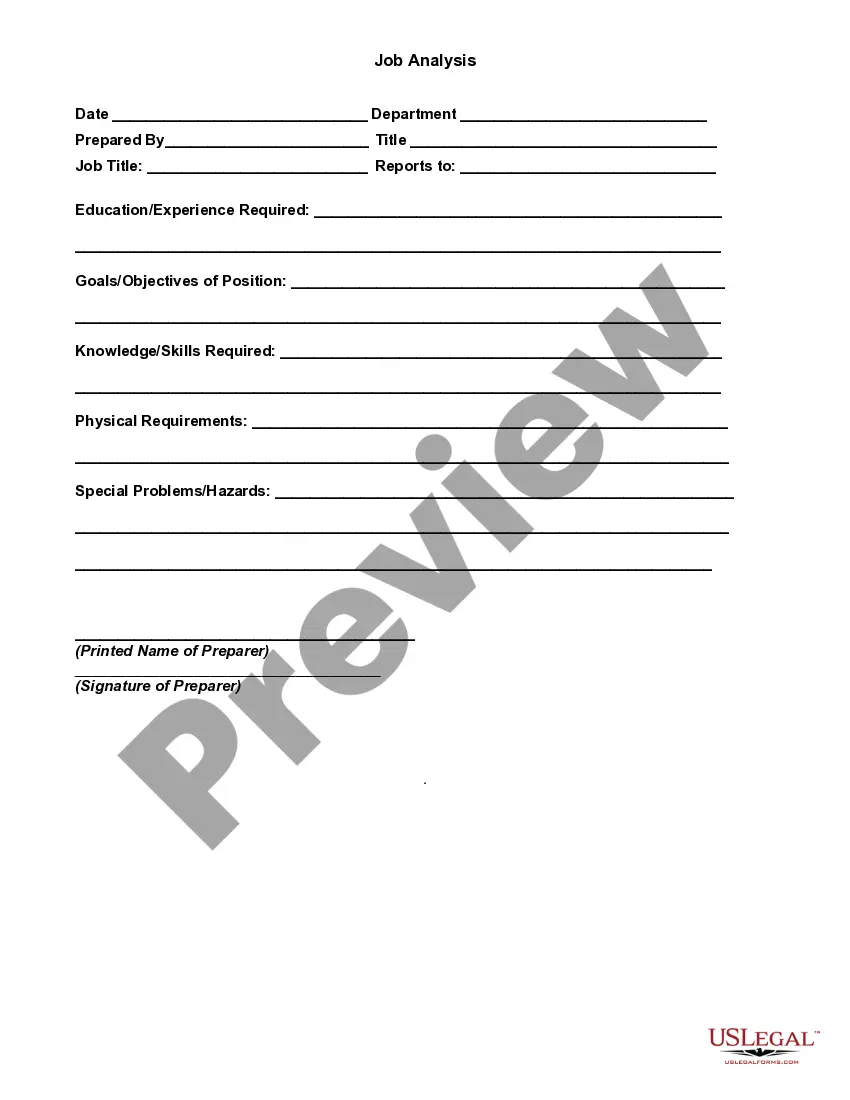
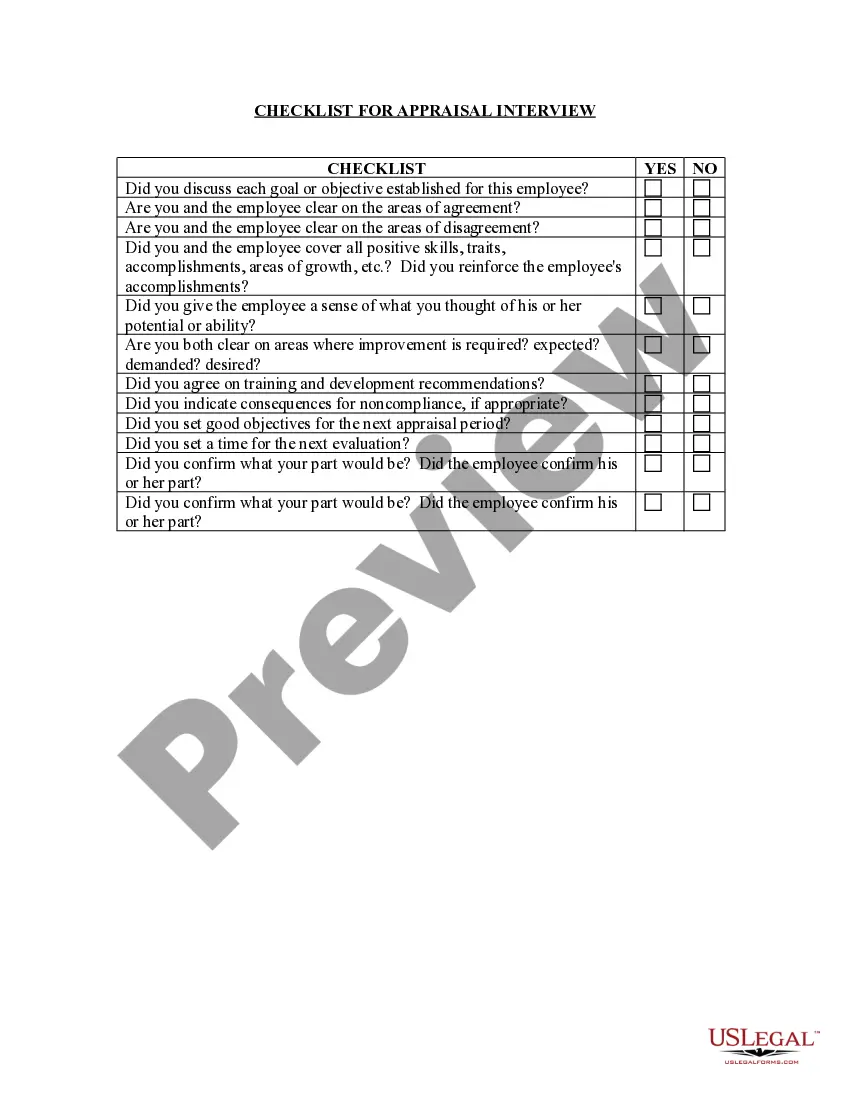
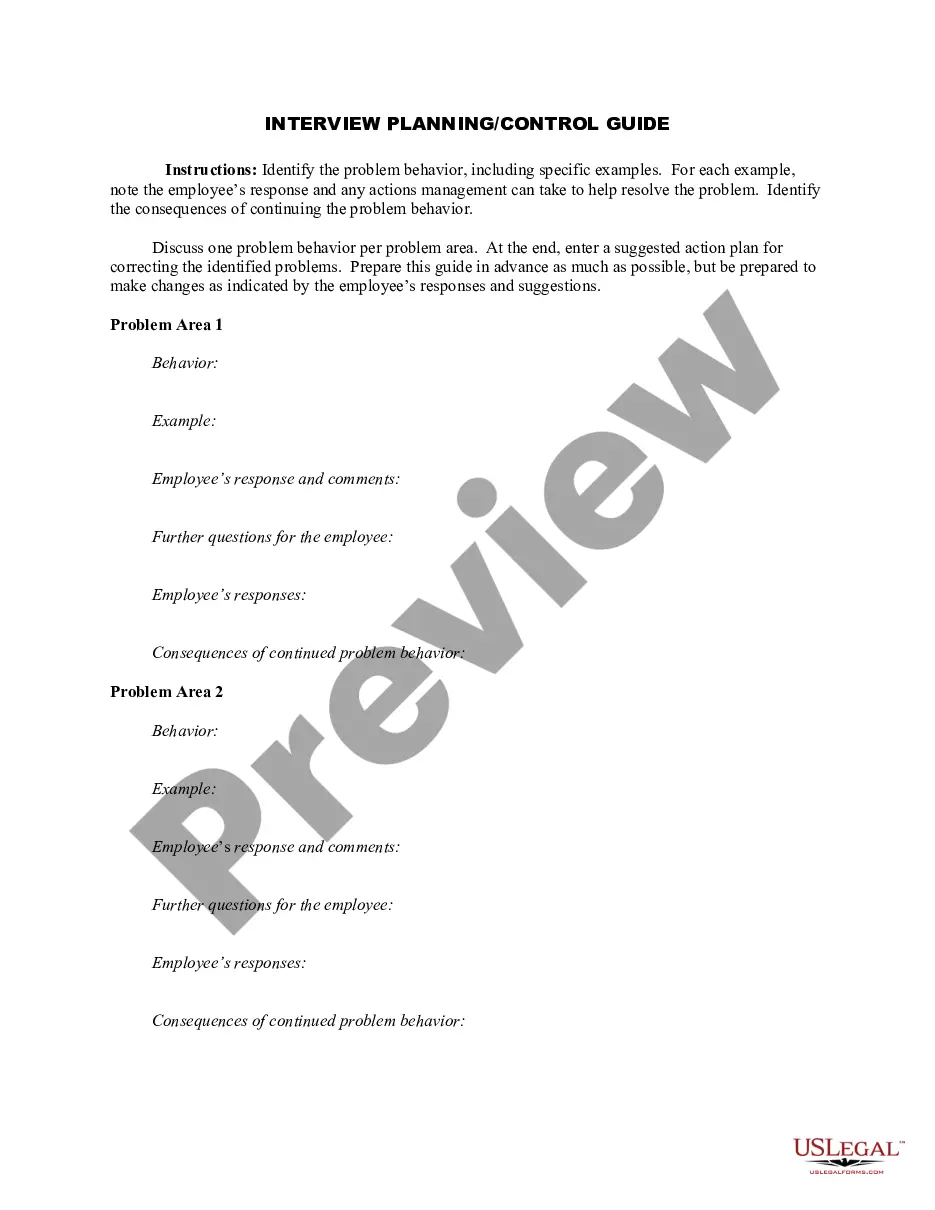
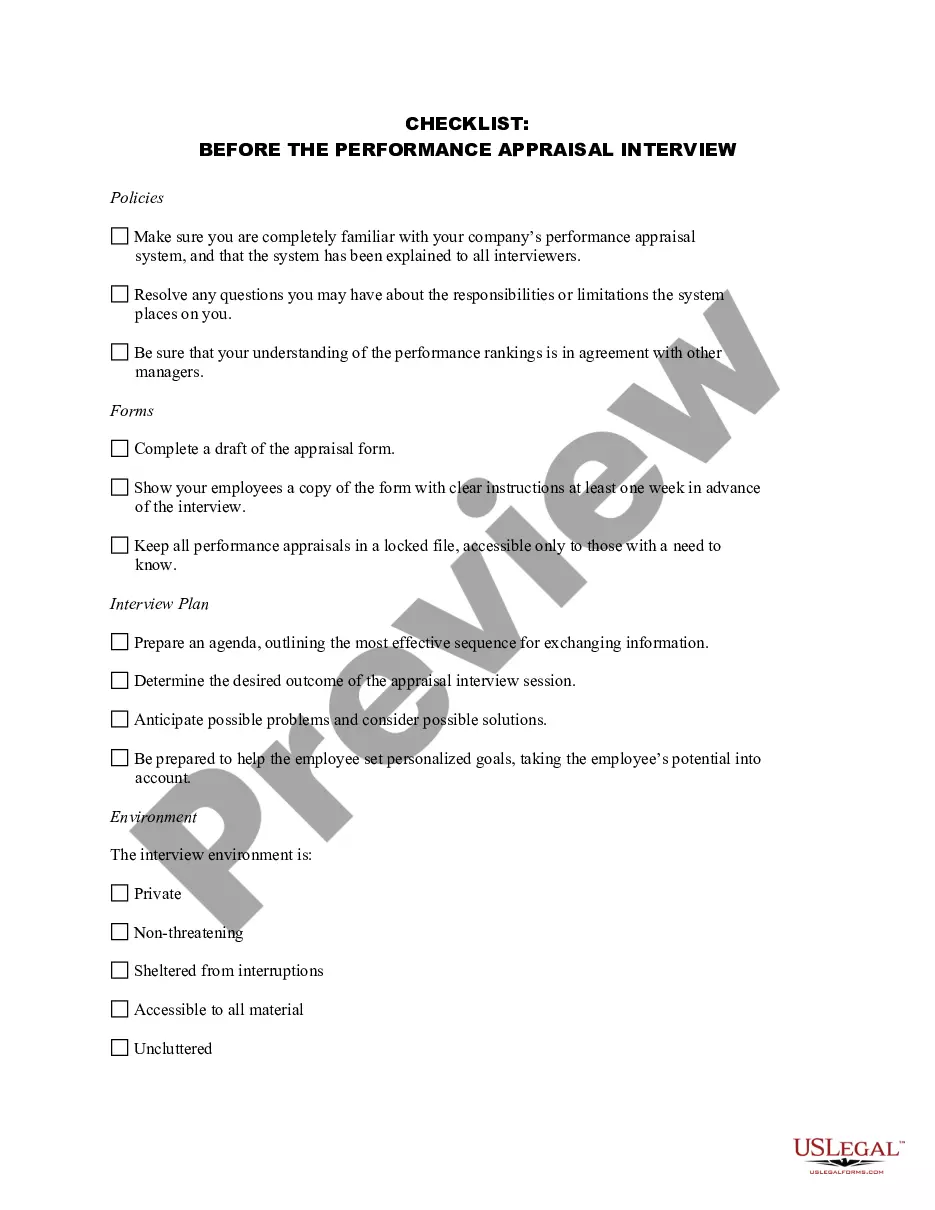
The "Planning and Conducting the Interview" form is a tool designed for managers and HR professionals to facilitate effective performance appraisal interviews. Unlike generic interview guides, this form provides a structured approach to ensure that all key topics are discussed, objectives are met, and both employee and employer perspectives are clearly understood.
Form components explained
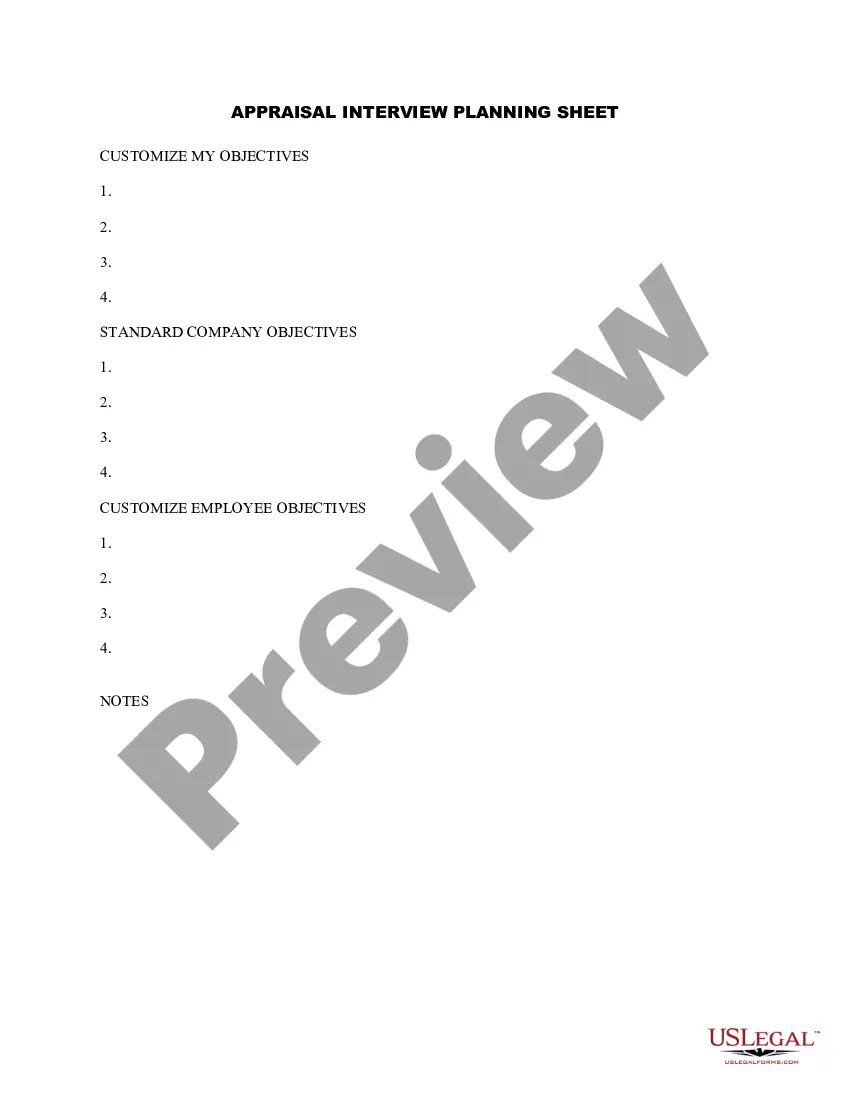
- Planning ideas: Outline your objectives for the interview.
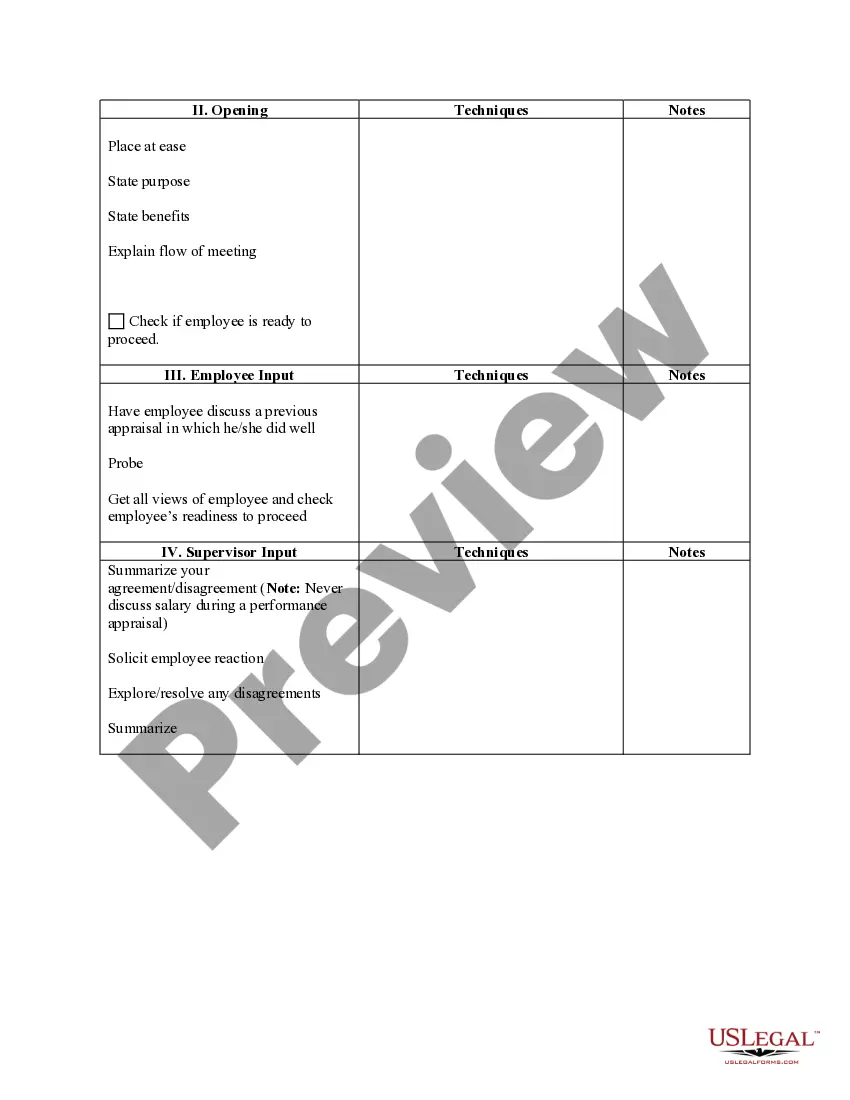
- Opening techniques: Methods to set a positive tone for the meeting.
- Employee input: Structured prompts for soliciting employee feedback.
- Supervisor input: Guidelines for summarizing priorities and feedback.
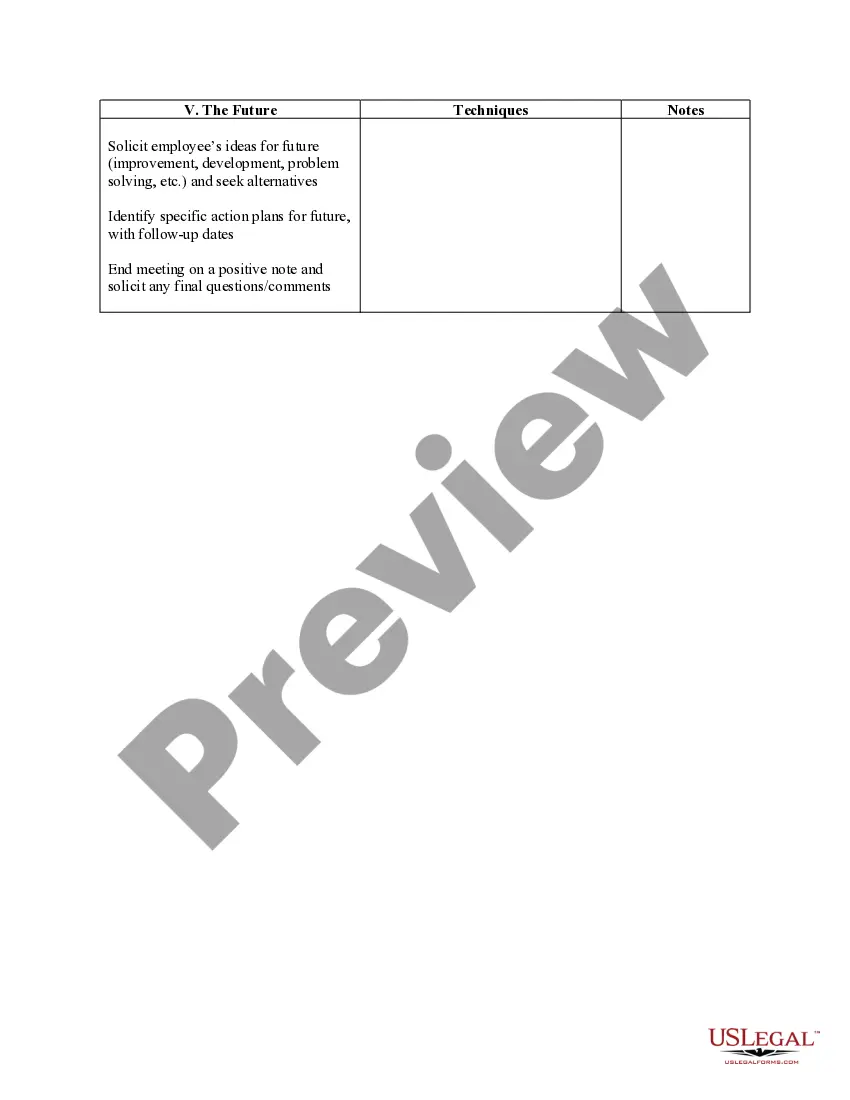
- Future planning: Setting actionable steps and follow-up dates.
When this form is needed
This form is essential for conducting performance appraisals, which may occur annually, biannually, or as needed. Use it to prepare for evaluations that focus on employee achievements, areas for improvement, company objectives, and employee career development.
Intended users of this form
- HR managers overseeing employee evaluations.
- Supervisors preparing for performance discussions.
- Anyone responsible for providing feedback in the workplace.
Instructions for completing this form
- Identify the key objectives for the interview session.
- Gather information from previous appraisals and performance metrics.
- Conduct the interview by following the outlined sections on the form.
- Encourage open dialogue to understand the employee's perspectives.
- Summarize discussions and establish action plans based on the interview outcomes.
Notarization requirements for this form
Notarization is not commonly needed for this form. However, certain documents or local rules may make it necessary. Our notarization service, powered by Notarize, allows you to finalize it securely online anytime, day or night.
Get your form ready online
Our built-in tools help you complete, sign, share, and store your documents in one place.
Make edits, fill in missing information, and update formatting in US Legal Forms—just like you would in MS Word.
Download a copy, print it, send it by email, or mail it via USPS—whatever works best for your next step.
Sign and collect signatures with our SignNow integration. Send to multiple recipients, set reminders, and more. Go Premium to unlock E-Sign.
If this form requires notarization, complete it online through a secure video call—no need to meet a notary in person or wait for an appointment.
We protect your documents and personal data by following strict security and privacy standards.

Make edits, fill in missing information, and update formatting in US Legal Forms—just like you would in MS Word.

Download a copy, print it, send it by email, or mail it via USPS—whatever works best for your next step.

Sign and collect signatures with our SignNow integration. Send to multiple recipients, set reminders, and more. Go Premium to unlock E-Sign.

If this form requires notarization, complete it online through a secure video call—no need to meet a notary in person or wait for an appointment.

We protect your documents and personal data by following strict security and privacy standards.
Common mistakes to avoid
- Failing to prepare adequately before the interview.
- Not allowing enough time for employee input.
- Neglecting to follow-up on previous discussions and action plans.
Advantages of online completion
- Convenience of accessing the form anytime, anywhere.
- Editability to tailor content to specific employee circumstances.
- Reliability of using a structured format to enhance the appraisal process.
Looking for another form?






Form popularity
FAQ
Put the applicant at ease. Make eye contact and establish rapport by finding a shared topic to talk about before you get down to the hard questions. Ask open-ended questions. Listen more, talk less. Take notes. Understand what you can't ask.
Interviews are a primary technique of gathering information. Structured interviews are prepared in advance with clear objectives.A structured interview uses a question and answer format, with most questions pre-determined in order to elicit specific information.
Tell me about a time you set difficult goals. Pitch our company to me as if I were buying our product/service. Tell me about the relationships you've had with the people you've worked with. What project would you consider your most significant career accomplishment to date?
Be positive. You'll be a more attractive candidate (and coworker!) Set goals. Prior to interviewing, take the time to write down where you want to be in 1 year, 3 years and 5 years. Sell what you can do. Know what benefits and skills you bring to the table. Ask the right questions in the right way.
Because each question asked in a job interview should be intentional, it's important to prepare ahead of time, carefully assess the role you're hiring for and ask a wide variety of interview questions.Ask questions related to the position. Gather more information with follow up questions.
1.The shortlist. The first step in the interview process is to get shortlisted for interview. The Screening Interview. The First Round Interview. The Second Round Interview. The Third Round Interview. The Job Offer and Background Check.
Select the best format for your interviews. Choose your interview questions carefully. Keep it relevant to the job. Be consistent with all candidates. Be ready to answer applicants' questions. Arrange a suitable location. Make sure interviewers have the right skills.
The ability of an individual, as an employer, to communicate or converse face to face with a job seeker in a formal manner is known as his skills of conducting job interviews. The aim of developing these skills is to be able to assess the suitability of the candidates being interviewed for a particular job.