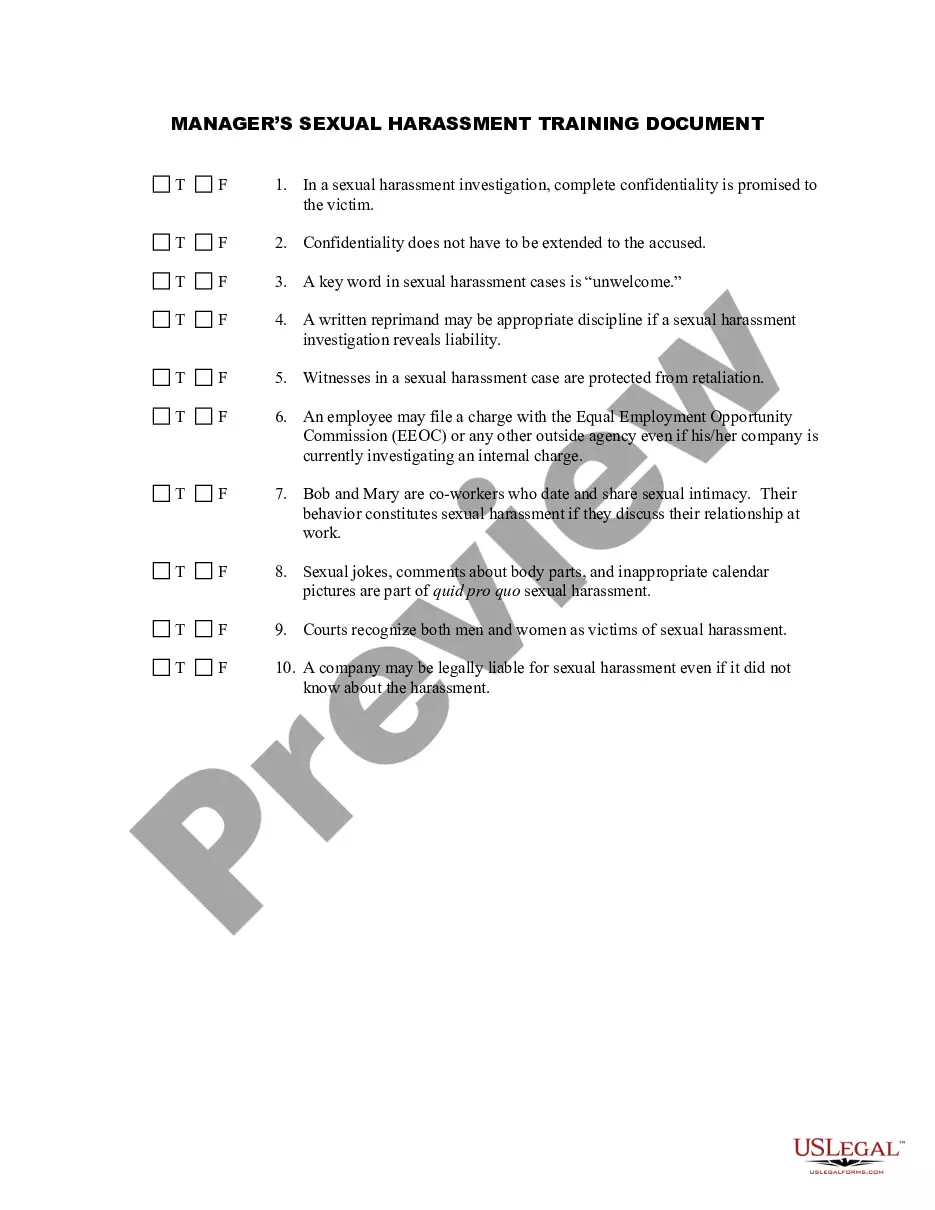
Manager's Sexual Harassment Training Document - Workplace
What this document covers
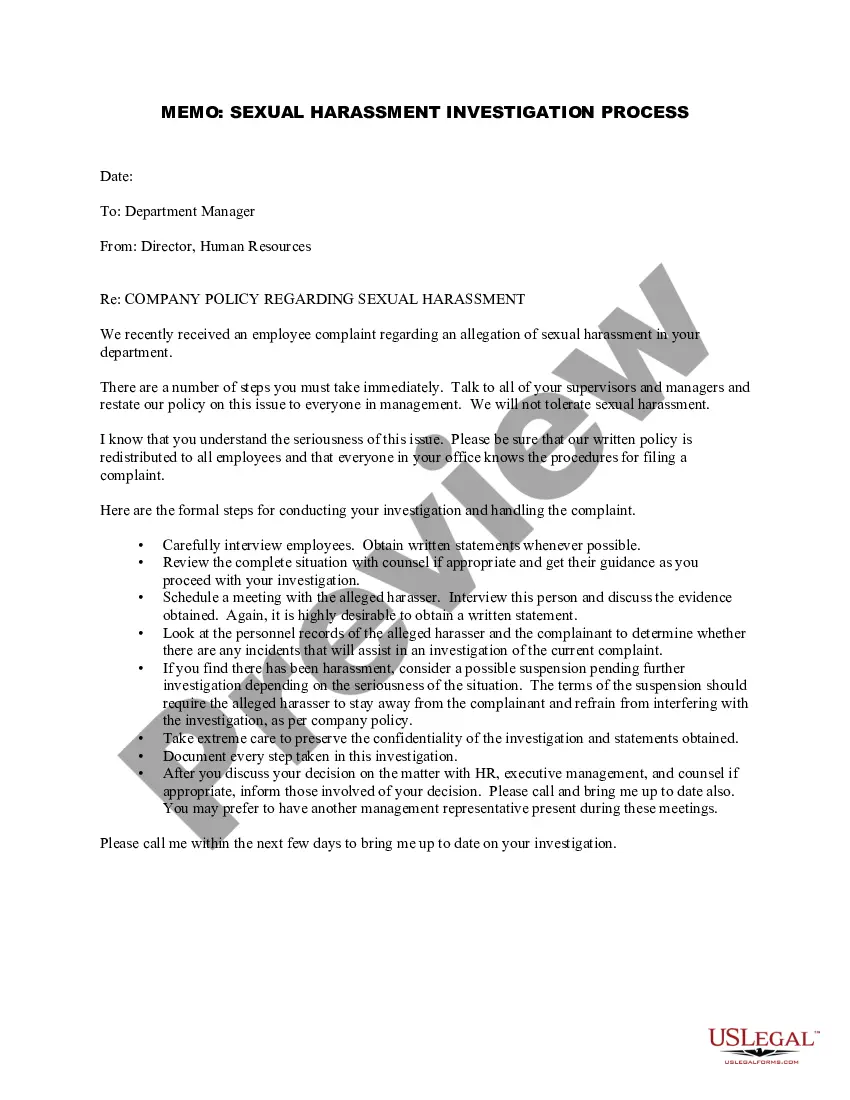
The Manager's Sexual Harassment Training Document is a critical tool designed to assess and enhance a manager's understanding of sexual harassment in the workplace. This document helps identify areas where a manager may need further education on sexual harassment policies, signs, and appropriate responses, ensuring a healthy workplace for all employees. Unlike other general training resources, this form specifically targets managerial responsibilities and knowledge, helping to foster an informed leadership team.
Key parts of this document
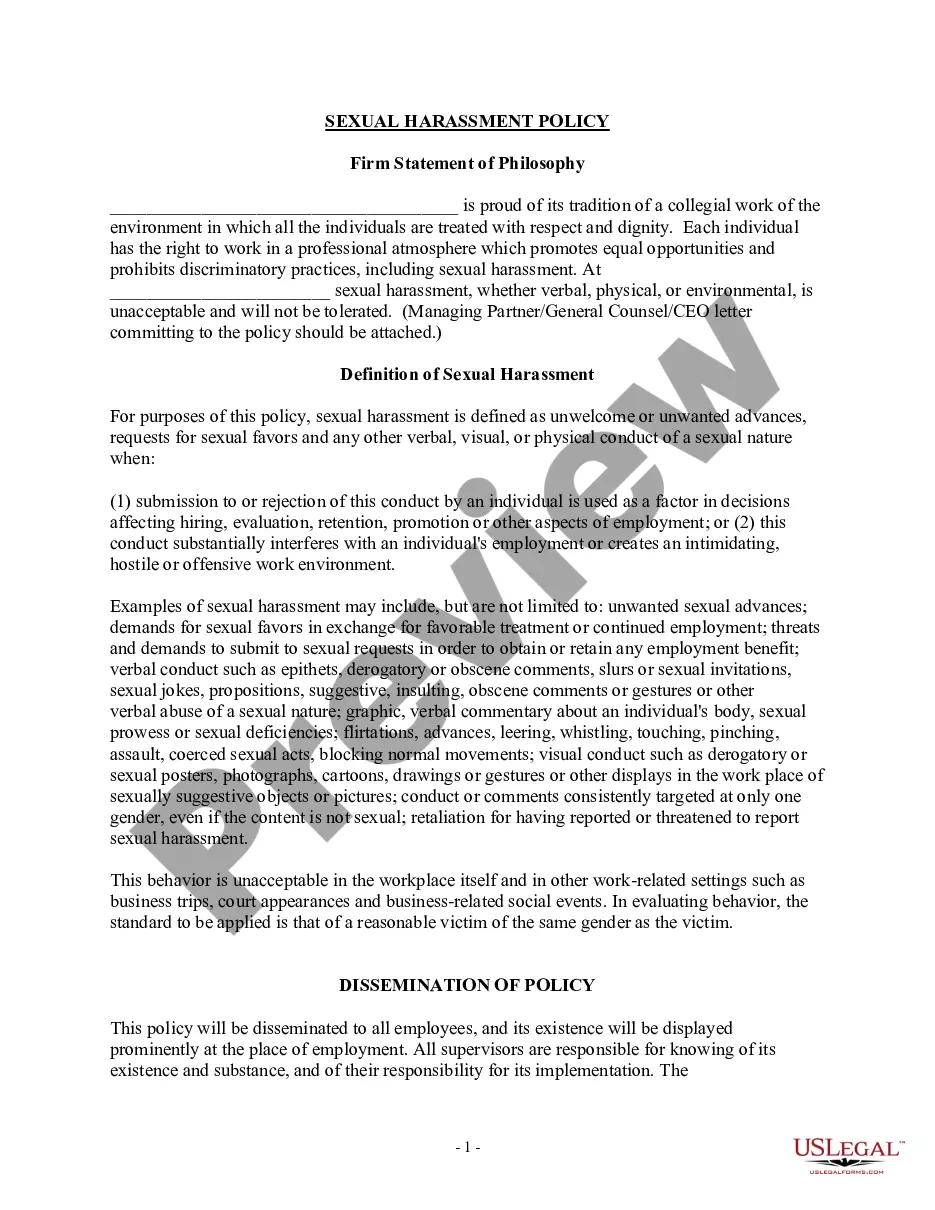
- Definitions of sexual harassment and related terms.
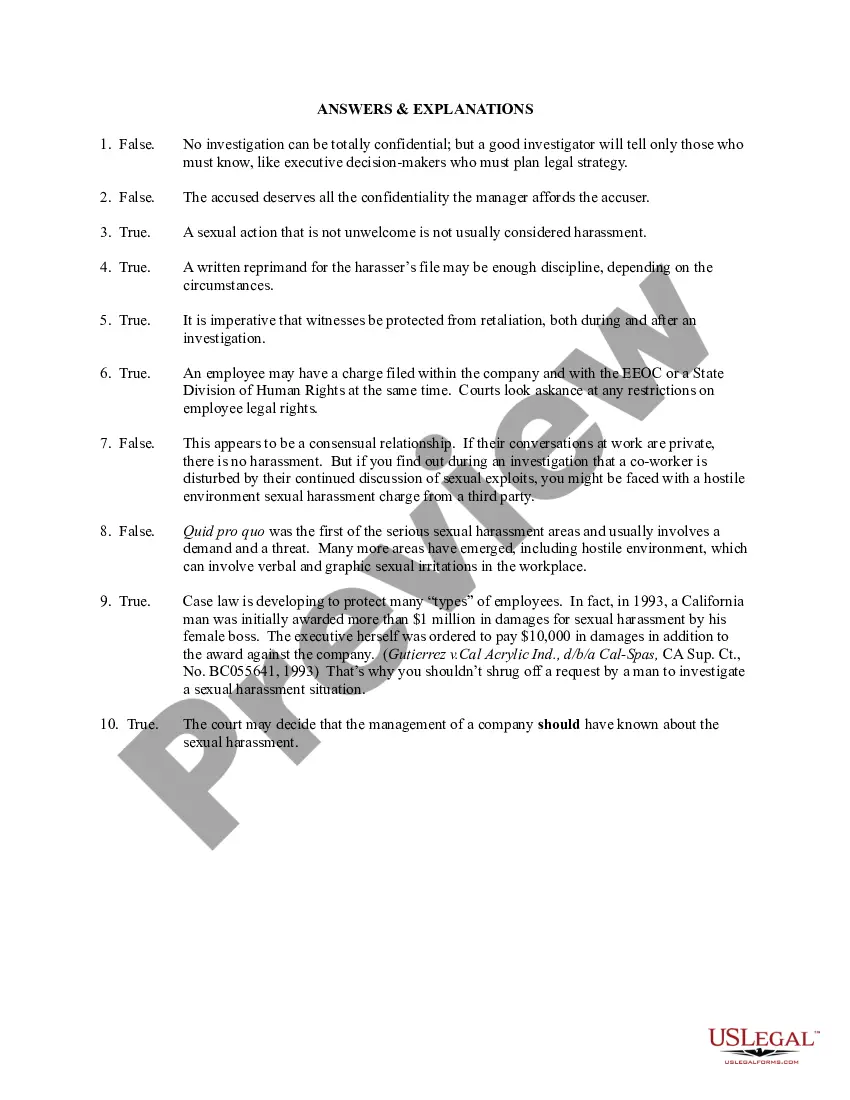
- Assessment questions to evaluate a manager's understanding.
- Guidelines for maintaining confidentiality during investigations.
- Clarifications on the roles and responsibilities of managers.
- Information on disciplinary actions and reporting procedures.
When this form is needed
This form should be used during employee onboarding, periodic training sessions, or when making updates to workplace harassment policies. It is particularly valuable when there are new regulations, company policy changes, or a need to reinforce the importance of a respectful and safe work environment. Managers should complete this document regularly to ensure ongoing compliance and understanding of their obligations regarding sexual harassment.
Intended users of this form
- Managerial staff responsible for overseeing teams.
- Human resource professionals who handle training and compliance.
- Business owners looking to solidify workforce policies.
- Organizations aiming to improve workplace culture and safety.
Steps to complete this form
- Identify the specific training needs by reviewing the assessment questions.
- Provide answers based on personal knowledge and company policies.
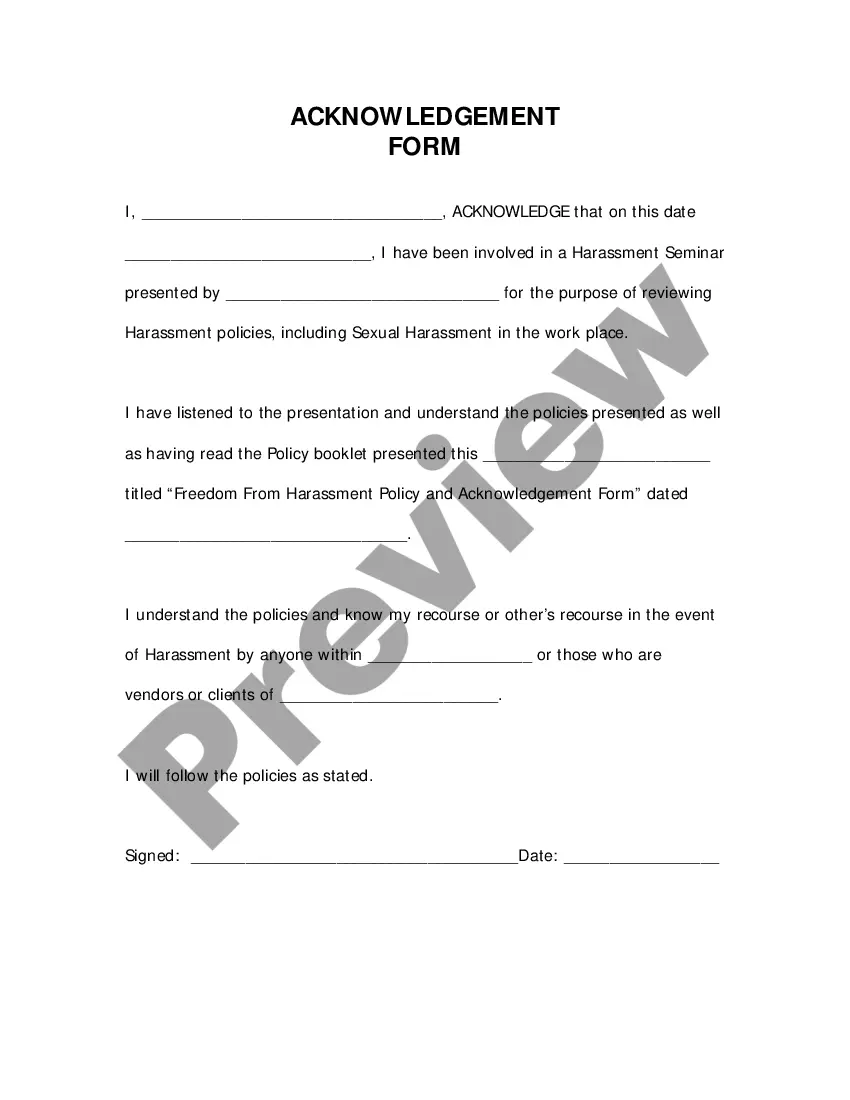
- Submit the completed document to the relevant human resources department or designated compliance officer.
- Utilize feedback from this document to participate in further training or educational sessions.
Does this form need to be notarized?
Notarization is not commonly needed for this form. However, certain documents or local rules may make it necessary. Our notarization service, powered by Notarize, allows you to finalize it securely online anytime, day or night.
Get your form ready online
Our built-in tools help you complete, sign, share, and store your documents in one place.
Make edits, fill in missing information, and update formatting in US Legal Forms—just like you would in MS Word.
Download a copy, print it, send it by email, or mail it via USPS—whatever works best for your next step.
Sign and collect signatures with our SignNow integration. Send to multiple recipients, set reminders, and more. Go Premium to unlock E-Sign.
If this form requires notarization, complete it online through a secure video call—no need to meet a notary in person or wait for an appointment.
We protect your documents and personal data by following strict security and privacy standards.

Make edits, fill in missing information, and update formatting in US Legal Forms—just like you would in MS Word.

Download a copy, print it, send it by email, or mail it via USPS—whatever works best for your next step.

Sign and collect signatures with our SignNow integration. Send to multiple recipients, set reminders, and more. Go Premium to unlock E-Sign.

If this form requires notarization, complete it online through a secure video call—no need to meet a notary in person or wait for an appointment.

We protect your documents and personal data by following strict security and privacy standards.
Common mistakes to avoid
- Providing vague answers without understanding the concepts of sexual harassment.
- Failing to update training based on new laws or company policies.
- Not using the form regularly, reducing the effectiveness of managerial training.
Benefits of using this form online
- Convenient access and ability to download at any time.
- Editability allows for personalized content that meets specific organizational needs.
- Reliable updates ensure that the form includes the latest legal requirements.
Main things to remember
- Use the Manager's Sexual Harassment Training Document as an essential training resource.
- Regularly reassess knowledge and understanding among managerial staff to maintain compliance.
- Ensure that organizations foster a respectful and legally compliant workplace culture.
Looking for another form?




Form popularity
FAQ
Racial slurs. Racial insults. Racial jokes.
1. Talk to the Person Directly. Once the first incident of sexual harassment occurs, be very clear in letting the person know the behavior is unwelcome and ask them to stop. If the behavior continues after that, tell them that you plan to file a report with Human Resources.
Verbal/Written. Physical. Visual.
Age. Race. Color. Religion. National origin. Sex. Gender Identity. Pregnancy.
Educate for common understanding. Get people to think differently. Impact culture.
Racial slurs. Racial insults. Racial jokes.
Verbal/Written. Physical. Visual.
California law requires all employers of 5 or more employees to provide 1 hour of sexual harassment and abusive conduct prevention training to nonsupervisory employees and 2 hours of sexual harassment and abusive conduct prevention training to supervisors and managers once every two years.
For example, a manager singling out one employee for regular criticism, hostility, or unfavorable treatment may constitute improper harassment if this treatment is secretly motivated by bias against a legally protected demographic characteristic of the employee.