Goals for Telecommuting
Overview of this form
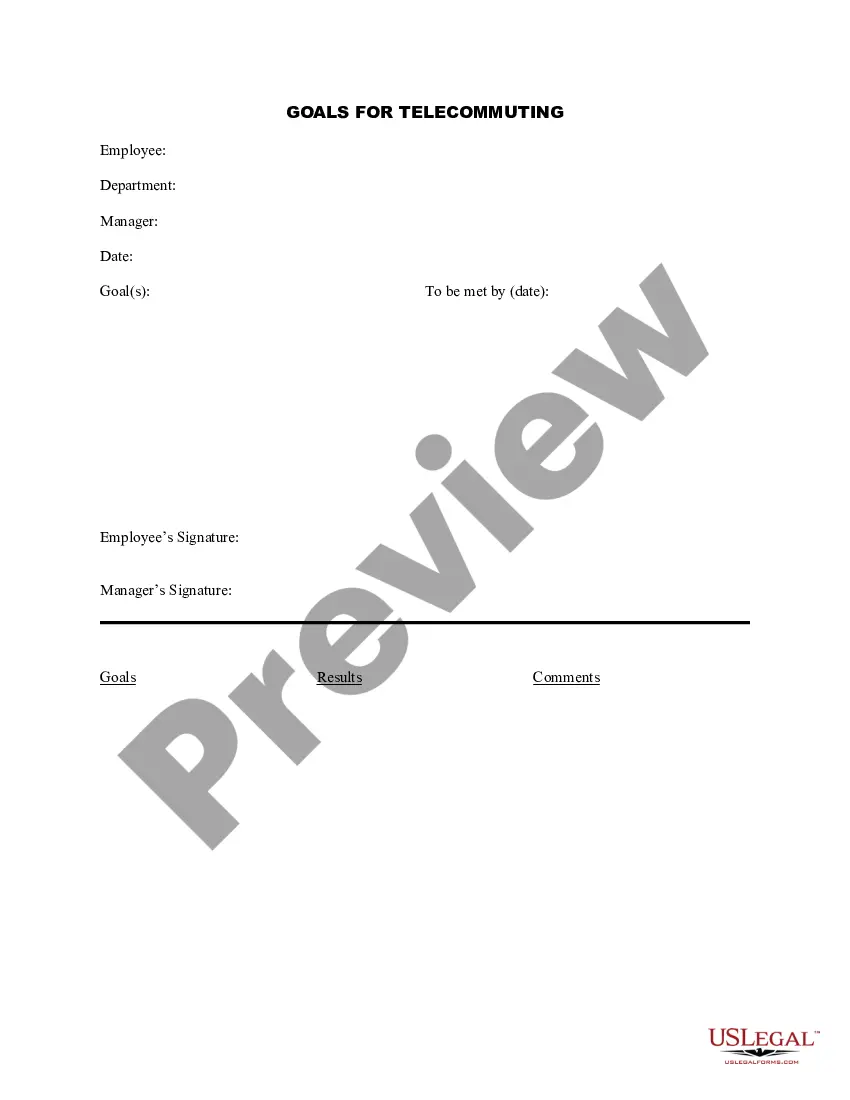
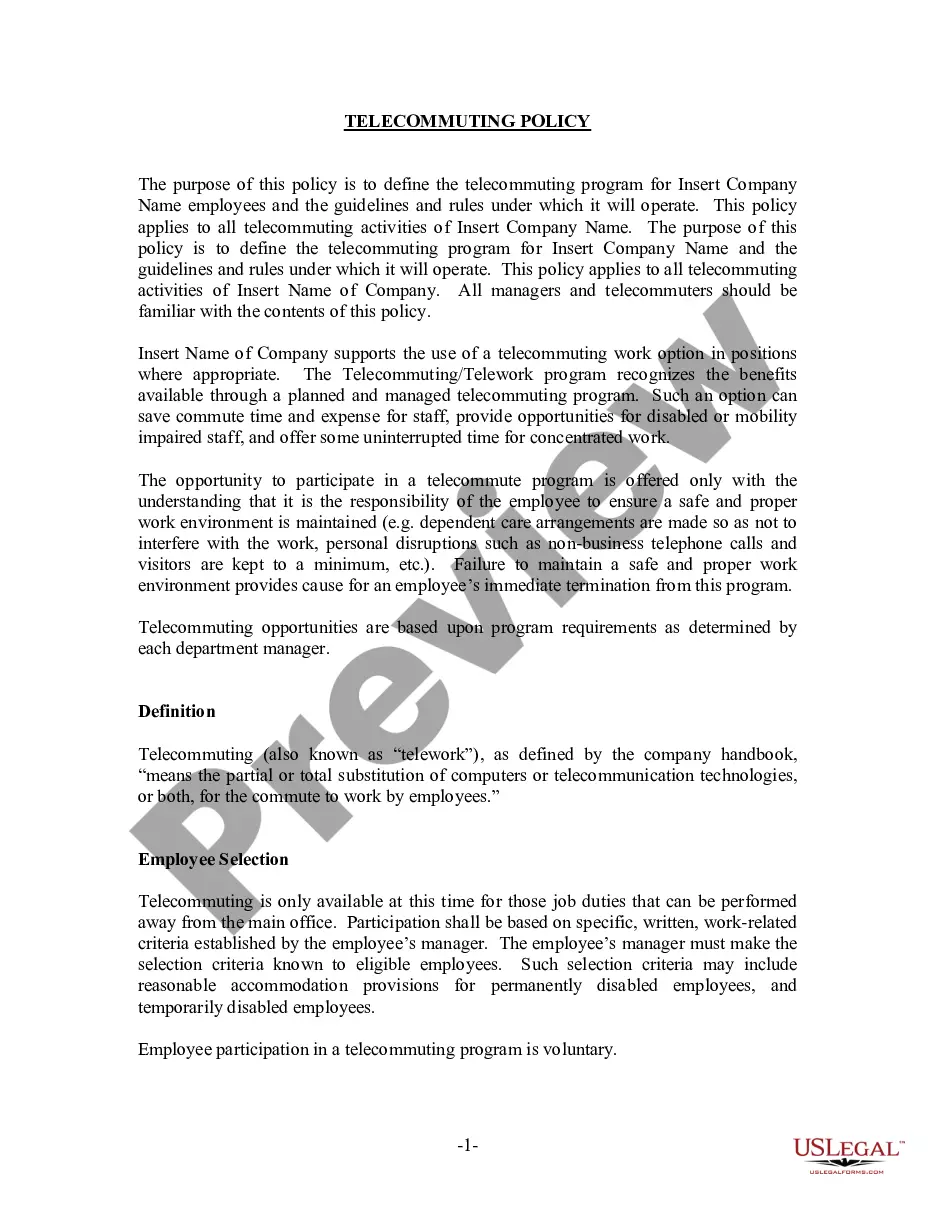
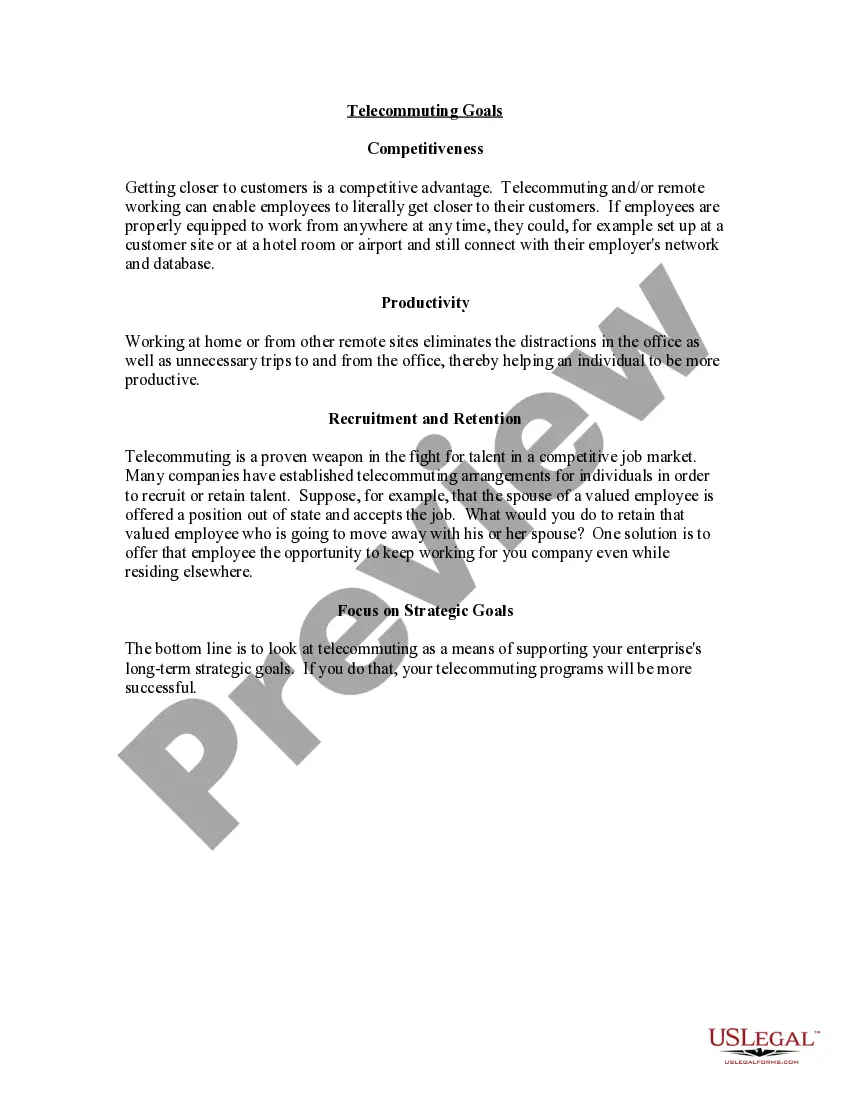
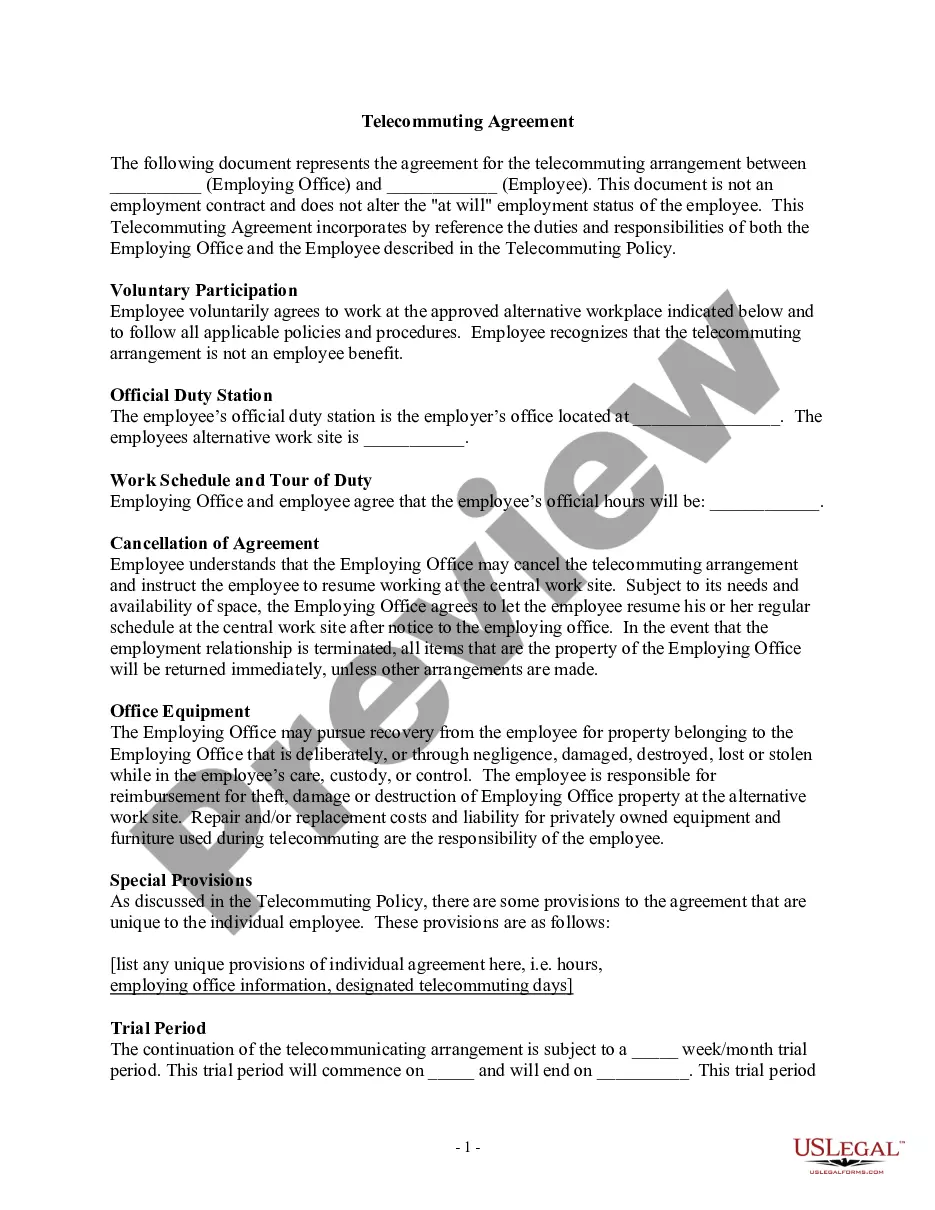
The Goals for Telecommuting form is a structured document designed to outline specific objectives and performance metrics related to remote work. This form helps employees and managers collaboratively set clear and measurable goals for telecommuting, differentiating it from general employment agreements or work-from-home policies by focusing explicitly on the individual and their remote operating environment.
Form components explained
- Employee Information: Fields for entering the employee's name, department, and manager's name.
- Goals Section: Area for specifying the goals to be achieved through telecommuting.
- Completion Dates: Space to set deadlines for when the goals should be met.
- Results: Sections for documenting the outcomes of the telecommuting arrangement.
- Comments: Field for additional remarks or notes related to the goals and results.
- Signatures: Lines for the employee's and manager's signatures to acknowledge agreement.
When to use this form
This form should be used when establishing a telecommuting arrangement between an employee and their manager. It is applicable in scenarios where specific objectives need to be set for remote work performance, ensuring accountability and clear expectations for both parties involved. Additionally, it can be utilized in performance reviews to assess the telecommuting outcomes against the established goals.
Who should use this form
- Employees who are transitioning to telecommuting and require a clear framework for their responsibilities.
- Managers who oversee remote teams and need to establish measurable performance expectations.
- Human resource professionals involved in drafting telecommuting policies or performance assessments.
Completing this form step by step
- Identify all parties involved by filling in the employee and manager information fields.
- Specify the telecommuting goals in the designated section, ensuring they are clear and measurable.
- Set target dates for each goal to track progress over time.
- Once goals are achieved, document the results in the appropriate sections.
- Have both the employee and manager sign and date the form to formalize the agreement.
Does this form need to be notarized?
Notarization is generally not required for this form. However, certain states or situations might demand it. You can complete notarization online through US Legal Forms, powered by Notarize, using a verified video call available anytime.
Get your form ready online
Our built-in tools help you complete, sign, share, and store your documents in one place.
Make edits, fill in missing information, and update formatting in US Legal Forms—just like you would in MS Word.
Download a copy, print it, send it by email, or mail it via USPS—whatever works best for your next step.
Sign and collect signatures with our SignNow integration. Send to multiple recipients, set reminders, and more. Go Premium to unlock E-Sign.
If this form requires notarization, complete it online through a secure video call—no need to meet a notary in person or wait for an appointment.
We protect your documents and personal data by following strict security and privacy standards.
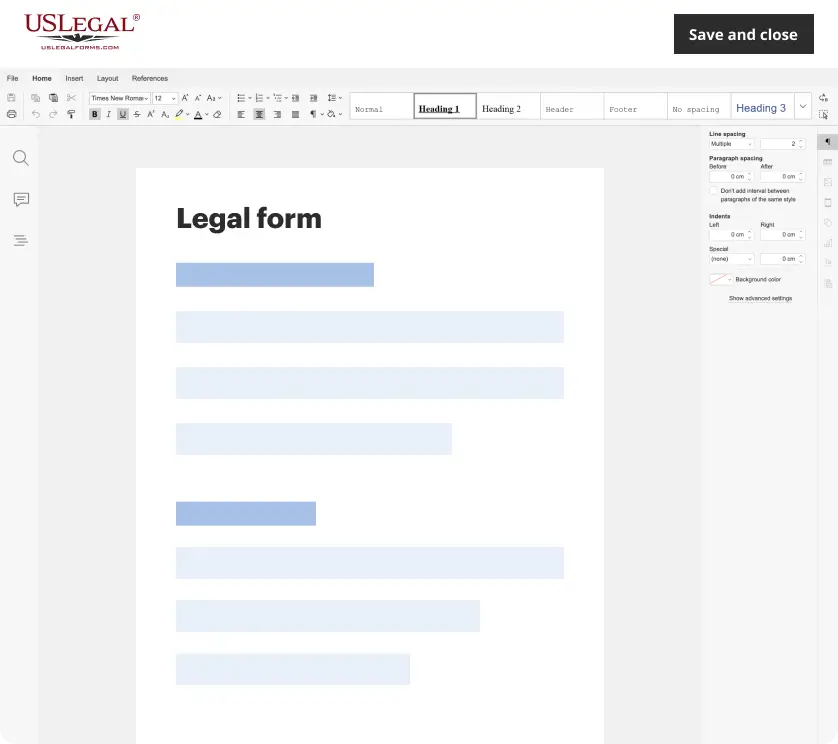
Make edits, fill in missing information, and update formatting in US Legal Forms—just like you would in MS Word.
Download a copy, print it, send it by email, or mail it via USPS—whatever works best for your next step.
Sign and collect signatures with our SignNow integration. Send to multiple recipients, set reminders, and more. Go Premium to unlock E-Sign.
If this form requires notarization, complete it online through a secure video call—no need to meet a notary in person or wait for an appointment.
We protect your documents and personal data by following strict security and privacy standards.
Avoid these common issues
- Setting vague or unrealistic goals that cannot be measured.
- Failing to update the form based on changing job responsibilities or company policies.
- Not involving both the employee and manager in the goal-setting process.
Why complete this form online
- Easy access and download from any location, allowing for quick updates and edits.
- Enhanced collaboration between employees and managers in defining performance metrics.
- Digital signature options streamline the process of formalizing agreements without the need for in-person meetings.
Quick recap
- The Goals for Telecommuting form establishes clear goals and expectations for remote work.
- It includes key components necessary for effective telecommuting agreements.
- Both employer and employee must collaborate to set measurable objectives.
- Failure to document clear goals can lead to misunderstandings and decreased productivity.
Looking for another form?

Form popularity
FAQ
1) Higher employee satisfaction. 2) Better work-life balance. 3) Increased flexibility. 4) Reduced operational costs. 5) Reduced expenses for employees. 6) Easier to focus. 7) There's zero commuting necessary. 1) You need the right technology to be effective.
Studies have shown that employees who are able to telecommute tend to be much happier than their in-office counterparts. When employees are happy, they are typically less likely to leave a position, which can add up savings for employers in the long run. Increased morale This, too, can have an impact on turnover.
But a successful teleworking program requires more. Measuring and developing employees for job performance.This model helps employees and managers identify specific goals and job expectations, but gives the employees significant flexibility over when, where, and how to meet them.
You do not have to spend time commuting back and forth from work. It is easier to focus without the usual workplace distractions. There are no transportation costs. It can provide a better balance of work and personal pursuits. Employers may save money on real estate and other overhead expenses.
Separate work life from home life. Get ready for work. Establish office hours. Divide up your day. Set up the proper environment. Keep the lines of communication open. Don't constantly monitor your cellphone. Get out of the house.
Recruit and retain key employees. In today's workforce, employees valueand expectan employer to offer benefits. A healthy workforce is a productive workforce. Culture and morale. Tax advantages. A foundation for growth.
Set immediate and clear expectations. Document your communication strategy. Engage as often as possible. Schedule regular team meetings. Be transparent. Build a strong rapport with each team member. Use technology to overcome geographic boundaries.
Larger labor pool. Higher productivity. Improved morale. Reduced office-space costs.
For a successful telecommuting arrangement, there needs to be some structure, productivity expectations, and good communication. However, the number one goal for telecommuting should be to provide the employee with the proper tools and environment so they can do their job and to meet the needs of the organization.