Discipline Interview Checklist
What this document covers
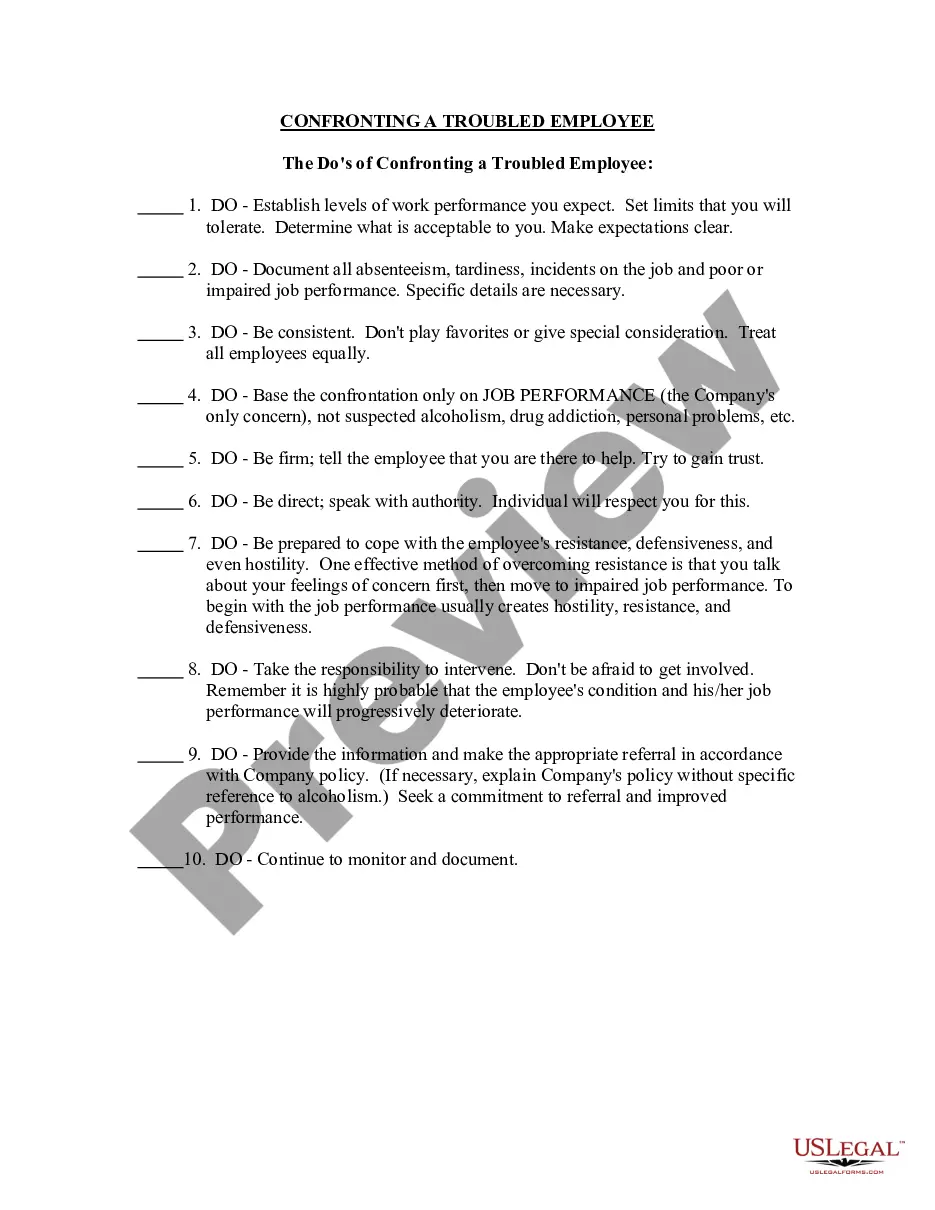
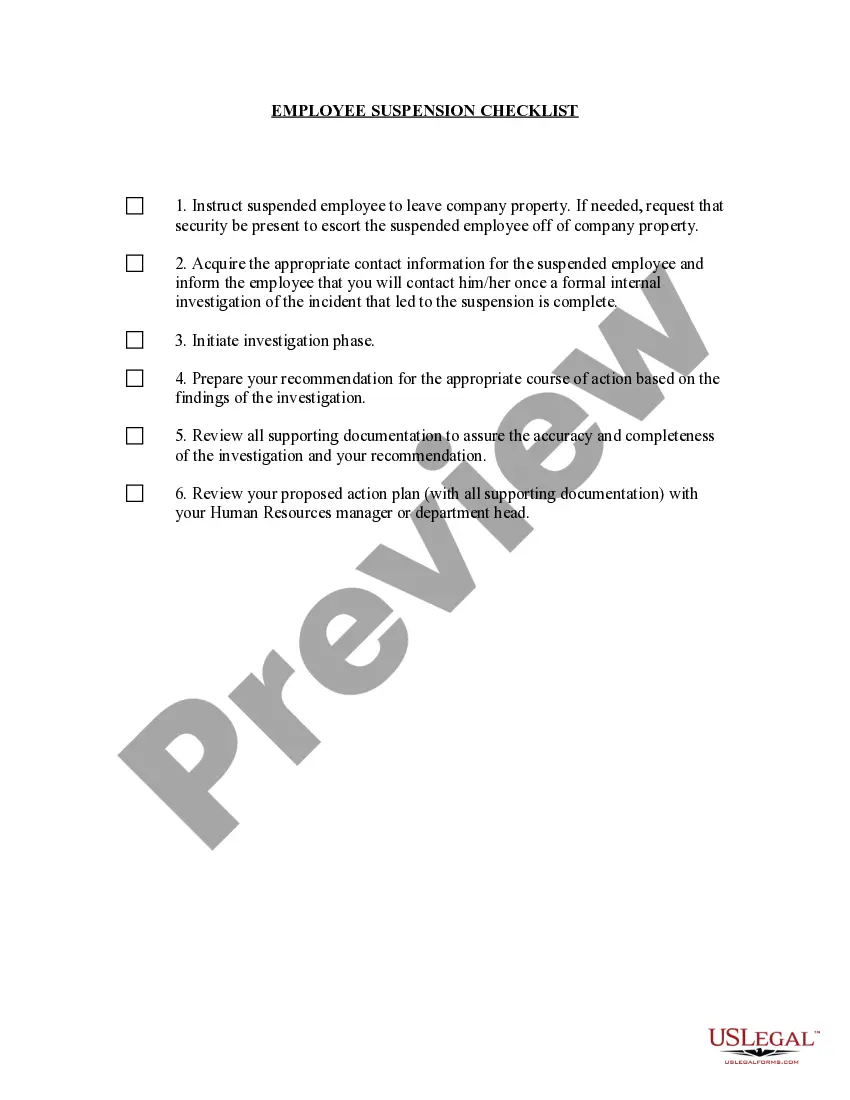
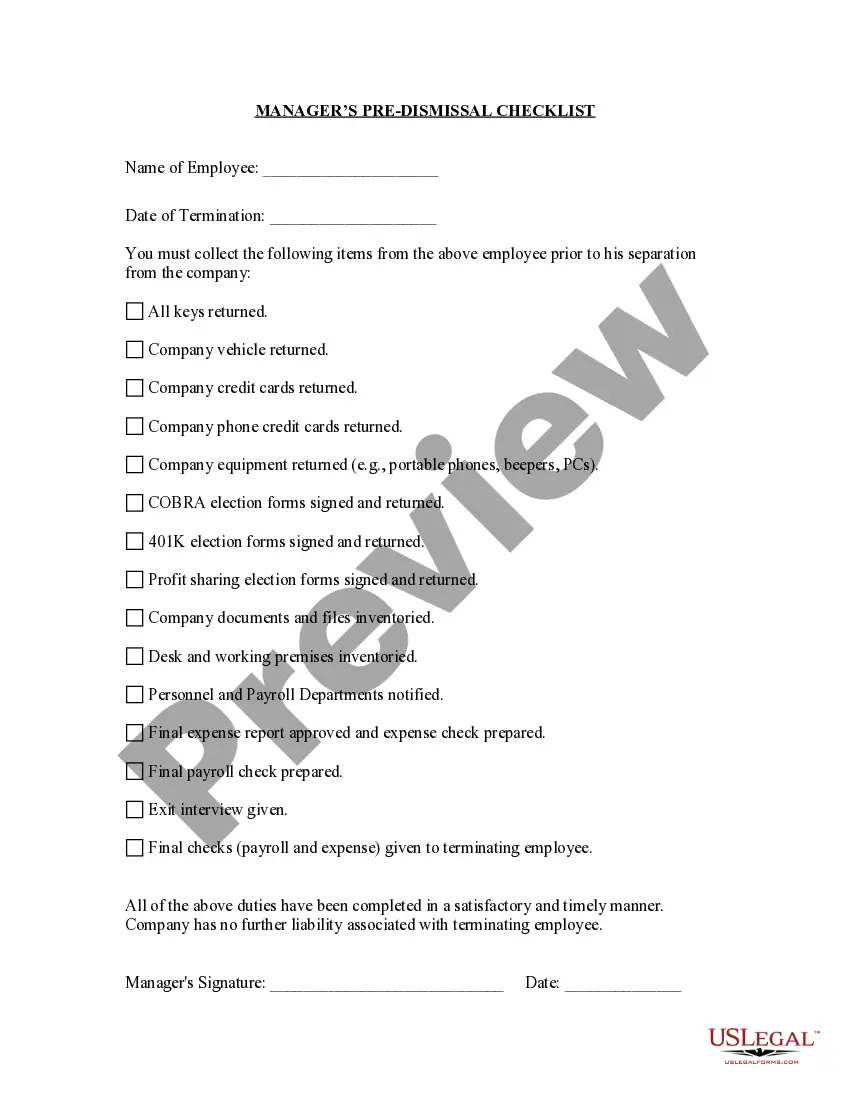
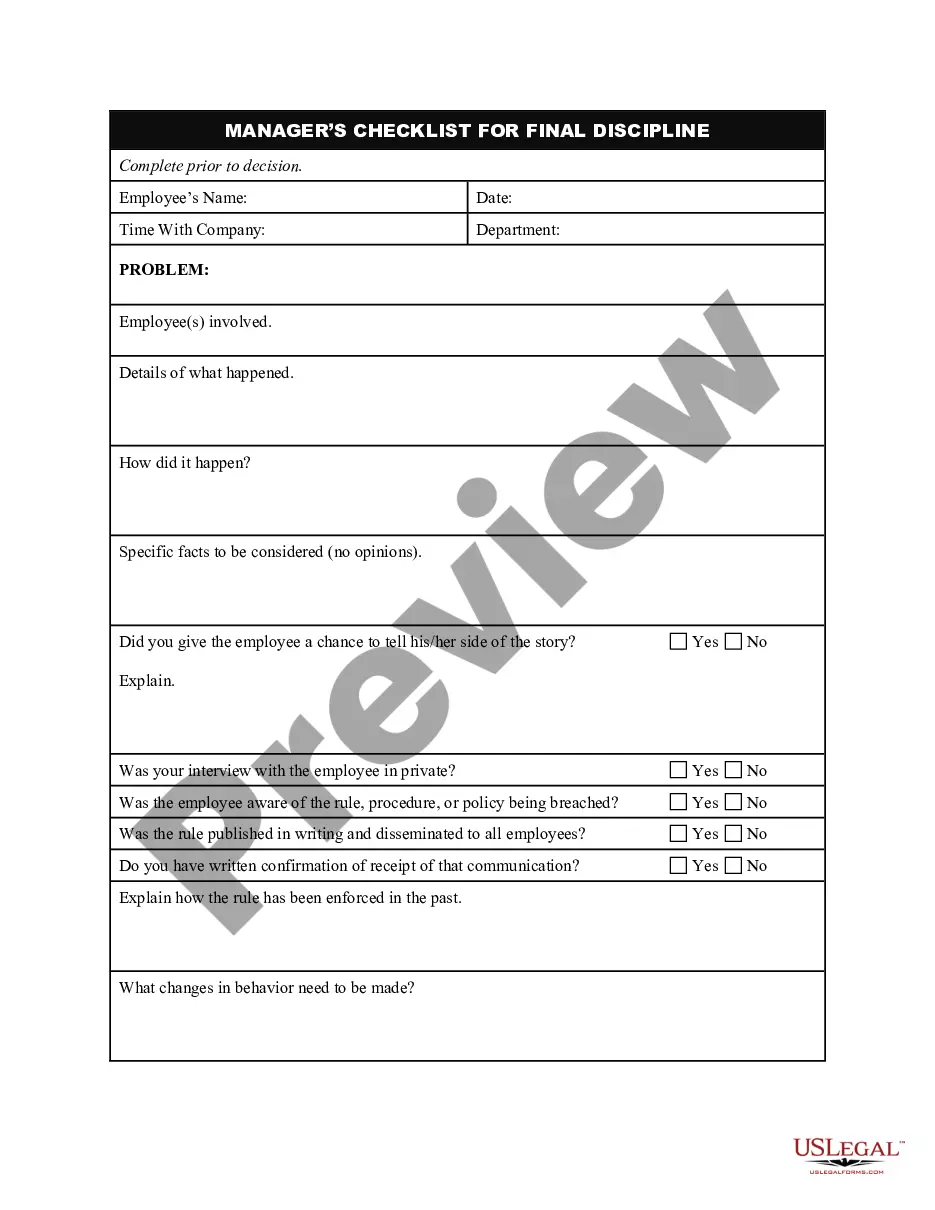
The Discipline Interview Checklist is a vital tool for conducting employee discipline interviews. This form ensures that all critical areas of concern are addressed during the interview process, differentiating it from other discipline-related documents by providing a structured approach for both the interviewer and the employee. It helps in maintaining professionalism and clarity during potentially contentious discussions.
Form components explained
- Preparation steps for conducting the interview, including reviewing employee records and past behaviors.
- Guidelines for handling the actual interview, such as explaining the specific issues and allowing the employee to respond.
- Follow-up actions after the interview, including documenting the conversation and distributing relevant forms.
Common use cases
This checklist should be used when an employer needs to address performance or behavioral issues with an employee. It is ideal for situations such as repeated tardiness, failure to meet performance standards, or any significant violation of company policies. This form assists in ensuring that the discussion is thorough, consistent, and fair.
Who this form is for
- Human resources professionals involved in employee management.
- Supervisors or managers who need to conduct disciplinary interviews.
- Companies aiming to maintain consistent disciplinary practices across their workforce.
Steps to complete this form
- Identify the specific behavior issues to address with the employee.
- Prepare detailed notes on previous incidents to support your discussion.
- During the interview, explain the issues clearly and state expected changes.
- Document the conversation and any agreements made regarding performance improvement.
- Provide a copy of the documentation to the employee and outline the next steps.
Is notarization required?
This form does not typically require notarization unless specified by local law. Always check your stateâs regulations and company policies to ensure compliance.
Get your form ready online
Our built-in tools help you complete, sign, share, and store your documents in one place.
Make edits, fill in missing information, and update formatting in US Legal Forms—just like you would in MS Word.
Download a copy, print it, send it by email, or mail it via USPS—whatever works best for your next step.
Sign and collect signatures with our SignNow integration. Send to multiple recipients, set reminders, and more. Go Premium to unlock E-Sign.
If this form requires notarization, complete it online through a secure video call—no need to meet a notary in person or wait for an appointment.
We protect your documents and personal data by following strict security and privacy standards.

Make edits, fill in missing information, and update formatting in US Legal Forms—just like you would in MS Word.

Download a copy, print it, send it by email, or mail it via USPS—whatever works best for your next step.

Sign and collect signatures with our SignNow integration. Send to multiple recipients, set reminders, and more. Go Premium to unlock E-Sign.

If this form requires notarization, complete it online through a secure video call—no need to meet a notary in person or wait for an appointment.

We protect your documents and personal data by following strict security and privacy standards.
Typical mistakes to avoid
- Failing to prepare adequately before the meeting.
- Not allowing the employee enough time to respond during the interview.
- Neglecting to document discussions that take place during the interview.
Advantages of online completion
- Convenience of accessing the form anytime and anywhere.
- Ability to edit the checklist before the interview to ensure it meets specific needs.
- Reliable format based on legal standards, helping to reduce the potential for errors.
Key takeaways
- The Discipline Interview Checklist is essential for a structured disciplinary process.
- Proper use of this form can help mitigate conflicts and ensure fair treatment of employees.
- Clear documentation following the interview fosters accountability and consistency in HR practices.
Looking for another form?
Form popularity
FAQ
What will happen at the meeting? Your employer will explain the reason for the meeting and go through the evidence they have. They should give you the opportunity to put your case and answer the allegations made against you. You should be allowed to ask questions, give your evidence and call witnesses.
Investigate, Investigate, Investigate. It is fundamental that you investigate the situation before you consider disciplinary action. Set Expectations. Invite Letter. Advance Notice. Preparation. Convening the Meeting. Adjourning the Meeting.
A brief summary of the case. Reference to any facts that are not in dispute. The issues that are in dispute. What has to be decided by the Chairman. How you intend to demonstrate your case through your evidence. What result you are seeking.
Be honest. Be honest if you have been in trouble. Take responsibility. If you answered yes to any of the disciplinary questions, you will be asked to share details about the offense. What did you learn? Share what you learned from the incident. Talk with others.
Provide a specific example and in your answer show your ability to have planned ahead for such instances by having measures in place and a clear action plan to deal with serious discipline problems. Support any disciplinary action you took with reasons as to why it was effective and why you used it.
Definition. A disciplinary interview is a meeting between at least one manager and an employee (who may be accompanied by a colleague or trade union representative) to investigate and deal with an employee's misconduct or performance in a fair and consistent manner.
Give yourself enough time to prepare. You are entitled to ask to reschedule your disciplinary meeting. Bring backup with you. Your employer must allow you to bring a work colleague or a trade union rep with you to your disciplinary hearing. Outline your argument. Bring your own evidence. Exercise your right to appeal.
Can the employee confirm they have received details in writing of the allegations against them? Do they understand the nature of the allegations being made against them? Are they aware that the behaviour connected with the disciplinary investigation is unacceptable?
No. It is important to note that when asking an HR adviser legal questions, those questions and any advice you receive as answers to those questions are likely to be given to the employee if the matter ever goes before an Employment Tribunal.