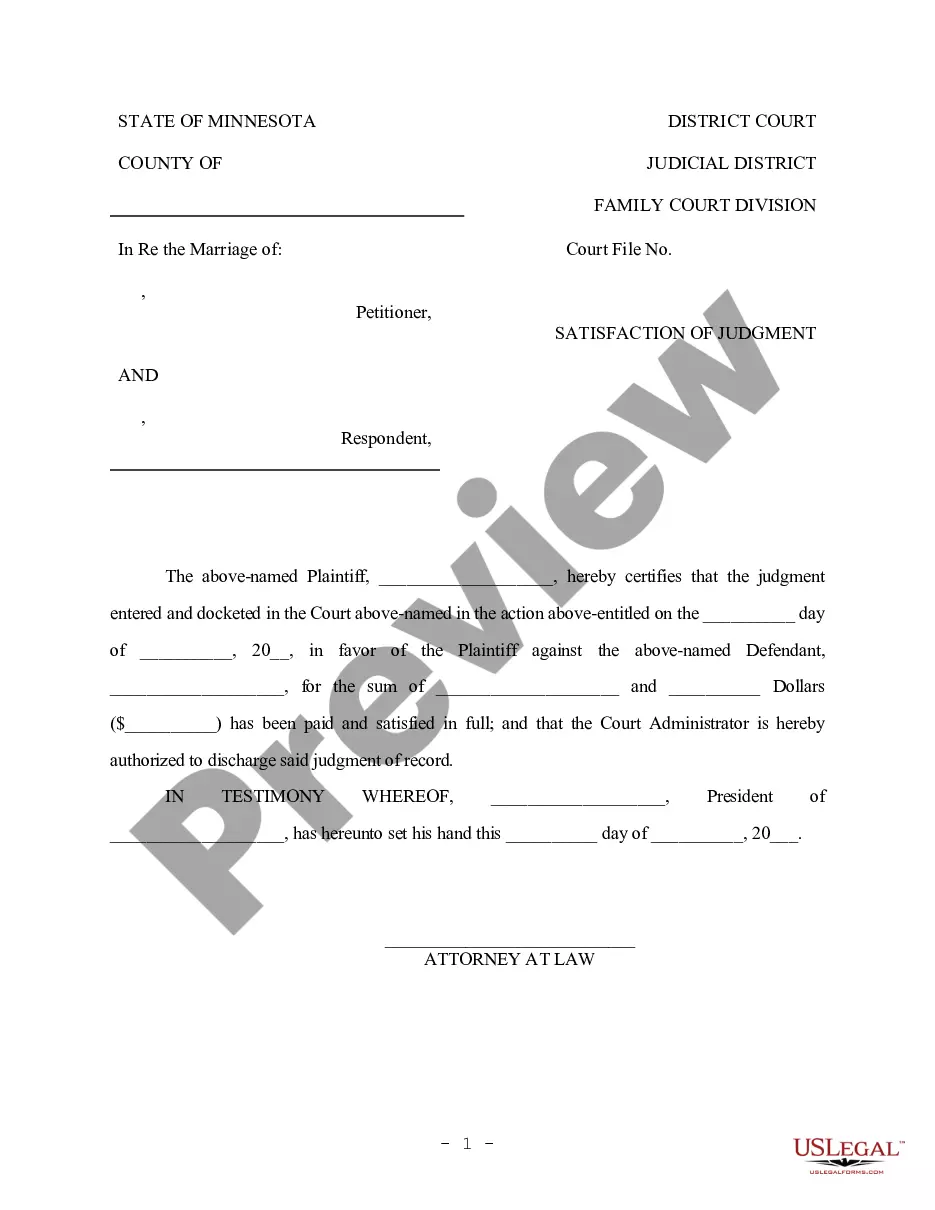
Manager's Checklist for Final Discipline
Understanding this form
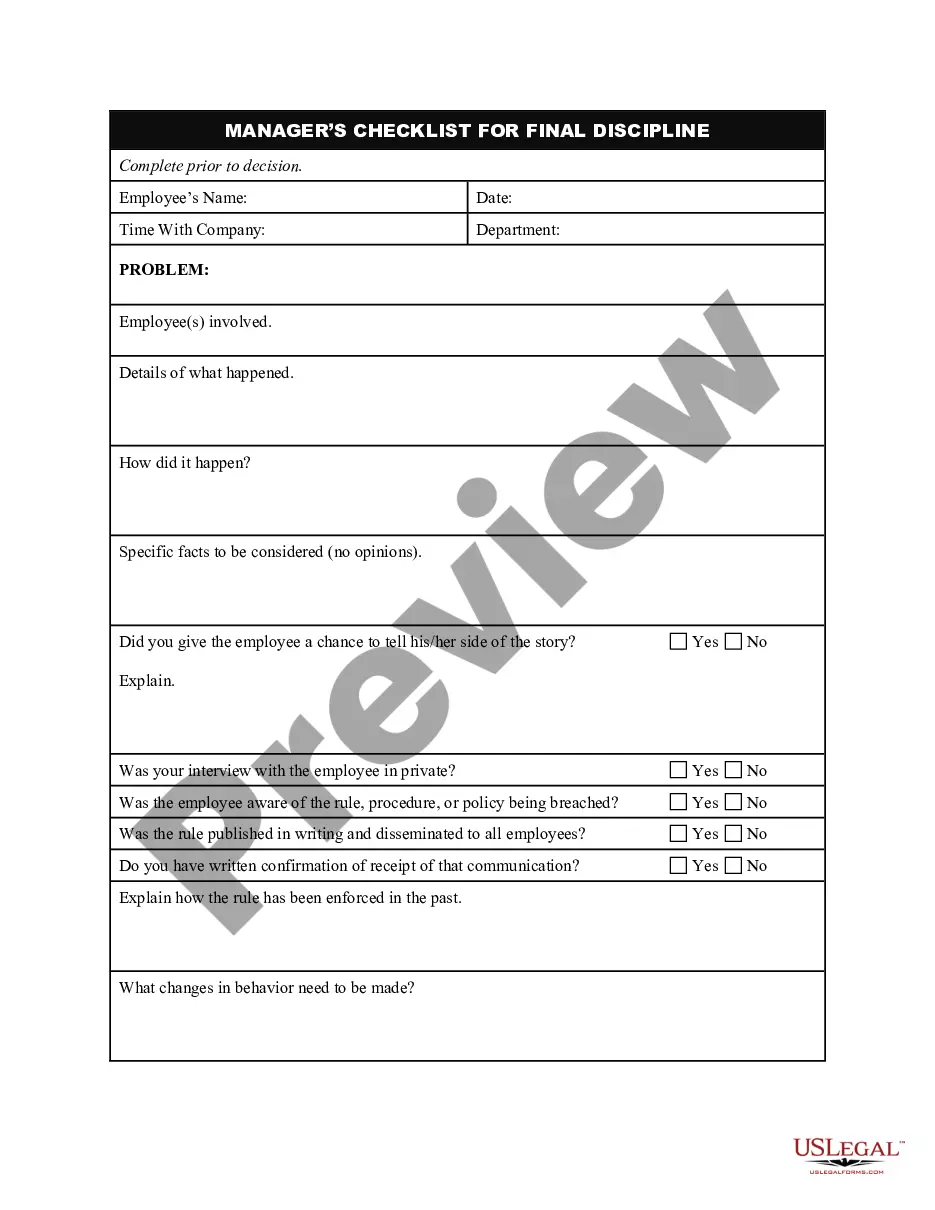
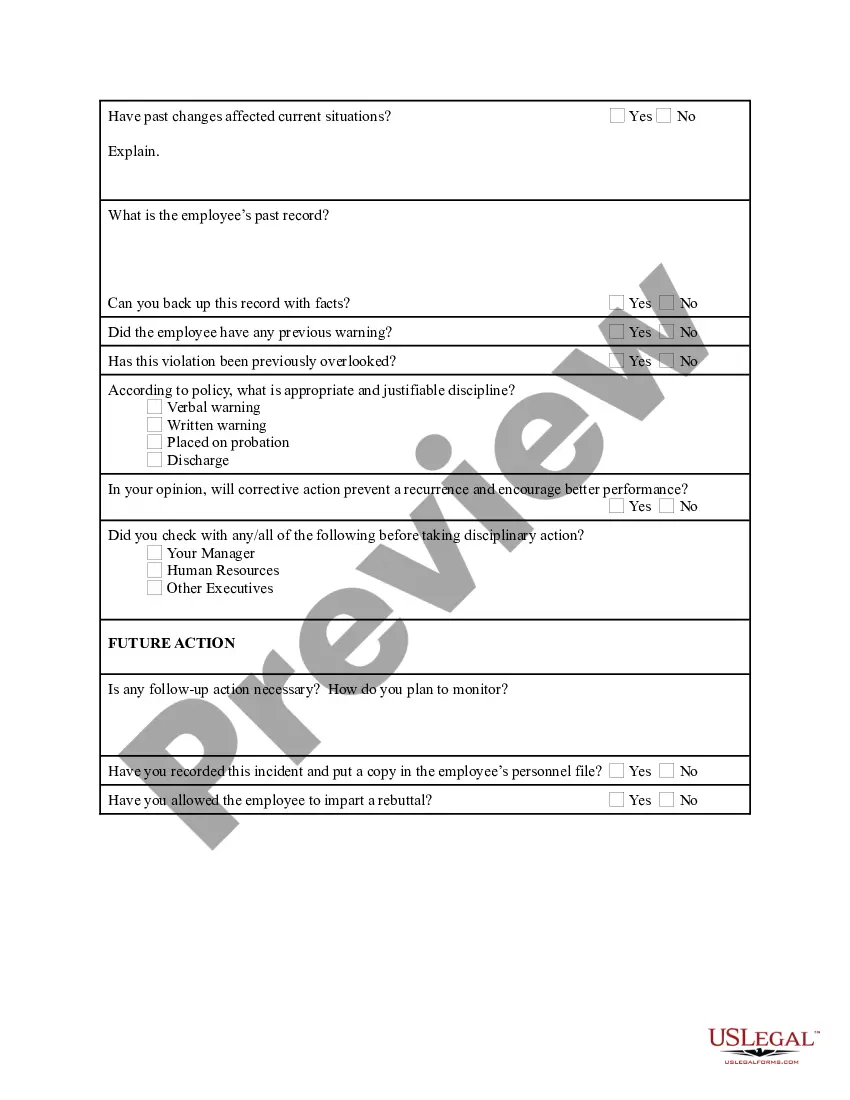
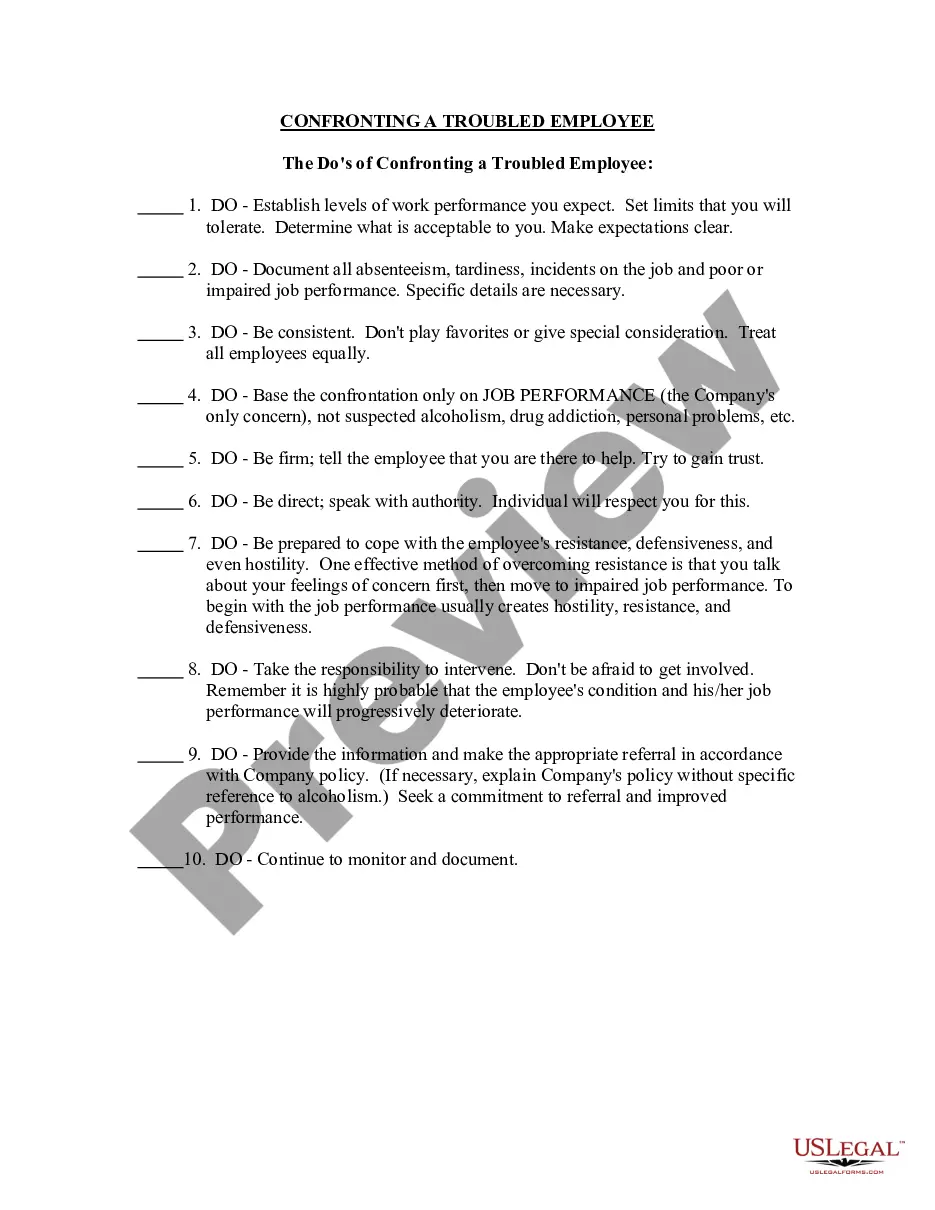
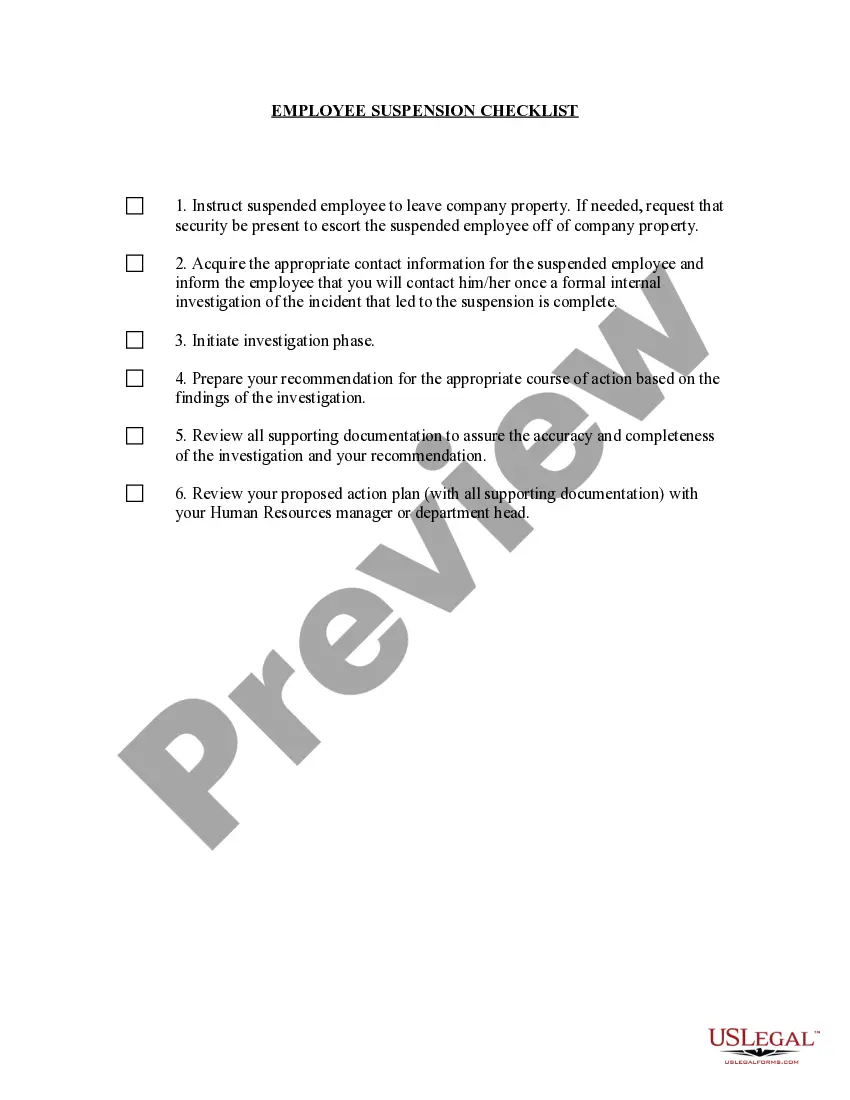
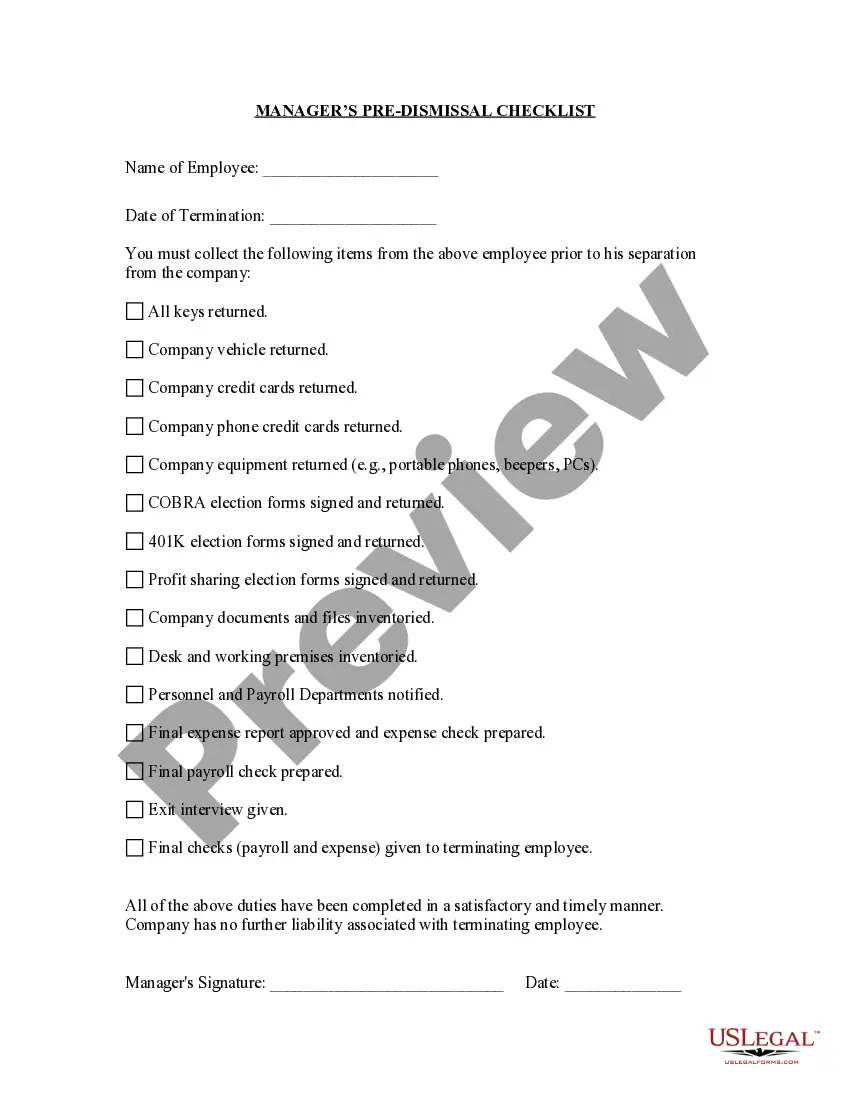
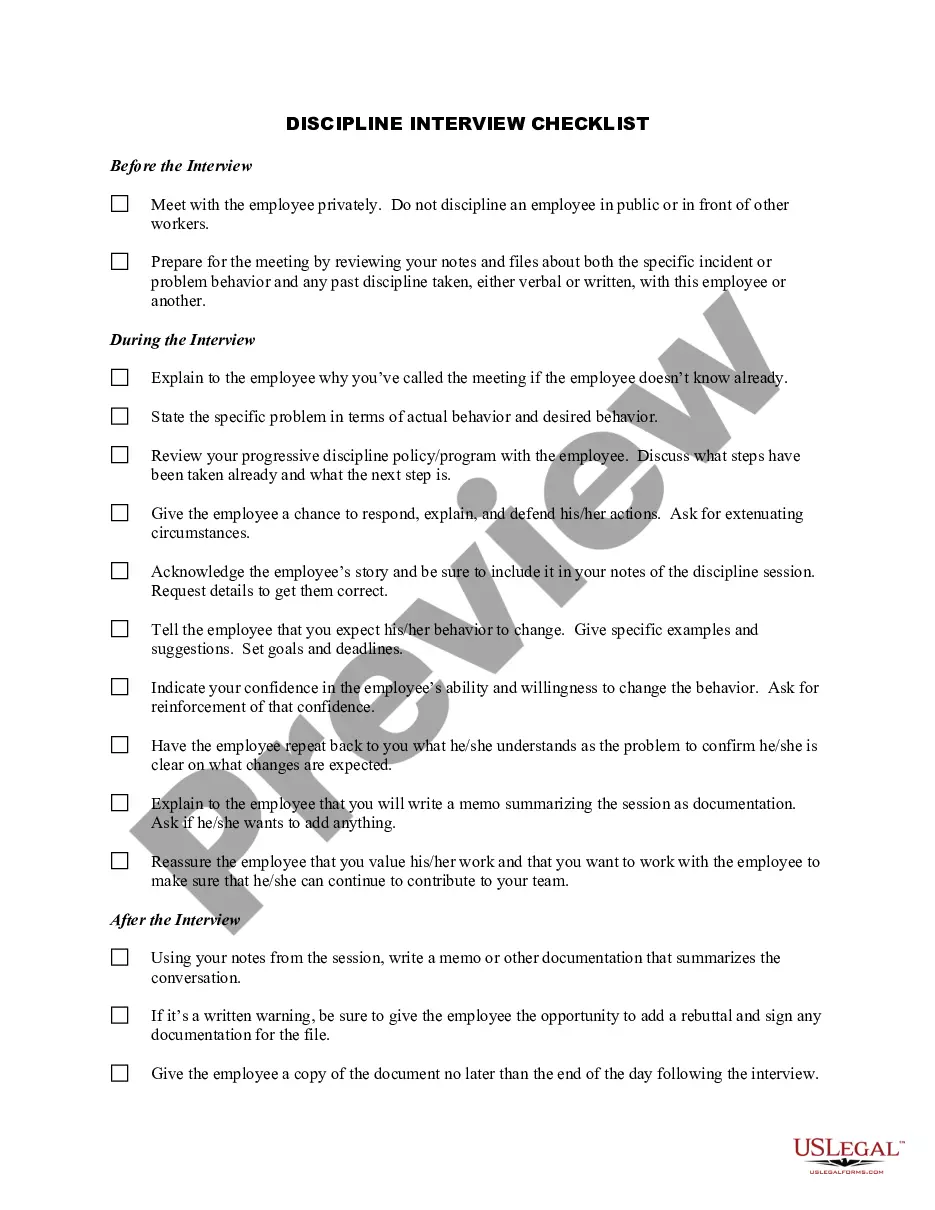
The Manager's Checklist for Final Discipline is a structured tool designed to assist managers in documenting disciplinary matters concerning employees. This checklist is crucial for recording specific discipline issues, actions taken, and the plans for future monitoring or follow-up. It serves as a critical reference to ensure that all necessary steps have been taken regarding employee discipline, differentiating it from other forms that may not provide such detailed procedural support.
Main sections of this form
- Date of incident
- Employee's name and details
- Problem description
- Details of disciplinary actions taken
- Future actions and follow-up plans
- Manager's observations and comments
When to use this document
This form is used during the disciplinary process when a manager needs to formally address an employee's behavioral or performance issues. It's particularly useful when an employee has repeated problems or when a final decision about disciplinary action needs to be documented. It is essential for ensuring legally compliant and fair treatment of employees.
Who needs this form
- Managers or supervisors responsible for employee performance and behavior
- HR professionals conducting disciplinary reviews
- Team leaders involved in evaluating staff performance
Steps to complete this form
- Enter the date and details of the disciplinary incident.
- Document the employee's name and the specific problem encountered.
- Record the actions taken to address the issue and any conclusions drawn.
- Outline any future actions, including follow-up steps to ensure the issue is resolved.
- Provide any observations or comments relevant to the incident.
Does this document require notarization?
This form does not typically require notarization unless specified by local law.
Get your form ready online
Our built-in tools help you complete, sign, share, and store your documents in one place.
Make edits, fill in missing information, and update formatting in US Legal Forms—just like you would in MS Word.
Download a copy, print it, send it by email, or mail it via USPS—whatever works best for your next step.
Sign and collect signatures with our SignNow integration. Send to multiple recipients, set reminders, and more. Go Premium to unlock E-Sign.
If this form requires notarization, complete it online through a secure video call—no need to meet a notary in person or wait for an appointment.
We protect your documents and personal data by following strict security and privacy standards.

Make edits, fill in missing information, and update formatting in US Legal Forms—just like you would in MS Word.

Download a copy, print it, send it by email, or mail it via USPS—whatever works best for your next step.

Sign and collect signatures with our SignNow integration. Send to multiple recipients, set reminders, and more. Go Premium to unlock E-Sign.

If this form requires notarization, complete it online through a secure video call—no need to meet a notary in person or wait for an appointment.

We protect your documents and personal data by following strict security and privacy standards.
Common mistakes to avoid
- Failing to document each step of the disciplinary process thoroughly.
- Neglecting to provide the employee with opportunities to respond.
- Using vague language that doesn't clearly define the issue.
Benefits of completing this form online
- Easy access and editing capabilities for accurate record-keeping.
- Convenient and quick documentation process.
- Reduces risk of incomplete or inconsistent records.
- The completion of this checklist ensures adherence to fair disciplinary practices.
- Documentation serves as protection for employers against potential legal disputes.
- Helps to create a record that can be referenced in case of further action.
Key takeaways
- The Manager's Checklist for Final Discipline is essential for consistent disciplinary actions.
- Utilizing this form promotes transparency and accountability in the workplace.
- Documenting the disciplinary process effectively protects both employee rights and employer interests.
Looking for another form?
Form popularity
FAQ
Have an employee discipline form. Conduct a full and fair investigation. Get the facts. Be objective. Be clear and specific. Complete the form while the facts are fresh. Get the employee's acknowledgement. Allow the employee to explain the conduct.
Date of the warning. the subject of the warning letter. name of the employee. section with the details of the violation. reasons why this situation is considered a violation. disciplinary actions that the company will take. your signature.
Stick to the facts and underline expectations. Emphasize behavior. Align records of past performance. Describe proof of misconduct. Identify and present consequences. Meet in person and get a signature.
Verbal warning. When an issue arises, a serious conversation should take place between the manager and the employee. Written warning. Suspension and improvement plan. Termination. Keep consistent. Be specific. Document clearly. Remain unemotional.
Step 1: Is formal action necessary? Step 2: Commencing a disciplinary process planning is key! Step 3: Suspension. Step 4: Investigation. Step 5: Information to be given to the employee before the disciplinary hearing. Step 6: Statutory Right to be Accompanied. Step 7: Record keeping. Step 8: The Decision.
The employee's name and the date of the write-up. Clearly state why they are being written up. How many times this employee has been written up. Clearly state details about the problem. Give the employee a deadline to fix the problem. Always have them sign and date the write-up.
Purpose. Step 1: Counseling and verbal warning. Step 2: Written warning. Step 3: Suspension and final written warning. Step 4: Recommendation for termination of employment. Appeals Process. Performance and Conduct Issues Not Subject to Progressive Discipline. Documentation.
Have an employee discipline form. Conduct a full and fair investigation. Get the facts. Be objective. Be clear and specific. Complete the form while the facts are fresh. Get the employee's acknowledgement. Allow the employee to explain the conduct.