Lack of Probate Affidavit- Separate Property
About this form
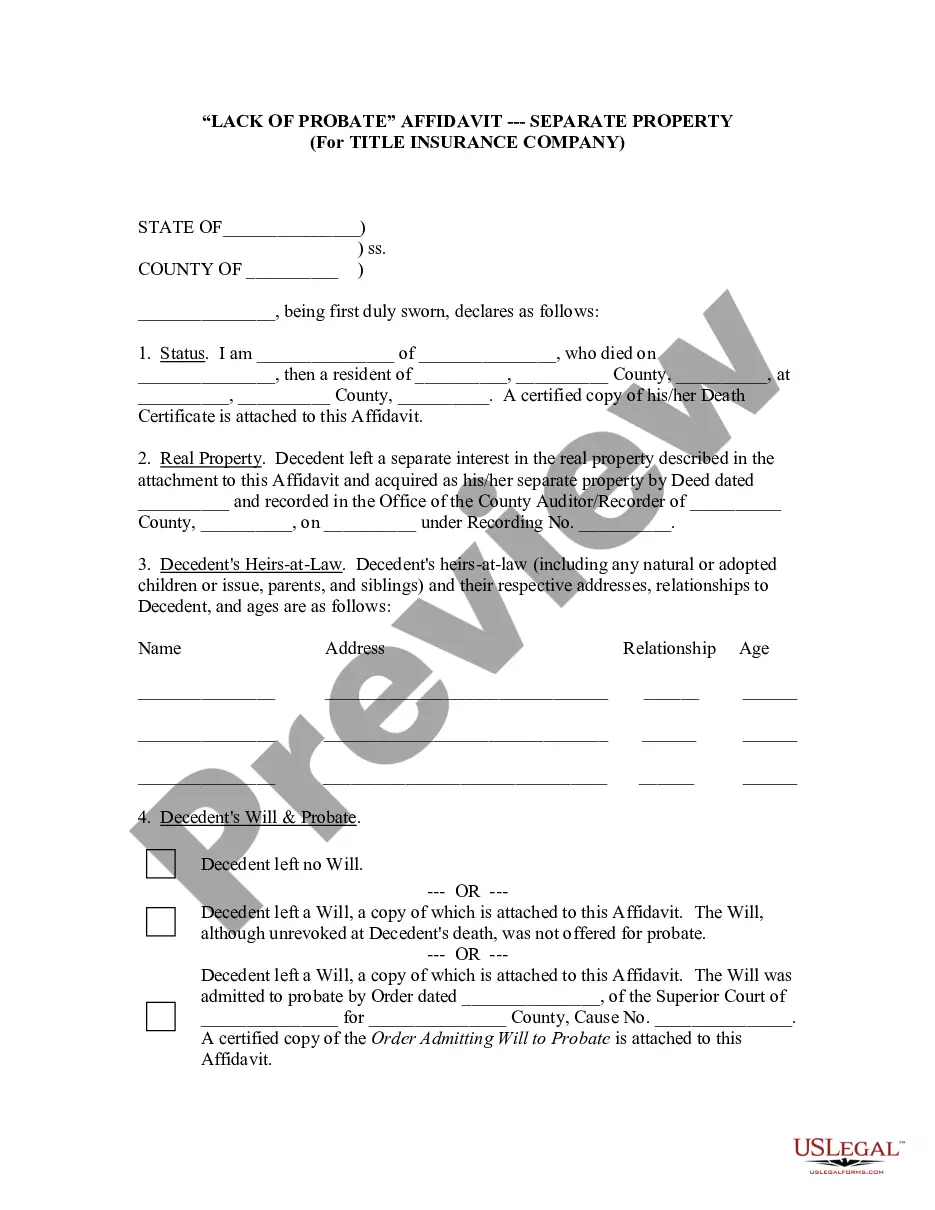
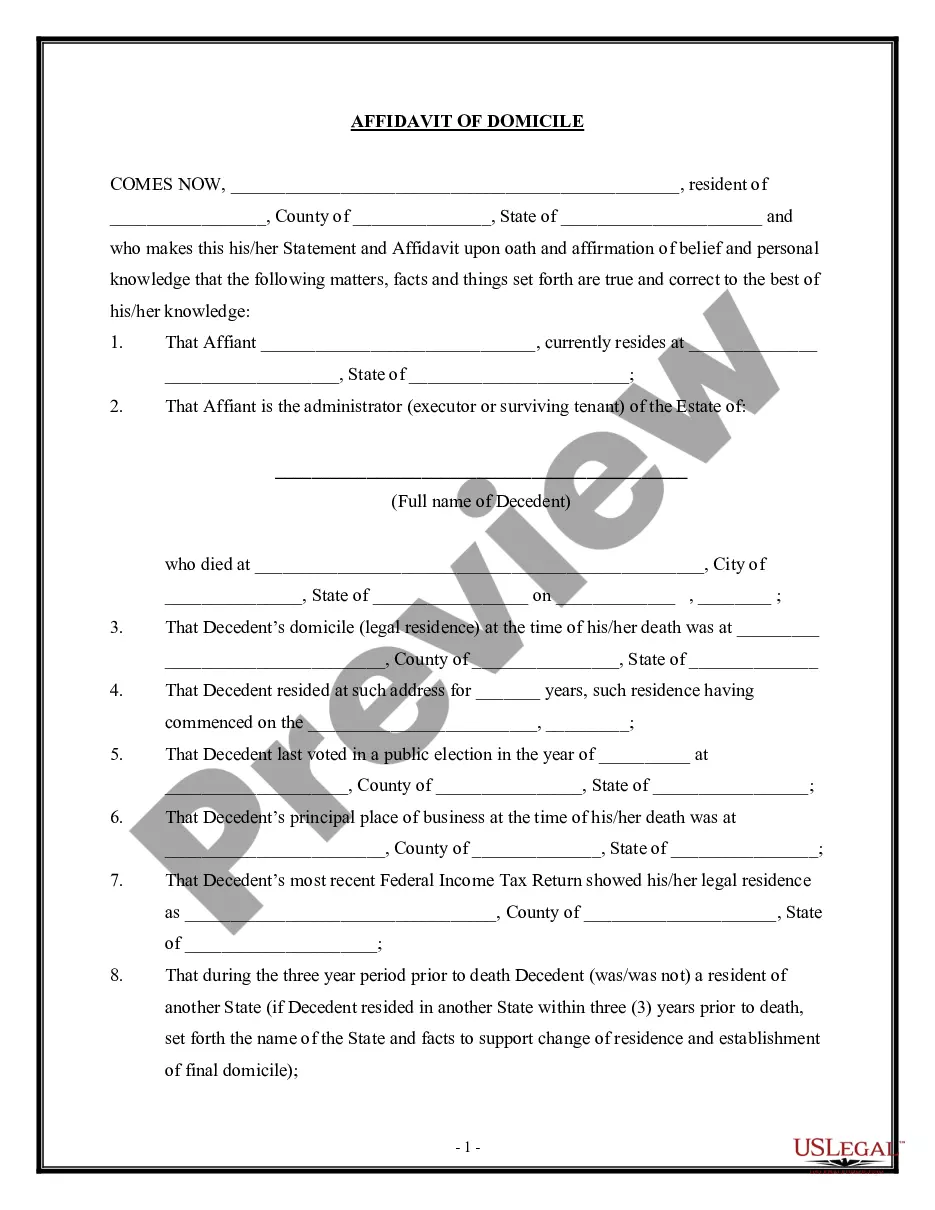
The Lack of Probate Affidavit for Separate Property is a legal document used to assert that a deceased individual left property that does not require probate proceedings to be legally transferred to heirs. Unlike other affidavits that may involve a will or probate process, this affidavit certifies that the property belongs solely to the decedent and that the heirs can claim it without the need for court approval.
Form components explained
- Status of the decedent: Information about the deceased's identity and date of death.
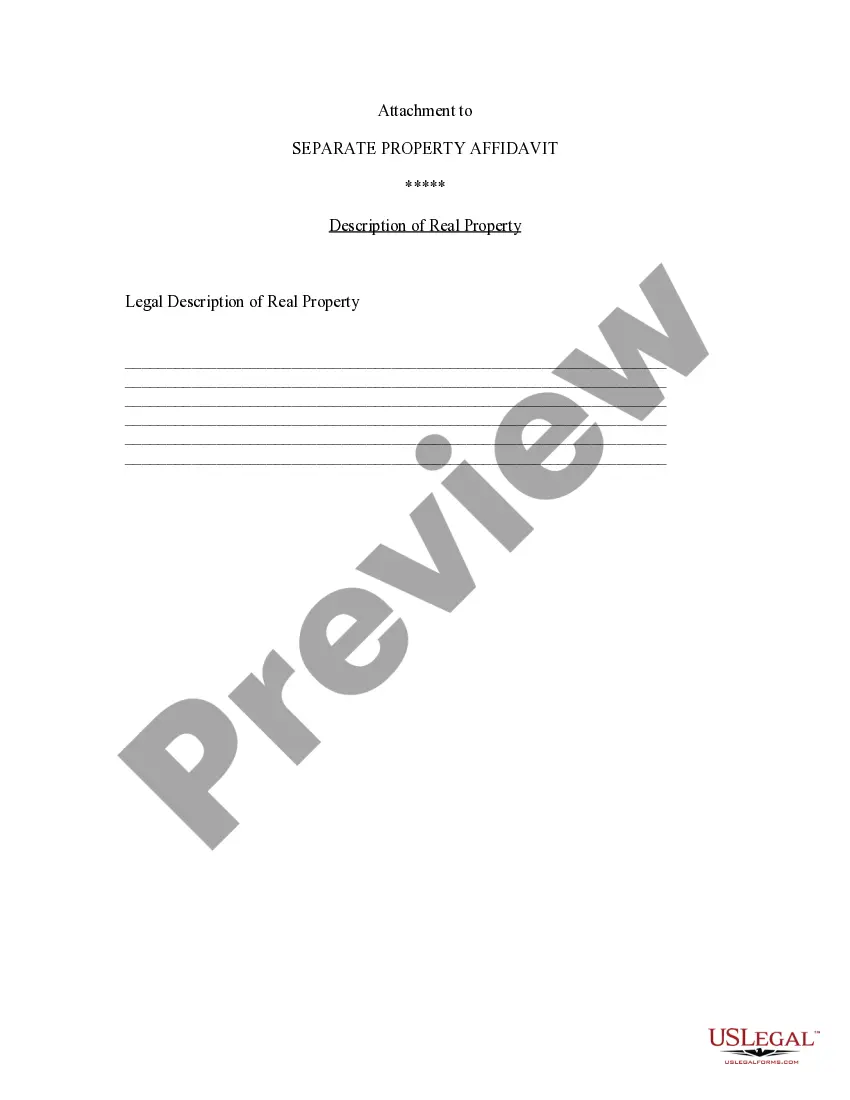
- Real Property Details: Description of the separate property and its legal documentation.
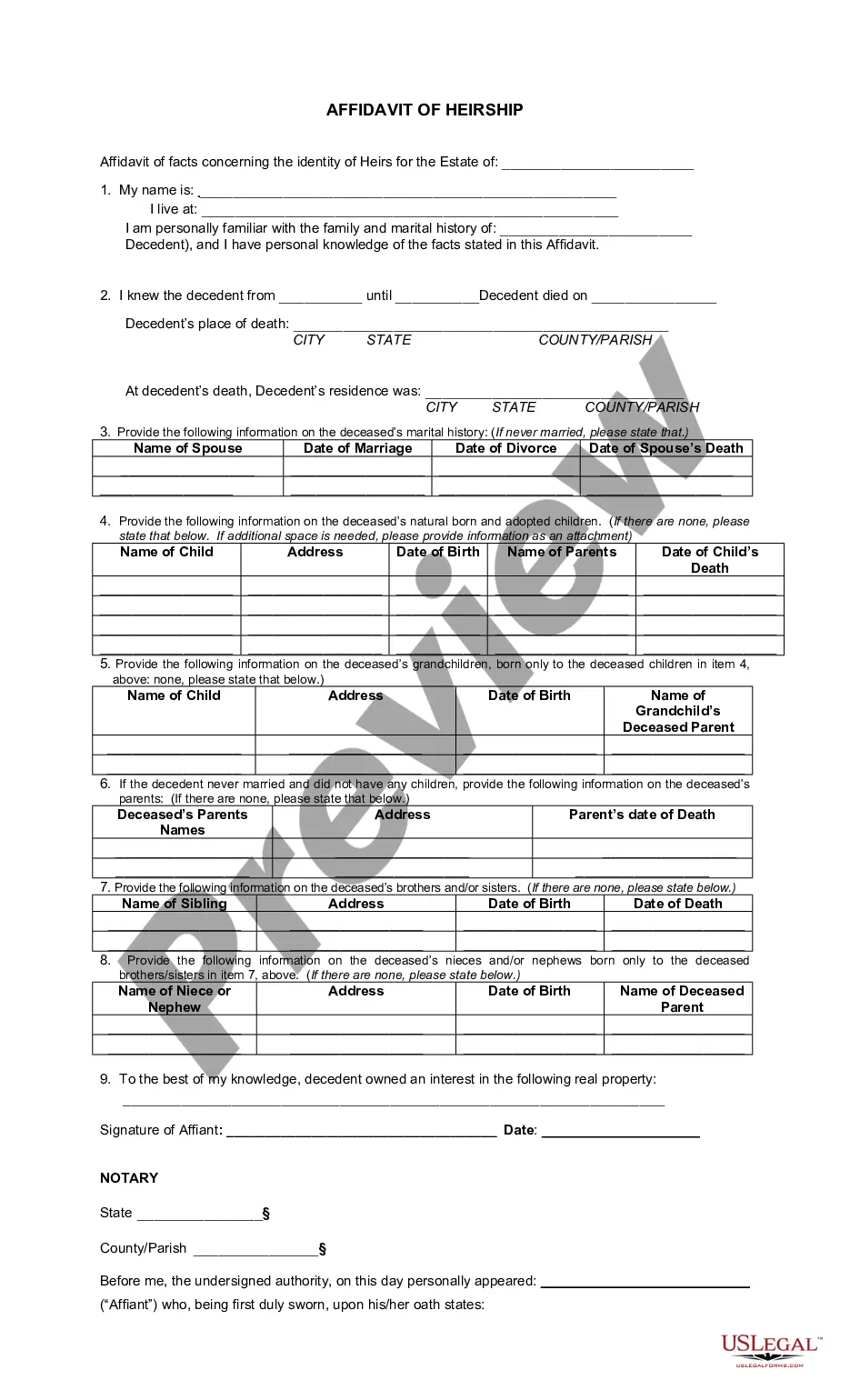
- Heirs-at-Law: List of heirs, their relationships to the decedent, and addresses.
- Decedent's Will: Information about any will and its probate status.
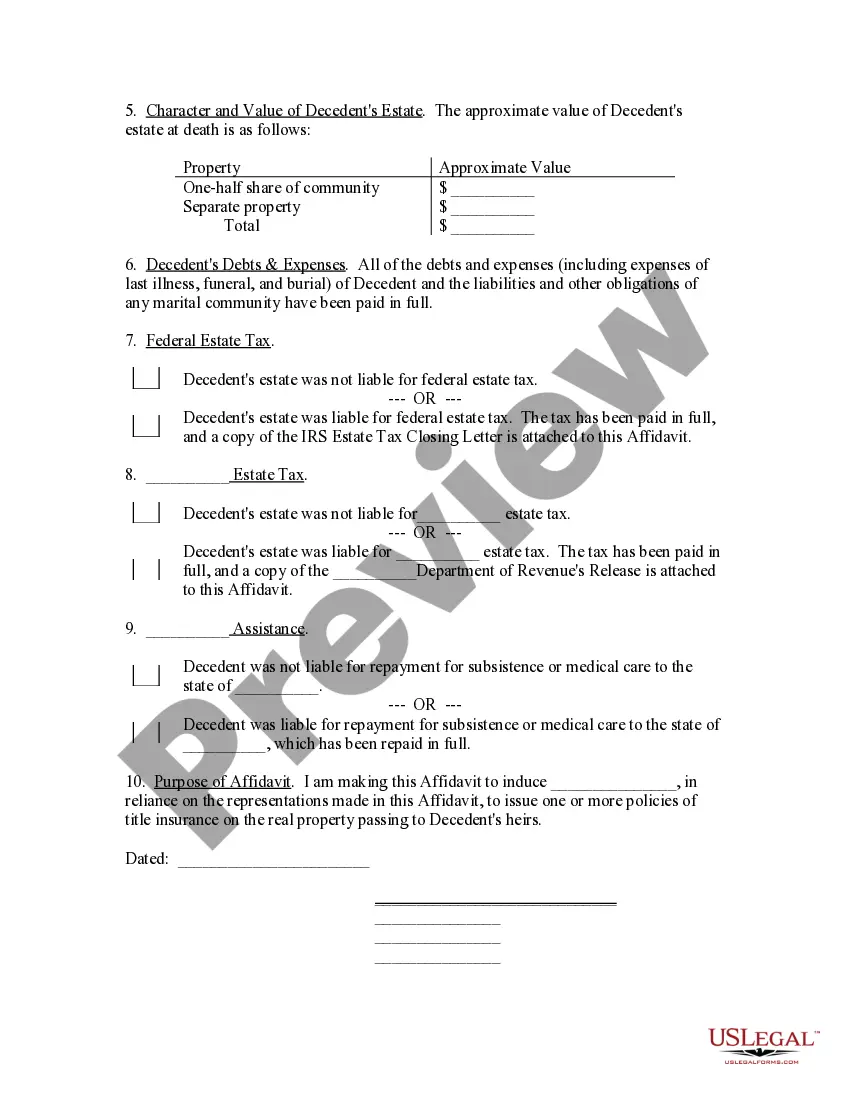
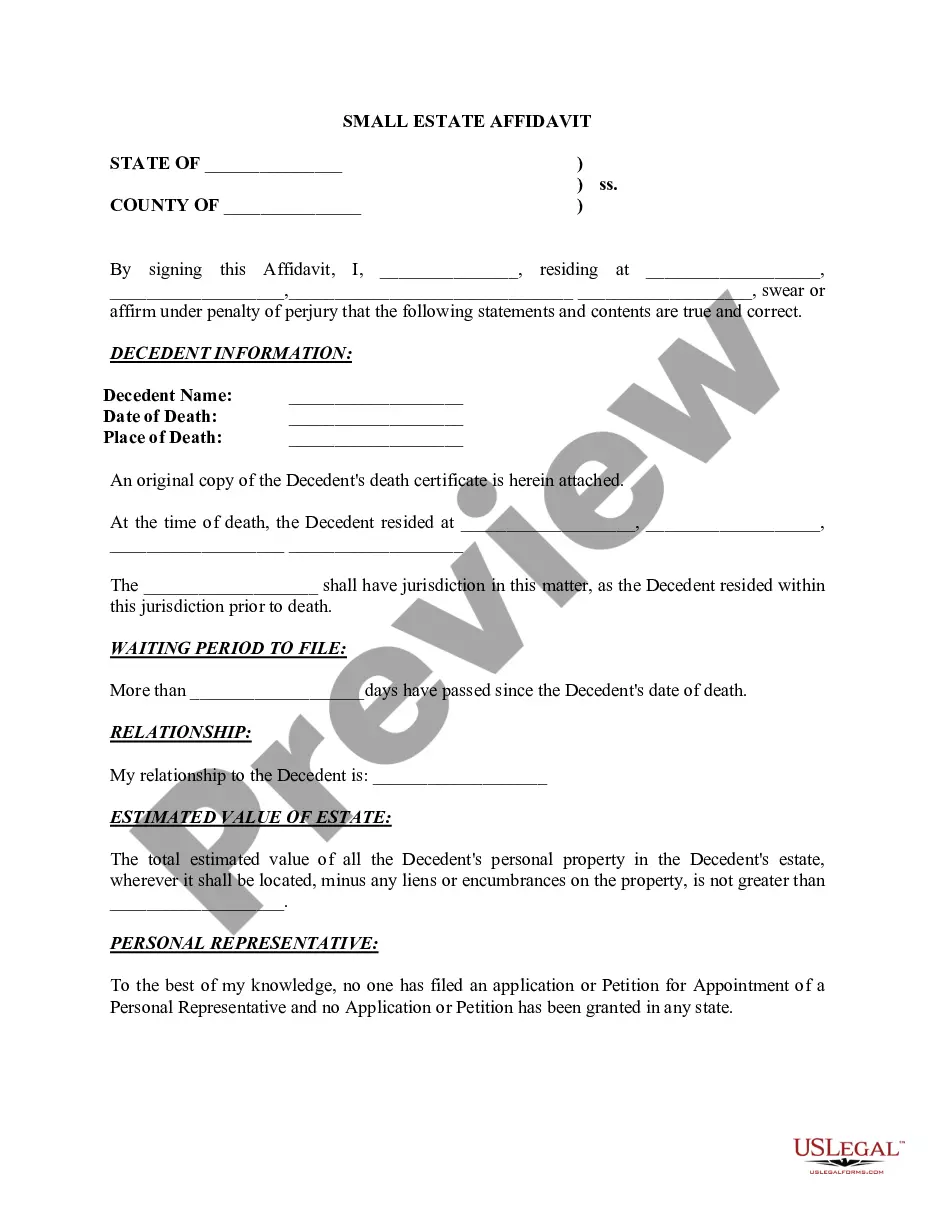
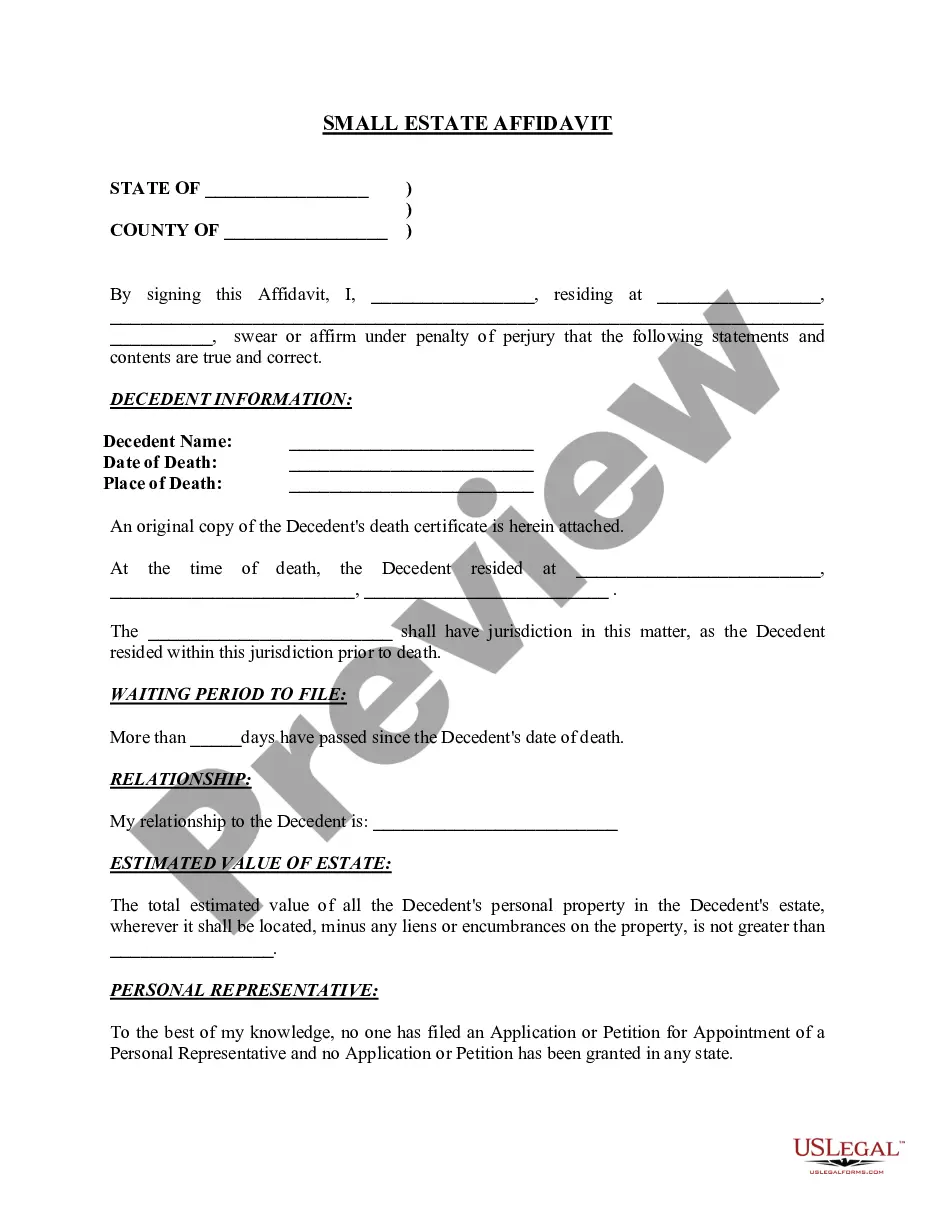
- Estate Value: Estimated value of the decedent's estate.
- Decedent's Debts: Confirmation that debts and funeral expenses have been paid.
- Purpose of the Affidavit: Intended use for obtaining title insurance.

When to use this document
This form is often used when a person dies leaving property in their name that does not require formal probate, whether because they had no will or their will was not probated. It is especially relevant in situations where the property needs to be transferred directly to heirs or to facilitate transactions like selling or refinancing the property without undergoing the probate process.
Who should use this form
This form is suitable for:
- Heirs of a deceased person who owned separate property.
- Individuals handling the estate of a decedent with no probate required for certain assets.
- Title insurance companies seeking verification of property ownership for the purpose of issuing new titles.
How to complete this form
- Identify the parties: Fill in the decedent's name and details of their death.
- Specify the property: Detail the real property owned by the decedent, including legal descriptions and relevant documentation.
- List the heirs: Include names, addresses, relationships to the decedent, and ages of all heirs-at-law.
- Document the decedent's will status: Indicate whether a will exists, and attach it if applicable.
- Provide estate details: Summarize the estate's value and confirm that all debts and taxes have been settled.
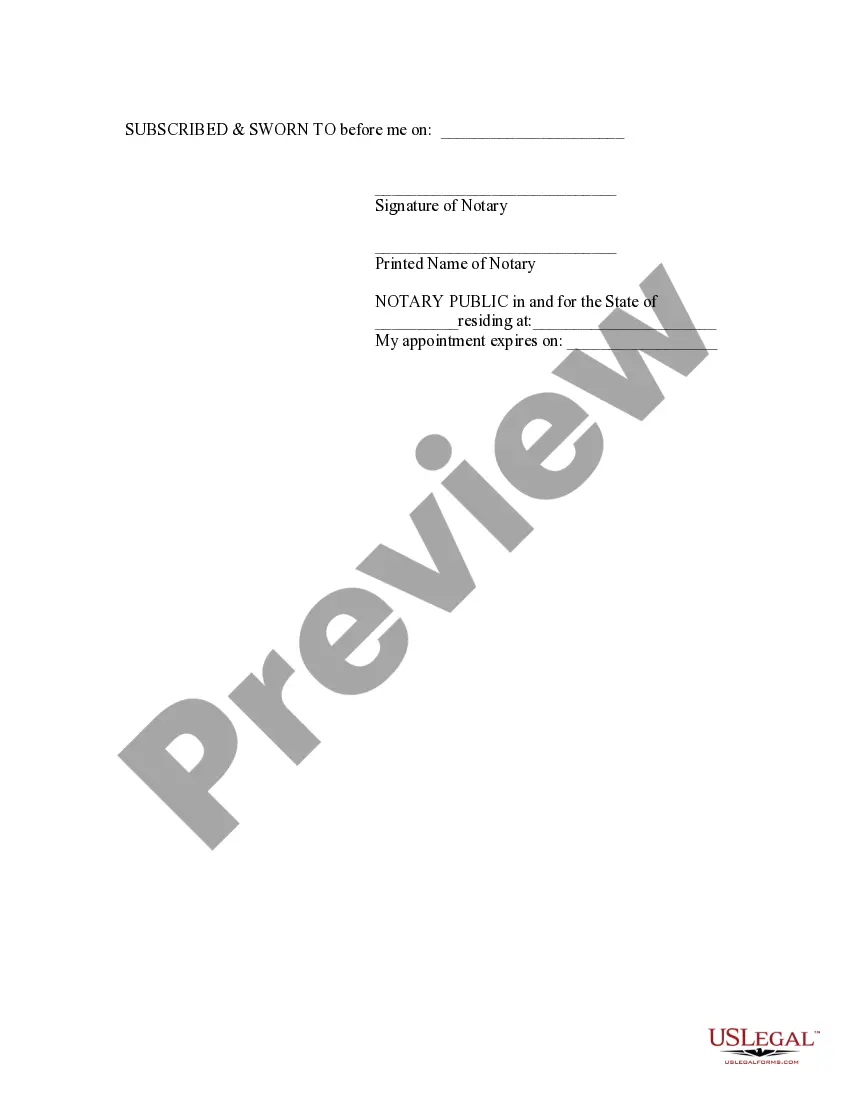
- Sign and date: Ensure the affidavit is signed in the presence of a notary public to validate it.
Notarization requirements for this form
Yes, this form must be notarized to be legally valid. It requires the affiant to sign in the presence of a notary public to authenticate the sworn statements and ensure compliance with legal standards. US Legal Forms offers integrated online notarization services for your convenience, available 24/7 through secure video calls, ensuring legal equivalence without the need for in-person visits.
Get your form ready online
Our built-in tools help you complete, sign, share, and store your documents in one place.
Make edits, fill in missing information, and update formatting in US Legal Forms—just like you would in MS Word.
Download a copy, print it, send it by email, or mail it via USPS—whatever works best for your next step.
Sign and collect signatures with our SignNow integration. Send to multiple recipients, set reminders, and more. Go Premium to unlock E-Sign.
If this form requires notarization, complete it online through a secure video call—no need to meet a notary in person or wait for an appointment.
We protect your documents and personal data by following strict security and privacy standards.

Make edits, fill in missing information, and update formatting in US Legal Forms—just like you would in MS Word.

Download a copy, print it, send it by email, or mail it via USPS—whatever works best for your next step.

Sign and collect signatures with our SignNow integration. Send to multiple recipients, set reminders, and more. Go Premium to unlock E-Sign.

If this form requires notarization, complete it online through a secure video call—no need to meet a notary in person or wait for an appointment.

We protect your documents and personal data by following strict security and privacy standards.
Avoid these common issues
- Failing to include all heirs or incorrect heir information.
- Not attaching required documents like the death certificate or will.
- Omitting property details or providing inaccurate descriptions.
- Leaving out signatures or not having the form properly notarized.
Benefits of using this form online
- Convenience of downloading and completing the form from home.
- Editability to customize the document as per individual requirements.
- Access to accurately drafted forms by licensed attorneys, ensuring legal compliance.
Looking for another form?
Form popularity
FAQ
1300. In all proceedings governed by this code, an appeal may be taken from the making of, or the refusal to make, any of the following orders: (a) Directing, authorizing, approving, or confirming the sale, lease, encumbrance, grant of an option, purchase, conveyance, or exchange of property.
Lack of probate affidavit" means a signed and notarized document (by any heir)declaring that the affiant or affiants are the rightful heir or heirs to the property and containing the following information: (i) The names of the affiant or affiants; (ii) The relationship of the affiant or affiants to the decedent; (iii)
This form may be used to collect the unclaimed property of a decedent without procuring letters of administration or awaiting probate of the decedent's will if you are entitled to the decedent's property under Section 13101 of the California Probate Code.
(Revised: 01/2021) Probate Code section 13100 provides for the collection or transfer of a decedent's personal property without the administration of the estate or probate of the will.
A Lack of Probate affidavit may be used when the deceased owned less than $100,000.00 in personal property and did not own real estate. With an affidavit, you do not go to court to direct the distribution of property. The successor or beneficiary can claim any of the belongings of the deceased.
Maximum Value of Small Estate: $166,250?$184,500 To use the affidavit for small estates under Probate Code §13100, the value of an estate must be no larger than $184,500. (For deaths prior to April 1, 2022, the maximum value of an estate that could use the small estate affidavit was $166,250.)
Non-probate property is passed along by: A contract with a beneficiary designation, such as a life insurance policy, an IRA or pension, or a profit-sharing plan. A right to survivorship for property held as joint tenants with the right of survivorship, or in a Payable on Death account.
Section 13050 - Property excluded in determining property of estate of decedent (a) For the purposes of this part: (1) Any property or interest or lien thereon that, at the time of the decedent's death, was held by the decedent as a joint tenant, or in which the decedent had a life or other interest terminable upon the