Reciprocal Confidientiality Agreement
Overview of this form
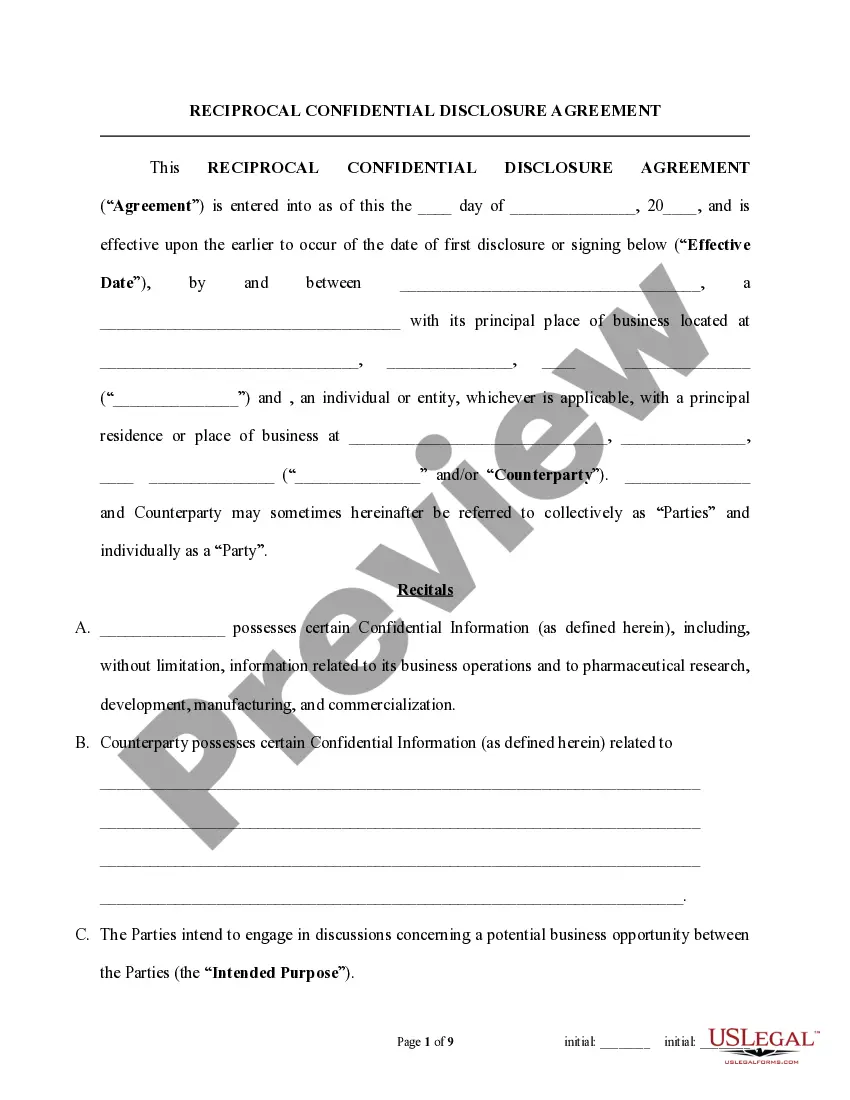
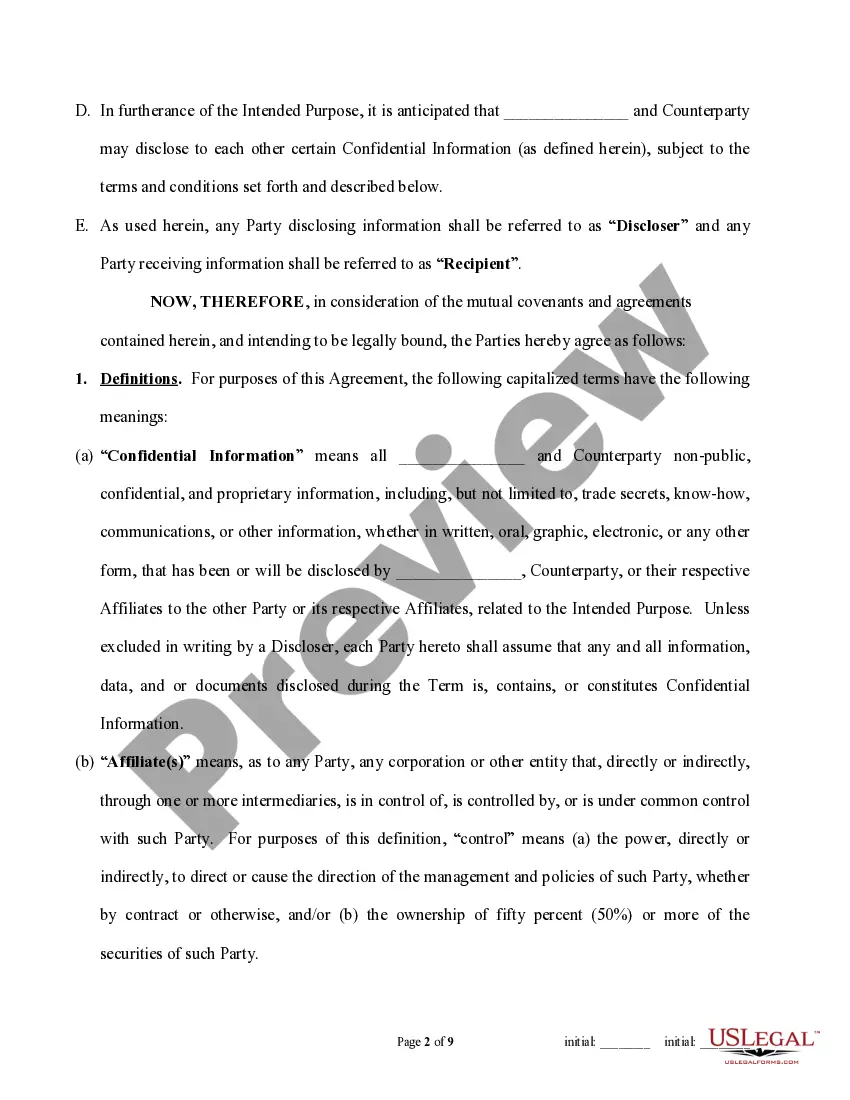
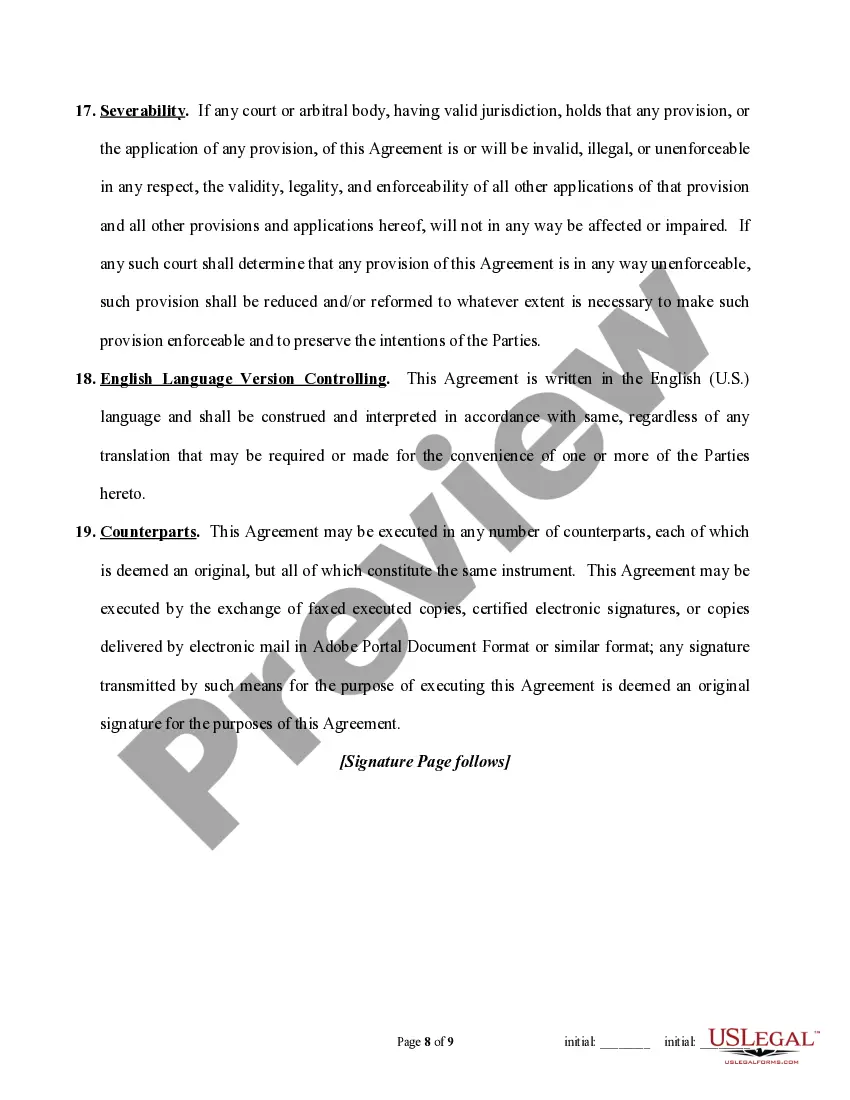
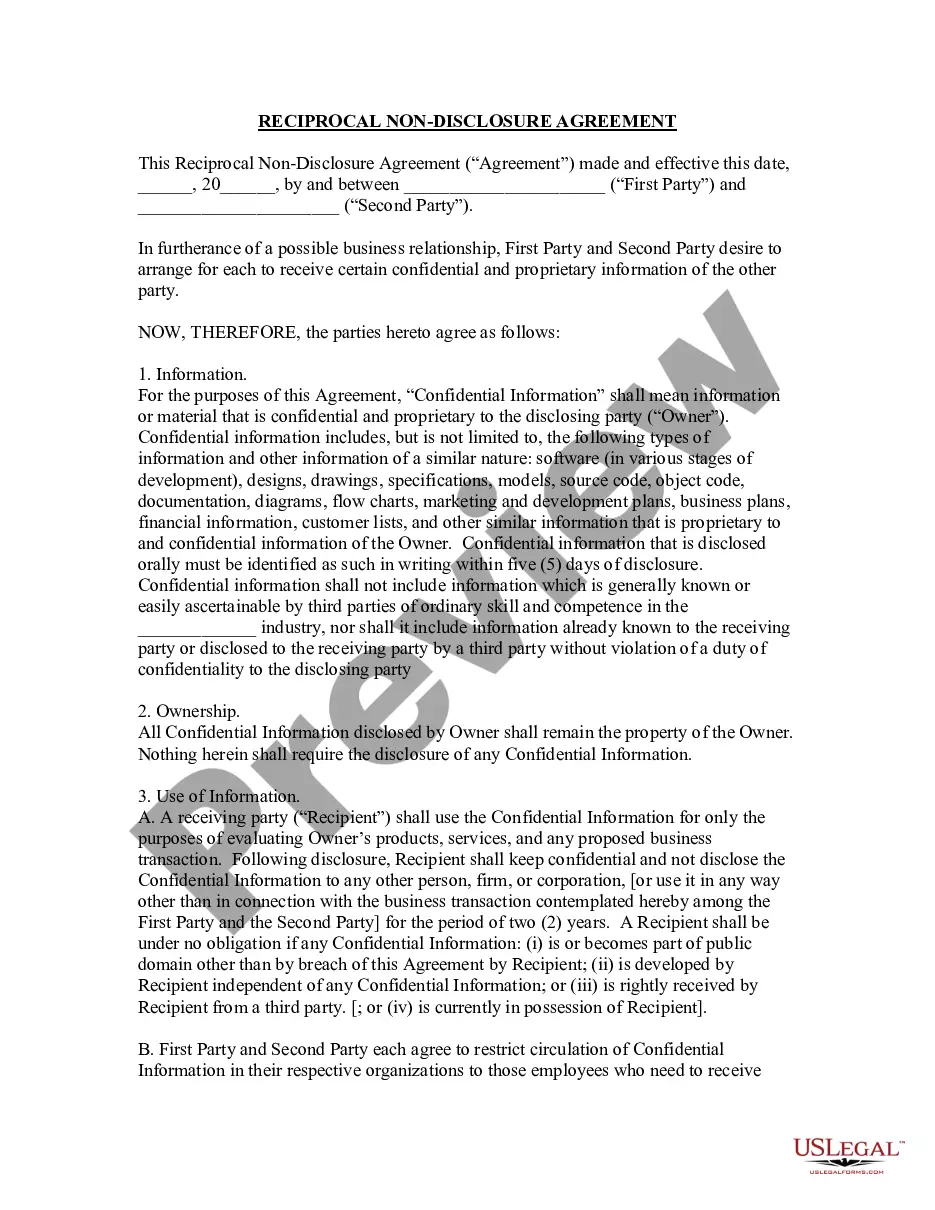
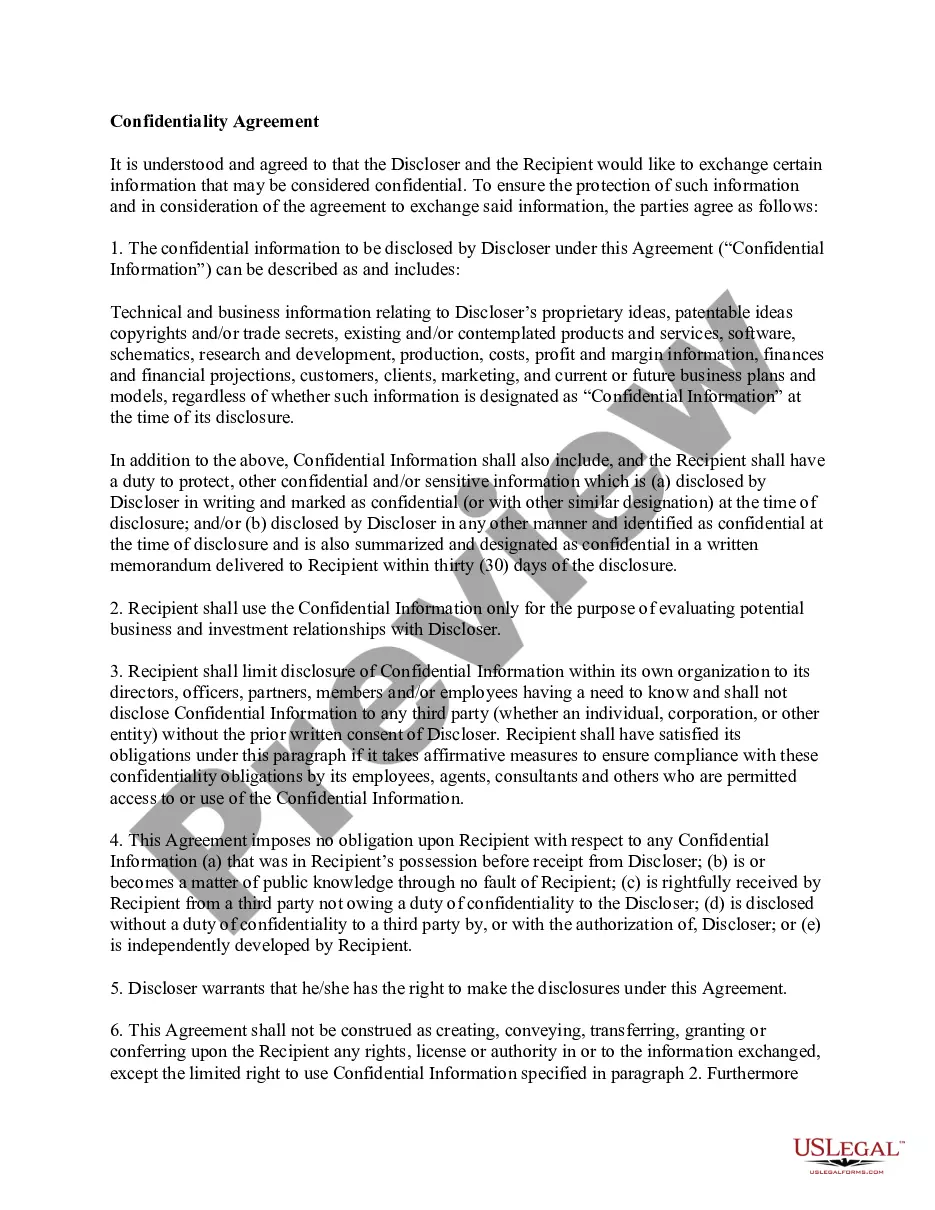
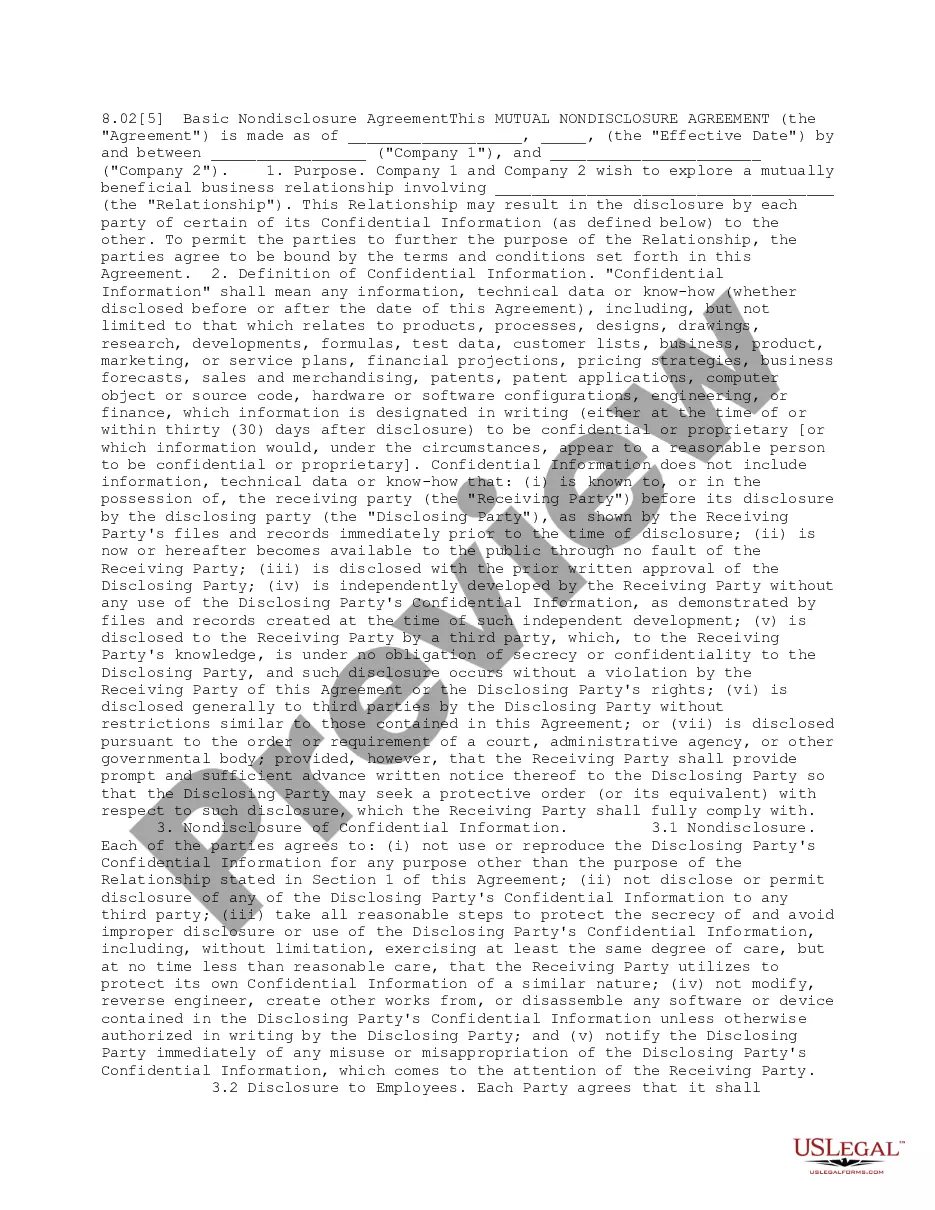
The Reciprocal Confidentiality Agreement is a legally binding contract used between two parties who wish to share confidential information while protecting their trade secrets. This agreement ensures that both parties will not disclose shared information without permission, allowing them to collaborate securely. Unlike non-disclosure agreements that often protect a single party's confidential information, this reciprocal agreement serves to protect the interests of both parties equally, making it ideal for joint ventures and partnerships.
Key parts of this document
- Effective date: Specifies when the agreement becomes active.
- Definitions: Clarifies what constitutes "Confidential Information."
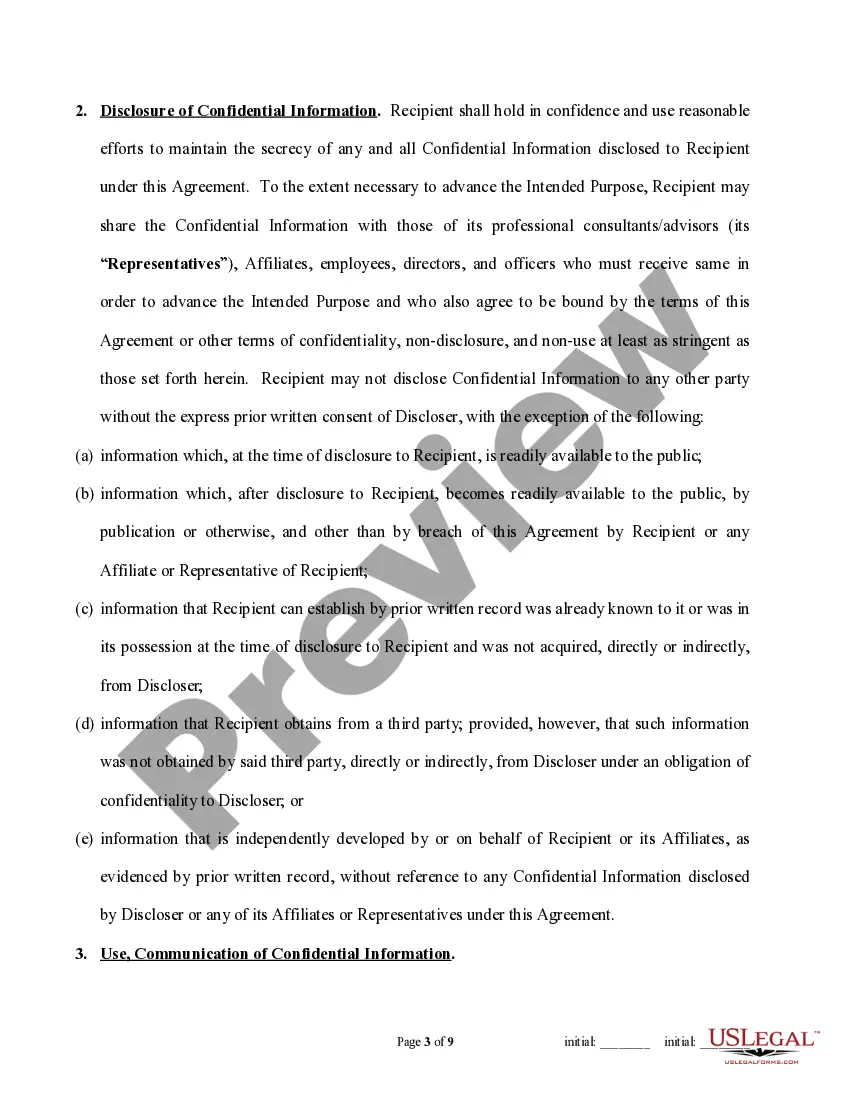
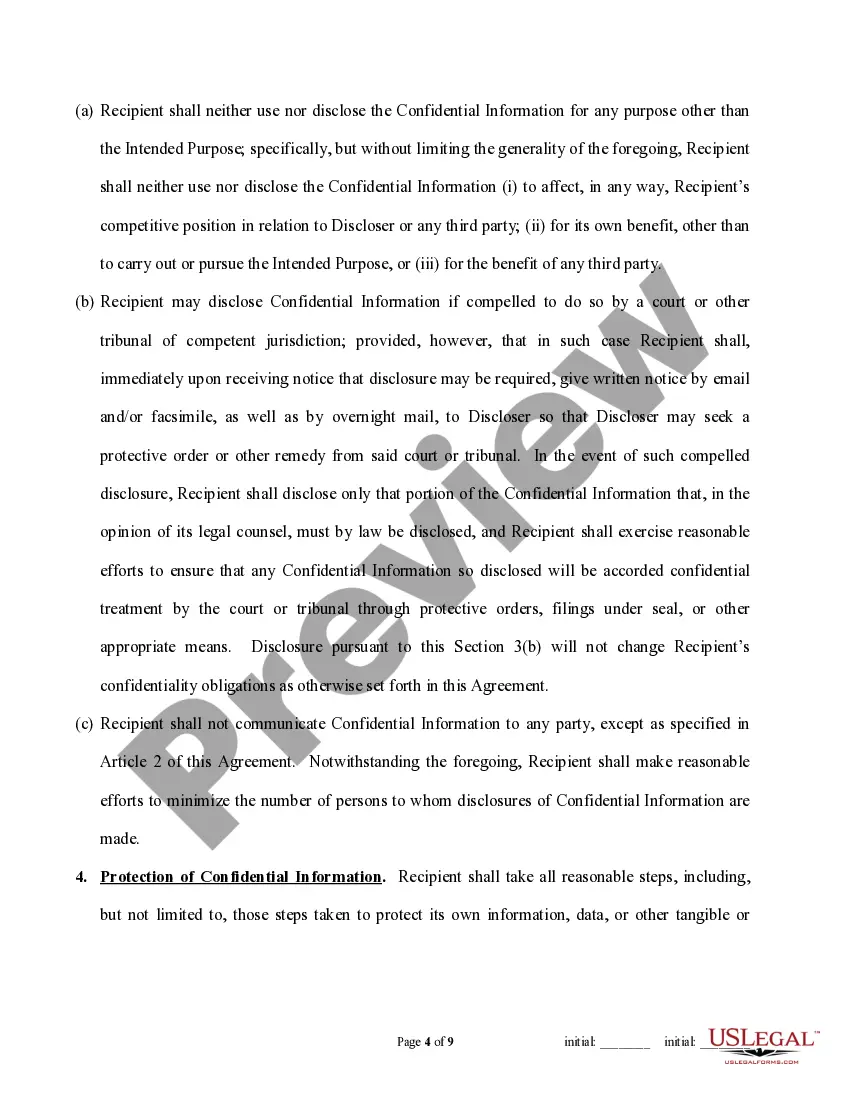
- Disclosure obligations: Outlines how the recipient must handle disclosed information.
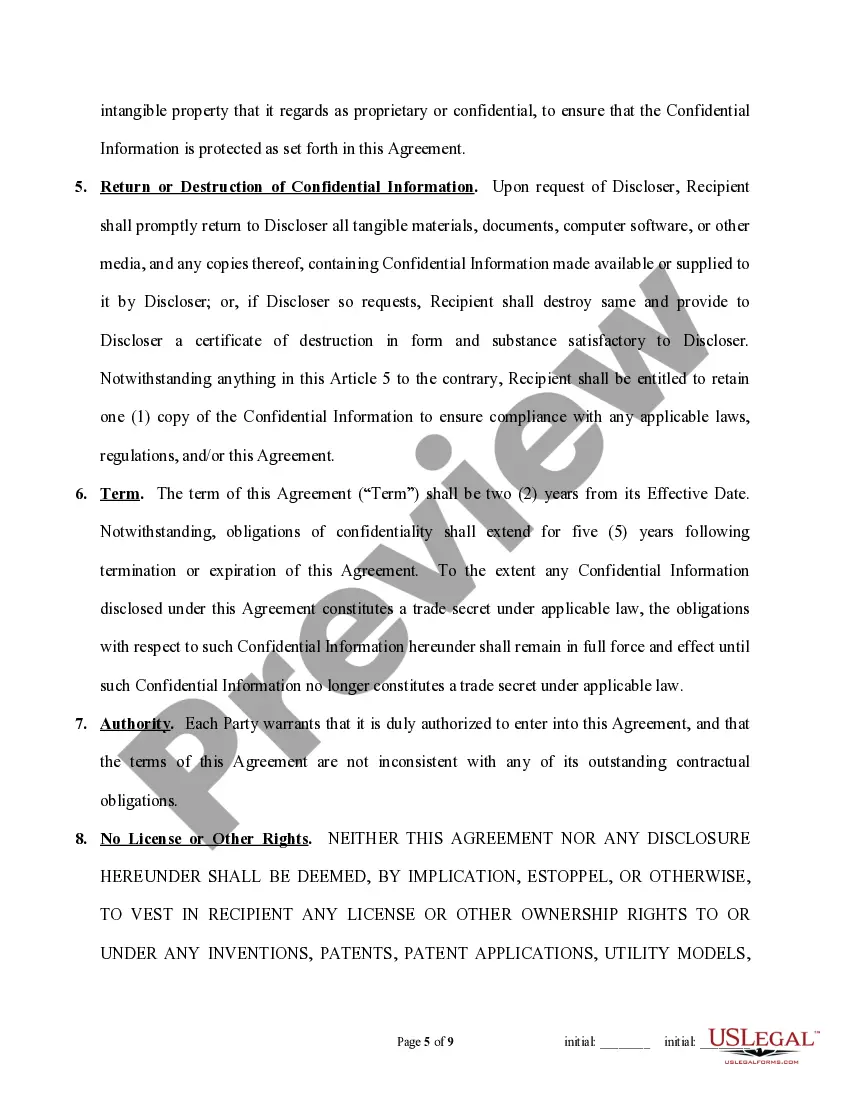
- Return or destruction of information: Requires the recipient to return or destroy confidential materials upon request.
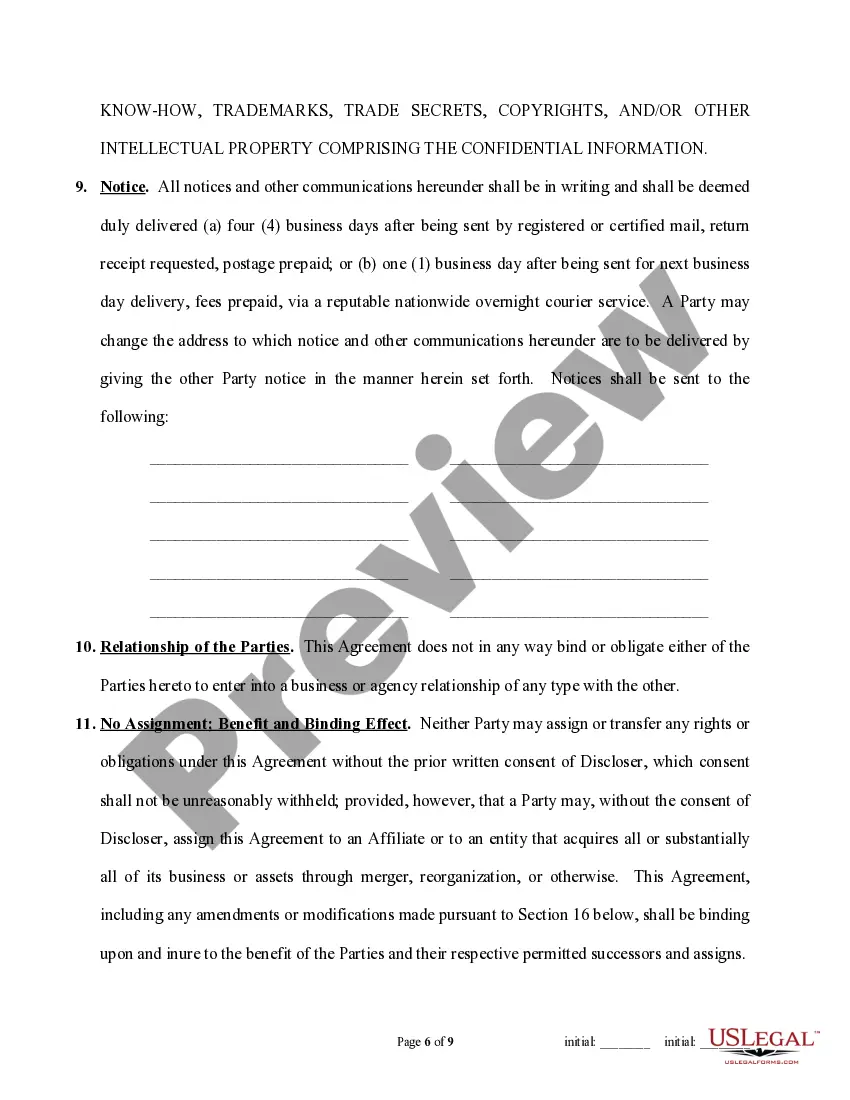
- Term of agreement: States the duration of the agreement and confidentiality obligations.
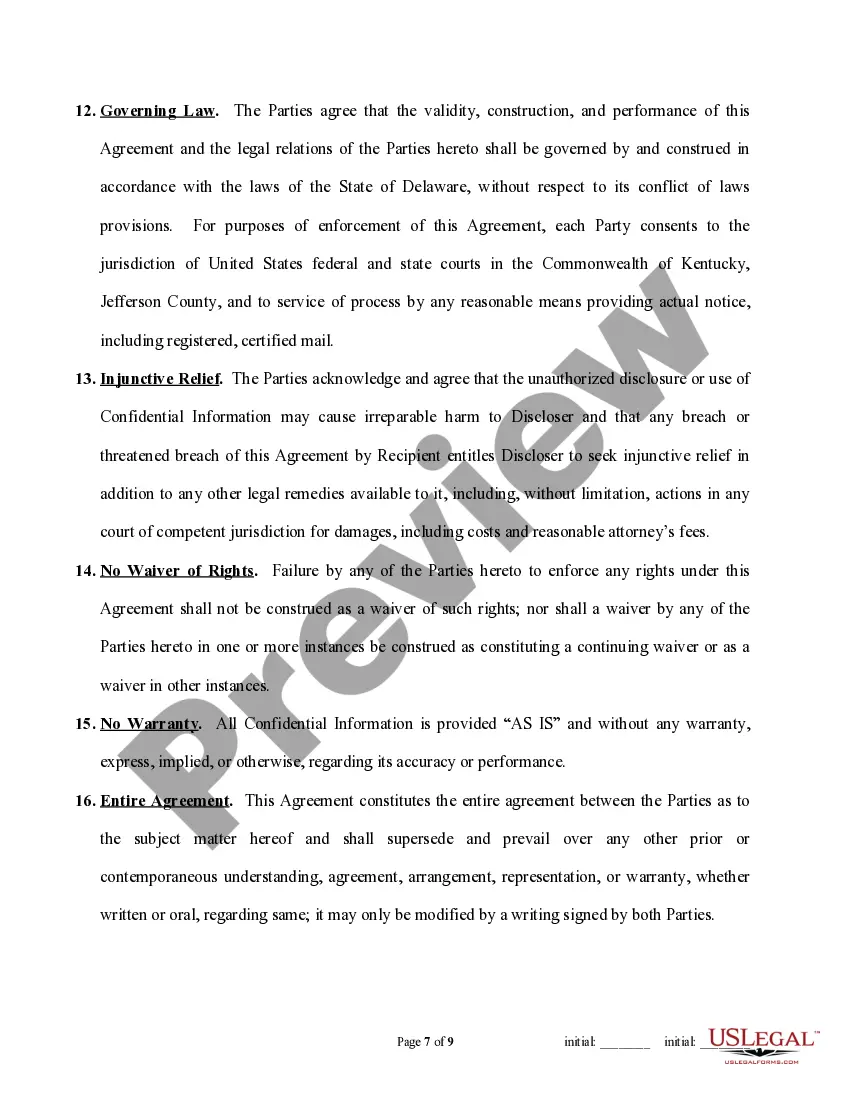
- Governing law: Specifies the jurisdiction for any legal disputes arising from the agreement.
Situations where this form applies
This form is useful when two parties are entering discussions about a business opportunity where sensitive information, such as trade secrets or proprietary business data, needs to be shared. Scenarios include potential partnerships, joint ventures, or collaborations in product development where confidentiality is paramount to protect both parties' interests.
Who can use this document
- Businesses exploring partnerships or joint ventures.
- Individuals or companies sharing sensitive information for product development.
- Consultants and contractors working closely with clients who require confidentiality.
- Any party needing a mutual agreement to protect proprietary information during negotiations.
Instructions for completing this form
- Identify the parties involved by entering their names and addresses in the designated fields.
- Specify the effective date of the agreement.
- Clearly define what constitutes confidential information.
- Outline the intended purpose of sharing information.
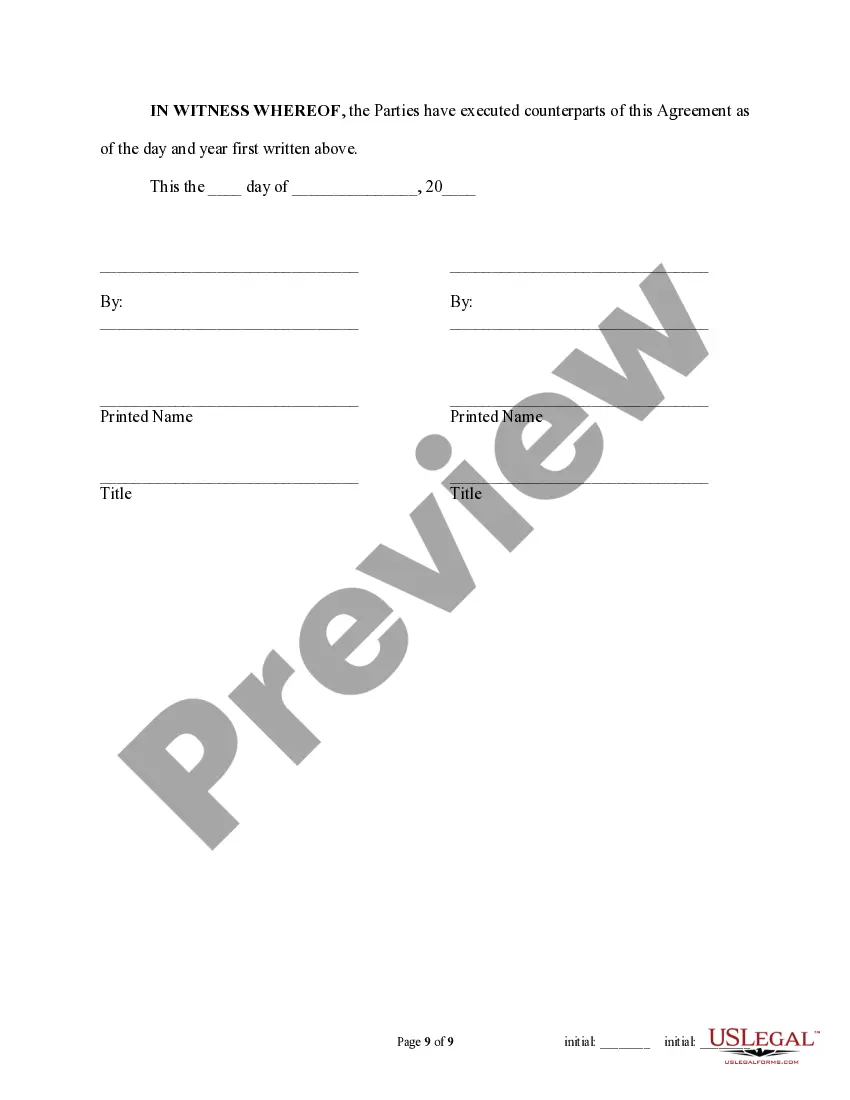
- Ensure signatures are obtained from authorized representatives of both parties along with their printed names and titles.
Does this form need to be notarized?
This form does not typically require notarization unless specified by local law. To ensure its enforceability, parties are advised to provide valid signatures from authorized representatives.
Get your form ready online
Our built-in tools help you complete, sign, share, and store your documents in one place.
Make edits, fill in missing information, and update formatting in US Legal Forms—just like you would in MS Word.
Download a copy, print it, send it by email, or mail it via USPS—whatever works best for your next step.
Sign and collect signatures with our SignNow integration. Send to multiple recipients, set reminders, and more. Go Premium to unlock E-Sign.
If this form requires notarization, complete it online through a secure video call—no need to meet a notary in person or wait for an appointment.
We protect your documents and personal data by following strict security and privacy standards.

Make edits, fill in missing information, and update formatting in US Legal Forms—just like you would in MS Word.

Download a copy, print it, send it by email, or mail it via USPS—whatever works best for your next step.

Sign and collect signatures with our SignNow integration. Send to multiple recipients, set reminders, and more. Go Premium to unlock E-Sign.

If this form requires notarization, complete it online through a secure video call—no need to meet a notary in person or wait for an appointment.

We protect your documents and personal data by following strict security and privacy standards.
Avoid these common issues
- Failing to clearly define what qualifies as confidential information.
- Not specifying the duration of confidentiality obligations.
- Overlooking the need for signatures from all parties involved.
- Neglecting to review the jurisdiction and governing law sections for compliance.
Why complete this form online
- Convenience of downloading and completing the form at your own pace.
- Editable format allows for customization to fit specific needs.
- Access to professionally drafted language ensures legal compliance and clarity.
- Instant delivery for prompt use in business negotiations.
Looking for another form?
Form popularity
FAQ
Sample Mutual NDA When Apple and Gorilla Glass partnered to make iPhones together, both had protections in their NDA to protect their proprietary information. Apple even went as far as to include a $50 million penalty if Gorilla Glass decided to break the agreement.
Obviously, the part of a mutual NDA that limits the other party is intended to protect confidential information. The mutual aspect?protecting both parties?also allows the parties to move ahead in pursuing a common goal, without either having to fear that confidential information will be disclosed to third parties.
In a reciprocal confidentiality agreement ? also called a 'two-way' or 'mutual' confidentiality agreement ? two parties agree to exchange confidential information with each other, and agree to keep that information confidential.
NDAs can be either mutual or one way. A mutual NDA requires each party to protect the confidential information to the other party. A one-way NDA contemplates that only one party will be disclosing confidential information. If you won't be disclosing any confidential information, then you may not need a mutual NDA.
Summary A Reciprocal Confidentiality Agreement, otherwise known as a Non-Disclosure Agreement or NDA, can help to protect private, sensitive or confidential information disclosed between two people. This NDA provides for a reciprocal duty of confidentiality.