Confidentiality Agreement-Letter Format - Therapy or Counseling Services
What this document covers
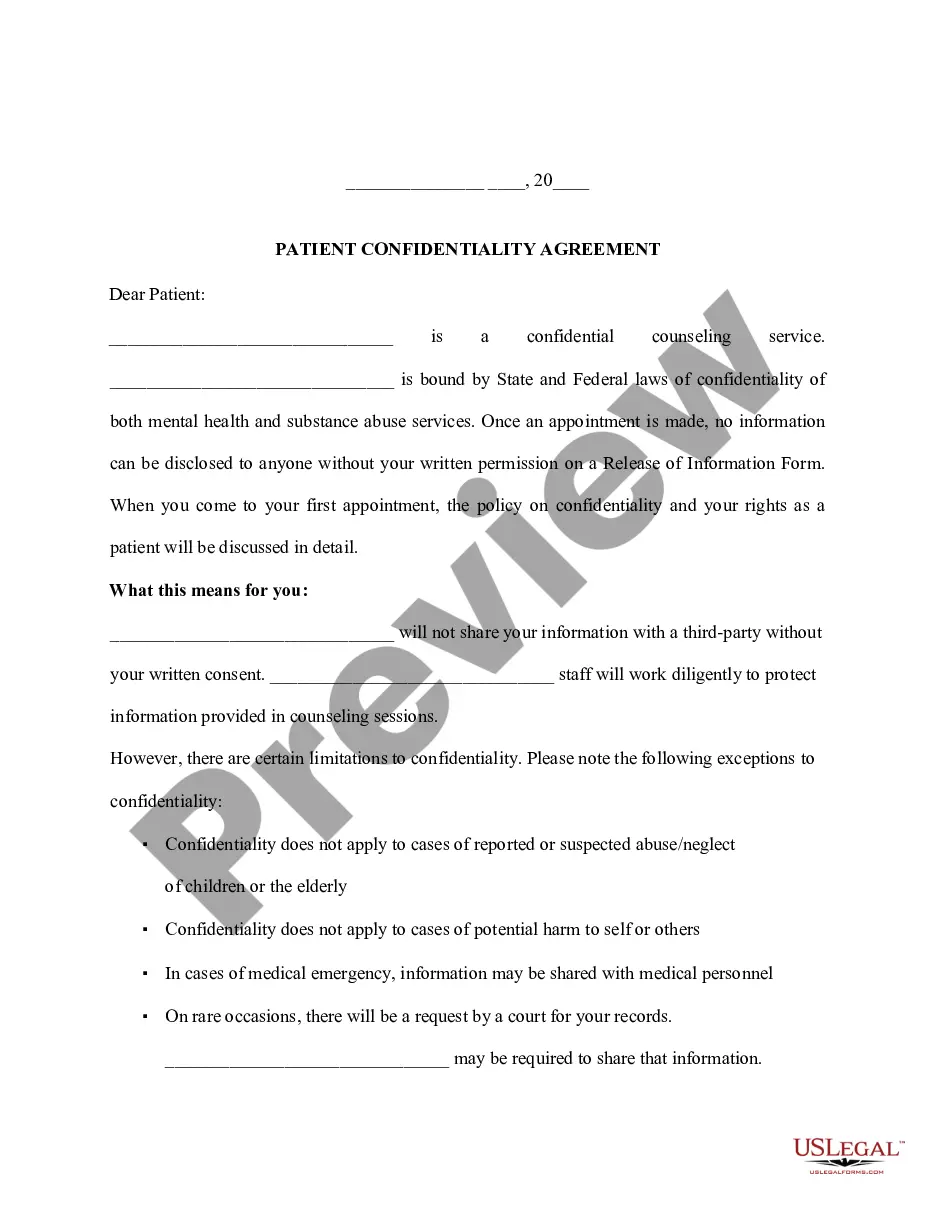
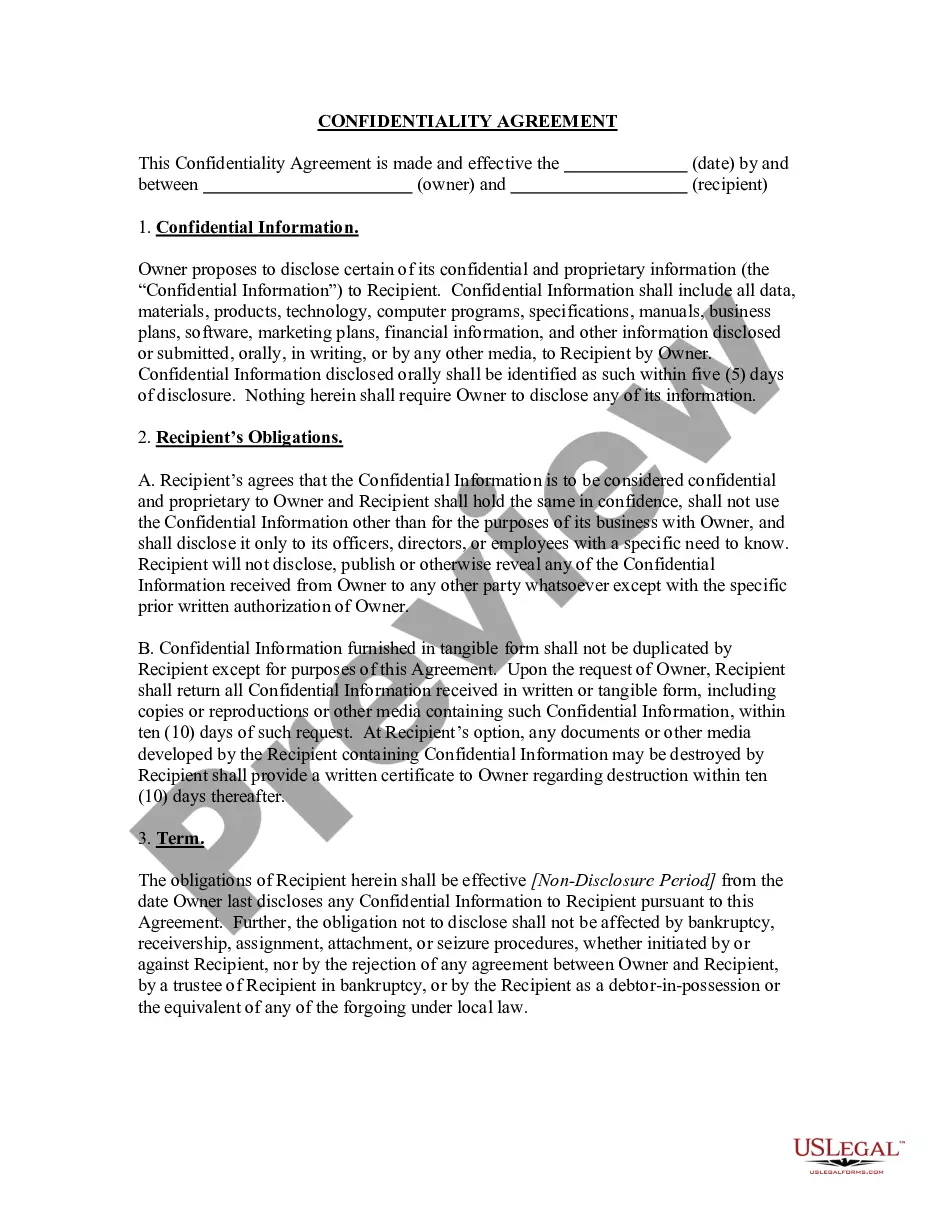
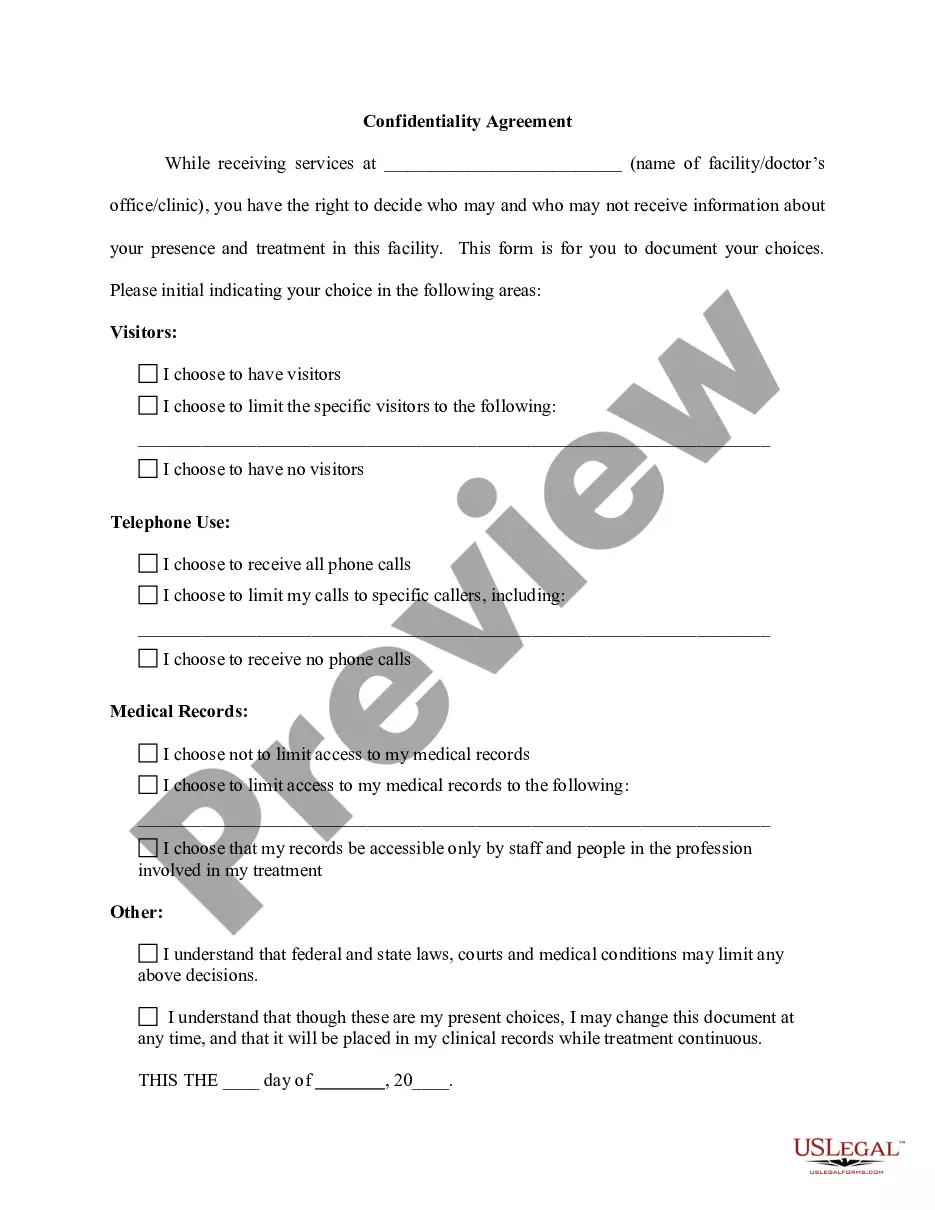
The Confidentiality Agreement-Letter Format for Therapy or Counseling Services is a legal document that establishes the confidentiality between a patient or client and their therapist. This agreement is essential for individual or group therapy sessions, ensuring that the therapist cannot disclose the patientâs information without explicit permission, unless legally required. It adheres to both state and federal confidentiality laws, protecting sensitive information shared during therapy sessions.
Key components of this form
- Identification of the counseling service and therapist.
- Clear statements regarding the obligation of confidentiality under state and federal laws.
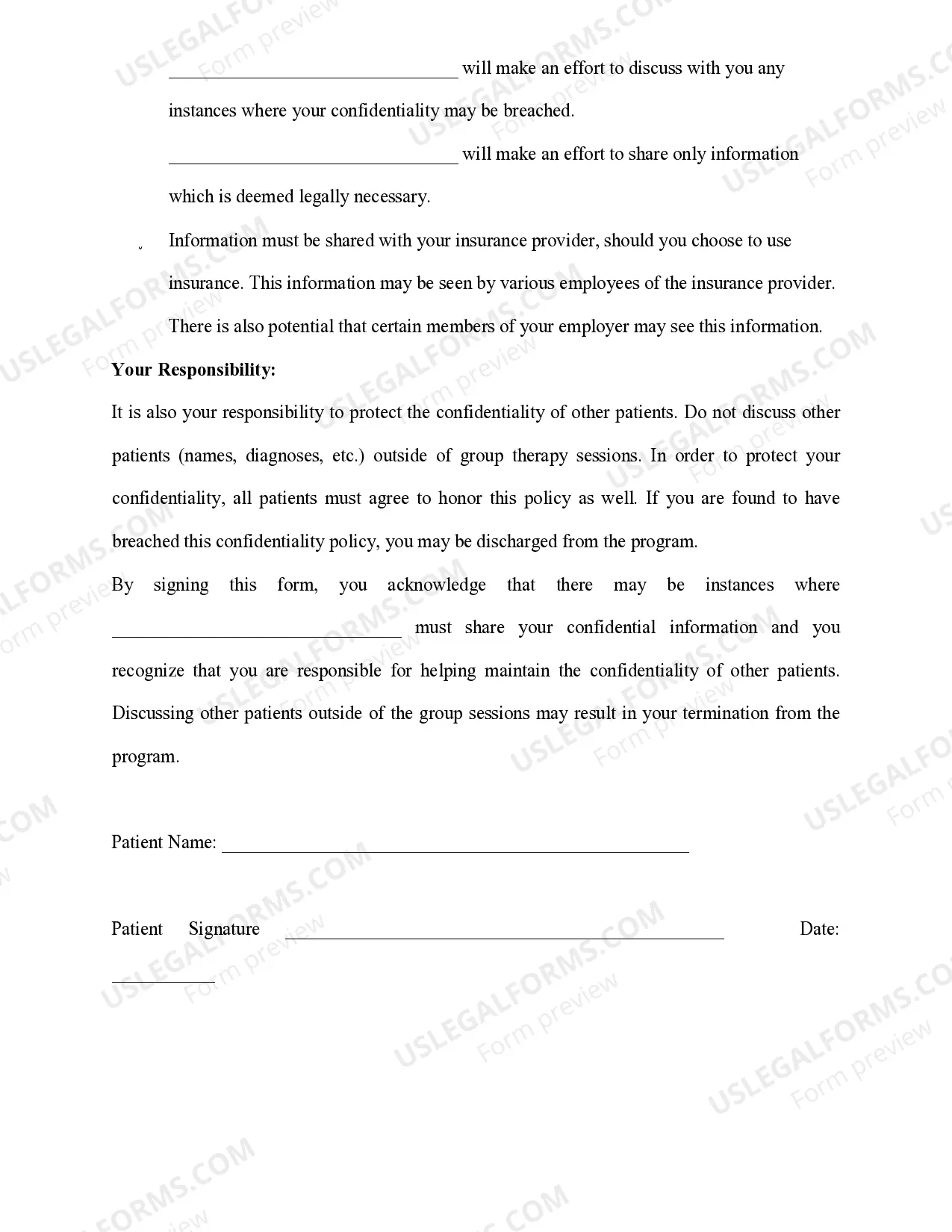
- Exceptions to confidentiality, such as cases involving abuse or threats of harm.
- Patient's responsibility to maintain the confidentiality of others in therapy.
- Signature line for the patient to acknowledge understanding of the terms.
When to use this form
This form should be used when a patient or client begins therapy or counseling services. It is vital for setting clear expectations regarding confidentiality and to inform patients of their rights and responsibilities in maintaining the privacy of their own information and that of other participants in group therapy.
Who should use this form
- Patients or clients seeking individual or group counseling or therapy.
- Therapists, psychologists, or psychiatrists providing mental health services.
- Organizations or clinics offering counseling services to ensure compliance with confidentiality laws.
Steps to complete this form
- Enter the name of the counseling service and therapist at the top of the agreement.
- Fill in the patientâs name and date of agreement.
- Review the terms of confidentiality and exceptions carefully.
- Sign and date the form to acknowledge understanding and agreement to the terms.
- Keep a copy for personal records to ensure awareness of confidentiality rights.
Does this document require notarization?
This form does not typically require notarization unless specified by local law. However, it is advisable to confirm any specific requirements that may apply in your state to ensure its legal effectiveness.
Get your form ready online
Our built-in tools help you complete, sign, share, and store your documents in one place.
Make edits, fill in missing information, and update formatting in US Legal Forms—just like you would in MS Word.
Download a copy, print it, send it by email, or mail it via USPS—whatever works best for your next step.
Sign and collect signatures with our SignNow integration. Send to multiple recipients, set reminders, and more. Go Premium to unlock E-Sign.
If this form requires notarization, complete it online through a secure video call—no need to meet a notary in person or wait for an appointment.
We protect your documents and personal data by following strict security and privacy standards.

Make edits, fill in missing information, and update formatting in US Legal Forms—just like you would in MS Word.

Download a copy, print it, send it by email, or mail it via USPS—whatever works best for your next step.

Sign and collect signatures with our SignNow integration. Send to multiple recipients, set reminders, and more. Go Premium to unlock E-Sign.

If this form requires notarization, complete it online through a secure video call—no need to meet a notary in person or wait for an appointment.

We protect your documents and personal data by following strict security and privacy standards.
Typical mistakes to avoid
- Not fully understanding the exceptions to confidentiality.
- Failing to sign and date the agreement.
- Not keeping a copy of the signed agreement for personal reference.
Why use this form online
- Convenience of downloading and completing the form anytime.
- Editable fields to tailor the document to specific needs.
- Reliability of having legally vetted content prepared by licensed attorneys.
Legal use & context
- The form is designed to protect patient confidentiality, a critical element in therapy.
- It helps establish trust between patients and therapists, essential for effective treatment.
- Any breach of this agreement may have legal implications and can affect the therapeutic relationship.
Summary of main points
- This Confidentiality Agreement is vital for establishing trust in therapy.
- It outlines the confidentiality obligations of the therapist and the patient.
- Understanding the exceptions to confidentiality is crucial for both parties.
Looking for another form?
Form popularity
FAQ
Examples of confidentiality clauses include: Example 1: Preventing employees from talking to the press. Example 2: Limiting the disclosure of on-site business practices. Example 3: Stopping business partners from sharing IP rights.
Describe what the other party is agreeing to. Exercising reasonable precautions against disclosure of the information. Not disclosing Confidential Information without the written consent of the Disclosing Party. Using the information only for business purposes, and only on a ?need to know? basis.
For licensed mental health professionals, confidentiality is protected by state laws and the Health Insurance Portability and Accountability Act (HIPAA). Therapists who break confidentiality can get in trouble with state licensing boards. They can also be sued by their clients in some cases.
This agreement is made between ("Employee") and Company Name on 20. Employee will perform services for Company Name that may require Company Name to disclose confidential and proprietary information ("Confidential Information") to Employee.
I acknowledge that all Information is strictly confidential and I agree that I shall not reveal to any person or entity, or use any Information at any time, except as expressly directed by firm, or as may be required by law.
Do: discuss confidentiality with your client at the contracting stage. be clear about the possible exceptions to confidentiality. be explicit about who you may need to share their information with, and who else has access to their records. explain that you need to discuss your casework with a supervisor.
I cannot and will not tell anyone else what you have told me, or even that you are in therapy with me without your prior permission. You can authorize me to share information with whomever you choose, and you may change your mind and revoke that permission at anytime.
A typical confidentiality clause might say, "The phrases and circumstances of this Agreement are completely confidential between the parties and shall not be disclosed to anybody else. Any disclosure in violation shall be deemed a breach of this Agreement."