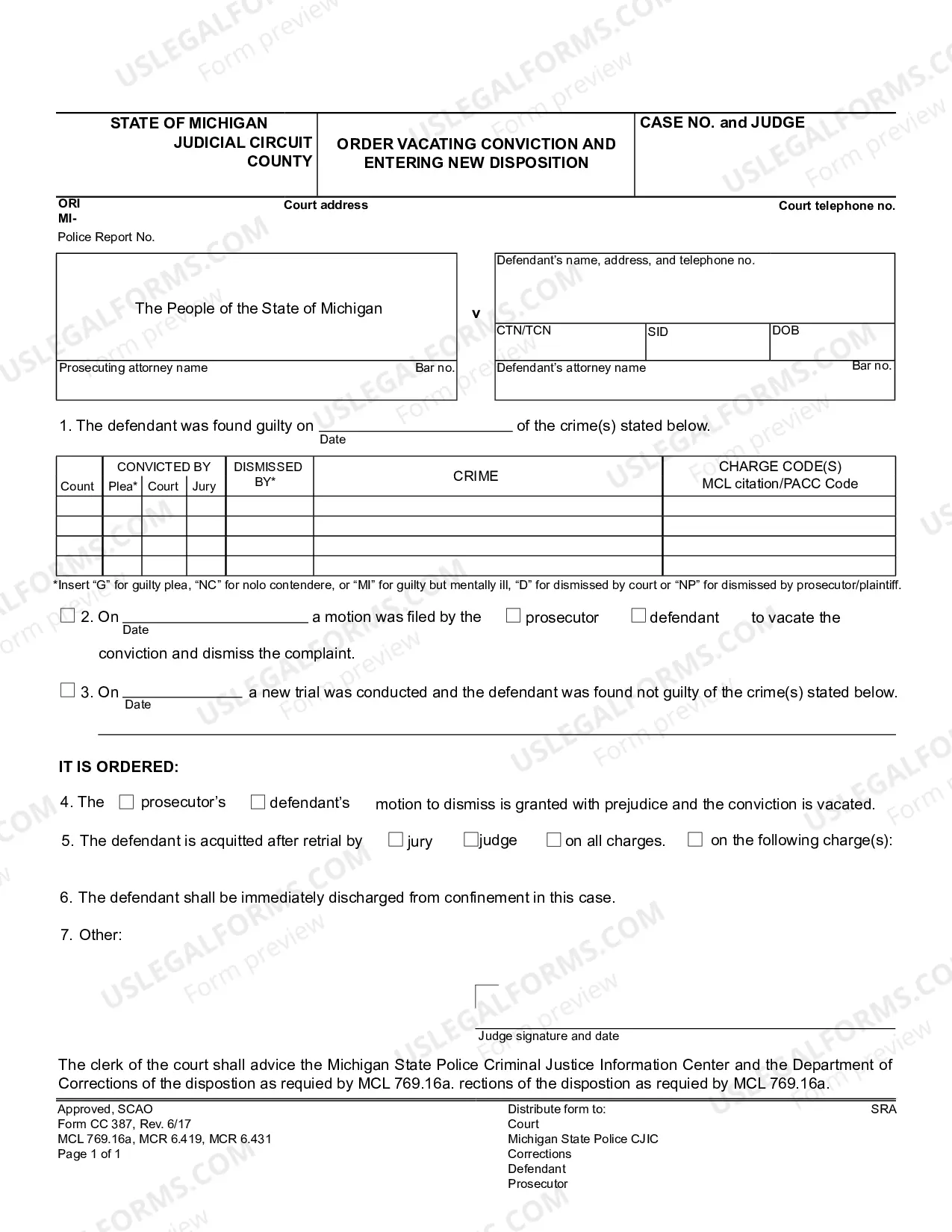
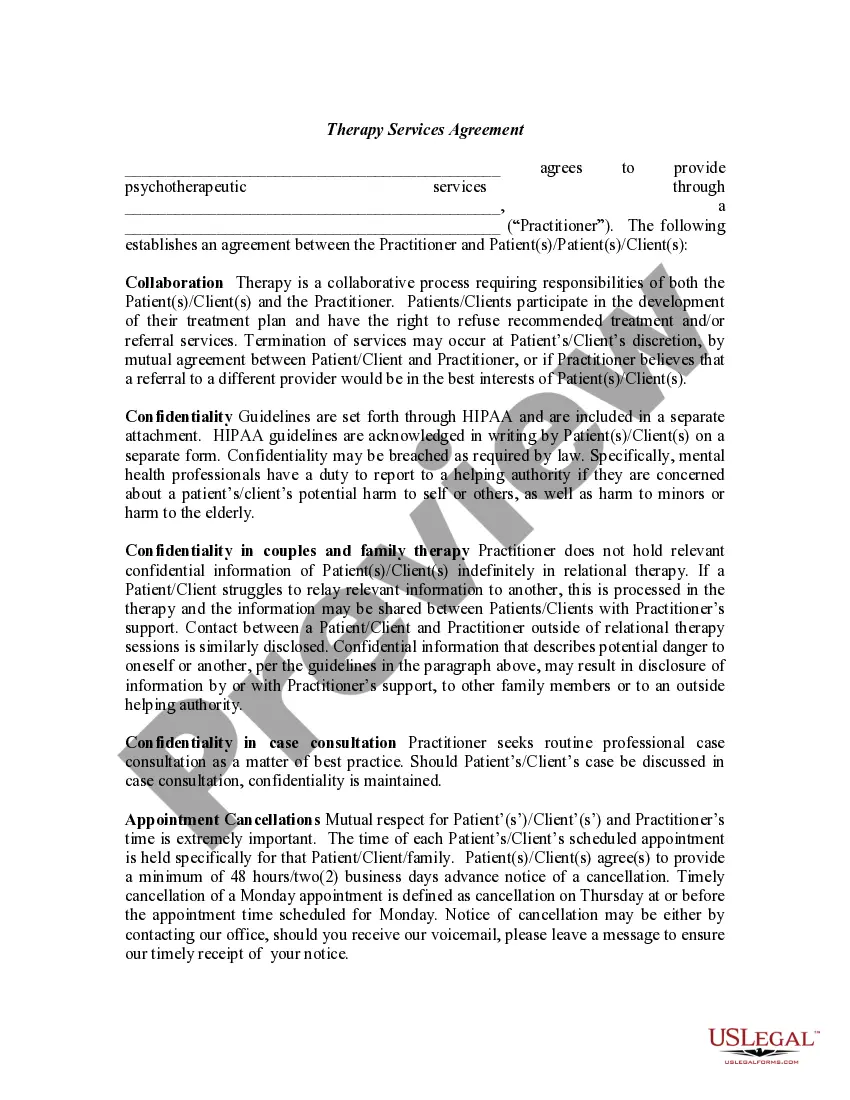
Therapy Services Agreement - Out of Network Provider
Overview of this form
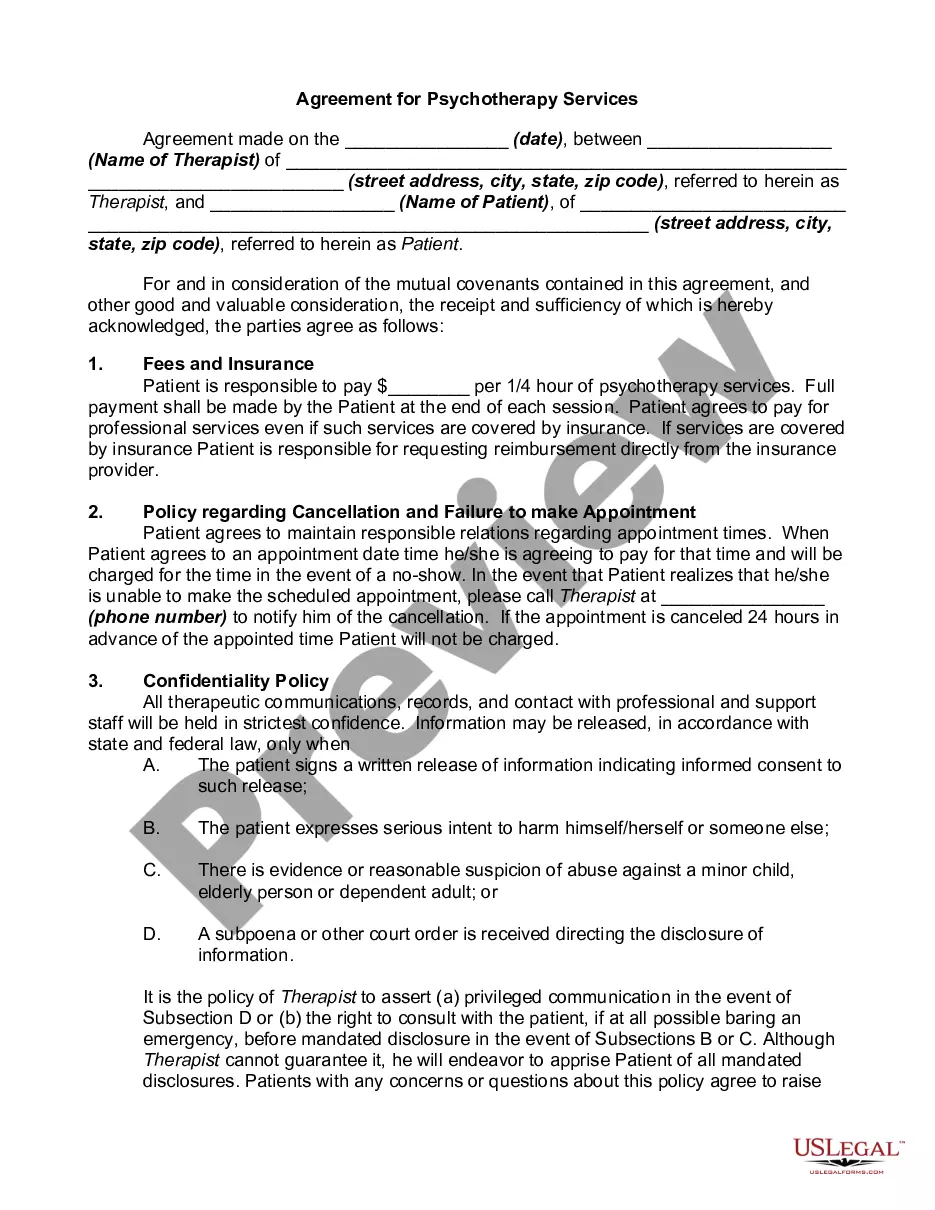
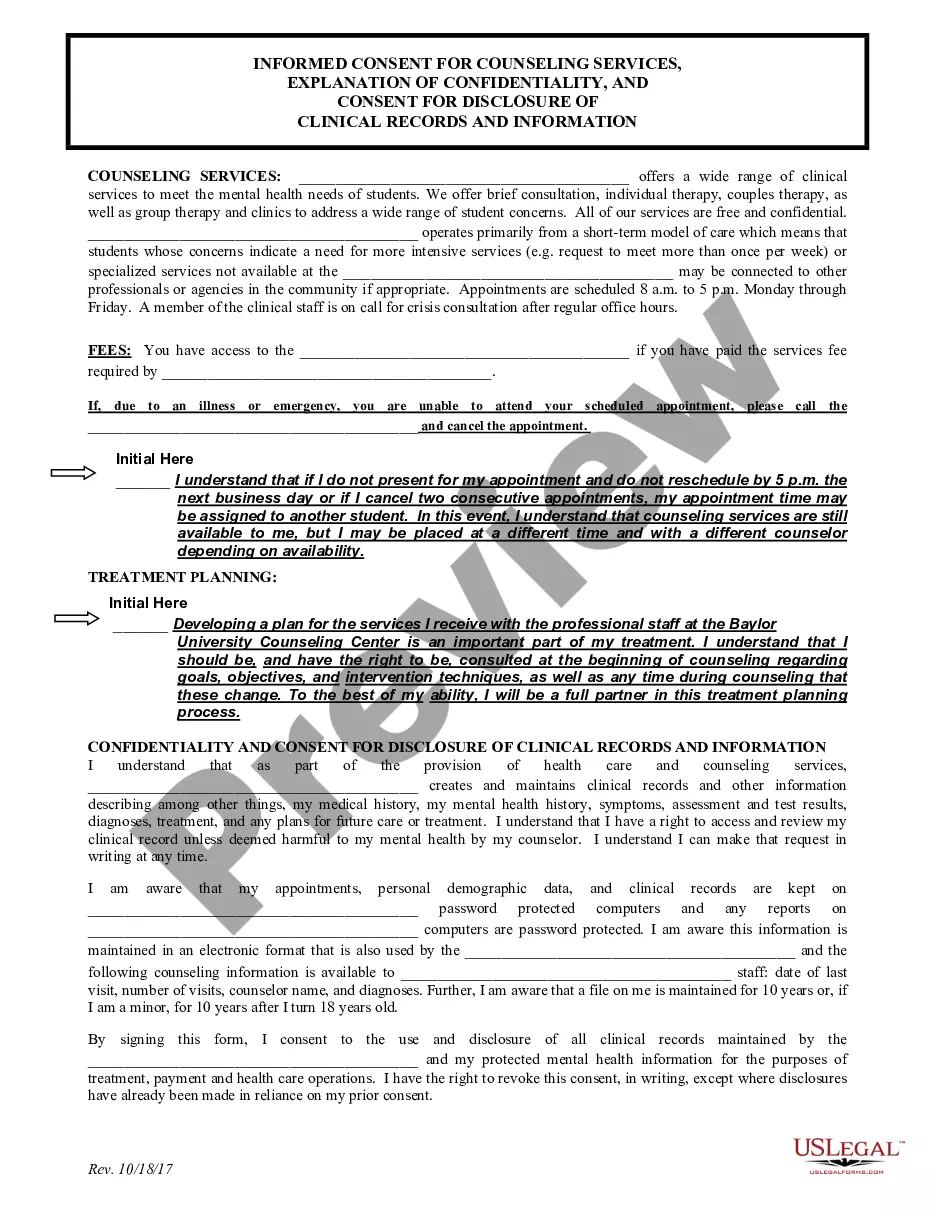
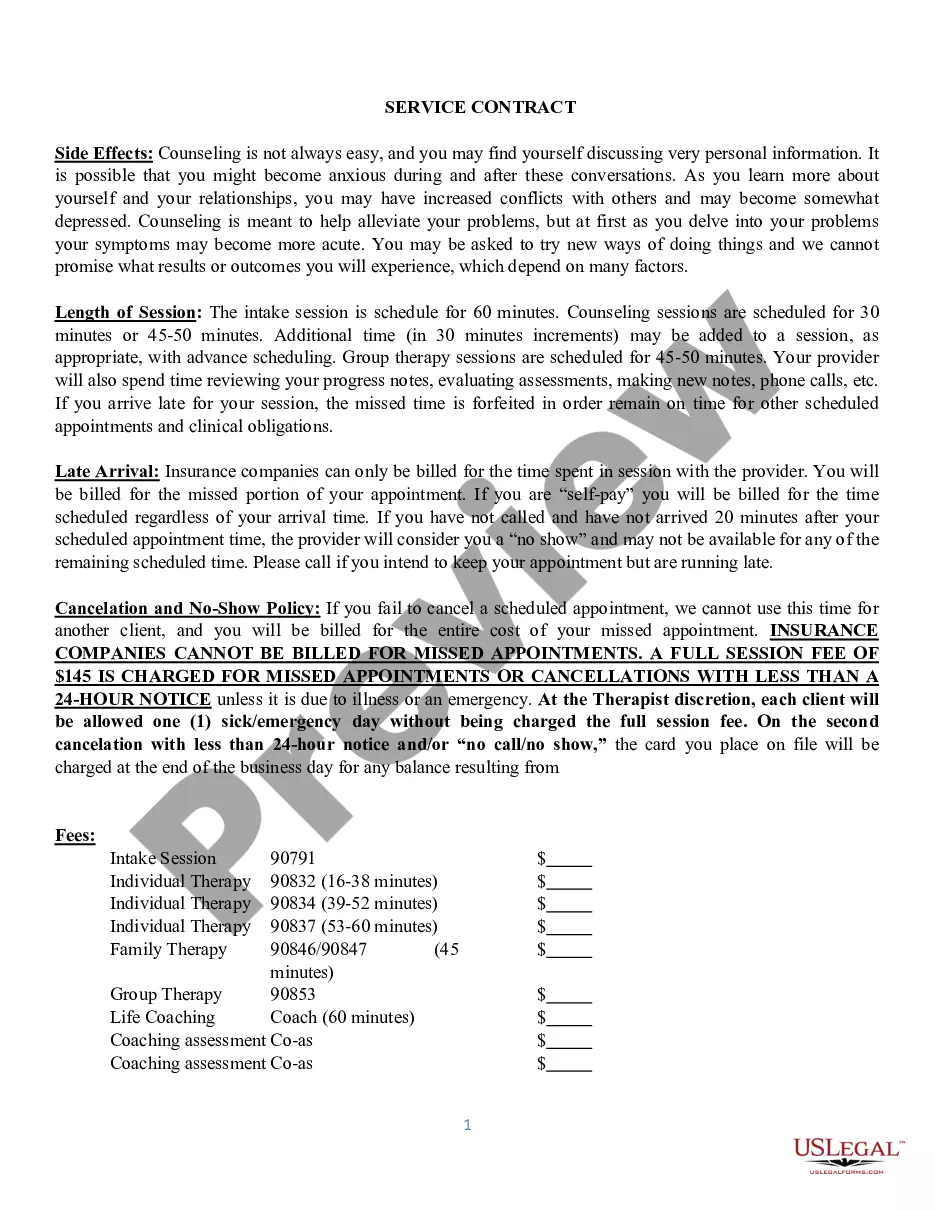
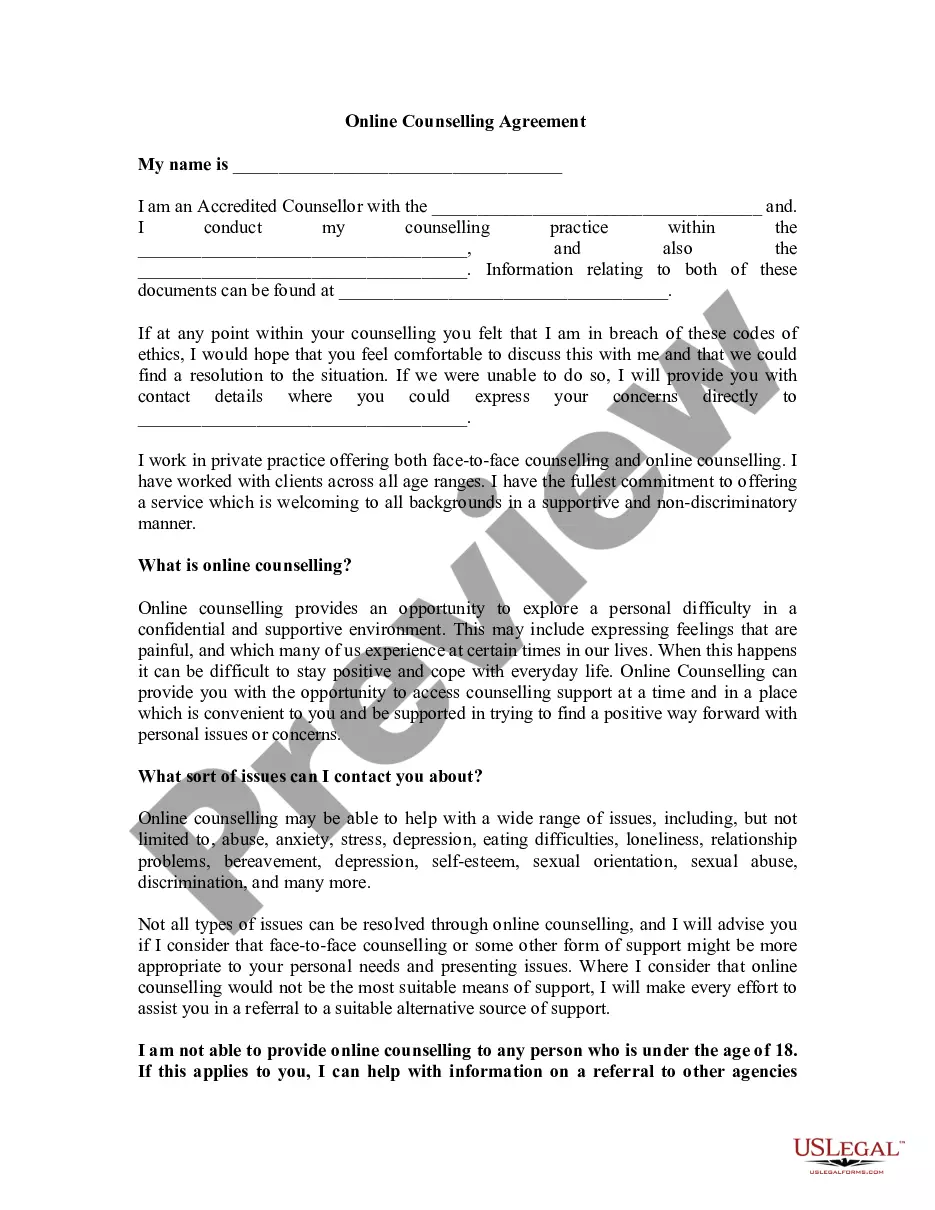
The Therapy Services Agreement - Out of Network Provider is a legal document that outlines the terms and conditions between a mental health practitioner and their clients when using services that are not covered by insurance. This form ensures transparency regarding treatment plans, confidentiality, payment terms, and appointment policies, differentiating it from in-network agreements by focusing specifically on out-of-network billing practices and consent.
What’s included in this form
- Agreement between the patient and practitioner regarding psychotherapy services.
- Collaboration section outlining the responsibilities of both the patient and the practitioner.
- Confidentiality guidelines in accordance with HIPAA regulations.
- Cancellation policy, including notice requirements and fees.
- Payment terms for therapy sessions and additional services.
- Provisions related to emergency contacts and situations.
When to use this form
This form should be used when a client seeks mental health services from a practitioner that is not within their insurance network. It is appropriate in situations where the client wants to ensure clear communication about treatment expectations, payment responsibilities, confidentiality practices, and cancellation policies. This agreement should ideally be completed before the initial therapy session.
Who needs this form
- Clients seeking therapy services from an out-of-network mental health provider.
- Mental health practitioners offering services without insurance network coverage.
- Individuals who want to establish agreements on fees, confidentiality, and therapeutic responsibilities.
How to complete this form
- Identify the parties involved by providing the names and titles of the practitioner and the clients.
- Fill in the treatment objectives and outline the client's involvement in their therapy plan.
- Complete the sections regarding confidentiality and understand the limitations as outlined.
- Specify the payment terms, including fees for sessions, cancellation, and any additional services.
- Obtain signatures from both the practitioner and client to validate the agreement.
Notarization requirements for this form
This form does not typically require notarization unless specified by local law. Ensure both parties sign the document to affirm their agreement to the terms outlined.
Get your form ready online
Our built-in tools help you complete, sign, share, and store your documents in one place.
Make edits, fill in missing information, and update formatting in US Legal Forms—just like you would in MS Word.
Download a copy, print it, send it by email, or mail it via USPS—whatever works best for your next step.
Sign and collect signatures with our SignNow integration. Send to multiple recipients, set reminders, and more. Go Premium to unlock E-Sign.
If this form requires notarization, complete it online through a secure video call—no need to meet a notary in person or wait for an appointment.
We protect your documents and personal data by following strict security and privacy standards.

Make edits, fill in missing information, and update formatting in US Legal Forms—just like you would in MS Word.

Download a copy, print it, send it by email, or mail it via USPS—whatever works best for your next step.

Sign and collect signatures with our SignNow integration. Send to multiple recipients, set reminders, and more. Go Premium to unlock E-Sign.

If this form requires notarization, complete it online through a secure video call—no need to meet a notary in person or wait for an appointment.

We protect your documents and personal data by following strict security and privacy standards.
Common mistakes
- Not thoroughly reading all terms and conditions before signing.
- Failing to provide proper notice for cancellations.
- Not understanding the financial implications of out-of-network services.
- Skipping signature lines or failing to date the agreement.
Why use this form online
- Convenience of accessing and completing the form from home.
- Editable templates allow for easy customization to meet specific needs.
- Reliable formats that meet legal standards and are vetted by licensed attorneys.
Legal use & context
- This agreement is a legally binding document if completed and signed as required.
- It is essential to communicate clearly the terms of engagement and expectations to maintain a good therapeutic relationship.
- Failure to adhere to the outlined terms may lead to disputes regarding services rendered and fees charged.
Quick recap
- The Therapy Services Agreement is crucial for setting clear expectations for out-of-network mental health services.
- Both parties should understand their roles and responsibilities under this agreement.
- Proper completion and signing of the document safeguard both client and practitioner interests.
Looking for another form?


Form popularity
FAQ
When a provider bills you for the difference between the provider's charge and the allowed amount. For example, if the provider's charge is $100 and the allowed amount is $70, the provider may bill you for the remaining $30. A preferred provider may not balance bill you for covered services.
If you're negotiating a balance bill from an out-of-network provider, call your insurance company and ask for the market rate (e.g., what they would have paid an in-network provider) for that service.
Depending on your plan, if you use an out-of-network provider, you may have to pay the full cost of the benefits and services you get from that provider, except for emergency services. Insurance plans can't make you pay more in copayments or coinsurance if you get emergency care from an out-of-network hospital.
If your insurance company provides out-of-network coverage, it may only pay the amount it would for an in-network service. As a result, you could owe a greater percentage of your care in the form of higher copayments and coinsurance when you go to out-of-network providers.
The secret to negotiating lower medical bills Get started early.Make sure there aren't any errors on your medical bill.Ask about any financial assistance programs.Research the insured rate for your service.Request or negotiate your payment plan.Check to see if the expense is HRA-, HSA-, or FSA-eligible.
Getting a health insurance plan with out-of-network coverage can help you avoid some surprise medical bills, and this type of coverage is worth it for people who want to maximize their health care choices or who have specialized medical needs.
To truly bill on an out-of-network basis, one typically bills without checking off Accept Assignment. Second, you need to know if the patient has out-of-network benefits, and if so, if there are strings attached. For example, you may need to get prior approval from the carrier (i.e., precertification).
An out-of-network provider is one that has not signed a contract with a given health insurance plan, agreeing to accept a negotiated reimbursement rate as payment in full.