Online Counseling Agreement - Short Form
What this document covers
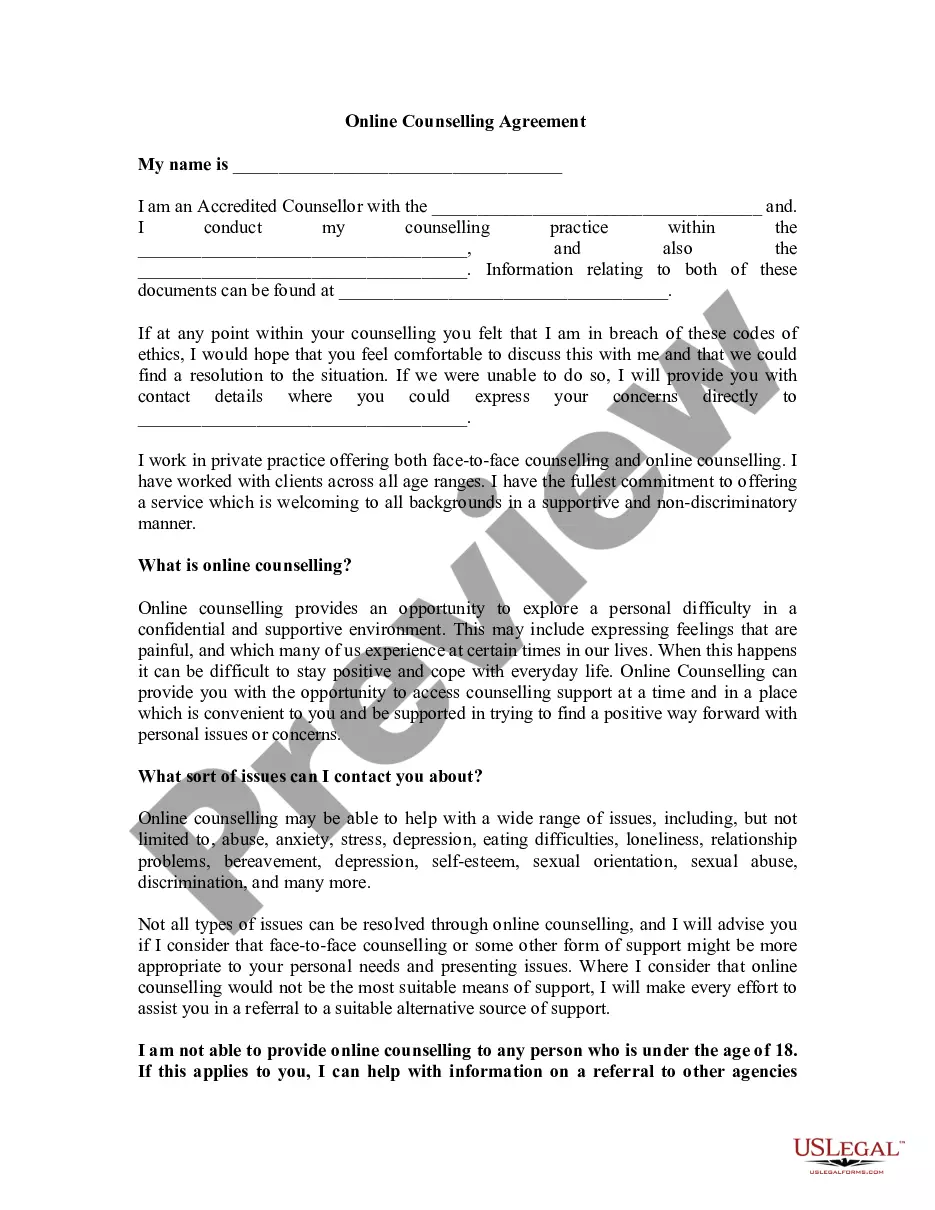
The Online Counseling Agreement - Short Form is a legal document used by mental health professionals to establish the terms and conditions of online counseling services. This form outlines the relationship between the counselor and client, ensuring that both parties understand the scope, confidentiality, and procedures involved in online sessions. It is designed to facilitate a supportive and non-discriminatory space for clients seeking mental health support remotely.
What’s included in this form
- Client's full name and contact information.
- Credentials of the counselor and their areas of practice.
- Definition of online counseling and its benefits.
- Outline of issues suitable for online counseling.
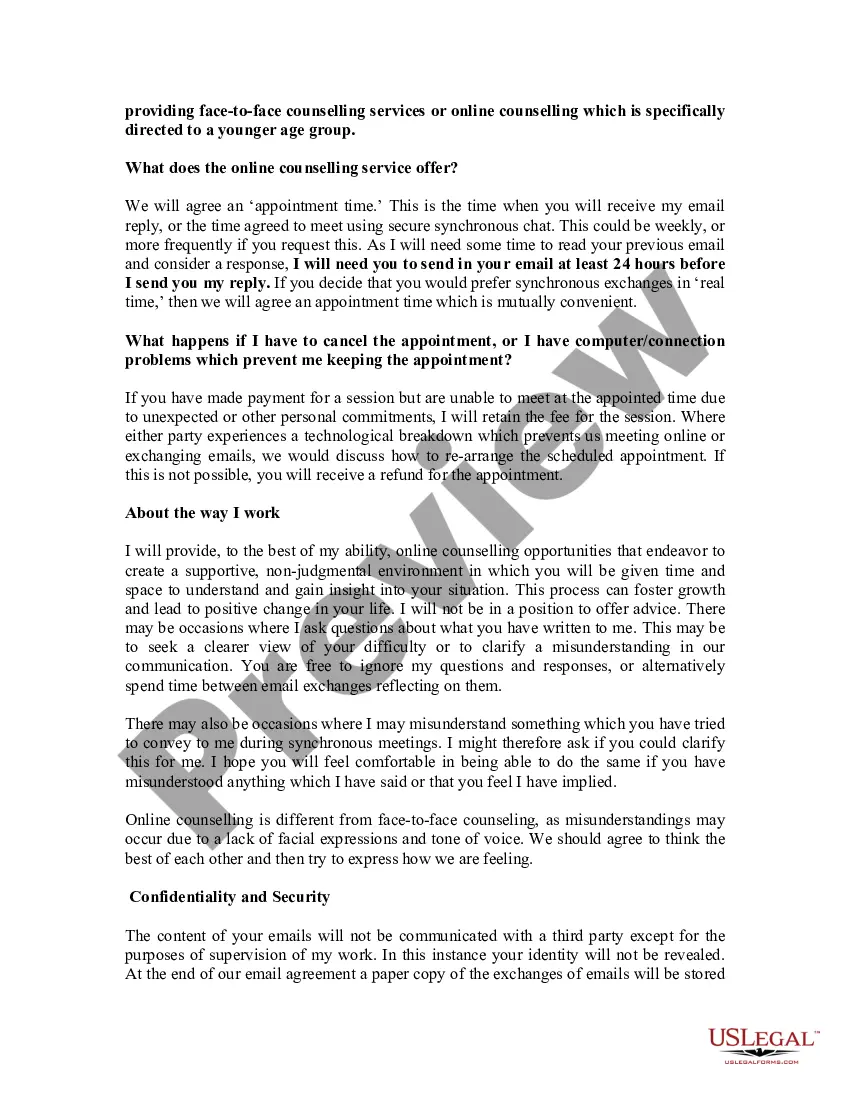
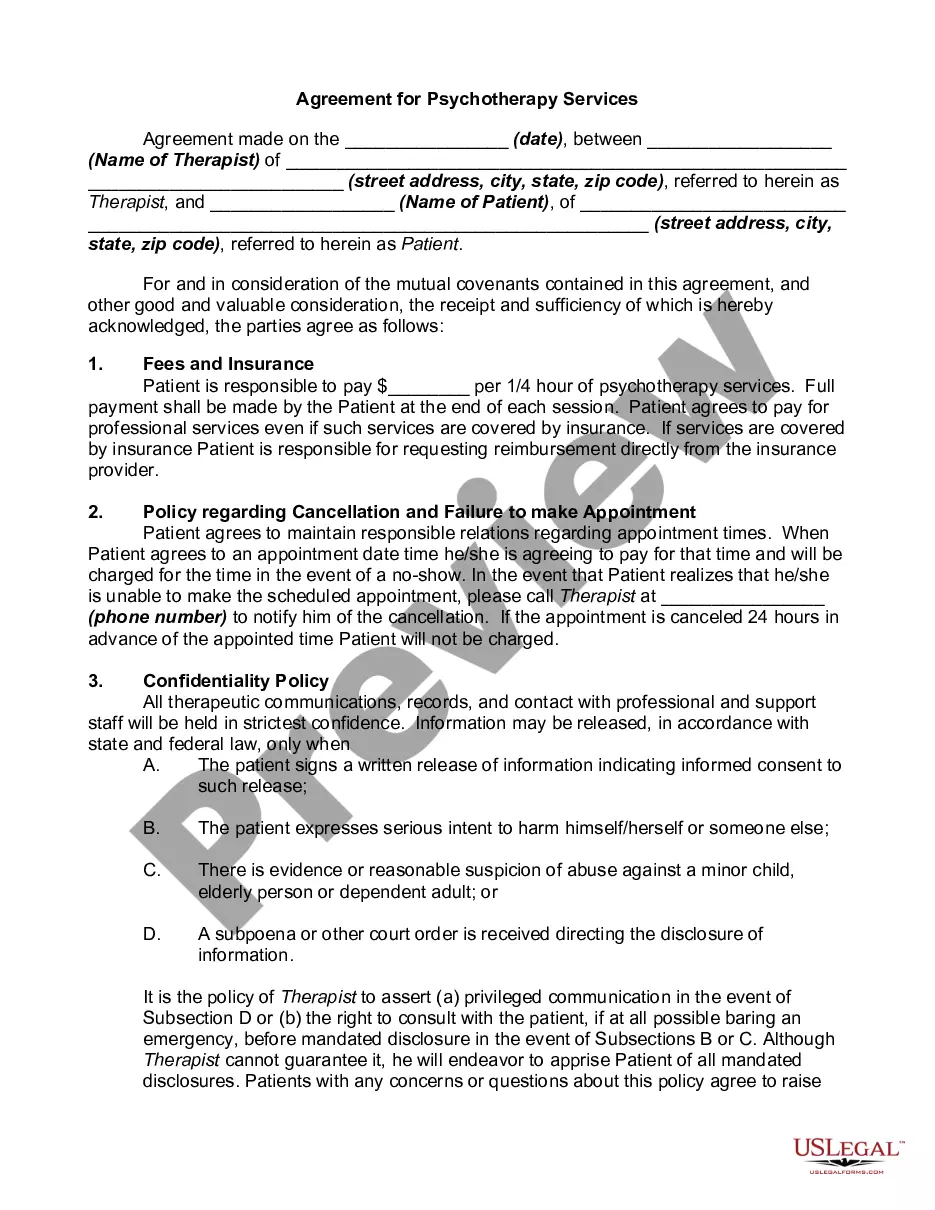
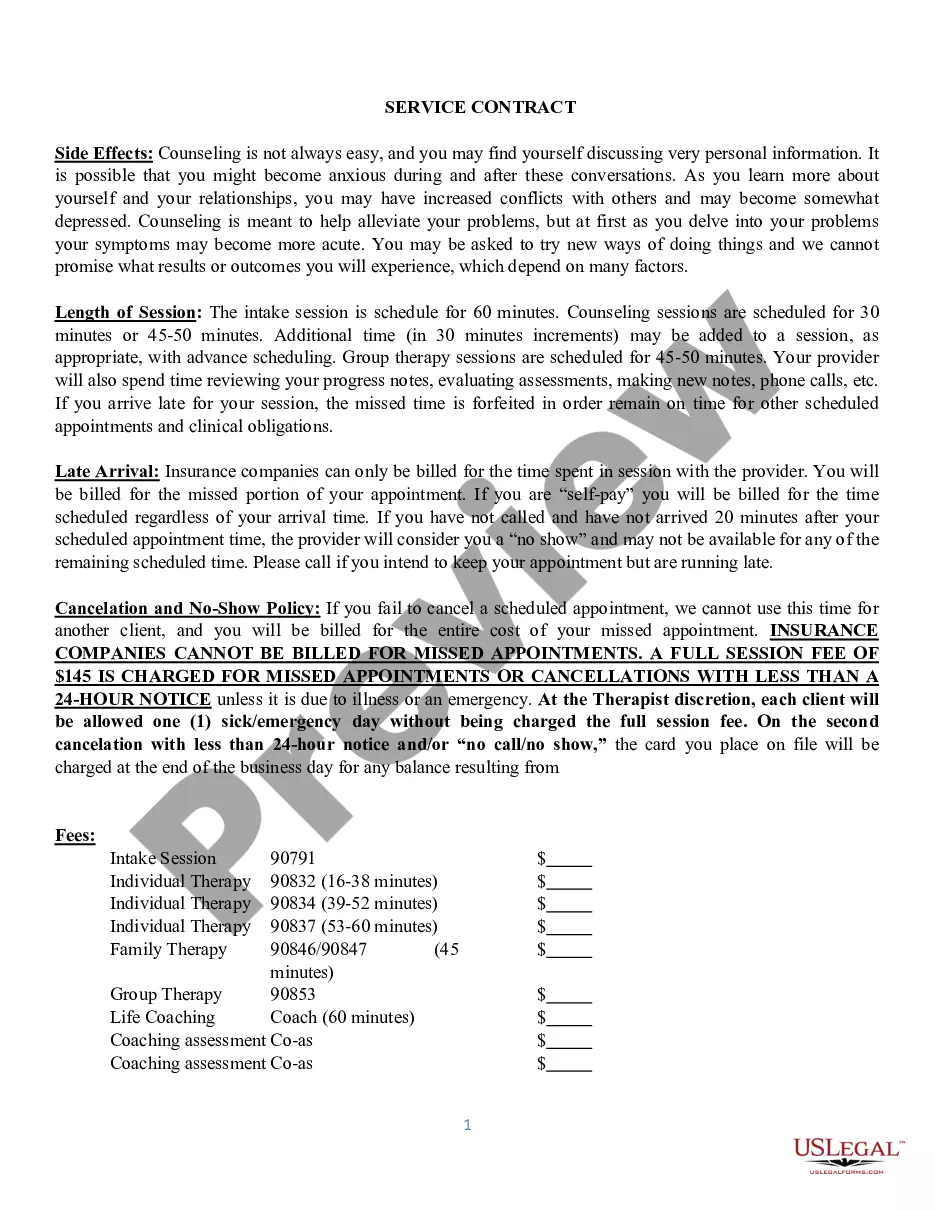
- Appointment scheduling details and cancellation policies.
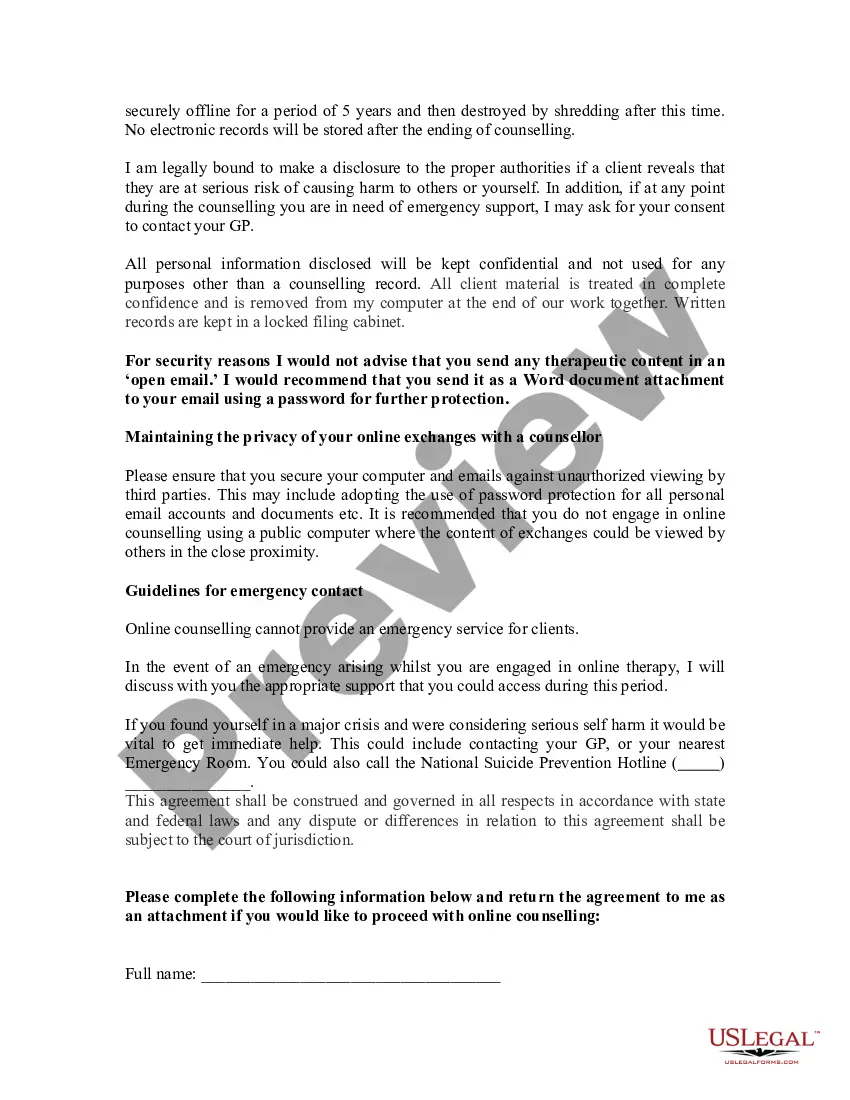
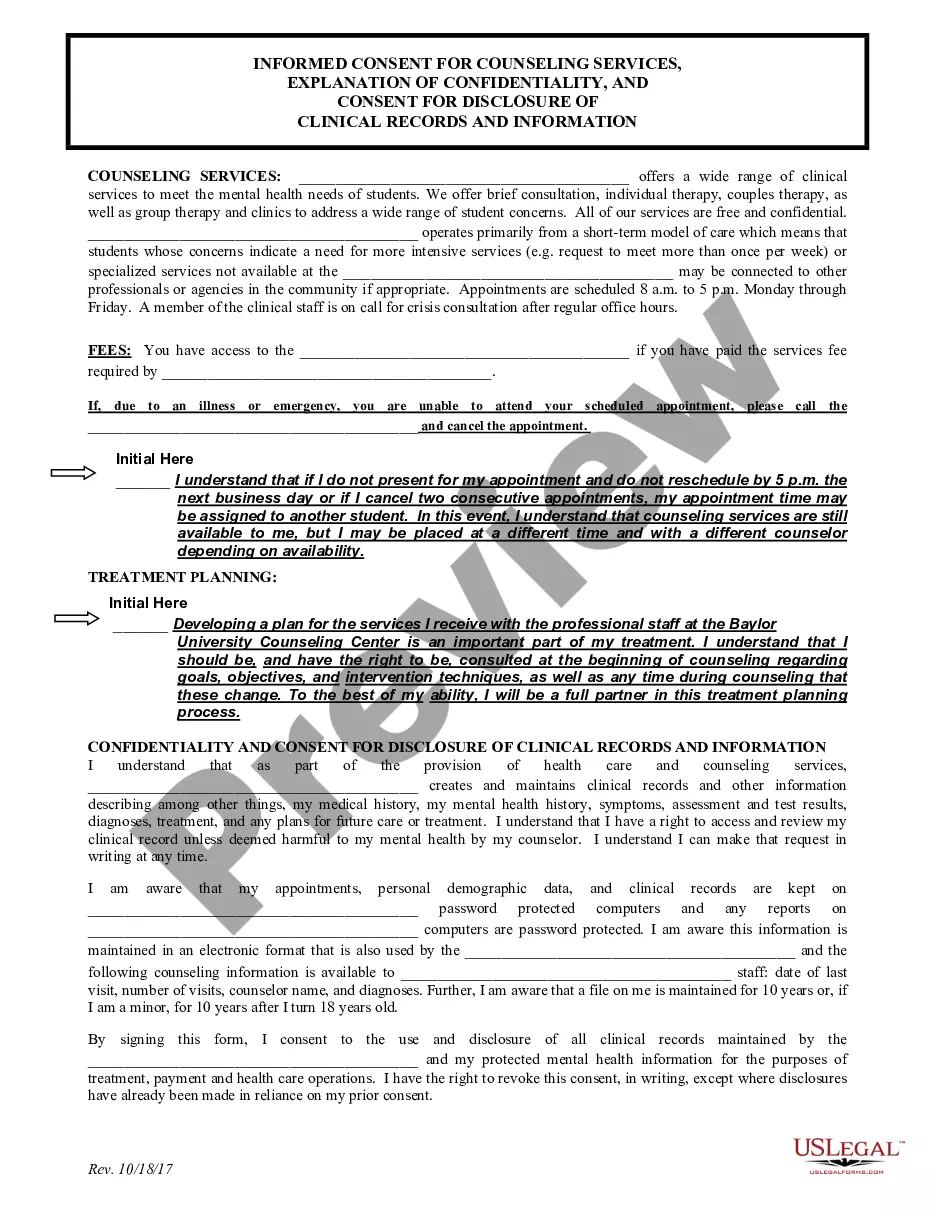
- Confidentiality and security provisions.
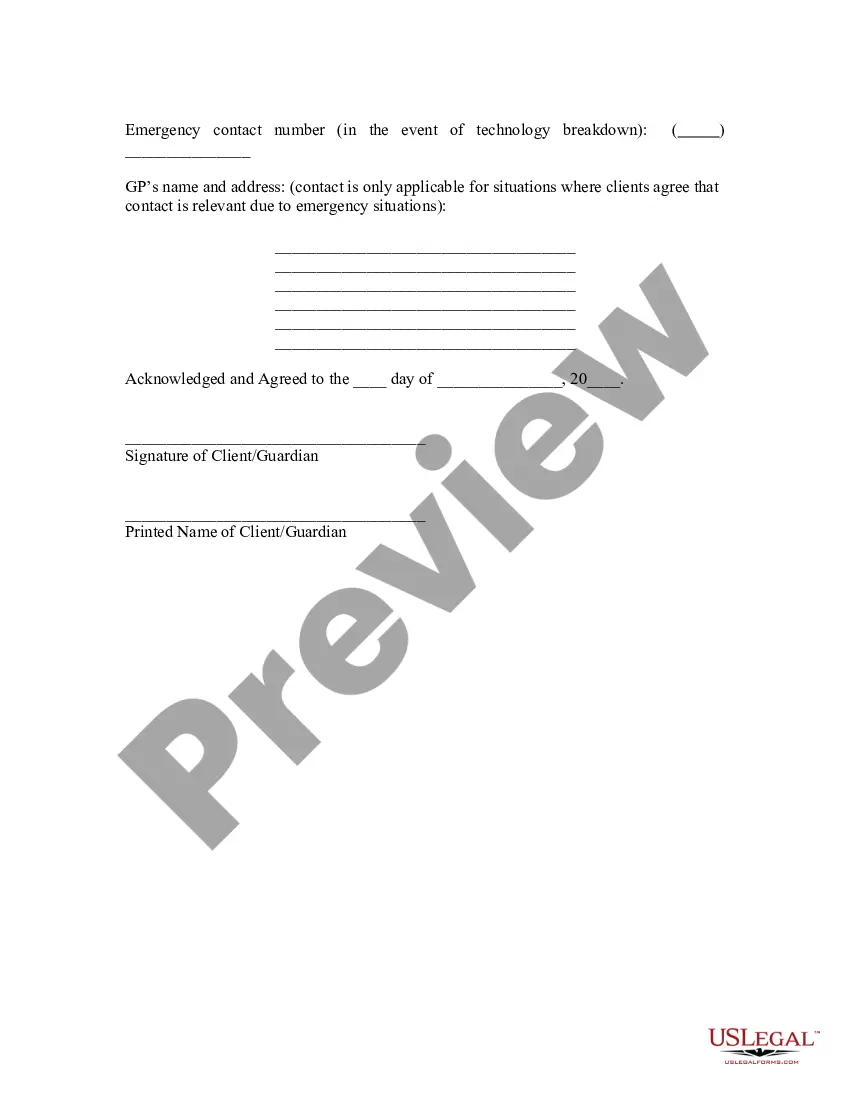
- Emergency contact guidelines and client acknowledgment section.
Situations where this form applies
This form should be used when mental health professionals provide counseling services online. It is essential for establishing clear communication and ensuring that clients fully understand their rights and responsibilities in an online counseling context. Use this agreement when setting up the terms of engagement with new clients or existing clients transitioning to an online format.
Who this form is for
The following individuals should consider using this form:
- Mental health professionals offering online counseling.
- Clients seeking mental health support in a remote setting.
- Accredited counselors and therapists wanting to clarify their service terms.
- Any individual or organization involved in providing or receiving online counseling services.
Completing this form step by step
- Provide your full name and emergency contact information.
- Fill in the counselor's credentials and areas of practice.
- Read and understand the sections regarding confidentiality and security.
- Sign and date the document to acknowledge agreement.
- Return the completed form to establish the counseling relationship.
Does this document require notarization?
This form does not typically require notarization unless specified by local law. However, both parties should retain a copy for their records to ensure clarity of the counseling agreement.
Get your form ready online
Our built-in tools help you complete, sign, share, and store your documents in one place.
Make edits, fill in missing information, and update formatting in US Legal Forms—just like you would in MS Word.
Download a copy, print it, send it by email, or mail it via USPS—whatever works best for your next step.
Sign and collect signatures with our SignNow integration. Send to multiple recipients, set reminders, and more. Go Premium to unlock E-Sign.
If this form requires notarization, complete it online through a secure video call—no need to meet a notary in person or wait for an appointment.
We protect your documents and personal data by following strict security and privacy standards.

Make edits, fill in missing information, and update formatting in US Legal Forms—just like you would in MS Word.

Download a copy, print it, send it by email, or mail it via USPS—whatever works best for your next step.

Sign and collect signatures with our SignNow integration. Send to multiple recipients, set reminders, and more. Go Premium to unlock E-Sign.

If this form requires notarization, complete it online through a secure video call—no need to meet a notary in person or wait for an appointment.

We protect your documents and personal data by following strict security and privacy standards.
Typical mistakes to avoid
- Failing to sign the agreement, which is essential for validity.
- Leaving crucial information, like emergency contacts or GP details, blank.
- Not reviewing confidentiality clauses thoroughly before agreeing.
- Misunderstanding the limitations of online counseling services.
Benefits of completing this form online
- Convenience of completing the form from any location.
- Editable format allows for easy updates and modifications.
- Accelerates the process of establishing the counseling relationship.
- Ensures legal compliance by using a professionally drafted document.
Looking for another form?
Form popularity
FAQ
A short form consent document attests that the elements of informed consent, as required by DHHS and the FDA, have been presented orally to either the participant or the participant's legally authorized representative. The IRB Office has Short Form Consent Templates available in English and other languages.
A consent form is a legal document that records a patient's agreement to a proposed treatment plan. Mental health providers require these documents before offering treatment to a patient. The goal is to ensure that the patient understands how they will be treated and any potential consequences.
Only the short form itself is to be signed by the subject or the representative. However, the witness shall sign both the short form and a copy of the summary, and the person actually obtaining the consent shall sign a copy of the summary.
Informed consent is a conversation between the researcher and potential research participants, and the consent form is a record of this conversation.
You need to write out the entire procedure name with no abbreviations, regardless of how it is written on the surgeon's Informed Consent.
Types of Informed Consent Implied consent: Implied consent refers to when a patient passively cooperates in a process without discussion or formal consent.Verbal consent: A verbal consent is where a patient states their consent to a procedure verbally but does not sign any written form.
The informed consent process involves three key features: (1) disclosing to potential research subjects information needed to make an informed decision; (2) facilitating the understanding of what has been disclosed; and (3) promoting the voluntariness of the decision about whether or not to participate in the research.
Stating clearly how a client's confidentiality and privacy will be protected and any circumstances in which confidential or private information will be communicated to others. providing the client with a record or easy access to a record of what has been agreed.