Bank Theft
Understanding this form
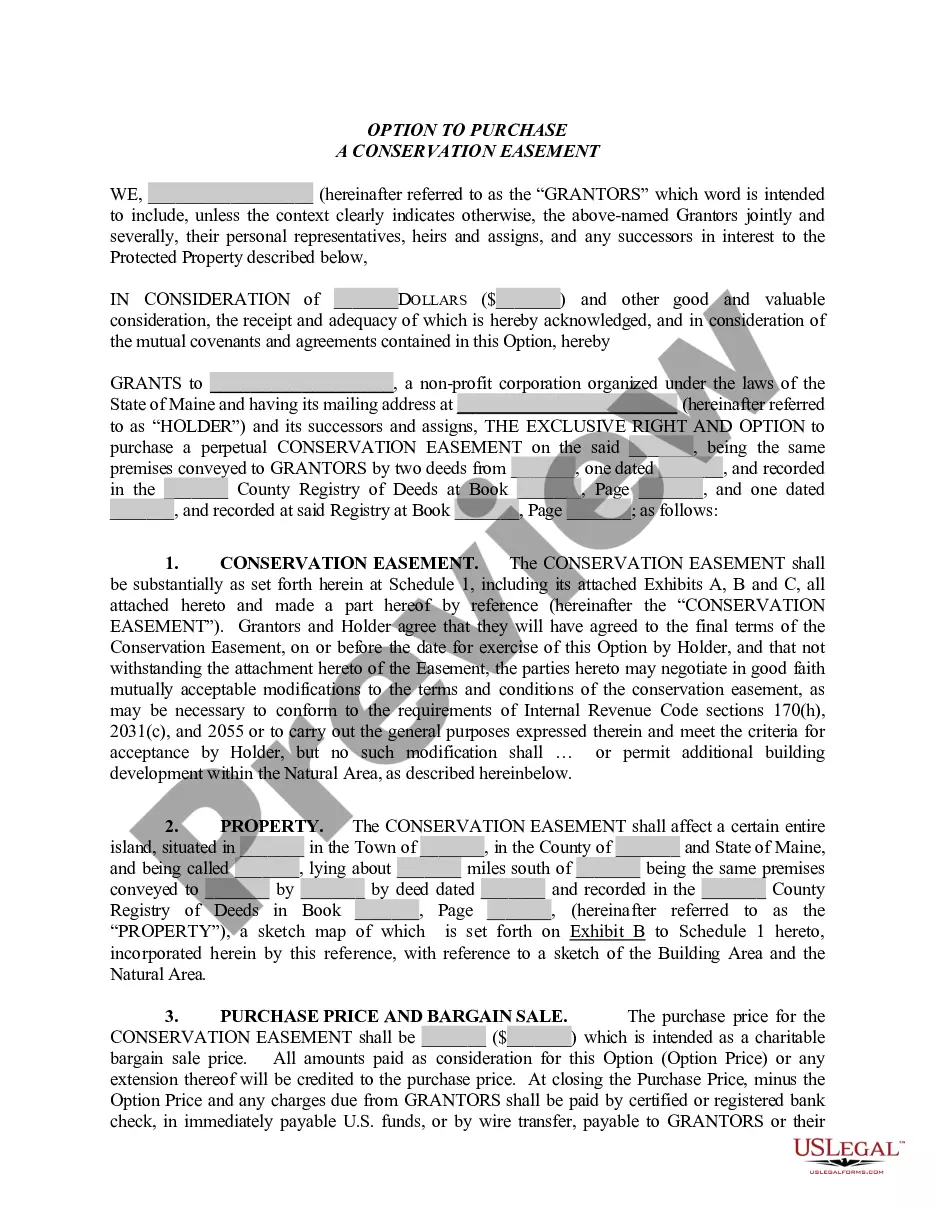
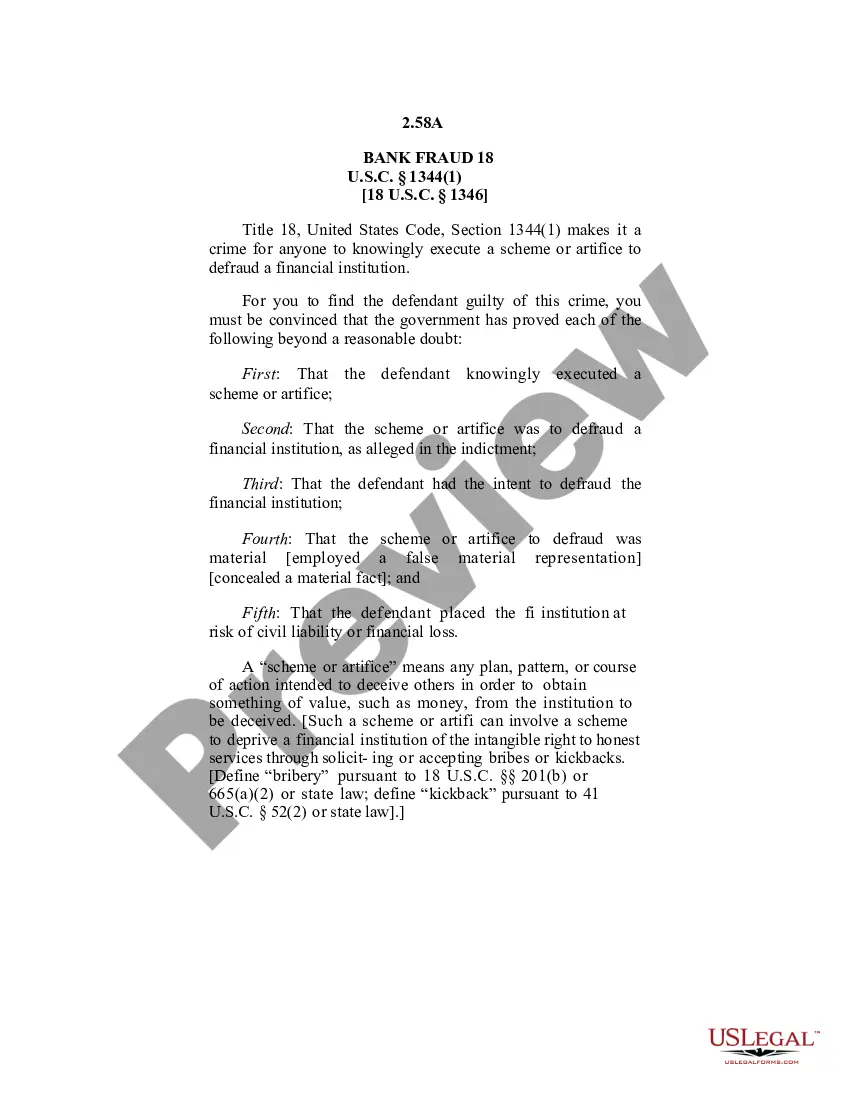
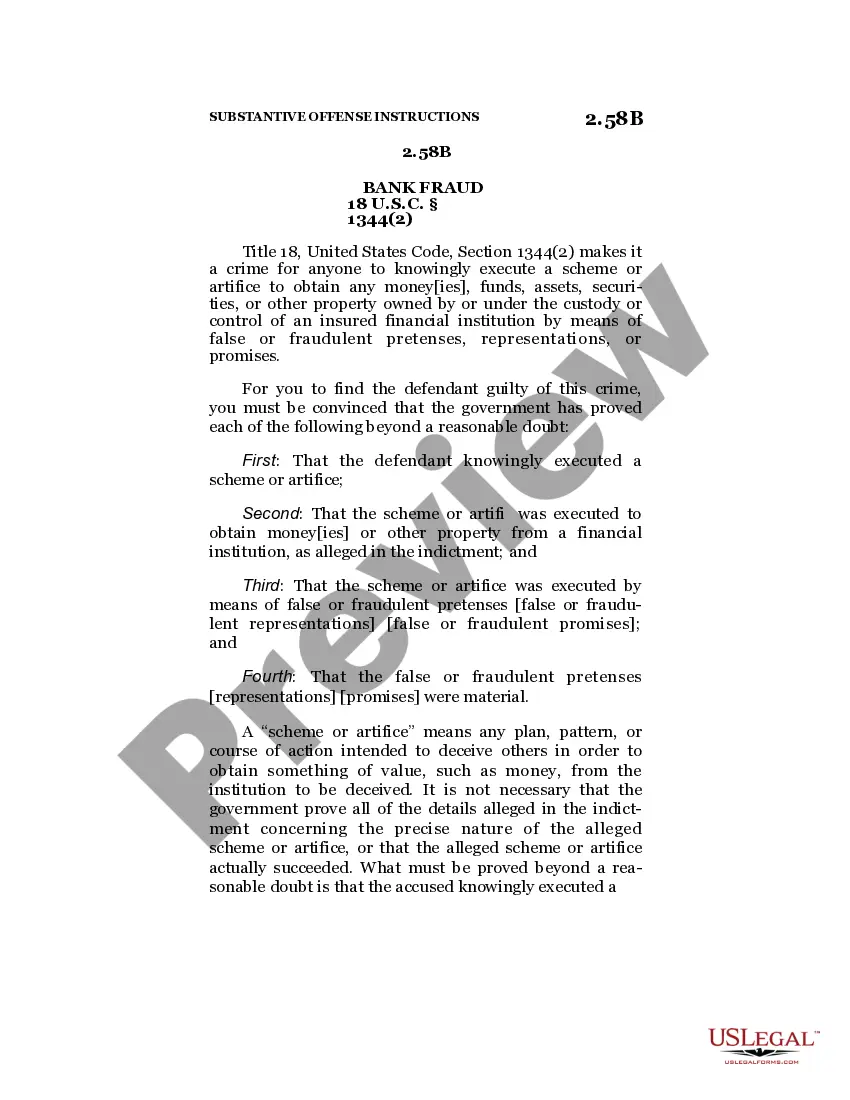
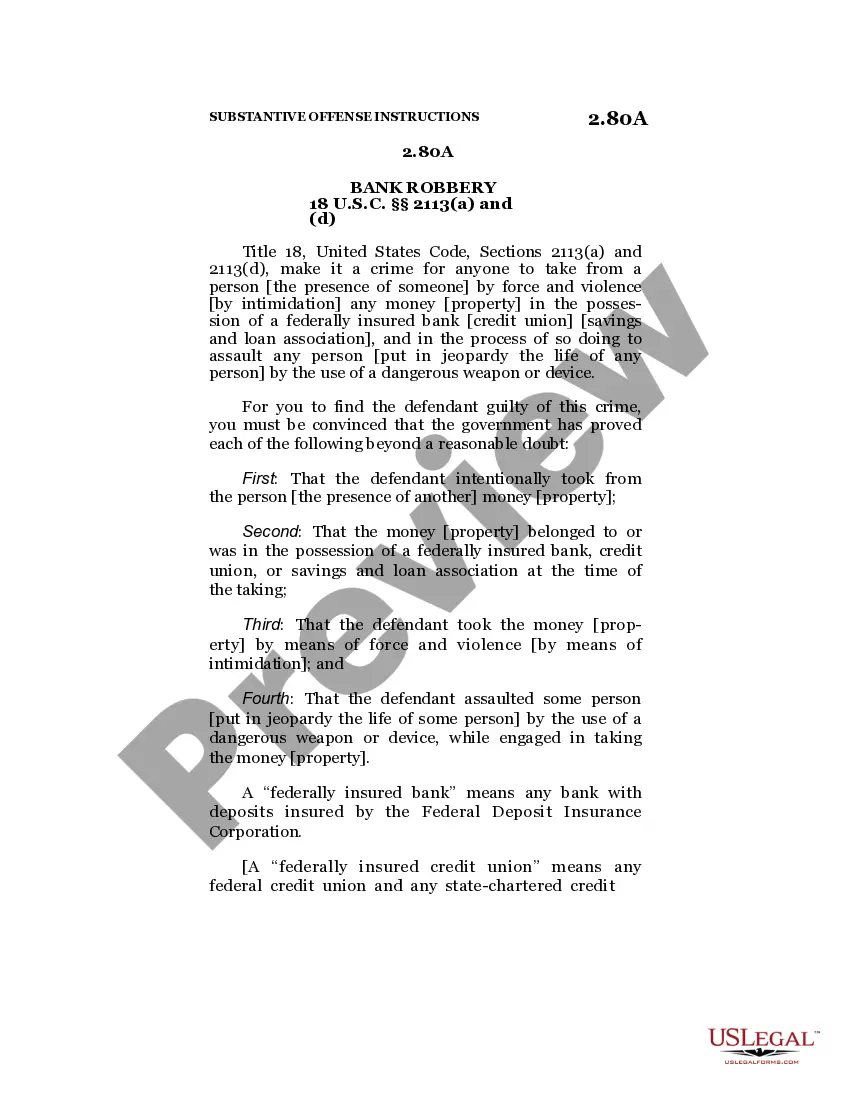
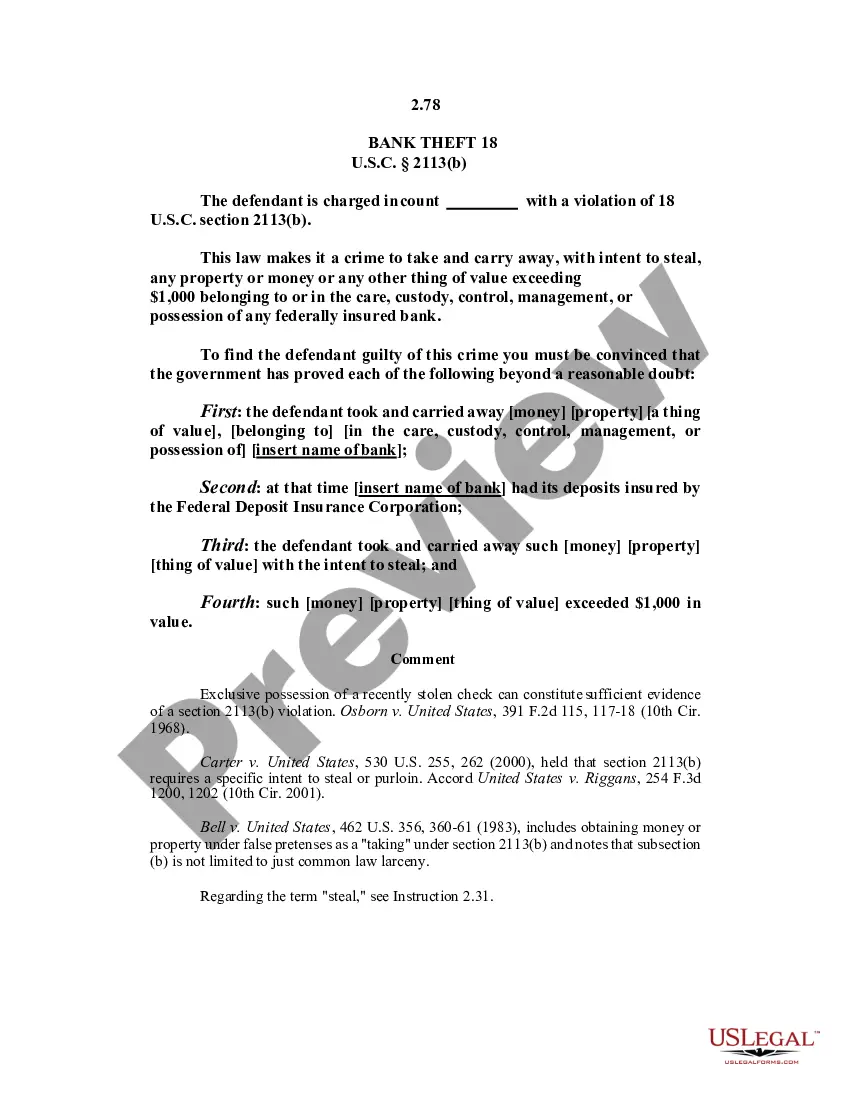
The Bank Theft form outlines the legal provisions and requirements related to crimes involving the taking of property, money, or valuables from federally insured banking institutions. It is specifically based on 18 U.S.C. § 2113(b), which differentiates bank theft from other theft-related crimes by emphasizing the intent to steal or purloin property exceeding a value of one thousand dollars. This form is crucial for understanding the legal parameters defining bank theft and the potential consequences of such actions.
Main sections of this form
- Definition of bank theft under 18 U.S.C. § 2113(b).
- Criteria for establishing guilt, including intent and value of the property.
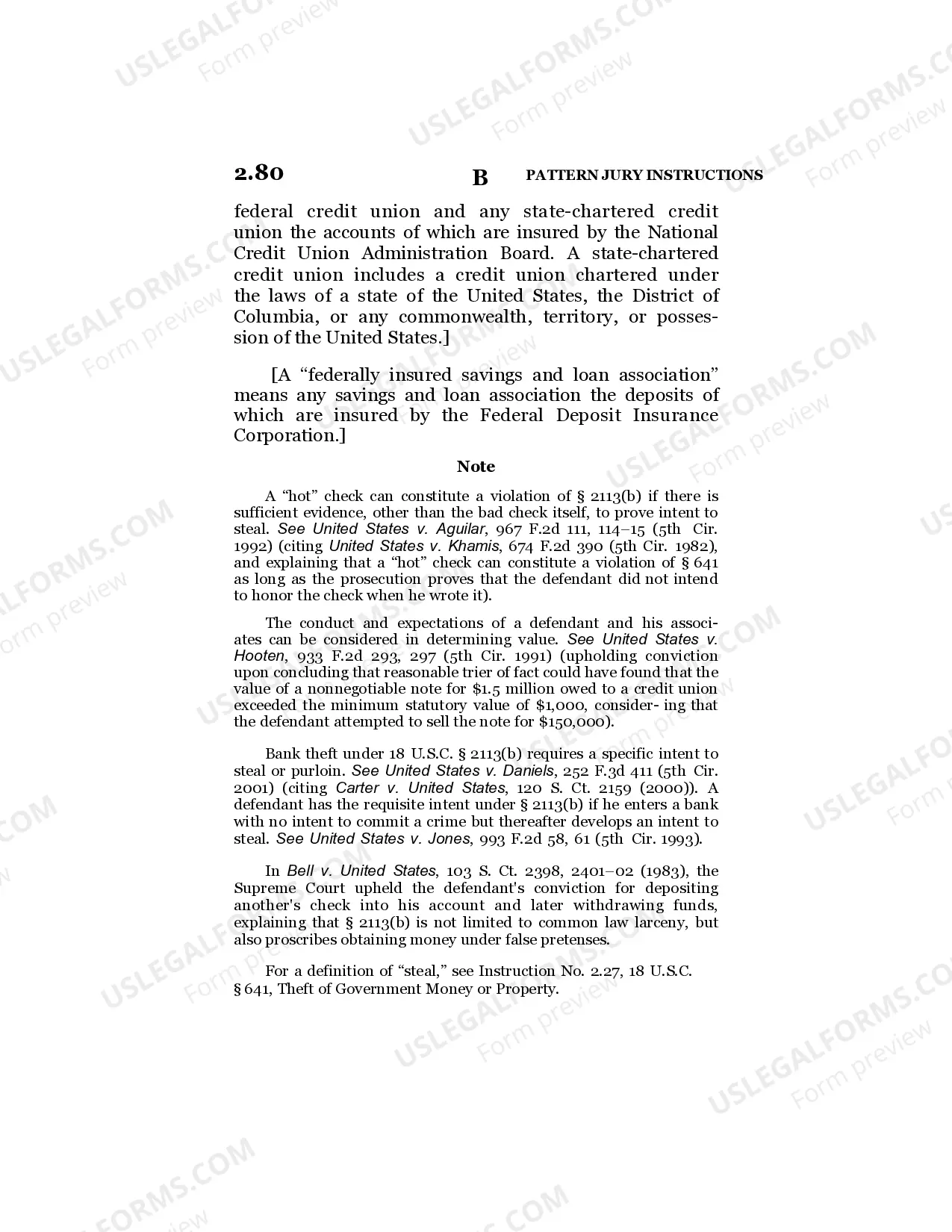
- Explanation of federally insured banks, credit unions, and savings institutions.
- Relevant case law that interprets the statute's application.


Situations where this form applies
This form is applicable in situations where an individual is accused or suspected of engaging in bank theft. It is utilized by legal professionals in preparing cases against defendants or in defense against such charges. It may also be referenced by individuals wishing to understand their rights and responsibilities regarding theft-related allegations against federally insured banking institutions.
Who needs this form
- Defendants facing charges of bank theft.
- Legal professionals representing clients in bank theft cases.
- Individuals seeking to understand the implications of theft laws in banking contexts.
Steps to complete this form
- Identify the bank, credit union, or savings institution involved.
- Detail the property or money taken, including its value.
- Specify the intent behind the action (such as intent to steal).
- Include any relevant case law references that support your position.
- Review the form for accuracy and completeness before submission.
Notarization requirements for this form
This form does not typically require notarization unless specified by local law. It is essential to check with local regulations or legal counsel regarding specific notarization requirements for criminal cases.
Get your form ready online
Our built-in tools help you complete, sign, share, and store your documents in one place.
Make edits, fill in missing information, and update formatting in US Legal Forms—just like you would in MS Word.
Download a copy, print it, send it by email, or mail it via USPS—whatever works best for your next step.
Sign and collect signatures with our SignNow integration. Send to multiple recipients, set reminders, and more. Go Premium to unlock E-Sign.
If this form requires notarization, complete it online through a secure video call—no need to meet a notary in person or wait for an appointment.
We protect your documents and personal data by following strict security and privacy standards.

Make edits, fill in missing information, and update formatting in US Legal Forms—just like you would in MS Word.

Download a copy, print it, send it by email, or mail it via USPS—whatever works best for your next step.

Sign and collect signatures with our SignNow integration. Send to multiple recipients, set reminders, and more. Go Premium to unlock E-Sign.

If this form requires notarization, complete it online through a secure video call—no need to meet a notary in person or wait for an appointment.

We protect your documents and personal data by following strict security and privacy standards.
Common mistakes to avoid
- Failing to specify the value of stolen property clearly.
- Not establishing intent to steal adequately.
- Omitting the name of the federally insured institution involved.
- Neglecting to reference relevant case law that can support your argument.
Benefits of using this form online
- Convenience of accessing and downloading the form at any time.
- Editability to customize the form to specific needs or contexts.
- Access to reliable templates drafted by licensed attorneys.
Legal use & context
- The Bank Theft form is based on federal law and is enforceable across all U.S. jurisdictions.
- It is crucial for establishing the elements needed for a successful prosecution or defense.
- Understanding the specific legal definitions and requirements can help avoid costly legal mistakes.
Looking for another form?



Form popularity
FAQ
Contact your bank or card provider to alert them. Reporting is an important first step to getting your money back, and you could be liable for all money lost before you report it. If you've been targeted, even if you don't fall victim, you can report it to Action Fraud.
1) The Central Bank of Iraq Robbery On March 18, 2003, the Central Bank of Iraq in Baghdad was robbed of approximately $920 million in cash, on the eve of the Iraq War.
There is a type of robbery known as the ?Morning Glory? where perpetrators will assault employees as they open up the premises for the day, take them inside and demand money, or they may have sequestered themselves within the premises during the night by some means.
Under federal law, bank robbery is a serious offense and you could be sentenced for up to 20 years in a federal prison, a fine up to $250,000, or both. If you used violence to accomplish the bank robbery, you could face more severe penalties.
The FBI has had a primary role in bank robbery investigations since the 1930s, when John Dillinger and his gang were robbing banks and capturing the public's attention. In 1934, it became a federal crime to rob any national bank or state member bank of the Federal Reserve System.
FDIC deposit insurance does not apply to financial products such as stocks, bonds, money market mutual funds, other types of securities, commodities, or crypto assets. FDIC deposit insurance does not protect against losses due to theft or fraud, which are addressed by other laws.
Yes, contrary to what you might think, a bank can take money out of your checking account, even if you don't authorize it. It's called a "right to offset" and it typically happens in one situation: When you owe your bank money on a loan.
When your money is in the bank, the bank is the custodian in trust. Money taken from a robbery is taken from the bank, not the individual depositors. In such a case, the bank has insurance that pays out to the bank, not the depositors. As far as the depositors are concerned, nothing happened to their money.