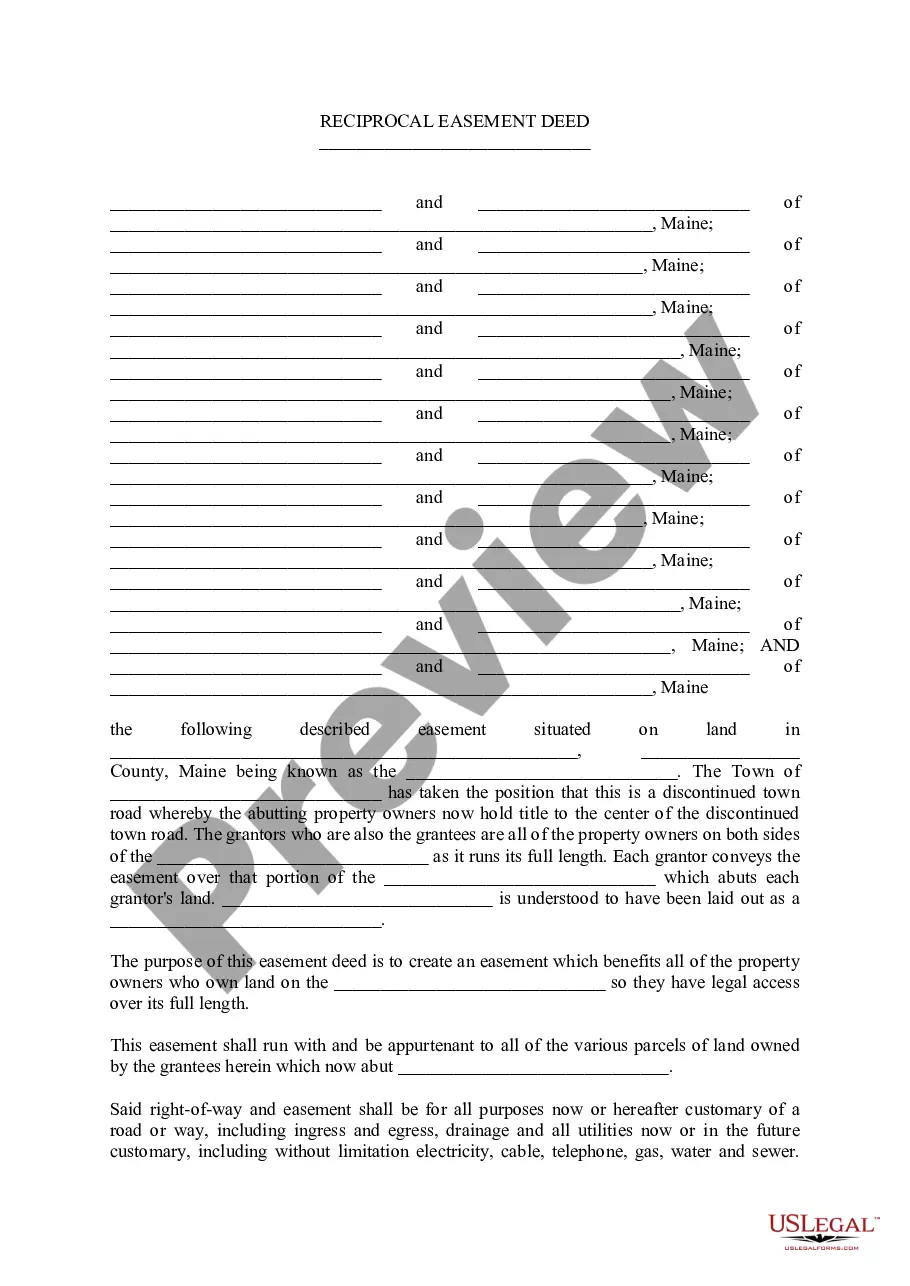
Bank Fraud
What this document covers
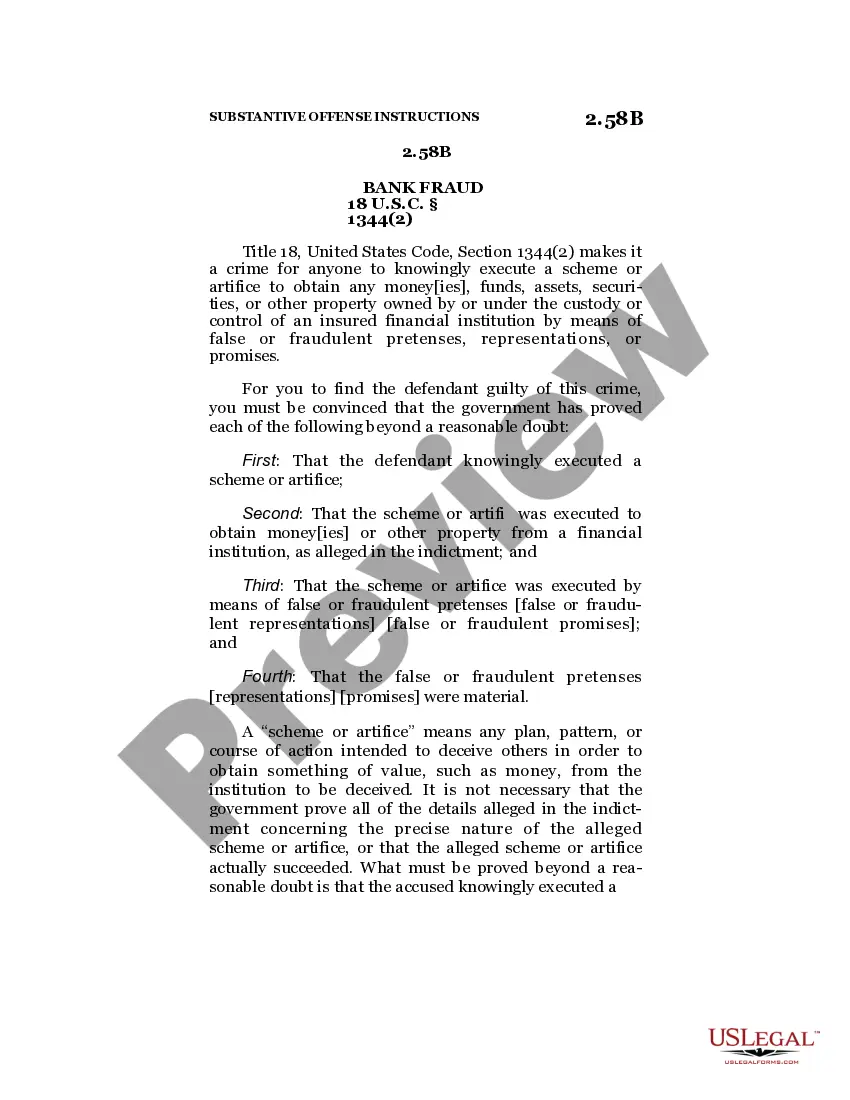
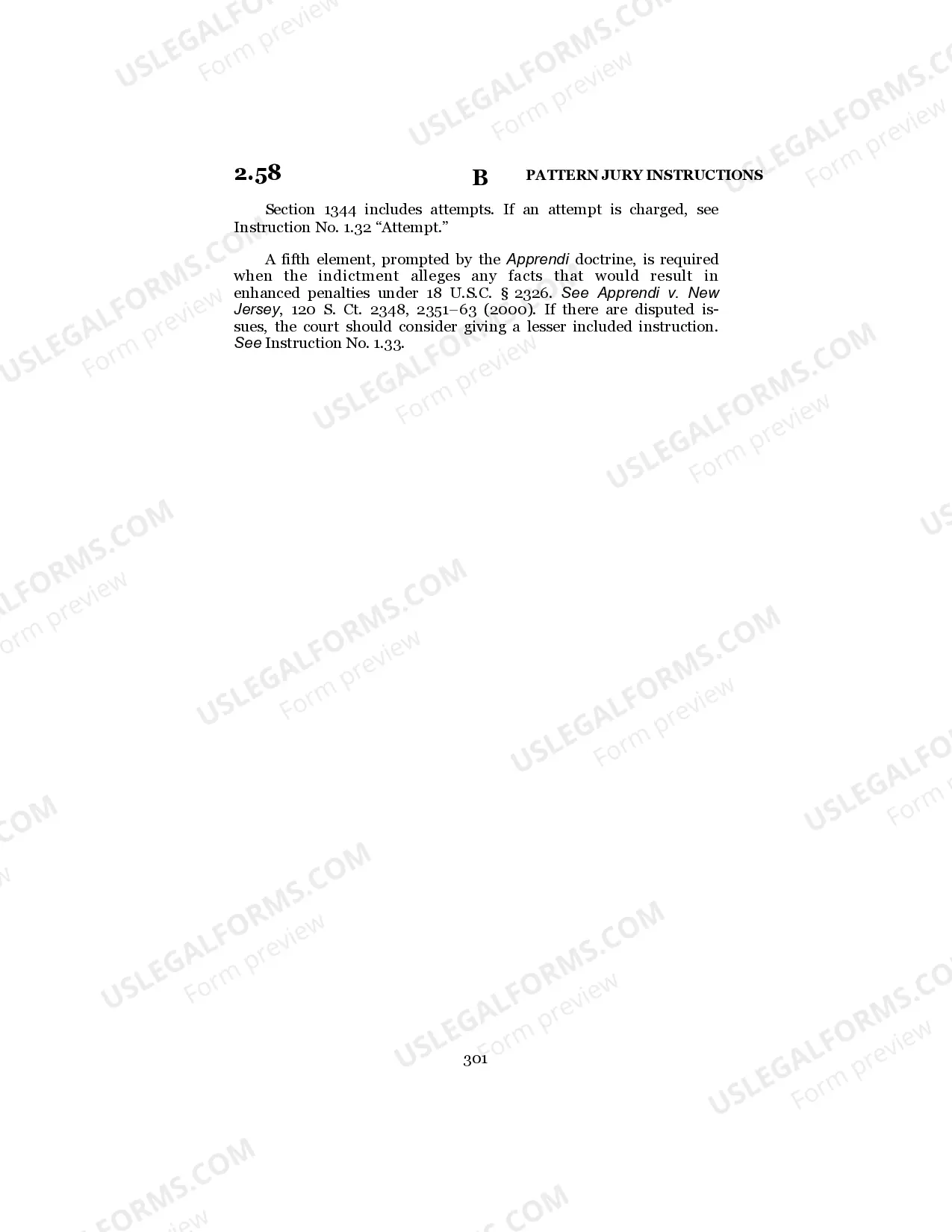
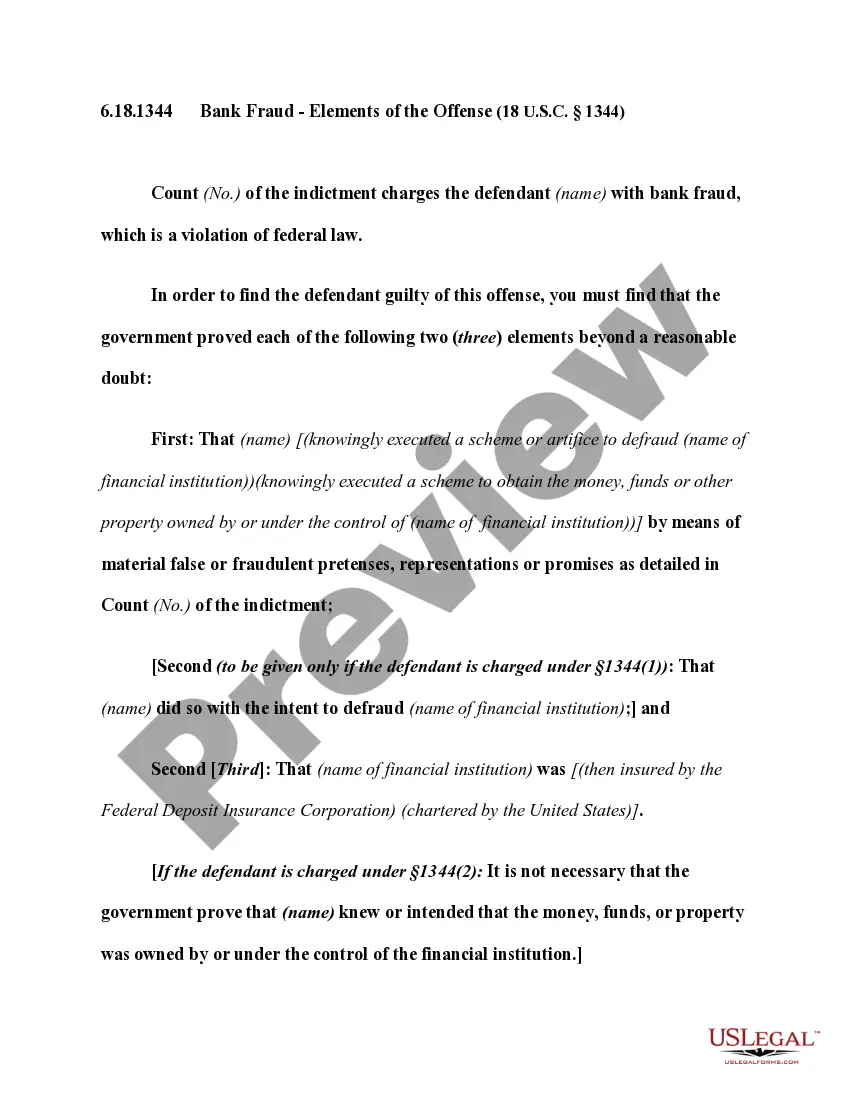
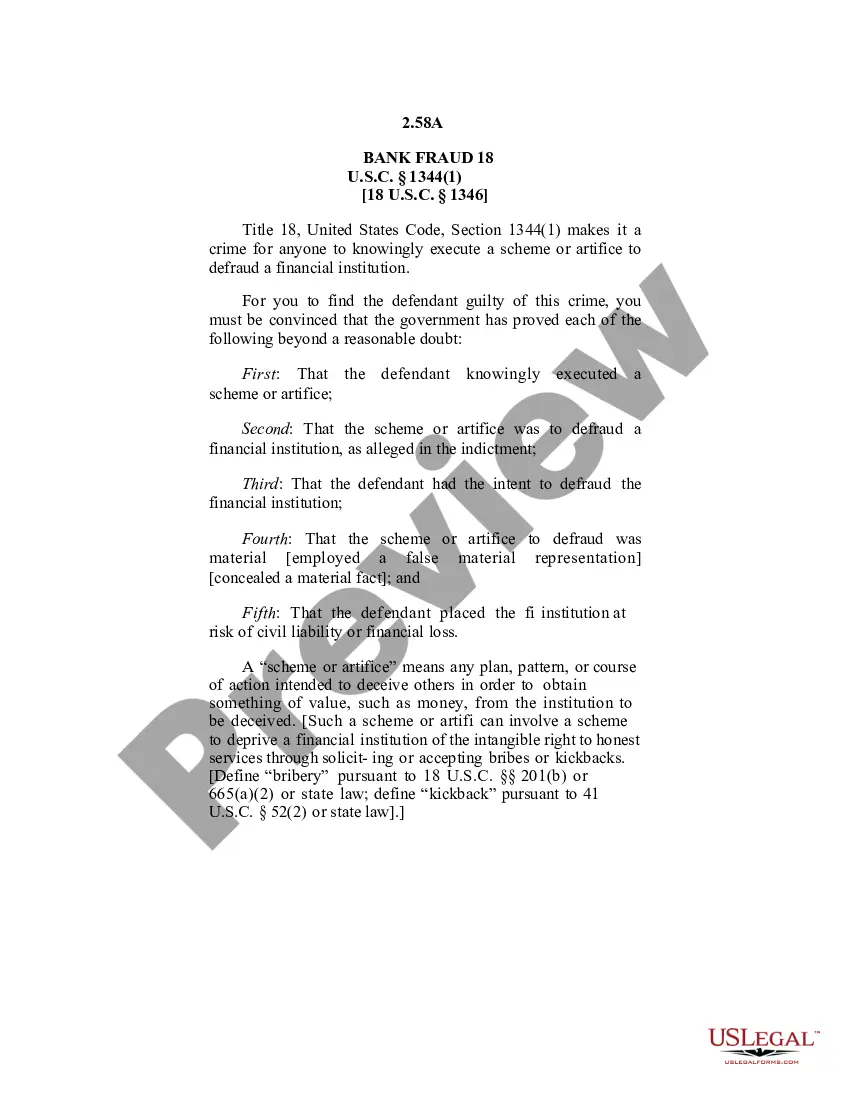
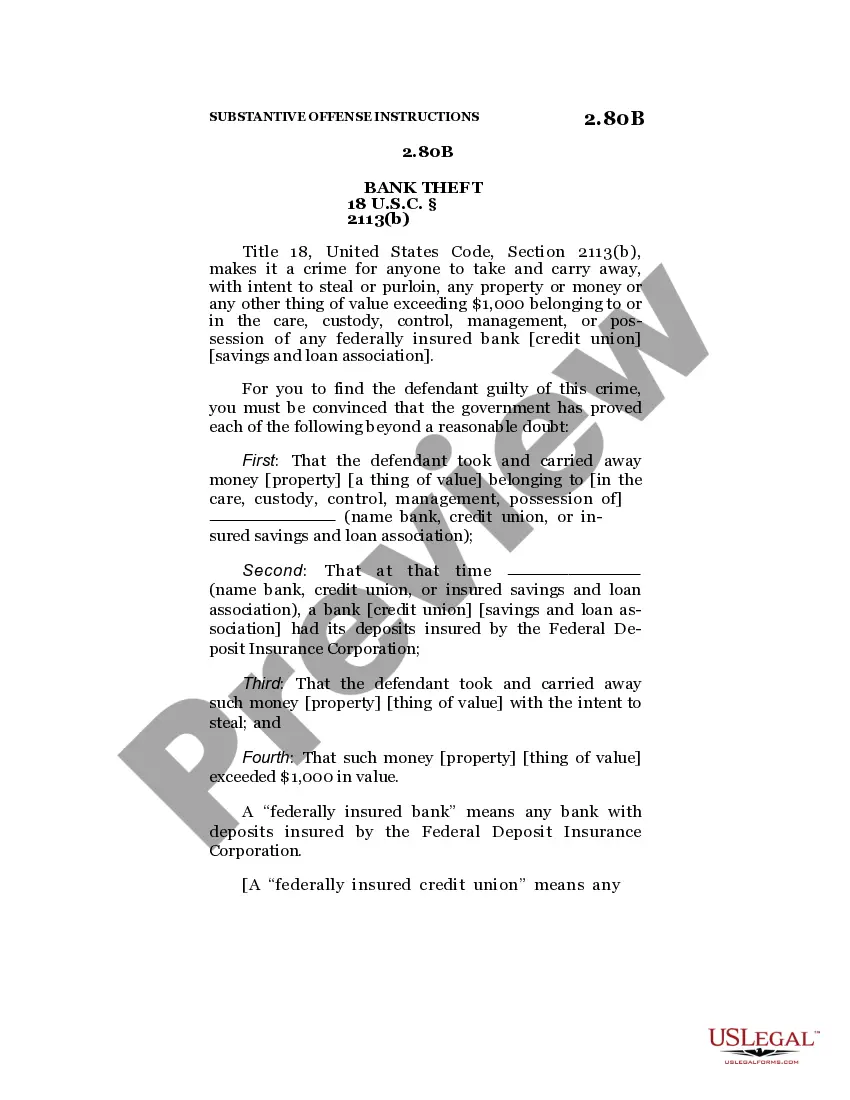
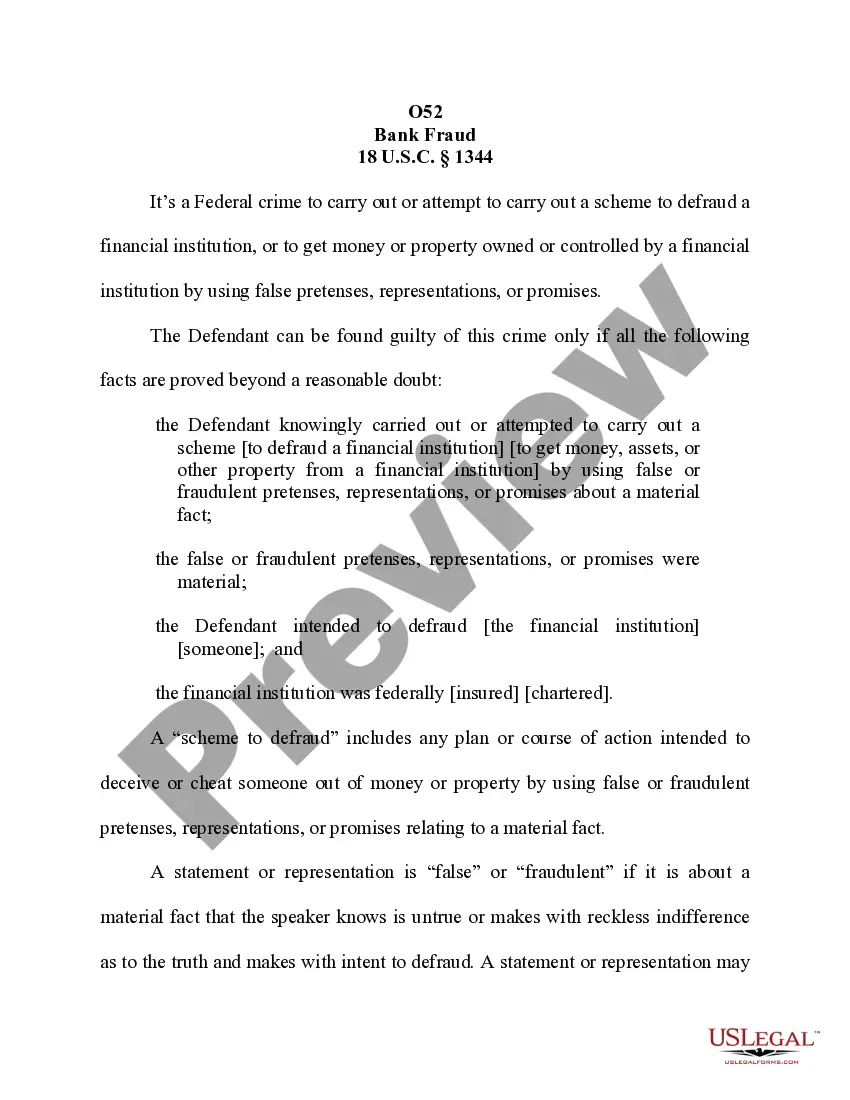
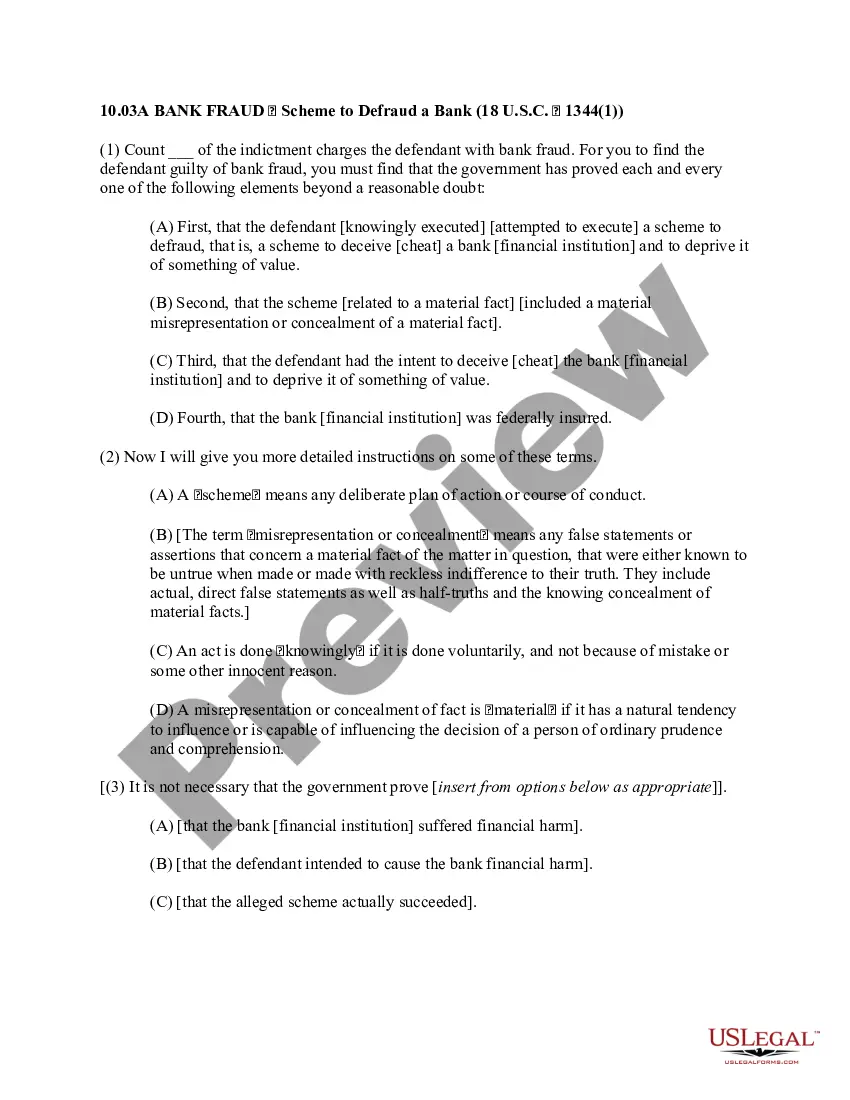
The Bank Fraud form is a legal document used in relation to the crime defined under Title 18, United States Code, Section 1344(2). It outlines the elements necessary to establish that an individual has committed bank fraud by executing a scheme to obtain money or property from a financial institution through deceitful practices. This form differs from other financial fraud forms in that it specifically addresses fraud involving federally insured banks and requires proof of false pretenses, representations, or promises.
Main sections of this form
- Definition of bank fraud under 18 U.S.C. 1344(2)
- Conditions for establishing guilt beyond a reasonable doubt
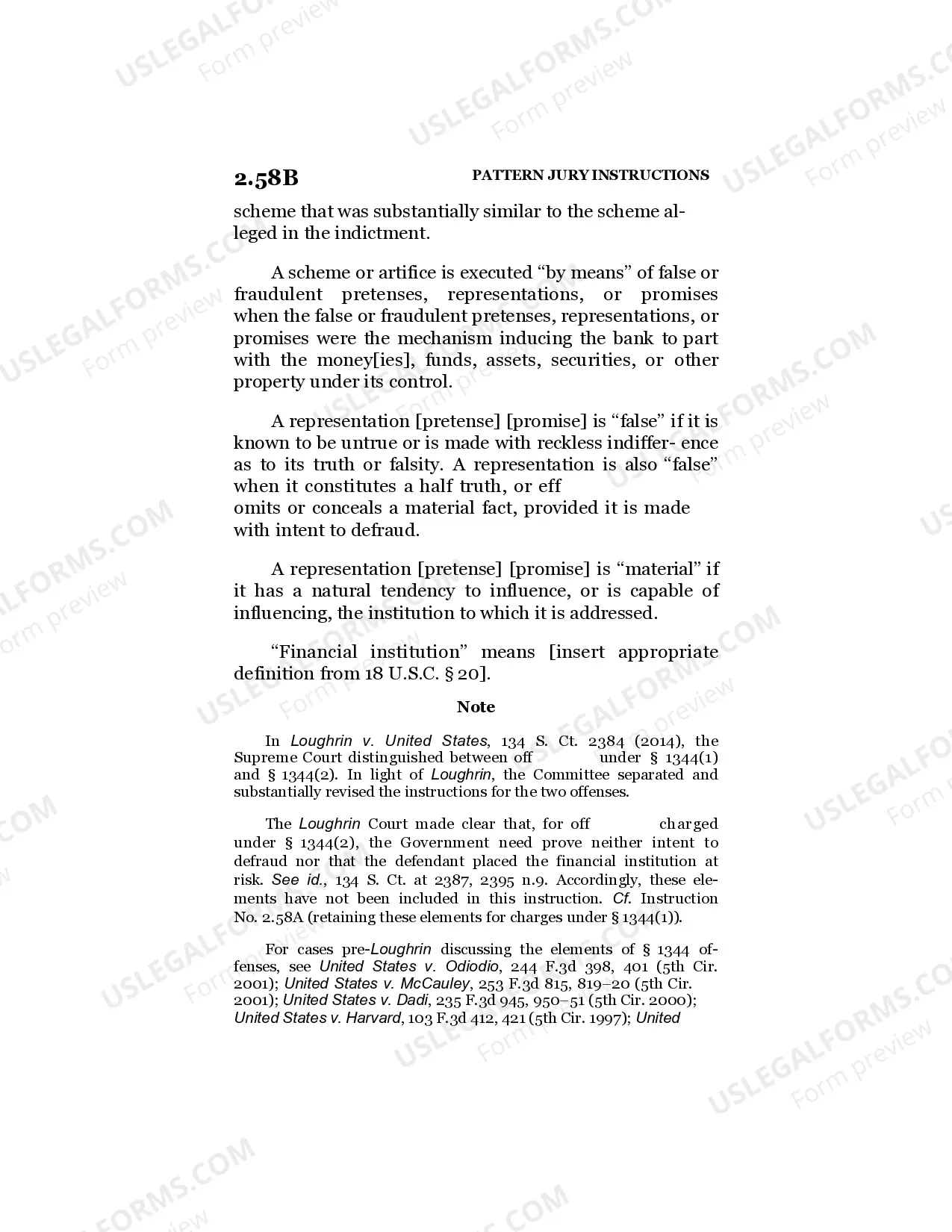
- Explanation of what constitutes a scheme or artifice
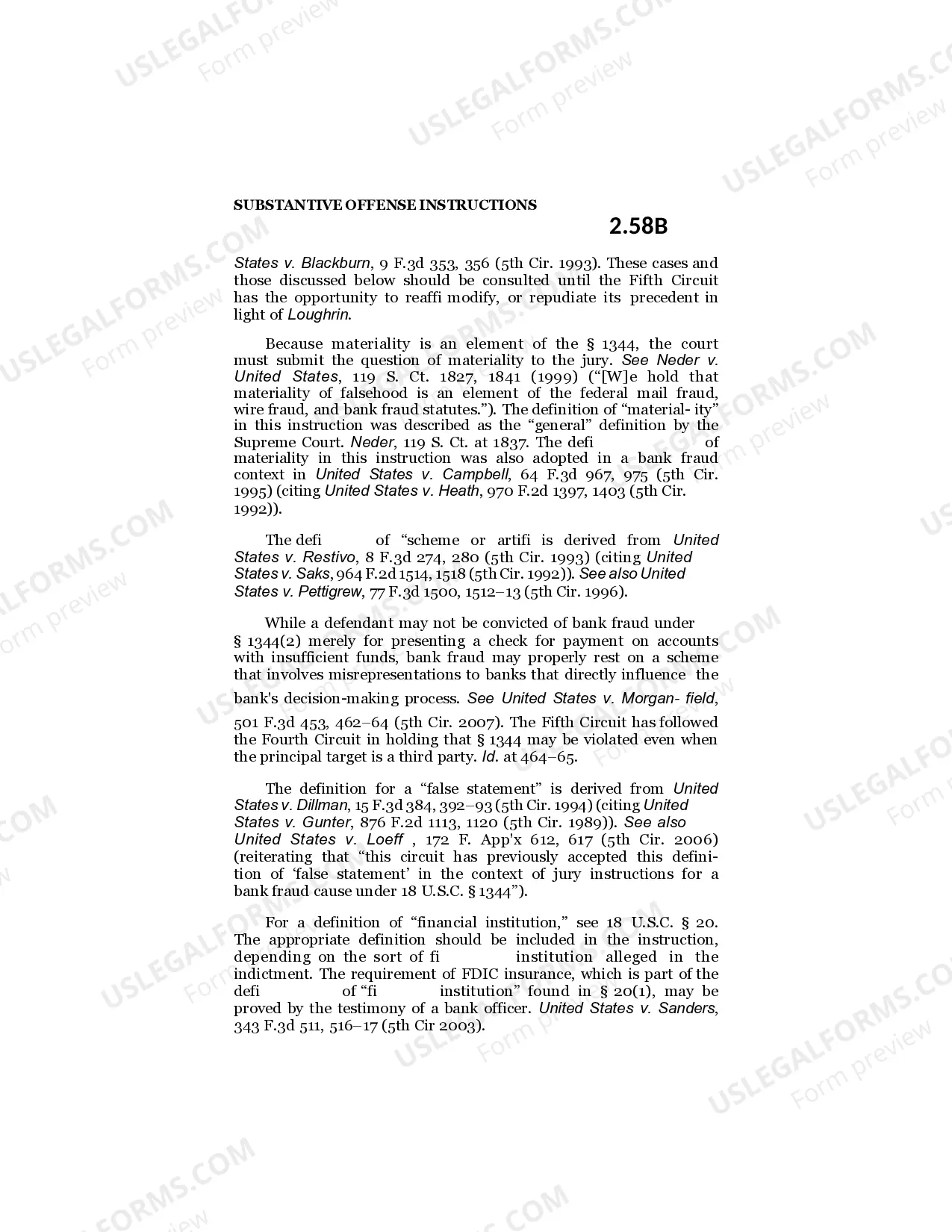
- Clarification of materials and misrepresentations
- Federal and circuit court references for legal context
When this form is needed
This form should be used when there are allegations or suspicions of bank fraud involving false pretenses or misrepresentations made to a financial institution. It is applicable in legal proceedings where one party is accused of executing a fraudulent scheme designed to deceive financial institutions for monetary gain.
Intended users of this form
- Defendants in bank fraud cases
- Attorneys representing clients accused of bank fraud
- Legal professionals involved in financial crime litigation
Steps to complete this form
- Identify the parties involved in the alleged fraudulent scheme.
- Clearly articulate the scheme or artifice used to deceive the financial institution.
- Specify the false pretenses, representations, or promises that were made.
- Detail the monetary or property gains sought within the fraudulent scheme.
- Ensure all allegations are supported by relevant evidence or documentation.
Does this document require notarization?
This form usually doesn’t need to be notarized. However, local laws or specific transactions may require it. Our online notarization service, powered by Notarize, lets you complete it remotely through a secure video session, available 24/7.
Get your form ready online
Our built-in tools help you complete, sign, share, and store your documents in one place.
Make edits, fill in missing information, and update formatting in US Legal Forms—just like you would in MS Word.
Download a copy, print it, send it by email, or mail it via USPS—whatever works best for your next step.
Sign and collect signatures with our SignNow integration. Send to multiple recipients, set reminders, and more. Go Premium to unlock E-Sign.
If this form requires notarization, complete it online through a secure video call—no need to meet a notary in person or wait for an appointment.
We protect your documents and personal data by following strict security and privacy standards.

Make edits, fill in missing information, and update formatting in US Legal Forms—just like you would in MS Word.

Download a copy, print it, send it by email, or mail it via USPS—whatever works best for your next step.

Sign and collect signatures with our SignNow integration. Send to multiple recipients, set reminders, and more. Go Premium to unlock E-Sign.

If this form requires notarization, complete it online through a secure video call—no need to meet a notary in person or wait for an appointment.

We protect your documents and personal data by following strict security and privacy standards.
Avoid these common issues
- Failing to provide clear evidence linking the scheme to the financial institution.
- Not adequately defining the false representations or pretenses made.
- Overlooking the necessity to prove intent and materiality in the charges.
Why complete this form online
- Convenient access to legal resources and information.
- Editable formats to tailor the document to specific case needs.
- Reliable templates drafted by licensed attorneys to ensure legal compliance.
Looking for another form?

Form popularity
FAQ
RankingBankFraud Search Volume1Santander11,6902NatWest11,4803Barclays9,4504HSBC5,5401 more row ?
Credit card fraud is probably the most common type of bank fraud. It is a broad term that signifies fraud committed using any type of payment card, including credit, debit, gift card, and prepaid ones.
Fraud cost consumers $8.8 billion last year, Federal Trade Commission says. That's up 44% from 2021. Although the number of fraud reports dropped to 2.4 million in 2022 from 2.9 million in 2021, the aggregate amount lost to the scams rose 44%.
Most Common Types of Fraud by the Numbers RankCategory% Reporting $ Loss1Imposter Scams23%2Online Shopping and Negative Reviews55%3Investment Related67%4Business and Job Opportunities29%1 more row
Some of the most common types of bank account fraud have been known to be check fraud (forgery or deliberate bouncing of checks), debit and credit card fraud (stolen numbers), safe deposit box fraud (d identity), and A.C.H. fraud, but there are even more types of bank fraud than these.
Some of the most common types of fraud tend to be check fraud, debit and credit card fraud, safe deposit box fraud, and ACH fraud, but there are many additional types of bank fraud both within and beyond these basic categories.
Unrestricted access to assets or sensitive data (e.g., cash, personnel records, etc.) Not recording transactions resulting in lack of accountability. Not reconciling assets with the appropriate records. Unauthorized transactions.