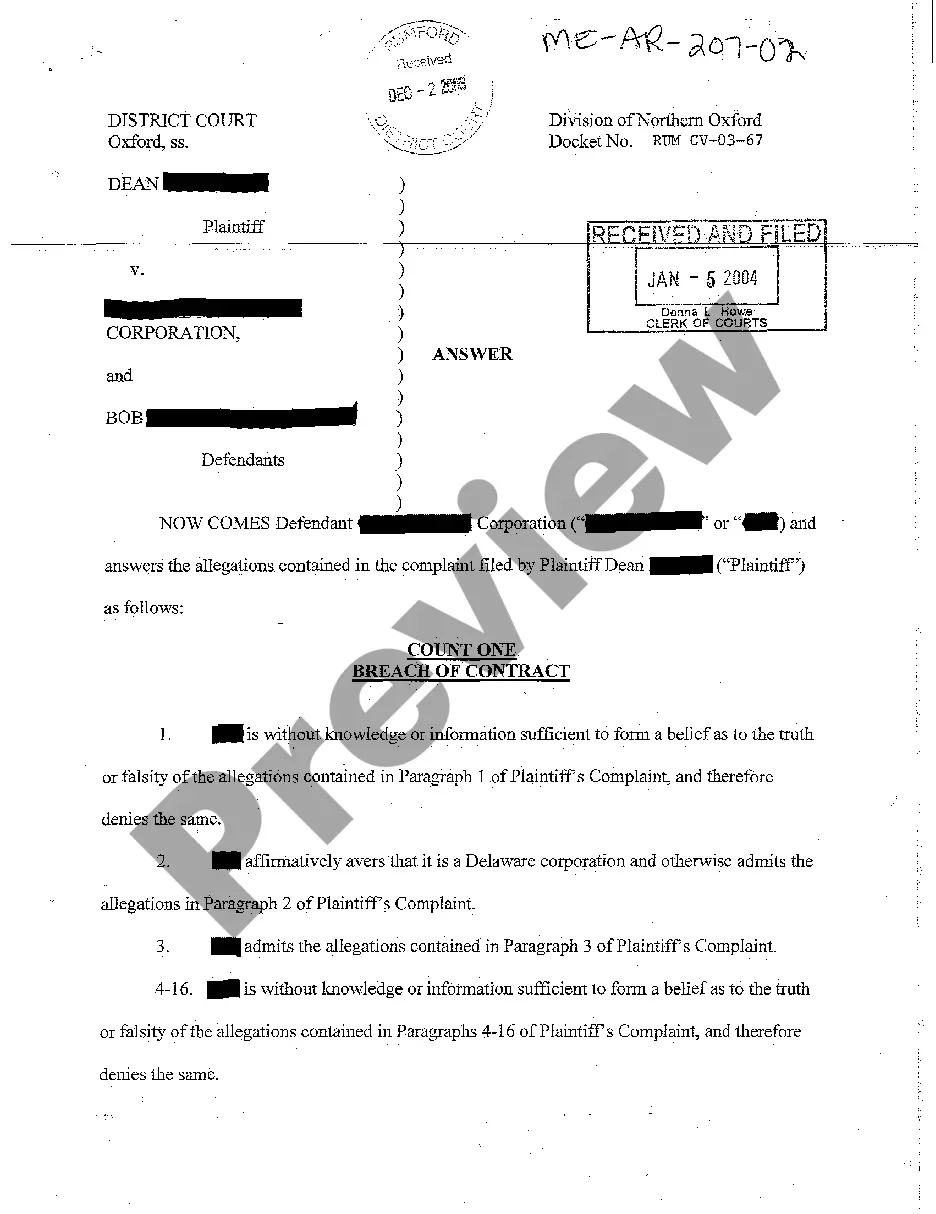
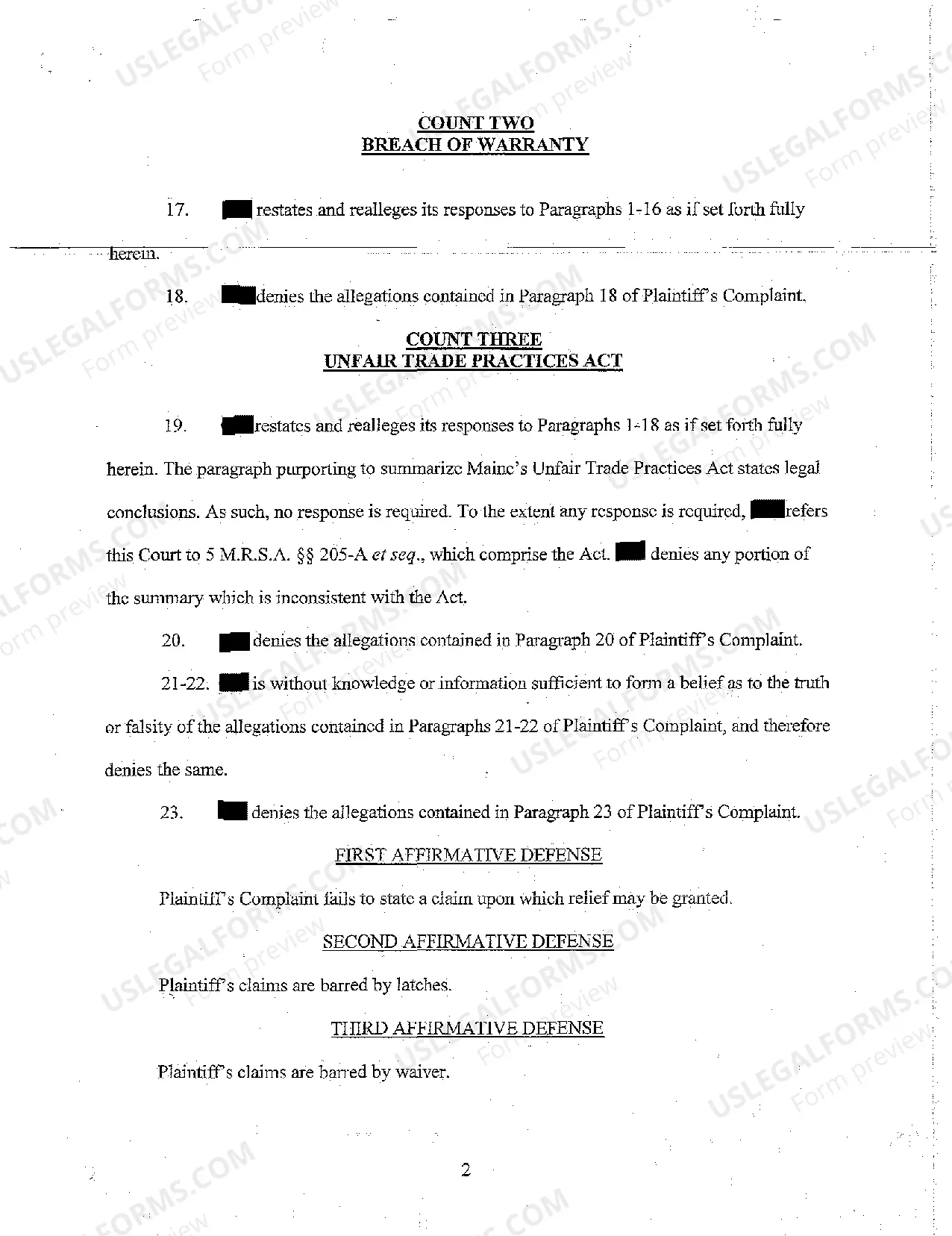
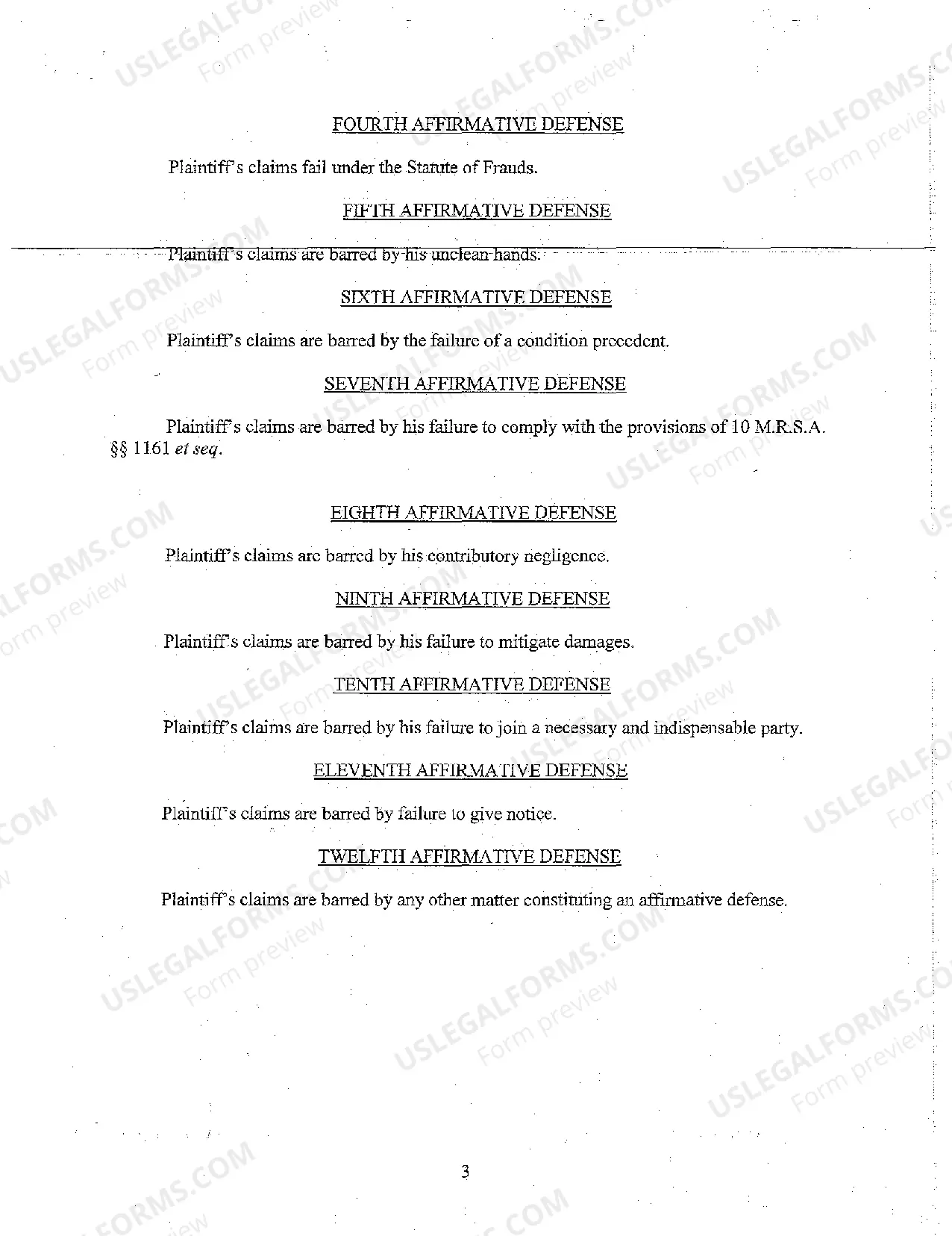
Maine Answer by Defendant
Description
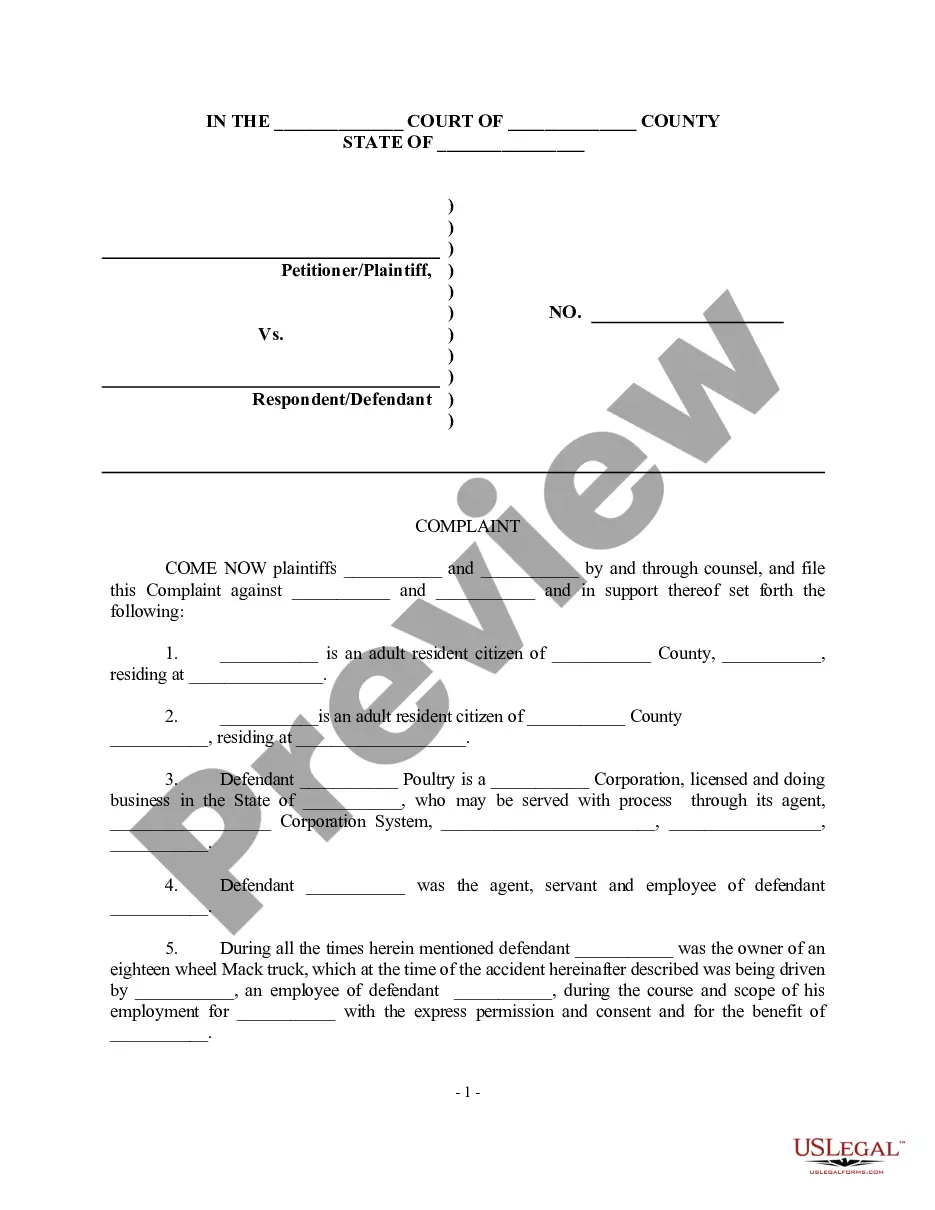
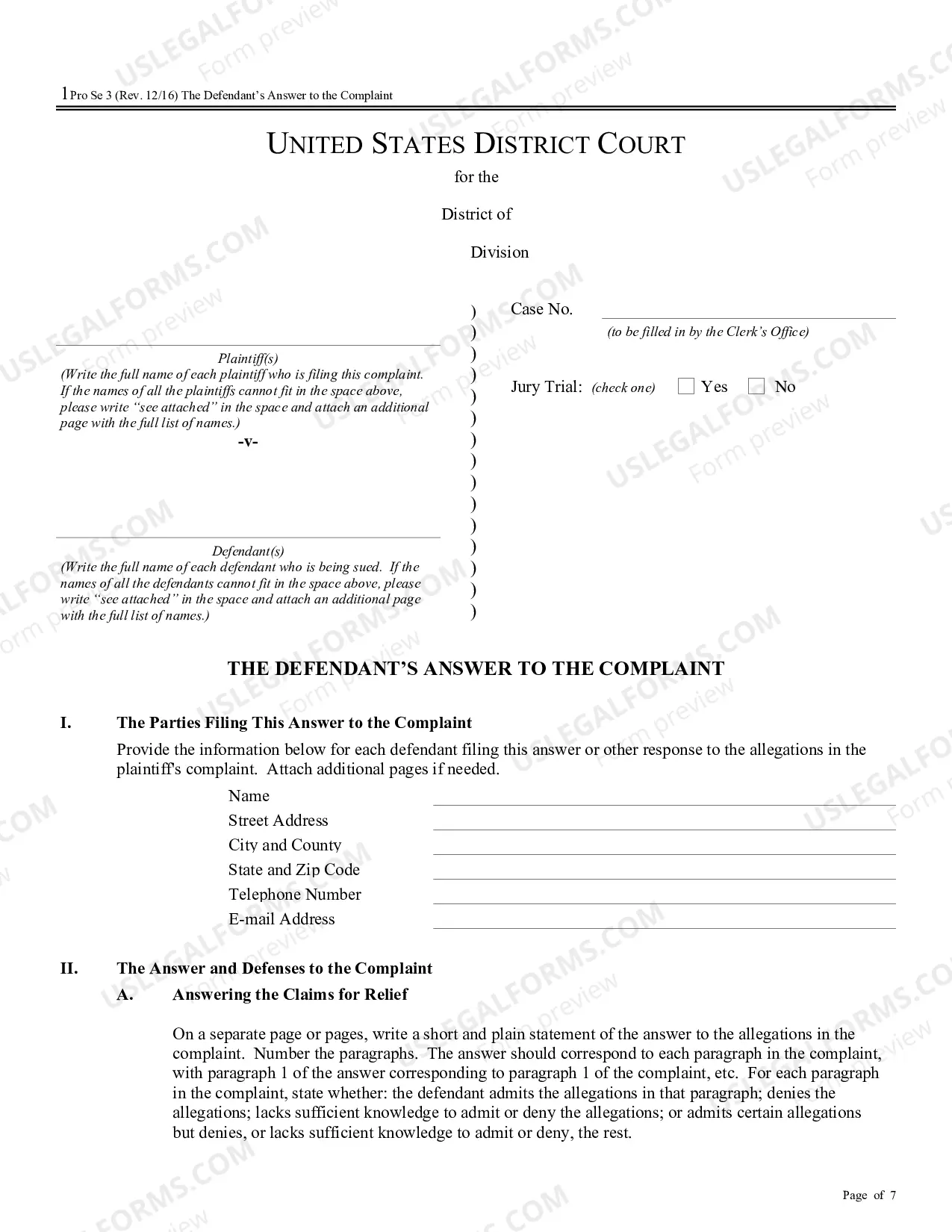




How to fill out Maine Answer By Defendant?
You are invited to the most important legal documents collection, US Legal Forms. Here you will discover various samples like Maine Response by Defendant formats and retain them (as many as you desire or require). Create official documents within a few hours instead of days or weeks, without spending a fortune on a lawyer. Obtain the state-specific template in just a few clicks and feel assured knowing it was prepared by our skilled attorneys.
If you’re already a registered customer, simply Log In to your account and select Download beside the Maine Response by Defendant you need. Since US Legal Forms is an online service, you will always have access to your downloaded templates, irrespective of the device you’re using. Find them under the My documents section.
If you haven't created an account yet, what are you waiting for? Follow our instructions below to get started.
Once you’ve completed the Maine Response by Defendant, forward it to your attorney for validation. It’s an additional step, but a critical one for ensuring you’re completely protected. Enroll in US Legal Forms today and gain access to a vast collection of reusable samples.
- If this is a state-specific document, verify its relevance in your state.
- Review the description (if available) to ascertain if it’s the right form.
- Explore more details using the Preview feature.
- If the template meets all your requirements, click Buy Now.
- To set up your account, choose a subscription plan.
- Utilize a credit card or PayPal to register.
- Save the document in the format you prefer (Word or PDF).
- Print the paper and complete it with your or your company’s information.
Form popularity
FAQ
Rule 45 of the Maine Rules of Civil Procedure pertains to subpoenas. It outlines the procedures for issuing subpoenas, demanding the production of documents, and requiring witness attendance in court. Knowing these rules is vital for a defendant preparing a Maine Answer by Defendant, as it impacts how evidence may be gathered. For assistance with navigating these rules, consider visiting US Legal Forms for tailored legal documents.
The defendant's written response to a petition complaint is called an answer. This document details the defendant's stance on the claims presented by the plaintiff. Accessing resources like uslegalforms can help you create an accurate Maine Answer by Defendant tailored to your situation.
Rule 45 of the Maine Rules of Civil Procedure pertains to the subpoenas issued by the court. It allows a party to compel attendance at a court proceeding or the production of documents. Understanding this rule is crucial for defendants seeking to gather evidence in their favor during litigation. When faced with complex legal matters, considering resources on uslegalforms can enhance your knowledge and preparation.
Read Information Sheet: Responsive Declaration to Request for Order (Form FL-320-INFO ). Fill out your court forms. Have your forms reviewed. Make at least 2 copies of all your forms. File your forms with the court clerk. Serve your papers on the other parent. File your Proof of Service.
Failure to Respond: If a defendant fails to answer the complaint or file a motion to dismiss within the time limit set forth in the summons, the defendant is in default. The plaintiff can ask the court clerk to make a note of that fact in the file, a procedure called entry of default.
You can file an answer to respond to the plaintiff's complaint. An answer is a formal statement, in writing, of your defense to the lawsuit. You can say that what the plaintiff claims is not true. Or you can say it is true but give more information and reasons to defend your actions or explain the situation.
The plaintiff must give you responses to your request for admissions within 30 days. You do not need to do anything if you do not get a response. The plaintiff has 30 days to deny or object to the statements.
Failure to Respond: If a defendant fails to answer the complaint or file a motion to dismiss within the time limit set forth in the summons, the defendant is in default. The plaintiff can ask the court clerk to make a note of that fact in the file, a procedure called entry of default.