Entrapment
Overview of this form
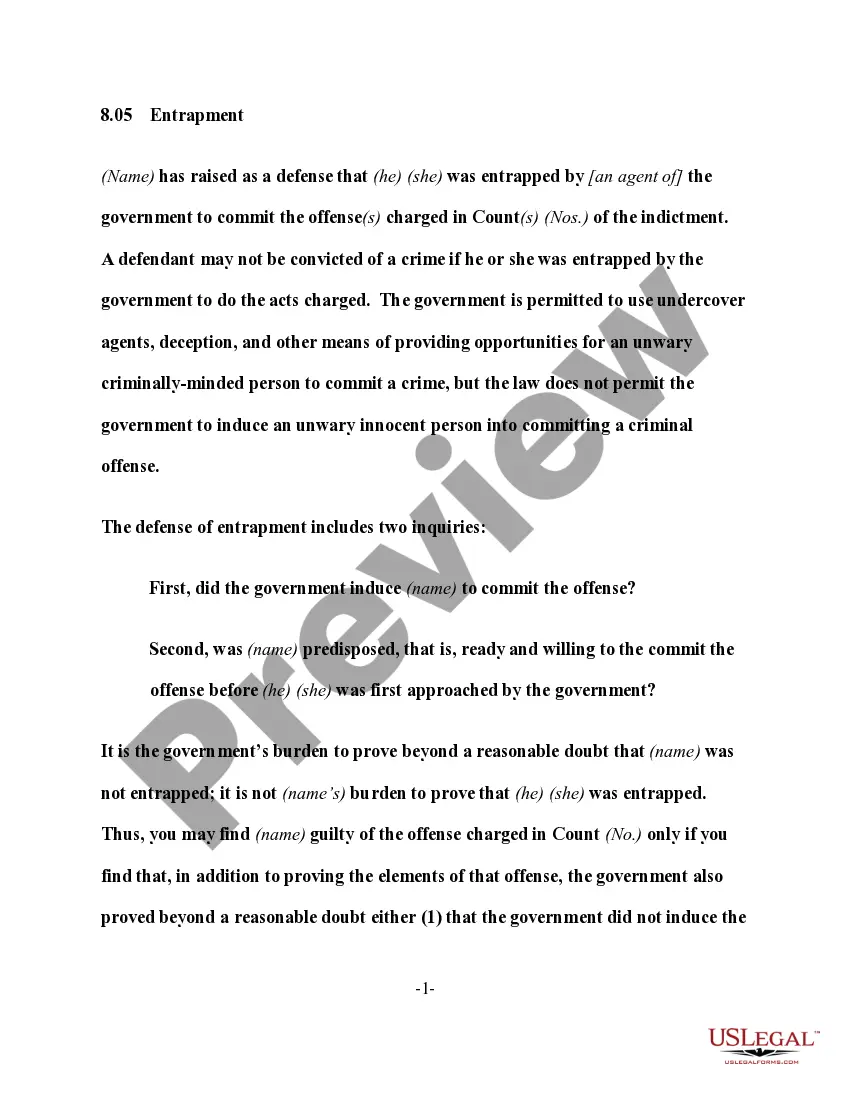
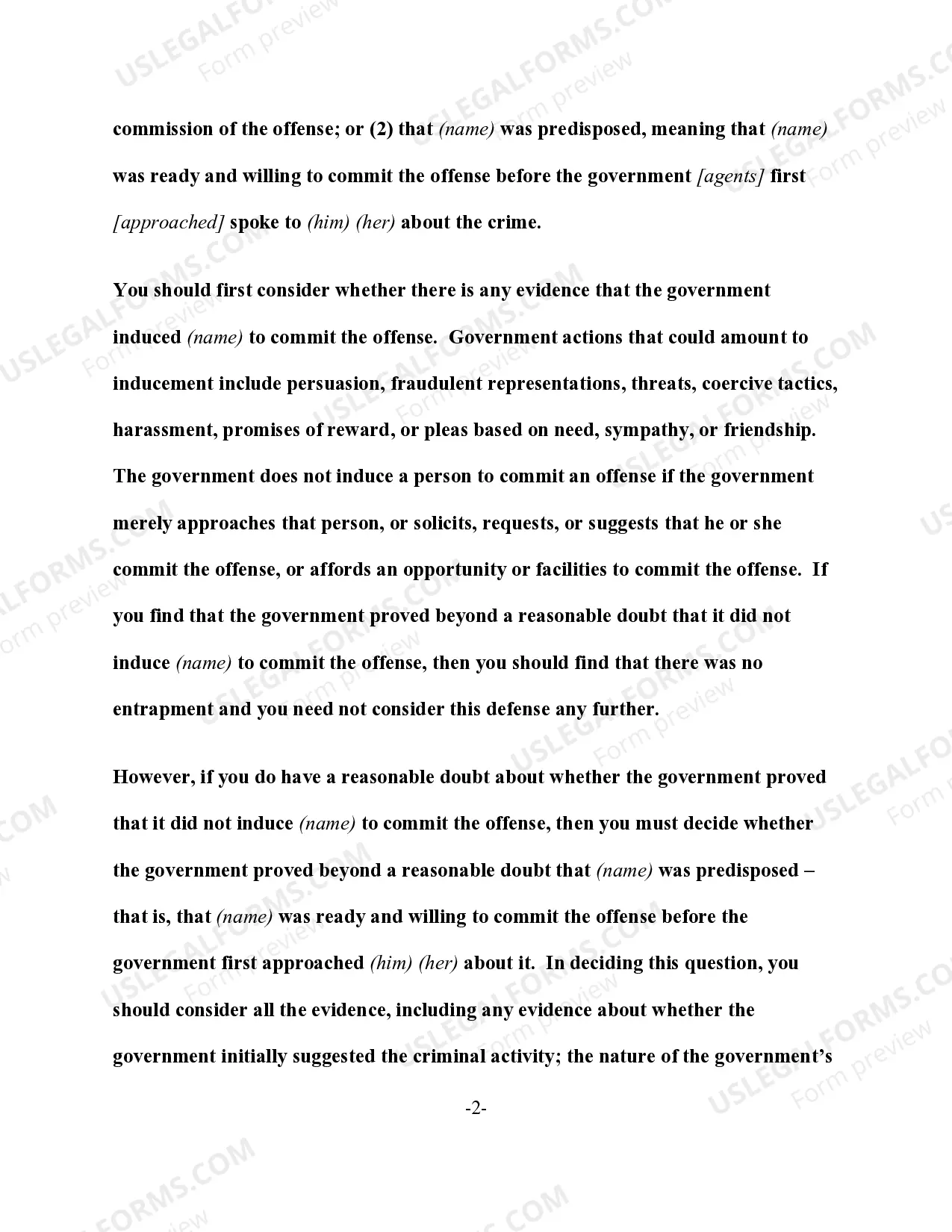
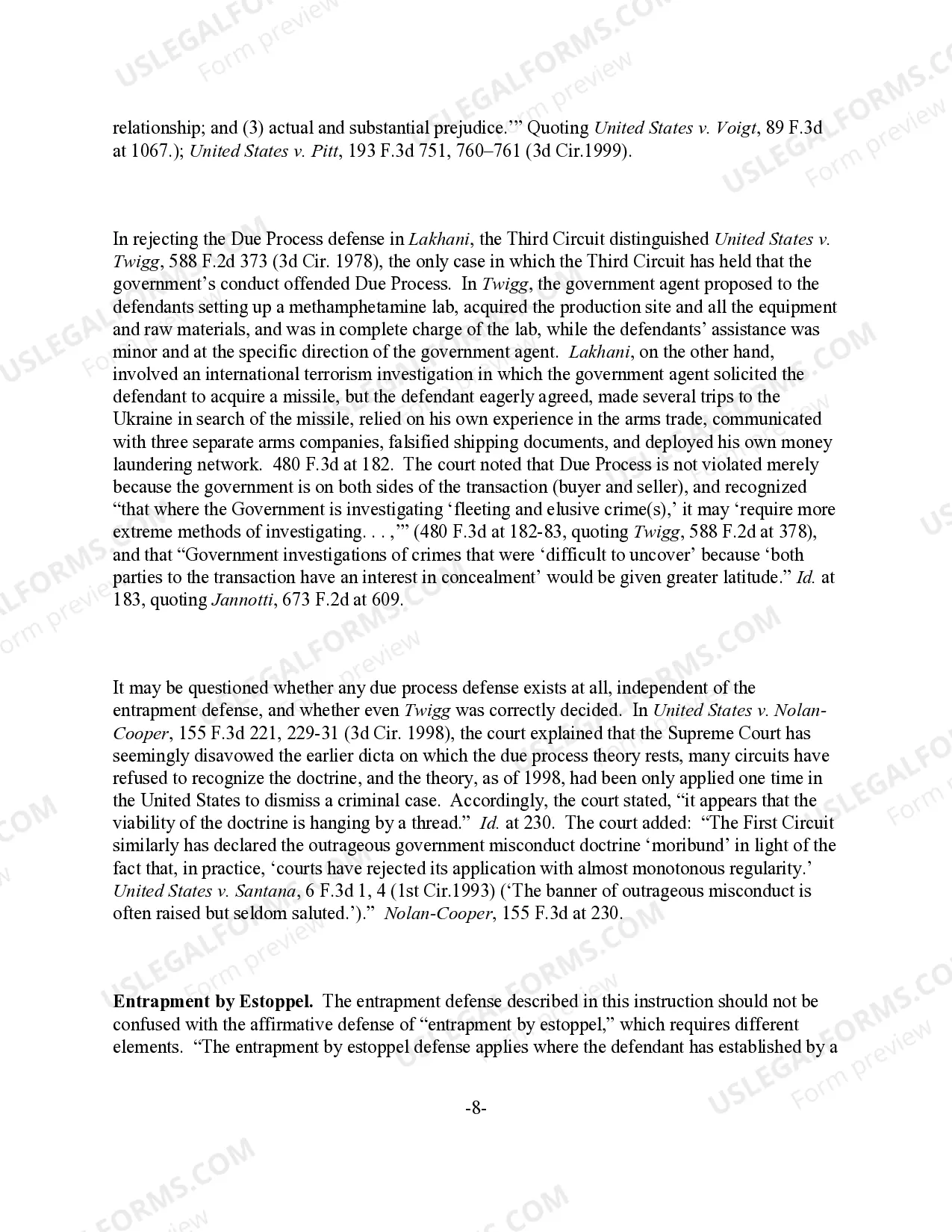
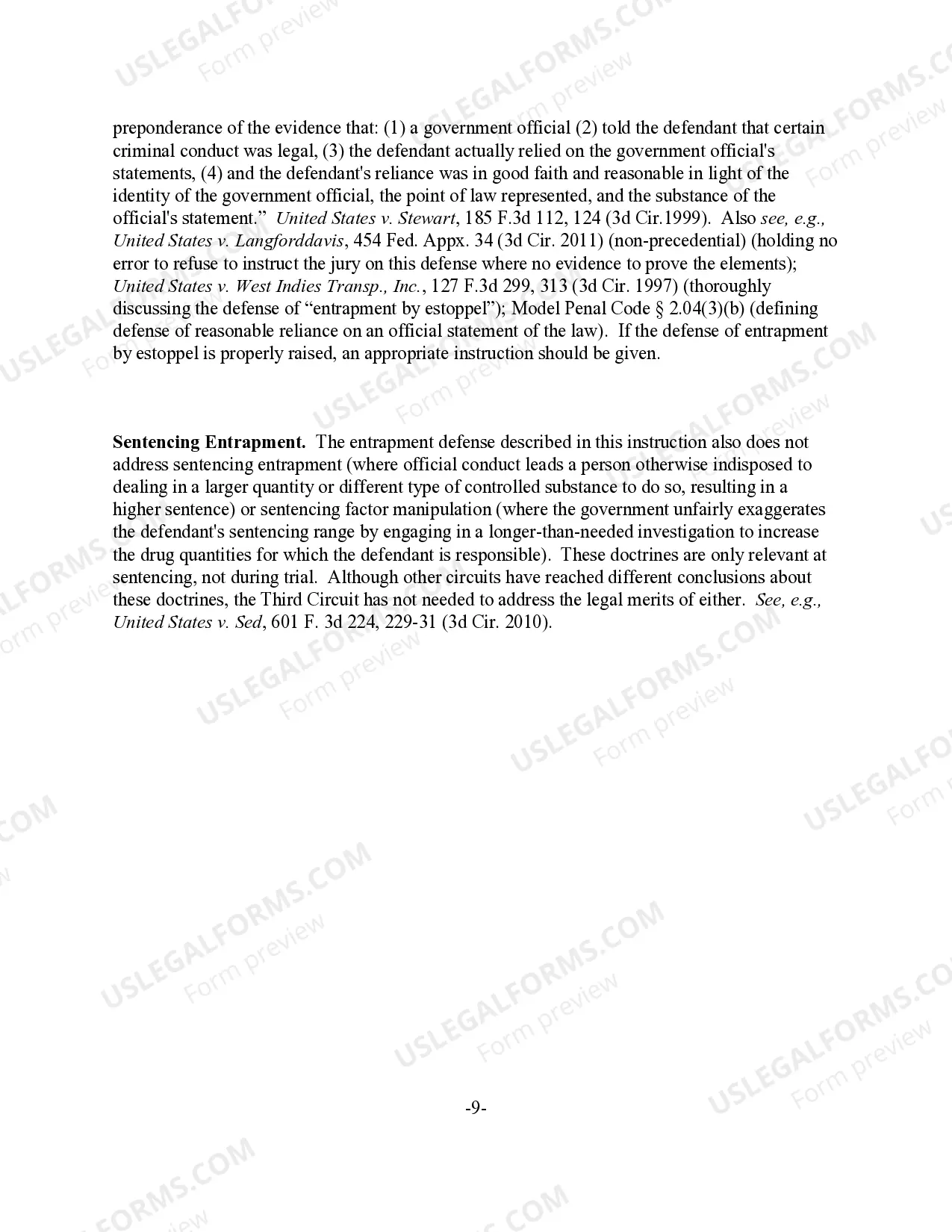
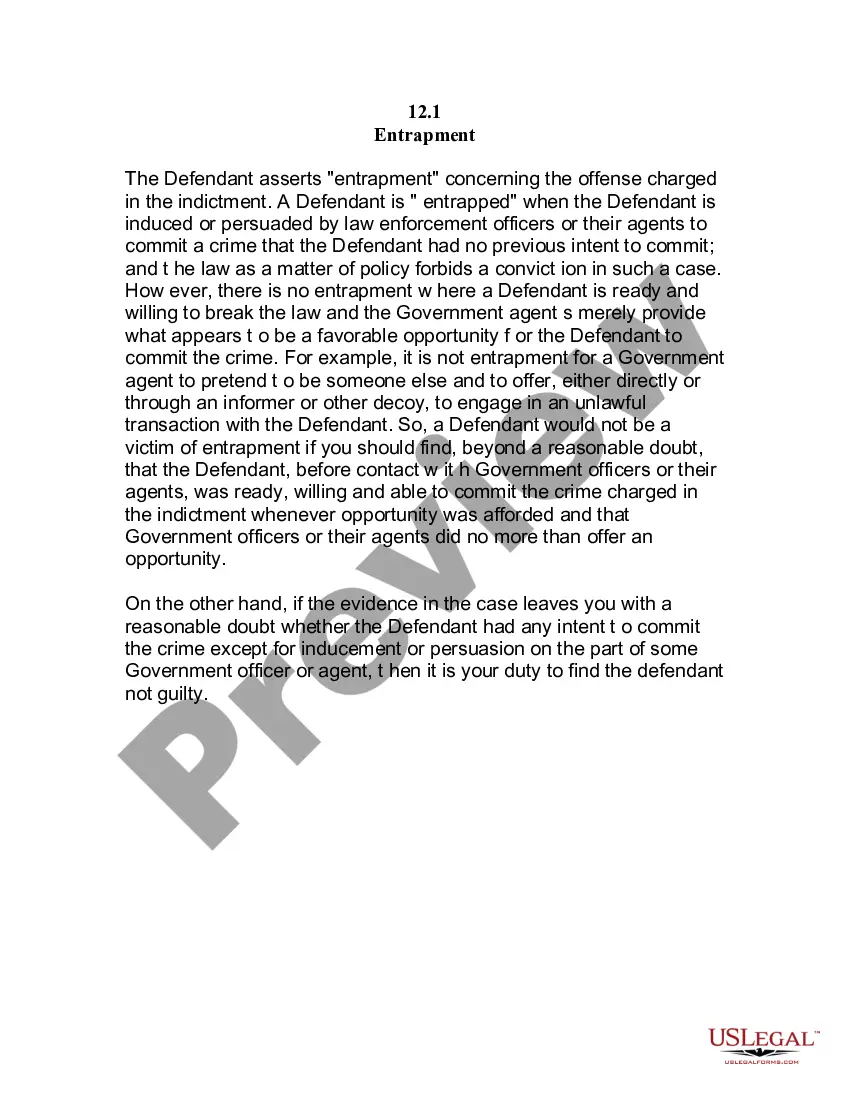
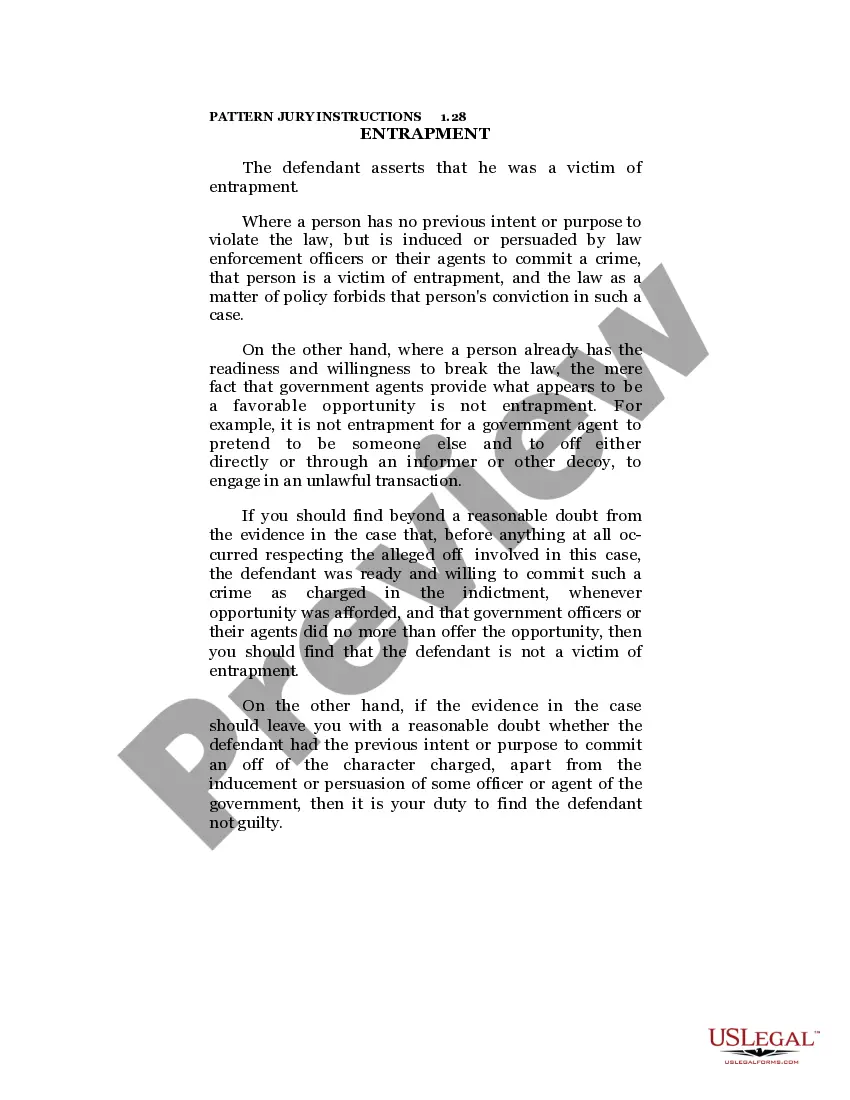
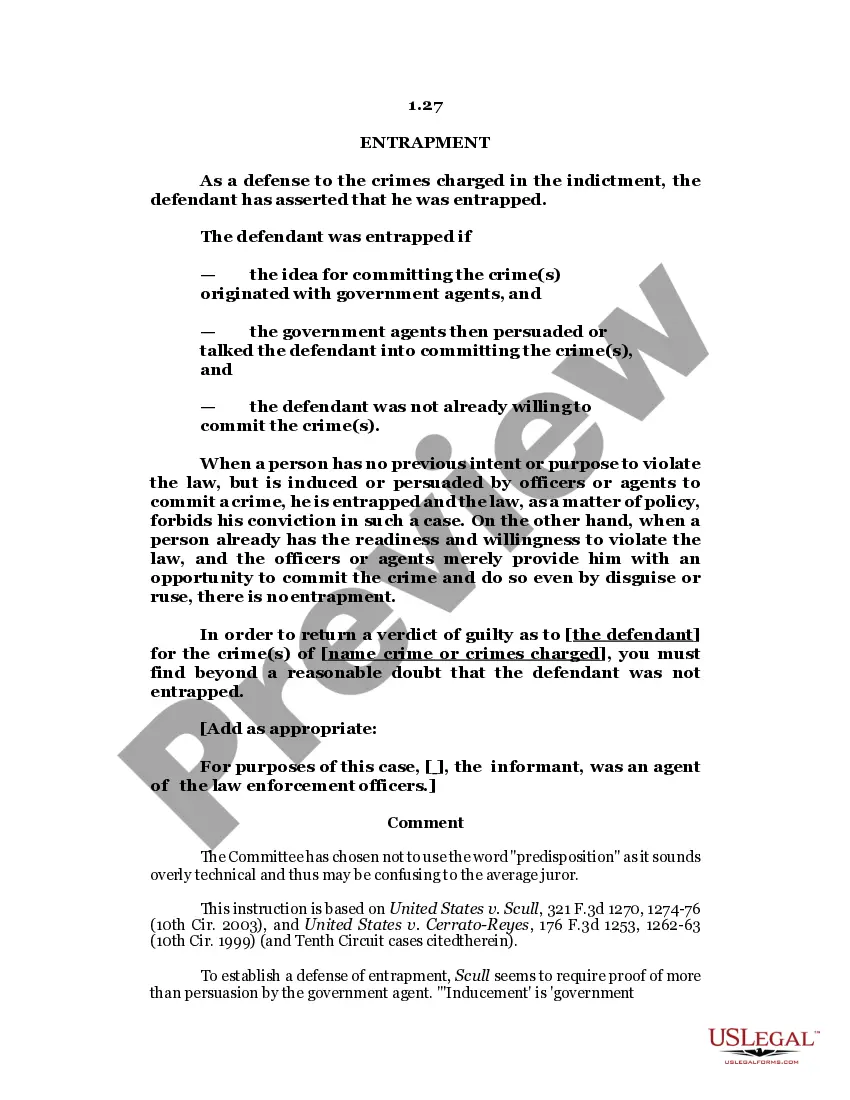
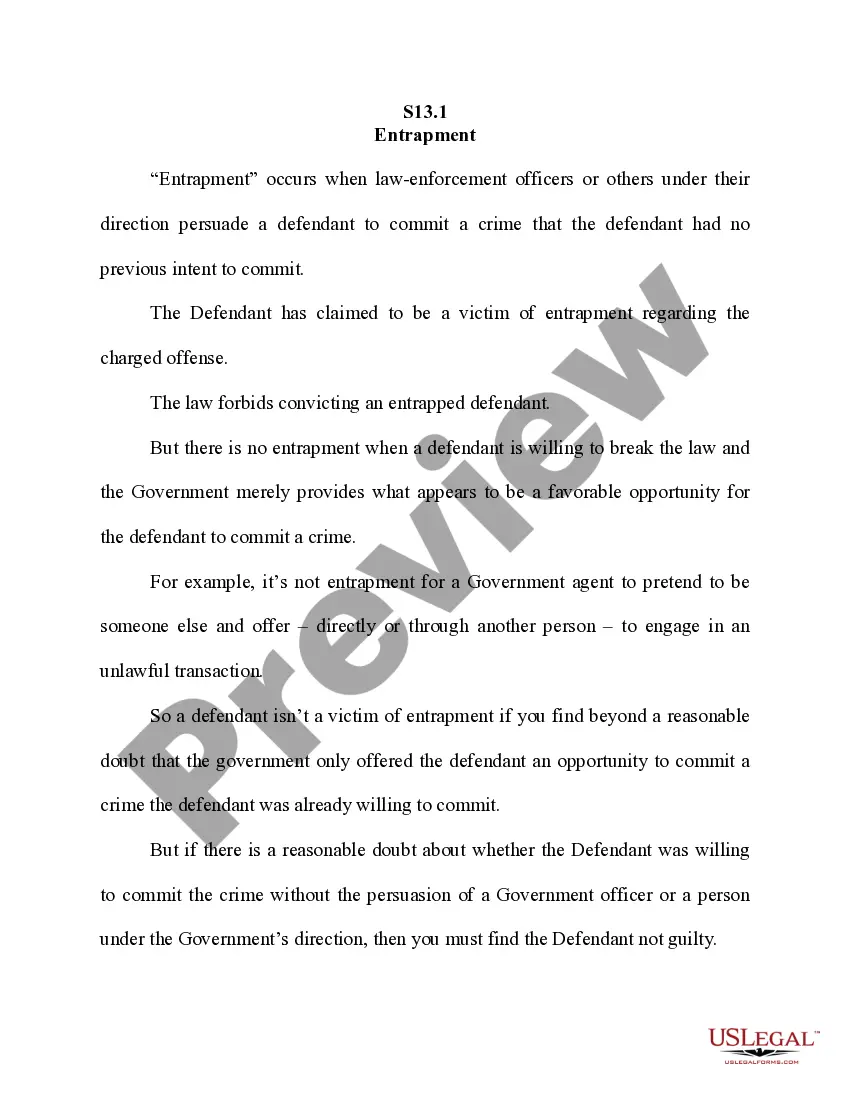
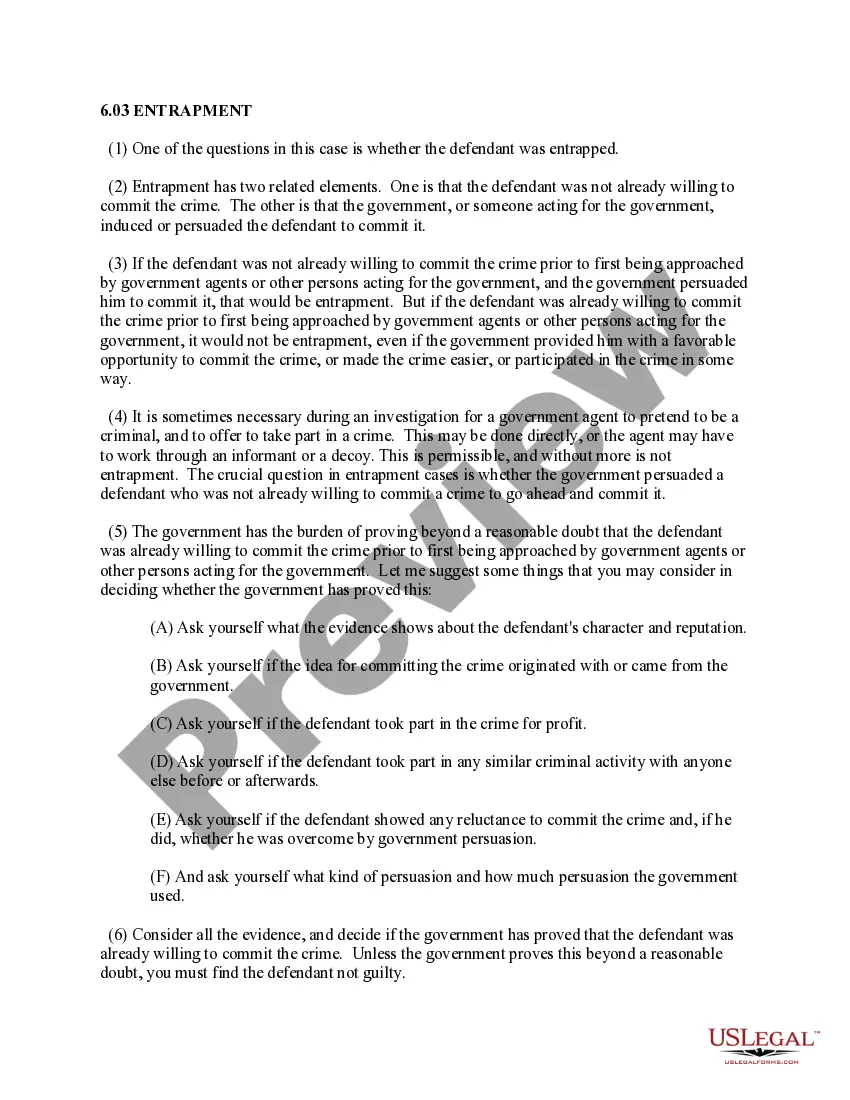
The entrapment form is a legal document that serves as a defense in criminal cases where a defendant claims they were persuaded by government agents to commit a crime they would not have otherwise committed. This form outlines critical elements that distinguish entrapment from mere solicitation or encouragement by law enforcement. Understanding the specifics of this form can be essential for individuals charged with crimes, as it can significantly impact the outcome of their case.
Main sections of this form
- Defendant's name and identification against charges.
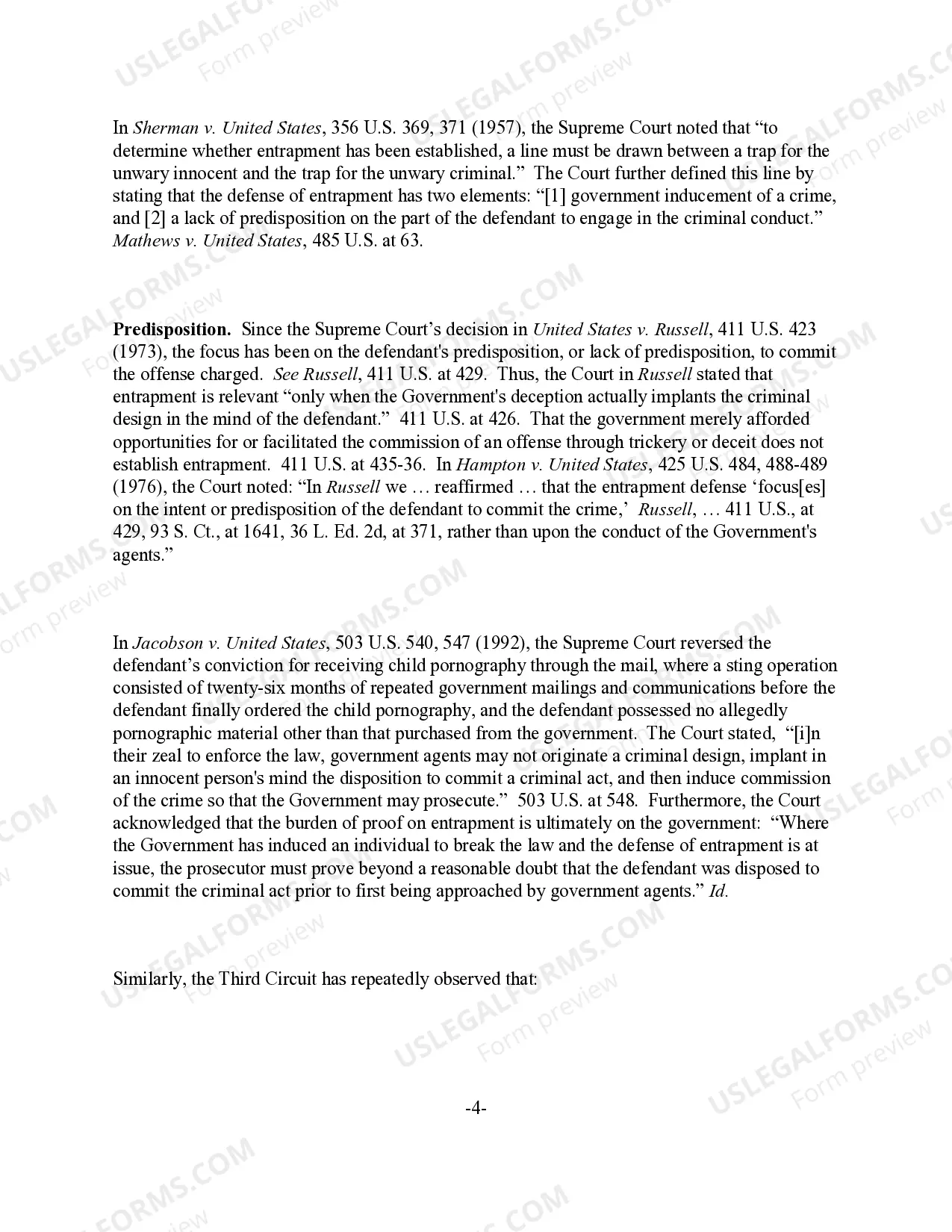
- Definition and explanation of entrapment as a legal defense.
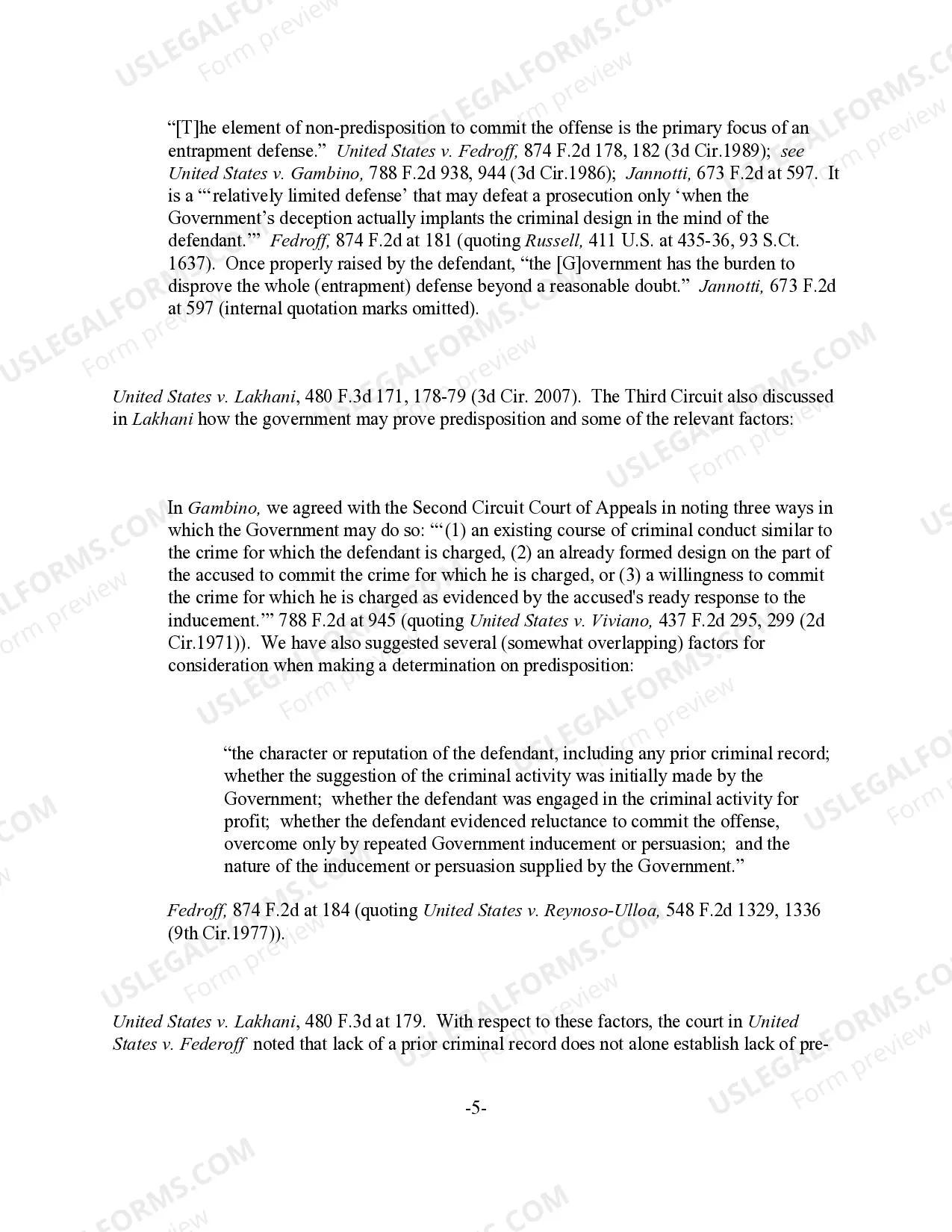
- Two-pronged inquiry: government inducement and defendant's predisposition.
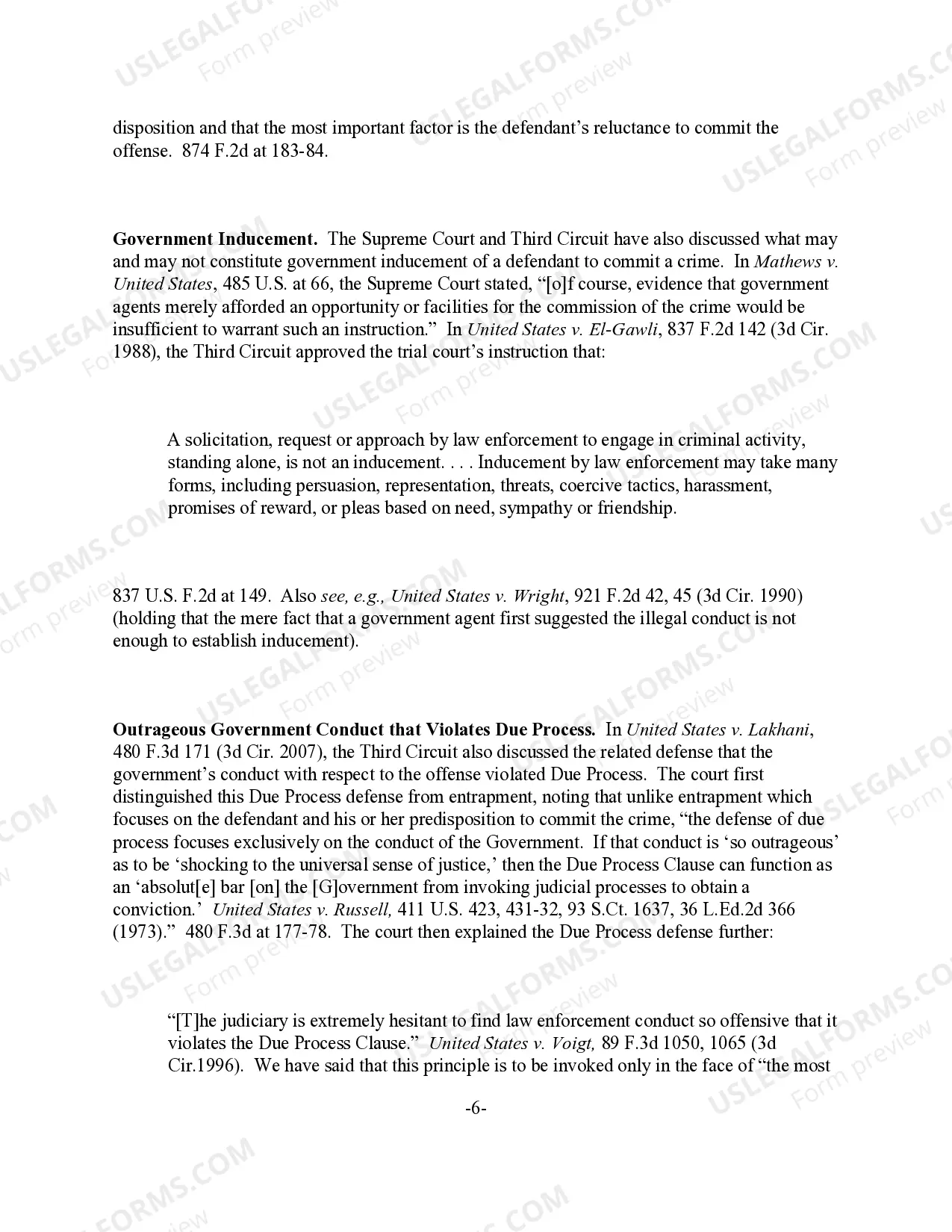
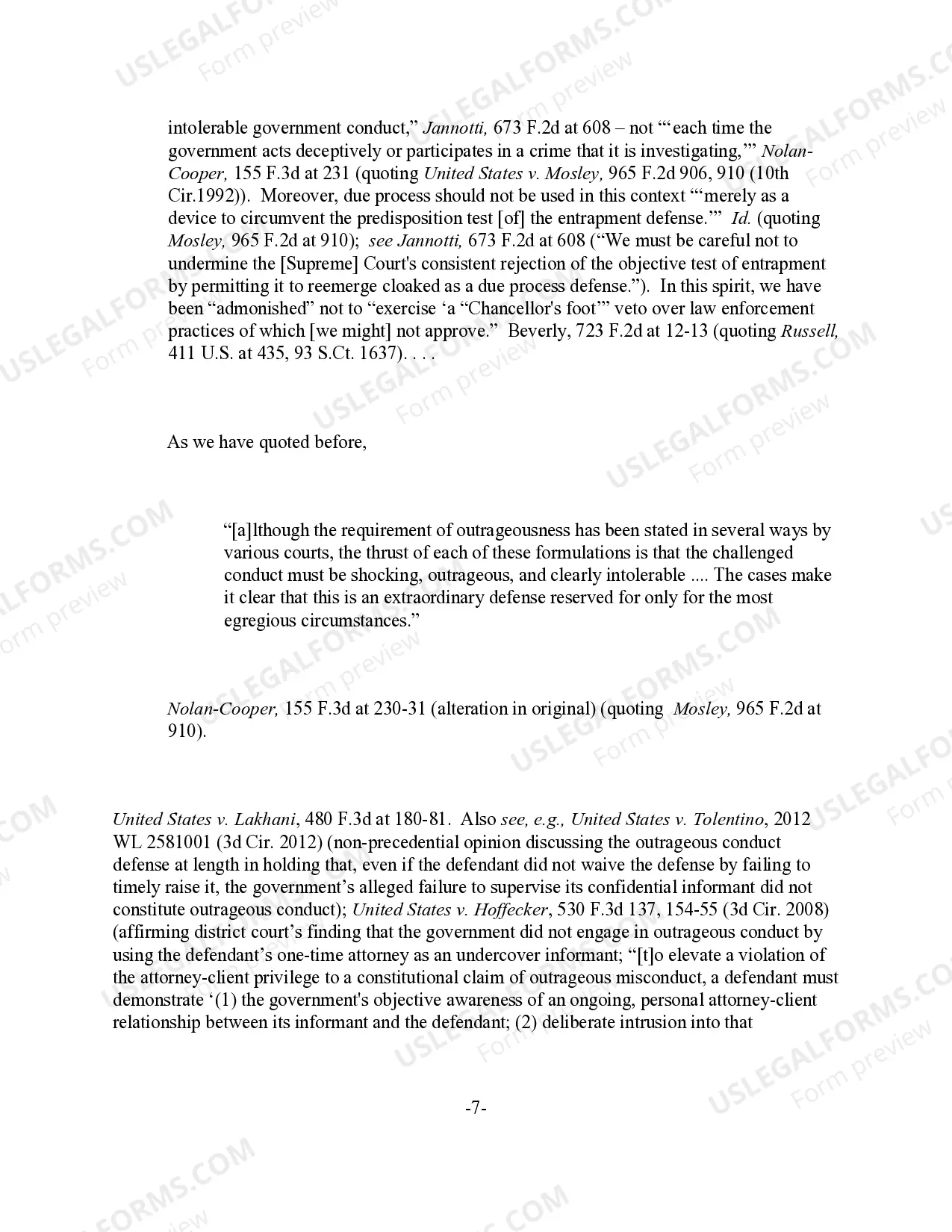
- Types of government actions that may constitute coercion.
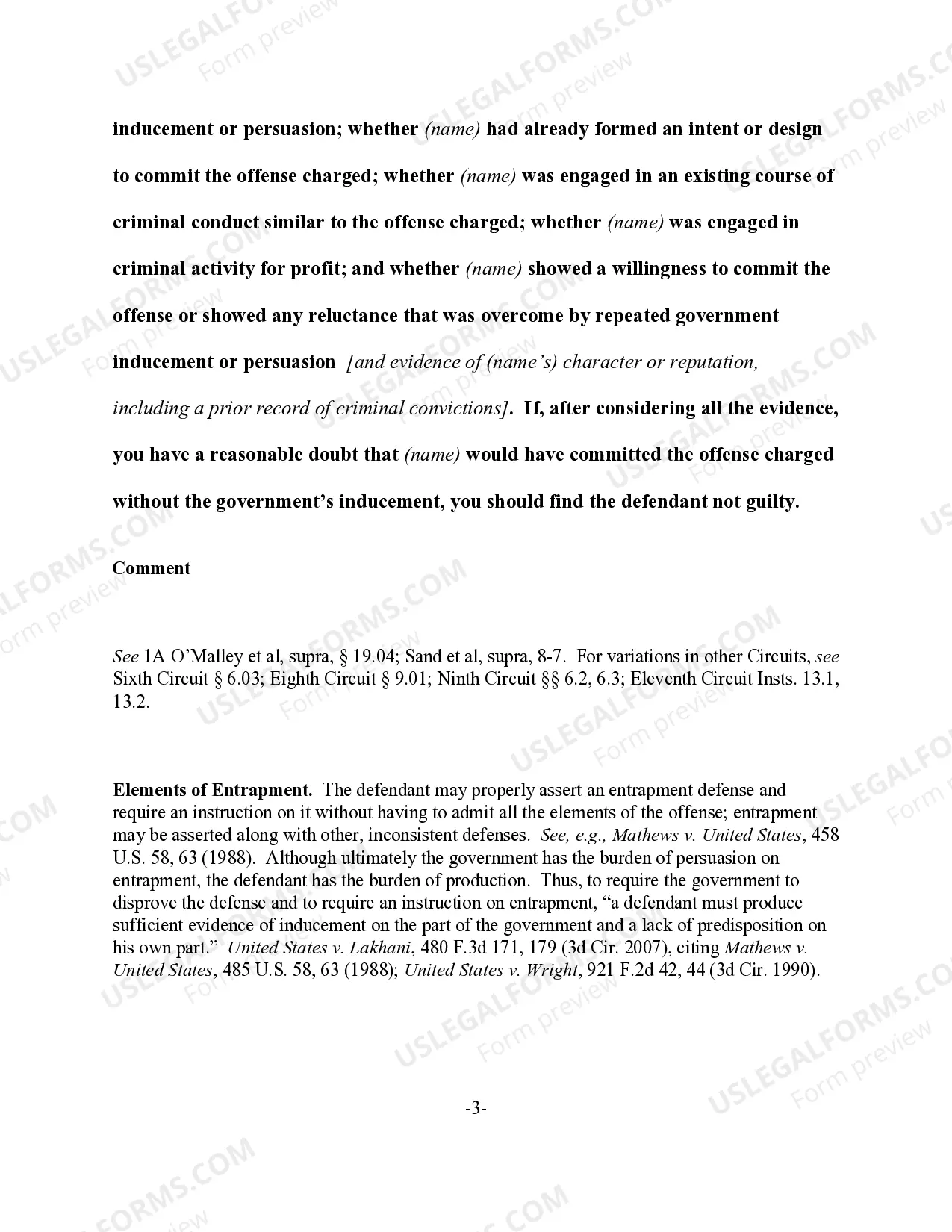
- Burden of proof requirements on the government.
- Consideration of previous criminal conduct and character of the defendant.
Situations where this form applies
This form should be used when a defendant in a criminal trial believes they were tricked or pressured by government agents into committing an offense. It is particularly relevant in cases involving drugs, theft, or other crimes where there may be an argument that the defendant would not have acted without government inducement. Utilizing this form can help establish a credible defense and communicate those circumstances to the court.
Who this form is for
- Defendants in criminal cases where an entrapment defense may apply.
- Individuals who have been approached by law enforcement or undercover agents regarding criminal activity.
- Those seeking legal representation to understand their rights regarding entrapment.
- Legal professionals advising clients on entrapment defenses.
Steps to complete this form
- Identify the defendantâs name and the specific criminal charges they are facing.
- Clearly state the circumstances of the alleged entrapment, including details of government involvement.
- Explain how government inducement affected the defendant's decision to commit the crime.
- Provide any evidence of the defendantâs predisposition to commit the crime without inducement.
- Gather supporting documentation or witness statements, if available, to strengthen the defense.
Notarization guidance
Notarization is not commonly needed for this form. However, certain documents or local rules may make it necessary. Our notarization service, powered by Notarize, allows you to finalize it securely online anytime, day or night.
Get your form ready online
Our built-in tools help you complete, sign, share, and store your documents in one place.
Make edits, fill in missing information, and update formatting in US Legal Forms—just like you would in MS Word.
Download a copy, print it, send it by email, or mail it via USPS—whatever works best for your next step.
Sign and collect signatures with our SignNow integration. Send to multiple recipients, set reminders, and more. Go Premium to unlock E-Sign.
If this form requires notarization, complete it online through a secure video call—no need to meet a notary in person or wait for an appointment.
We protect your documents and personal data by following strict security and privacy standards.

Make edits, fill in missing information, and update formatting in US Legal Forms—just like you would in MS Word.
Download a copy, print it, send it by email, or mail it via USPS—whatever works best for your next step.
Sign and collect signatures with our SignNow integration. Send to multiple recipients, set reminders, and more. Go Premium to unlock E-Sign.

If this form requires notarization, complete it online through a secure video call—no need to meet a notary in person or wait for an appointment.

We protect your documents and personal data by following strict security and privacy standards.
Common mistakes
- Failing to provide sufficient evidence of government inducement.
- Not addressing the defendant's predisposition adequately.
- Neglecting to specify the nature of the government's tactics in the defense.
- Assuming that mere solicitation constitutes entrapment.
Benefits of using this form online
- Convenience of immediate access for download and completion.
- Editability allows for customization to fit individual case needs.
- Ensures reliability with templates drafted by licensed attorneys.
- Reduction of paperwork-related stress through a straightforward online process.
Legal use & context
- This form is legally recognized in jurisdictions that allow entrapment as a defense.
- The defendant must demonstrate that they were not predisposed to commit the crime.
- Evidence of government tactics such as coercion or deception strengthens the case.
- The burden of proof is on the government to establish that entrapment did not occur.
What to keep in mind
- The entrapment defense requires careful presentation of evidence regarding inducement.
- Awareness of the defendant's past behavior is crucial in establishing predisposition.
- This form serves as a vital tool for defendants claiming entrapment.
- Consultation with legal counsel can enhance the effectiveness of this defense strategy.
Looking for another form?

Form popularity
FAQ
Entrapment is a complete defense to a criminal charge, on the theory that "Government agents may not originate a criminal design, implant in an innocent person's mind the disposition to commit a criminal act, and then induce commission of the crime so that the Government may prosecute." Jacobson v.
What is an example of police entrapment? A police officer offers to buy drugs from a suspected drug dealer. The dealer sells the drugs to the officer, who then arrests the dealer. This act is entrapment by inducement.
Another special rule for entrapment is that private citizens cannot entrap others. A private individual inducing another person to commit an illegal act has not committed entrapment, but has rather aided and/or abetted the crime in the eyes of the court.
Entrapment may result from the use of threats, intimidation, extended fraud, or any other means where the defendant was essentially forced to commit a crime. For example, law enforcement officers could set up a sting operation for a suspected criminal to commit a burglary.
Entrapment is defined as a situation in which a normally law-abiding individual is induced into committing a criminal act they otherwise would not have committed because of overbearing harassment, fraud, flattery or threats made by an official police source.
What Constitutes Entrapment in California? Pressure an Individual Into Committing a Crime.Threaten Someone Into Committing a Crime.Make False Promises.Drug Crimes: An Example of Entrapment.Prostitution: An Example of Entrapment.
Abstract. Psychological entrapment occurs when people continue investing in unfavorable situations after already devoting too much to lose. We predicted that women who already invested more time and resources into their relationships would exert effort to improve their relationships following partner violence.