Willful Blindness
About this form
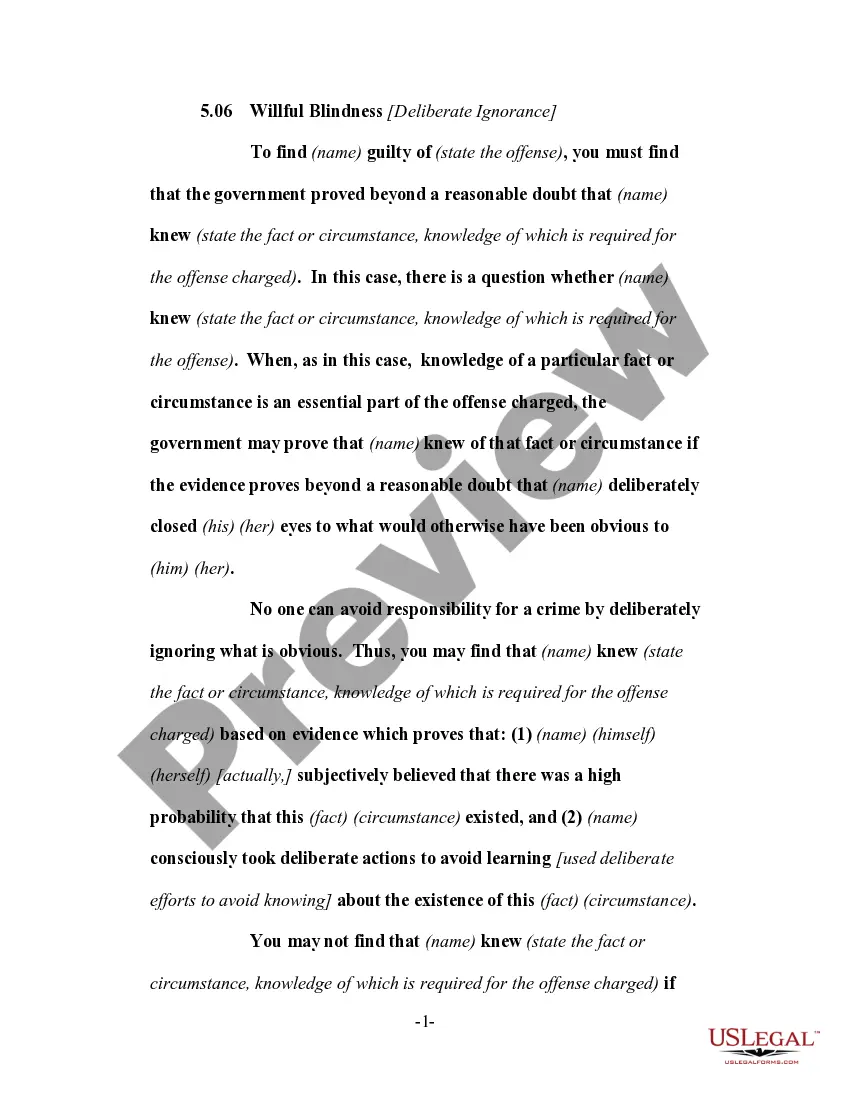
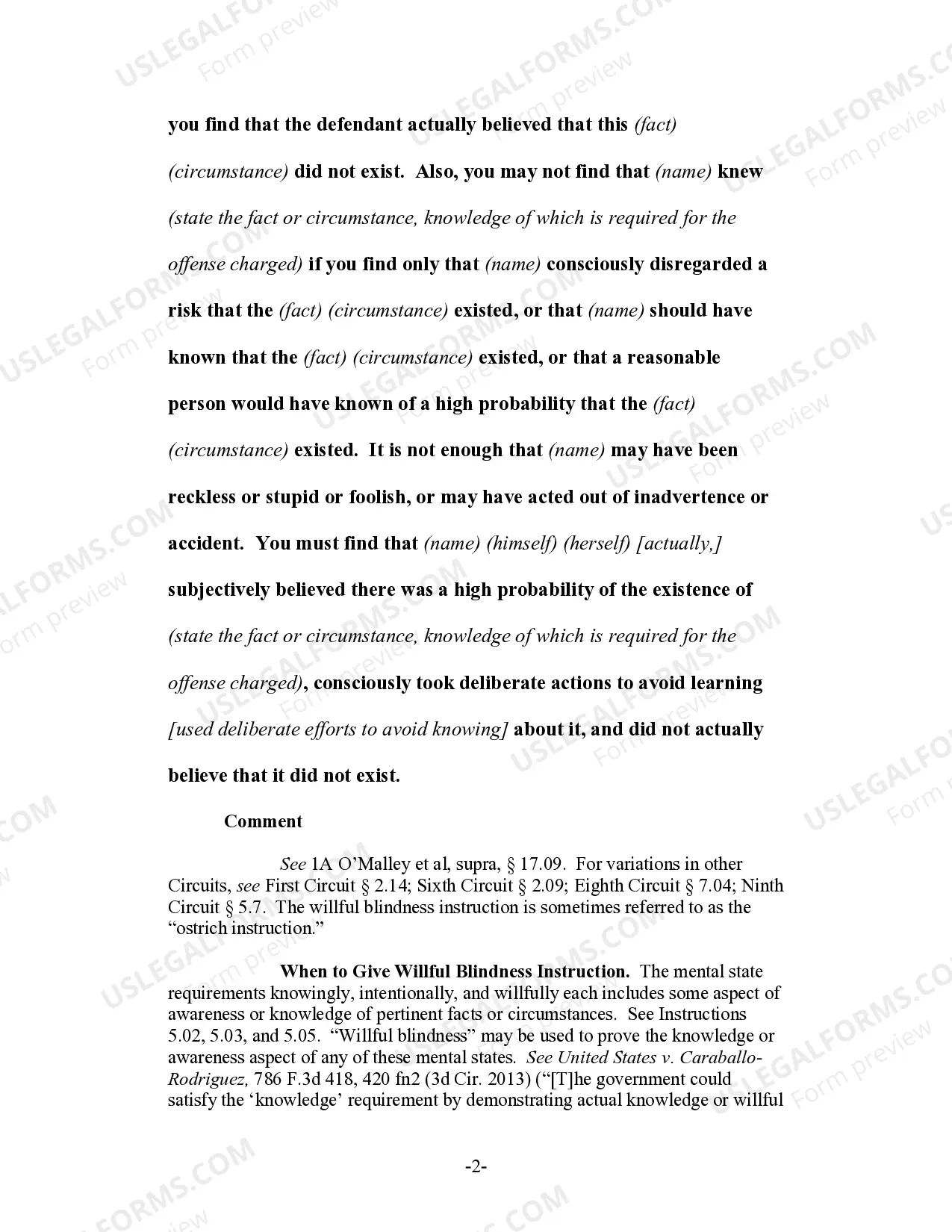
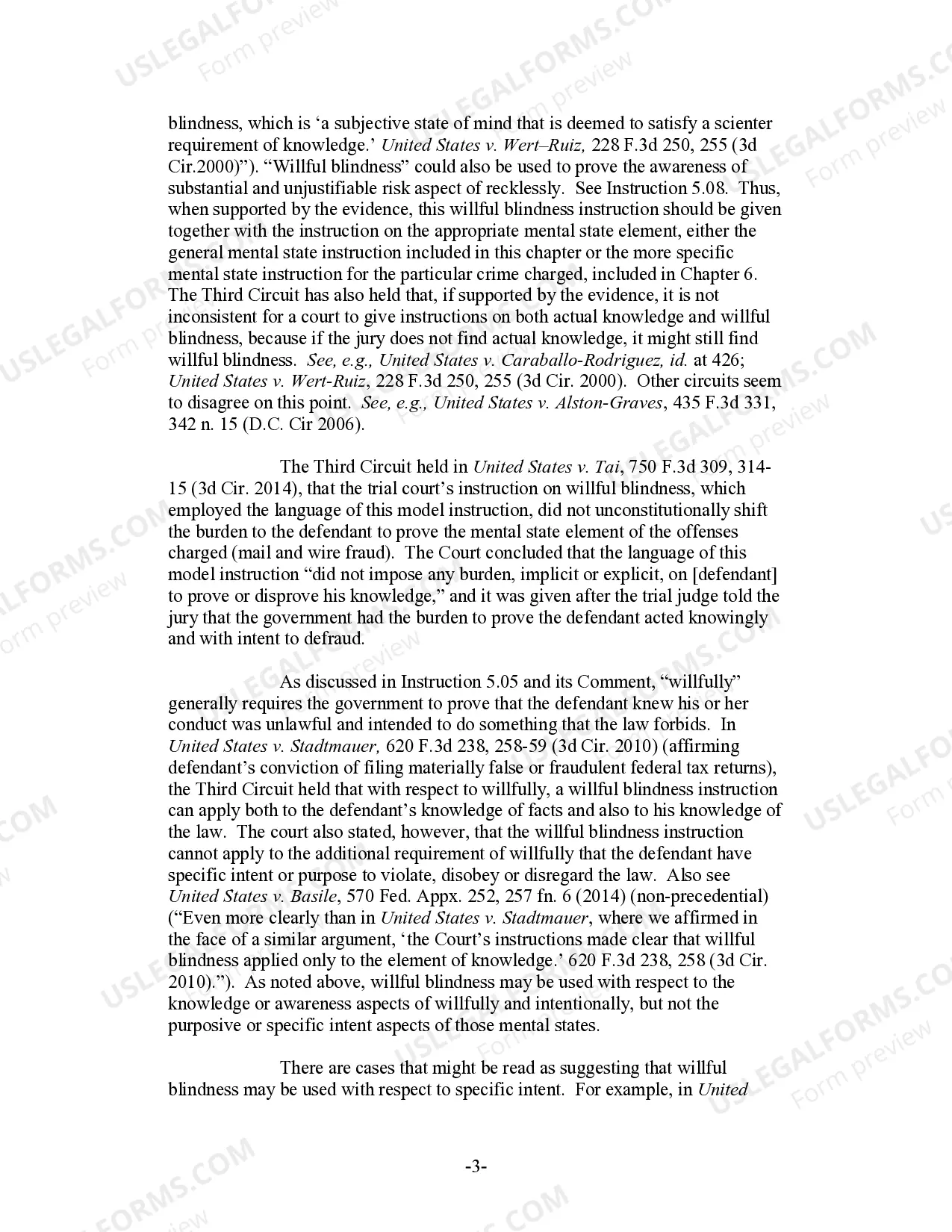
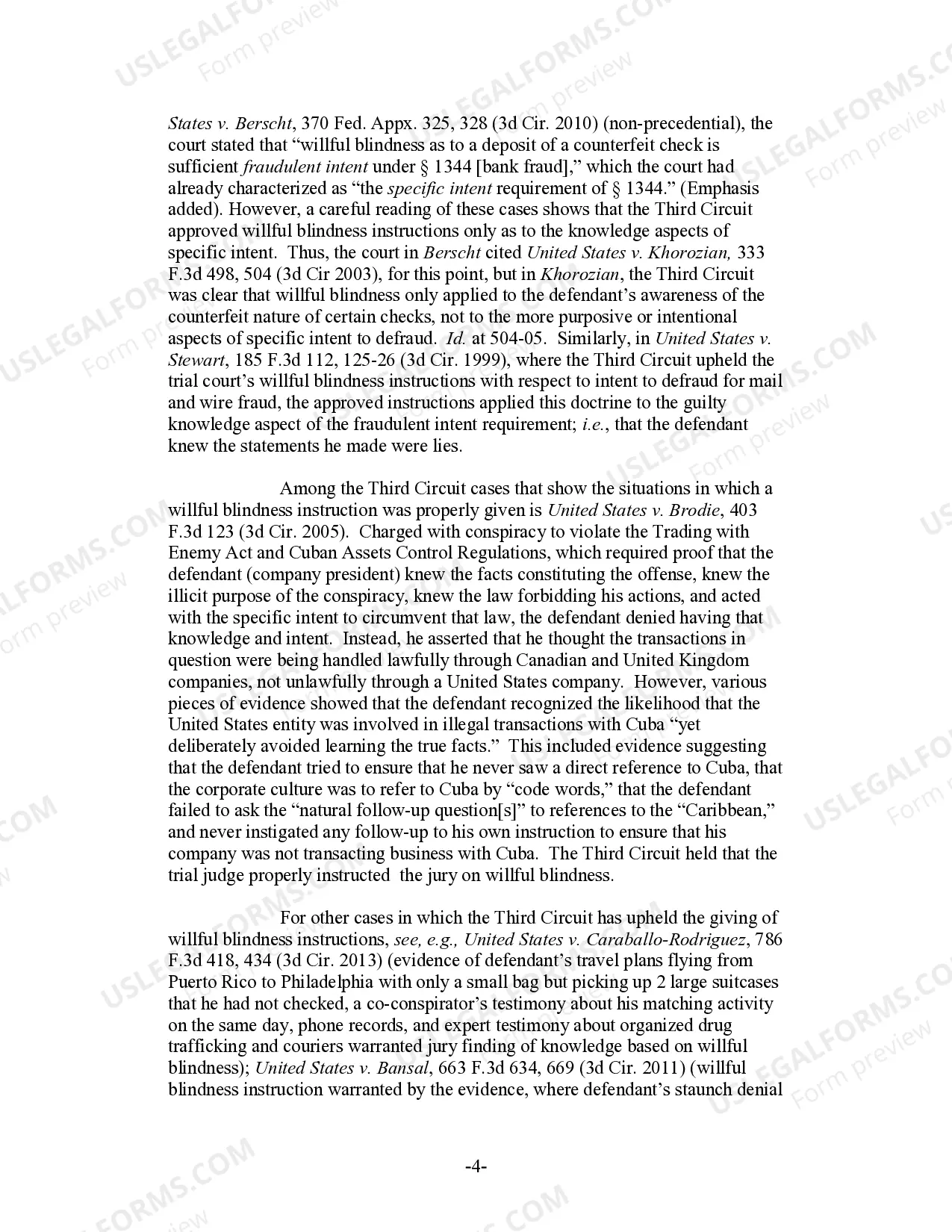
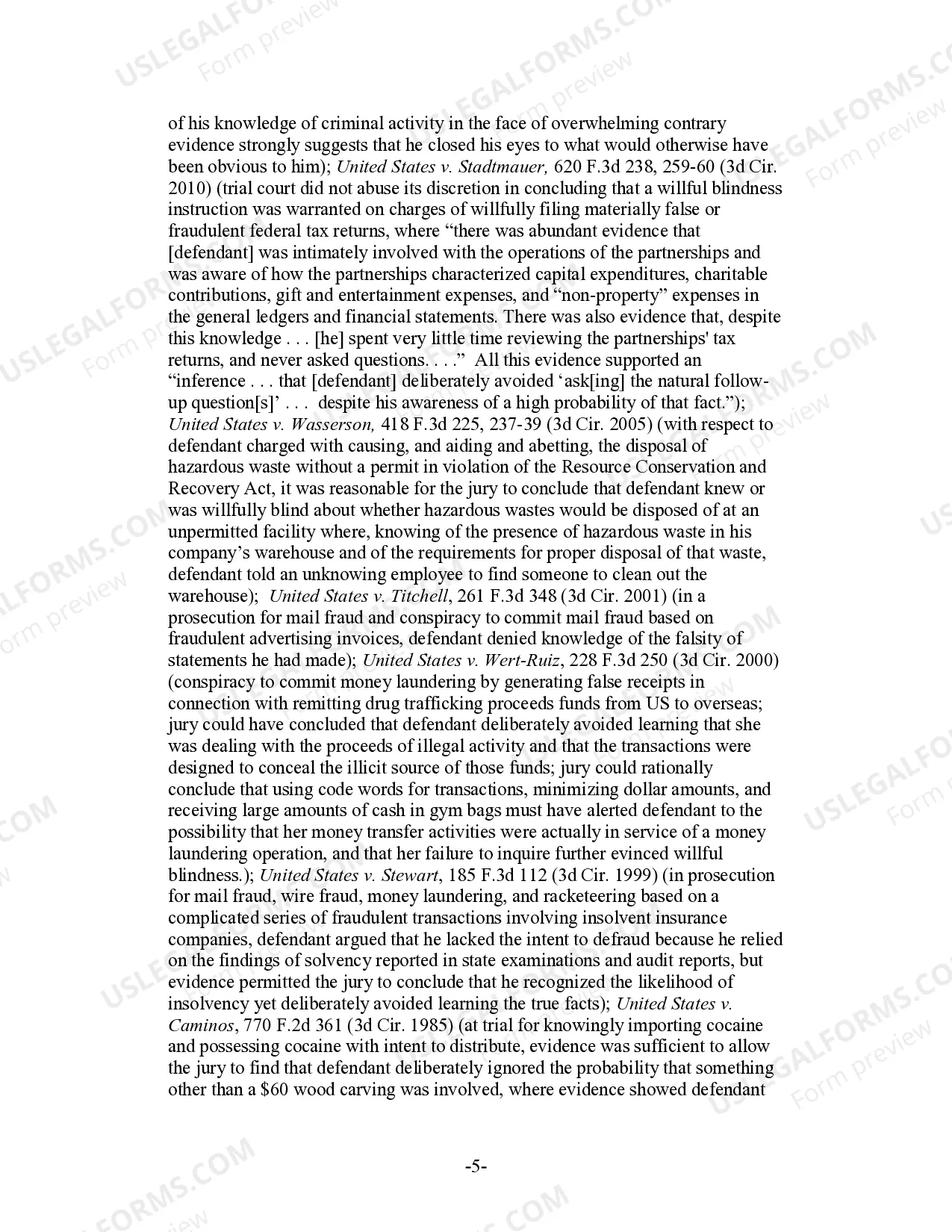
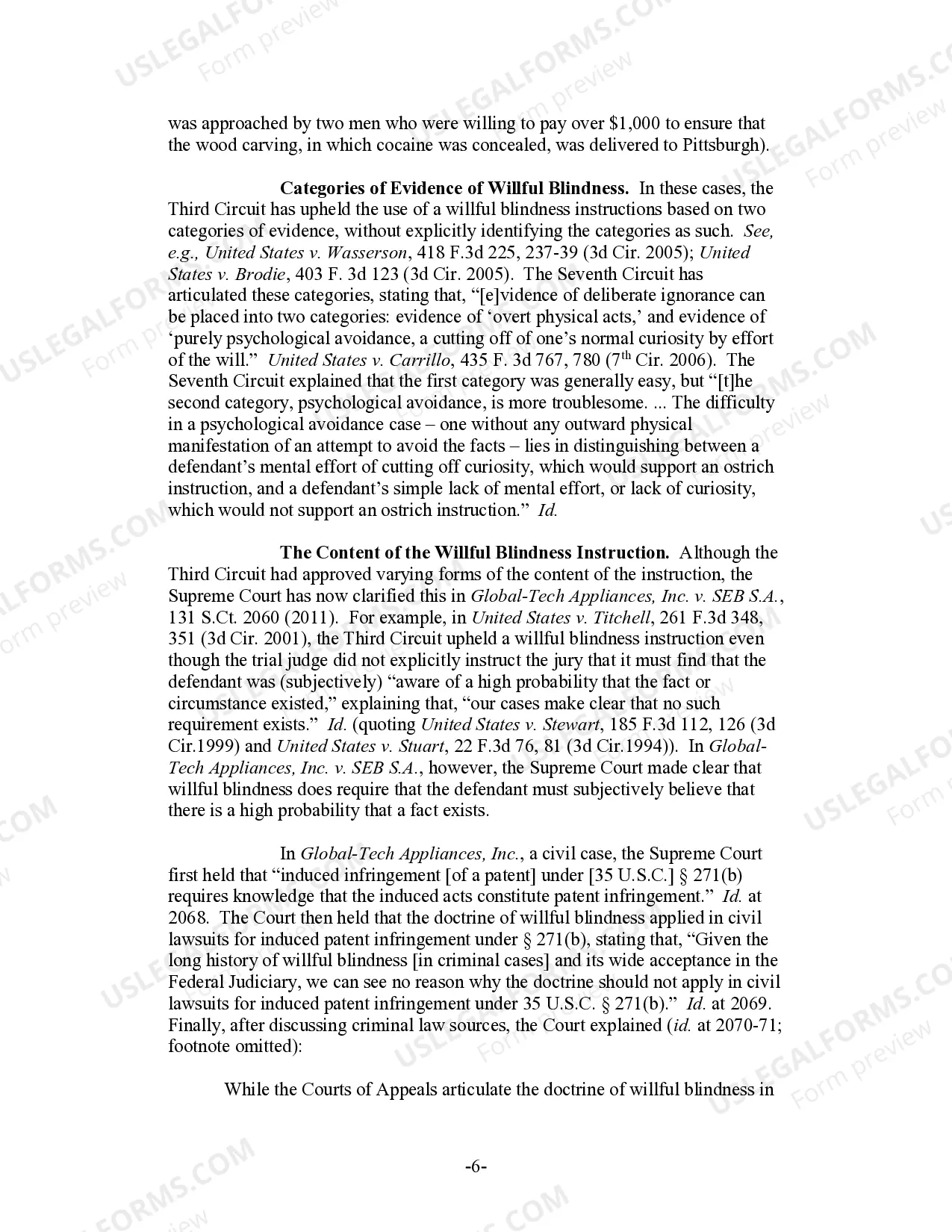
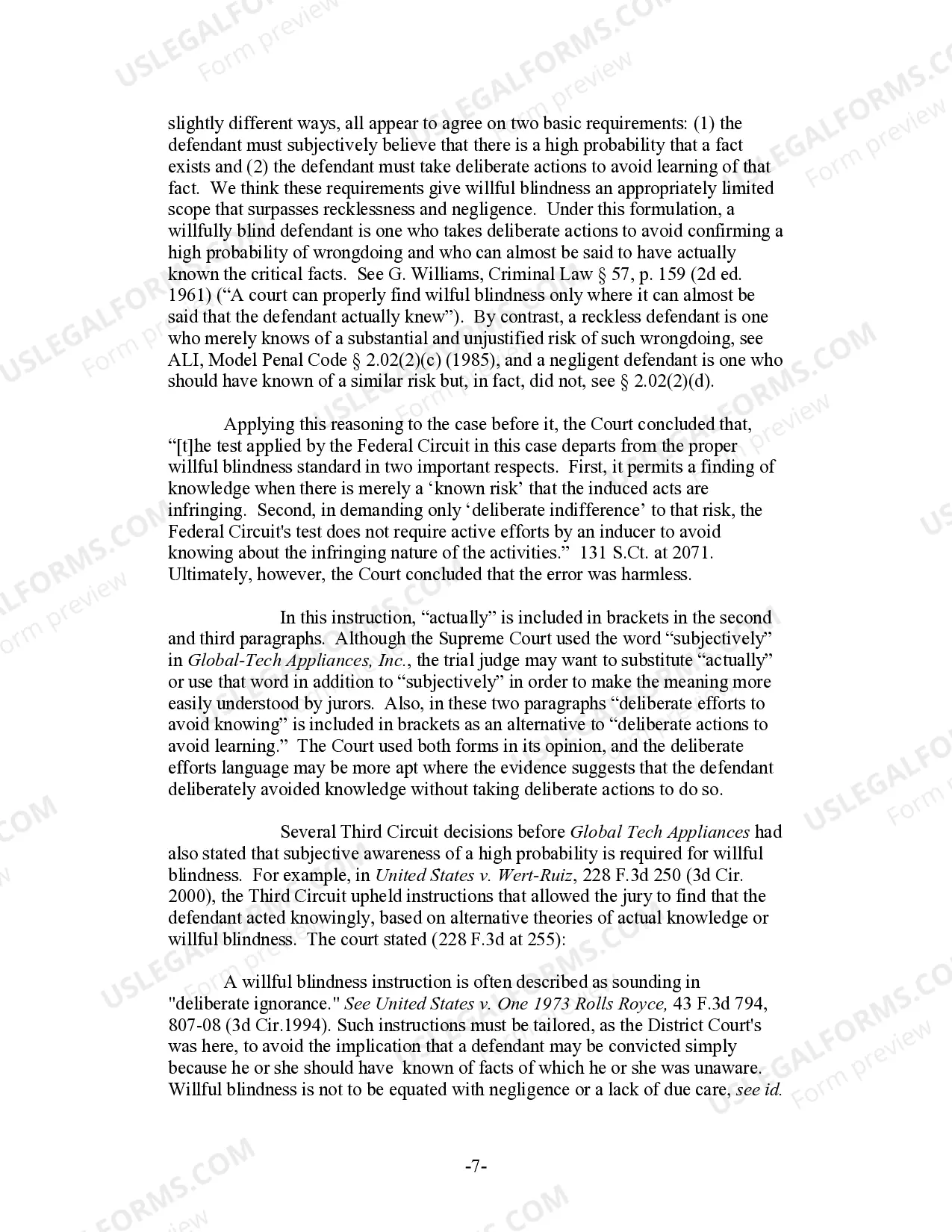
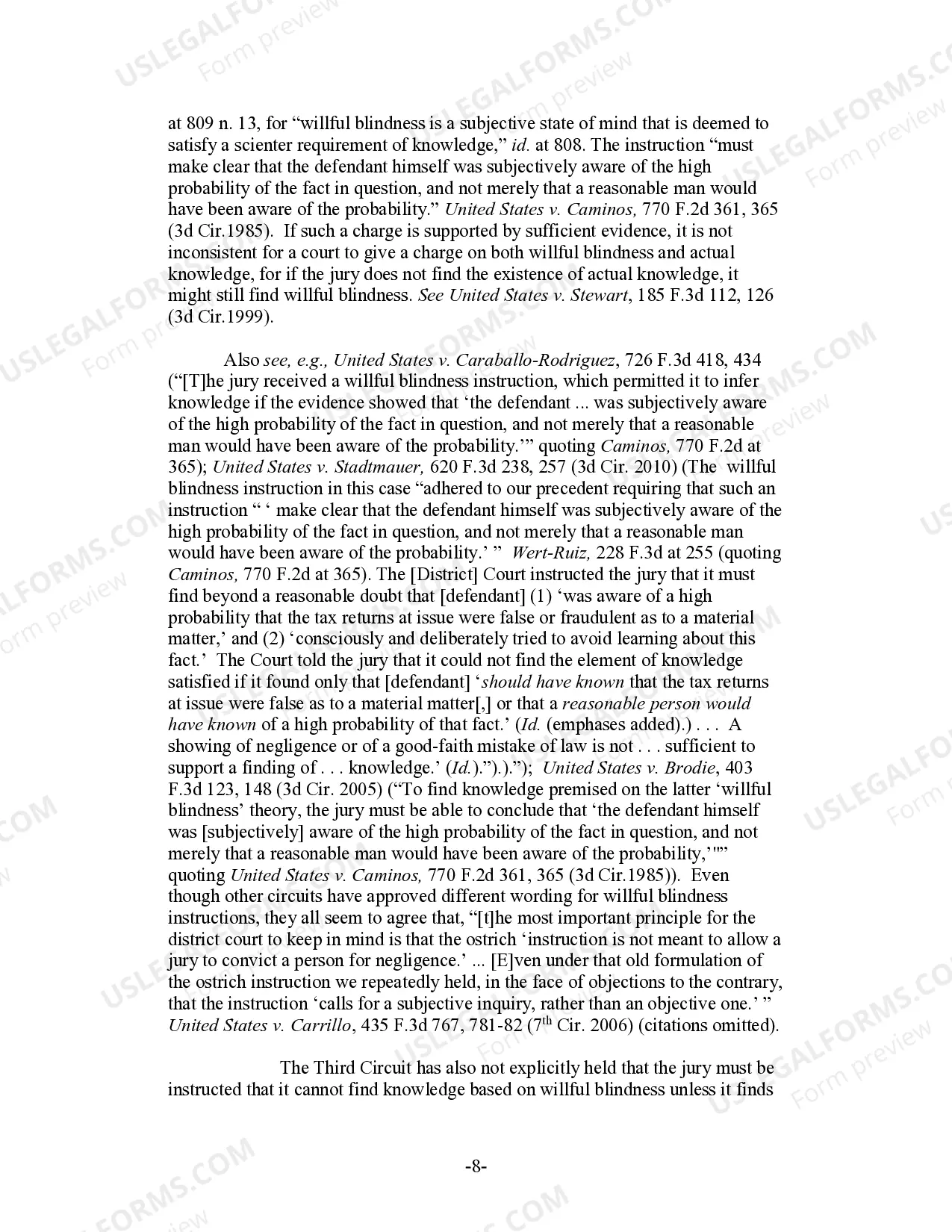
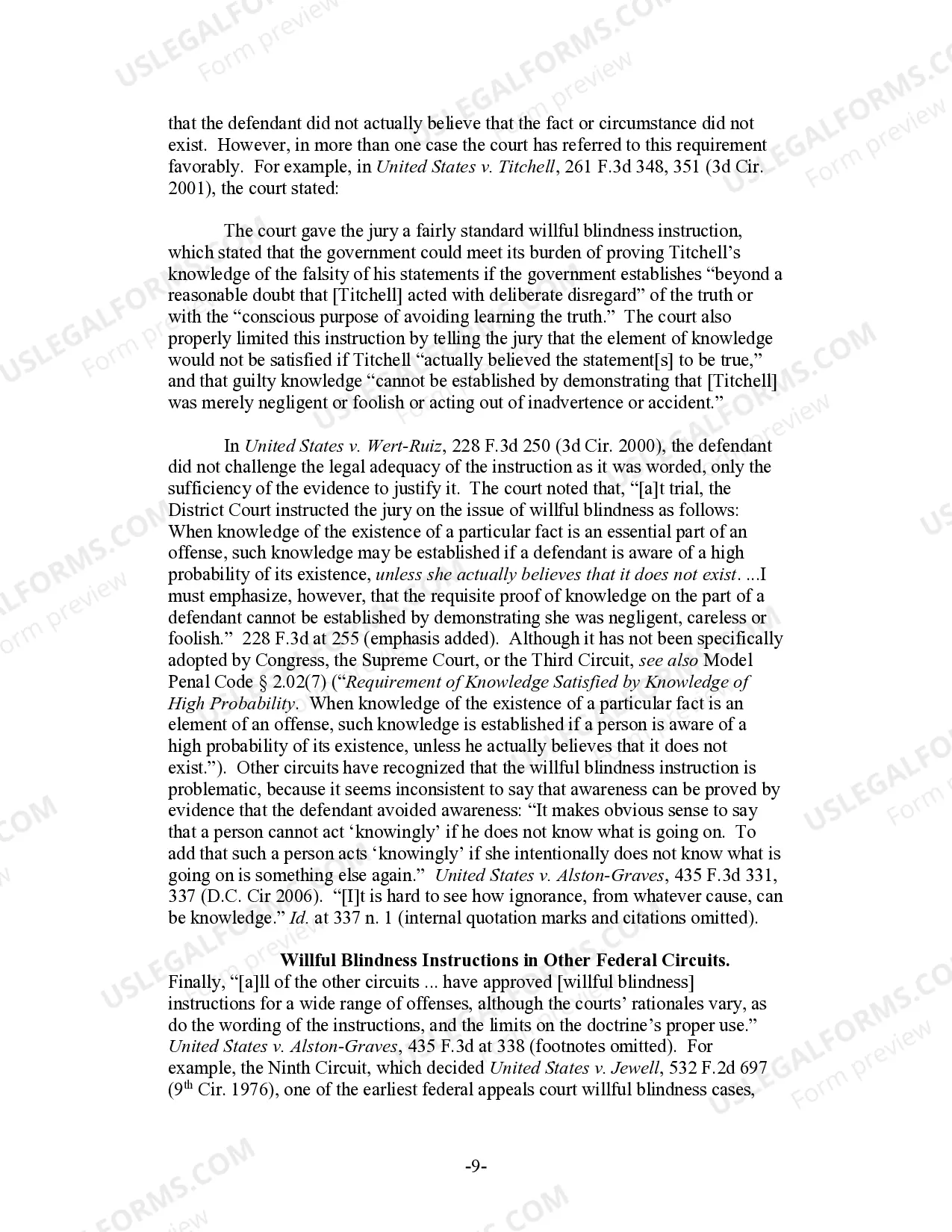
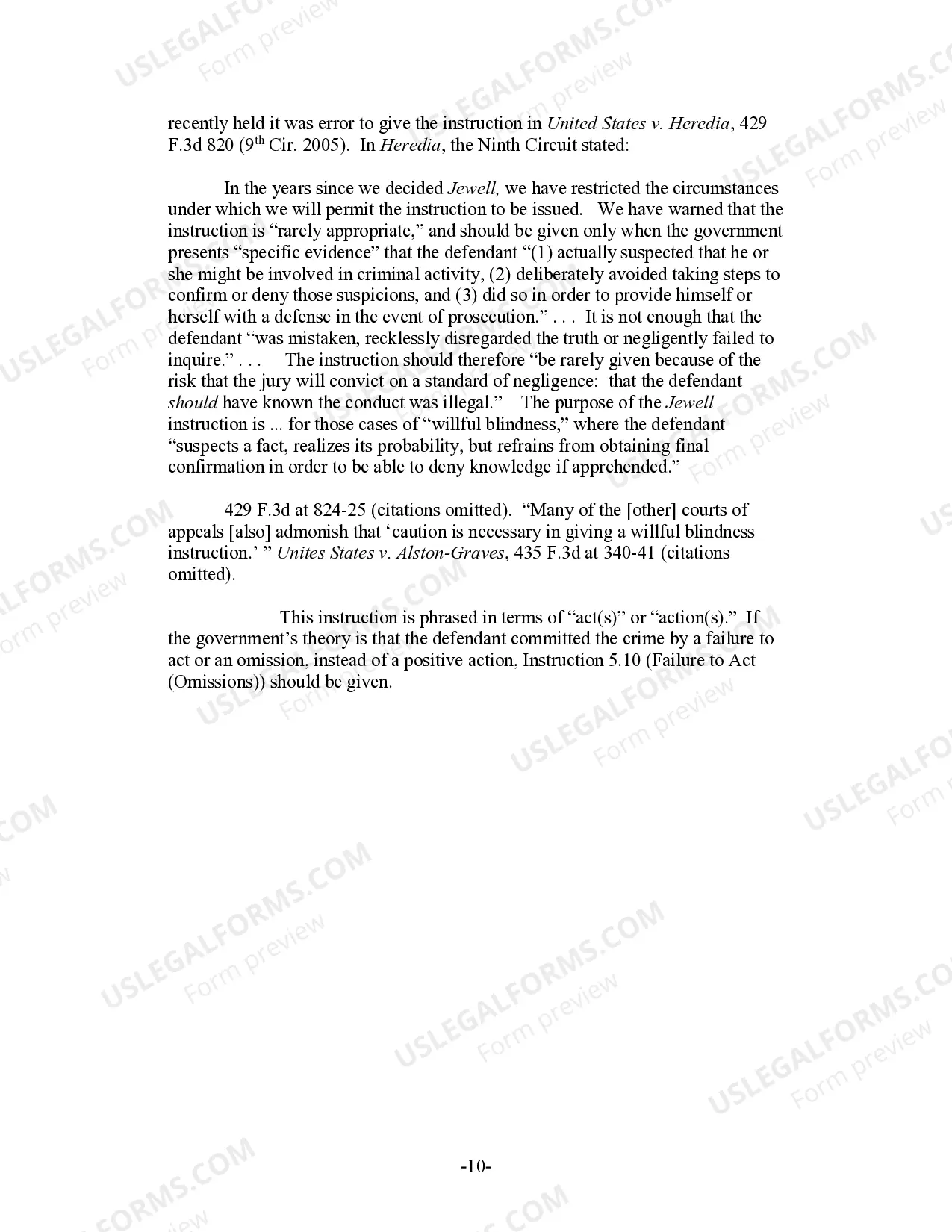
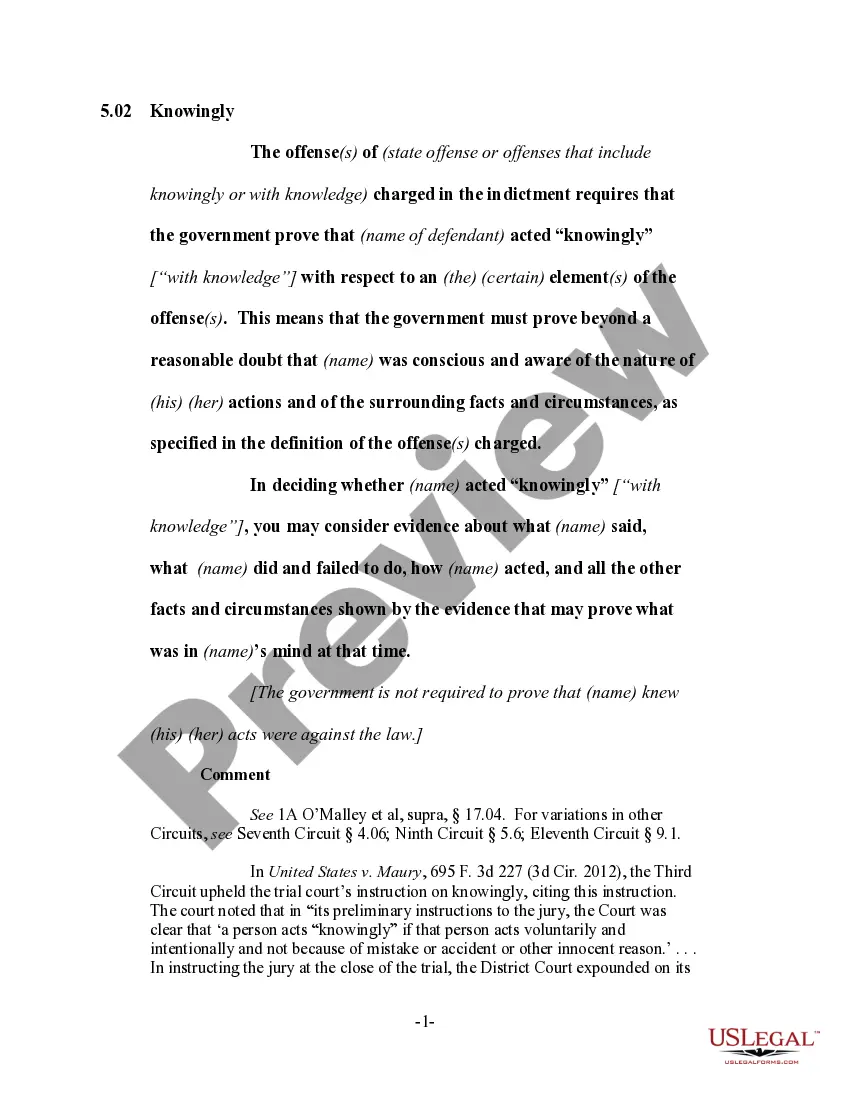
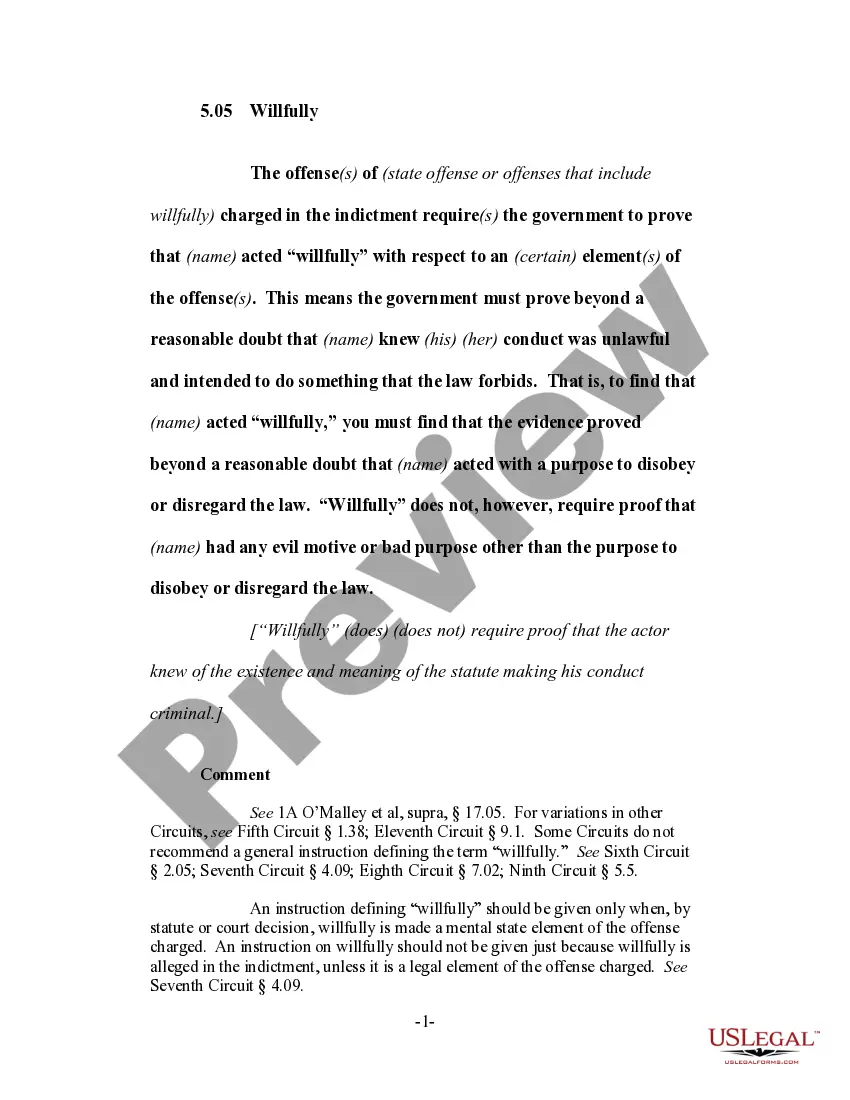
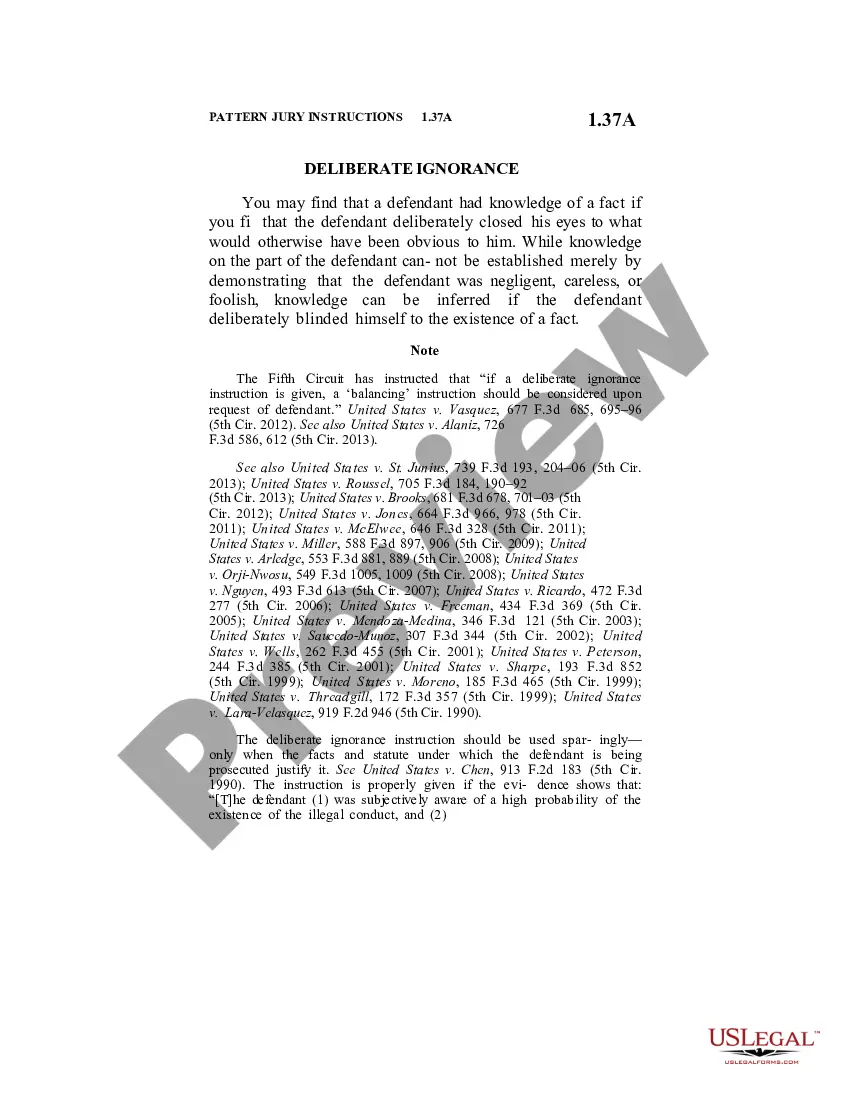
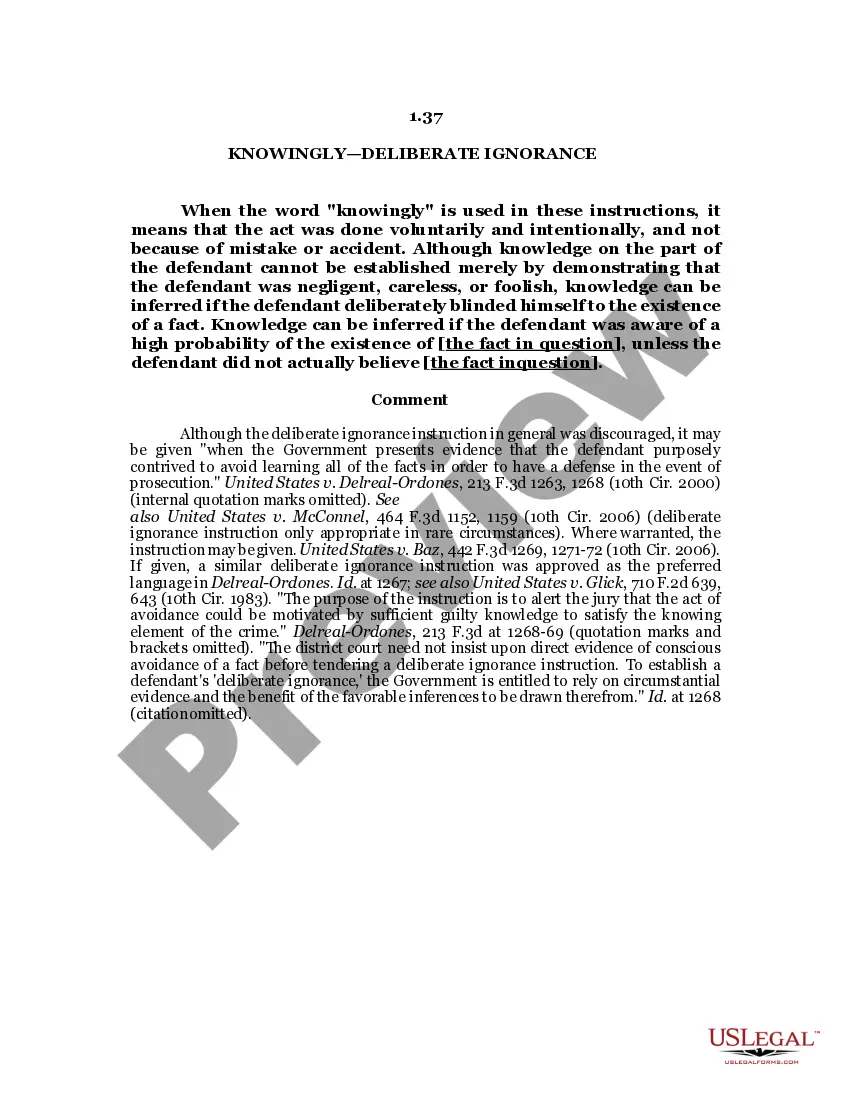
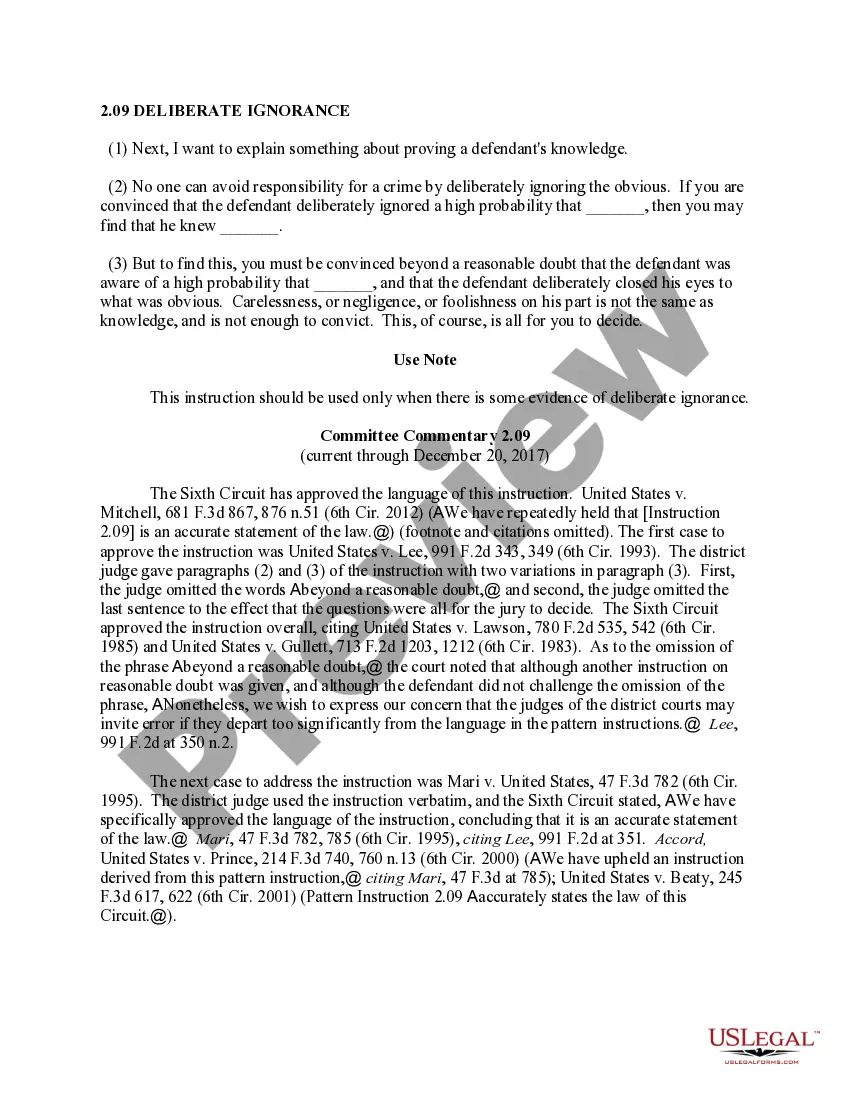
The Willful Blindness form, also referred to as Deliberate Ignorance, outlines the legal concept where an individual may be found guilty of an offense if they consciously avoid knowledge of an obvious fact. This form helps clarify how the prosecution can establish that a defendant knew of critical facts related to the offense, even if they claim ignorance. Unlike other legal forms that deal with direct knowledge, this form is specifically intended for determining culpability when the defendant deliberately closes their eyes to apparent truths.
Form components explained
- Definition of willful blindness and its legal implications.
- Criteria for proving knowledge through deliberate ignorance.
- Instructions for the court and how to apply willful blindness in cases.
- Distinction between actual knowledge and willful blindness.
- Examples of evidence sufficient to establish willful blindness.
Common use cases
This form is needed in criminal cases where the defendant may be accused of an offense requiring knowledge of certain facts. For instance, it is applicable when a defendant claims ignorance of illegal activities despite evidence suggesting they deliberately avoided awareness of those facts. This form helps guide judges and juries in determining whether to apply the willful blindness standard during trials.
Who can use this document
- Judges overseeing criminal cases that involve claims of ignorance.
- Prosecutors who need to establish knowledge through the concept of willful blindness.
- Defense attorneys who wish to challenge the evidence of willful blindness.
- Law students or legal professionals seeking clarity on this legal doctrine.
Completing this form step by step
- Review the definition of willful blindness carefully.
- Identify the essential facts that demonstrate knowledge of the offense.
- Gather evidence that indicates deliberate avoidance of knowledge.
- Document court instructions clearly to ensure jury understanding.
- Present examples that illustrate the concept of willful blindness to the jury.
Notarization guidance
Notarization is generally not required for this form. However, certain states or situations might demand it. You can complete notarization online through US Legal Forms, powered by Notarize, using a verified video call available anytime.
Get your form ready online
Our built-in tools help you complete, sign, share, and store your documents in one place.
Make edits, fill in missing information, and update formatting in US Legal Forms—just like you would in MS Word.
Download a copy, print it, send it by email, or mail it via USPS—whatever works best for your next step.
Sign and collect signatures with our SignNow integration. Send to multiple recipients, set reminders, and more. Go Premium to unlock E-Sign.
If this form requires notarization, complete it online through a secure video call—no need to meet a notary in person or wait for an appointment.
We protect your documents and personal data by following strict security and privacy standards.

Make edits, fill in missing information, and update formatting in US Legal Forms—just like you would in MS Word.

Download a copy, print it, send it by email, or mail it via USPS—whatever works best for your next step.

Sign and collect signatures with our SignNow integration. Send to multiple recipients, set reminders, and more. Go Premium to unlock E-Sign.

If this form requires notarization, complete it online through a secure video call—no need to meet a notary in person or wait for an appointment.

We protect your documents and personal data by following strict security and privacy standards.
Typical mistakes to avoid
- Assuming ignorance alone constitutes a defense against a crime.
- Failing to provide sufficient evidence of deliberate ignorance.
- Confusing willful blindness with mere negligence or carelessness.
- Neglecting to differentiate between actual knowledge and willful blindness in jury instructions.
Why use this form online
- Access to downloadable, attorney-drafted templates that ensure legal accuracy.
- Convenient and fast completion, allowing users to expedite their legal processes.
- Ability to customize the form according to specific case needs.
- Secure storage of completed forms for future reference.
Legal use & context
- This form is used in criminal law settings to determine the culpability of defendants.
- It provides essential guidance on how willful blindness affects the knowledge requirement for various offenses.
- Understanding willful blindness is crucial for both prosecutors and defendants in navigating legal strategies.
Summary of main points
- Willful blindness is crucial in establishing knowledge in criminal cases.
- Evidence of deliberate avoidance can lead to a finding of guilt even in the absence of direct knowledge.
- This form plays an important role in clarifying the legal principles surrounding willful blindness.
Looking for another form?


Form popularity
FAQ
Willful blindness is a term used in law to describe a situation in which a person seeks to avoid civil or criminal liability for a wrongful act by intentionally keeping themselves unaware of facts that would render them liable or implicated.
Deliberate indifference and contrived ignorance also are used to describe the phenomenon. Unfortunately, there is a great deal of willful blindness in the world today. Willful blindness causes the downfall of an organization's leadership and culture.
To prove ?willful blindness,? the prosecution must show that the defendant subjectively believed that there was a high probability that the relevant fact was true and that the defendant took deliberate actions to avoid learning that fact.
Deliberate indifference and contrived ignorance also are used to describe the phenomenon. Unfortunately, there is a great deal of willful blindness in the world today. Willful blindness causes the downfall of an organization's leadership and culture.
For example, you know that you could ease your diabetes by changing your diet, but you choose not to. It's easy to justify eating poorly "just this once" ? even if you do it every day. But soon enough, this kind of blindness will catch up with you.
To prove ?willful blindness,? the prosecution must show that the defendant subjectively believed that there was a high probability that the relevant fact was true and that the defendant took deliberate actions to avoid learning that fact.
The doctrine of willful blindness imputes knowledge to an accused whose suspicion is aroused to the point where he or she sees the need for further inquiries, but deliberately chooses not to make those inquiries. Wilful blindness has also been described as the state of ?deliberate ignorance? of a certain fact.
The mental culpability (the ?mens rea? element) necessary to convict a defendant of a crime may be established through a judgment of intentional blindness. By proving willful blindness, the defense that the defendant lacked the necessary intent to commit the offense is effectively abandoned.
Willful Blindness As a Way of Satisfying Knowingly. In deciding whether defendant acted knowingly, you may infer that defendant had knowledge of a fact if you find that he/she deliberately closed his/her eyes to a fact that otherwise would have been obvious to him/her.