Separation, Confidentiality, and Noncompetition Agreement and Release
Overview of this form
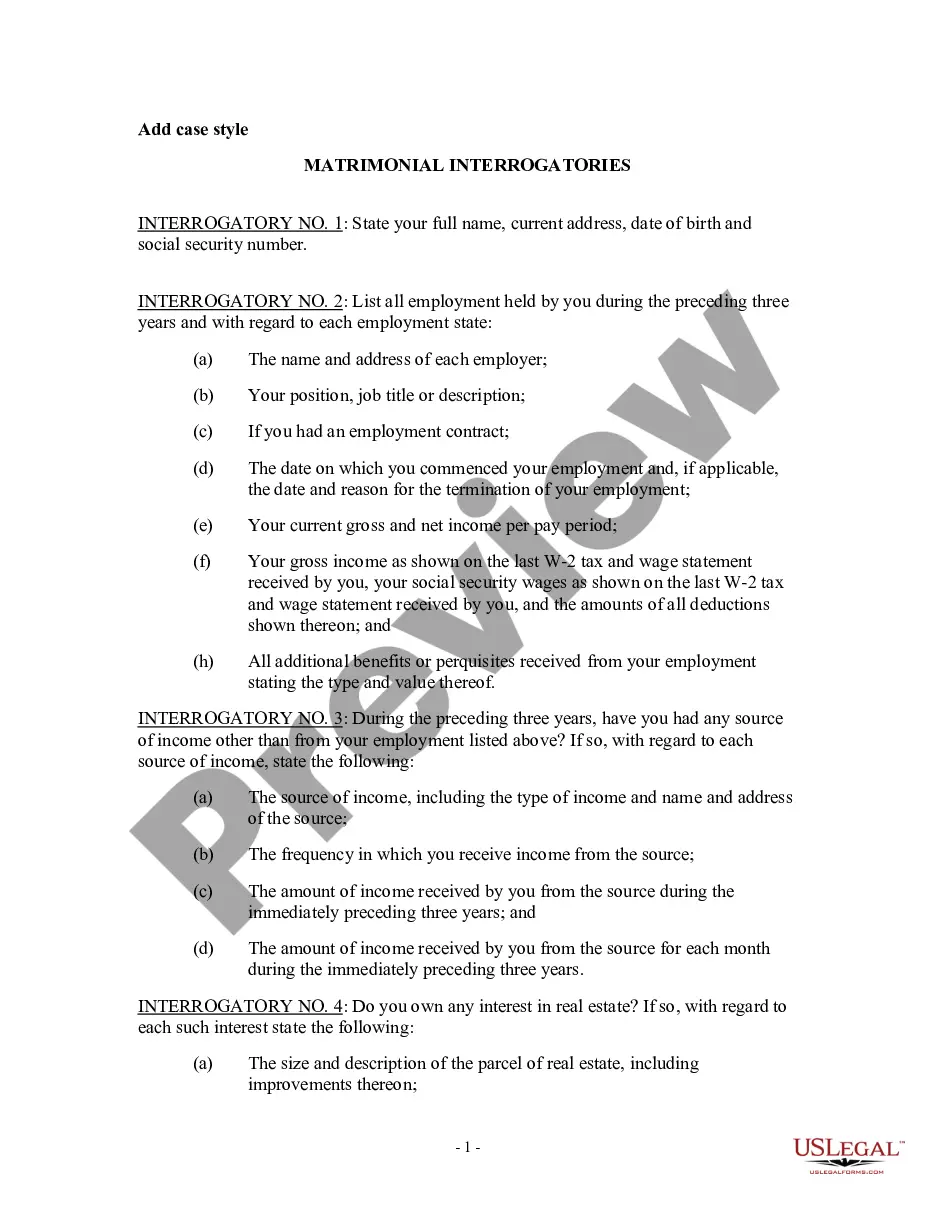
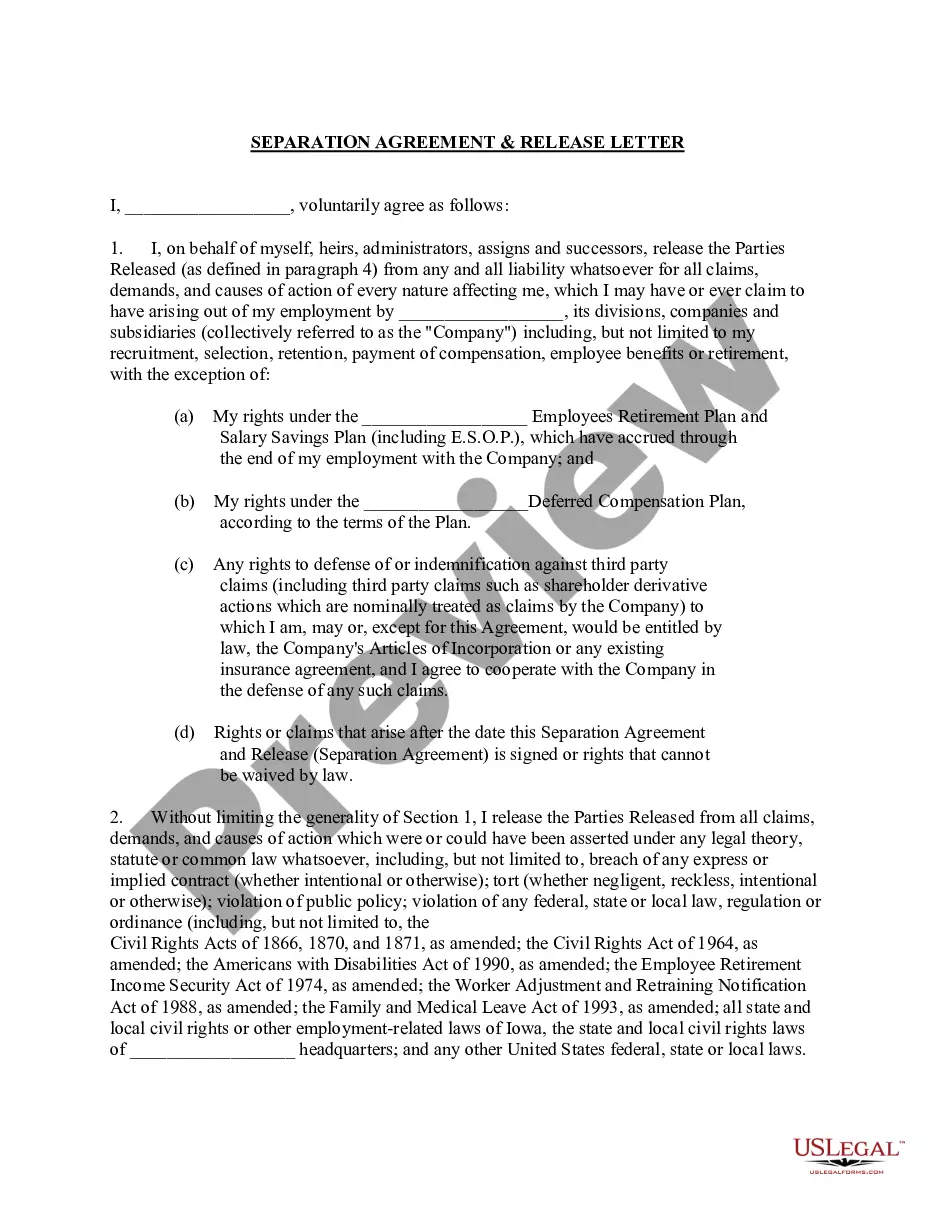
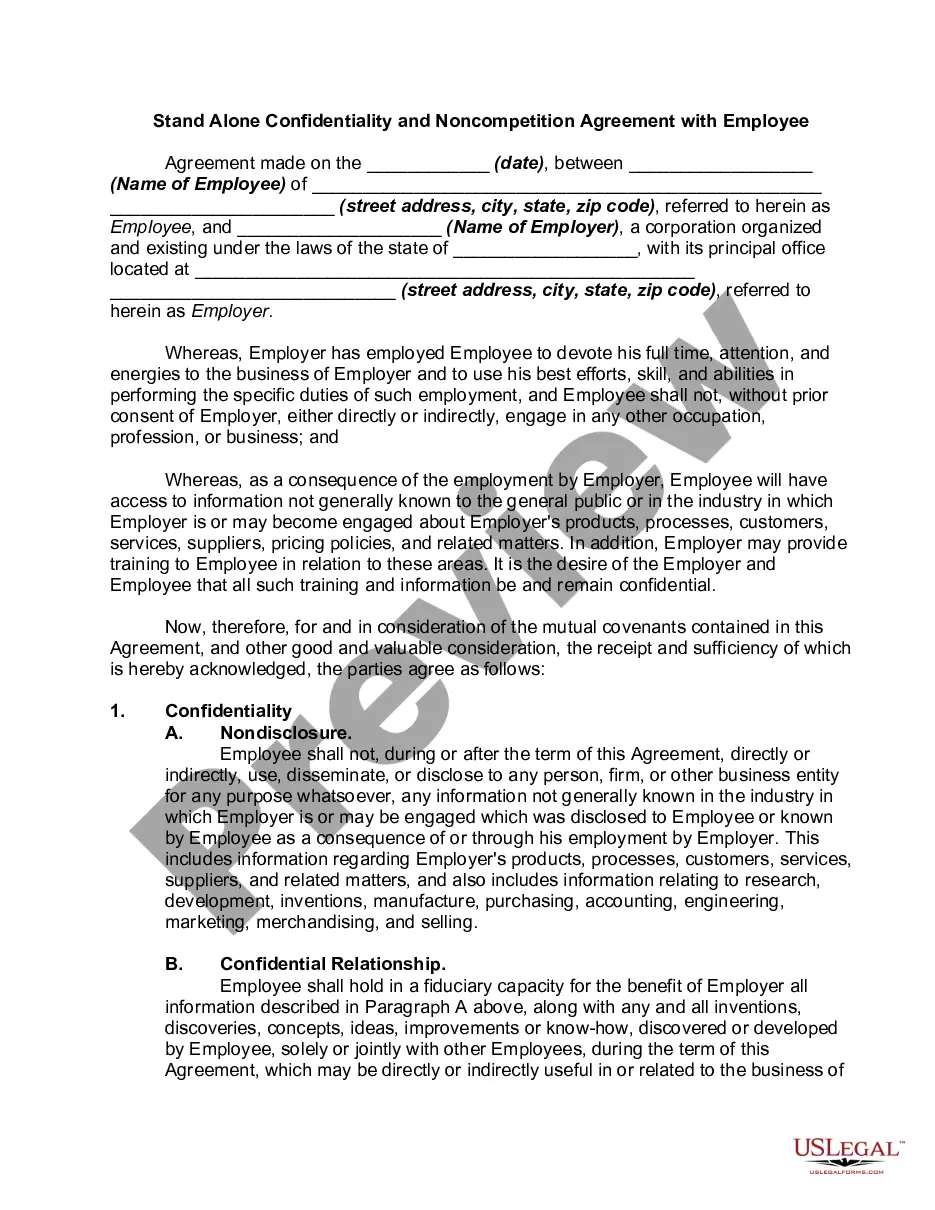
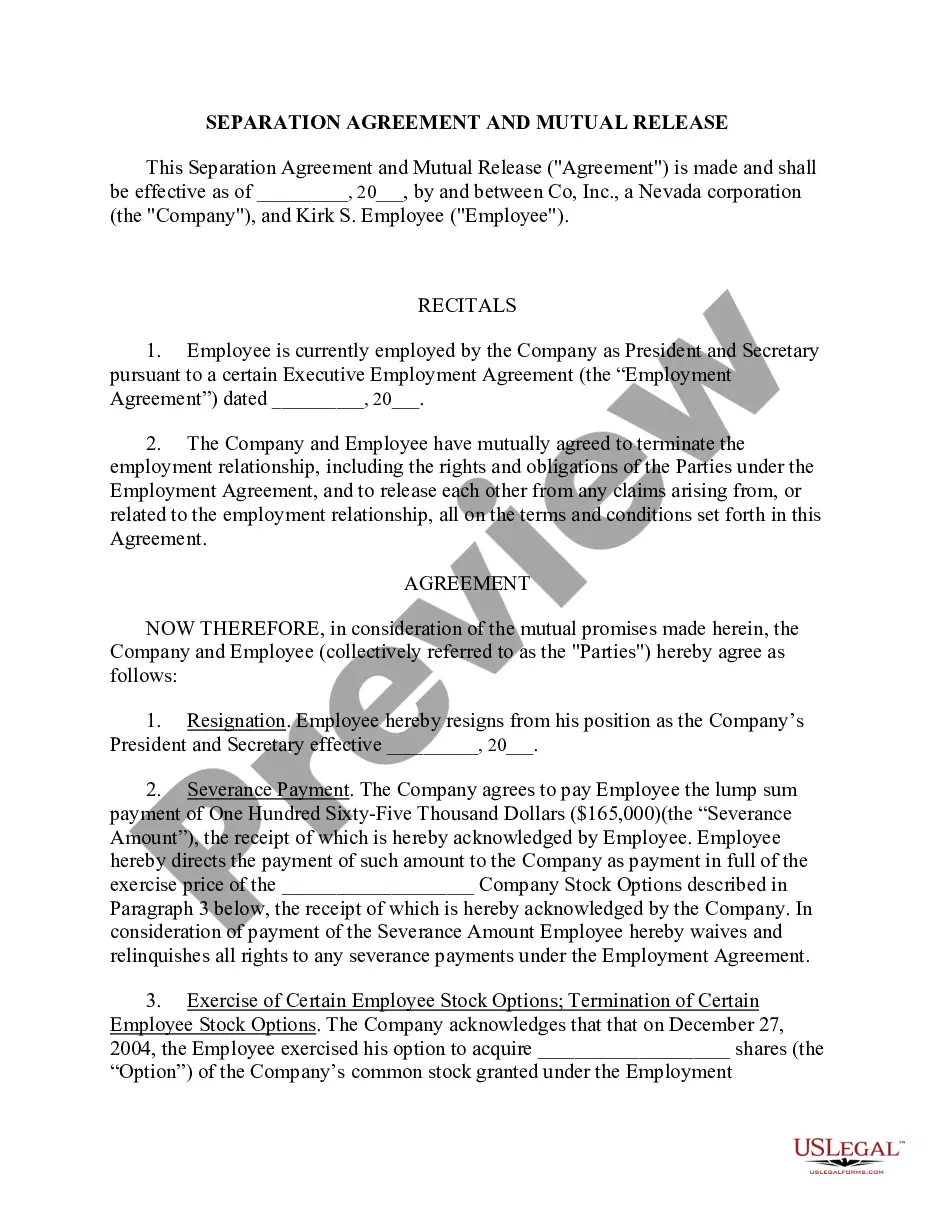
The Separation, Confidentiality, and Noncompetition Agreement and Release is a legal document that allows an employee to voluntarily agree to specific terms upon terminating their employment. This form differs from regular separation agreements by including clauses that address confidentiality and noncompetition, protecting the company's sensitive information and interests after the employee departs.
Main sections of this form
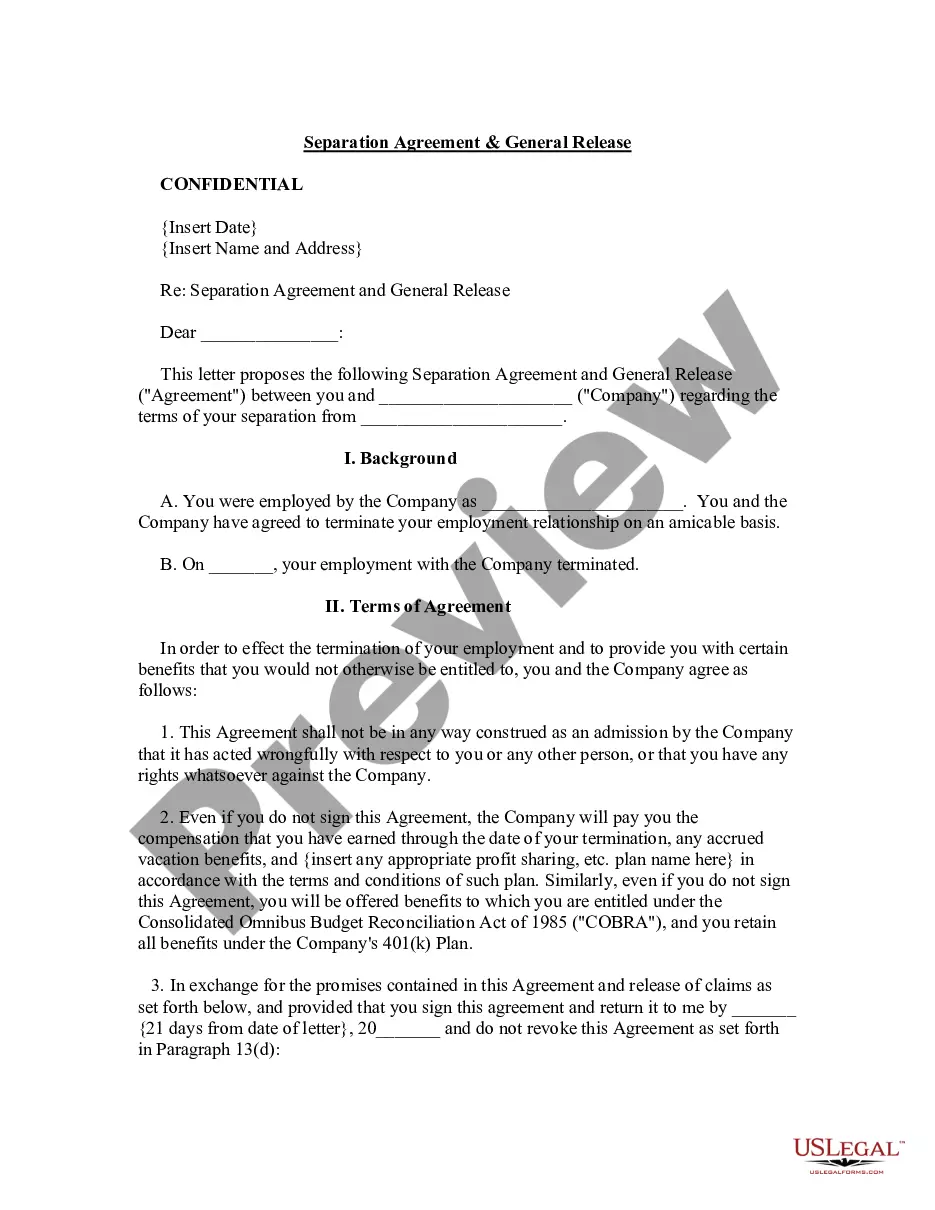
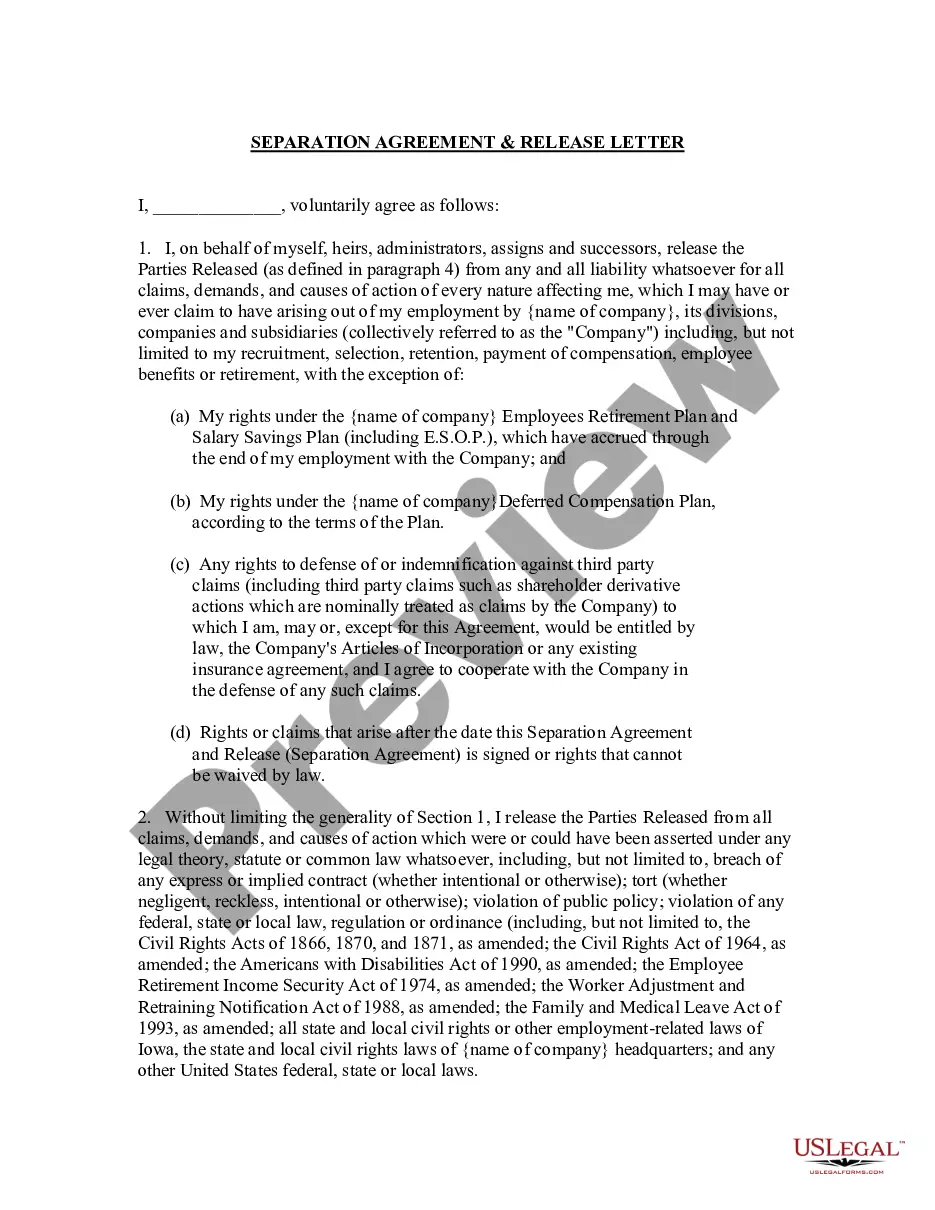
- Separation Agreement: Outlines the release of liability by the employee against the company.
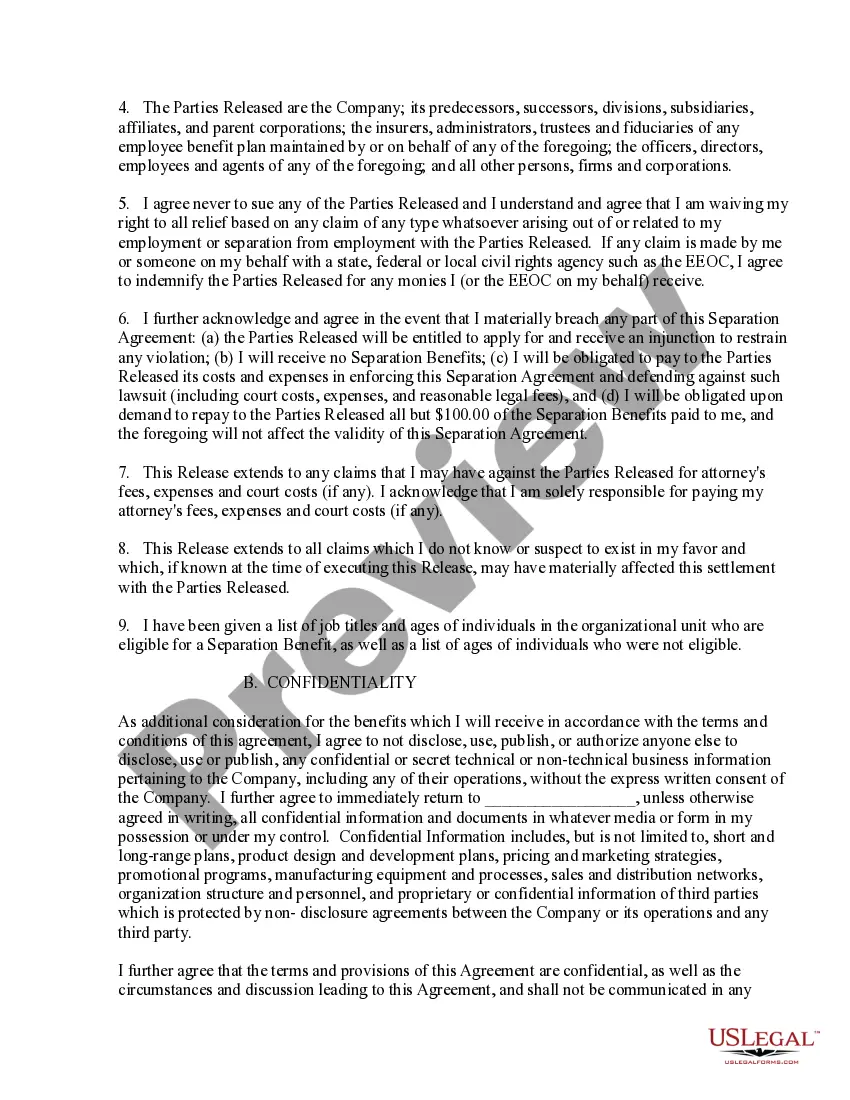
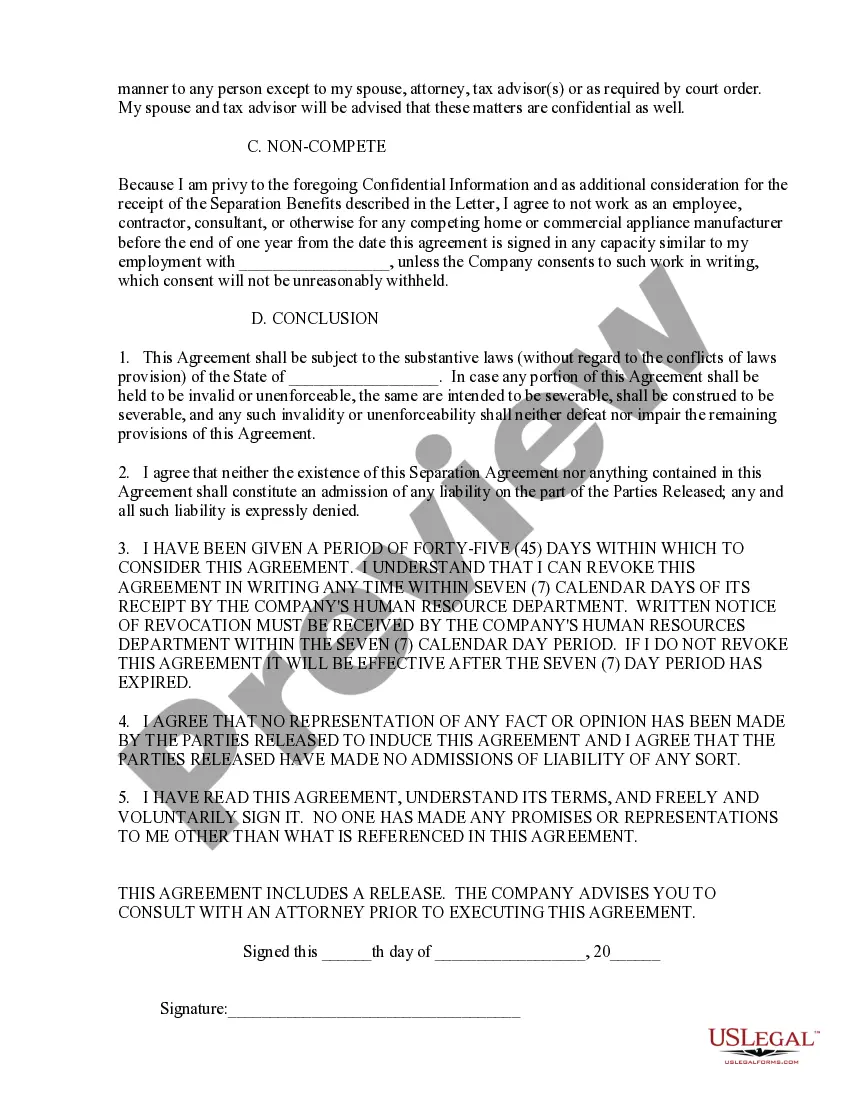
- Confidentiality Clause: Prohibits the disclosure of confidential company information.
- Non-Competition Agreement: Restricts the employee from working with competitors for a specified time.
- Release of Claims: Details the legal rights relinquished by the employee.
- Indemnification Clause: Discusses responsibility for any claims made by the employee post-separation.

When this form is needed
This form is necessary when an employee is ending their relationship with a company and wishes to formalize the terms of their departure. It is especially relevant when the employee has access to proprietary information or trade secrets that need protection after they leave the company. It helps both parties clarify their rights and obligations, and avoids potential disputes.
Intended users of this form
- Employees who are voluntarily leaving a company and want to ensure a clear separation agreement.
- Employers seeking to protect their business interests and confidential information post-termination.
- Individuals who hold positions where they have access to sensitive business information.
Completing this form step by step
- Identify the parties involved, including the employee and employer details.
- Fill in the effective date of the agreement and the employee's last working day.
- Specify any exceptions to the release, such as rights under retirement plans.
- Complete the confidentiality and non-competition sections, ensuring clarity on the restrictions imposed.
- Sign and date the agreement, confirming understanding and voluntary consent to the terms.
Notarization guidance
In most cases, this form does not require notarization. However, some jurisdictions or signing circumstances might. US Legal Forms offers online notarization powered by Notarize, accessible 24/7 for a quick, remote process.
Get your form ready online
Our built-in tools help you complete, sign, share, and store your documents in one place.
Make edits, fill in missing information, and update formatting in US Legal Forms—just like you would in MS Word.
Download a copy, print it, send it by email, or mail it via USPS—whatever works best for your next step.
Sign and collect signatures with our SignNow integration. Send to multiple recipients, set reminders, and more. Go Premium to unlock E-Sign.
If this form requires notarization, complete it online through a secure video call—no need to meet a notary in person or wait for an appointment.
We protect your documents and personal data by following strict security and privacy standards.

Make edits, fill in missing information, and update formatting in US Legal Forms—just like you would in MS Word.

Download a copy, print it, send it by email, or mail it via USPS—whatever works best for your next step.

Sign and collect signatures with our SignNow integration. Send to multiple recipients, set reminders, and more. Go Premium to unlock E-Sign.

If this form requires notarization, complete it online through a secure video call—no need to meet a notary in person or wait for an appointment.

We protect your documents and personal data by following strict security and privacy standards.
Common mistakes to avoid
- Not reading the agreement thoroughly before signing, which may lead to unintended obligations.
- Failing to specify particular exceptions to confidentiality or noncompetition clauses.
- Ignoring state-specific legal requirements that could impact the enforceability of the agreement.
Why use this form online
- Immediate access to a comprehensive legal template drafted by licensed attorneys.
- Convenient downloading options that allow for easy customization.
- Time-saving compared to consulting a lawyer for basic agreements.
Legal use & context
- The form is enforceable as long as it complies with state laws and does not violate public policy.
- Confidentiality and noncompetition clauses are subject to reasonableness in duration and geographic scope.
- Employees should be encouraged to seek legal advice prior to signing to fully understand their rights.
What to keep in mind
- The form formalizes the separation process and protects company interests.
- Clear identification of terms can prevent future disputes.
- Understanding and compliance with legal requirements is crucial for enforceability.
Looking for another form?

Form popularity
FAQ
The release waives claims for conduct that occurs on or before the date the agreement is signed. As a result, an employee often signs the separation agreement and release after the date that the employee stops working, often called the ?termination date.?
Upon termination, severance pay and separation pay are interchangeable terms. Although some companies may distinguish between separation pay and severance pay packages, the distinction is not universally applied.
Confidentiality/non-disclosure agreements are contracts in which the employee promises not to disclose certain proprietary information, such as trade secrets. Non-compete agreements are contracts in which the employee agrees not to unfairly compete against his/her (former) employer.
A severance package refers to an employer's offer of added money and/or benefits to a terminated employee. A severance (or separation) agreement refers to a written agreement in which the departing employee agrees to certain promises made to the employer.
Confidentiality of Agreement Terms The terms of this Agreement shall be held in strict confidence by Employee and shall not be disclosed by Employee to anyone other than Employee's spouse, Employee's legal counsel, and Employee's other advisors, unless required by law.
Fraud, misrepresentation, duress, or unconscionability are common defenses you can use if you want to void a severance agreement that you already signed.
A separation agreement is the entire contract that details an employee's termination including terms about items like continued pay, benefits and potential legal actions against the employer.
The severance pay offered is typically one to two weeks for every year worked, but it can be more. If the job loss will create an economic hardship, discuss this with your (former) employer. The general practice is to try to get four weeks of severance pay for each year worked.