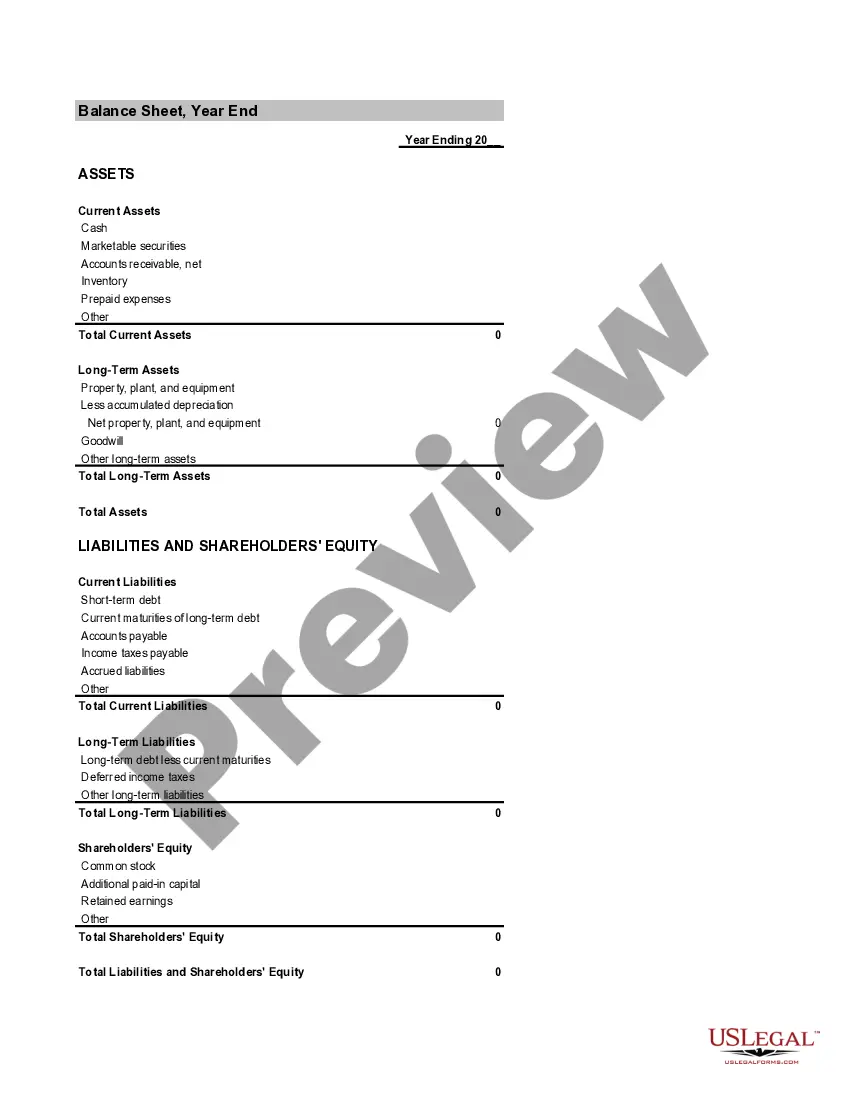
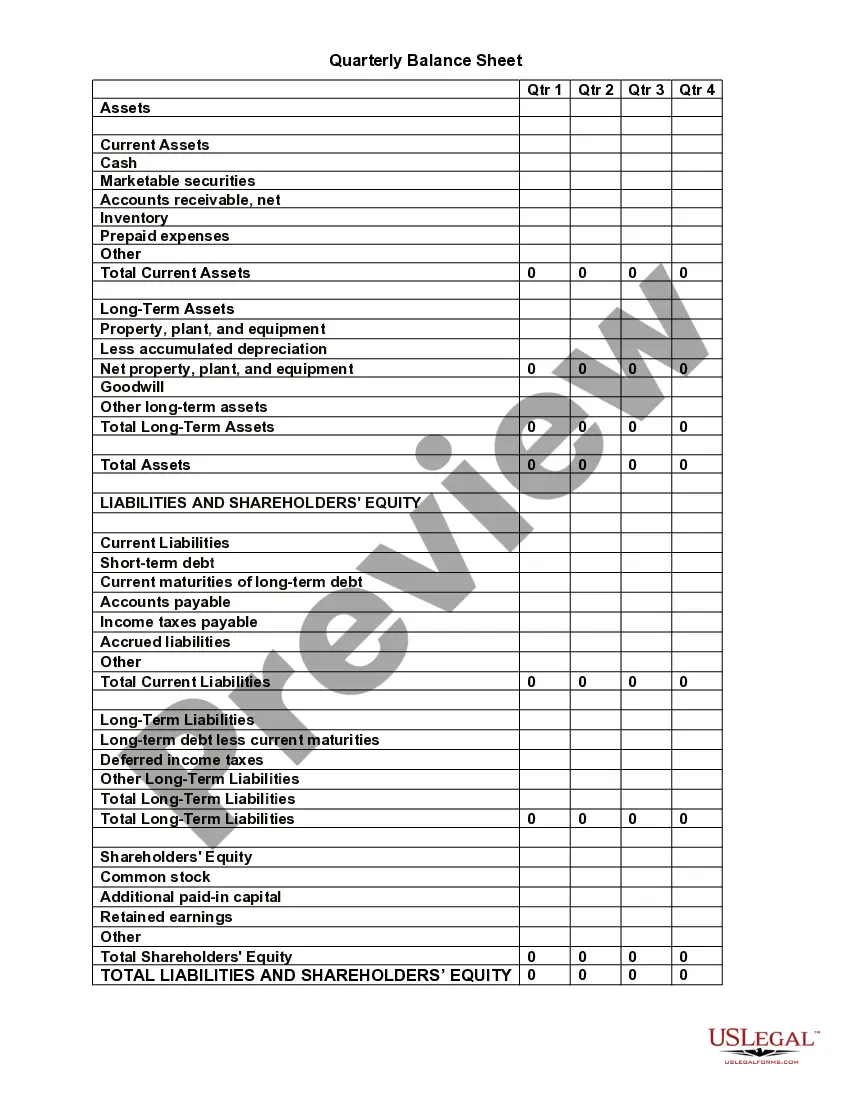
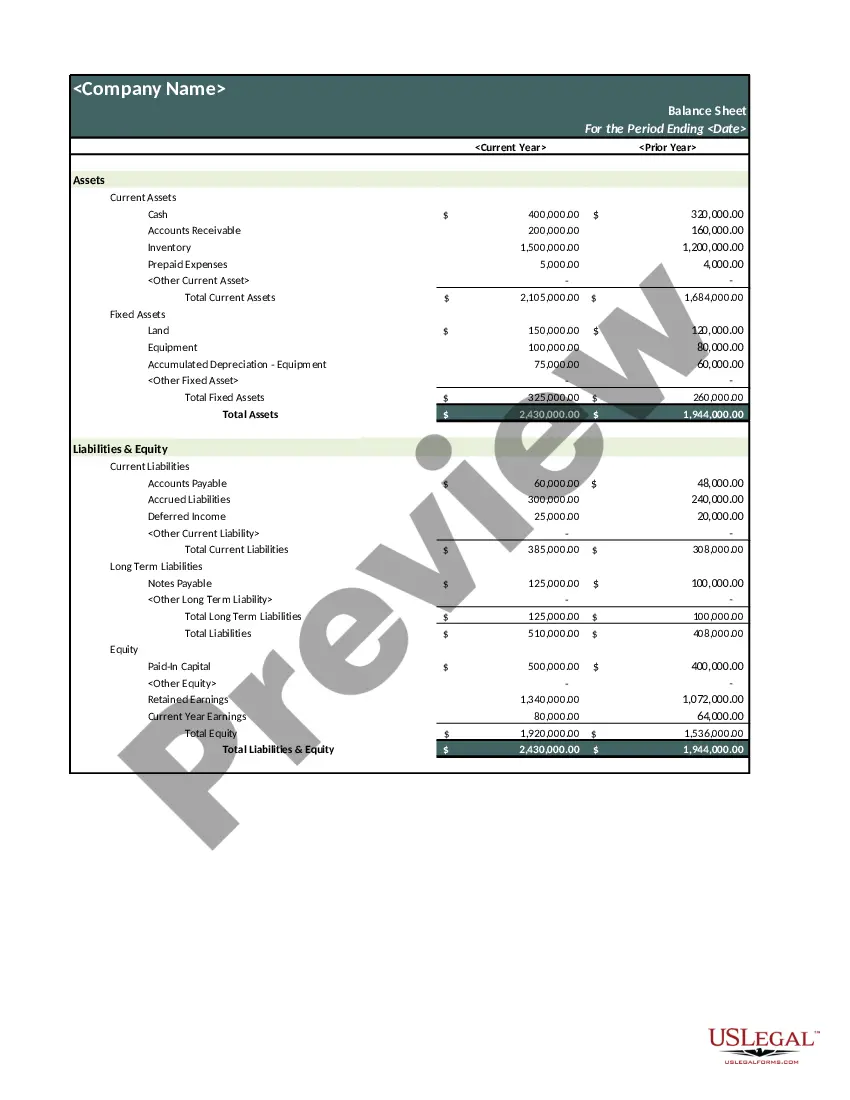
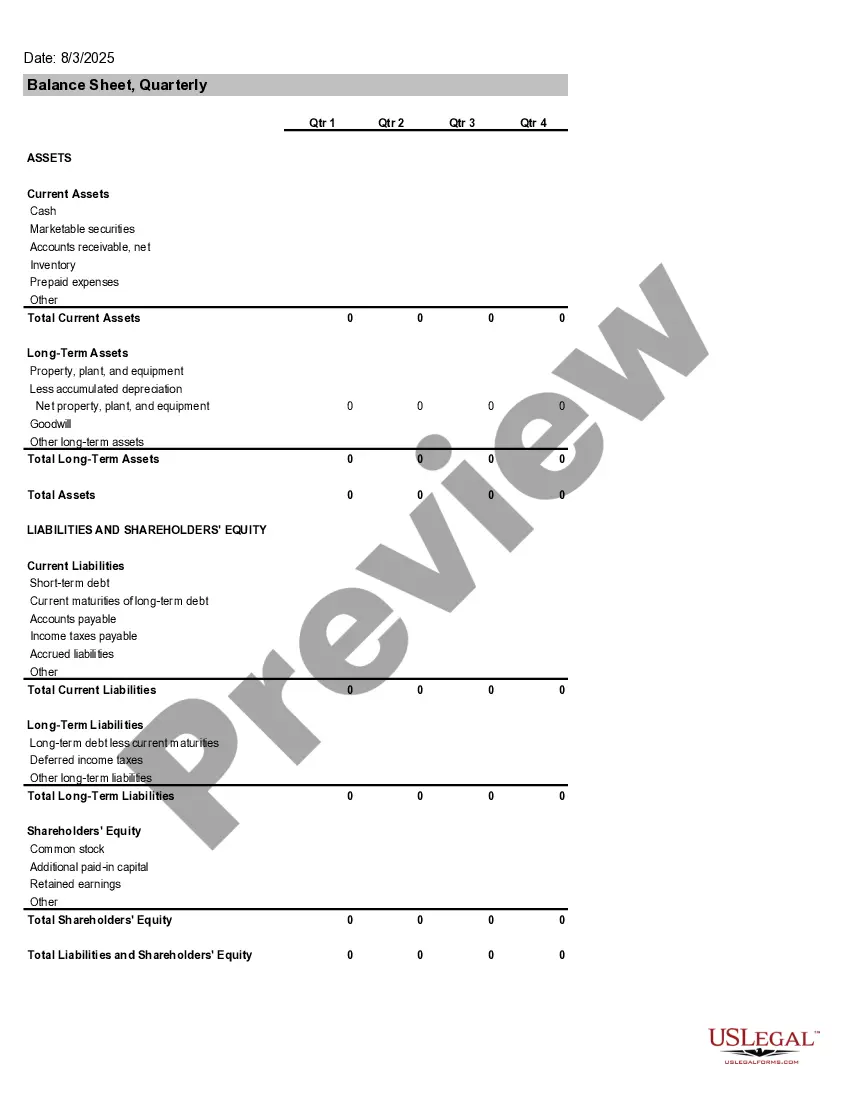
Balance Sheet (Year End)
Notarization requirements for this form
In most cases, this form does not require notarization. However, some jurisdictions or signing circumstances might. US Legal Forms offers online notarization powered by Notarize, accessible 24/7 for a quick, remote process.
Get your form ready online
Our built-in tools help you complete, sign, share, and store your documents in one place.
Make edits, fill in missing information, and update formatting in US Legal Forms—just like you would in MS Word.
Download a copy, print it, send it by email, or mail it via USPS—whatever works best for your next step.
Sign and collect signatures with our SignNow integration. Send to multiple recipients, set reminders, and more. Go Premium to unlock E-Sign.
If this form requires notarization, complete it online through a secure video call—no need to meet a notary in person or wait for an appointment.
We protect your documents and personal data by following strict security and privacy standards.

Make edits, fill in missing information, and update formatting in US Legal Forms—just like you would in MS Word.

Download a copy, print it, send it by email, or mail it via USPS—whatever works best for your next step.

Sign and collect signatures with our SignNow integration. Send to multiple recipients, set reminders, and more. Go Premium to unlock E-Sign.

If this form requires notarization, complete it online through a secure video call—no need to meet a notary in person or wait for an appointment.

We protect your documents and personal data by following strict security and privacy standards.
Looking for another form?




Form popularity
FAQ
A balance sheet will provide you a quick snapshot of your business's finances - typically at a quarter- or year-end?and provide insights into how much cash or how much debt your company has.
At the end of the fiscal year, closing entries are used to shift the entire balance in every temporary account into retained earnings, which is a permanent account. The net amount of the balances shifted constitutes the gain or loss that the company earned during the period.
A balance sheet will provide you a quick snapshot of your business's finances - typically at a quarter- or year-end?and provide insights into how much cash or how much debt your company has.
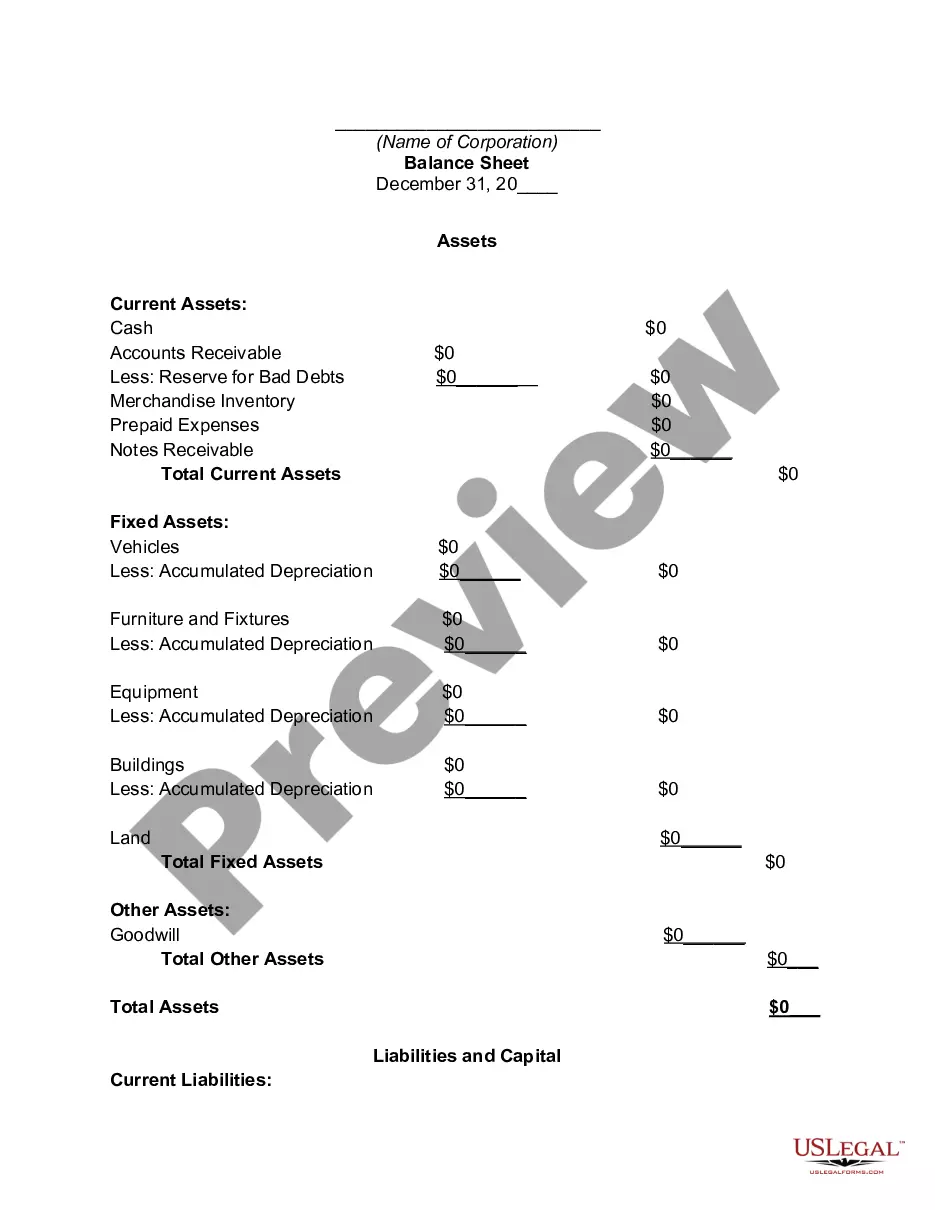
Balance Sheet is part of final accounts, prepared by a business firm to know its financial position on a particular date for a particular period. Balance sheet shows the total liabilities and total assets of a business firm on a particular date.
Balance sheets are usually prepared at the close of an accounting period such as month-end, quarter-end, or year-end. New business owners should not wait until the end of 12 months or the end of an operating cycle to complete a balance sheet.
Typically, a balance sheet is prepared at the end of set periods (e.g., every quarter; annually). A balance sheet is comprised of two columns. The column on the left lists the assets of the company. The column on the right lists the liabilities and the owners' equity.
This financial statement details your assets, liabilities and equity, as of a particular date. Although a balance sheet can coincide with any date, it is usually prepared at the end of a reporting period, such as a month, quarter or year.