Nongrantor Charitable Lead Annuity Trust
Understanding this form
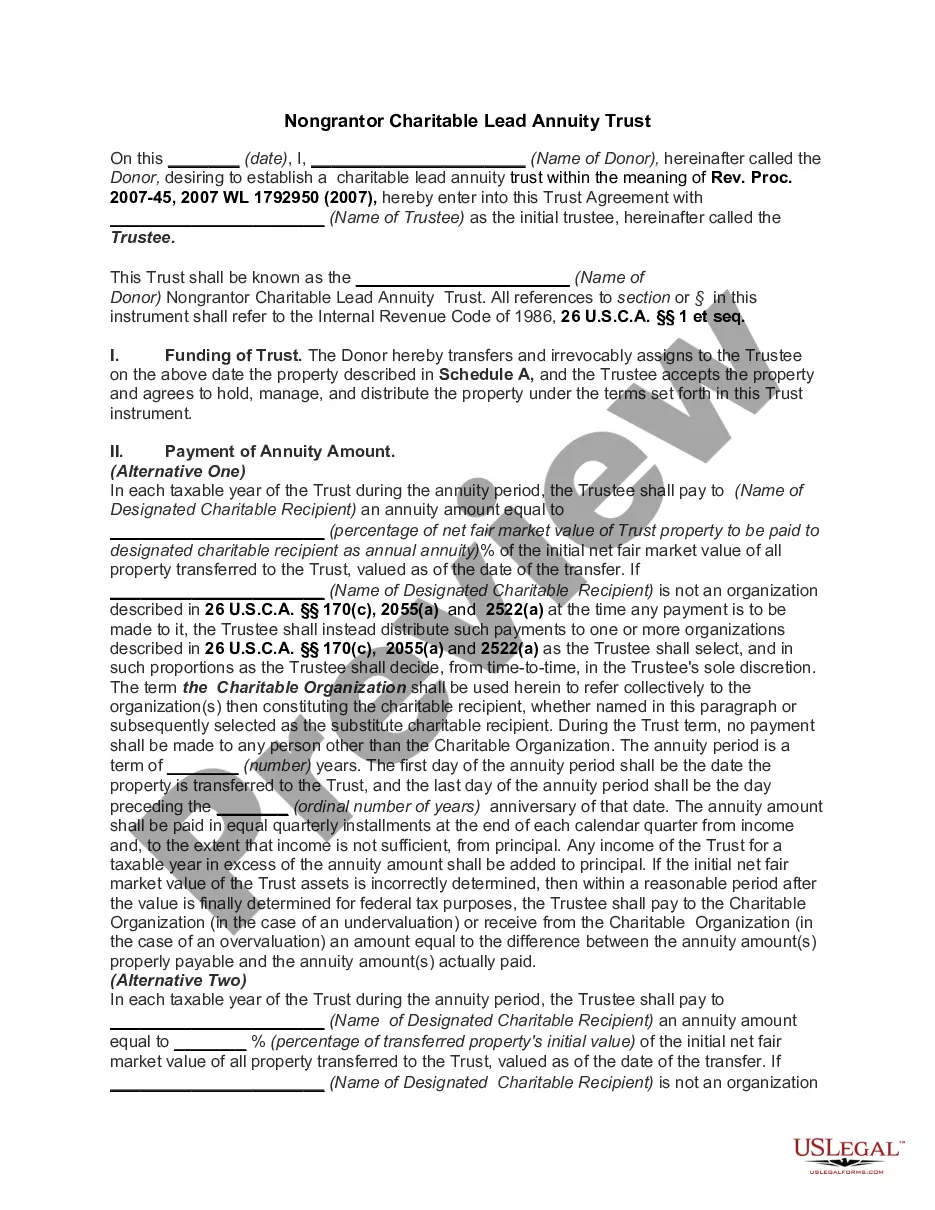
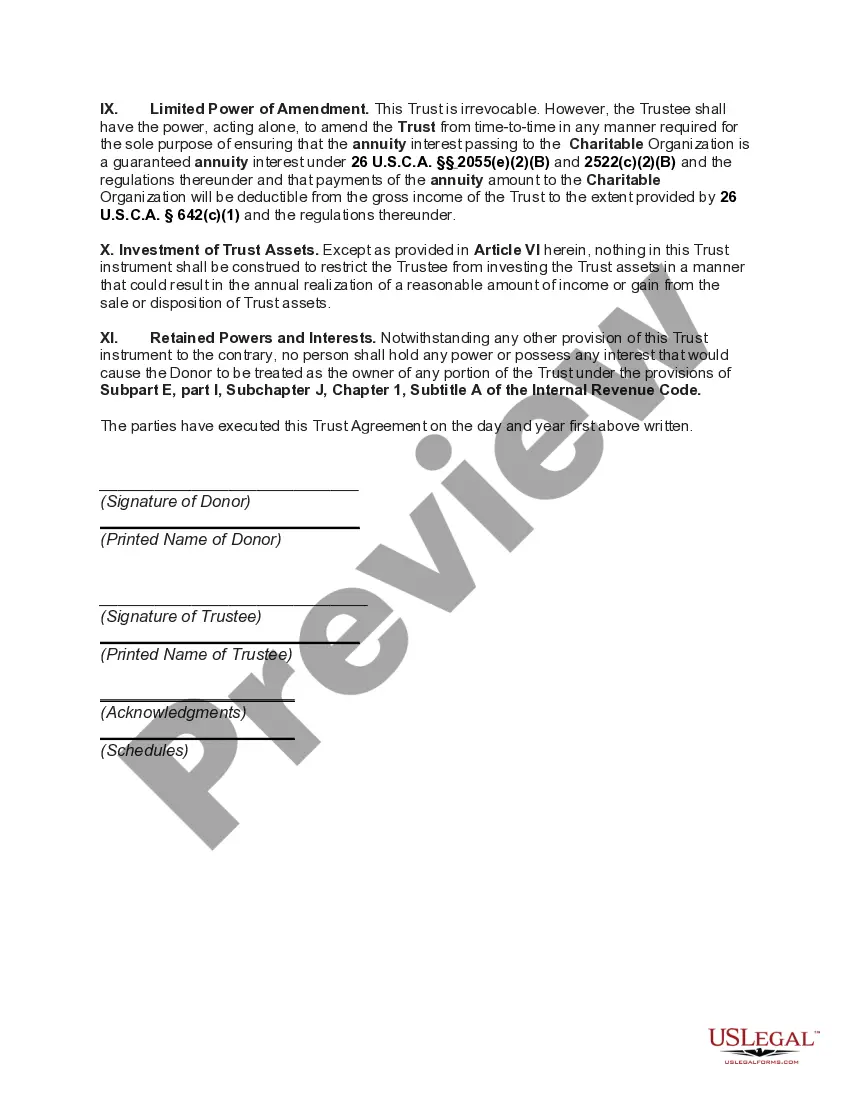
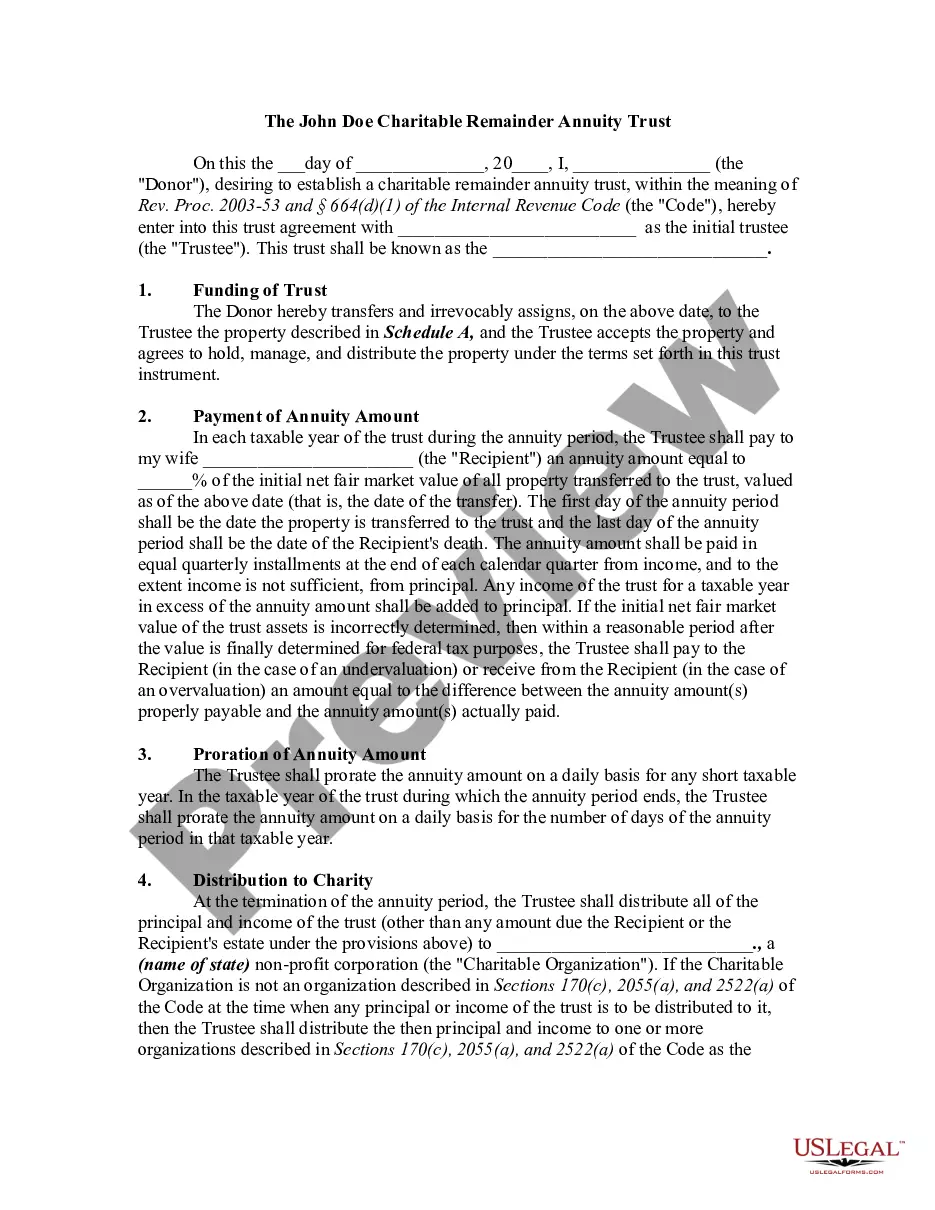
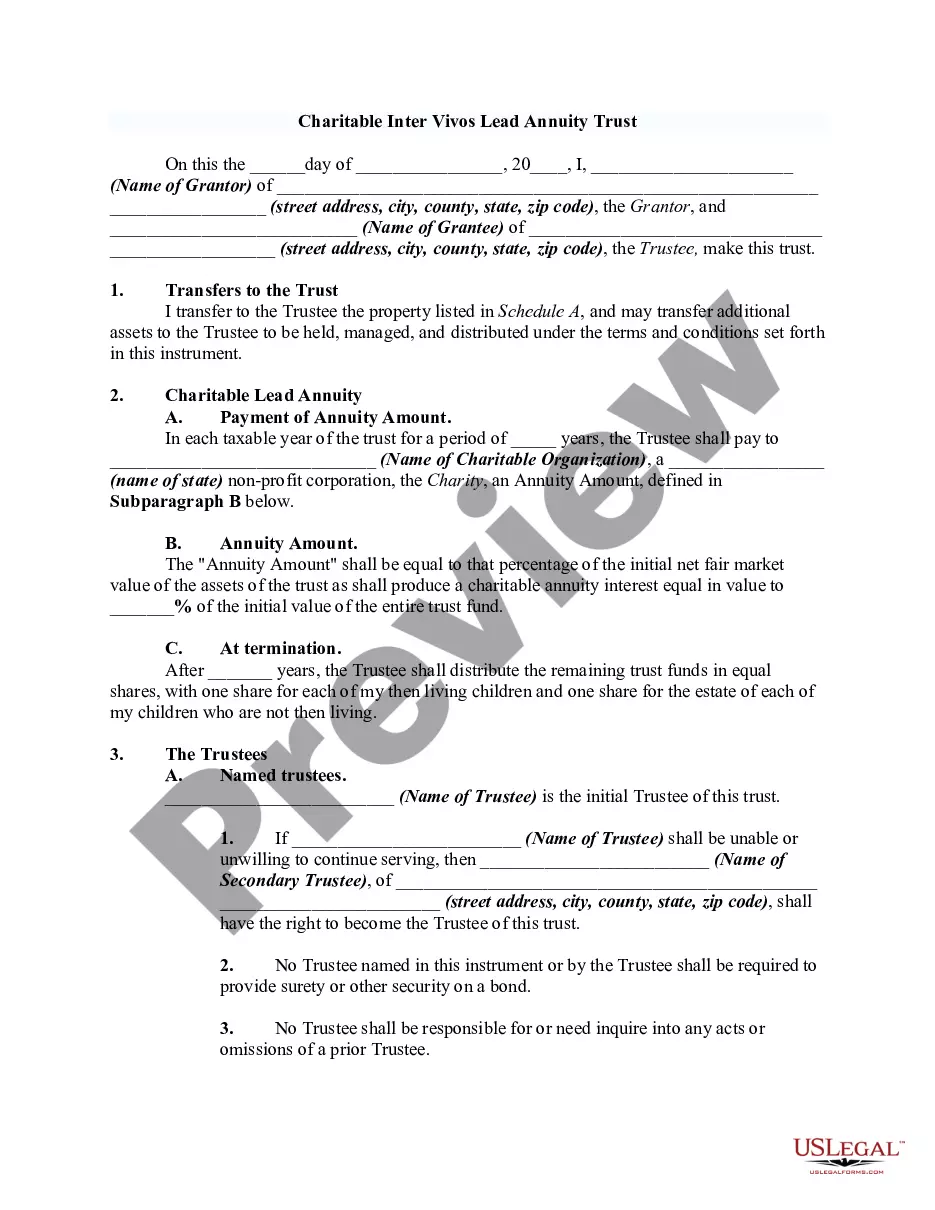
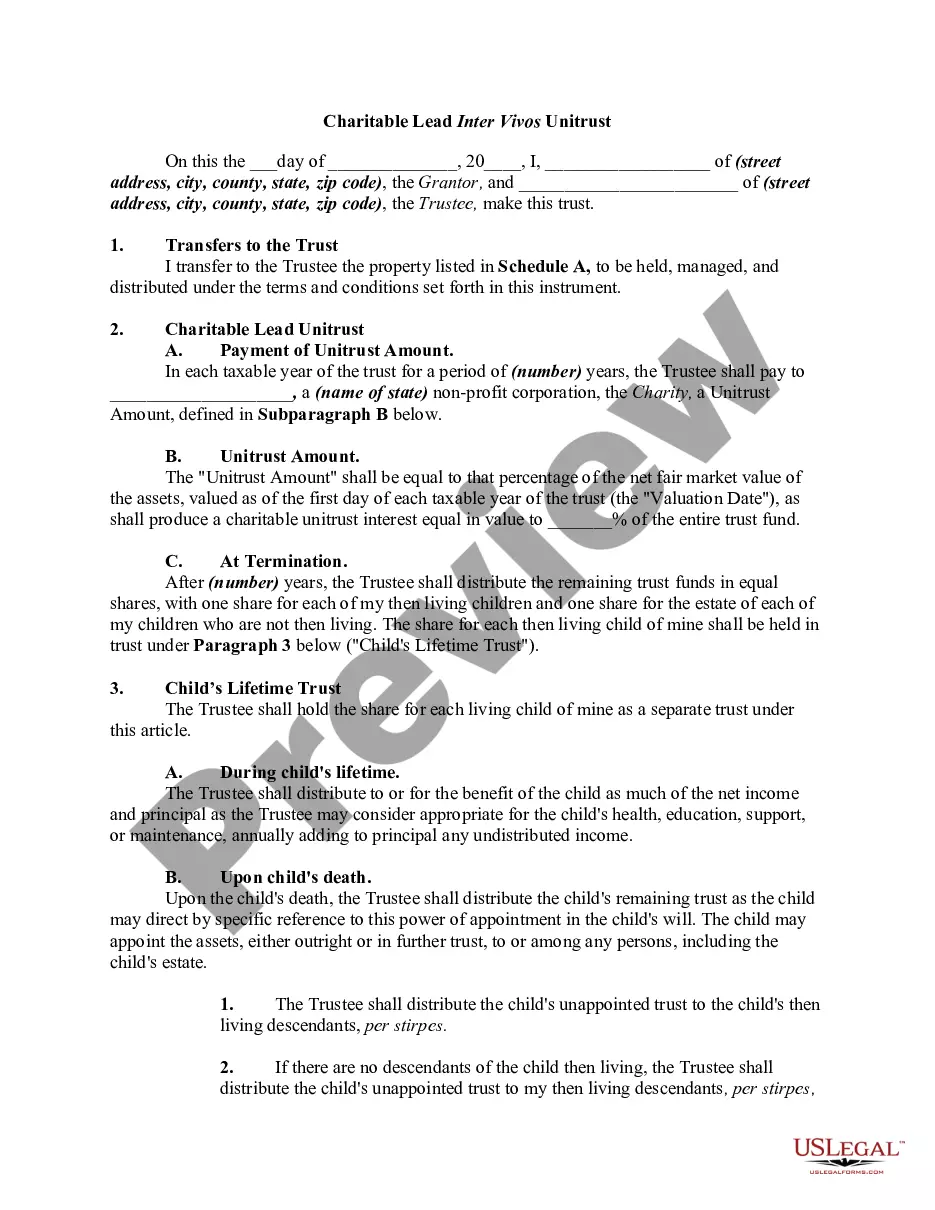
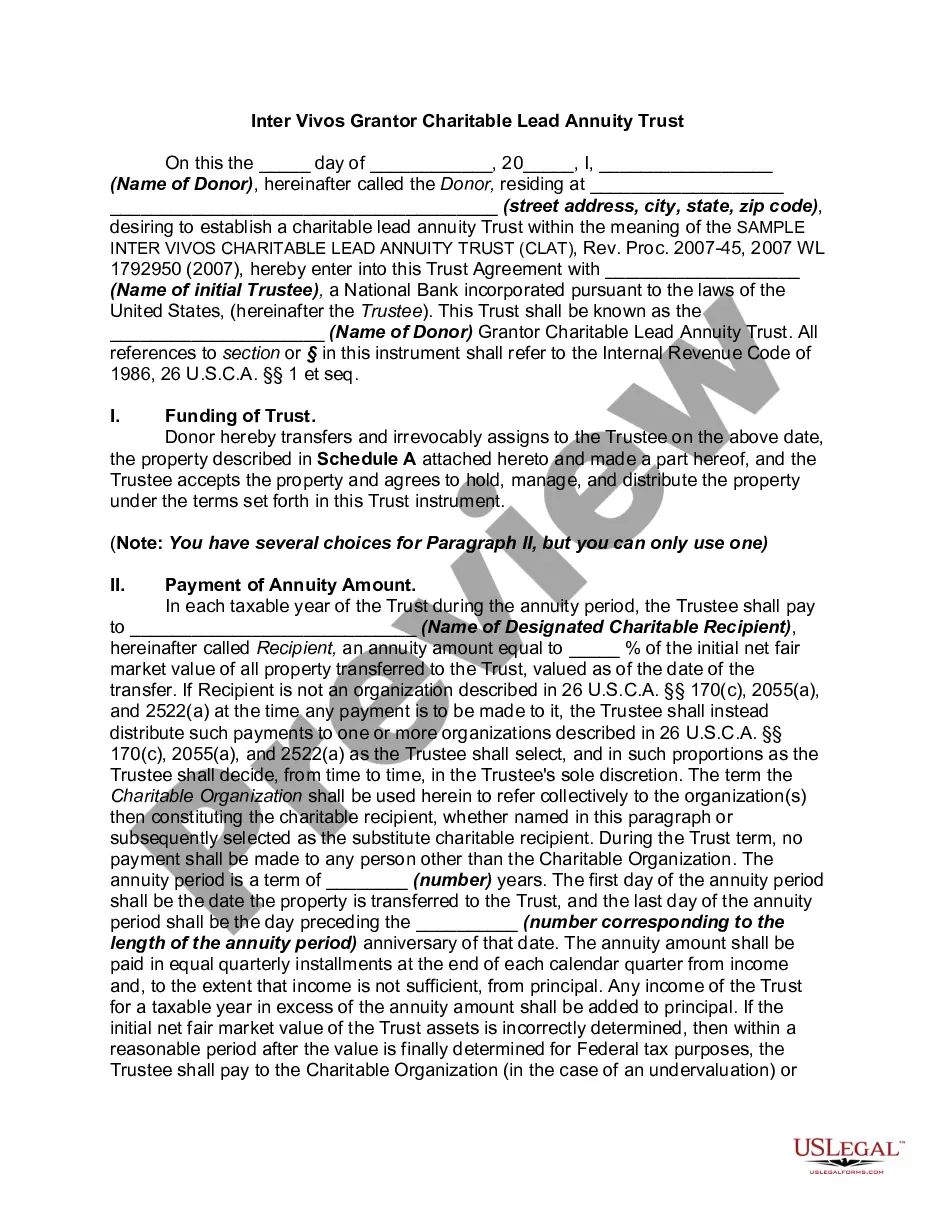
A Nongrantor Charitable Lead Annuity Trust is a legal document that allows a donor to make a substantial gift to a qualified charitable organization while minimizing tax liabilities. Unlike a grantor trust, where the donor retains some control over the trust assets, a nongrantor trust removes the assets from the donor's taxable estate, allowing family members to benefit from the trust at a reduced tax cost. This type of trust is established to provide a fixed annuity payment to the charity for a specified period before the remaining assets revert to the donor's heirs.
Main sections of this form
- Funding of Trust: Details on how the trust is funded with specific property.
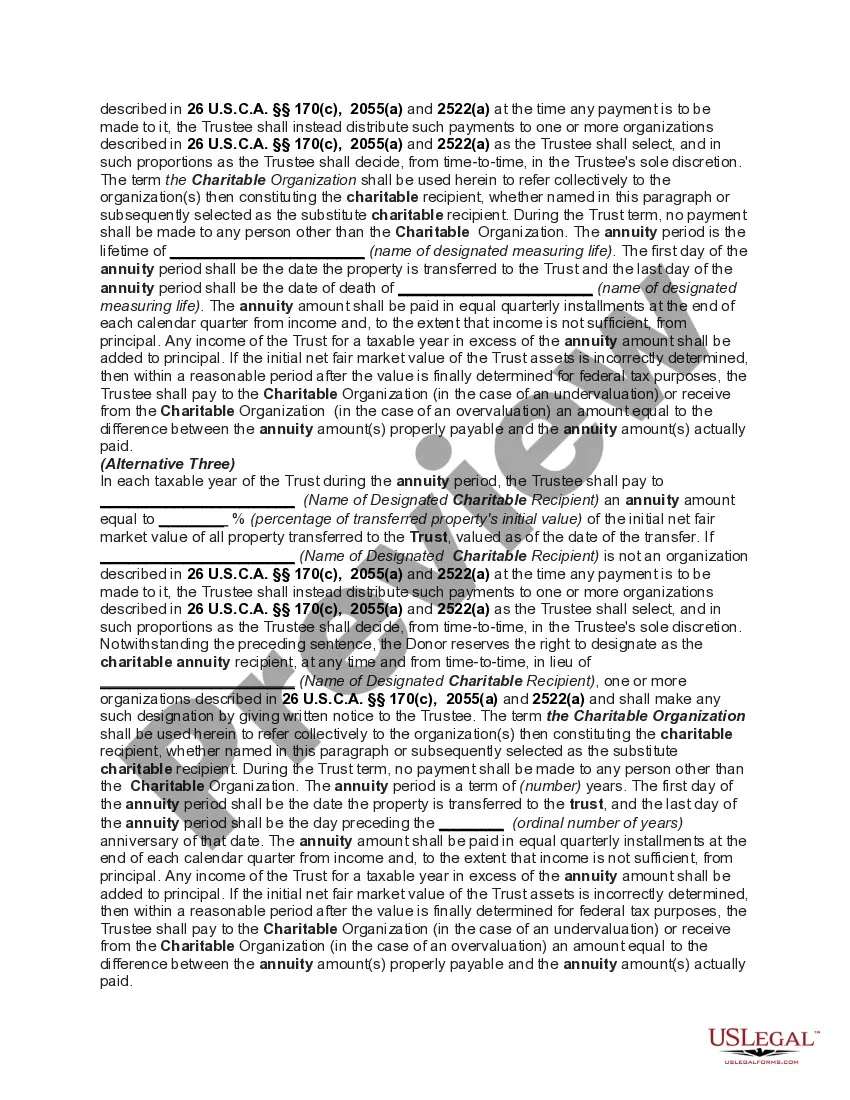
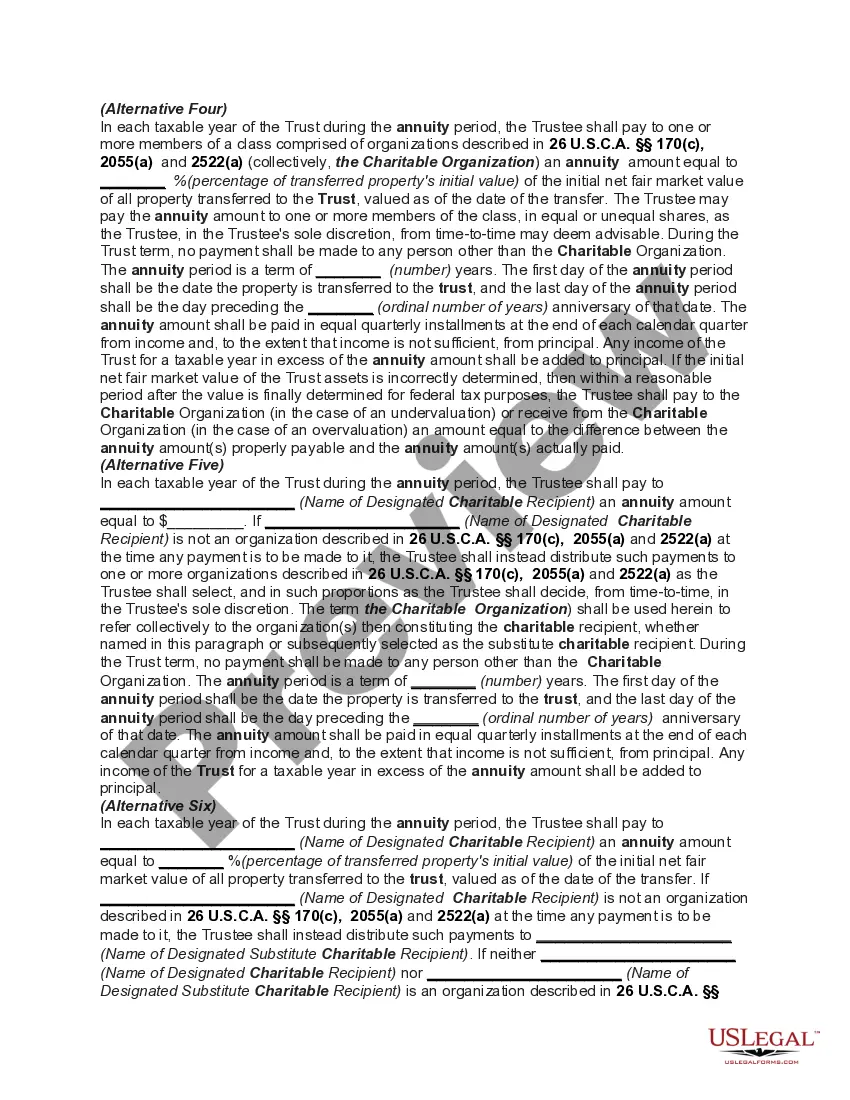
- Payment of Annuity: Specifies the annuity amount to be paid to the designated charitable recipient.
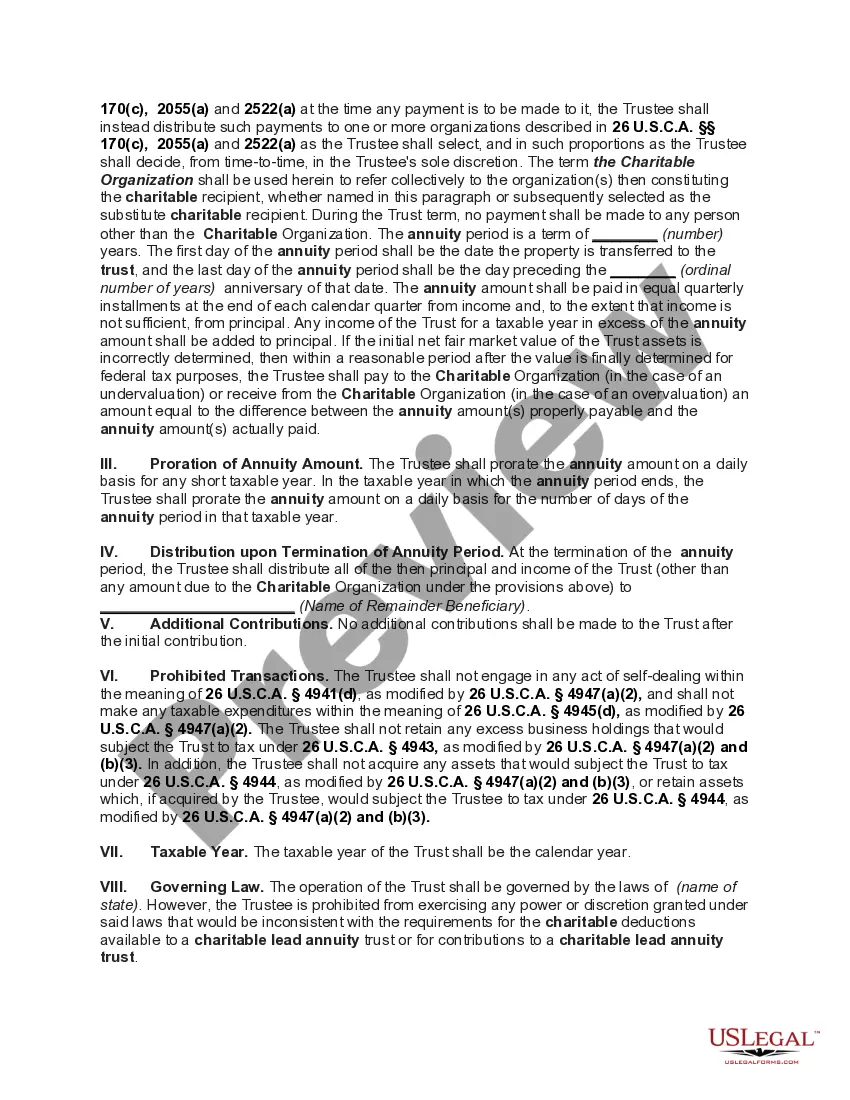
- Proration of Annuity Amount: Instructions for prorating the annuity for short taxable years.
- Distribution upon Termination: Indicates how trust assets will be distributed after the annuity period ends.
- Prohibited Transactions: Outlines actions the trustee is not allowed to take to maintain trust integrity.
When to use this document
This form should be used when an individual or couple wants to establish a Nongrantor Charitable Lead Annuity Trust to benefit a charity financially while transferring a portion of wealth to heirs at a reduced tax burden. It is particularly suitable for individuals looking to make significant charitable contributions and manage estate taxes effectively.
Intended users of this form
- Individuals or couples looking to support charitable organizations through a structured donation.
- Those wanting to reduce their taxable estate while providing for future beneficiaries.
- Donors interested in philanthropic strategies to manage their wealth effectively.
How to complete this form
- Identify the parties involved: the donor and the trustee.
- Specify the property that will be funded into the trust.
- Enter the name and percentage of the annuity amount to be paid to the designated charitable recipient.
- Determine the duration of the annuity period and record any necessary dates.
- Provide signatures from both the donor and the trustee to finalize the trust agreement.
Is notarization required?
This form does not typically require notarization unless specified by local law. However, it is advisable to consult with a legal professional to ensure compliance with specific state requirements.
Get your form ready online
Our built-in tools help you complete, sign, share, and store your documents in one place.
Make edits, fill in missing information, and update formatting in US Legal Forms—just like you would in MS Word.
Download a copy, print it, send it by email, or mail it via USPS—whatever works best for your next step.
Sign and collect signatures with our SignNow integration. Send to multiple recipients, set reminders, and more. Go Premium to unlock E-Sign.
If this form requires notarization, complete it online through a secure video call—no need to meet a notary in person or wait for an appointment.
We protect your documents and personal data by following strict security and privacy standards.

Make edits, fill in missing information, and update formatting in US Legal Forms—just like you would in MS Word.

Download a copy, print it, send it by email, or mail it via USPS—whatever works best for your next step.

Sign and collect signatures with our SignNow integration. Send to multiple recipients, set reminders, and more. Go Premium to unlock E-Sign.

If this form requires notarization, complete it online through a secure video call—no need to meet a notary in person or wait for an appointment.

We protect your documents and personal data by following strict security and privacy standards.
Common mistakes
- Failing to properly identify charitable organizations in compliance with federal tax laws.
- Incorrectly valuing the assets funded into the trust, leading to tax discrepancies.
- Omitting signatures or not following the required format for notarization, if necessary.
Why use this form online
- Convenience of downloading and filling out the form at your own pace.
- Access to attorney-drafted templates that ensure compliance with legal standards.
- Editable formats that allow for easy customization based on individual needs.
- A Nongrantor Charitable Lead Annuity Trust provides both charitable contributions and potential tax savings.
- It is essential to have clear terms regarding the annuity payments and specified beneficiaries.
- Consulting legal or tax professionals can maximize the benefits of this trust type.
Looking for another form?


Form popularity
FAQ
While the donor of a non-grantor CLT receives a gift or estate tax charitable deduction for the present value of the estimated benefit to charitable entities, the donor of a grantor CLT receives an income tax charitable deduction for the present value of the estimated charitable benefit.
While the donor of a non-grantor CLT receives a gift or estate tax charitable deduction for the present value of the estimated benefit to charitable entities, the donor of a grantor CLT receives an income tax charitable deduction for the present value of the estimated charitable benefit.
Non-grantor trusts create separation between the grantor and the beneficiaries. You can achieve estate planning goals without paying income tax on that trust in the future.
A charitable lead annuity trust (CLAT) is an irrevocable split-interest trust that provides for a specified amount to be paid to one or more charitable beneficiaries during the term of the trust.
A non grantor trust is any trust that is not a grantor trust. This kind of trust affords no control or powers to the grantor. That means they're unable to revoke or change the terms of the trust or make changes to trust beneficiaries.
At the end of the term, the trust terminates and the non-charitable beneficiaries receive whatever assets remain in the trust. A CLAT files both a Form 1041 and a Form 5227.
Non-Grantor Charitable Lead Trusts are used to transfer assets to loved ones and reduce gift and estate taxes by a significant amount or eliminate them entirely. These trusts also allow you to provide immediate support to Duke each year for a specific time period?either a person's life or a term of years. NON- GRANTOR.
Grantor charitable lead trust: In a grantor charitable lead trust, the grantor can take an immediate income tax charitable deduction for the present value of the future payments that will be made to the charitable beneficiary, subject to applicable deduction limitations depending on whether the beneficiary is a public