Motion to Vacate, Set Aside, Modify or Correct a Sentence by a Person in Federal Custody
What this document covers
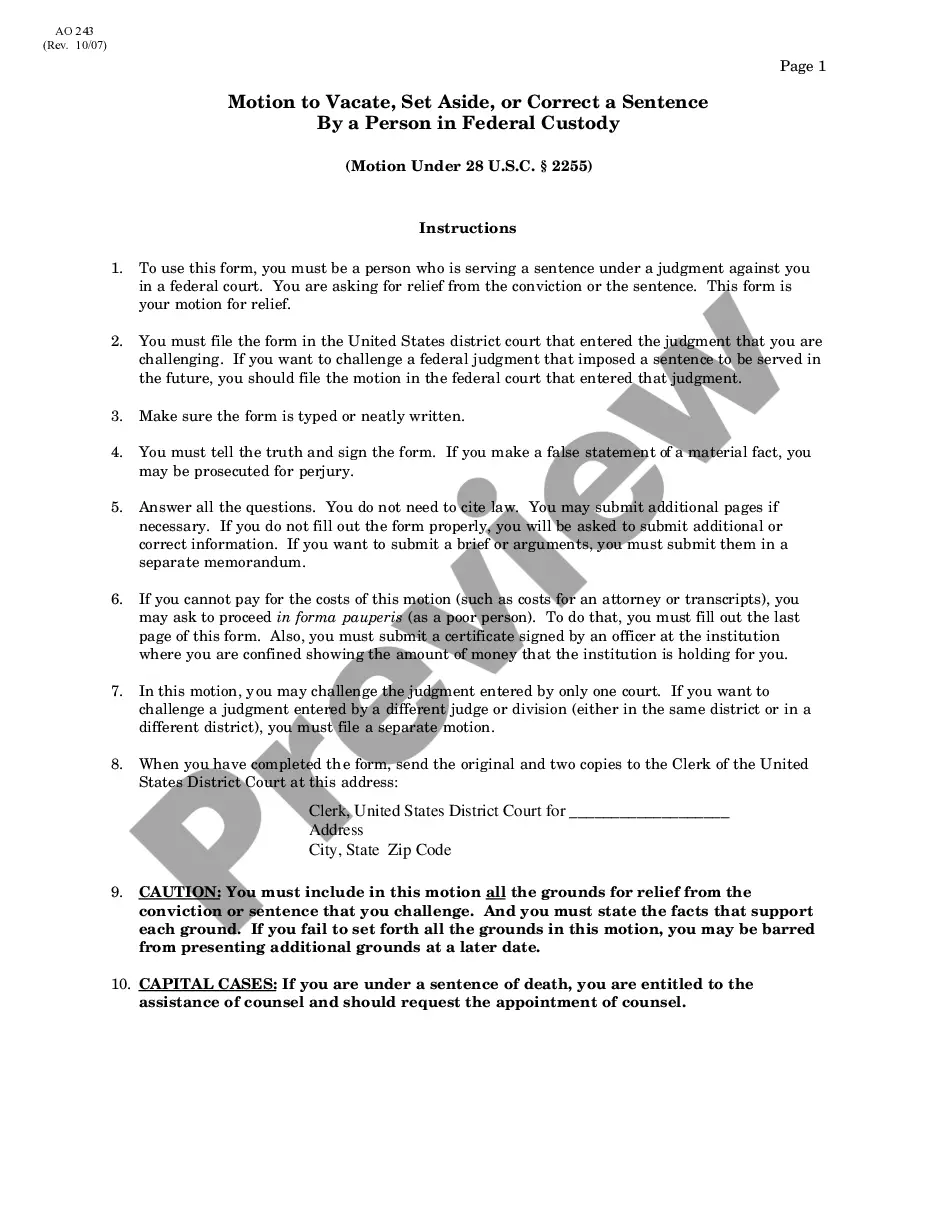
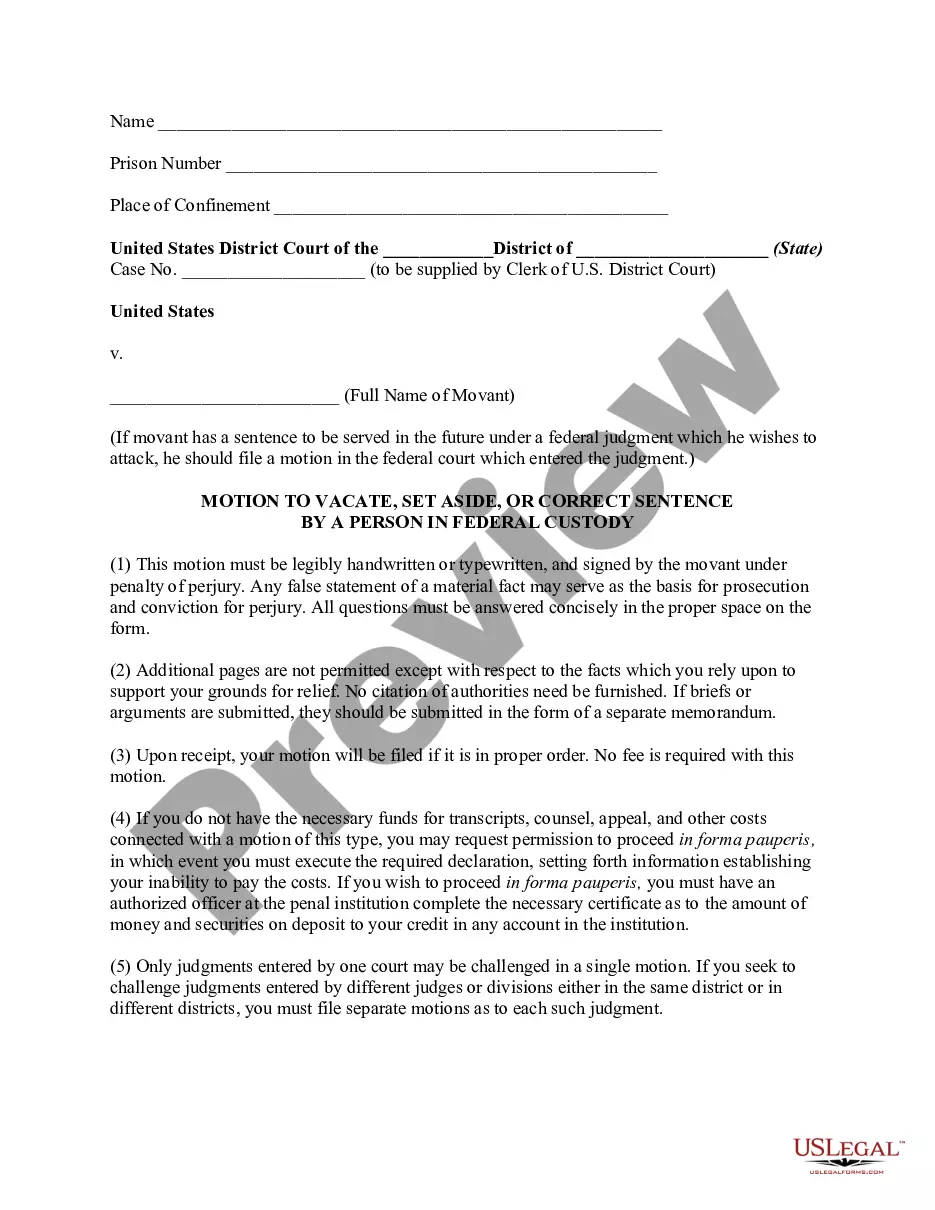
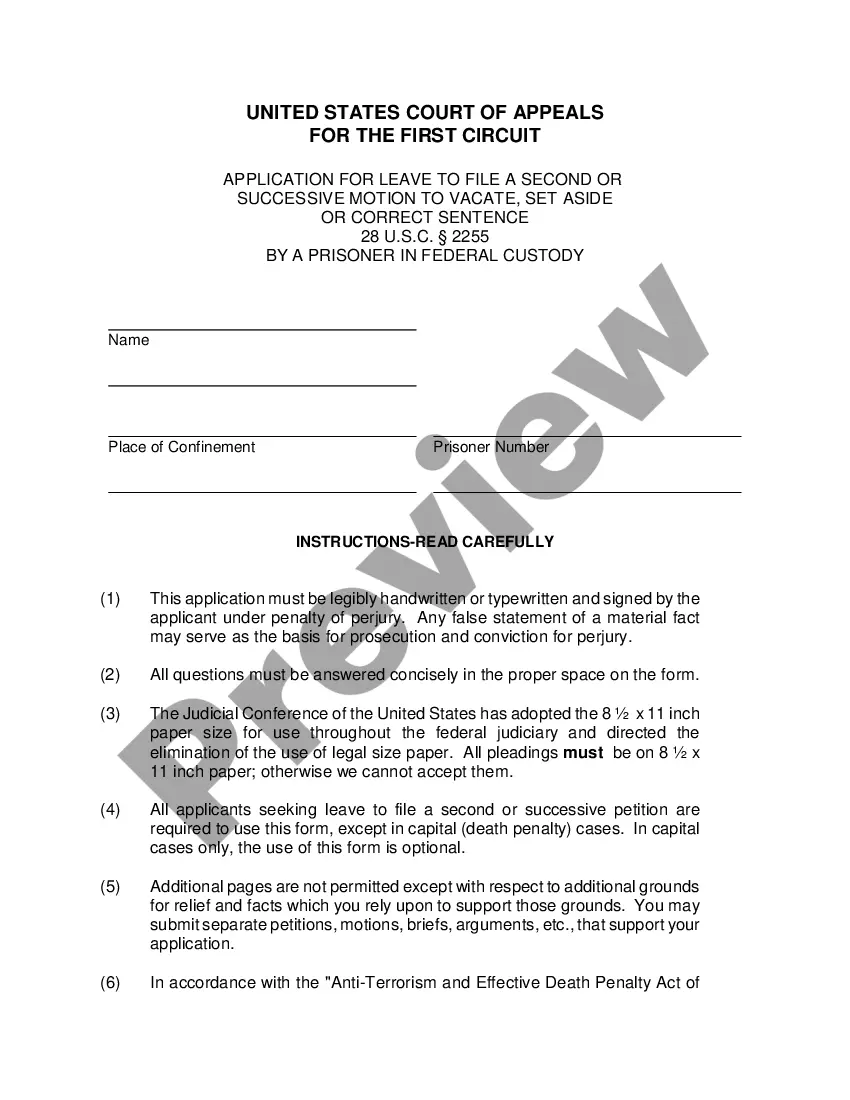
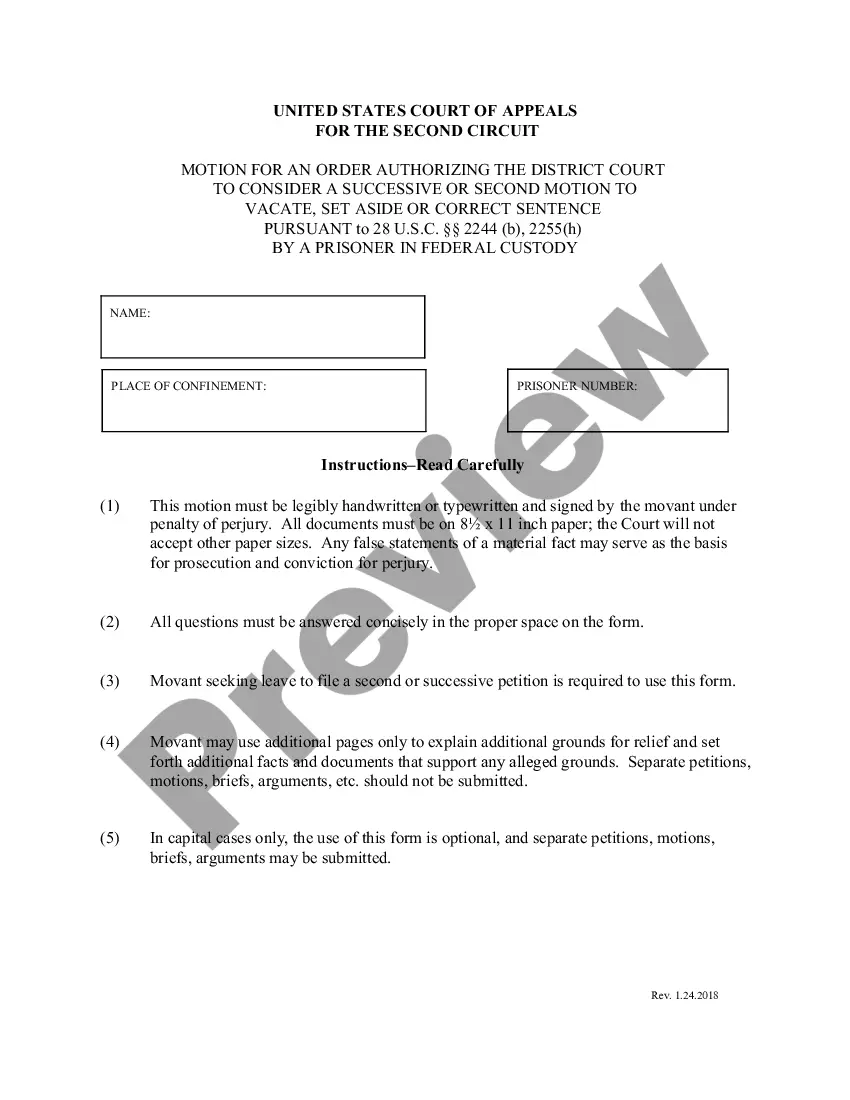
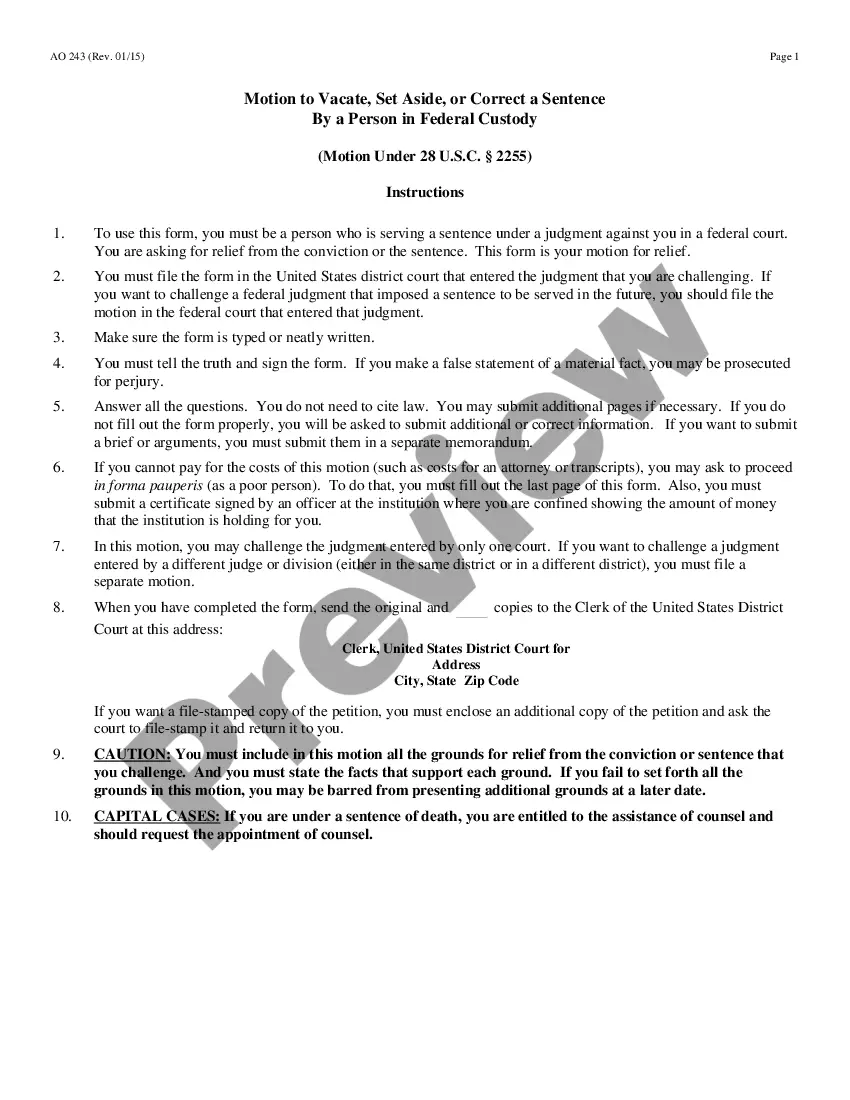
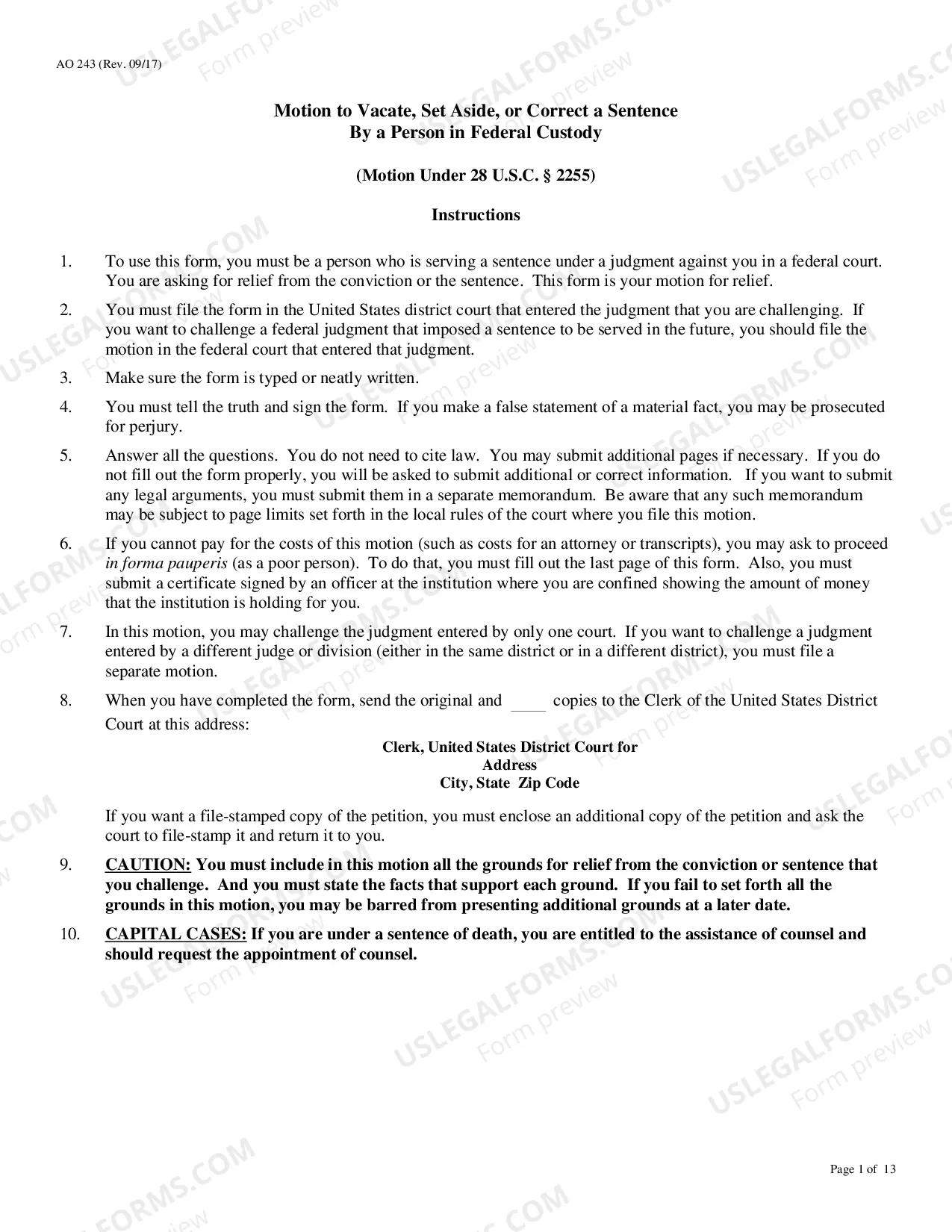
The Motion to Vacate, Set Aside, Modify or Correct a Sentence by a Person in Federal Custody is a legal document used by prisoners to challenge their federal convictions or sentences. This form allows an individual to request the court to reconsider their sentencing based on specific grounds, such as constitutional violations or legal errors. This motion is governed by 28 U.S.C. § 2255 and is distinct from other post-conviction relief options, making it particularly relevant for individuals currently incarcerated under federal sentences.
Key components of this form
- Identification of the Court: Specify the federal court that issued the original sentencing.
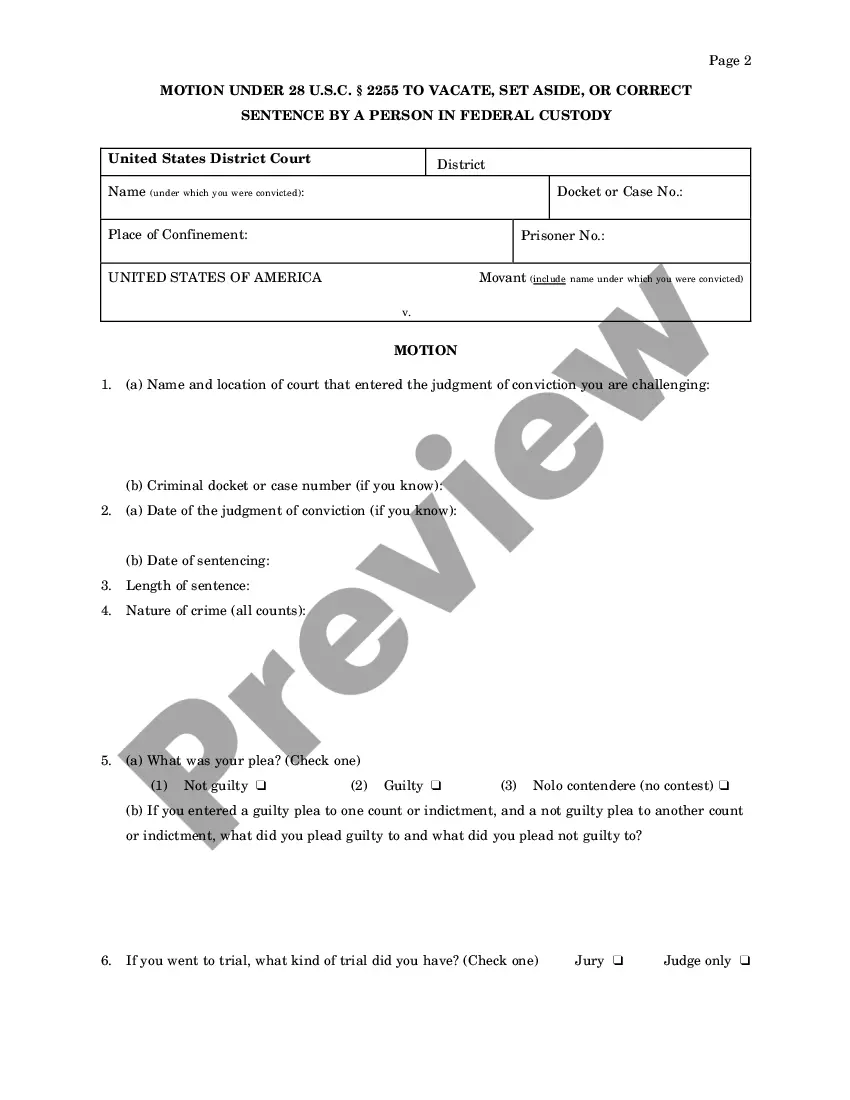
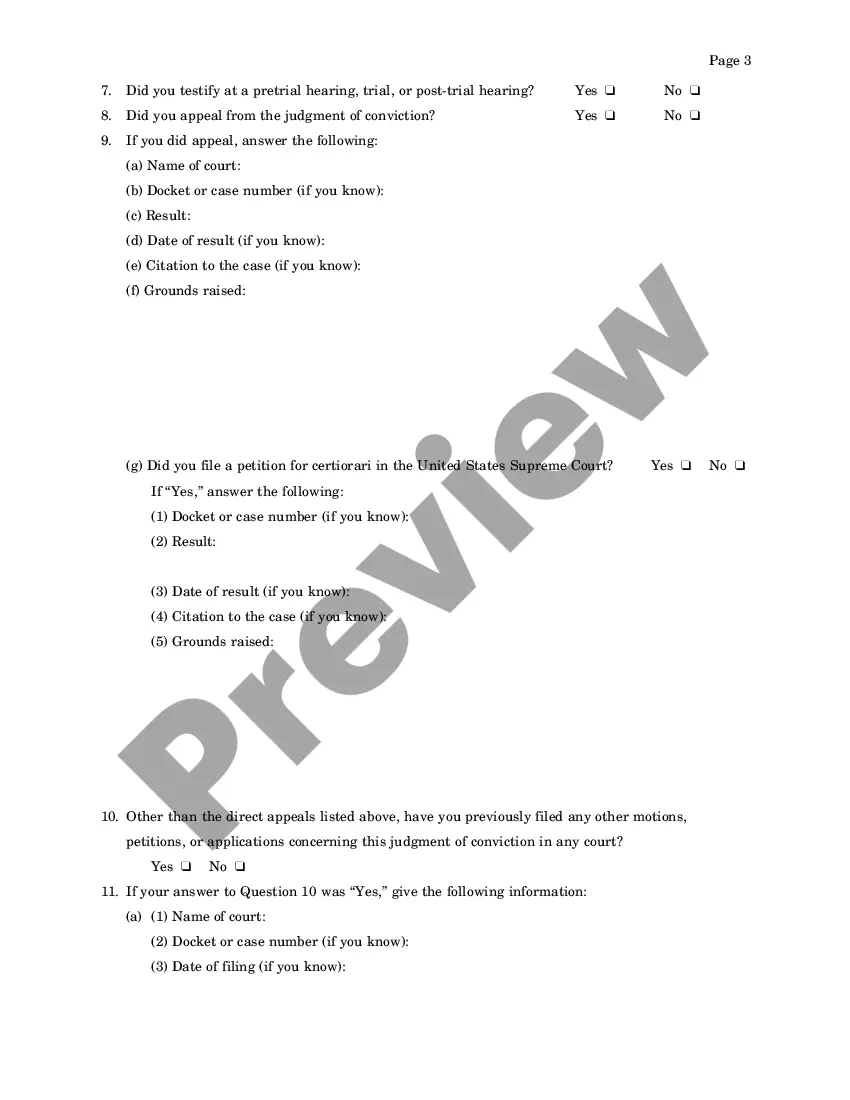
- Conviction Details: Provide the date of conviction and sentencing along with the nature of the crime.
- Plea Information: Indicate whether a plea of guilty, not guilty, or no contest was entered.
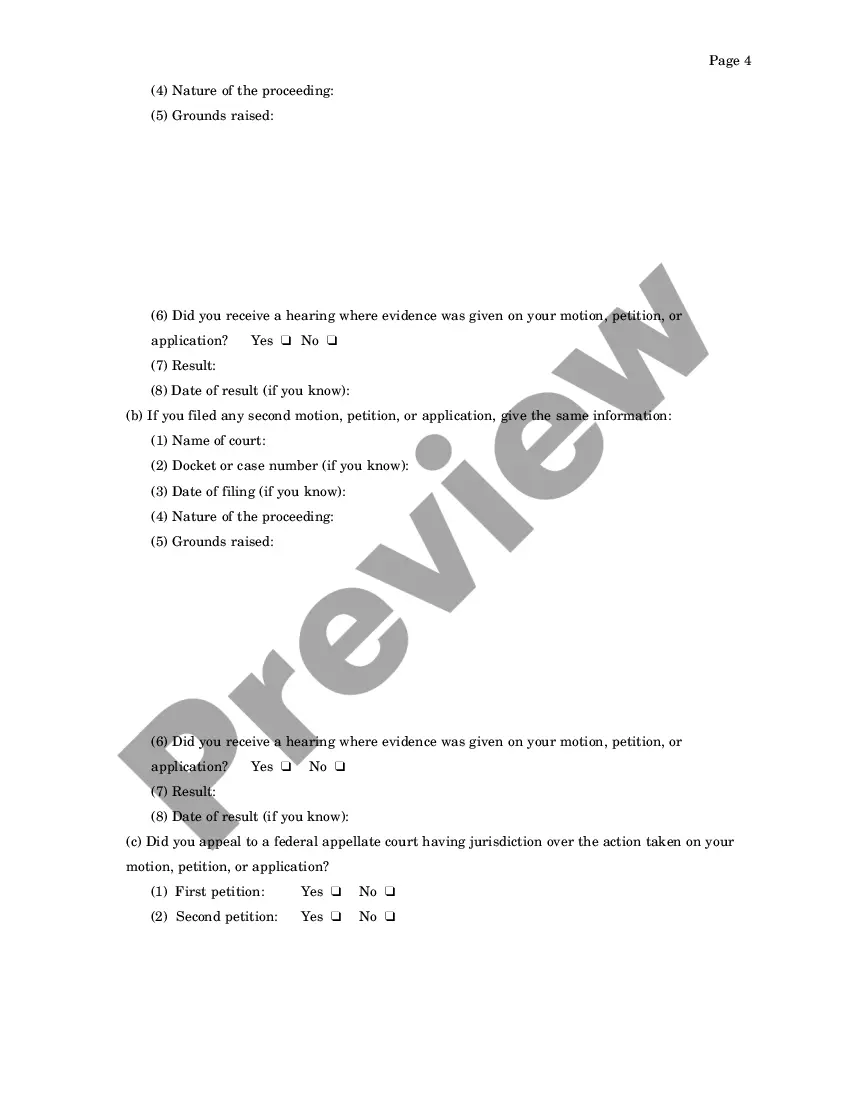
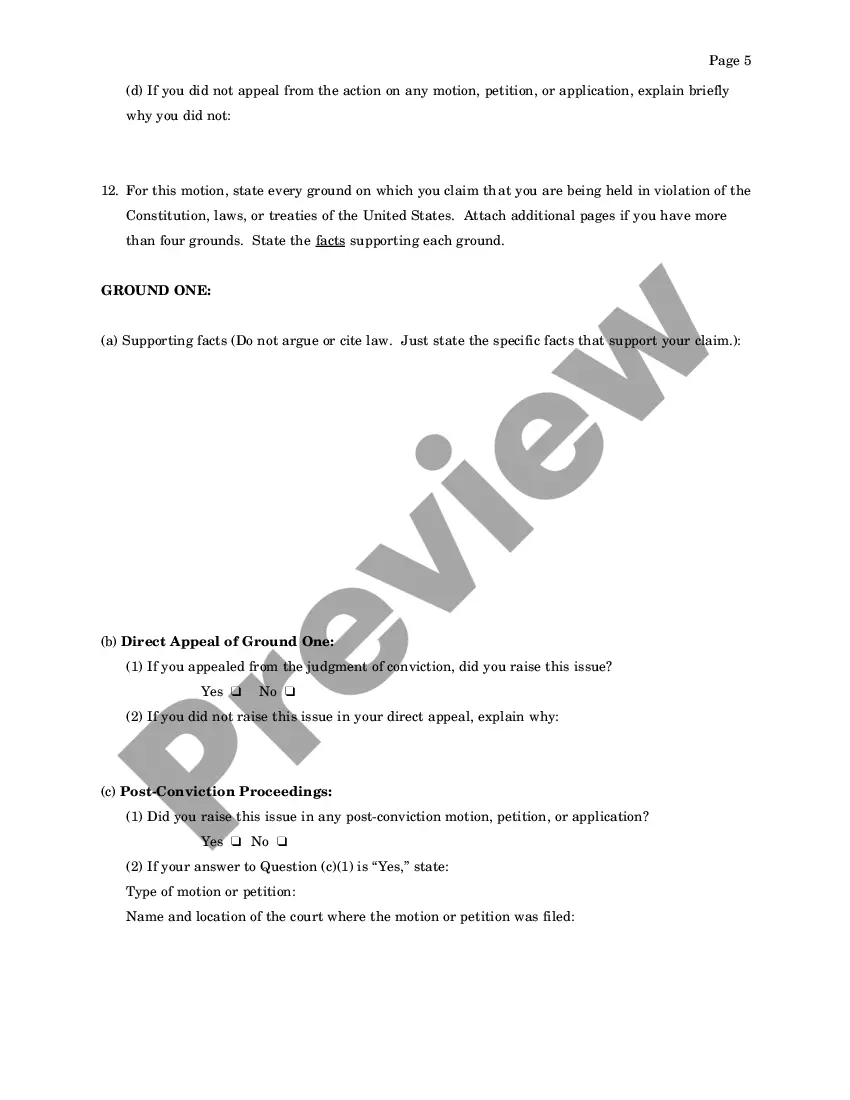
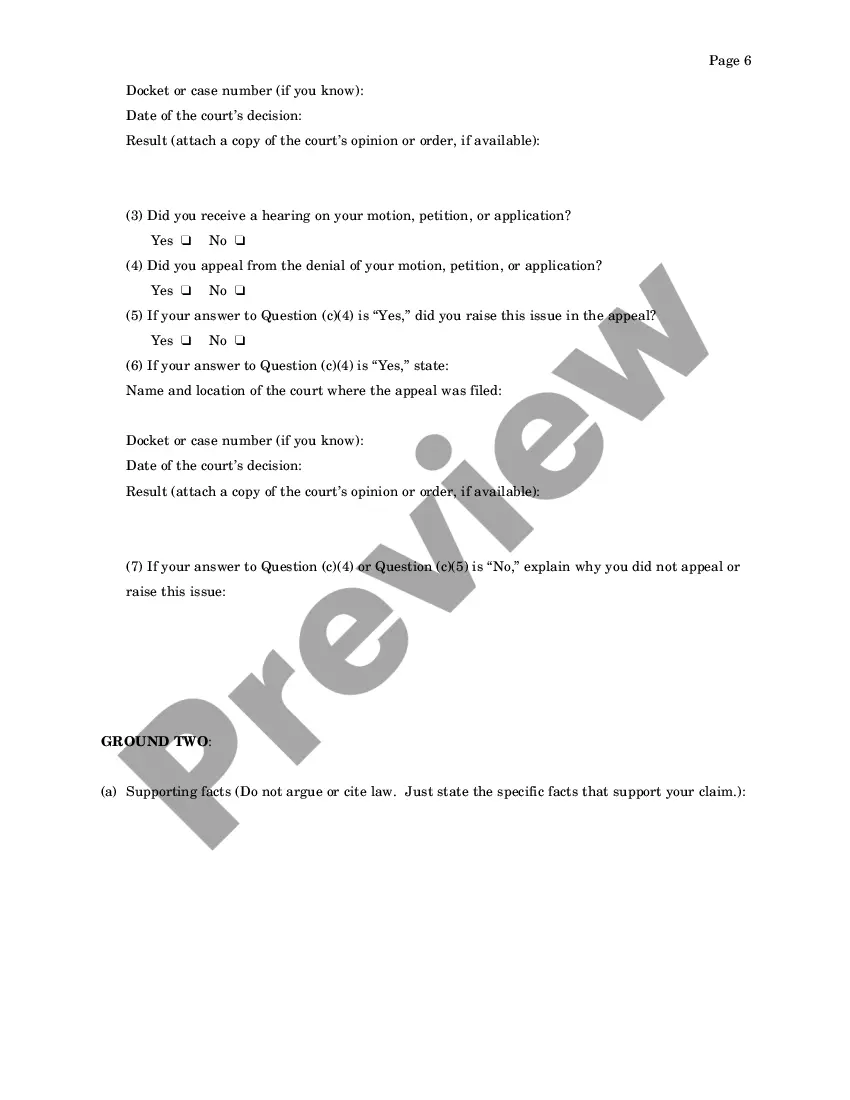
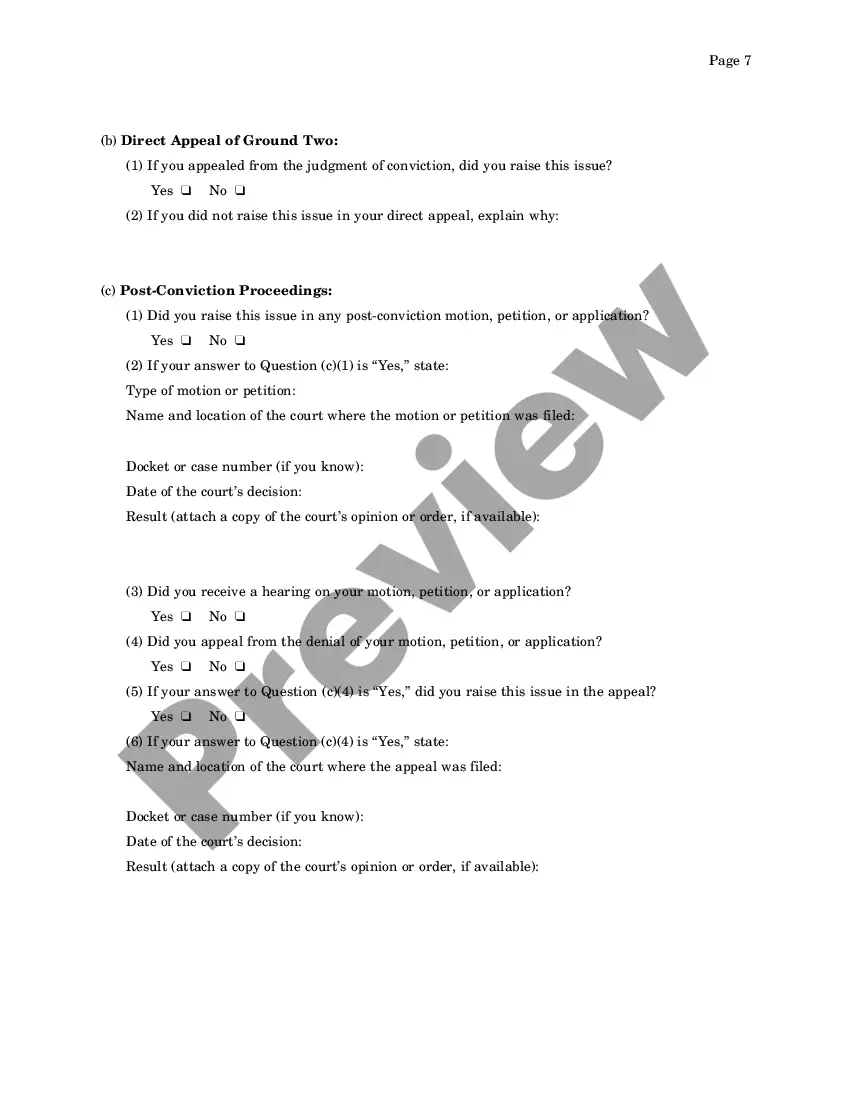
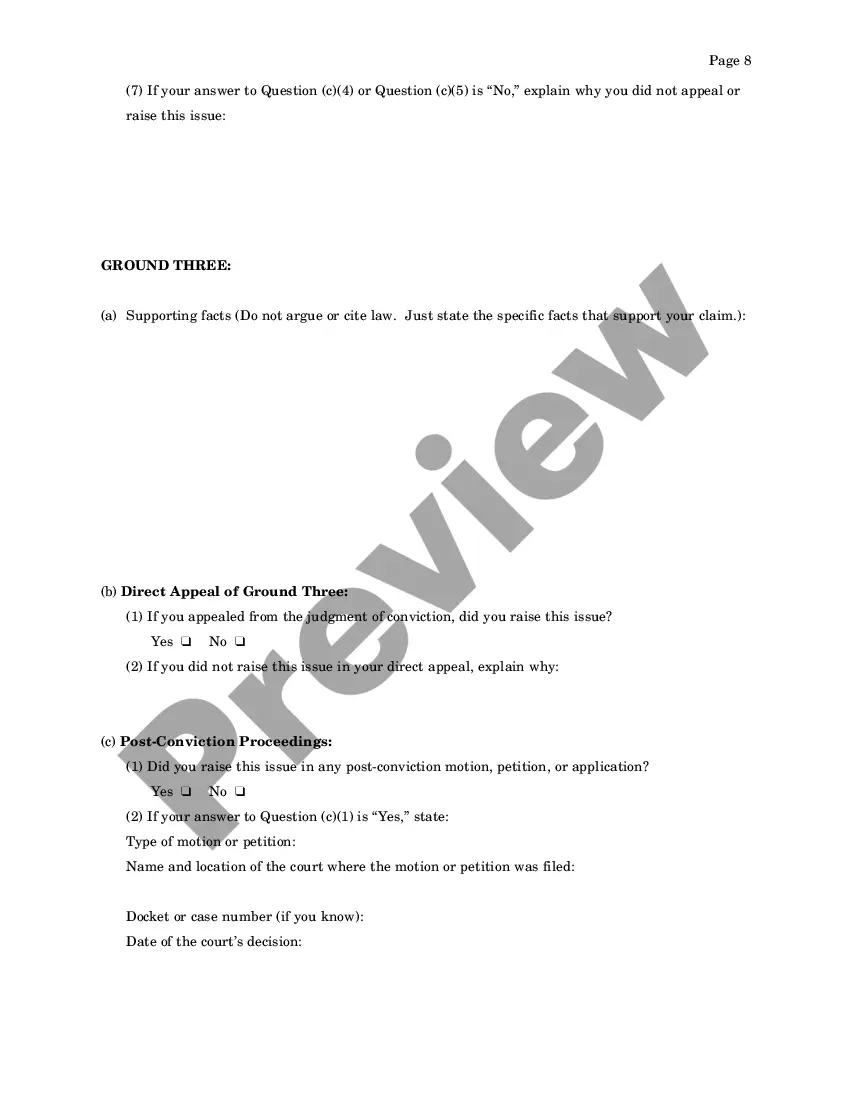
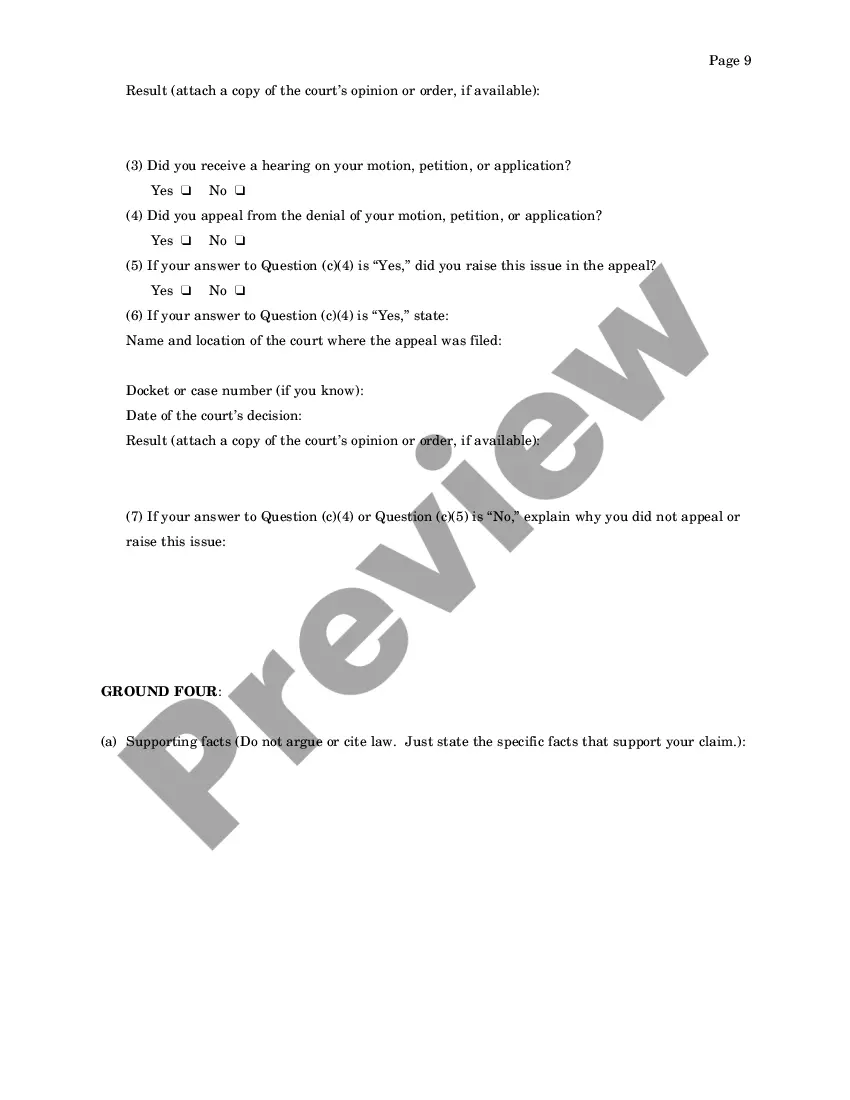
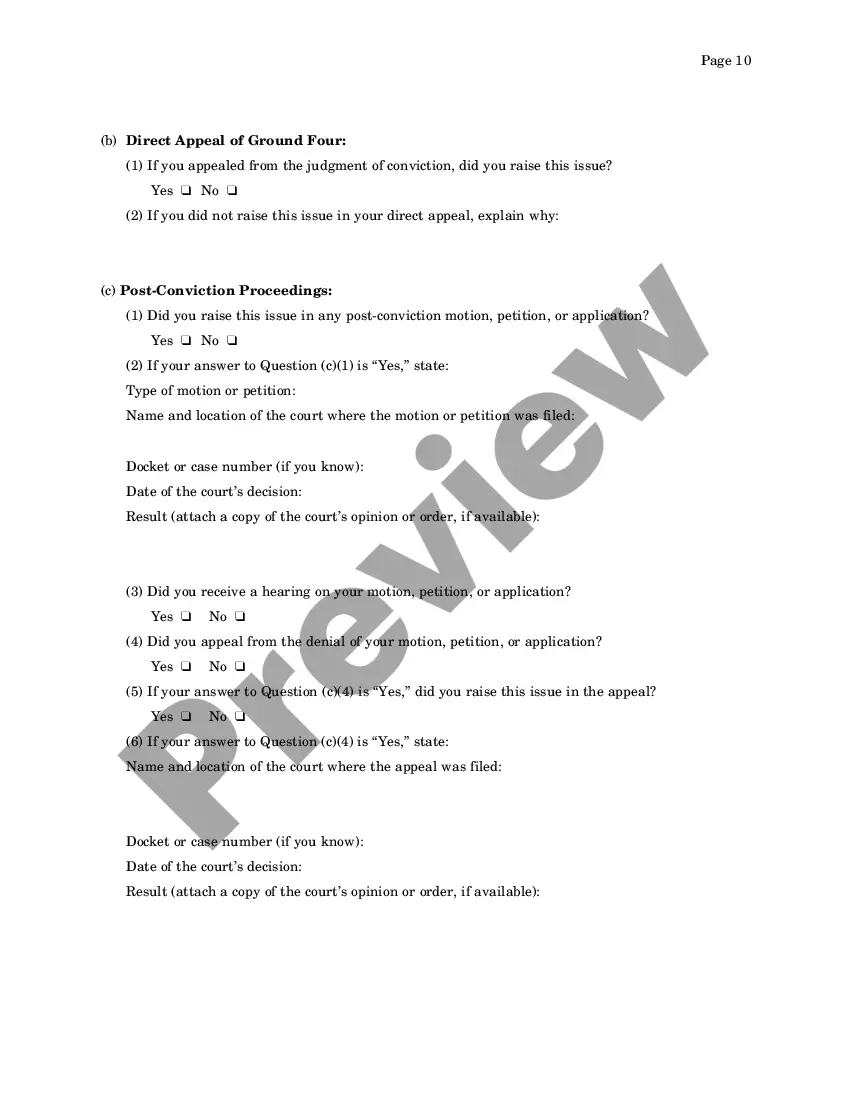
- Grounds for Relief: Outline the specific legal reasons for seeking to vacate or modify the sentence.
- Timeliness Explanation: Address any delays in filing the motion if the judgment became final over a year ago.

Common use cases
This form should be used when an individual in federal custody believes their sentence was incorrect due to a violation of their constitutional rights, lack of jurisdiction, or excessive sentencing. Common scenarios include discovering new evidence that could exonerate the individual or changes in the law that might affect the legality of the sentence imposed.
Who should use this form
- Individuals currently serving a sentence under a federal court judgment.
- Prisoners who believe their sentencing was constitutionally invalid.
- Persons who have exhausted their direct appeal options and seek additional relief.
How to prepare this document
- Identify the federal court that issued your judgment and enter the relevant case number.
- Complete personal information, including your name and place of confinement.
- Clearly state all grounds for seeking relief, providing factual support for each claim.
- Ensure all fields are filled out accurately and completely to avoid delays in processing.
- Submit the completed form to the Clerk of the United States District Court with required copies.
Notarization requirements for this form
Notarization is generally not required for this form. However, certain states or situations might demand it. You can complete notarization online through US Legal Forms, powered by Notarize, using a verified video call available anytime.
Get your form ready online
Our built-in tools help you complete, sign, share, and store your documents in one place.
Make edits, fill in missing information, and update formatting in US Legal Forms—just like you would in MS Word.
Download a copy, print it, send it by email, or mail it via USPS—whatever works best for your next step.
Sign and collect signatures with our SignNow integration. Send to multiple recipients, set reminders, and more. Go Premium to unlock E-Sign.
If this form requires notarization, complete it online through a secure video call—no need to meet a notary in person or wait for an appointment.
We protect your documents and personal data by following strict security and privacy standards.

Make edits, fill in missing information, and update formatting in US Legal Forms—just like you would in MS Word.

Download a copy, print it, send it by email, or mail it via USPS—whatever works best for your next step.

Sign and collect signatures with our SignNow integration. Send to multiple recipients, set reminders, and more. Go Premium to unlock E-Sign.

If this form requires notarization, complete it online through a secure video call—no need to meet a notary in person or wait for an appointment.

We protect your documents and personal data by following strict security and privacy standards.
Mistakes to watch out for
- Failing to include all grounds for relief in the motion.
- Not providing adequate factual support for claims.
- Missing deadlines for filing the motion.
- Submitting incomplete or unsigned forms.
Advantages of online completion
- Convenient access to complete the form at any time.
- Editable templates allow for easy modifications as needed.
- Reliability and accuracy of forms drafted by licensed attorneys.
Legal use & context
- This form allows individuals to challenge the legality of their detention based on specific legal grounds.
- Correctly filing this form may result in the court vacating or modifying a sentence.
- It is a critical avenue for post-conviction relief under federal law.
Looking for another form?
Form popularity
FAQ
As to federal convictions, we can file in federal court a motion to vacate judgment pursuant to 28 USC sec 2255, motions for permission to file a second or subsequent 2255 motion, and periods for pardon, clemency, or commutation.
From Wikipedia, the free encyclopedia. A vacated judgment makes a previous legal judgment legally void. A vacated judgment is usually the result of the judgment of an appellate court, which overturns, reverses, or sets aside the judgment of a lower court. An appellate court may also vacate its own decisions.
Motions to Vacate a Criminal Judgment in California. Penal Code 1018 PC allows a convicted defendant in California to file a Motion to Vacate Judgment. When successful, this Motion grants you the opportunity to withdraw your plea so that you can alternatively plead not guilty to the offense.
A Motion to Vacate is a request to the court to withdraw a previous order or judgment it entered.An appeal is a request to a higher court to change the decision made by a lower court. A Motion to Vacate asks the same court to withdraw its decision. A Motion to Vacate is rarely granted.
Dismissed: means the court or prosecutor has decided the charge against you should not go forward, terminating the case.Vacated: means the court has withdrawn the guilty plea or set aside the guilty verdict, and for all purposes you may state you have never been convicted of that crime.
Section 2255 allows a defendant to file a motion to vacate, set aside or correct the sentence imposed by a federal district court. Although section 2255 refers to a challenge to the defendant's sentence, it can also be used to challenge the conviction that produced the sentence.
Once a defendant files a § 2255 motion, it can take anywhere from several weeks (in the event of a summary dismissal) to over a year (if the government is ordered to respond, and a hearing is held) for a court either to grant or dismiss a A§ 2255 motion.
When a conviction is vacated, the guilty plea is withdrawn and the court dismisses the case, releasing you from all penalties and disabilities.
The term post-conviction relief refers to legal channels by which defendants convicted of a crime can seek to get their convictions overturned, sentences modified, records expunged or civil rights reinstated.