Kentucky Fencing Contract for Contractor
Understanding this form
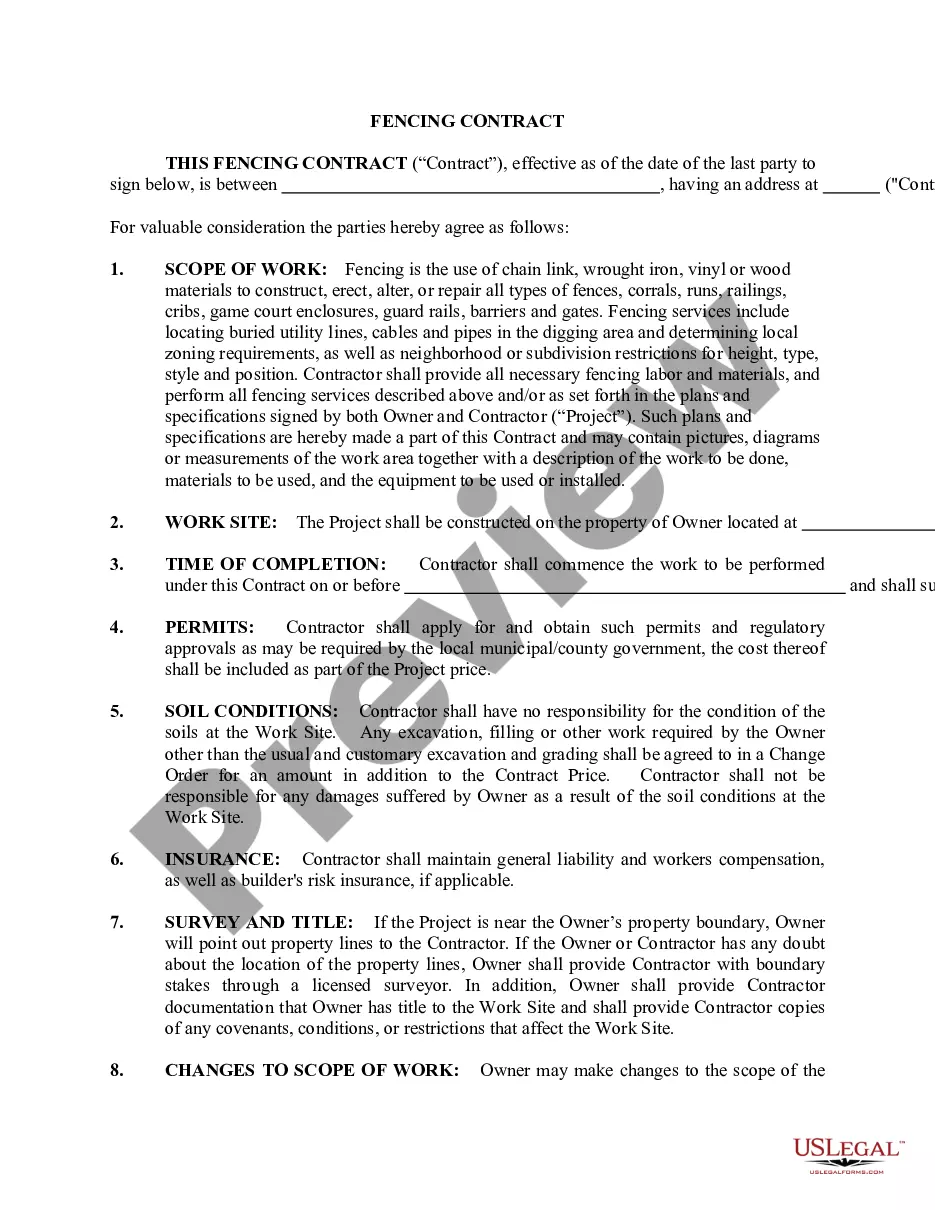
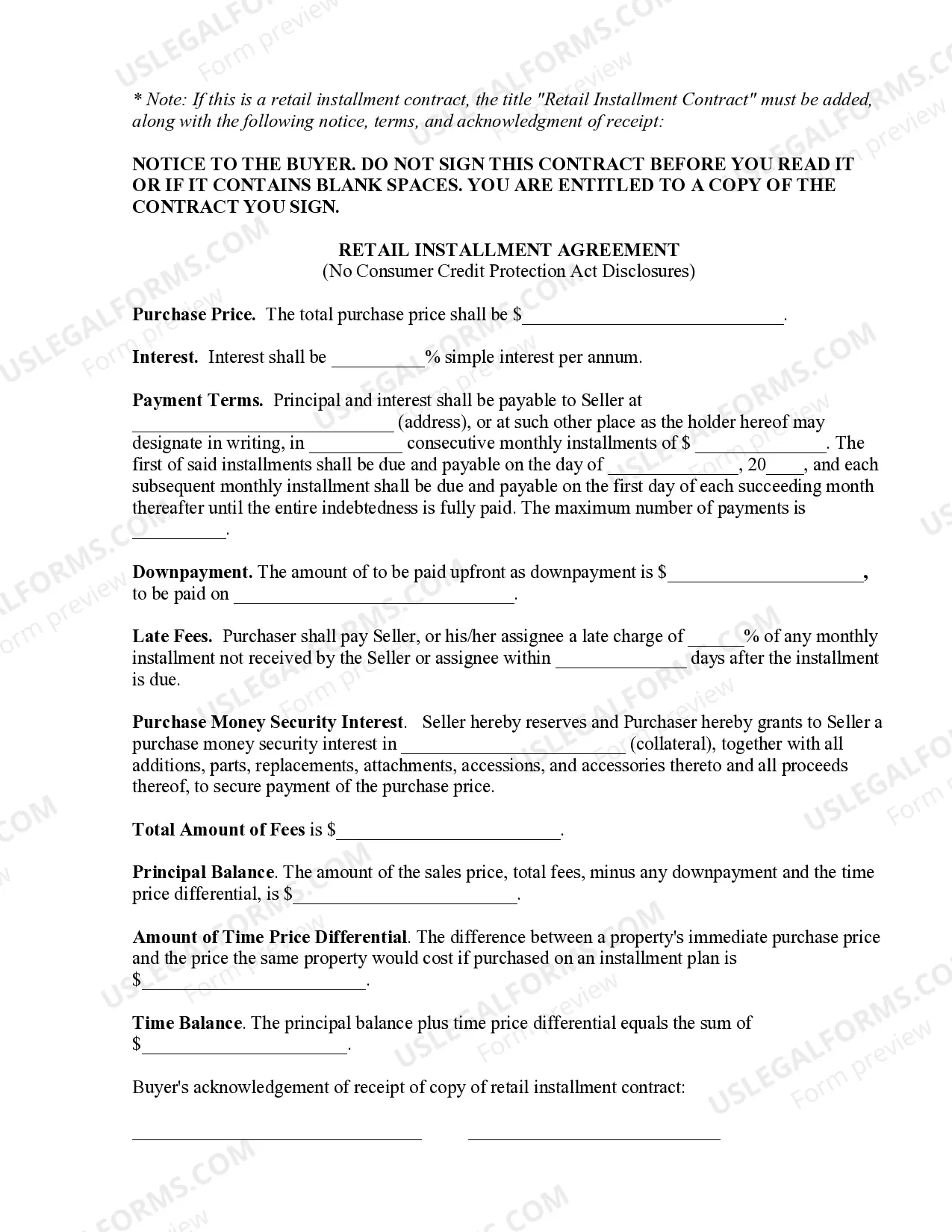
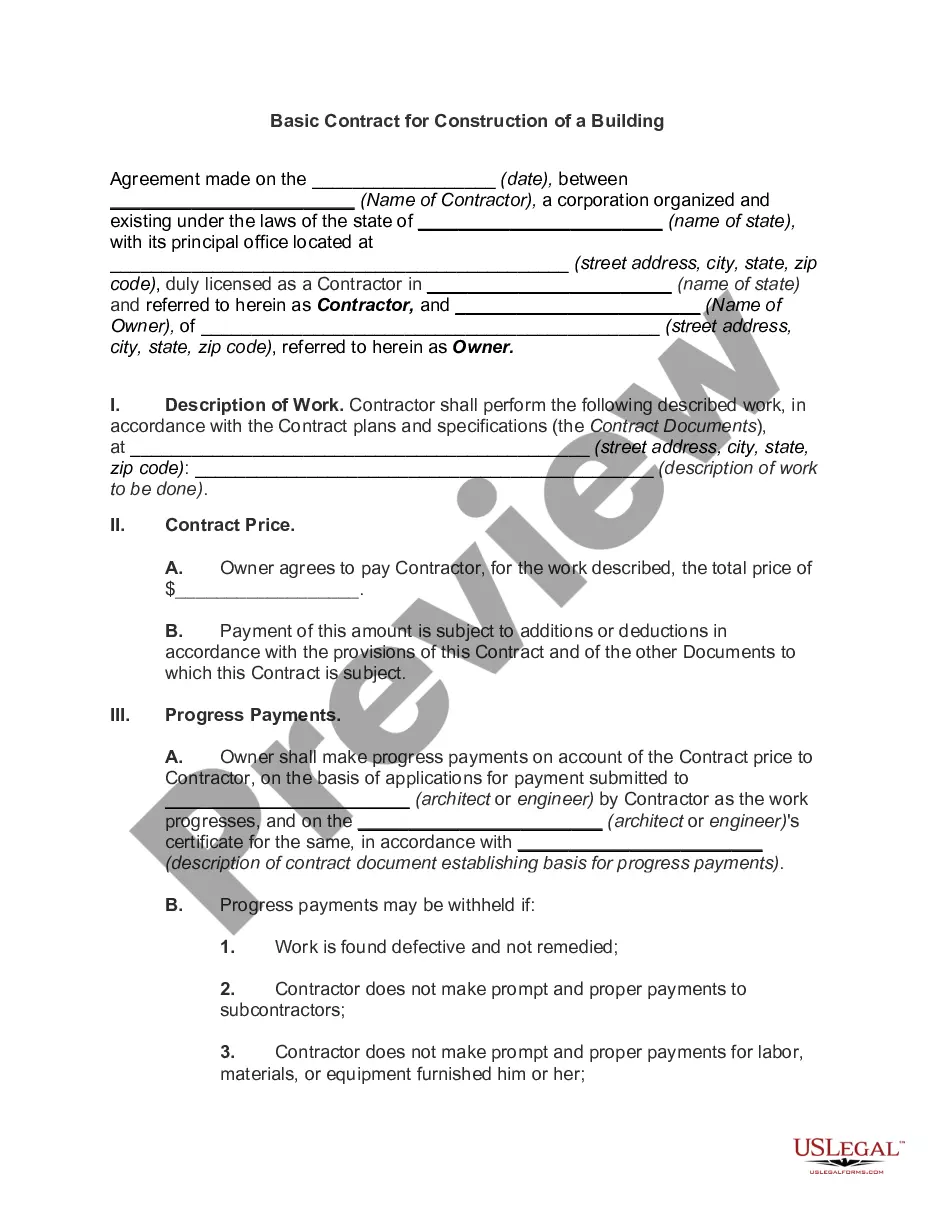
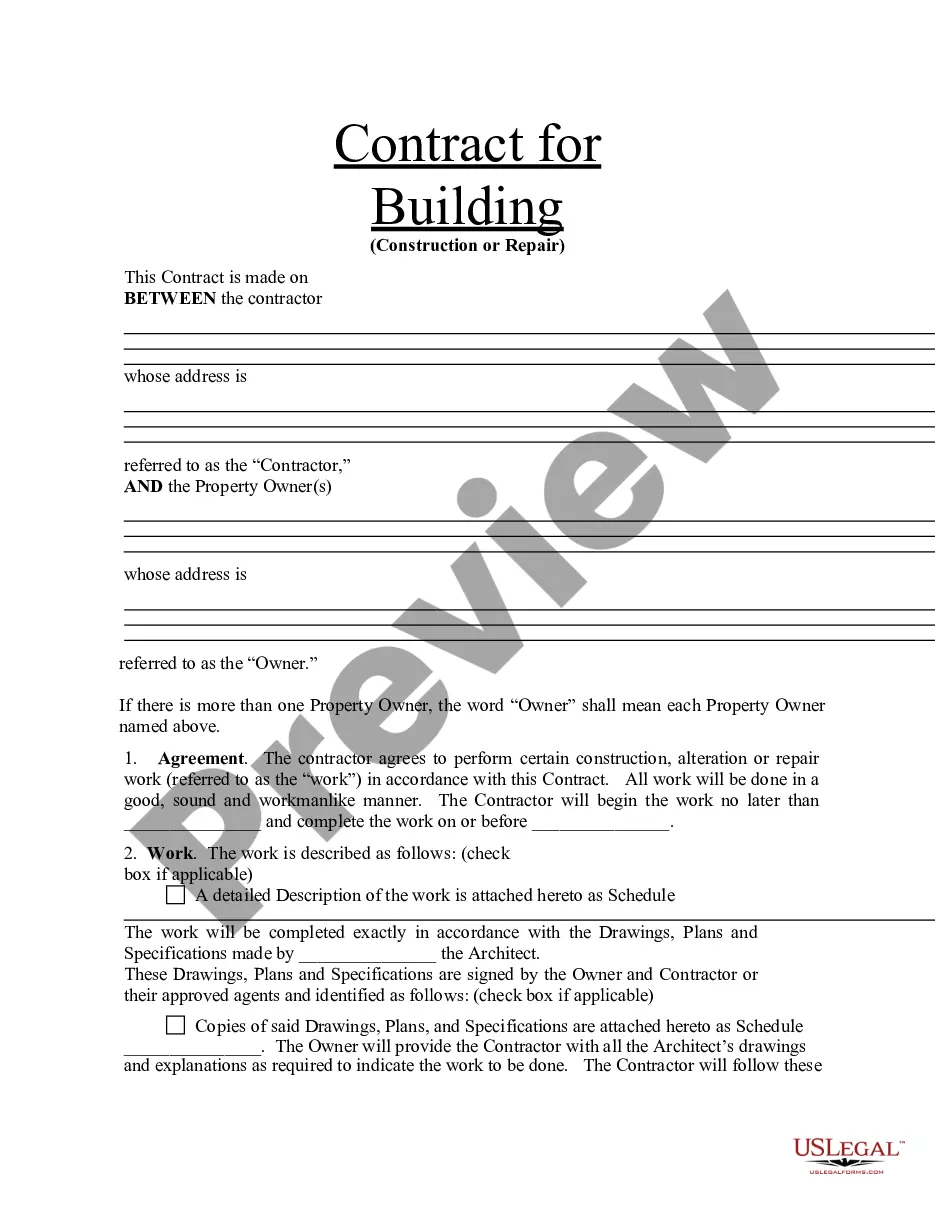
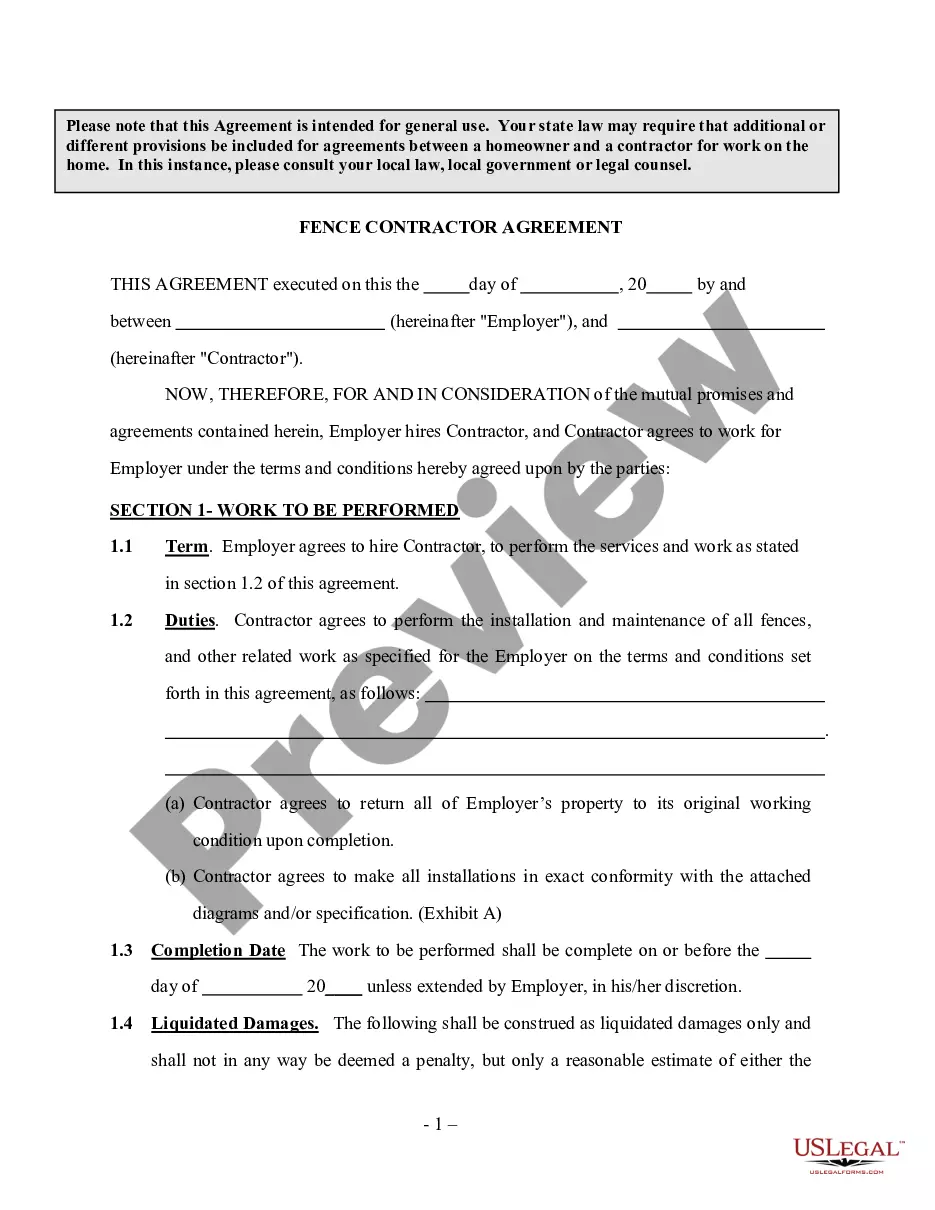
The Fencing Contract for Contractor is a legal document used to outline the terms and conditions between a fencing contractor and a property owner. This form can be executed on a cost plus or fixed fee basis and includes essential provisions related to change orders, work site information, warranty, and insurance. It is specifically designed to comply with Kentucky state laws, making it distinct from other generic contracts.
What’s included in this form
- Work Site: Details the location of the project.
- Permits: Specifies the responsibility for obtaining necessary permits.
- Soil Conditions: Clarifies the contractor's liabilities regarding soil conditions.
- Insurance: Outlines required insurance coverage for the contractor.
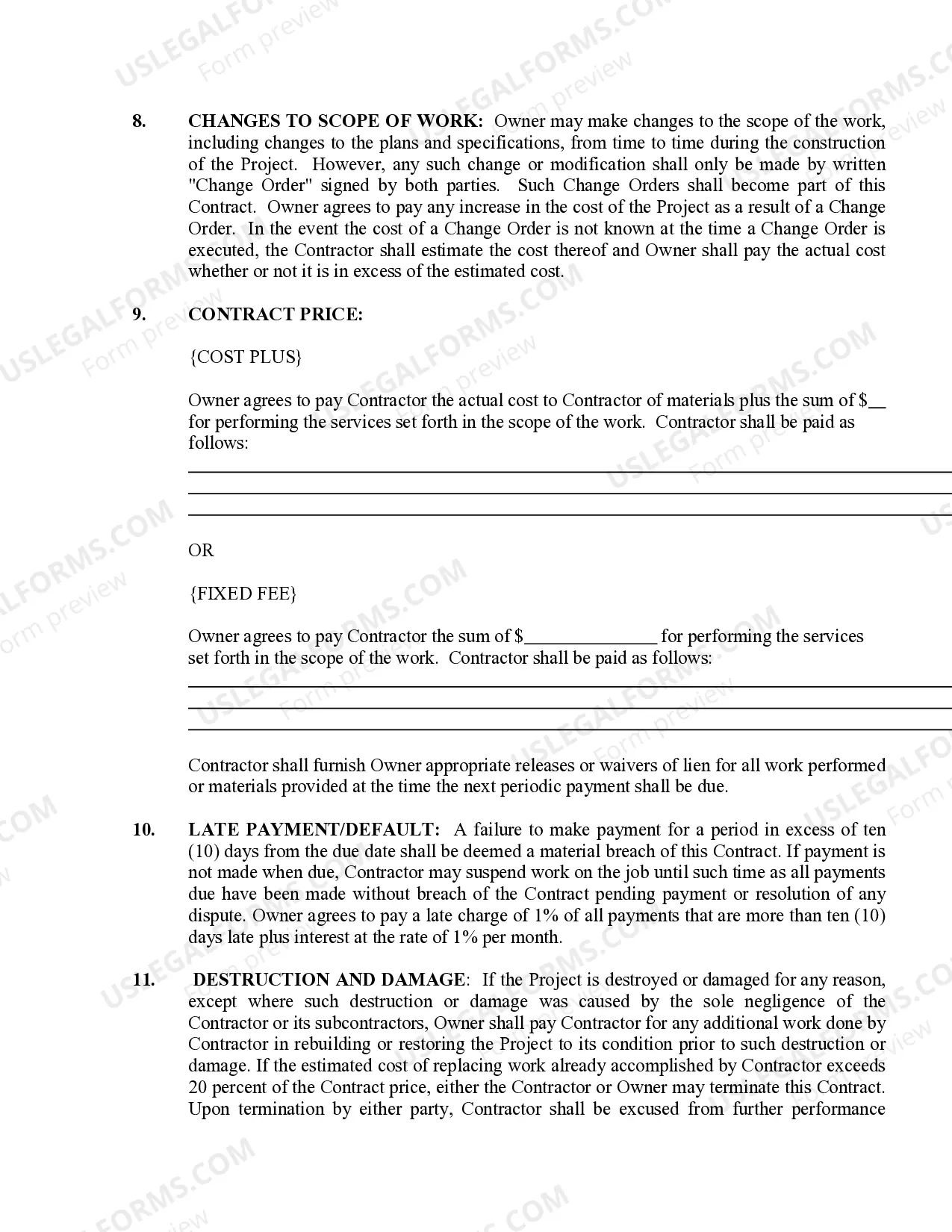
- Change Orders: Describes the process for making changes to the work scope.
- Contract Price: Indicates the pricing arrangements for the project.
- Late Payment Terms: Defines consequences for late payments.
- Destruction and Damage: Specifies responsibilities in case of project damage or destruction.
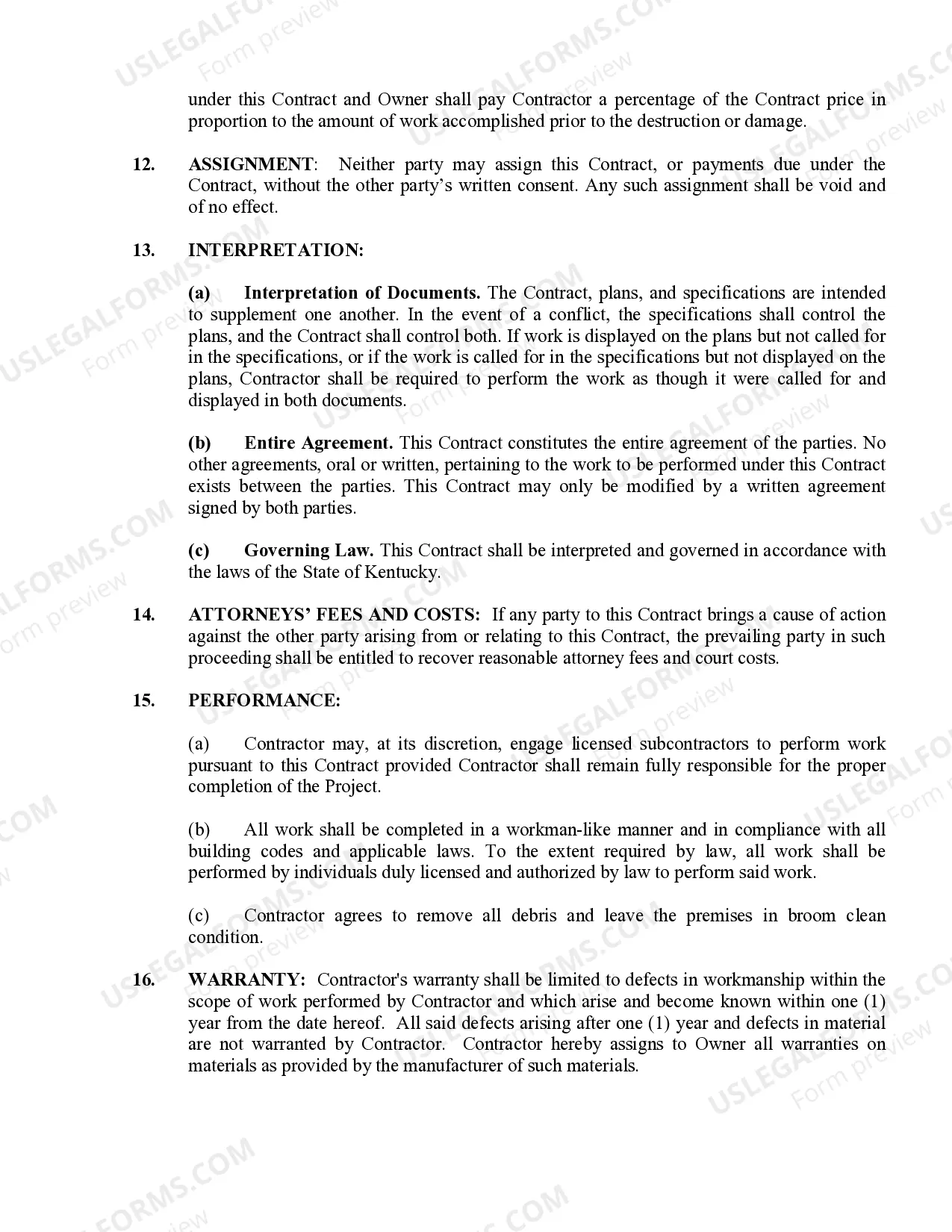
- Warranty: Covers the contractor's warranty for workmanship.




When to use this document
This form should be used when a property owner engages a contractor for fencing work. It outlines expectations, pricing arrangements, and responsibilities, which are essential to ensure smooth project execution. Situations that may require this contract include installing new fences, replacing old fences, or making alterations to existing fencing structures.
Who needs this form
- Property Owners looking to hire a contractor for fencing projects.
- Fencing Contractors who need a formal contract to outline their terms of service.
- Both parties wanting to document their agreement to prevent disputes.
Steps to complete this form
- Identify the parties involved: Fill in the names and contact information of the contractor and property owner.
- Specify the work site: Provide the location where the fencing project will take place.
- Outline payment terms: Choose between cost plus or fixed fee arrangements and specify amounts.
- Detail any required permits: Ensure that the contractor will obtain the necessary permissions for the work.
- Review change order provisions: Ensure both parties understand how any modifications to the work will be handled.
Is notarization required?
Notarization is generally not required for this form. However, certain states or situations might demand it. You can complete notarization online through US Legal Forms, powered by Notarize, using a verified video call available anytime.
Get your form ready online
Our built-in tools help you complete, sign, share, and store your documents in one place.
Make edits, fill in missing information, and update formatting in US Legal Forms—just like you would in MS Word.
Download a copy, print it, send it by email, or mail it via USPS—whatever works best for your next step.
Sign and collect signatures with our SignNow integration. Send to multiple recipients, set reminders, and more. Go Premium to unlock E-Sign.
If this form requires notarization, complete it online through a secure video call—no need to meet a notary in person or wait for an appointment.
We protect your documents and personal data by following strict security and privacy standards.

Make edits, fill in missing information, and update formatting in US Legal Forms—just like you would in MS Word.

Download a copy, print it, send it by email, or mail it via USPS—whatever works best for your next step.

Sign and collect signatures with our SignNow integration. Send to multiple recipients, set reminders, and more. Go Premium to unlock E-Sign.

If this form requires notarization, complete it online through a secure video call—no need to meet a notary in person or wait for an appointment.

We protect your documents and personal data by following strict security and privacy standards.
Avoid these common issues
- Failing to specify the work site clearly.
- Overlooking the need for necessary permits.
- Not detailing change order procedures, leading to misunderstandings later.
- Inadequately defining payment terms, which can result in disputes over costs.
- Neglecting to have both parties sign the contract to make it enforceable.
Advantages of online completion
- Convenience: Easily download and customize the form according to your needs.
- Editability: The digital format allows for quick modifications to meet specific requirements.
- Reliability: Each template is drafted by licensed attorneys to ensure compliance with state laws.
Looking for another form?
Form popularity
FAQ
Get it in writing. Keep it simple. Deal with the right person. Identify each party correctly. Spell out all of the details. Specify payment obligations. Agree on circumstances that terminate the contract. Agree on a way to resolve disputes.
Successful general contractors often have a degree in construction management or civil engineering, along with several years in the construction industry. Regardless of your approach, start planning three to five years in advance to become a general contractor. At a minimum, you need to: Be at least 18 years old.
Kentucky requires all electrical, HVAC, plumbing, and elevator contractors to have a permit before conducting any work. This is not optional. However, for a general contractor's license, the process is different. The measures you need to take depend on the county/city you plan on performing work in.
Be at least 18 years old. Be able to work legally in the U.S. Earn your high school diploma or GED. Have a clean work record.
A certified contractor passed the state licensing examination. Certified contractors can work anywhere within the state in which they are licensed. A registered contractor is registered by a local county or municipality and receives a certificate of competency from the Electrical Contractors' Licensing Board.
Before you can register your business you'll need to choose a legal structure and a name. Registration with the Secretary of State and Department of Revenue In order to legally conduct business in Kentucky most businesses are required to register with the Kentucky Secretary of State and the Department of Revenue.
Here are some steps on how to start a legal handyman business in the state of Kentucky. -Register your handyman business name. -Select your business structure. Sole-proprietor, LLC, Partnership, Corporation, etc. -Register your handyman business. -Open a Business Checking Account.
A completed application form. Proof of general liability insurance and worker's compensation insurance. And unemployment affidavit. Depending on the type of license, proof of experience and training. A $125 application fee for Building Type A licenses.
Generally speaking, a general contractor is someone who manages a team of subcontractors to help do various types of construction projects in your home. A custom home builder, however, is specialized in building custom homes and is able to complete this specific type of project start to finish on their own.