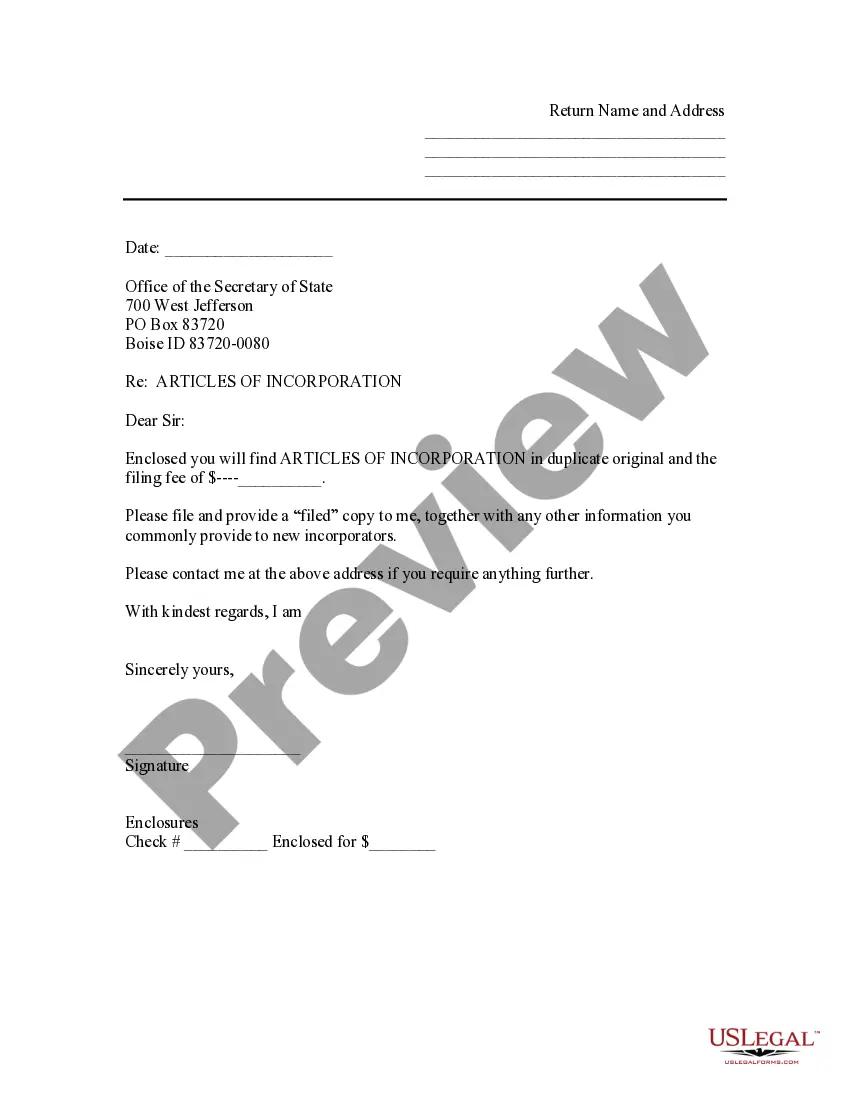
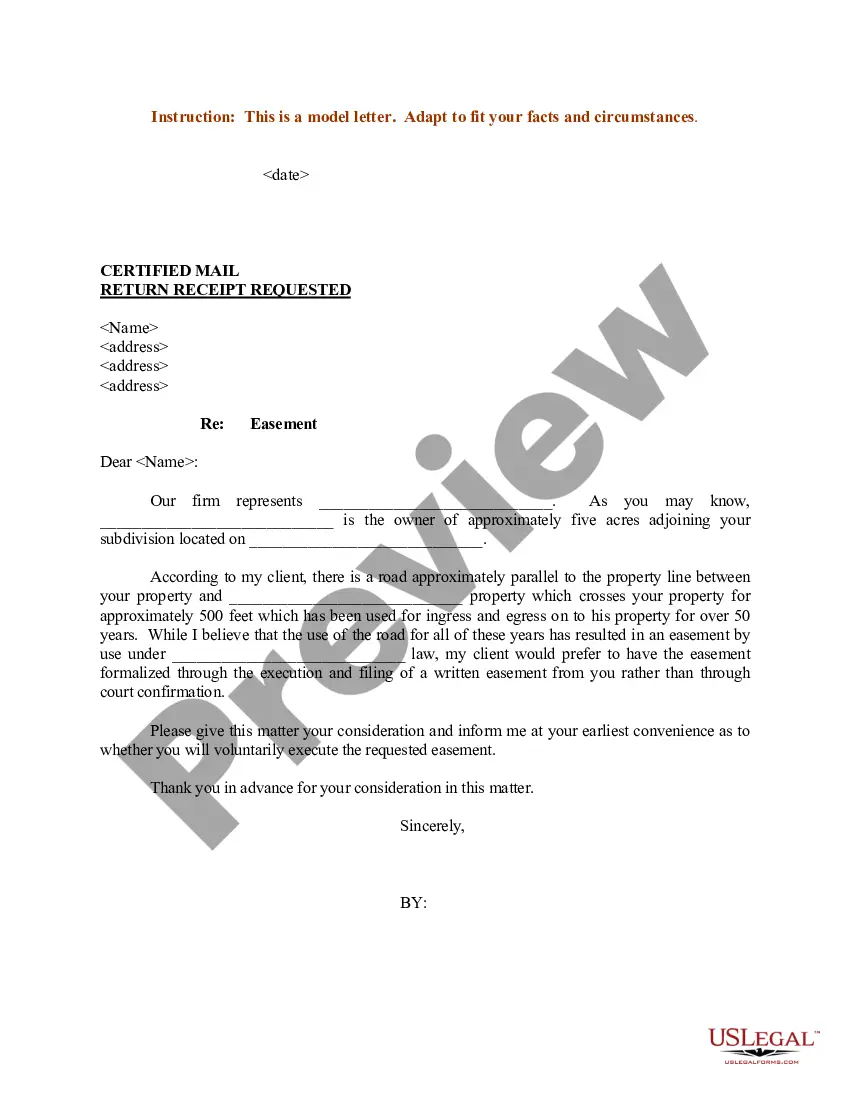
Sample Letter for Request to Formalize Easement
About this form
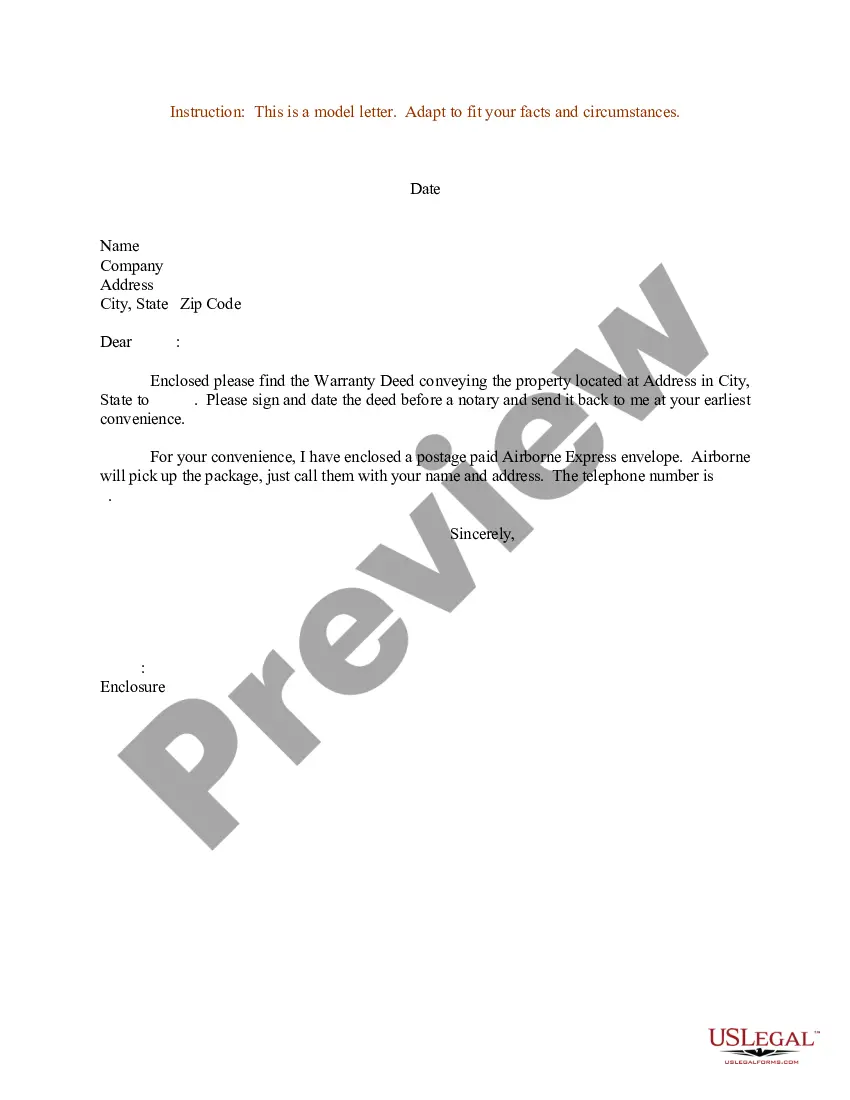
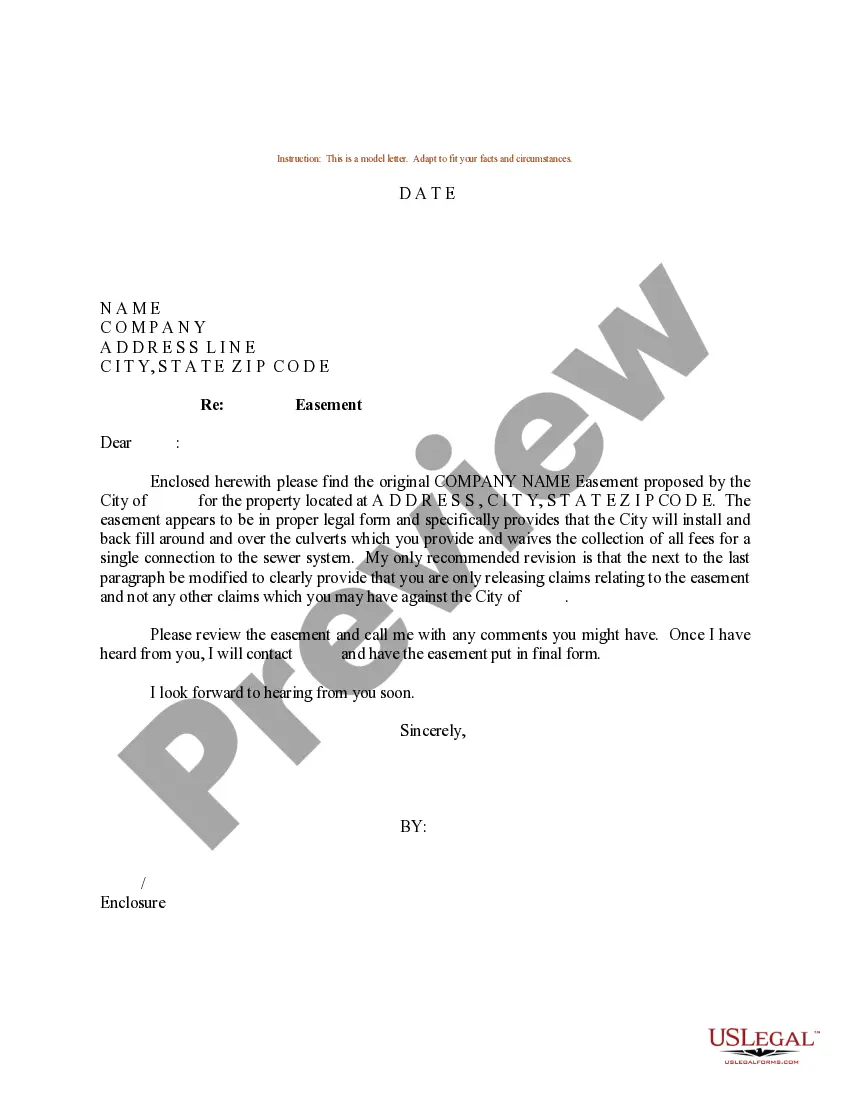
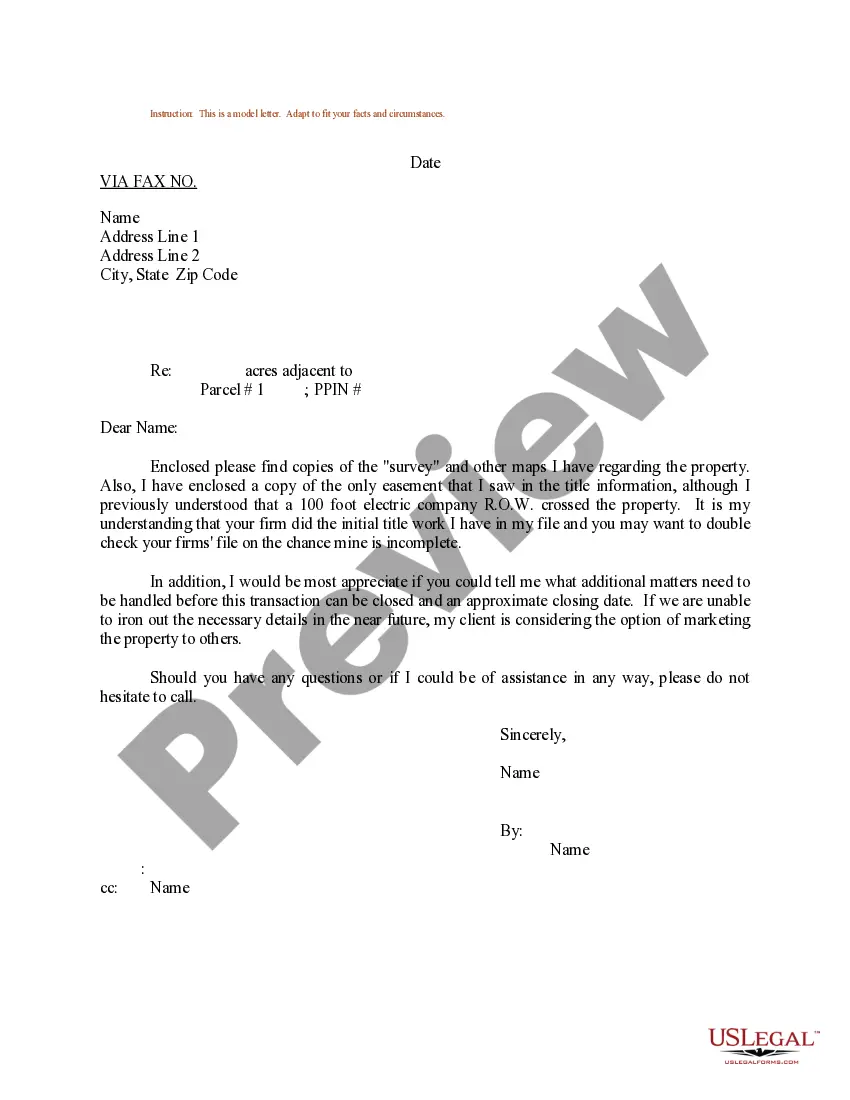
The Sample Letter for Request to Formalize Easement is a template letter designed to formally request the establishment of an easement on a property. An easement allows one party the legal right to access or use another party's property. This letter is useful for notifying the property owner of the long-standing use of the road and seeking formal recognition of that easement without the need for court intervention.
Form components explained
- Sender's information: Name and address of the party making the request.
- Recipient's information: Name and address of the property owner.
- Property description: Details about the property involved in the easement.
- Historical use: Explanation of how the road has been used for access over the years.
- Request: A direct ask for the creation and execution of a formal easement document.
When to use this document
This form is typically used when a party has been using a road or path on someone else's property for an extended period and wants to formalize that usage through an easement. Common scenarios include property developments, land disputes, or agricultural needs where access to water sources or roadways is necessary.
Who this form is for
- Property owners seeking to formalize an existing easement.
- Individuals or businesses that have been using adjacent land for ingress and egress.
- Attorneys representing clients in land use or property disputes.
- Long-term tenants or lessees with a need for official access rights.
Steps to complete this form
- Identify the parties: Fill in the names and addresses of both the sender and the recipient.
- Specify the property: Describe the property related to the easement, including boundaries and location.
- Document historical use: Clearly explain how long the property has been used for access.
- Make your request: State the intent to formalize the easement and request the other party's cooperation.
- Sign and date: Ensure the letter is signed and dated before sending.
Notarization requirements for this form
This form does not typically require notarization unless specified by local law. However, it is advisable to check your local regulations to ensure compliance.
Get your form ready online
Our built-in tools help you complete, sign, share, and store your documents in one place.
Make edits, fill in missing information, and update formatting in US Legal Forms—just like you would in MS Word.
Download a copy, print it, send it by email, or mail it via USPS—whatever works best for your next step.
Sign and collect signatures with our SignNow integration. Send to multiple recipients, set reminders, and more. Go Premium to unlock E-Sign.
If this form requires notarization, complete it online through a secure video call—no need to meet a notary in person or wait for an appointment.
We protect your documents and personal data by following strict security and privacy standards.

Make edits, fill in missing information, and update formatting in US Legal Forms—just like you would in MS Word.

Download a copy, print it, send it by email, or mail it via USPS—whatever works best for your next step.

Sign and collect signatures with our SignNow integration. Send to multiple recipients, set reminders, and more. Go Premium to unlock E-Sign.

If this form requires notarization, complete it online through a secure video call—no need to meet a notary in person or wait for an appointment.

We protect your documents and personal data by following strict security and privacy standards.
Typical mistakes to avoid
- Failing to clearly specify the property location and boundaries.
- Not including adequate historical details of use.
- Ignoring the need for an accurate and complete address for the recipient.
- Leaving out a date or signature before sending the letter.
Why complete this form online
- Immediate access: Download and customize your letter conveniently.
- Editability: Modify sections to fit your specific situation easily.
- Professional design: The form is drafted by licensed attorneys for legal reliability.
Legal use & context
The easement, once formalized, grants legal rights to the property specified in the agreement. It is critical to understand that the easement itself is a separate interest from the ownership of the land but affects the use of the property by the owner. A properly executed easement can help avoid disputes and misunderstandings between property owners.
Main things to remember
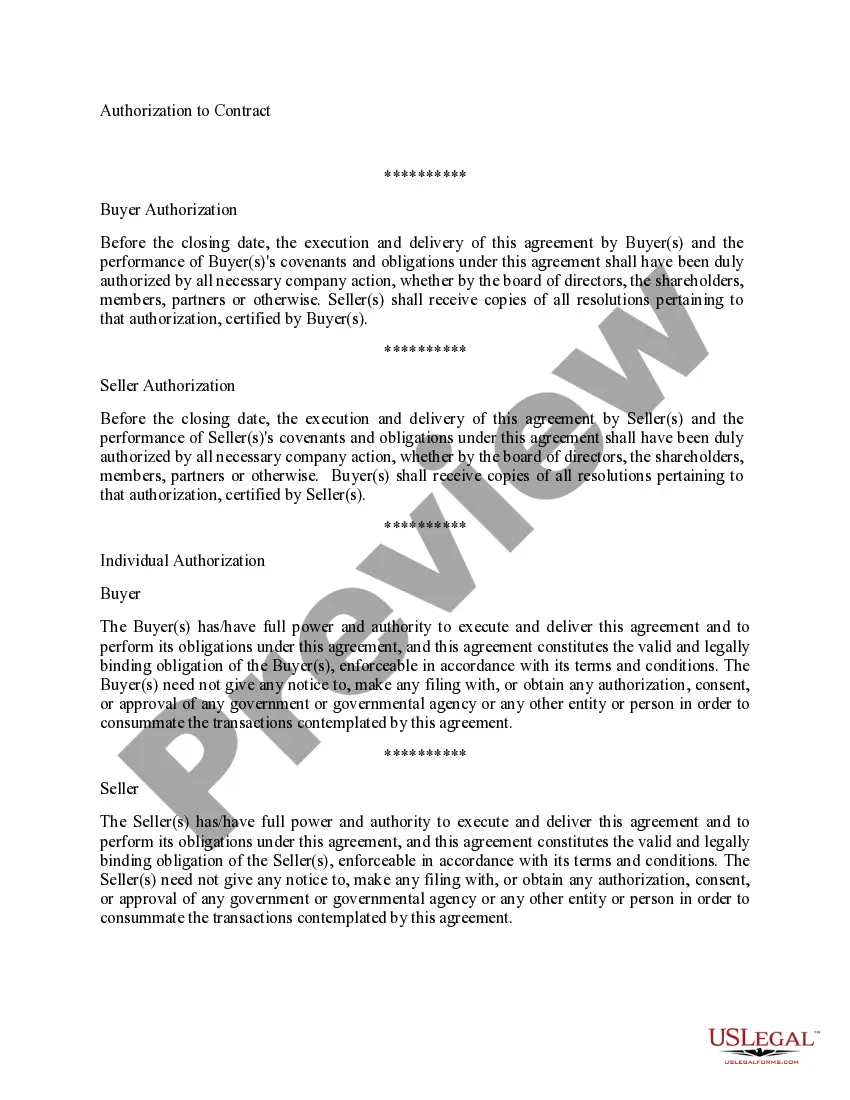
- An easement allows access to another party's property.
- The Sample Letter for Request to Formalize Easement is essential for legally establishing that right.
- Be sure to provide complete and accurate information to avoid mistakes.
- Consider local laws when using this form to ensure its validity.
Looking for another form?
Form popularity
FAQ
An easement deed allows a party that is not the owner to use a portion of the land. It is a written agreement between two parties that spells out what part of the property is available for access and how it may be used. Since you are granting an easement to your land, you can set any terms and conditions you like.
Explain precisely what your request is. Mention the reason for the request. Use polite language and a professional tone. Demonstrate respect and gratitude to the reader. The content of the letter should be official. You may provide contact information where you can be reached.
Description Easement Request Sample Letter An easement gives one party the right to go onto another party's property. That property may be owned by a private person, a business entity, or a group of owners.The easement is a real property interest, but separate from the legal title of the owner of the underlying land.
Easements are often recorded at the county clerk's office and encumber your property's title. Easements are commonly granted to public utility companies, for example, for various power or plumbing lines.
Step 1: Focus on the recipient. Remember: Your message to the important person should be focused on THEM. Step 2: Sell your benefits. Let's face it, you're trying to sell yourself here. Step 3: Make saying no impossible.
The start of the letter should be with a warm greeting, then you should introduce yourself properly, that who are you, your name, job, position and name of the organization. It will make it easy for the reader to understand who is asking for a letter of request.
Explain precisely what your request is. Mention the reason for the request. Use polite language and a professional tone. Demonstrate respect and gratitude to the reader. The content of the letter should be official. You may provide contact information where you can be reached.
Your Name. Date. Reference or Subject (as required) Dear Recipient (Salutation) First Paragraph Introductory lines about the request. Second Paragraph Details of the Request. Third Paragraph Intimation for any further communication and so on. Subscription Thanking you, yours sincerely etc.
You are willing to either share in or bear the cost of land maintenance and are now ready to negotiate. Reducing the impact the easement has on the neighbor will help convince him to say yes. Include in the negotiations elements that include his continued use and rights to share that parcel of land with you.