Sample Letter regarding Modification Agreement
What this document covers
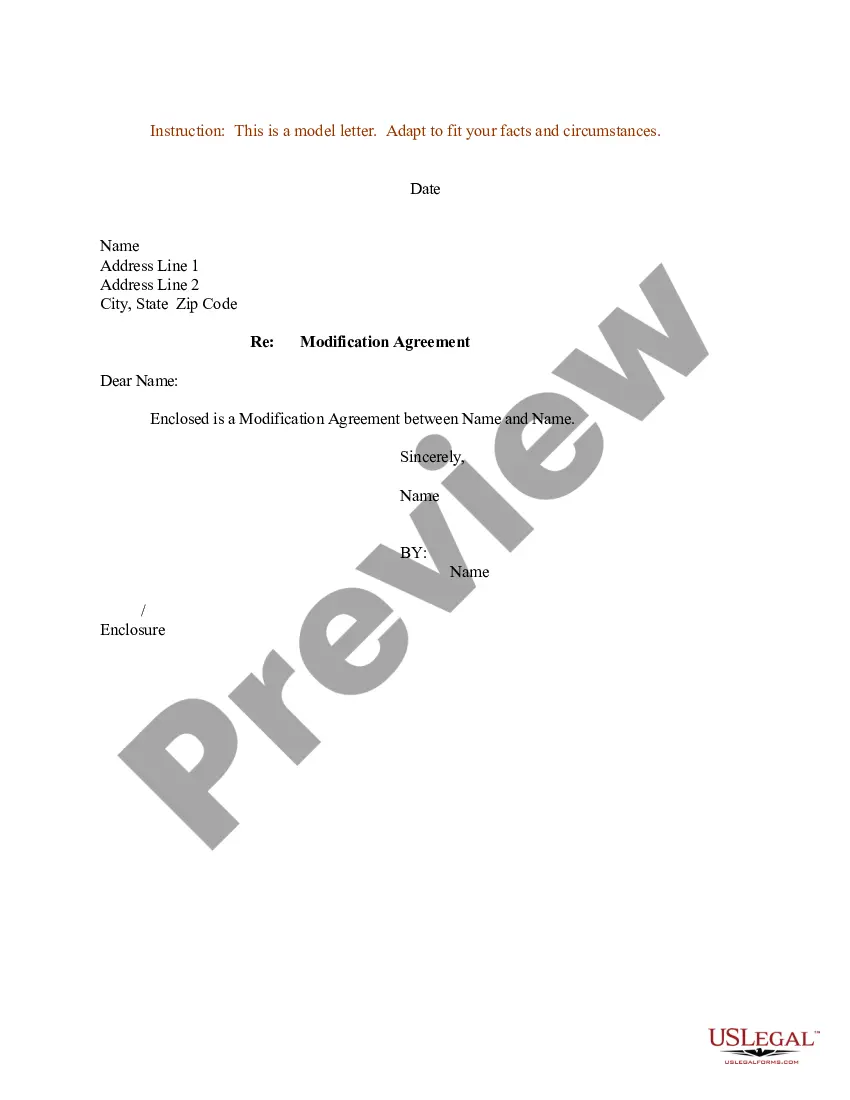
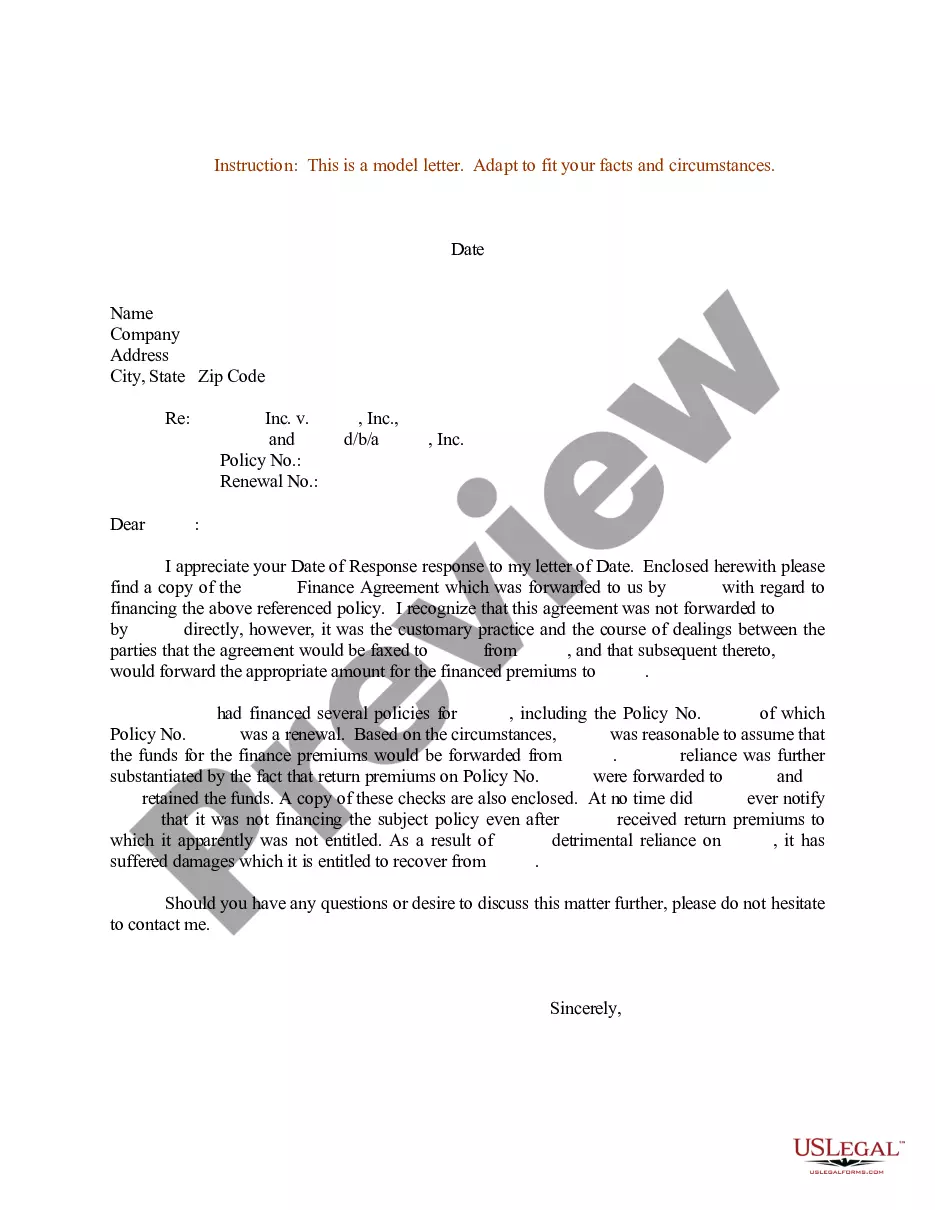
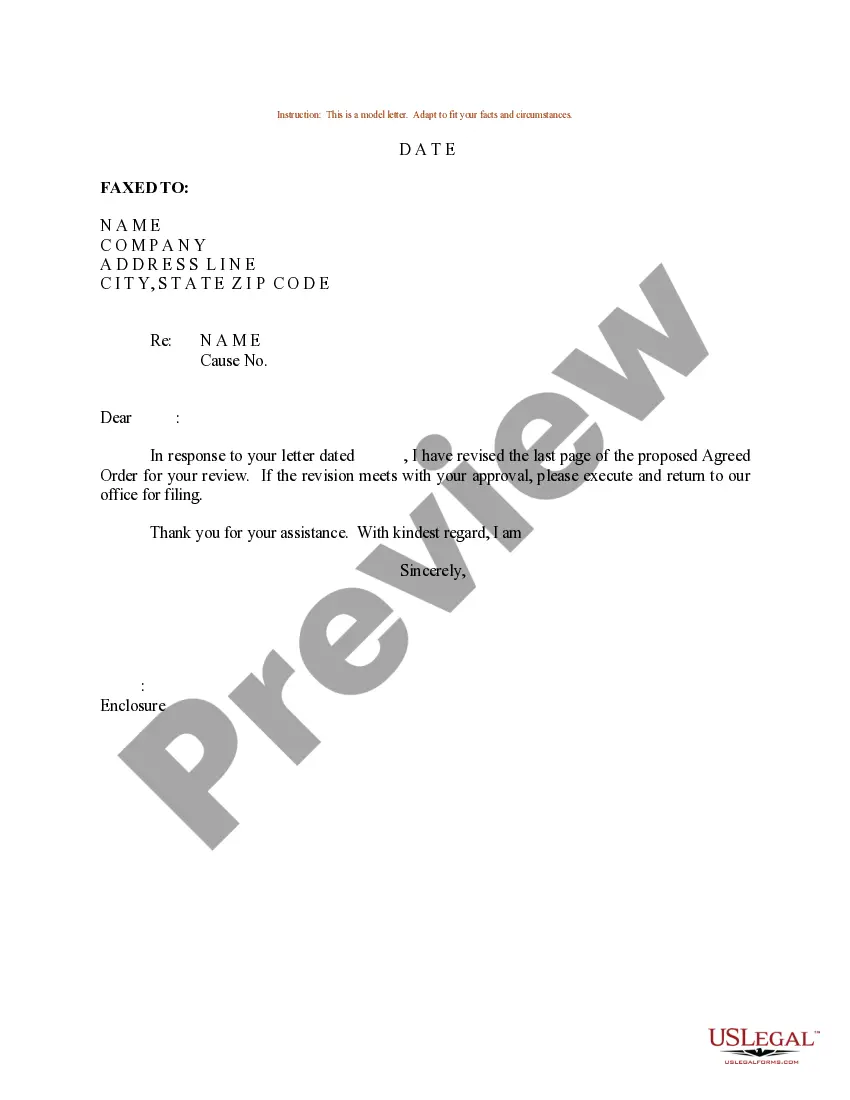
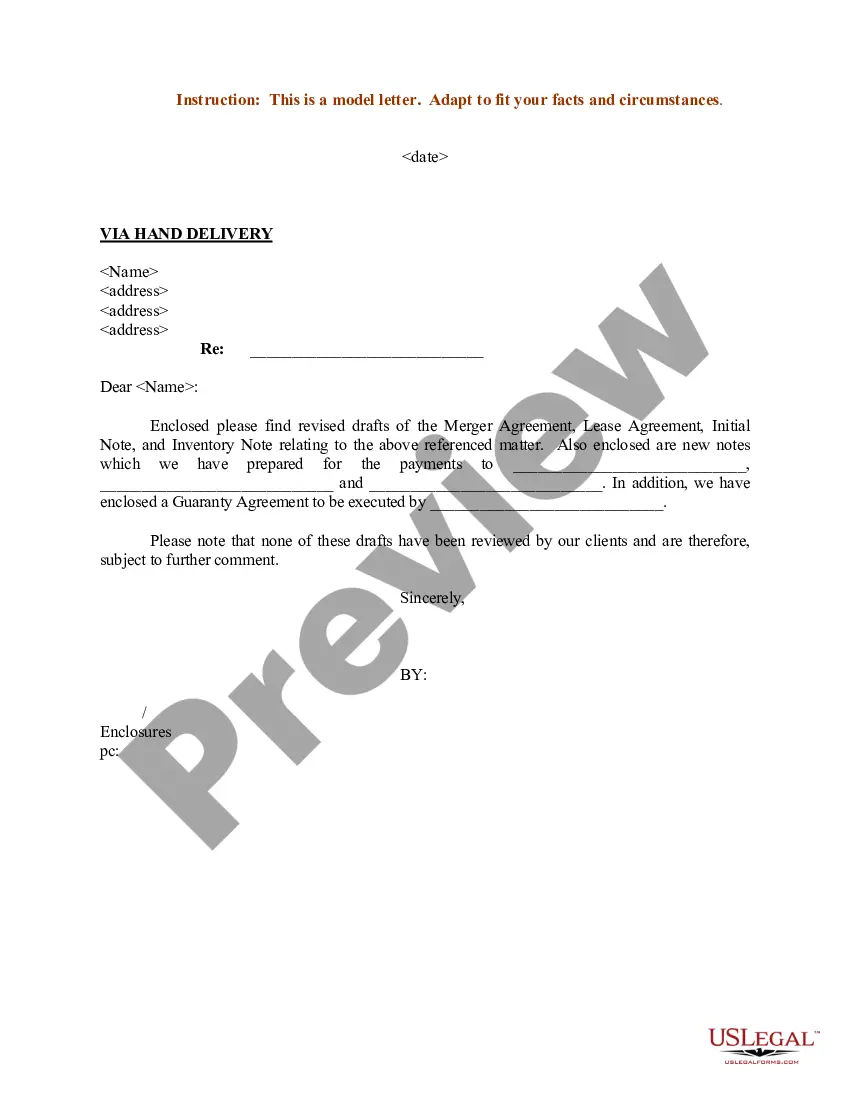
The Sample Letter regarding Modification Agreement is a document used to formally communicate changes to an existing agreement between parties. This letter serves as a cover note with the attached Modification Agreement, emphasizing the adjustments made to the original contract. It differs from other legal correspondence by specifically addressing modifications rather than general contract creation or termination.
Key parts of this document
- Date: The date when the letter is created or sent.
- Recipient Name and Address: The details of the party receiving the letter.
- Subject Line: Clearly states that the document is regarding a modification agreement.
- Salutation: A personalized greeting to the recipient.
- Body of the letter: Notifies the recipient of the enclosed Modification Agreement.
- Closing: A courteous sign-off along with the sender's name and title.
Common use cases
This form is essential when parties involved in a contract need to modify the terms of that agreement. Common scenarios include changes in payment terms, duration of the agreement, or alterations to specific provisions. Using this letter ensures clear communication and formal acknowledgment of the modifications between parties.
Who needs this form
- Individuals or businesses seeking to modify a contractual agreement.
- Lawyers or legal representatives drafting modifications on behalf of clients.
- Parties to a contract who need to formally communicate changes to terms.
Steps to complete this form
- Identify the date of the letter and enter it at the top.
- Fill in the name and address of the recipient.
- Specify the subject line indicating the document pertains to a Modification Agreement.
- Address the recipient politely and outline the key change in the body of the letter.
- Sign the letter with your name and title after a formal closing.
Is notarization required?
In most cases, this form does not require notarization. However, some jurisdictions or signing circumstances might. US Legal Forms offers online notarization powered by Notarize, accessible 24/7 for a quick, remote process.
Get your form ready online
Our built-in tools help you complete, sign, share, and store your documents in one place.
Make edits, fill in missing information, and update formatting in US Legal Forms—just like you would in MS Word.
Download a copy, print it, send it by email, or mail it via USPS—whatever works best for your next step.
Sign and collect signatures with our SignNow integration. Send to multiple recipients, set reminders, and more. Go Premium to unlock E-Sign.
If this form requires notarization, complete it online through a secure video call—no need to meet a notary in person or wait for an appointment.
We protect your documents and personal data by following strict security and privacy standards.

Make edits, fill in missing information, and update formatting in US Legal Forms—just like you would in MS Word.

Download a copy, print it, send it by email, or mail it via USPS—whatever works best for your next step.

Sign and collect signatures with our SignNow integration. Send to multiple recipients, set reminders, and more. Go Premium to unlock E-Sign.

If this form requires notarization, complete it online through a secure video call—no need to meet a notary in person or wait for an appointment.

We protect your documents and personal data by following strict security and privacy standards.
Typical mistakes to avoid
- Failing to include the correct parties' names and addresses.
- Not clearly stating what aspects of the agreement are being modified.
- Leaving out the date, which can create confusion.
- Using informal language instead of a professional tone.
Benefits of completing this form online
- Easy access and immediate download from any device.
- Customizable templates to fit your specific needs.
- Reliable legal language drafted by licensed attorneys.
- Save time compared to creating documents from scratch.
Legal use & context
- Serves as formal documentation of changes to an existing agreement.
- Helps safeguard against misunderstandings regarding contract modifications.
- Can be presented in legal disputes to prove mutual consent to modifications.
What to keep in mind
- The letter provides formal notice of changes to an existing agreement.
- It is an essential tool for clear communication between contract parties.
- Using this form can help avoid misunderstandings regarding contract modifications.
Looking for another form?
Form popularity
FAQ
Contact your servicer Contact your lender or servicer and ask for a loan modification. If you're denied, you have 14 days after the denial date to ask for a review of your application, but only if you applied for the modification at least three months before the foreclosure sale of your home.
Your name, address, phone number and account number. The type of debt resolution you're seeking. Your financial situation that has caused you to fall behind in your payments. A detailed budget and your plan for making payments (if you want to keep your home)
Long-term illness or disability. Death of a family member (and loss of their income) Natural or declared disaster. Uninsured loss of property. Sudden increase in housing costs, including hikes in property taxes or homeowner association fees. Divorce.
Be at least one regular mortgage payment behind or show that missing a payment is imminent. Provide evidence of significant financial hardship, for reasons such as:
Keep your letter to a single page. Include income and asset documentation such as pay stubs, bank statements, and other relevant paperwork. Stick to the facts. Don't lie, exaggerate or share excessive personal details. Let the lender know the specific concession you are requesting.
Keep your letter to a single page. Include income and asset documentation such as pay stubs, bank statements, and other relevant paperwork. Stick to the facts. Don't lie, exaggerate or share excessive personal details. Let the lender know the specific concession you are requesting.
A hardship letter explains why a homeowner is defaulting on their mortgage and needs to sell their home for less than what's owed. The best letters read like an attorney's pleading. They establish facts in a way as to convince a mortgage lender to grant a short sale or loan modification instead of a foreclosure.
Your name, address, phone number and account number. The type of debt resolution you're seeking. Your financial situation that has caused you to fall behind in your payments. A detailed budget and your plan for making payments (if you want to keep your home)