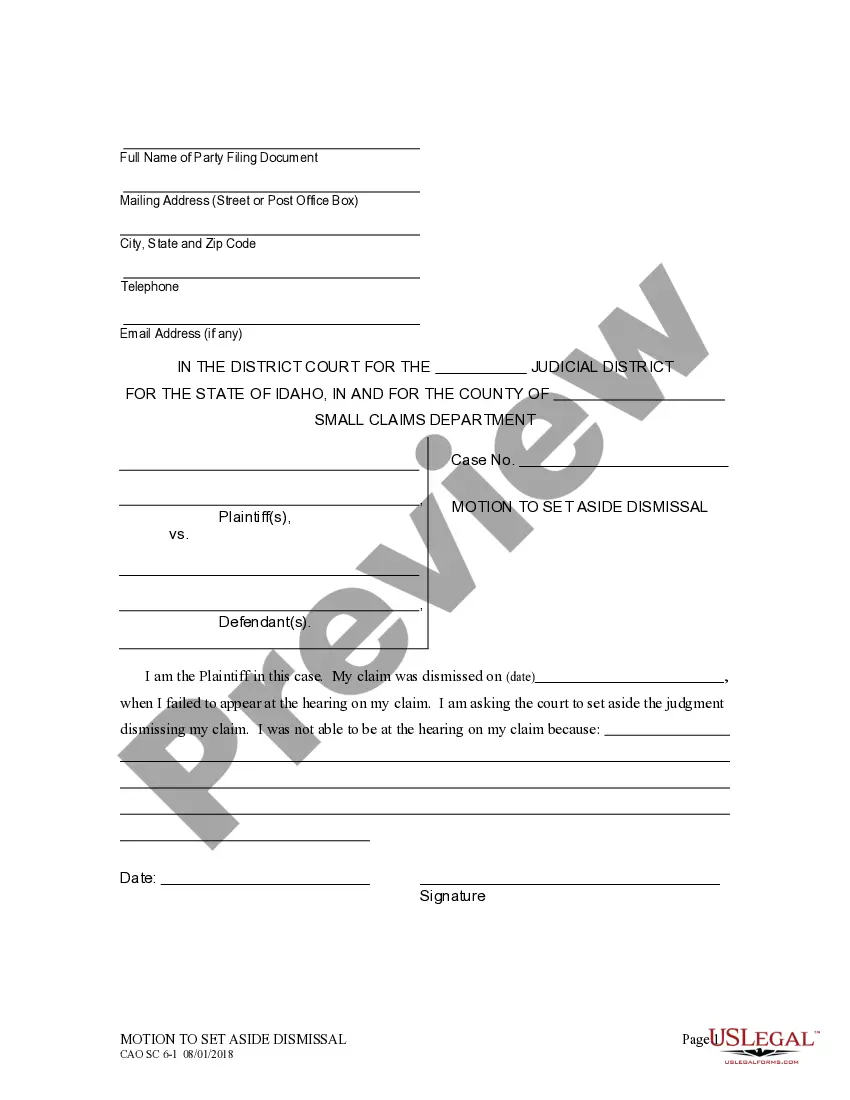
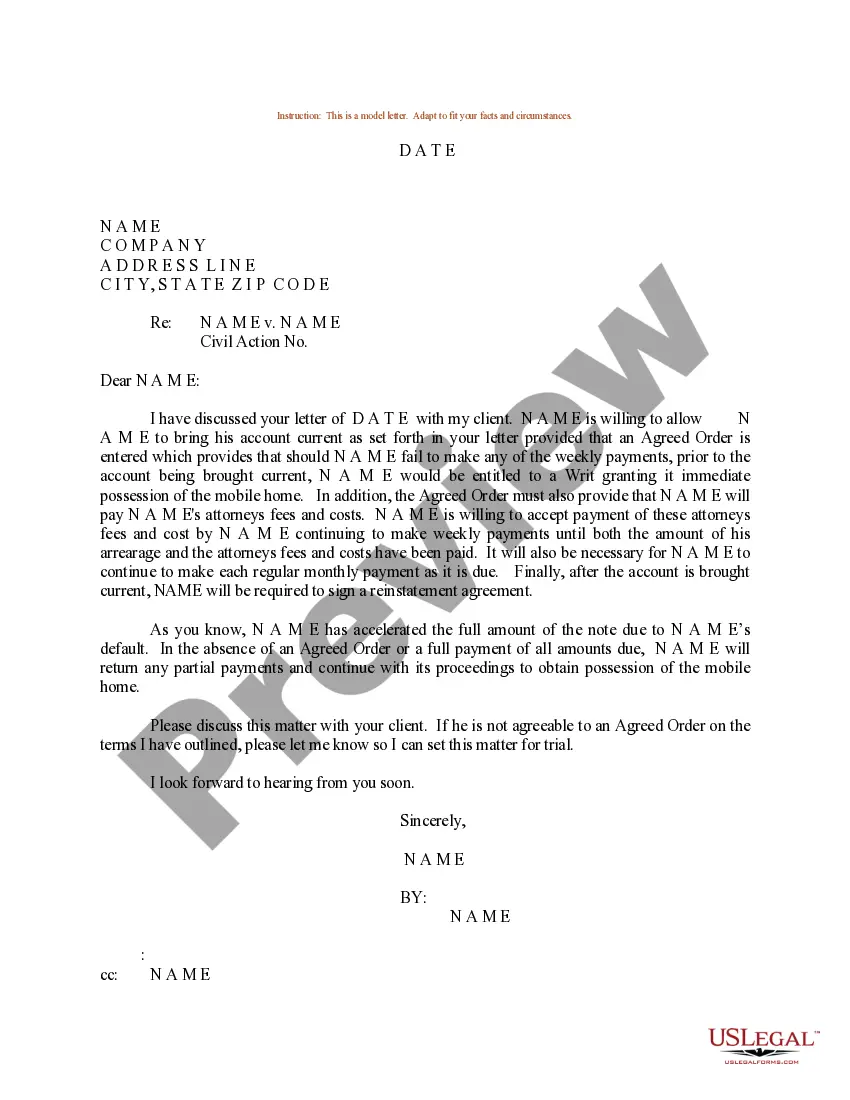
Sample Letter for Bringing Account Current
About this form
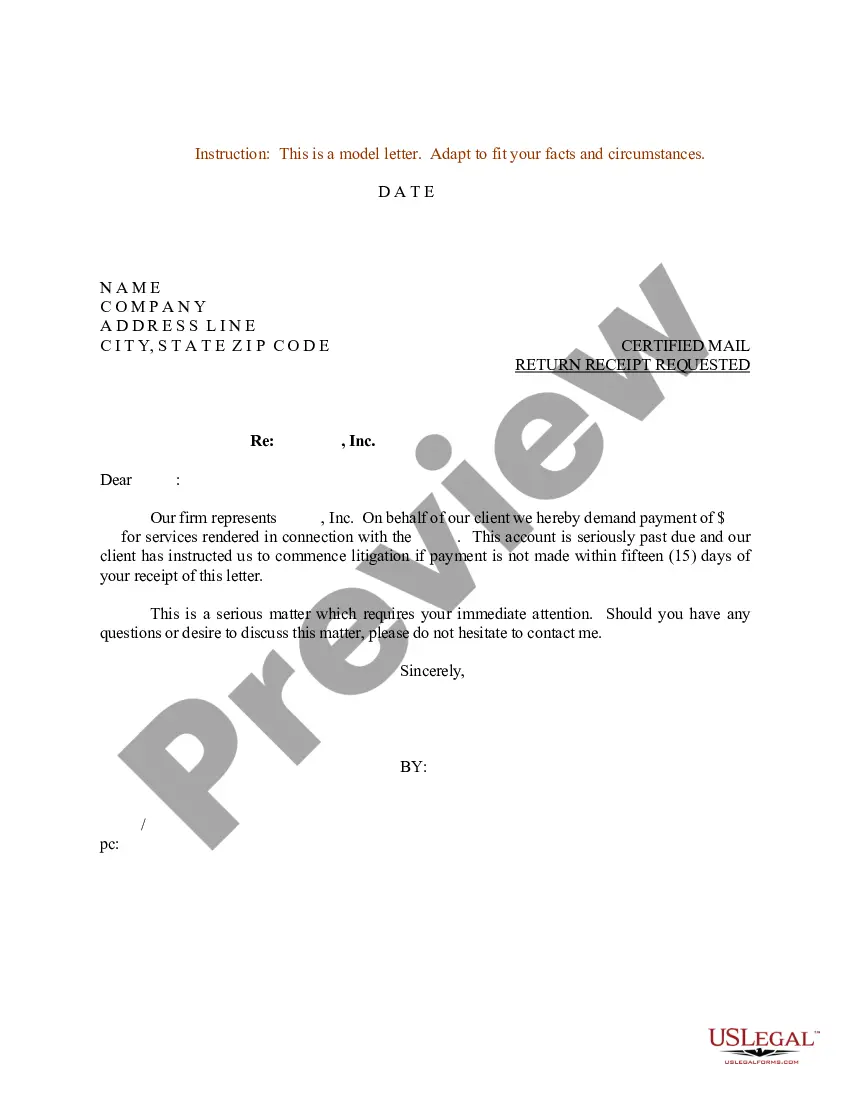
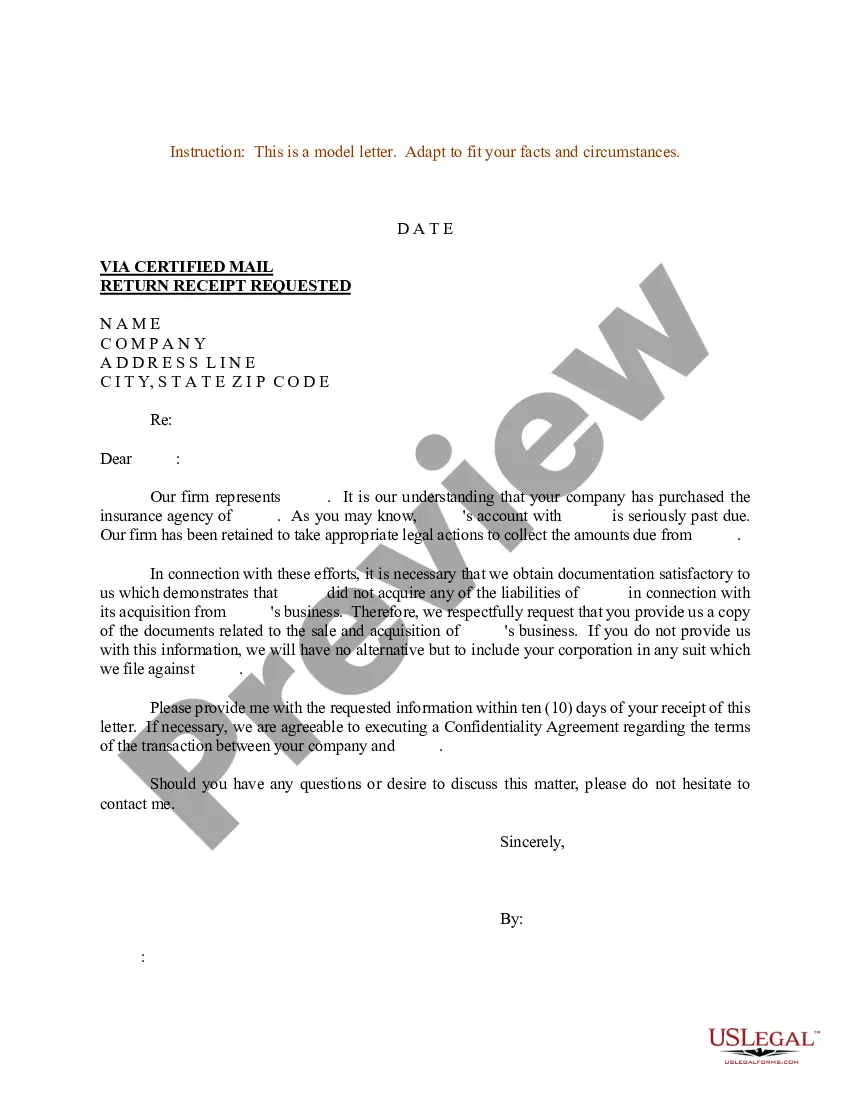
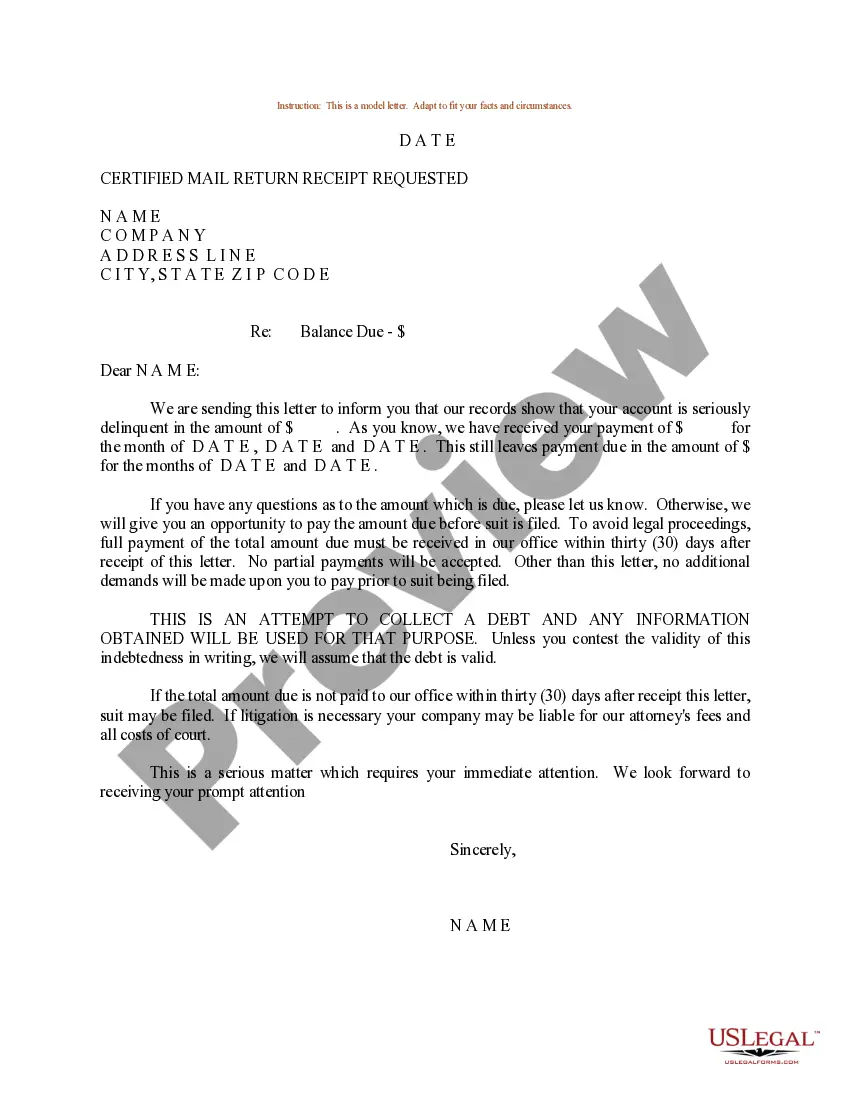
The Sample Letter for Bringing Account Current is a legal template designed to notify a party about a default in a financial agreement. This letter serves as a formal communication to initiate discussions about rectifying the account status by bringing it current. It differs from other financial letters by focusing specifically on the need to address defaults and potential legal actions without immediate payment of the total owed amount.
Form components explained
- Date of the letter.
- Names and contact information of both parties.
- Reference to the legal case or agreement.
- Summary of the default and amounts due.
- Proposed actions or resolutions, including discussion of an Agreed Order.
- Signature line for the sender.
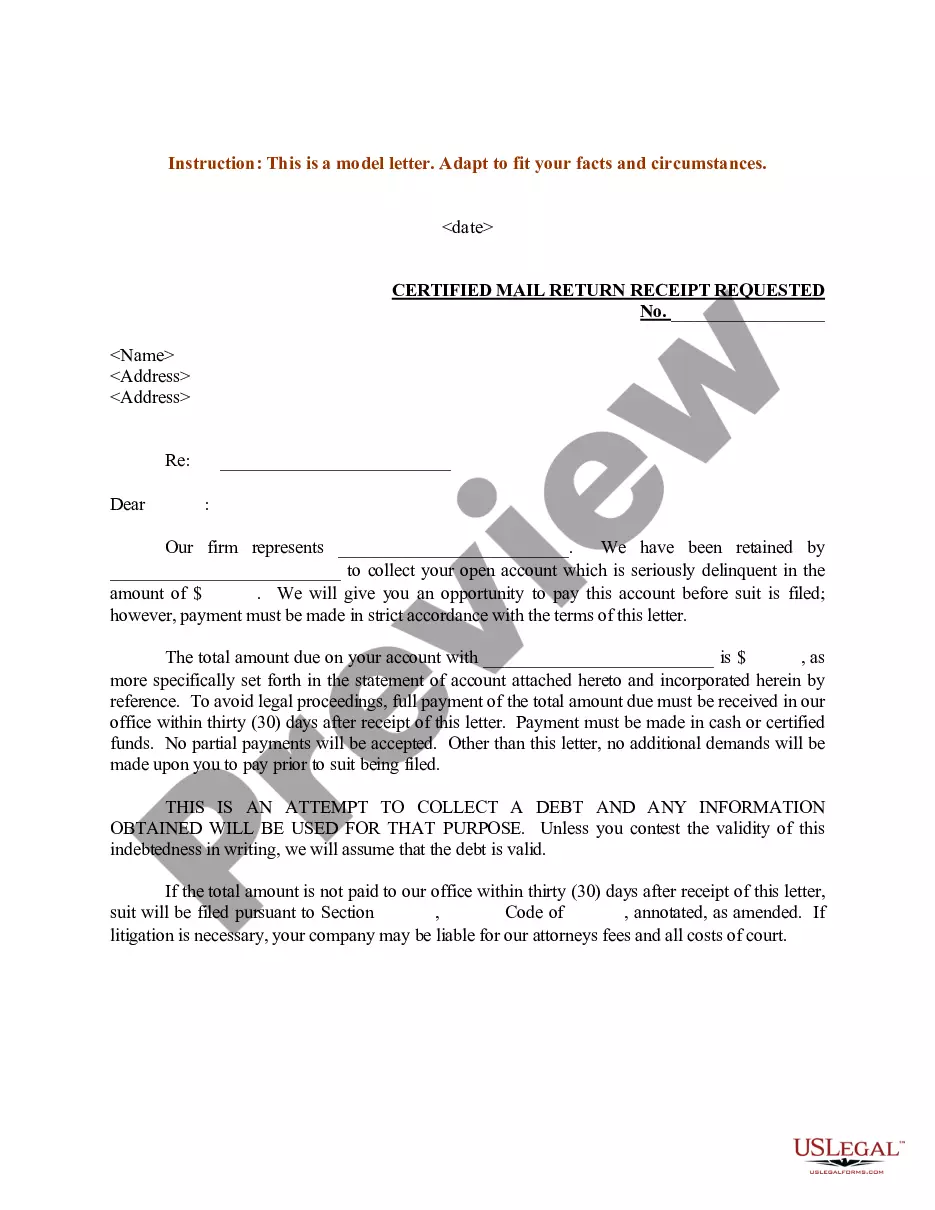
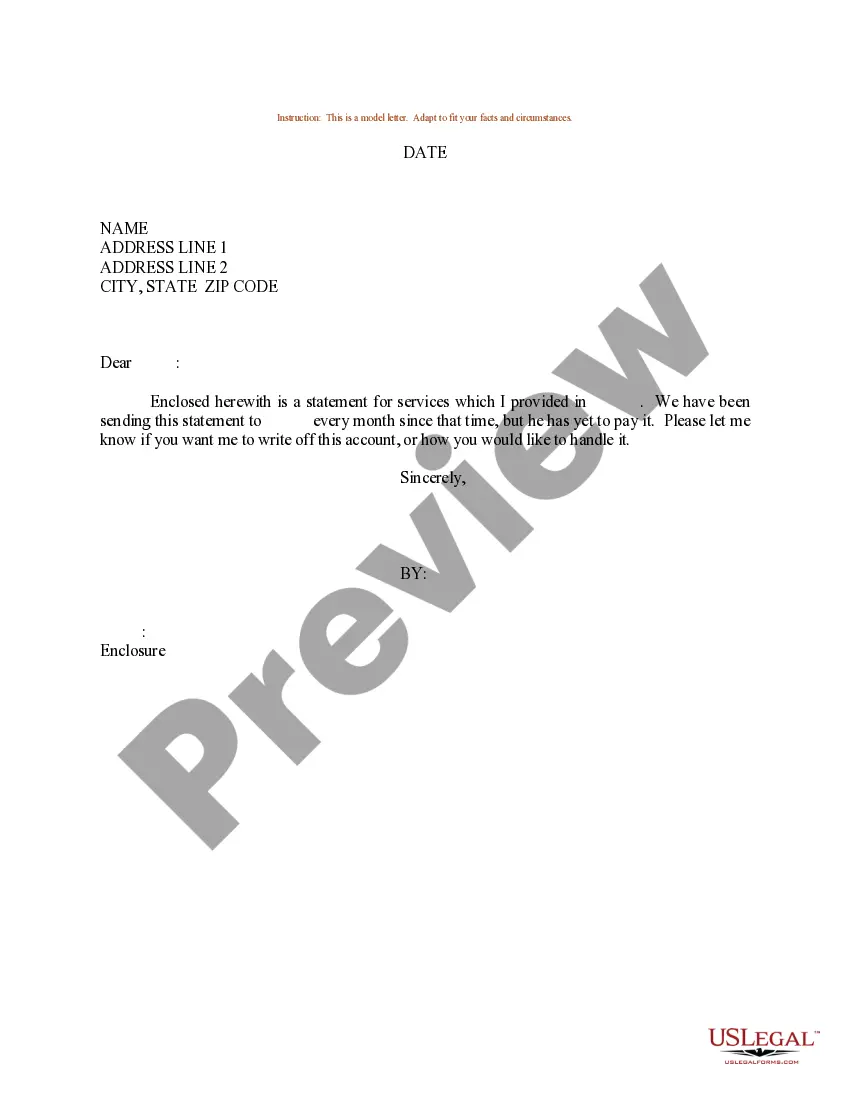
When this form is needed
This form is used when a party has defaulted on a financial agreement, such as a loan or lease, and the lender or lessor seeks to address the issue formally. It is appropriate to use this letter when you want to establish communication regarding the default without immediate legal action, allowing for a possible negotiation of terms to avoid litigation.
Who needs this form
- Lenders or creditors seeking to notify a debtor about a default.
- Landlords or lessors addressing tenants who have failed to make payments.
- Attorneys representing clients in financial discussions.
- Individuals or businesses managing accounts that are in default.
Instructions for completing this form
- Identify the parties involved by entering names and addresses at the top of the letter.
- Specify the date of the letter clearly.
- Reference the legal case or agreement that pertains to the default.
- Detail the nature of the default and the total amount due.
- State the actions that should be taken, including the possibility of negotiating an Agreed Order.
- Sign the letter and include your title if applicable.
Does this form need to be notarized?
This form does not typically require notarization unless specified by local law. It is advisable to check specific state requirements to ensure compliance.
Get your form ready online
Our built-in tools help you complete, sign, share, and store your documents in one place.
Make edits, fill in missing information, and update formatting in US Legal Forms—just like you would in MS Word.
Download a copy, print it, send it by email, or mail it via USPS—whatever works best for your next step.
Sign and collect signatures with our SignNow integration. Send to multiple recipients, set reminders, and more. Go Premium to unlock E-Sign.
If this form requires notarization, complete it online through a secure video call—no need to meet a notary in person or wait for an appointment.
We protect your documents and personal data by following strict security and privacy standards.

Make edits, fill in missing information, and update formatting in US Legal Forms—just like you would in MS Word.

Download a copy, print it, send it by email, or mail it via USPS—whatever works best for your next step.

Sign and collect signatures with our SignNow integration. Send to multiple recipients, set reminders, and more. Go Premium to unlock E-Sign.

If this form requires notarization, complete it online through a secure video call—no need to meet a notary in person or wait for an appointment.

We protect your documents and personal data by following strict security and privacy standards.
Avoid these common issues
- Failing to include the correct date can lead to confusion about the timelines.
- Not providing complete names and addresses of the parties involved.
- Using vague language that does not clearly state the default or required actions.
- Neglecting to sign the letter or provide necessary contact information.
Why use this form online
- Convenience of downloading and editing your letter at any time.
- Access to a professionally drafted template, ensuring legal compliance.
- Saves time compared to creating a letter from scratch.
Looking for another form?


Form popularity
FAQ
Pay the Entire Past-Due Balance. DNY59 / Getty Images. Catch Up. Negotiate a Pay for Delete. Consolidate the Account. Settle the Account. File for Bankruptcy. Seek Consumer Credit Counseling.
Create an accounts receivable aging report. Act quickly. Consider working out a payment plan. Send past-due notices and letters. Call in the cavalry.
If you've fallen behind on your credit card or loan payments, your lender may talk to you about "bringing your account current." That's another way of saying that you make a payment large enough to satisfy any past due balance that's accumulated since you made your last payment.
When a debtor stops paying and the number of days since the most recent payment reaches 120 days, the account is no longer considered current and the creditor is required to write-off the debt. This doesn't mean the debtor is no longer responsible for the loan or that the debt is forgiven.
A late payment, also known as a delinquency, will typically fall off your credit reports seven years from the original delinquency date. For example: If you had a 30-day late payment reported in June 2017 and bring the account current in July 2017, the late payment would drop off your reports in June 2024.
An indicator of stage of an invoice in relation to the payment. There are six different payment statuses: payment not submitted, payment submitted, payment authorized, payment in manual review, payment cleared and payment failed.
The account current is a summary statement detailing the financial performance of an individual insurance agent's business over a specified period.The account current is the basis for the paper trail as premiums paid by policyholders travel between insurance provider, agencies, and agents.
Re: What mean ( Pay status: current) if the account is closed. Current is what you want on accounts. If an account is marked "current" the baddies drop off at 7 years and continues to report as a positive TL.