Sample Letter for Settlement - Counter Offer
What this document covers
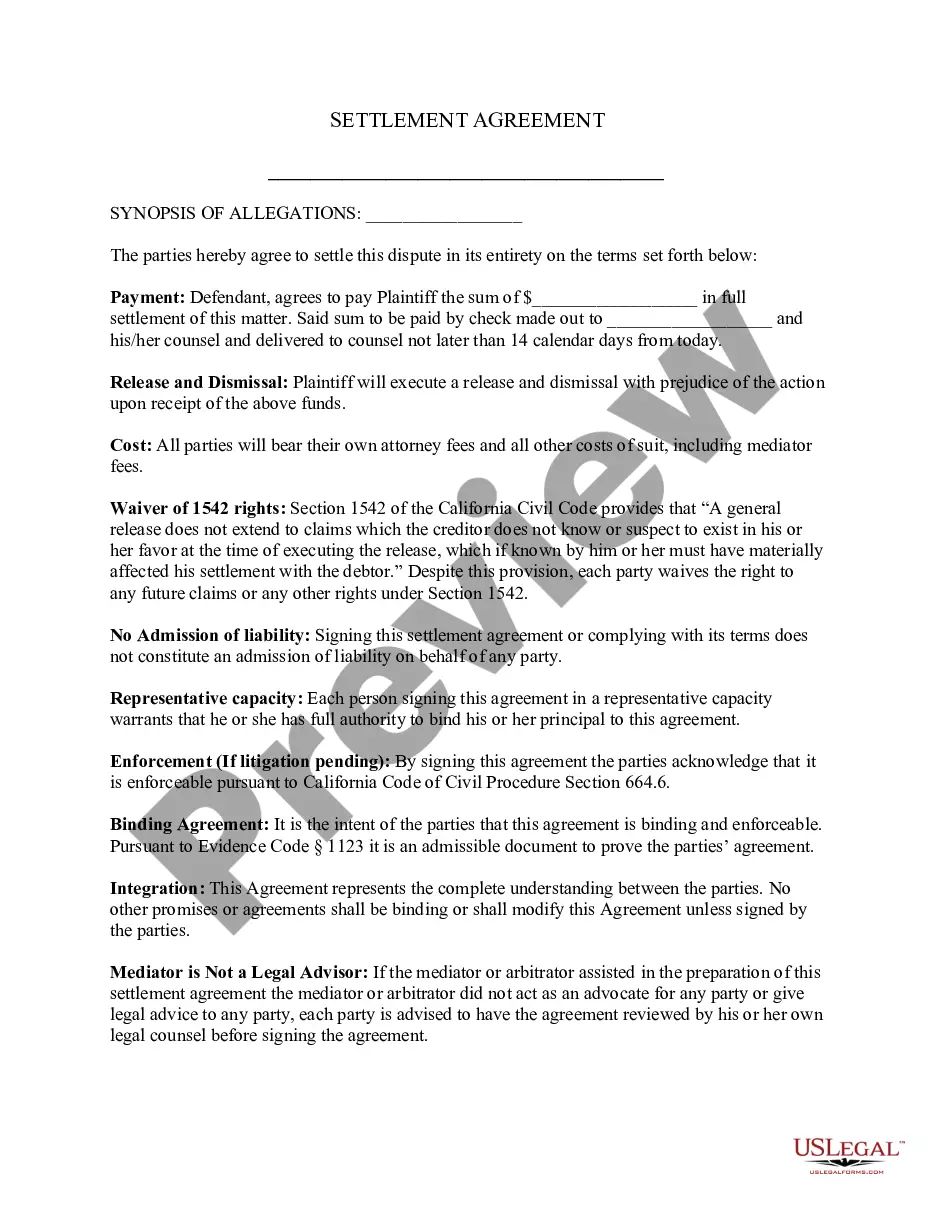
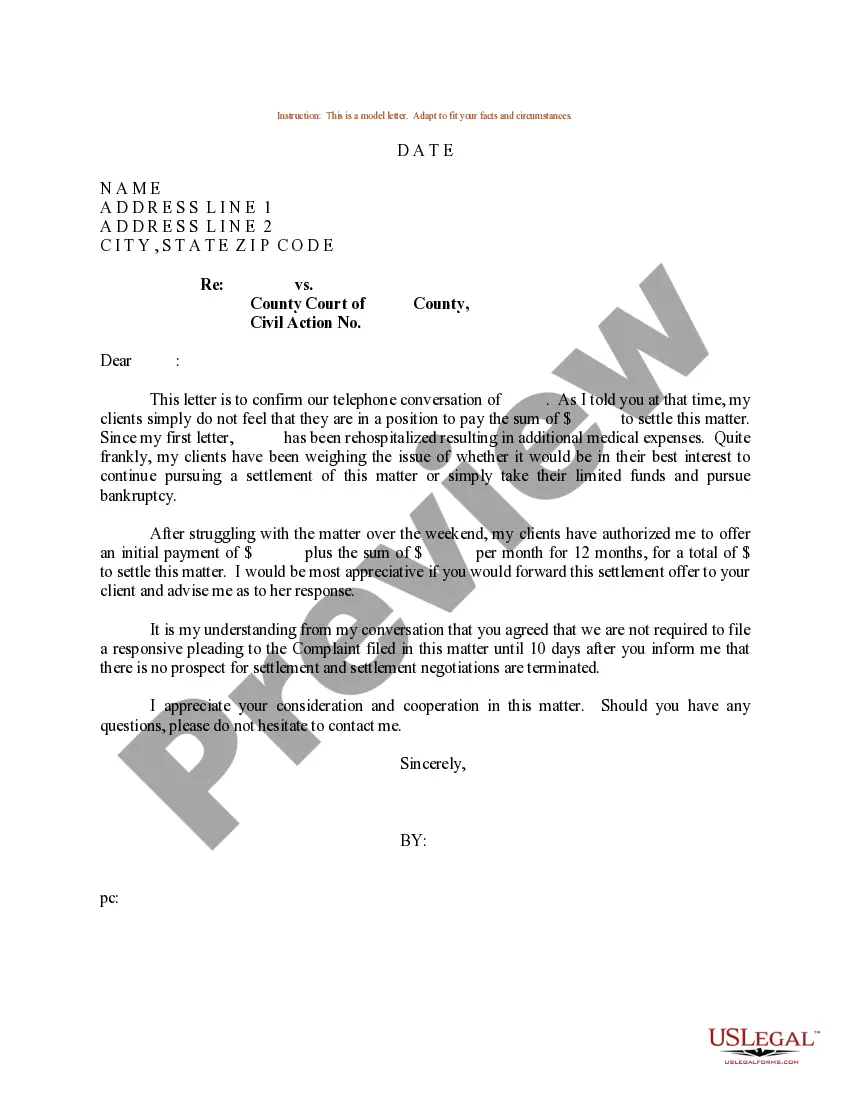
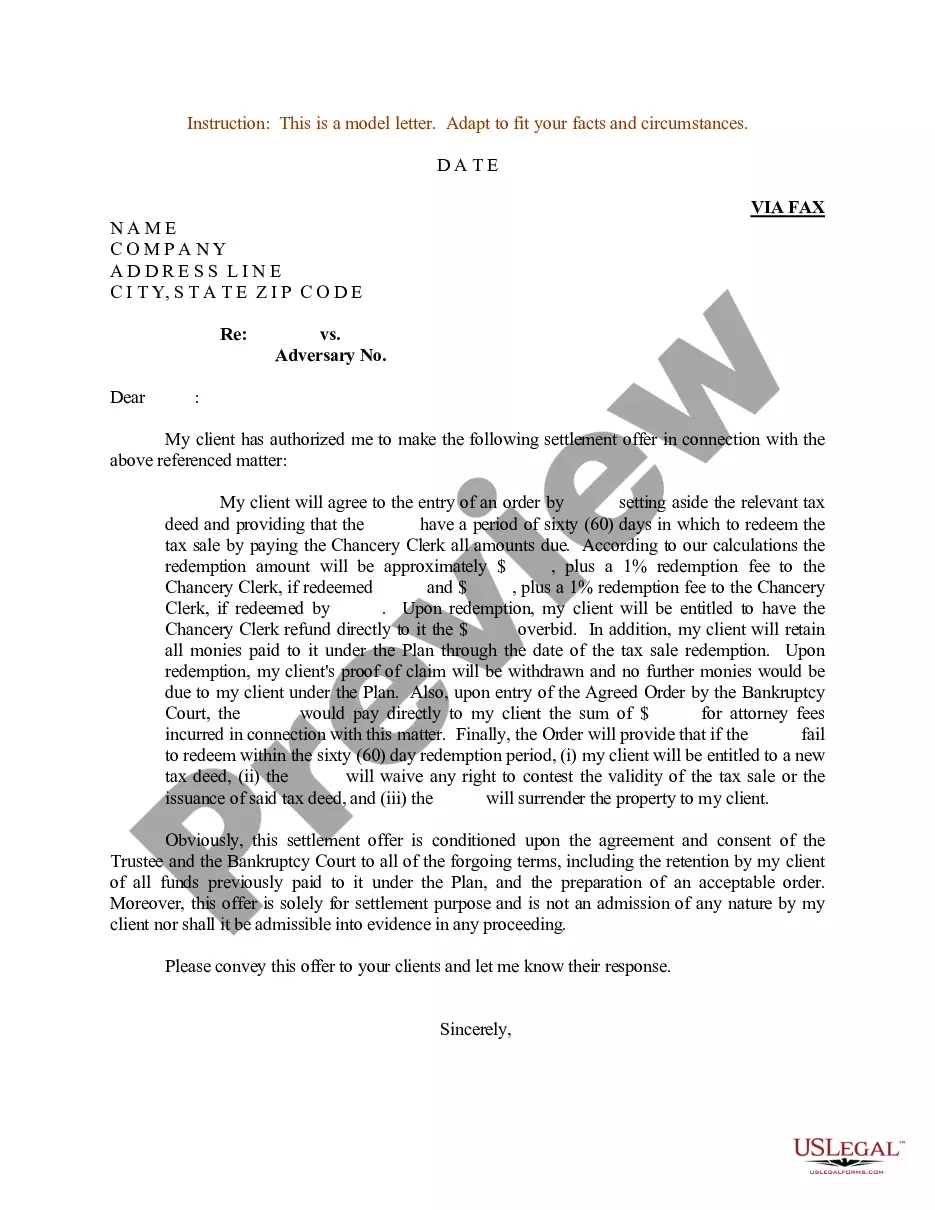
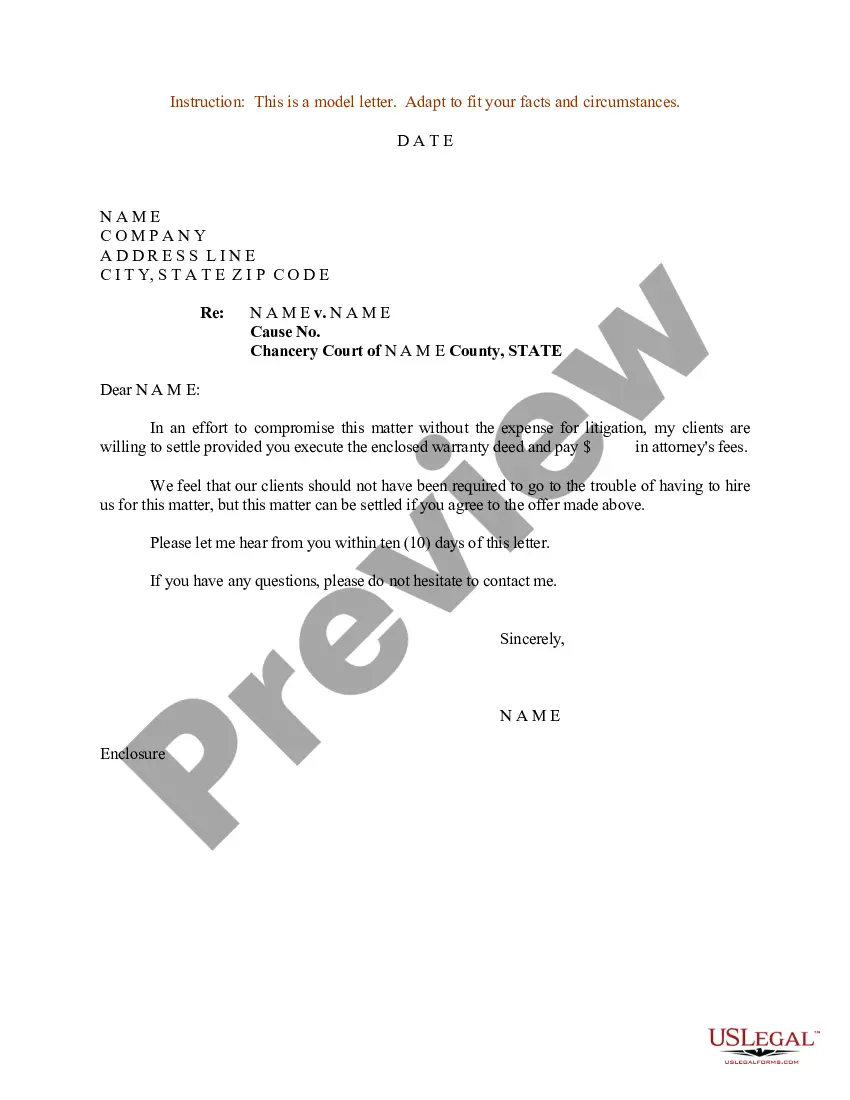
The Sample Letter for Settlement - Counter Offer is a formal document used to propose a counter offer during settlement negotiations. This letter is essential in legal situations, such as resolving disputes, where one party seeks to modify the terms of an initial settlement offer. Differentiating itself from a standard settlement letter, this form specifically addresses counter offers, indicating a willingness to negotiate further rather than accept initial terms outright.
Key parts of this document
- Date: The date the letter is written.
- Recipient's information: Name and address of the party the letter is addressed to.
- Opening statement: Acknowledgment of the other party's consideration.
- Body: Details of the counter offer and any conditions attached.
- Closing statement: Encouragement for further communication and cooperation.
- Signature: Your name and any relevant titles.

When to use this form
This letter should be used when you want to respond to an initial settlement offer with your own terms. Examples include disputes over contracts, personal injury claims, or any situation where a settlement is being negotiated, and you wish to propose revised terms instead of accepting the original offer.
Intended users of this form
- Individuals involved in legal disputes seeking to negotiate terms.
- Business entities responding to settlement offers related to contracts or liability claims.
- Legal representatives drafting correspondence on behalf of their clients.
How to complete this form
- Identify the date of the letter at the top of the document.
- Enter the recipient's name and address in the appropriate fields.
- Write a courteous opening statement acknowledging the initial offer.
- Clearly state your counter offer and any conditions for acceptance.
- Conclude with a statement encouraging the recipient to reach out with questions.
- Sign the letter with your name and title, if applicable.
Is notarization required?
This form usually doesn’t need to be notarized. However, local laws or specific transactions may require it. Our online notarization service, powered by Notarize, lets you complete it remotely through a secure video session, available 24/7.
Get your form ready online
Our built-in tools help you complete, sign, share, and store your documents in one place.
Make edits, fill in missing information, and update formatting in US Legal Forms—just like you would in MS Word.
Download a copy, print it, send it by email, or mail it via USPS—whatever works best for your next step.
Sign and collect signatures with our SignNow integration. Send to multiple recipients, set reminders, and more. Go Premium to unlock E-Sign.
If this form requires notarization, complete it online through a secure video call—no need to meet a notary in person or wait for an appointment.
We protect your documents and personal data by following strict security and privacy standards.

Make edits, fill in missing information, and update formatting in US Legal Forms—just like you would in MS Word.

Download a copy, print it, send it by email, or mail it via USPS—whatever works best for your next step.

Sign and collect signatures with our SignNow integration. Send to multiple recipients, set reminders, and more. Go Premium to unlock E-Sign.

If this form requires notarization, complete it online through a secure video call—no need to meet a notary in person or wait for an appointment.

We protect your documents and personal data by following strict security and privacy standards.
Common mistakes
- Failing to clearly outline the terms of the counter offer.
- Not including all required parties in the correspondence.
- Missing the date or addressing the letter incorrectly.
- Using overly complex language that may confuse the recipient.
Benefits of completing this form online
- Immediate access to a professionally drafted document.
- Editable format allows you to tailor the letter to your specific situation.
- Convenient download and printing options for ease of use.
- Cost-effective solution compared to hiring legal counsel for simple negotiations.
Key takeaways
- The Sample Letter for Settlement - Counter Offer facilitates negotiation by stating your position clearly.
- It is important to use professional language and express willingness to continue discussions.
- Understanding your specific state requirements can enhance the effectiveness of your counter offer.
Looking for another form?




Form popularity
FAQ
Always reject a settlement offer in writing. Type a letter to your contact at the insurance company listing the reasons you think that their offer is too low. Back up these reasons with concrete evidence attached to the letter. Finally, provide a counteroffer of a sum you think is more reasonable.
That you will not accept the initial settlement offer; The reasons why you feel you deserve a higher settlement amount; Each of their low-offer reasons, and your responses; The higher settlement amount that you will accept.
Most cases settle out of court before proceeding to trial. Some say that the measure of a good settlement is when both parties walk away from the settlement unhappy.This means that the defendant paid more than he wanted to pay, and the plaintiff accepted less than he wanted to accept.
Have a Specific Settlement Amount in Mind. Do Not Jump at a First Offer. Get the Adjuster to Justify a Low Offer. Emphasize Emotional Points in Your Favor. Wait for a Response. Know When To Engage an Attorney.
Outline The Incident. You will need to start by outlining the details of the accident. Detail Your Injuries. Explain All Of Your Damages. Calculate Your Settlement Demand. Attach Relevant Documents. Get Help From An Attorney.
State that the offer you received is unacceptable. Refute any statements in the adjustor's letter that are inaccurate and damaging to your claim. Re-state an acceptable figure. Explain why your counteroffer is appropriate, including the reasons behind your general damages demands.
Example of Counteroffer For example, a seller wants to sell a vehicle for $20,000. A buyer arrives and offers $15,000 for the vehicle. The offerer provides a counteroffer, asking for $16,000 with the objective of obtaining a higher price.
State clear reasons backed with research. Communicate other job offers. Emphasize your sought-after skills. Formulate your wants as requests rather than demands. Use polite, neutral terms. Edit and proof.