Self-Employed Independent Contractor Payment Schedule
What this document covers
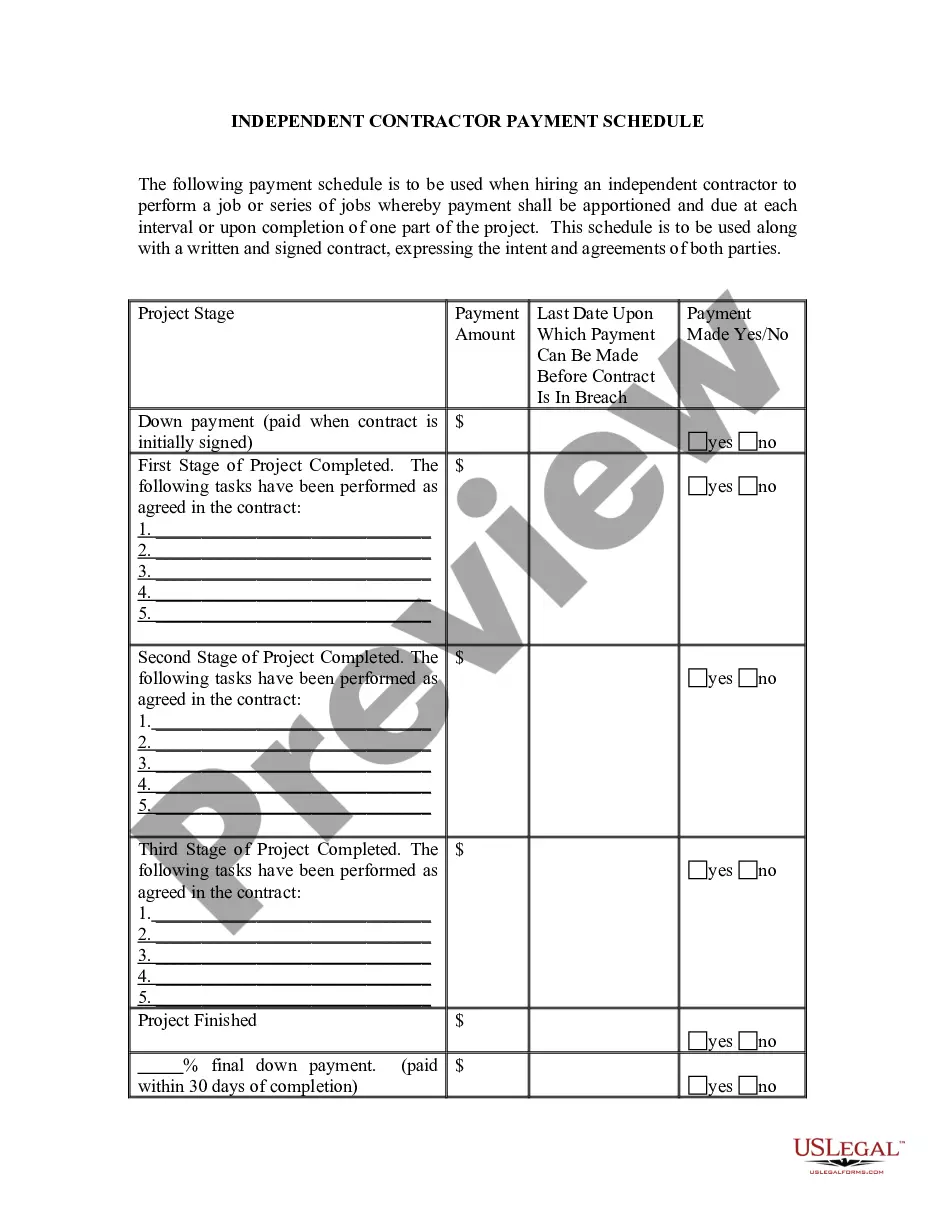
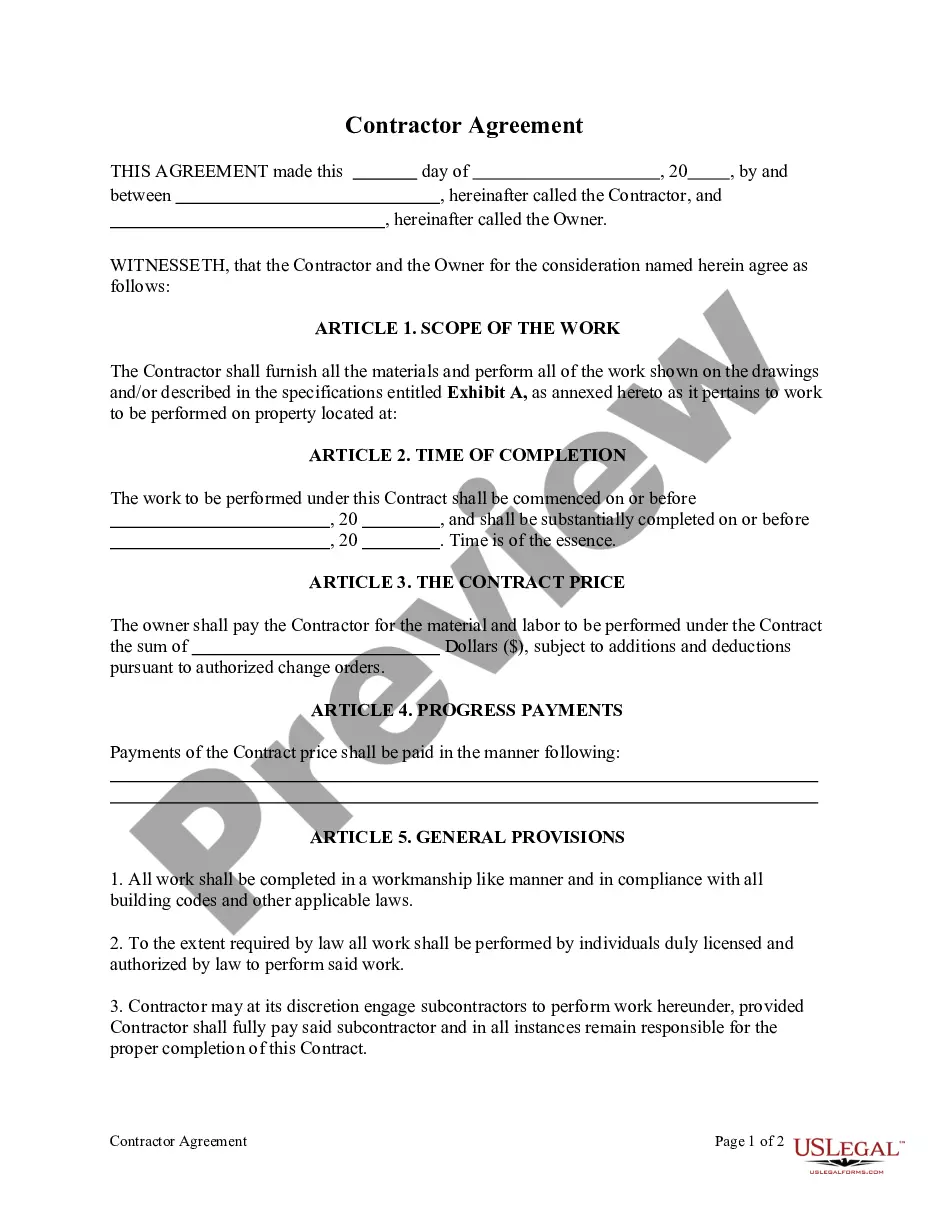
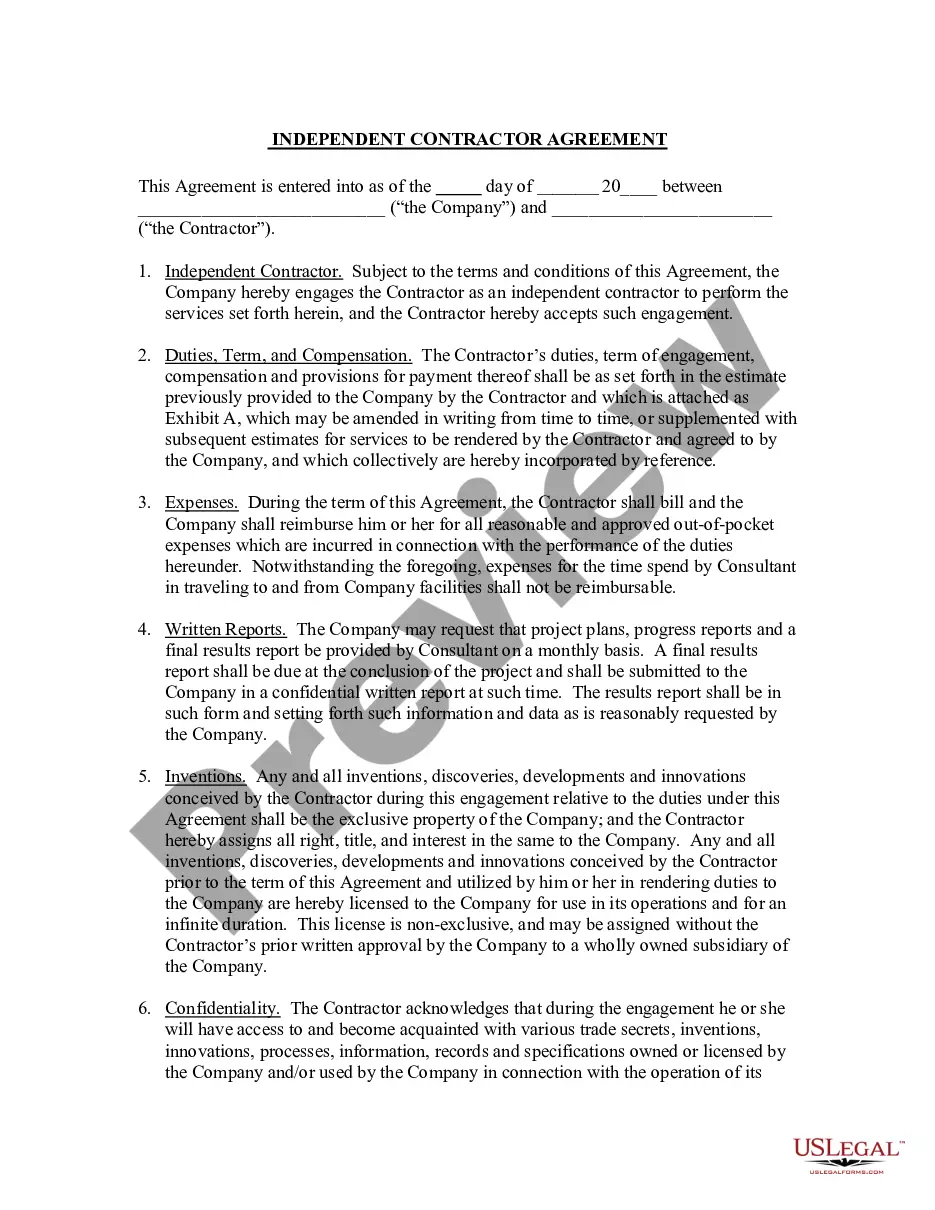
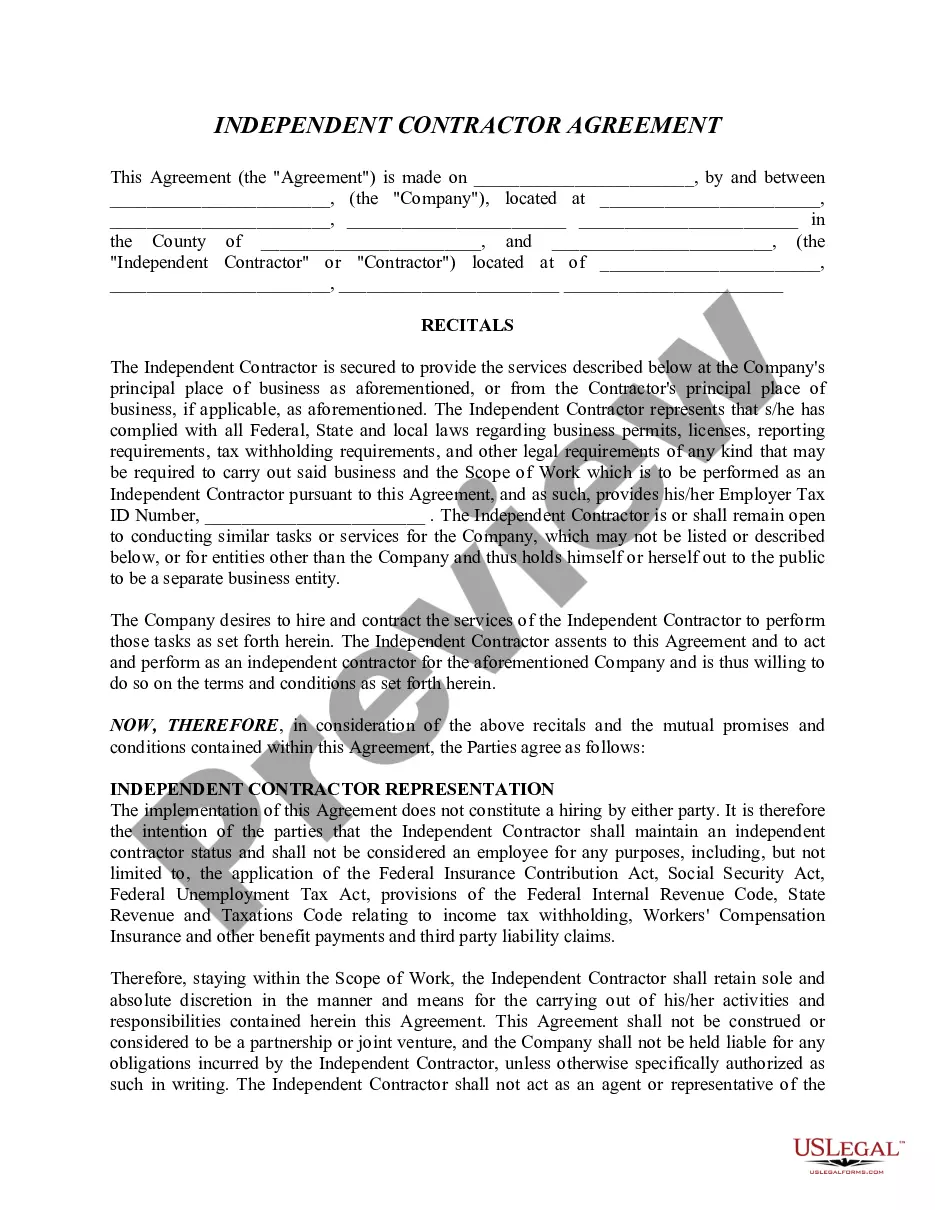
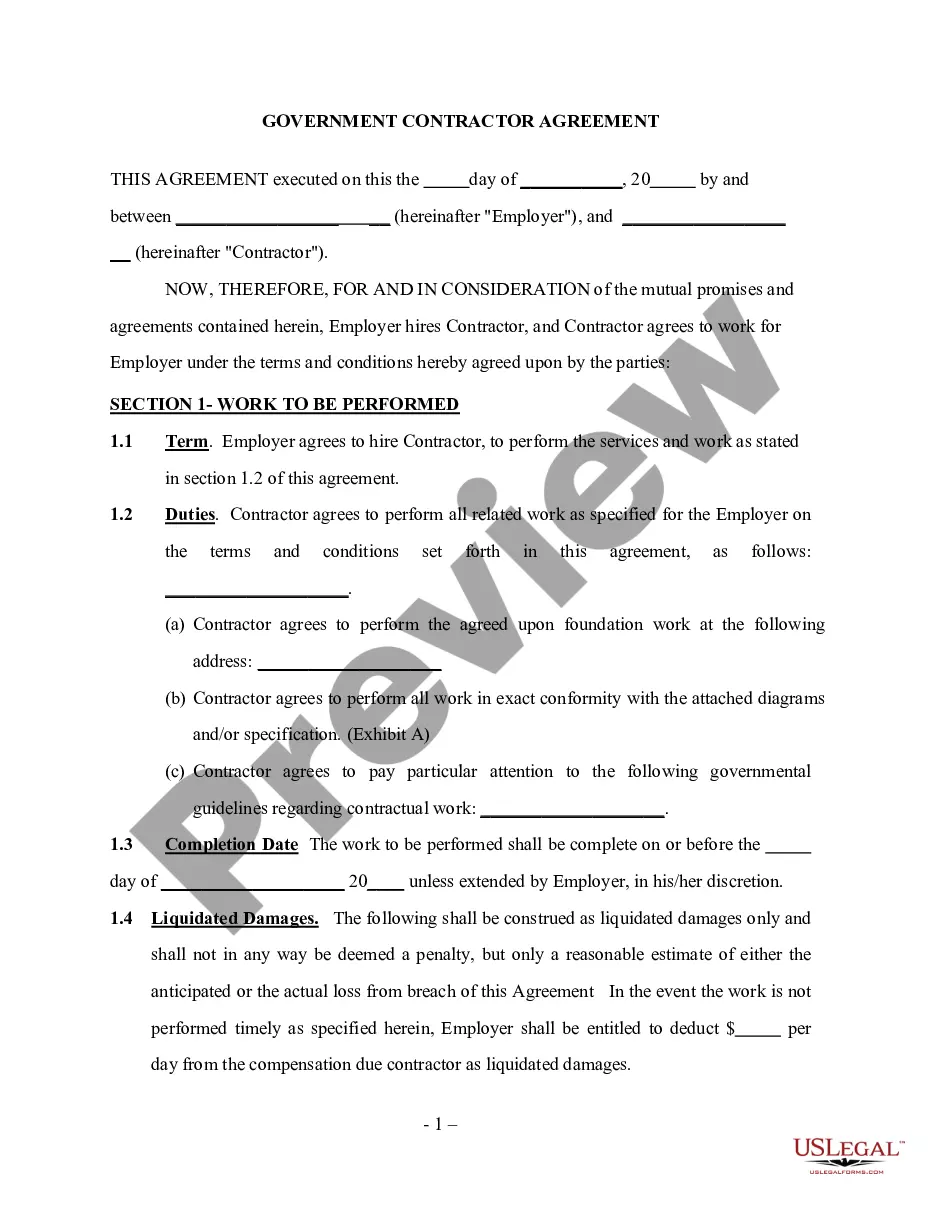
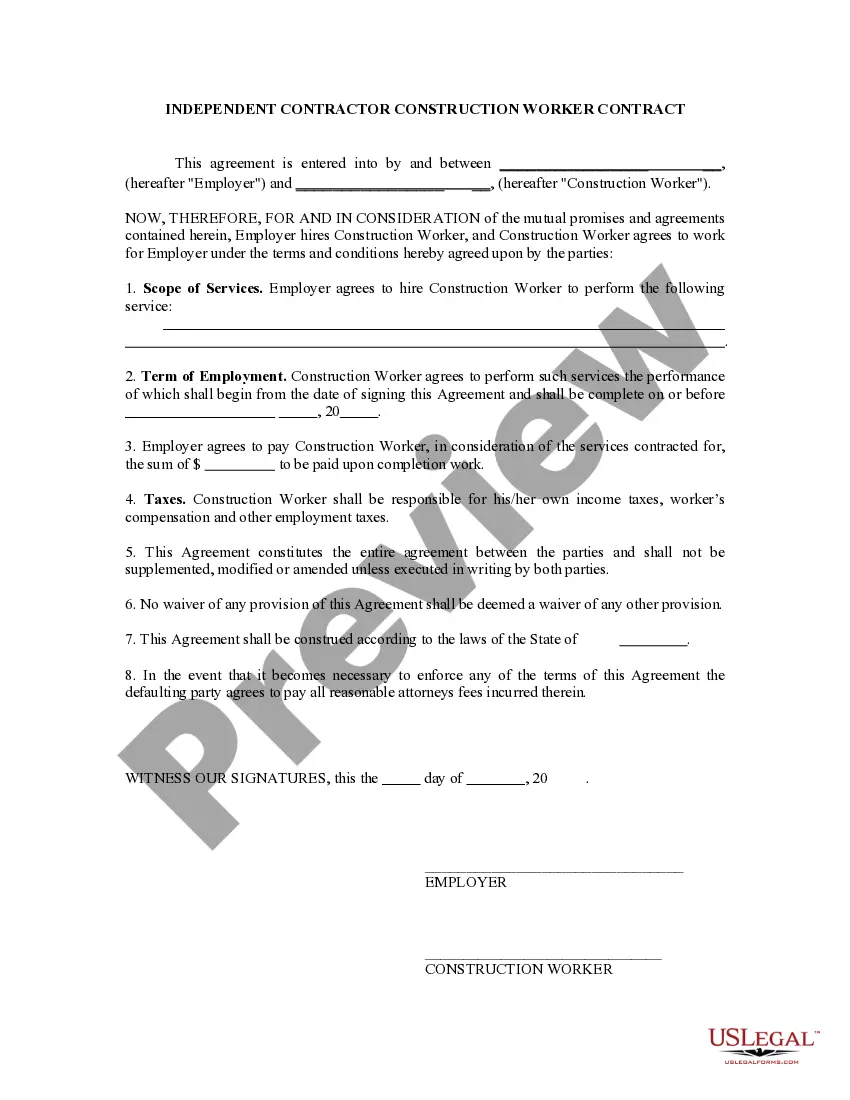
The Self-Employed Independent Contractor Payment Schedule is a legal document used by employers to establish a structured payment plan for independent contractors. This form helps outline the payment amounts due at various stages of a project, ensuring that both parties have a clear understanding of their financial obligations. Unlike general contracts, this payment schedule specifically focuses on the financial terms associated with project completion benchmarks.
Key components of this form
- Payment intervals: Specifies when payments are due based on project completion stages.
- Payment amounts: Details the exact amount or percentage of total payment due at each stage.
- Task completion verification: Lists the specific tasks that must be completed to trigger each payment.
- Down payment: Documents an initial payment upon signing the contract.
- Payment confirmation: Includes a section for accepting or declining payment after each stage is completed.

When to use this form
This form is essential when hiring an independent contractor for a project with multiple phases, and payments are to be made as specific project milestones are achieved. It is particularly useful for projects where financial clarity and structured payment plans are needed to ensure both parties meet their obligations.
Who should use this form
This payment schedule is primarily intended for:
- Businesses hiring independent contractors for specific projects.
- Independent contractors seeking structured payment plans.
- Freelancers working on project-based contracts requiring milestone payments.
Completing this form step by step
- Identify all parties involved and enter their contact information.
- Detail the project stages and specify the associated payment amounts.
- Outline the tasks required for payment to be triggered at each stage.
- Indicate the deadlines for payment to avoid breach of contract.
- Both parties should sign and date the form to confirm agreement.
Is notarization required?
This form does not typically require notarization to be legally valid. However, some jurisdictions or document types may still require it. US Legal Forms provides secure online notarization powered by Notarize, available 24/7 for added convenience.
Get your form ready online
Our built-in tools help you complete, sign, share, and store your documents in one place.
Make edits, fill in missing information, and update formatting in US Legal Forms—just like you would in MS Word.
Download a copy, print it, send it by email, or mail it via USPS—whatever works best for your next step.
Sign and collect signatures with our SignNow integration. Send to multiple recipients, set reminders, and more. Go Premium to unlock E-Sign.
If this form requires notarization, complete it online through a secure video call—no need to meet a notary in person or wait for an appointment.
We protect your documents and personal data by following strict security and privacy standards.

Make edits, fill in missing information, and update formatting in US Legal Forms—just like you would in MS Word.

Download a copy, print it, send it by email, or mail it via USPS—whatever works best for your next step.

Sign and collect signatures with our SignNow integration. Send to multiple recipients, set reminders, and more. Go Premium to unlock E-Sign.

If this form requires notarization, complete it online through a secure video call—no need to meet a notary in person or wait for an appointment.

We protect your documents and personal data by following strict security and privacy standards.
Avoid these common issues
- Failing to specify payment amounts clearly.
- Omitting important deadlines for payments.
- Not listing all required tasks for each payment stage.
- Having one party sign without the other party's consent.
Advantages of online completion
- Easy to edit and customize to match the specific terms of your project.
- Downloadable and printable for your records and reference.
- Convenient access anytime, ensuring you can finalize agreements quickly.
Legal use & context
- This form offers clear documentation of payment terms, which can be crucial in legal disputes.
- Using this payment schedule helps both parties understand their obligations, enhancing accountability.
- It supports legal enforceability by clearly outlining agreed-upon terms and conditions.
What to keep in mind
- The Self-Employed Independent Contractor Payment Schedule is essential for managing phased project payments.
- It provides clarity and security for both employers and contractors regarding financial expectations.
- Proper completion and documentation can help prevent payment disputes and ensures both parties are on the same page.
Looking for another form?
Form popularity
FAQ
Is a 1099 the Same as a Schedule C? A form 1099 is not the same as a Schedule C form.It will then file the 1099 with the government, and provide you a copy too so that you can do your personal income tax return using the figure provided.
Independent contractors report their income on Schedule C (Form 1040), Profit or Loss from Business (Sole Proprietorship). Also file Schedule SE (Form 1040), Self-Employment Tax if net earnings from self-employment are $400 or more.You may need to make estimated tax payments.
1099 employees are self-employed independent contractors. They receive pay in accord with the terms of their contract and get a 1099 form to report income on their tax return.The employer withholds income taxes from the employee's paycheck and has a significant degree of control over the employee's work.
An owner must pay a direct contractor within 30 days of the contractor's request for payment.
Schedule C is the tax form filed by most sole proprietors. As you can tell from its title, "Profit or Loss From Business," it´s used to report both income and losses. Many times, Schedule C filers are self-employed taxpayers who are just getting their businesses started.
When you first engage with a 1099 worker, you'll also need to consider some additional payment agreements, such as: How often is payment due? Upon receipt of the invoice, net 15 and net 30 days are the most common payment terms.
A 1099 job is a job that is performed by a self-employed contractor or business owner as opposed to an employee hired by a business or self-employed contractor. The 1099 form is the Internal Revenue Service form you fill out for the person doing the work. It denotes how much money was paid for the service.
Step 1: Gather Information. Step 2: Calculate Gross Profit and Income. Step 3: Include Your Business Expenses. Step 4: Include Other Expenses and Information. Step 5: Calculate Your Net Income. And If You Have a Business Loss.
When you earn money by performing work, that income is usually subject to social security and Medicare taxes.When you receive a 1099-MISC with income in Box 7 that is for nonemployee compensation, the IRS requires that this income be reported on a Schedule C.