Sample Letter for Proposed Release
Overview of this form
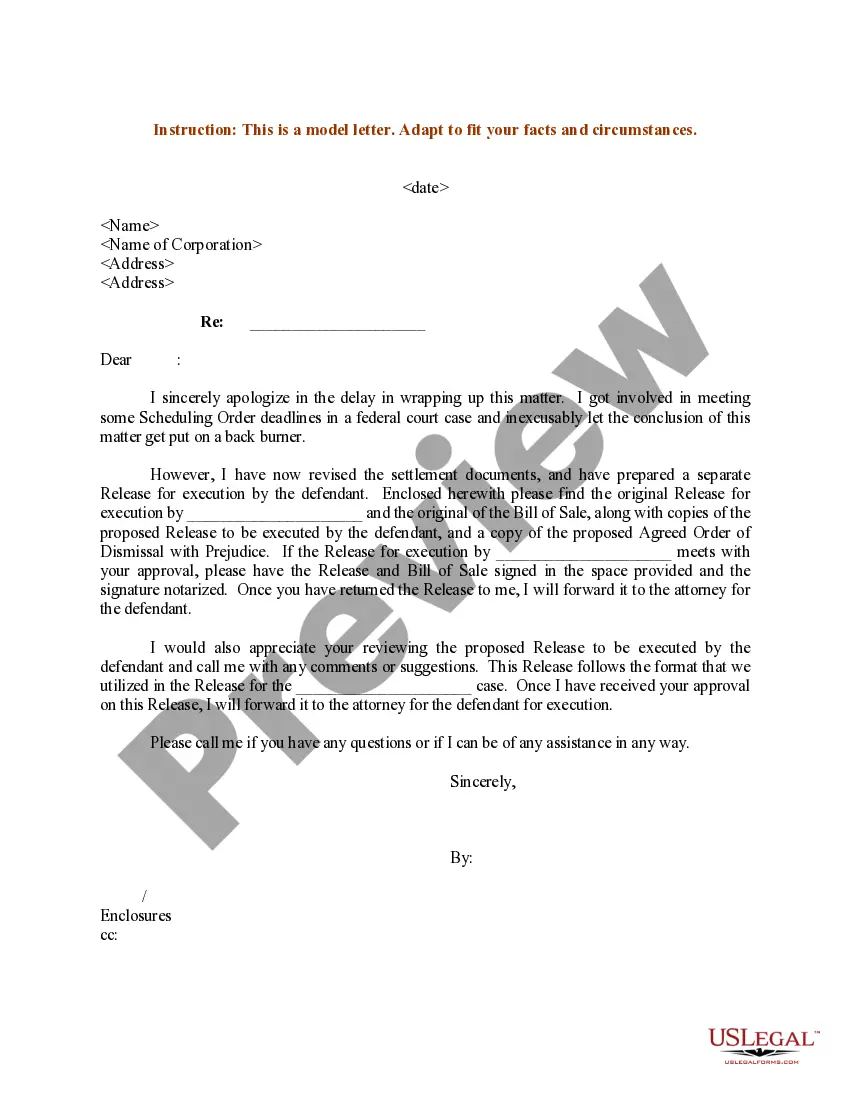
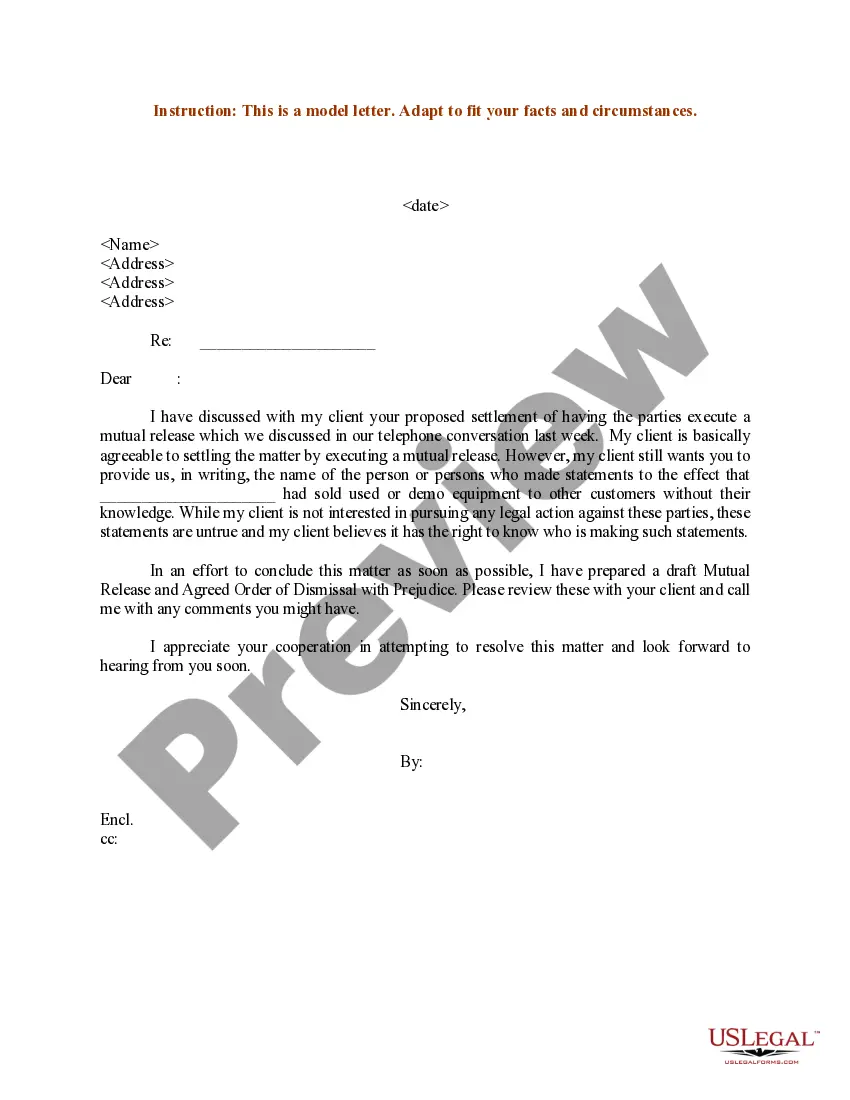
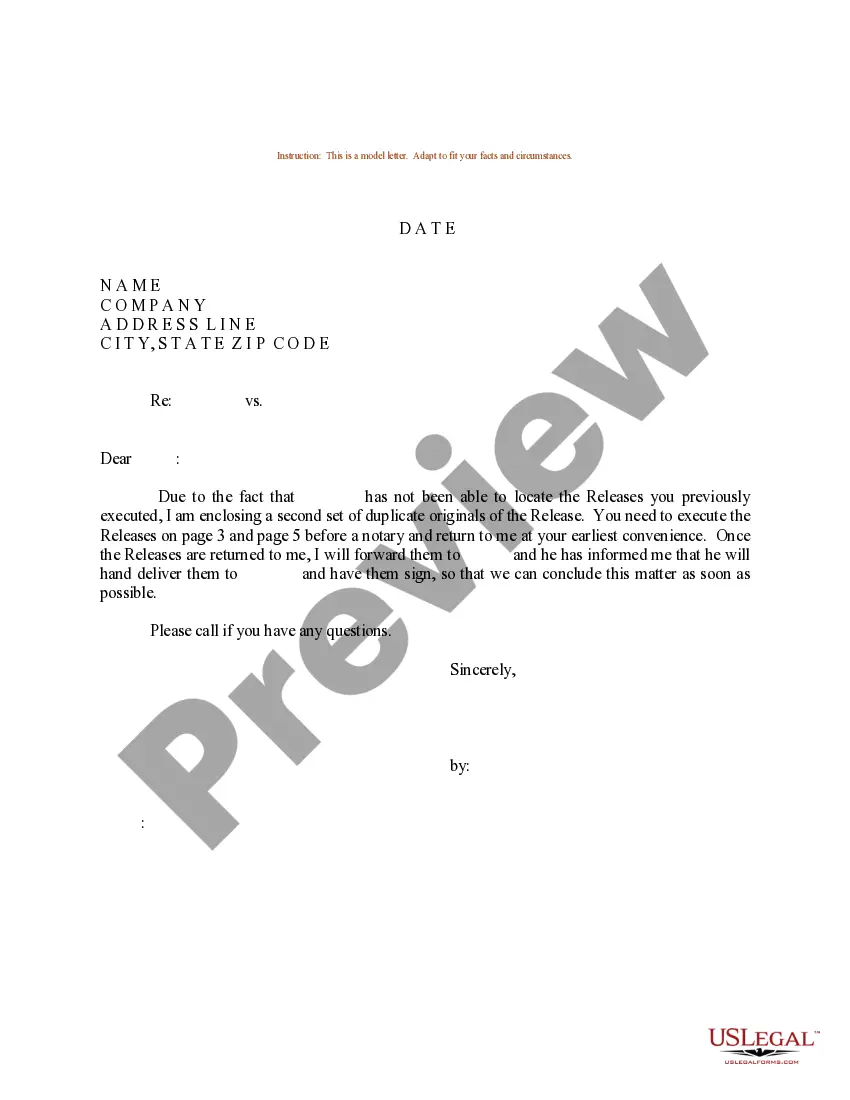
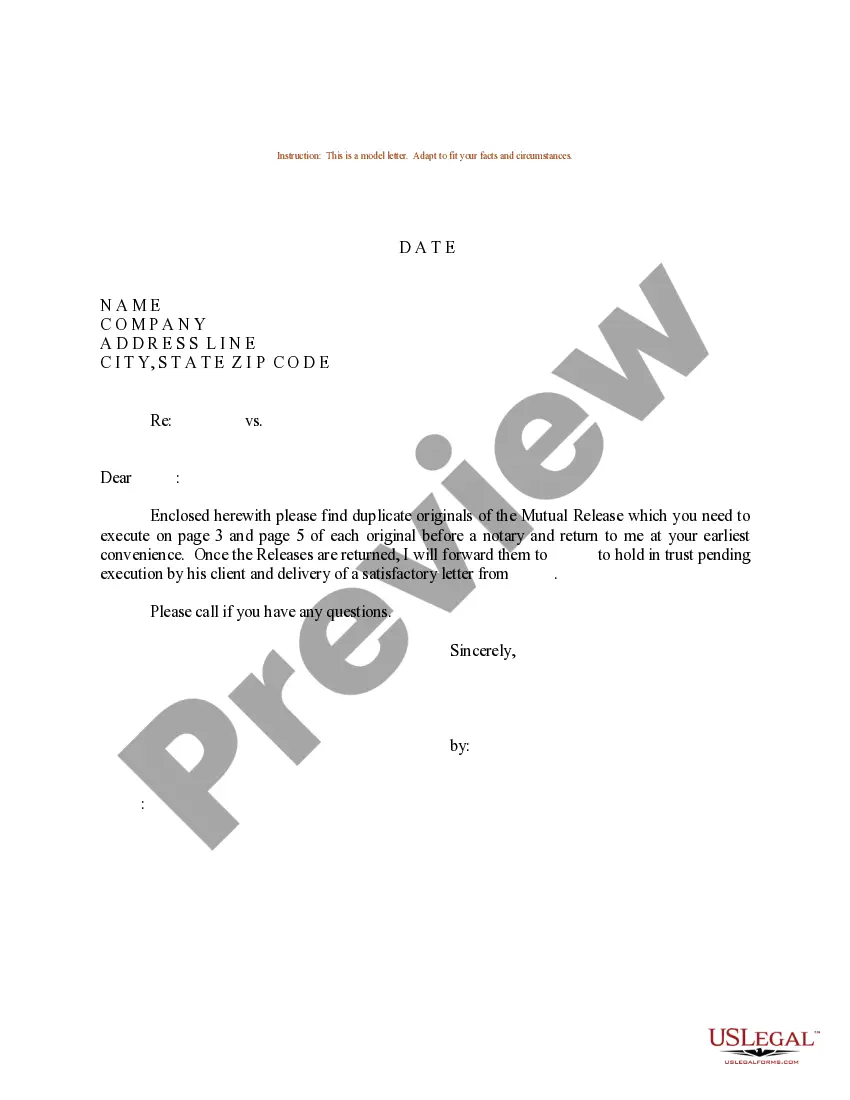
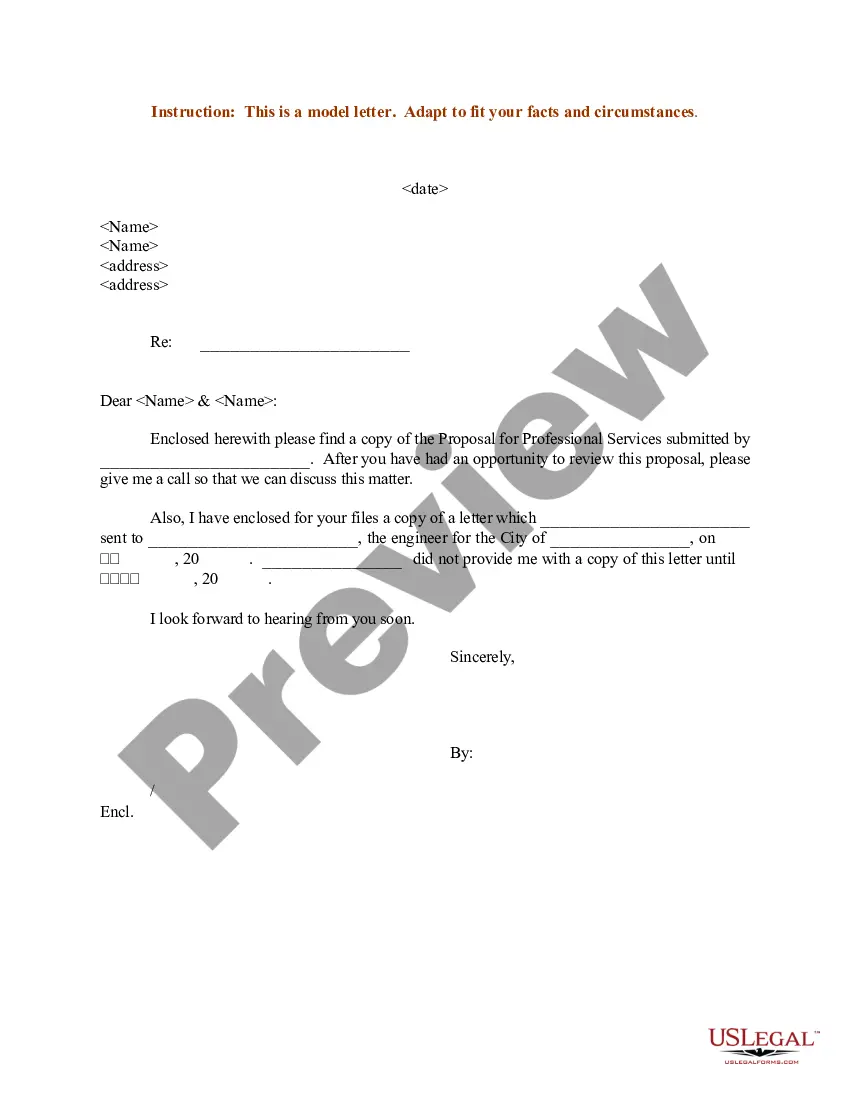
The Sample Letter for Proposed Release is a template designed to assist individuals or organizations in formally communicating the proposed terms of a release. This letter can be adapted to various scenarios, setting it apart from other forms of communication such as informal emails or verbal agreements. It serves as a clear outline of the release terms, ensuring all parties understand their rights and responsibilities before finalizing any agreements.
Key parts of this document
- Date of the letter
- Name of the individual or corporation sending the letter
- Address of the sender
- Introduction and context of the release
- Proposed terms of the release
- Signature line for the sender

Situations where this form applies
This letter is useful in situations where one party wishes to formally propose a release of liability or obligation to another party. Typical scenarios include negotiations following a dispute, finalizing a settlement, or clarifying terms after a contract conclusion. It helps in documenting intentions and can lead to a clear understanding between involved parties.
Who needs this form
Individuals and businesses who may find this form useful include:
- Business owners negotiating a release with clients or partners
- A legal representative drafting agreements for clients
- Individuals settling a dispute or liability claims
Instructions for completing this form
- Identify the date on which the letter is being written.
- Enter the name and address of the sender at the top of the letter.
- Clearly articulate the proposed terms of the release in the body of the letter.
- Include any necessary contact information for further discussion.
- Sign the letter to formalize the proposal.
Does this form need to be notarized?
This form does not typically require notarization to be legally valid. However, some jurisdictions or document types may still require it. US Legal Forms provides secure online notarization powered by Notarize, available 24/7 for added convenience.
Get your form ready online
Our built-in tools help you complete, sign, share, and store your documents in one place.
Make edits, fill in missing information, and update formatting in US Legal Forms—just like you would in MS Word.
Download a copy, print it, send it by email, or mail it via USPS—whatever works best for your next step.
Sign and collect signatures with our SignNow integration. Send to multiple recipients, set reminders, and more. Go Premium to unlock E-Sign.
If this form requires notarization, complete it online through a secure video call—no need to meet a notary in person or wait for an appointment.
We protect your documents and personal data by following strict security and privacy standards.

Make edits, fill in missing information, and update formatting in US Legal Forms—just like you would in MS Word.

Download a copy, print it, send it by email, or mail it via USPS—whatever works best for your next step.

Sign and collect signatures with our SignNow integration. Send to multiple recipients, set reminders, and more. Go Premium to unlock E-Sign.

If this form requires notarization, complete it online through a secure video call—no need to meet a notary in person or wait for an appointment.

We protect your documents and personal data by following strict security and privacy standards.
Common mistakes to avoid
- Failing to include necessary details about the parties involved.
- Leaving out specific terms of the release being proposed.
- Not providing a contact method or follow-up information.
Why complete this form online
- Convenient access to a professionally designed template.
- Editable Word format allows customization to fit specific needs.
- Reliable legal wording crafted by licensed attorneys.
Main things to remember
- The Sample Letter for Proposed Release helps clarify obligations between parties.
- Customizable to fit various scenarios across multiple states.
- Vital for formalizing communication regarding releases.
Looking for another form?


Form popularity
FAQ
Identify yourself by yourself as accurately as possible. Introduce the person or entity to whom you wish to grant authority. Mention their name, their ID number, and how they relate to you. Specify the scope of the authority, that is the allowed actions. Specify any exclusions if any.
The letter must clearly state the reason why the employee is being released. The letter must also state that all the official belongings that the employee has must be returned to the office.
The letter must clearly state the reason why the employee is being released. The letter must also state that all the official belongings that the employee has must be returned to the office.
Introduce yourself and provide background information. State your purpose for the proposal. Define your goals and objectives. Highlight what sets you apart. Briefly discuss the budget and how funds will be used. Finish with a call to action and request a follow-up. Close the letter and provide contact details.
Release letter is a formal letter that is issued to inform that the employee has been released from his/her duties. Release letter can be issued either if the employer gets dissatisfied with the employee services or when the expiry contract period happens.
To write an authorization letter to release information you need to know It's contents. The letter has to have the sender's name and address with state and zip code, as well as the recipients name and his address with state and zip code. A letter date is also required.
Notify the employee of their termination date. State the reason(s) for termination. Explain their compensation and benefits going forward. Notify them of any company property they must return. Remind them of signed agreements. Include HR contact information.