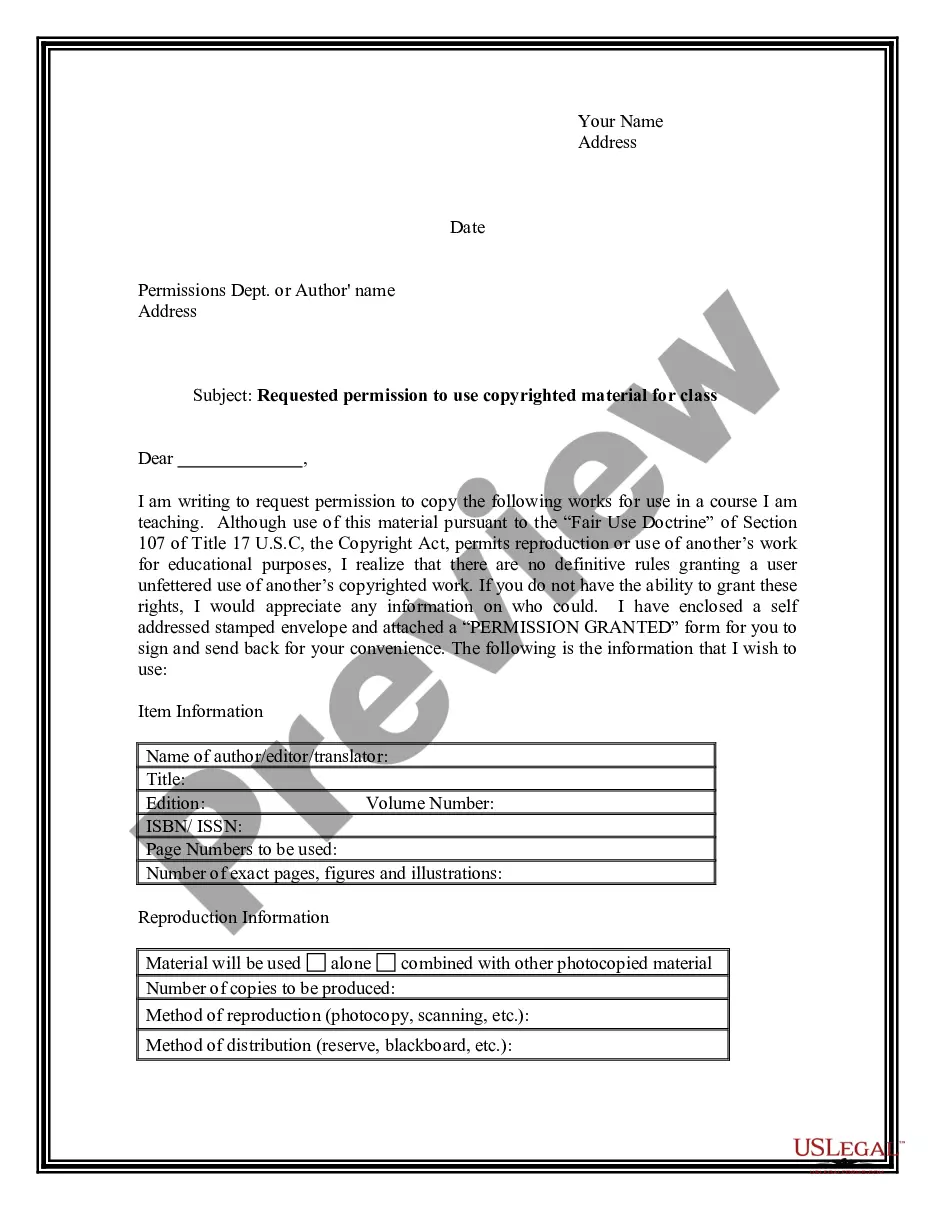
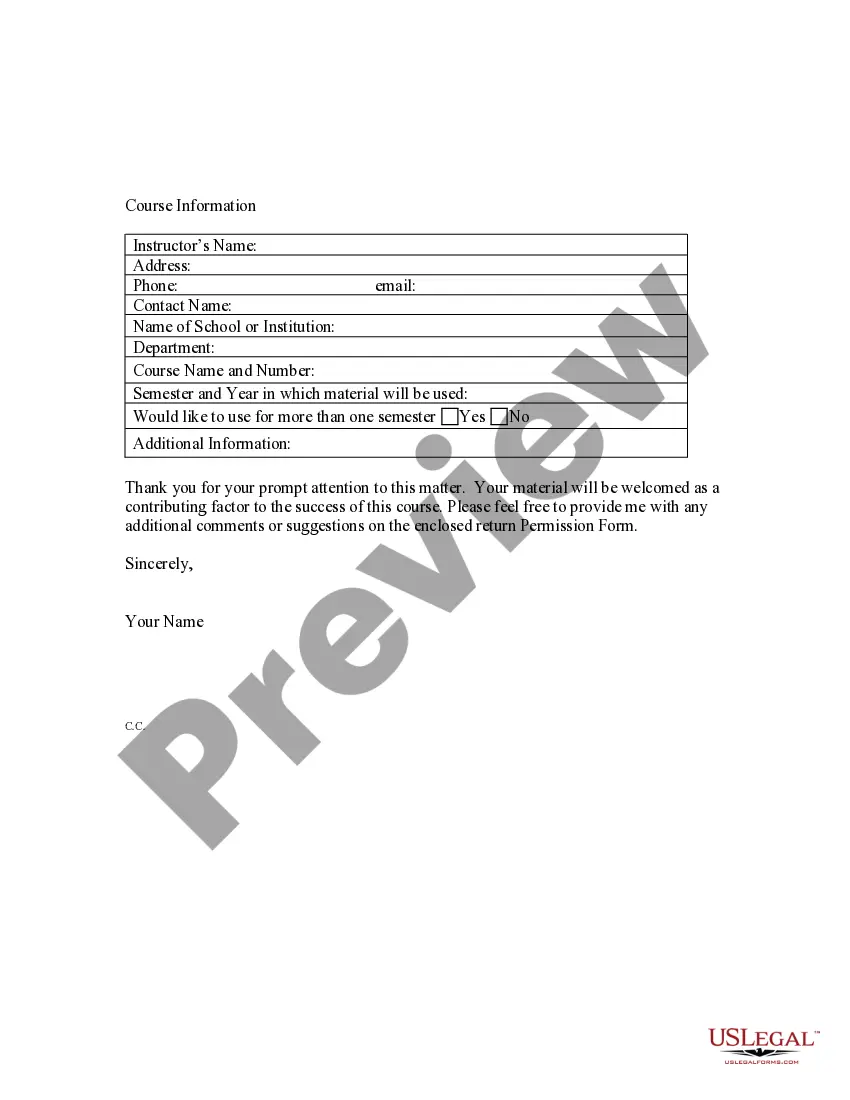
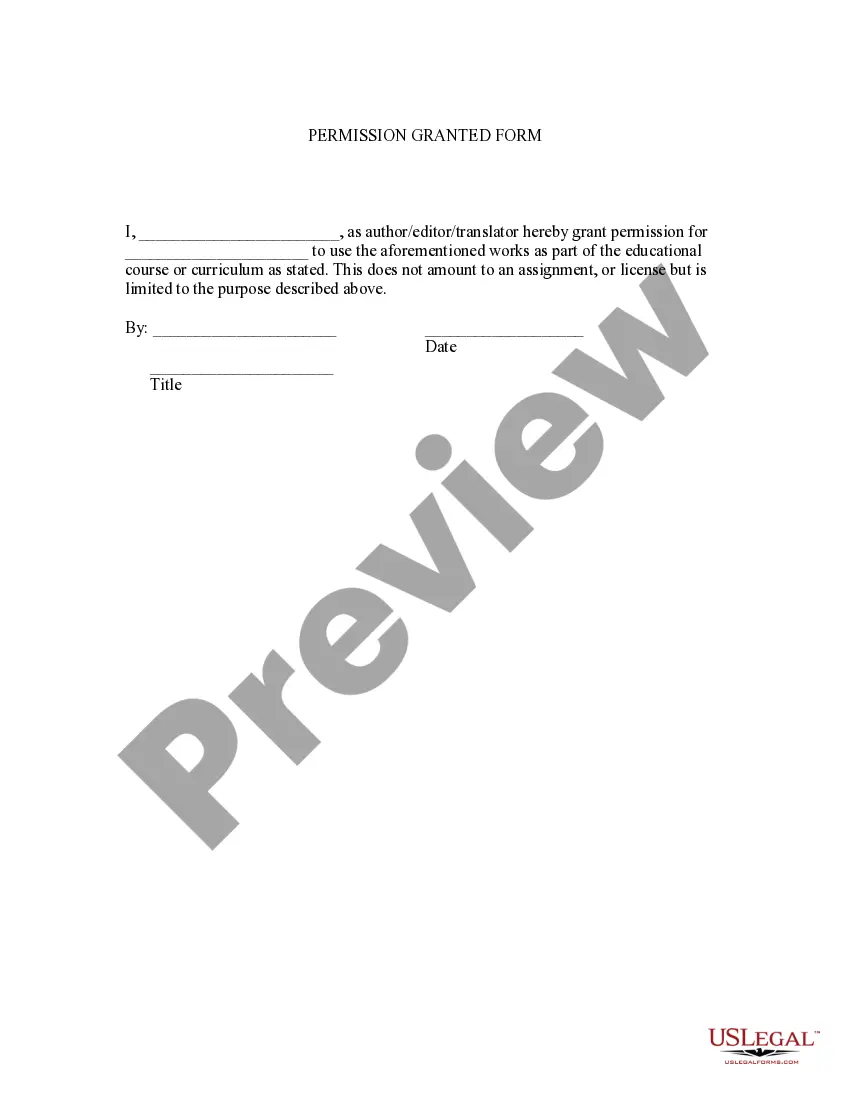
This is a permission request made by a teacher or professor requesting the right to use an author's material for a class or as part of a school curriculum. This form also includes an addendum for the author or editor to sign and send back to the teacher granting permission.
South Dakota Permission Request to Use Copyrighted Material For Class
State:
Multi-State
Control #:
US-PRM-04
Format:
Word;
Rich Text
Instant download
Description
Free preview
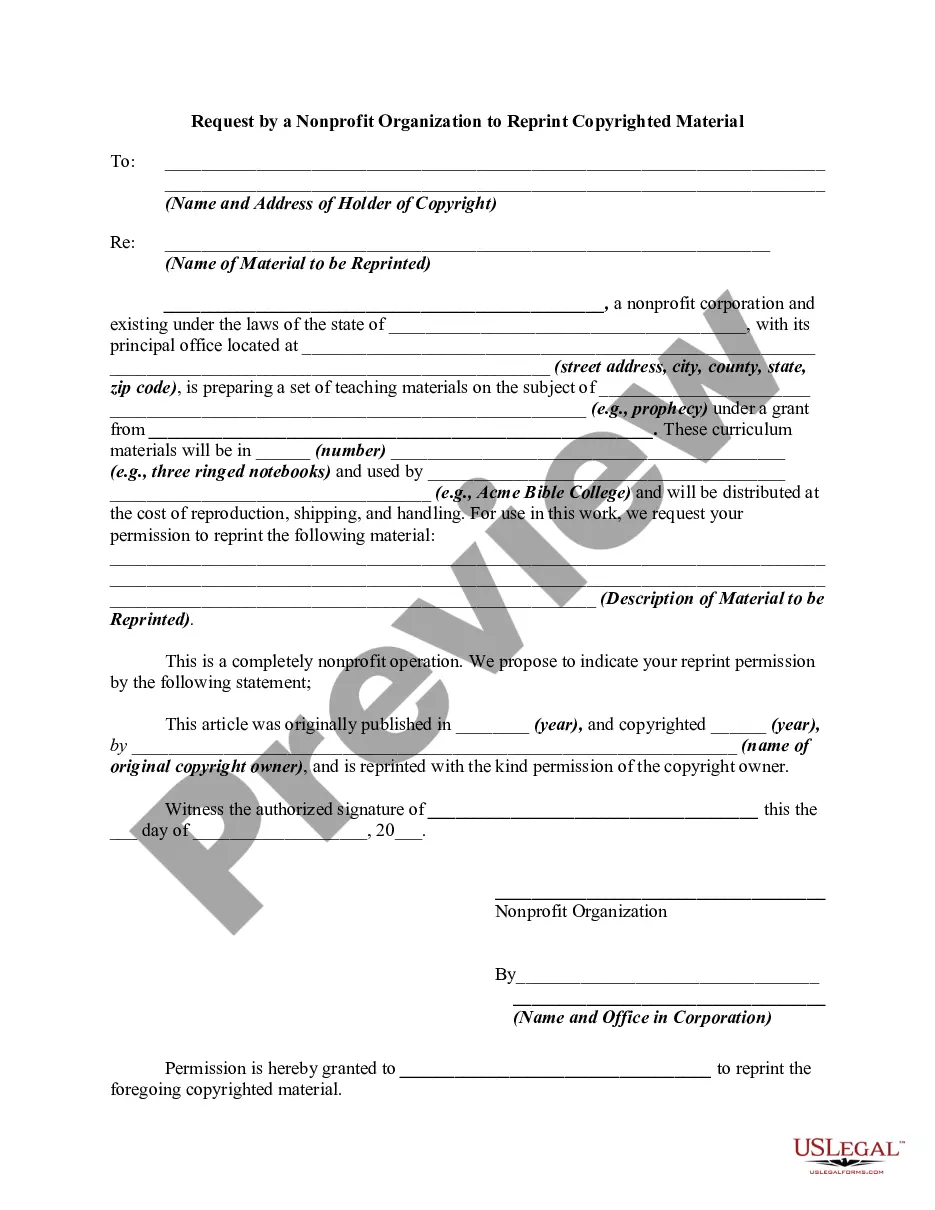
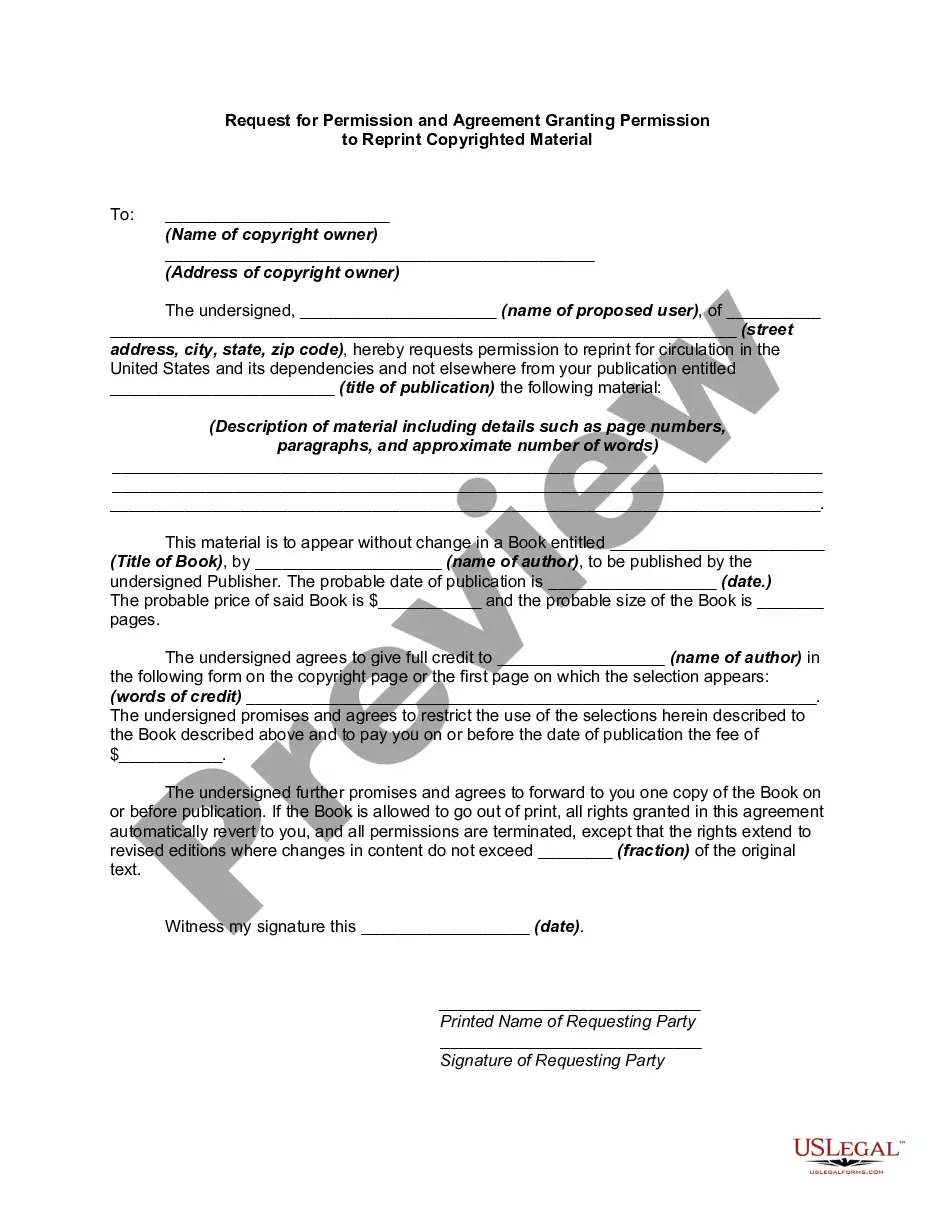
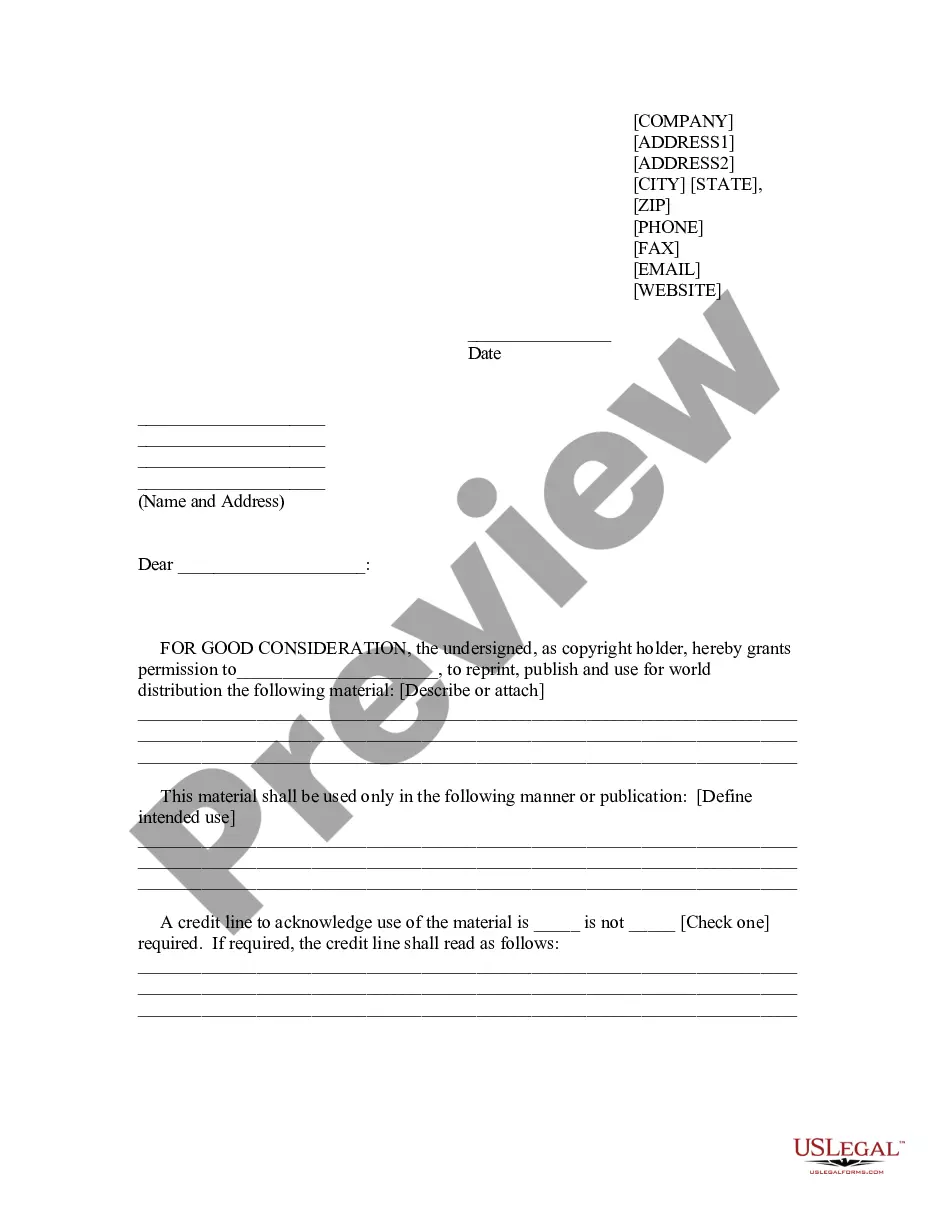

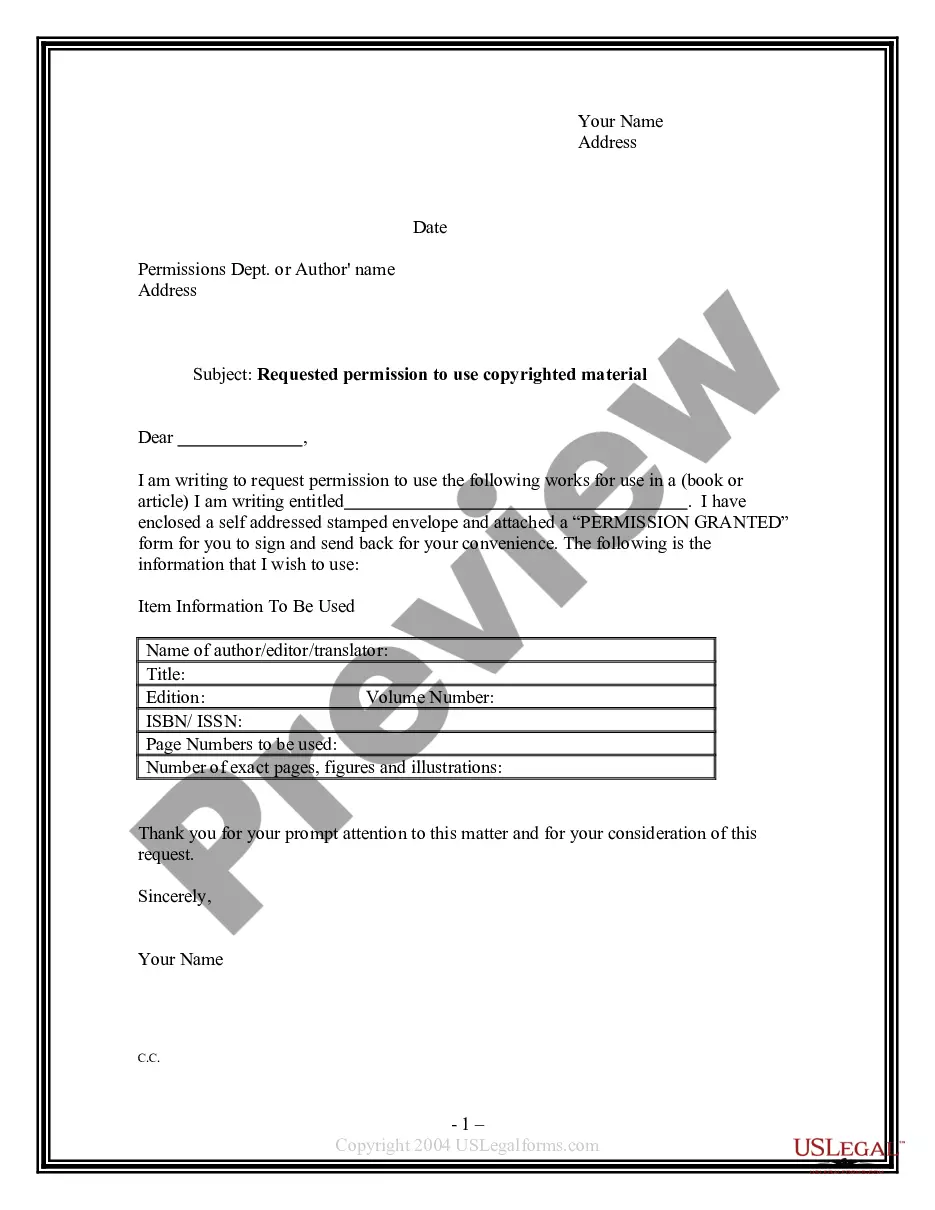
How to fill out Permission Request To Use Copyrighted Material For Class?
Finding the right authentic document template can be challenging. Of course, there is a plethora of templates available online, but how do you locate the authentic form you require? Utilize the US Legal Forms website. The service provides a vast selection of templates, including the South Dakota Permission Request to Use Copyrighted Material For Class, which can be utilized for business and personal purposes. All of the forms are reviewed by experts and comply with federal and state regulations.
If you are already registered, sign in to your account and click on the Obtain button to access the South Dakota Permission Request to Use Copyrighted Material For Class. Use your account to review the legal forms you may have acquired previously. Navigate to the My documents section of your account and retrieve an additional copy of the document you require.
If you are a new user of US Legal Forms, here are simple instructions for you to follow: First, ensure you have selected the correct form for your locality/region. You can browse the document using the Preview button and review the document details to confirm this is indeed the right one for you. If the form does not meet your requirements, use the Search box to find the appropriate form. Once you are confident that the form is suitable, click the Buy now button to obtain the form. Choose the pricing plan you desire and enter the necessary information. Create your account and complete your order using your PayPal account or credit card. Select the document format and download the legal document template to your device. Finally, complete, edit, print, and sign the received South Dakota Permission Request to Use Copyrighted Material For Class.
- US Legal Forms is the largest collection of legal forms you can access different document templates.
- Utilize the service to download professionally crafted paperwork that comply with state regulations.
- Ensure you have the correct form for your needs before proceeding.
- Take advantage of expert-reviewed templates for your legal requirements.
- Easily retrieve previously purchased forms from your account.
- Follow the straightforward steps to acquire and manage your legal documents.
Form popularity
FAQ
You can legally use copyrighted material in a school project by securing the appropriate permissions or licenses. A South Dakota Permission Request to Use Copyrighted Material For Class can help you navigate this process effectively. Additionally, consider using materials that fall under fair use or those that are in the public domain. US Legal Forms offers resources to help you understand these concepts and ensure compliance with copyright laws.
To obtain permission to use copyrighted material, you should first identify the copyright owner of the content you wish to use. Once identified, you can submit a South Dakota Permission Request to Use Copyrighted Material For Class, detailing how you plan to use the material. It is essential to include specific information such as the nature of your project and the duration for which you need the material. Utilizing platforms like US Legal Forms can simplify this process by providing you with the necessary templates and guidance.
The Basics of Getting PermissionDetermine if permission is needed.Identify the owner.Identify the rights needed.Contact the owner and negotiate whether payment is required.Get your permission agreement in writing.
Guidelines. Fair use explicitly allows use of copyrighted materials for educational purposes such as criticism, comment, news reporting, teaching, scholarship, and research.
(address) (date) Copyright Permissions Department: I am writing to request permission to (photocopy, scan, post to Blackboard, put on library reserve, put on electronic reserve, include in a course pack, whatever, but be specific) the following material to which, I believe, you hold the copyright.
Although many uses of works may be free, you should usually expect to pay somethingeven a minimal feefor copyright permission, said Stanford University Libraries. For instance, using a stock image can cost as little as $5; but, a song license may be a few thousand dollars.
The Copyright Office cannot grant permission to use copyrighted works. In many situations, securing permission is the most certain way to ensure an intended use is not an infringement of the copyright owner's rights.
How much of someone else's work can I use without getting permission? Under the fair use doctrine of the U.S. copyright statute, it is permissible to use limited portions of a work including quotes, for purposes such as commentary, criticism, news reporting, and scholarly reports.
Fair use allows limited use of copyrighted material without permission from the copyright holder for purposes such as criticism, parody, news reporting, research and scholarship, and teaching. There are four factors to consider when determining whether your use is a fair one.
Although many uses of works may be free, you should usually expect to pay somethingeven a minimal feefor copyright permission, said Stanford University Libraries. For instance, using a stock image can cost as little as $5; but, a song license may be a few thousand dollars.