Project Cost Aggregate
About this form
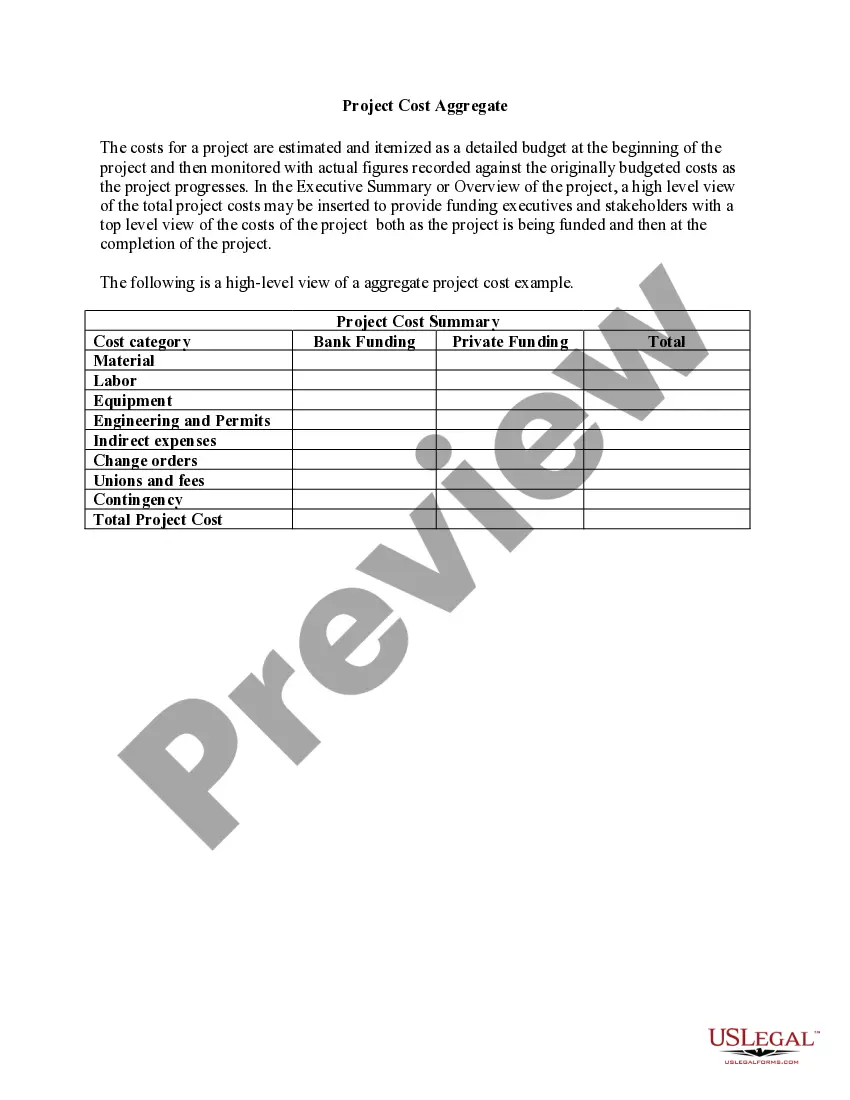
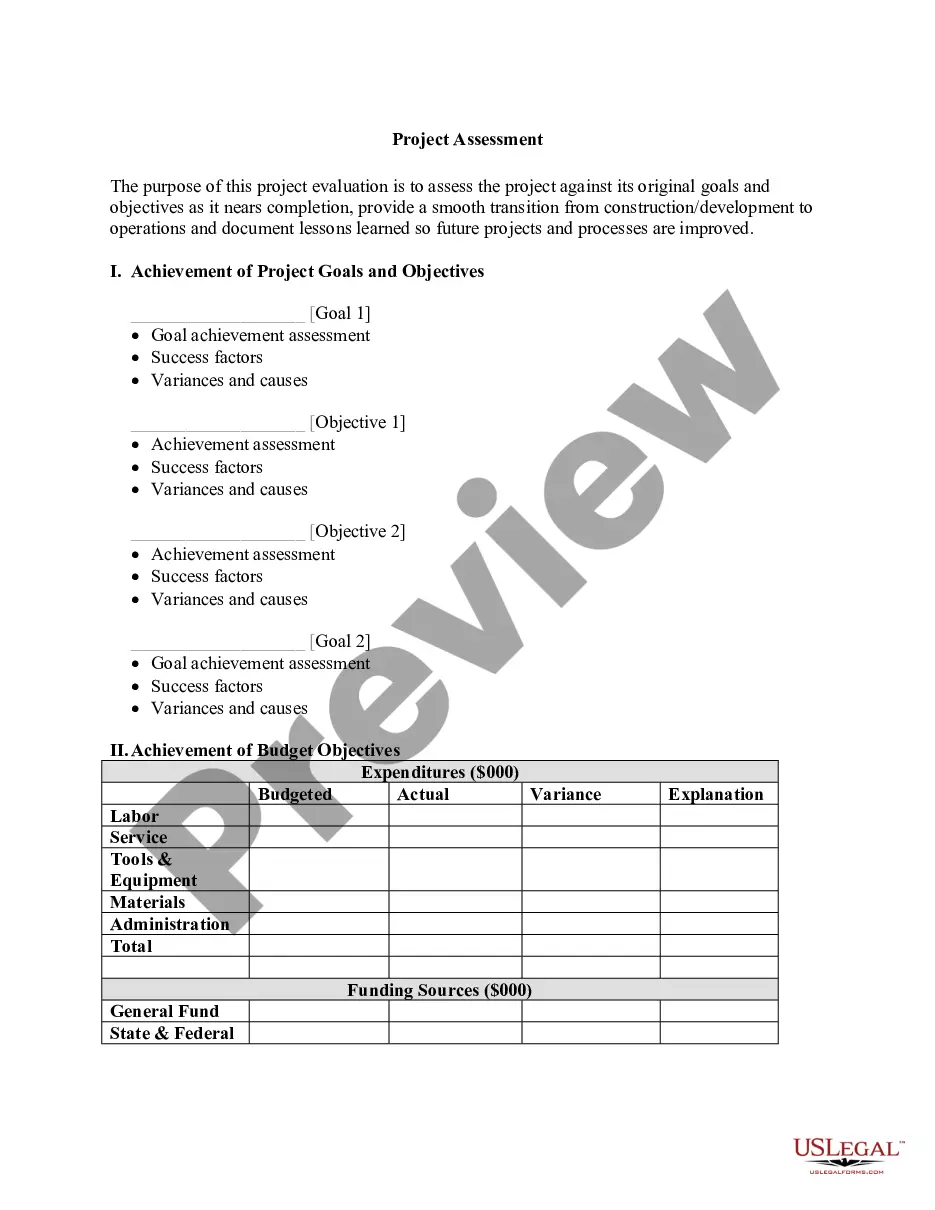
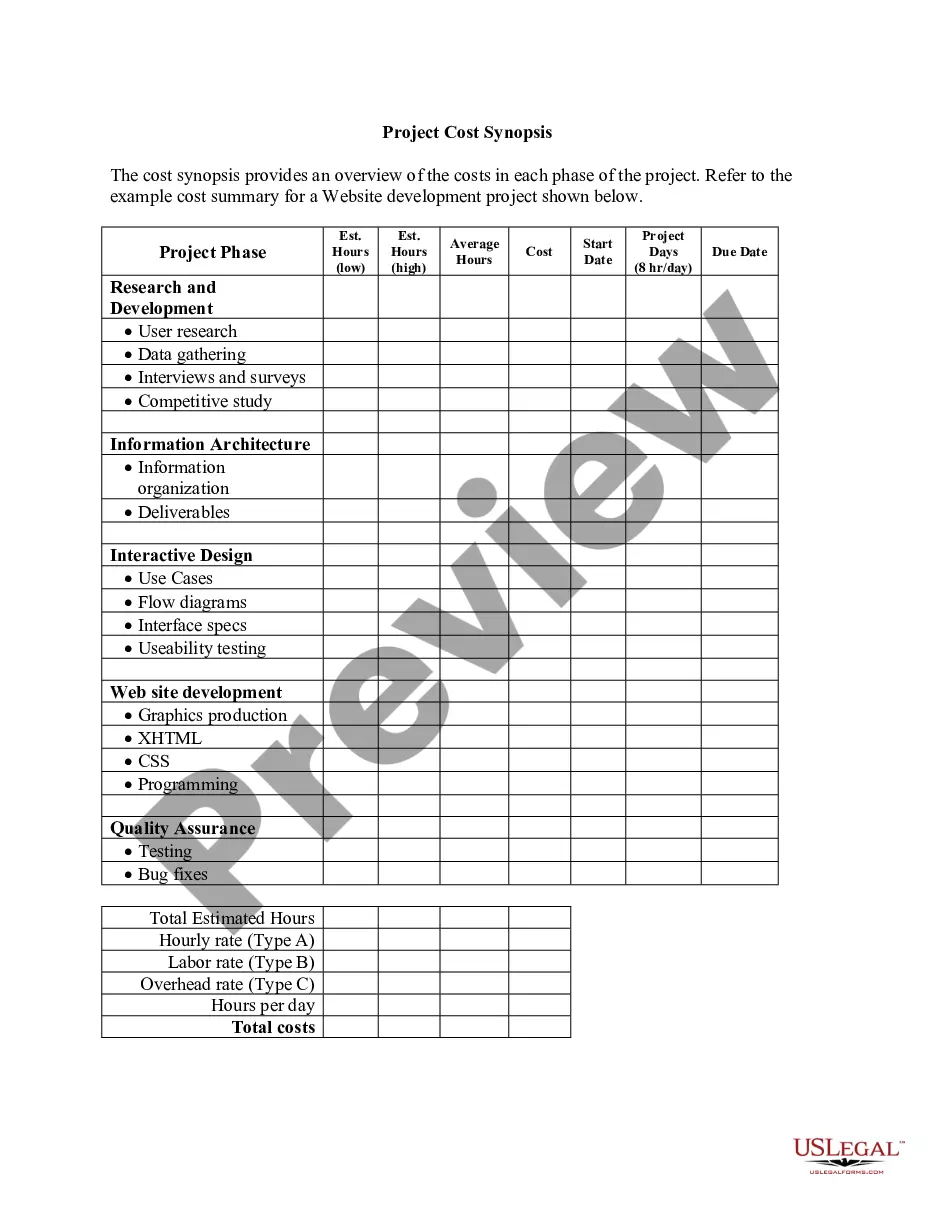
The Project Cost Aggregate form is a comprehensive document that helps project managers estimate, itemize, and monitor the costs associated with a project. This form serves as a detailed budget at the start of the project and tracks actual expenditures against the initial budget as the work progresses. Unlike simpler budget forms, the Project Cost Aggregate includes categories for funding sources and potential contingencies, providing a high-level overview that is particularly useful for stakeholders and funding executives.
Main sections of this form
- Cost categories including materials, labor, equipment, and engineering permits.
- Funding sources breakdown between bank funding and private funding.
- Monitoring section for actual costs versus budgeted costs.
- Contingency planning to account for unforeseen expenses.
- Overall project cost summary, ensuring transparent reporting.
Situations where this form applies
This form is essential when initiating a project that requires comprehensive cost planning. Use it when you need to present a detailed budget to stakeholders, track expenses throughout the project, or prepare for funding applications. The Project Cost Aggregate is particularly critical in construction, engineering projects, or any initiative where accurate financial reporting is necessary.
Who this form is for
This form is intended for:
- Project managers responsible for overseeing budgets.
- Financial planners and analysts involved in project funding.
- Contractors and subcontractors who need to itemize project costs.
- Stakeholders who require a clear understanding of project expenses.
How to prepare this document
- Identify all cost categories relevant to your project, such as materials, labor, and equipment.
- Estimate the budget for each category and enter these figures in the designated fields.
- Monitor actual costs by recording expenses as they occur during the project.
- Calculate total project costs by summing all individual categories.
- Include a contingency plan for unexpected costs and track change orders if applicable.
Is notarization required?
In most cases, this form does not require notarization. However, some jurisdictions or signing circumstances might. US Legal Forms offers online notarization powered by Notarize, accessible 24/7 for a quick, remote process.
Get your form ready online
Our built-in tools help you complete, sign, share, and store your documents in one place.
Make edits, fill in missing information, and update formatting in US Legal Forms—just like you would in MS Word.
Download a copy, print it, send it by email, or mail it via USPS—whatever works best for your next step.
Sign and collect signatures with our SignNow integration. Send to multiple recipients, set reminders, and more. Go Premium to unlock E-Sign.
If this form requires notarization, complete it online through a secure video call—no need to meet a notary in person or wait for an appointment.
We protect your documents and personal data by following strict security and privacy standards.

Make edits, fill in missing information, and update formatting in US Legal Forms—just like you would in MS Word.

Download a copy, print it, send it by email, or mail it via USPS—whatever works best for your next step.

Sign and collect signatures with our SignNow integration. Send to multiple recipients, set reminders, and more. Go Premium to unlock E-Sign.

If this form requires notarization, complete it online through a secure video call—no need to meet a notary in person or wait for an appointment.

We protect your documents and personal data by following strict security and privacy standards.
Mistakes to watch out for
- Underestimating costs in initial budgeting, leading to financial shortfalls.
- Failing to update actual costs periodically, which can skew project status reports.
- Neglecting to account for contingencies and change orders in the budget.
Benefits of completing this form online
- Convenient access to download and store the form as needed.
- Editability allows for easy updates to budget figures as the project progresses.
- Reliability ensured through forms drafted by licensed attorneys tailored to meet legal standards.
Quick recap
- The Project Cost Aggregate form is crucial for accurate budget management in projects.
- Suitable for a variety of stakeholders, ensuring transparency and accountability.
- Monitoring actual costs against projected expenses is essential for financial health.
Legal terms and meanings
- Contingency: A reserve fund set aside for unexpected costs that may arise during a project.
- Change orders: Amendments to the original project scope that may affect costs.
- Itemized budget: A detailed financial plan that breaks down all project costs into specific categories.
Looking for another form?

Form popularity
FAQ
: the whole sum or amount : sum total.
How to create a basic project budget in five easy steps Break down your project into tasks and milestones.Estimate each item in the task list.Add your estimates together.Add contingency and taxes.Get approval.
Aggregation is an accurate method of getting all the positions or assets owned by an investor or a firm. It offers a convenient way of identifying items in a group. Aggregation facilitates a proper analysis, whether Financial Analysis or data analysis.
Aggregate cost refers to the total amount of money required to create a product, provide a service or implement a project. Aggregate cost is sometimes also referred to as "total cost" because it encompasses all costs associated with the totality of a project or production.
The aggregates is a budgetary term used to describe the total amount of spending and revenue of the Federal Government. It may refer to the actual amounts having already occurred, or more typically, those that are projected to occur in the future.
What Is the Aggregate Level Cost Method? The aggregate level cost method refers to an actuarial accounting method that tries to match and allocate the cost and benefit of a pension plan over the span of the plan's life.
Ans. Aggregate scores are calculated by finding the sum of all those subjects whose marks have to be considered, and then dividing the sum by total marks. The final result is then multiplied with 100, which gives the aggregate percentage.
How are aggregate scores calculated? Ans. Aggregate scores are calculated by finding the sum of all those subjects whose marks have to be considered, and then dividing the sum by total marks. The final result is then multiplied with 100, which gives the aggregate percentage.