North Carolina Insulation Contractor Package
Understanding this form package
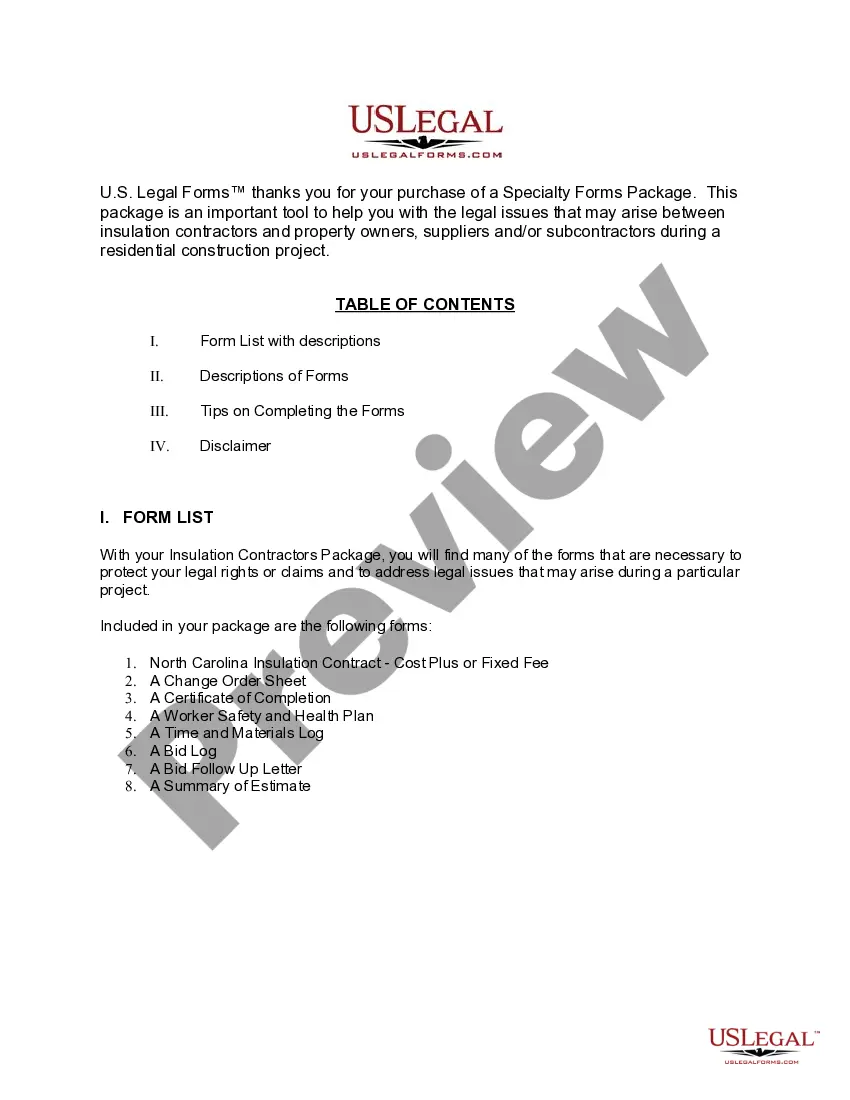
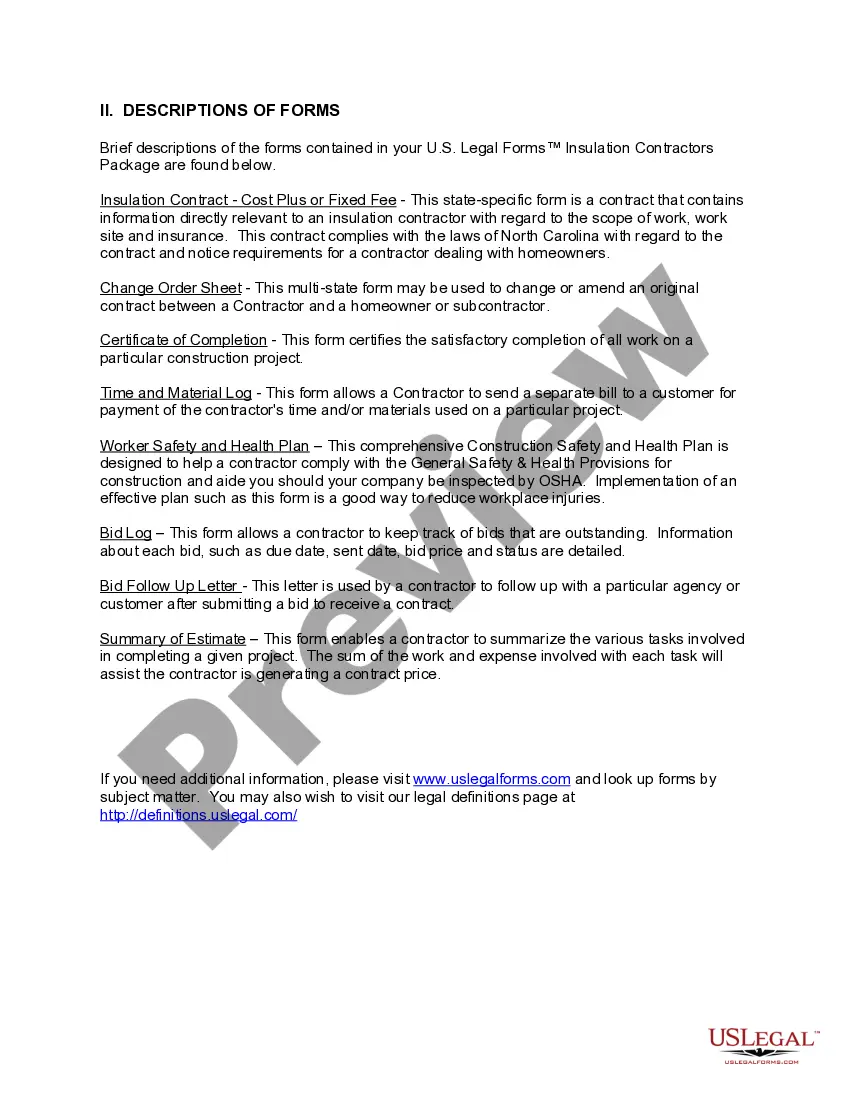
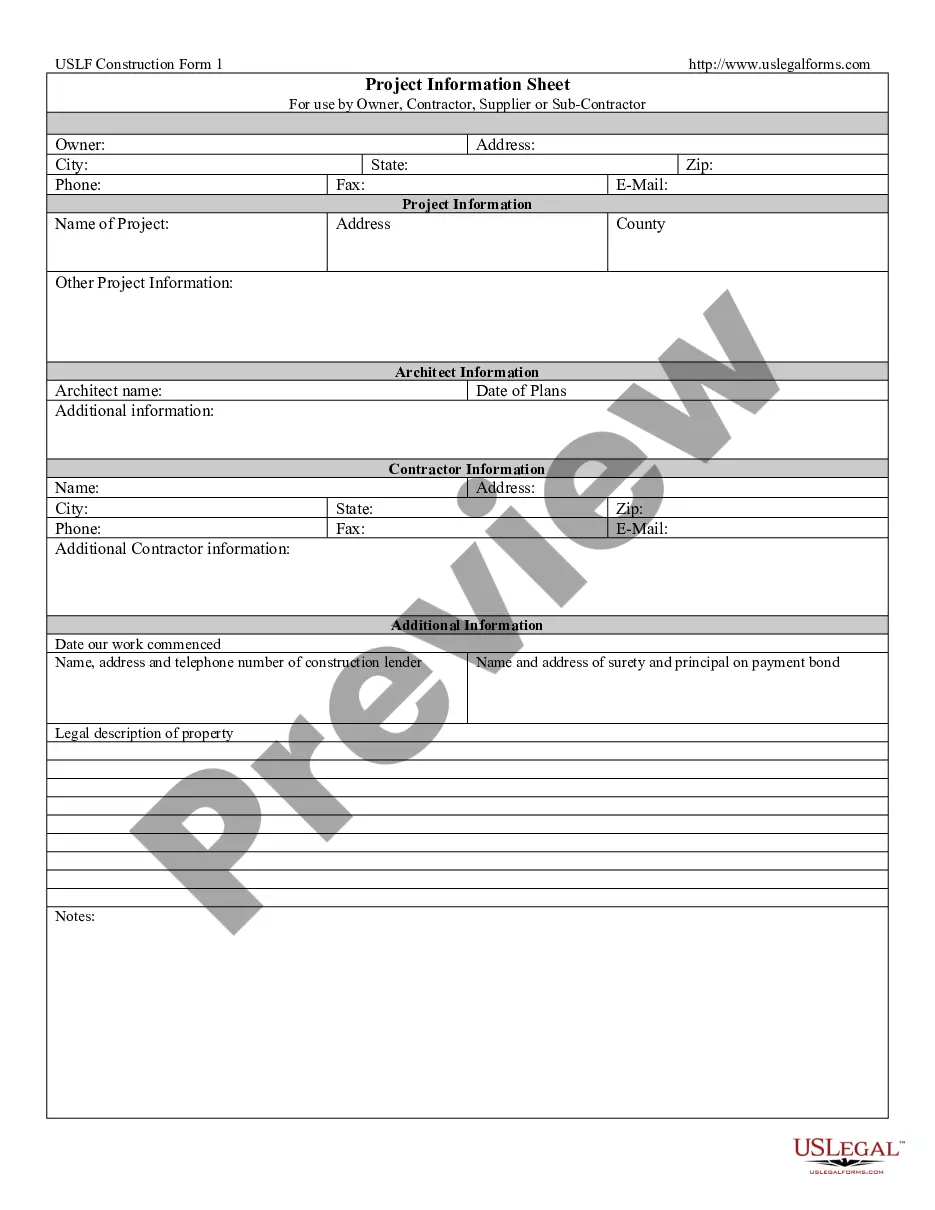
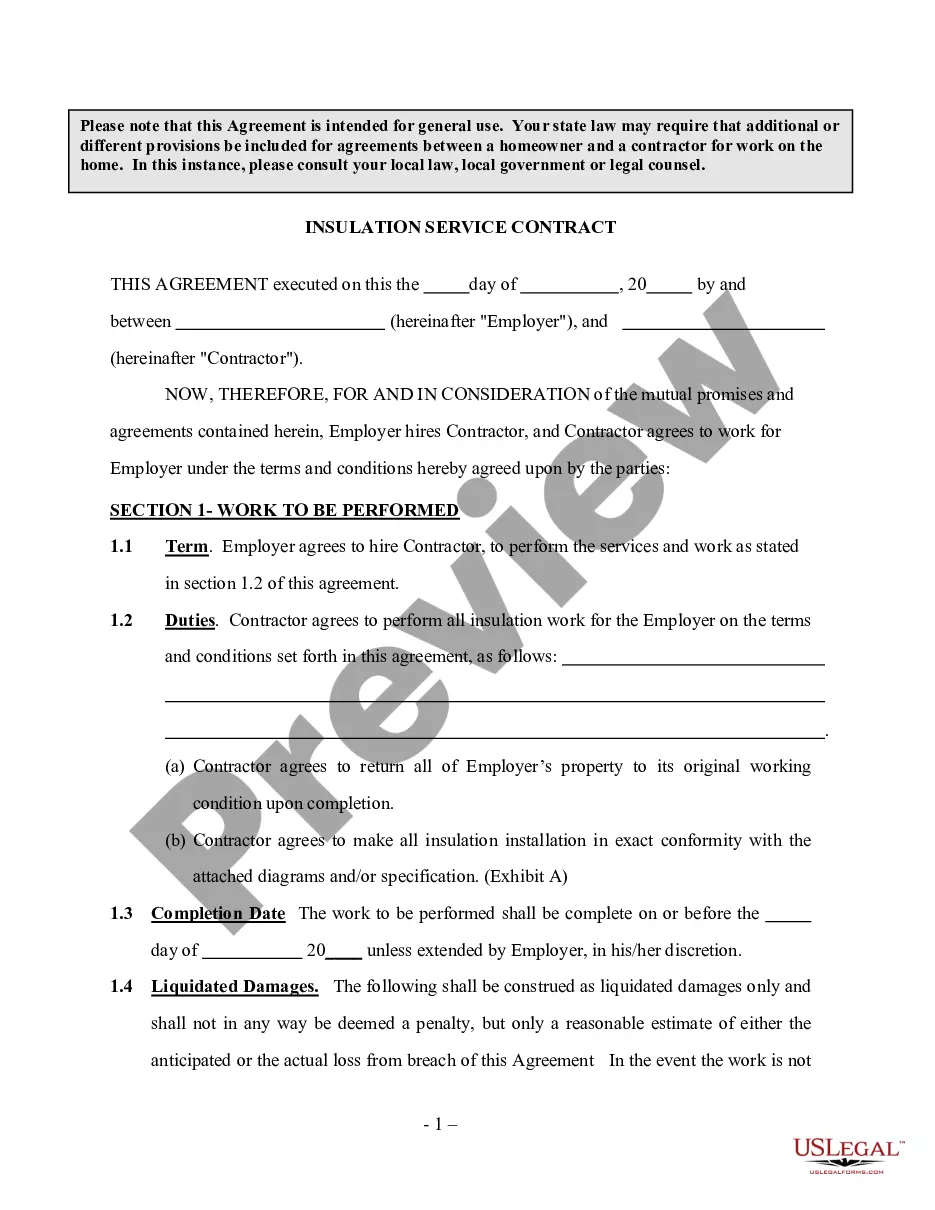
The North Carolina Insulation Contractor Package provides essential legal documents tailored for insulation contractors and their associated parties. This package includes a comprehensive insulation contract that meets state regulatory requirements, ensuring that contractors, owners, suppliers, and subcontractors have the necessary tools to protect their legal rights and address critical project issues. Unlike general contractor packages, this form package is specifically designed to cater to the unique needs of insulation installation projects in North Carolina.
Forms you’ll find in this package
When to use this document
This form package is useful in various situations, including:
- When entering into agreements for insulation services with homeowners or developers.
- When making amendments to existing contracts through change orders.
- When completing and certifying the satisfactory installation of insulation materials.
- When tracking project estimates, bids, and worker health and safety protocols.
Who needs this form package
- Insulation contractors who need to formalize contracts and agreements.
- Homeowners acting as project managers for insulation installations.
- Suppliers and subcontractors involved in insulation projects.
- Anyone seeking to ensure compliance with North Carolina state regulations regarding insulation work.
Steps to complete these forms
- Review the included forms thoroughly.
- Identify the parties involved in the contract.
- Enter pertinent dates and details relevant to the insulation project.
- Fill in amounts, terms, and conditions as specified in the forms.
- Sign and date the contracts where necessary.
- Keep copies of all completed forms for your records.
Do forms in this package need to be notarized?
Forms in this package typically do not require notarization. However, certain states or document types may still need it. US Legal Forms provides online notarization powered by Notarize, available 24/7 for your convenience.
Get your form ready online
Our built-in tools help you complete, sign, share, and store your documents in one place.
Make edits, fill in missing information, and update formatting in US Legal Forms—just like you would in MS Word.
Download a copy, print it, send it by email, or mail it via USPS—whatever works best for your next step.
Sign and collect signatures with our SignNow integration. Send to multiple recipients, set reminders, and more. Go Premium to unlock E-Sign.
If this form requires notarization, complete it online through a secure video call—no need to meet a notary in person or wait for an appointment.
We protect your documents and personal data by following strict security and privacy standards.

Make edits, fill in missing information, and update formatting in US Legal Forms—just like you would in MS Word.

Download a copy, print it, send it by email, or mail it via USPS—whatever works best for your next step.

Sign and collect signatures with our SignNow integration. Send to multiple recipients, set reminders, and more. Go Premium to unlock E-Sign.

If this form requires notarization, complete it online through a secure video call—no need to meet a notary in person or wait for an appointment.

We protect your documents and personal data by following strict security and privacy standards.
Typical mistakes to avoid
- Failing to specify the scope of work in the insulation contract.
- Neglecting to document change orders properly.
- Not signing the Certificate of Completion after project finalization.
- Omitting important details in the Time and Material Log.
Advantages of online completion
- Convenience of downloading forms immediately, without waiting for shipment.
- Editability of forms, allowing customization to fit individual project needs.
- Reliable documents drafted by licensed attorneys, ensuring quality and legal compliance.
Legal use & context
- These forms provide a framework for legally binding agreements related to insulation work.
- Using these forms helps to mitigate disputes by clearly defining roles, responsibilities, and expectations.
- Always ensure that the forms are properly completed and executed to maintain their enforceability.
What to keep in mind
- The North Carolina Insulation Contractor Package is essential for managing insulation projects legally and effectively.
- Forms in this package cater to various needs, from contracts to safety plans.
- Using these legal documents helps to safeguard your rights and clarify responsibilities among parties involved.
Looking for another form?

Form popularity
FAQ
The effectiveness of insulation is rated by R-values. The higher the R-value, the greater the material's ability to insulate. Each inch of fiberglass blanket insulation, for example, provides an R-value of about 3.27. Loose-fill insulation can vary from about 2.2 to 4.0, depending on how effectively it is installed.
An insulation contractor is a type of contractor who is specialized in installing thermal insulation. These are contractors who work on residential, commercial, or industrial projects and coordinate with heating, plumbing, and mechanical construction workers.
In actuality the North Carolina construction license exam is more difficult to pass than similar closed book exams due to the fact that you have books available as a resource during the contractor exam. You are permitted to bring certain reference materials into the builder test.
The parts of the home to insulate take these basic facts into consideration. Heat rises to the ceiling. Because a large volume of indoor heat is lost through the ceiling, the attic floor above is considered the most important area in the house to insulate for winter comfort and efficiency.
R-Value is a measure of insulation's ability to resist heat flow. The higher the R-Value, the better the thermal performance of the insulation. The recommended level for most attics is to insulate to R-38 or about 10 to 14 inches, depending on insulation type.
Are you a licensed installer? Can I speak with your references? What warranty or guarantee do you provide for your insulation? What personal protective equipment do you require for your workers? Do you carry liability insurance and workers comp insurance? What type of insulation products do you offer?
Generally, insulators charge about $50 to $80 per hour. To help you calculate the cost of insulation, consider the size of the installation, the shape of the ceiling and additional services incurred. For accurate pricing, have a professional insulation installer take measurements and provide cost estimates.
For example, if the square footage of the room you're planning on insulating is 1,000 square feet and you want to achieve an R-value of 60, you will need approximately 17 bags to fully insulate your room.
To determine the amount of insulation needed, start by measuring the height and length of each of your room walls. Multiply the wall's length by the wall's height and don't forget to write down the spacing of the studs so you can then determine what type of the insulation will be purchased.