Mississippi Response to Motion for Summary Judgment
What is this form?
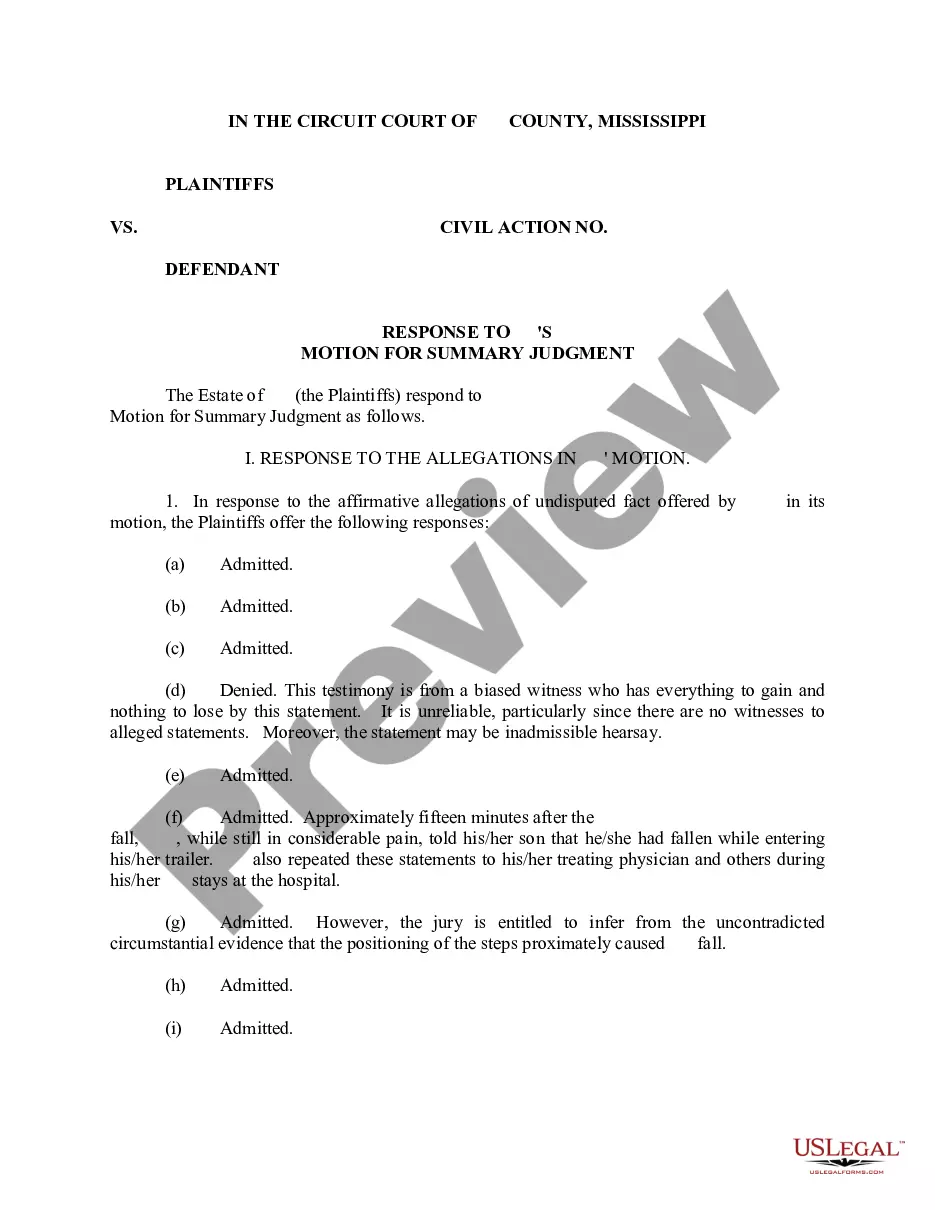
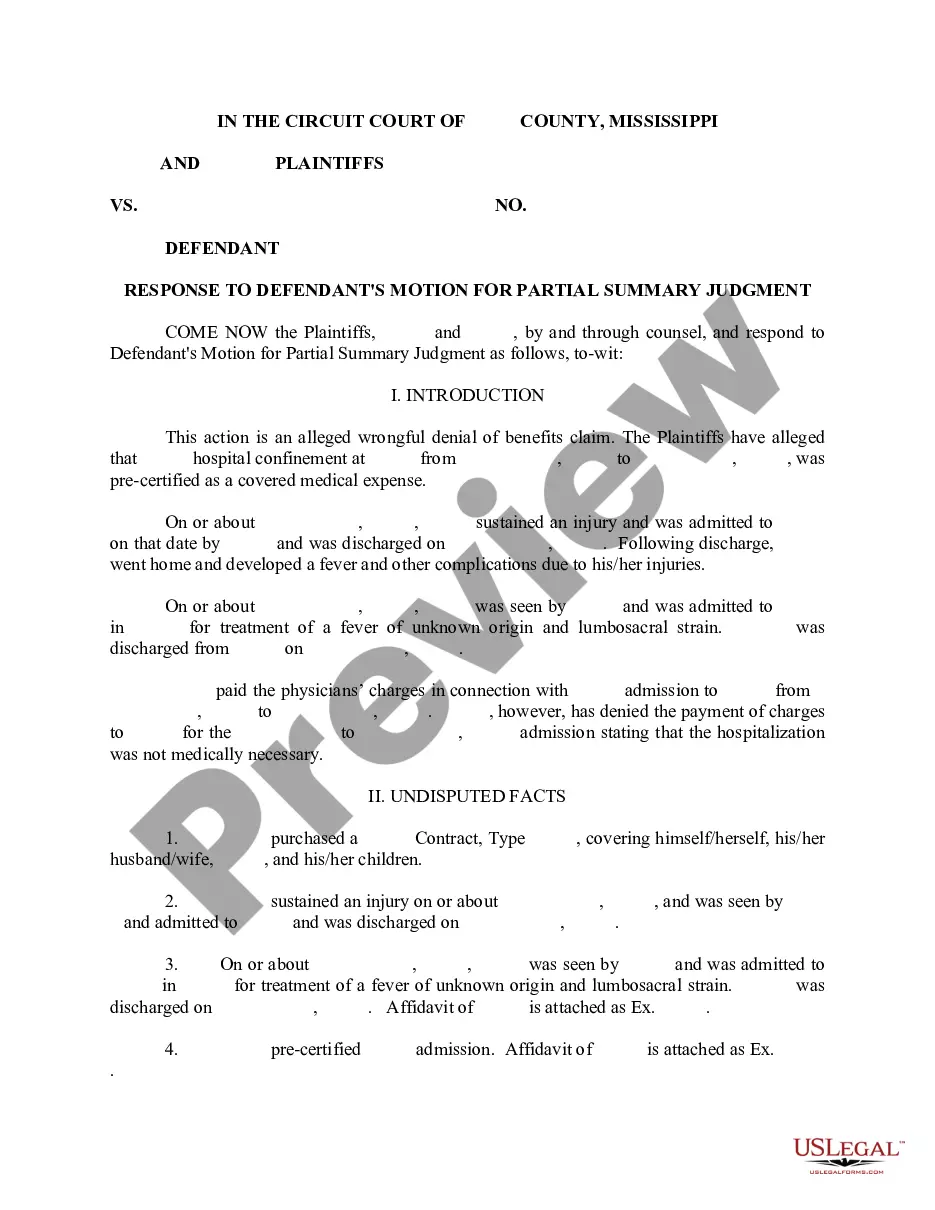
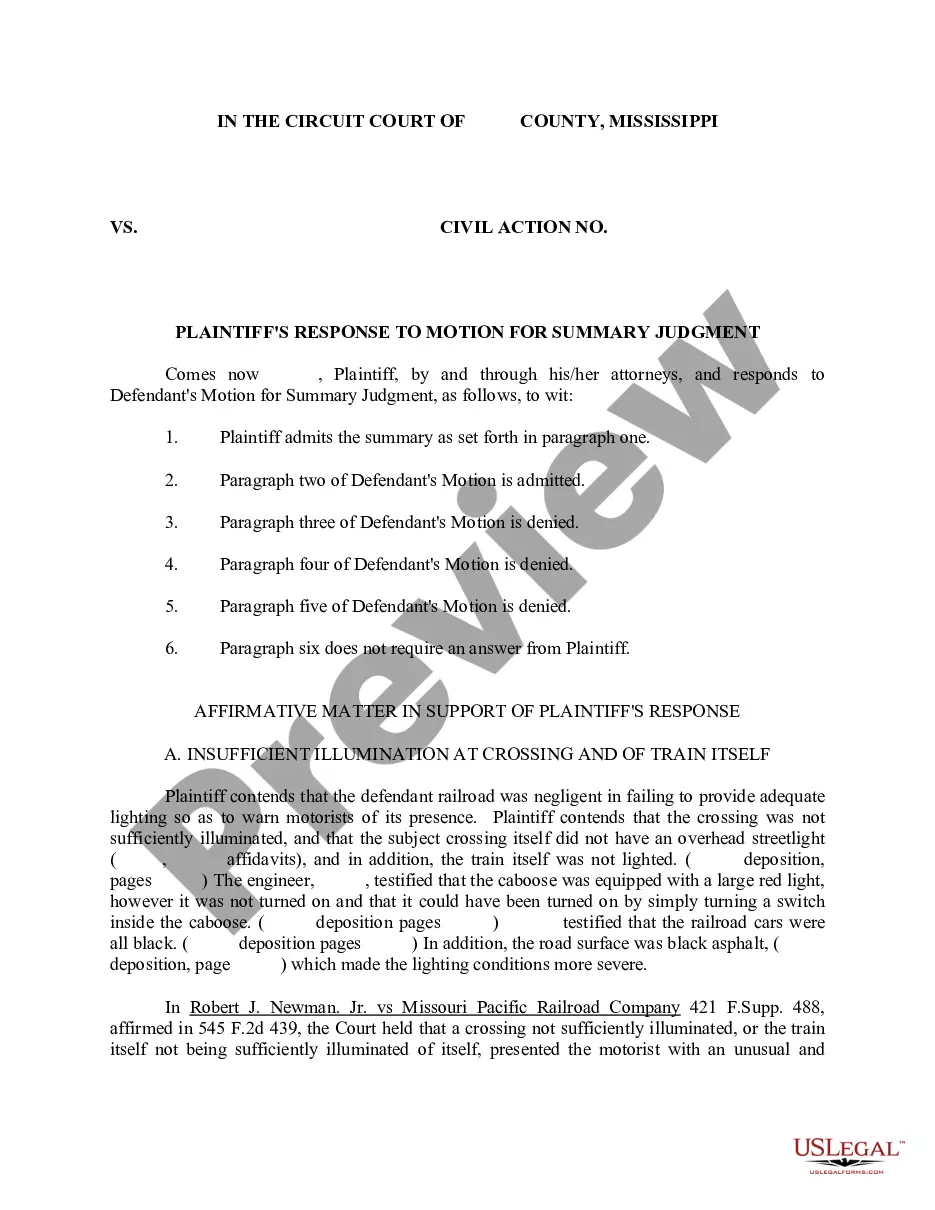
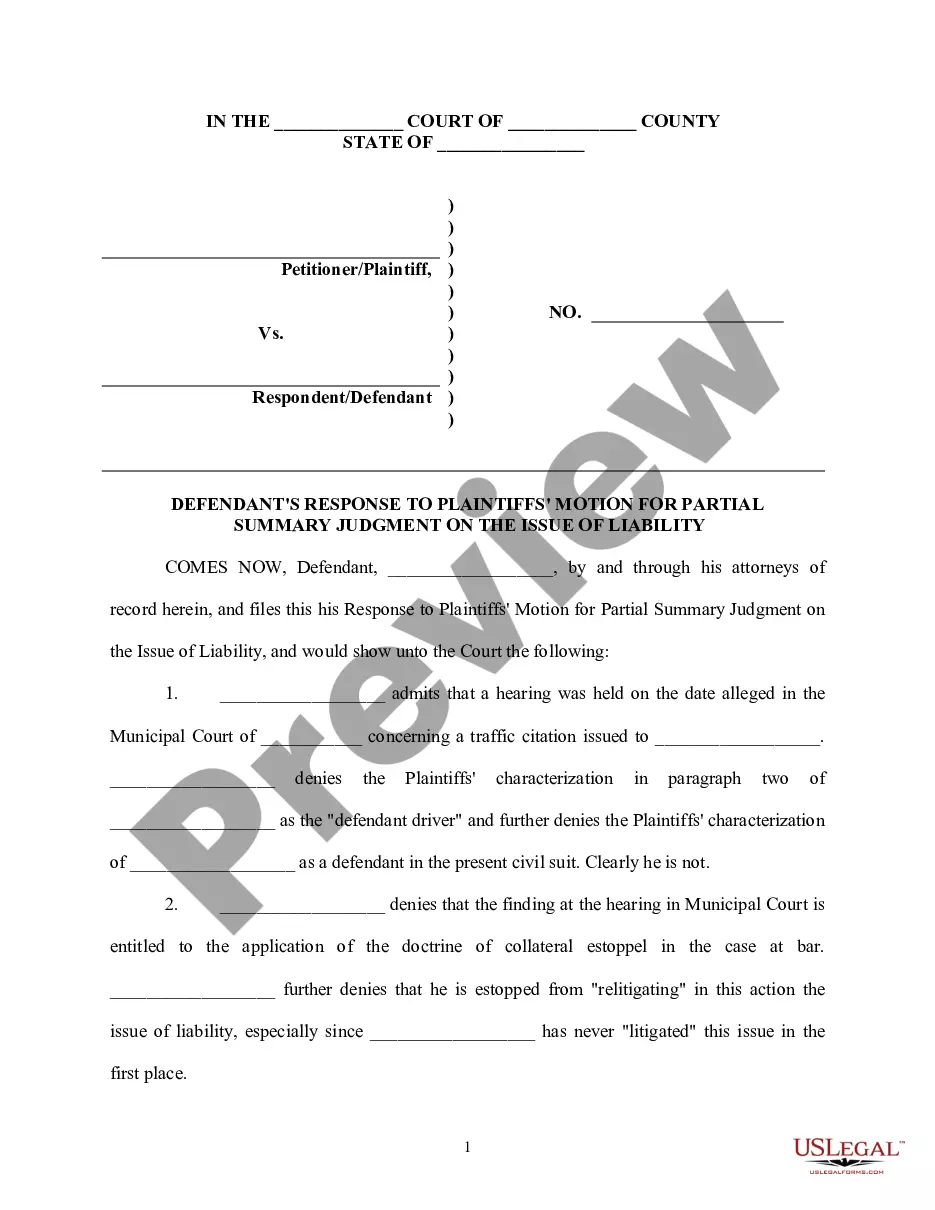
The Response to Motion for Summary Judgment is a legal document used by plaintiffs to formally respond to a defendant's motion requesting the court to rule in their favor without a trial. This response allows plaintiffs to present their arguments, challenge the defendant's claims, and assert their case in a concise manner. Unlike other responses, this form is specifically tailored to address the unique aspects of a motion for summary judgment.
Key components of this form
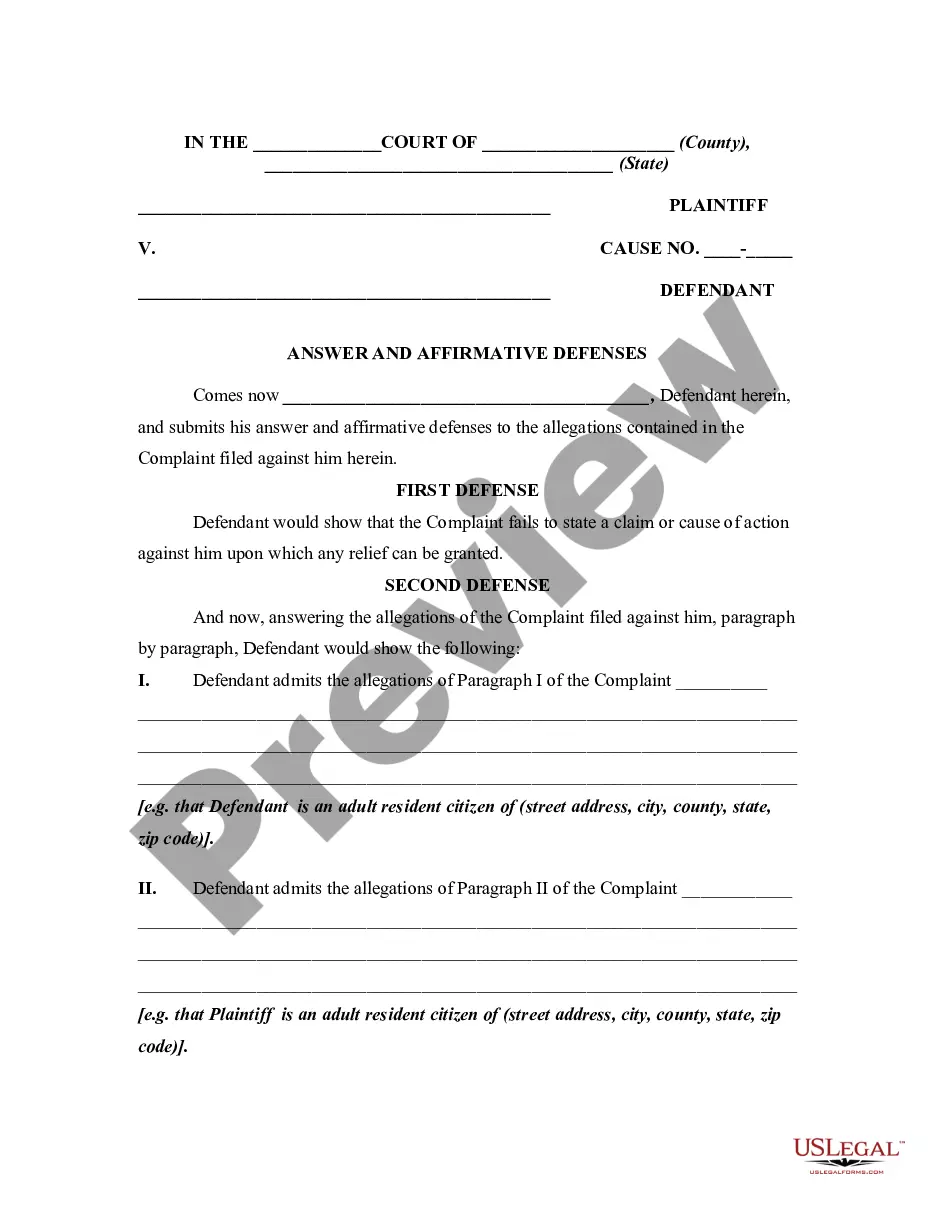
- Header with case details: includes plaintiffs and defendants with civil action number.
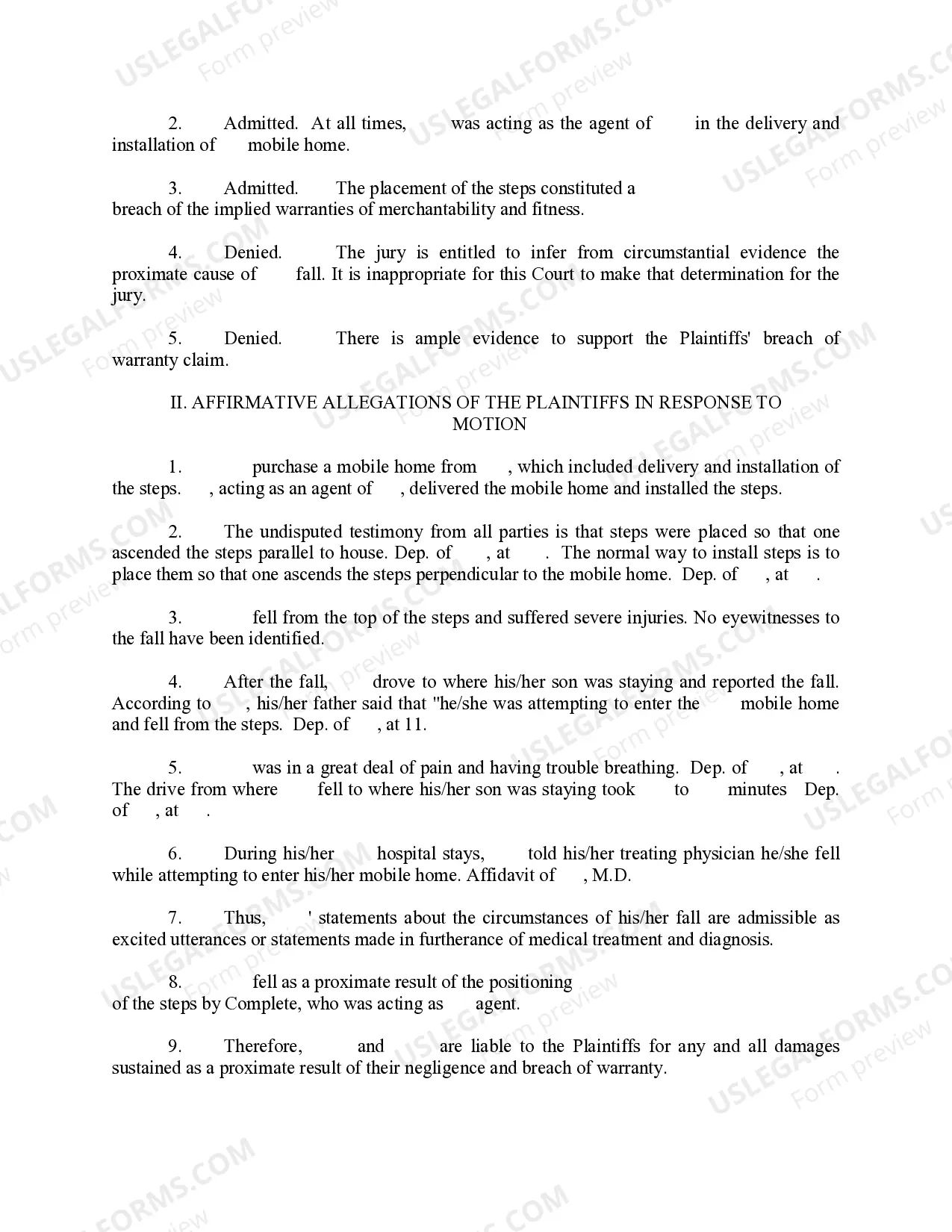
- Response to allegations: a section for admitting or denying facts presented in the motion.
- Affirmative allegations: plaintiffs outline their arguments and evidence supporting their claims.
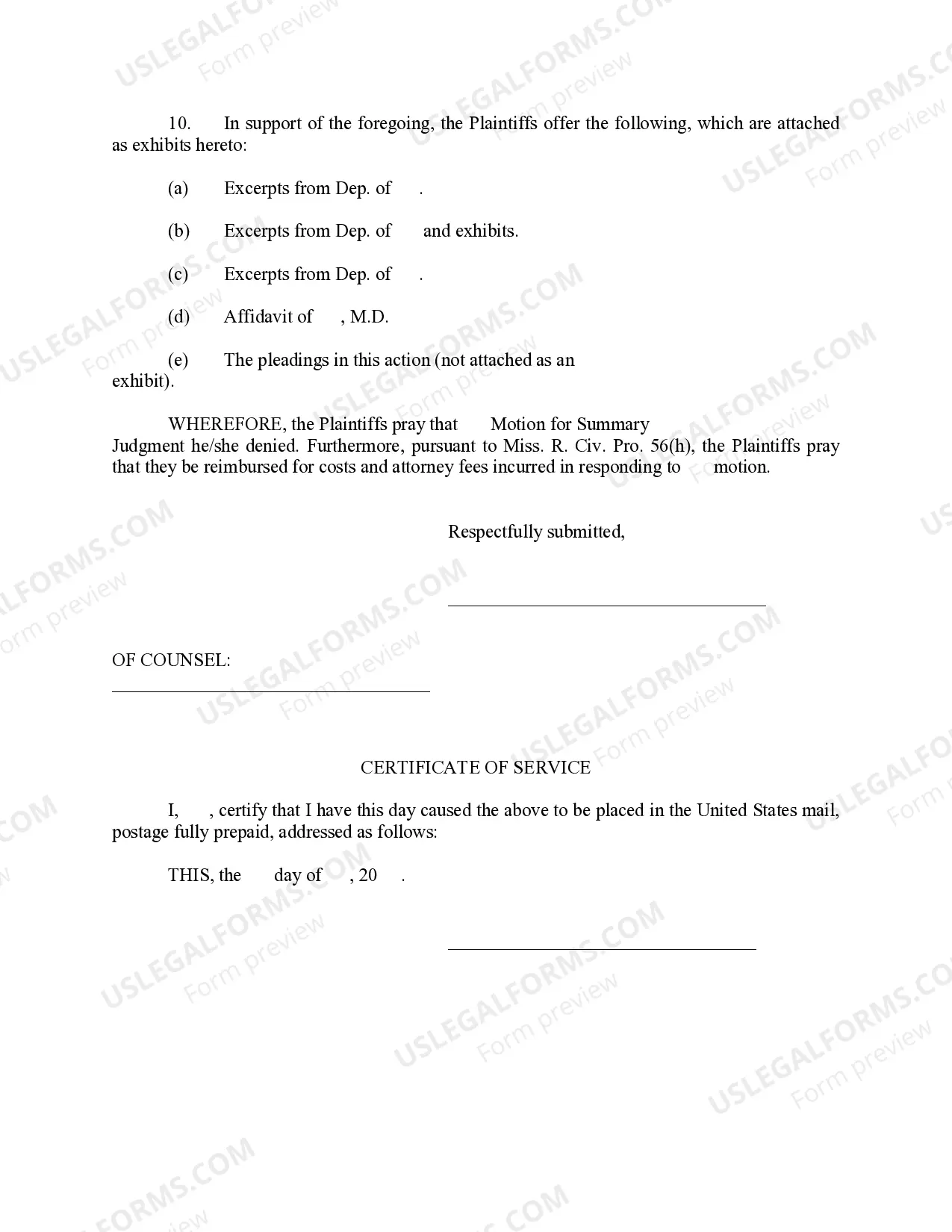
- Exhibits: a section to attach supporting documents such as depositions and affidavits.
- Signature block: includes space for the attorney's signature and date of submission.
When to use this document
This form is necessary when you, as a plaintiff, receive a Motion for Summary Judgment from the defendant, asserting that there are no genuine disputes of material fact and that a trial is unnecessary. It is crucial to respond promptly to ensure your arguments are considered by the court.
Who this form is for
- Plaintiffs in a civil case facing a motion for summary judgment.
- Individuals or attorneys seeking to contest claims made by the opposing party.
- Anyone looking to secure their right to a trial by disputing the defendant's claims.
Completing this form step by step
- Fill in the header with the names of the plaintiffs and defendants and the civil action number.
- Address each allegation made by the defendant, indicating whether you admit or deny each fact.
- Provide your affirmative allegations, clearly stating your claims and supporting evidence.
- Attach any relevant exhibits as evidence to support your arguments.
- Sign and date the form in the designated areas before submission.
Is notarization required?
Notarization is generally not required for this form. However, certain states or situations might demand it. You can complete notarization online through US Legal Forms, powered by Notarize, using a verified video call available anytime.
Get your form ready online
Our built-in tools help you complete, sign, share, and store your documents in one place.
Make edits, fill in missing information, and update formatting in US Legal Forms—just like you would in MS Word.
Download a copy, print it, send it by email, or mail it via USPS—whatever works best for your next step.
Sign and collect signatures with our SignNow integration. Send to multiple recipients, set reminders, and more. Go Premium to unlock E-Sign.
If this form requires notarization, complete it online through a secure video call—no need to meet a notary in person or wait for an appointment.
We protect your documents and personal data by following strict security and privacy standards.

Make edits, fill in missing information, and update formatting in US Legal Forms—just like you would in MS Word.

Download a copy, print it, send it by email, or mail it via USPS—whatever works best for your next step.

Sign and collect signatures with our SignNow integration. Send to multiple recipients, set reminders, and more. Go Premium to unlock E-Sign.

If this form requires notarization, complete it online through a secure video call—no need to meet a notary in person or wait for an appointment.

We protect your documents and personal data by following strict security and privacy standards.
Common mistakes to avoid
- Failing to respond within the required time frame.
- Not addressing every allegation made by the defendant.
- Omitting important evidence or exhibits that support your claims.
- Relying on legal jargon instead of clear language that can be understood by the court.
Benefits of using this form online
- Convenience of accessing and downloading the form at any time.
- Editable templates that can be customized to fit your specific case details.
- Time-saving option to avoid lengthy legal research.
- Reliable drafts created by licensed attorneys to ensure legal compliance.
Legal use & context
- This form helps maintain the right to a trial by allowing plaintiffs to contest the motion effectively.
- Understanding the legal context surrounding summary judgments is essential for successful completion.
- This response must comply with relevant procedural rules to be considered valid by the court.
Looking for another form?
Form popularity
FAQ
A response must be in writing and include the same supporting documents as a motion for summary judgment. The opposition to the motion for summary judgment should also include a statement of facts showing the dispute and supporting documents.
If the motion is granted, the judgment on the issue or case is deemed to be a final judgment from which a party may seek an appeal. The court of appeal can reverse the grant of summary judgment and reinstate the claim in the lower court. However, this is rarely done and most summary judgments are upheld on appeal.
If a defendant refuses to produce documents or witnesses for depositions, you can oppose the summary-judgment motion by submitting your declaration and showing that facts essential to justify your opposition may exist but cannot for reasons stated be presented to the court.
19, 2008) (motions to dismiss or for summary judgment are not responsive pleadings, and therefore do not cut off a plaintiff's right to amend his pleadings once at any time).