Mississippi Response to Motion for Judgment Notwithstanding the Verdict, or in the Alternative, for a New Trial
Overview of this form
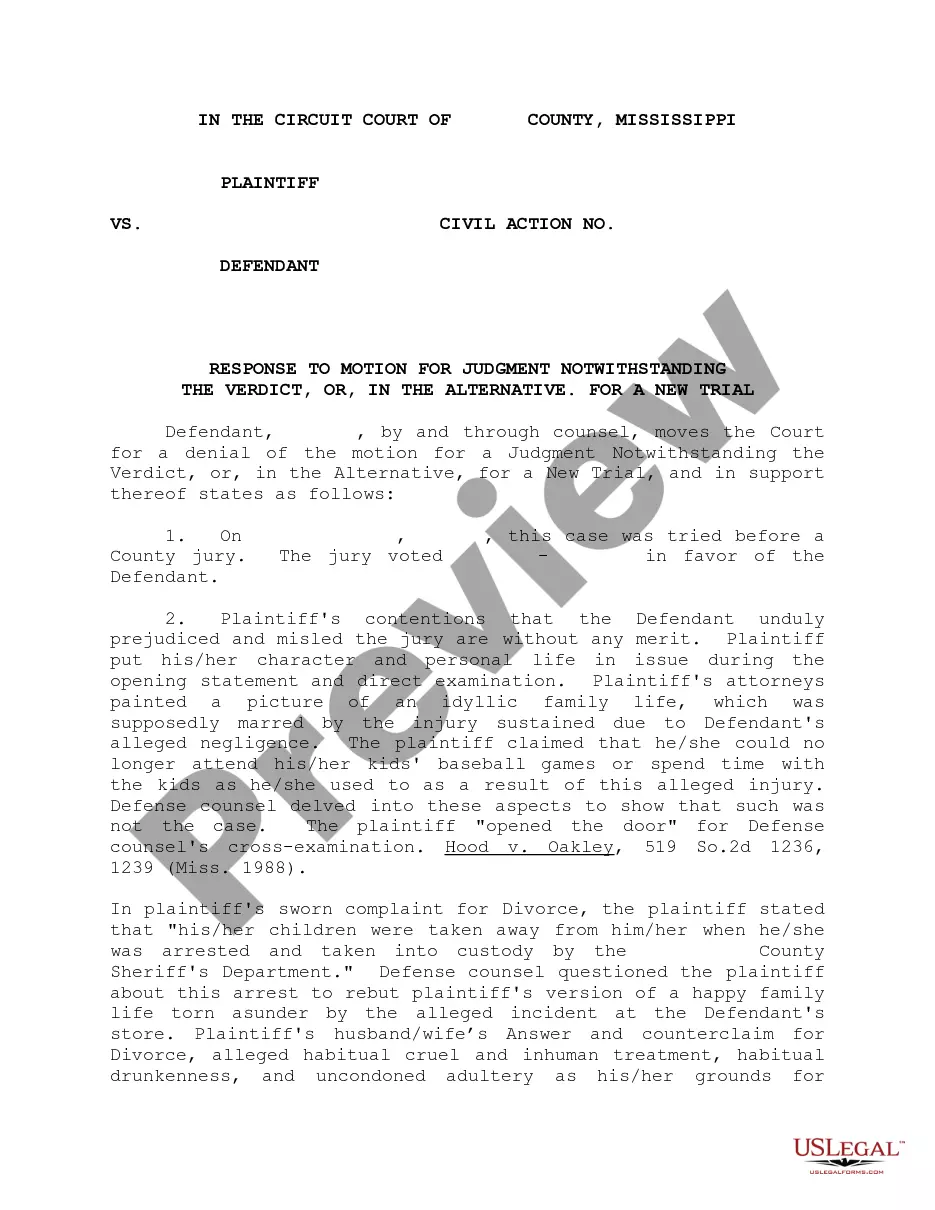
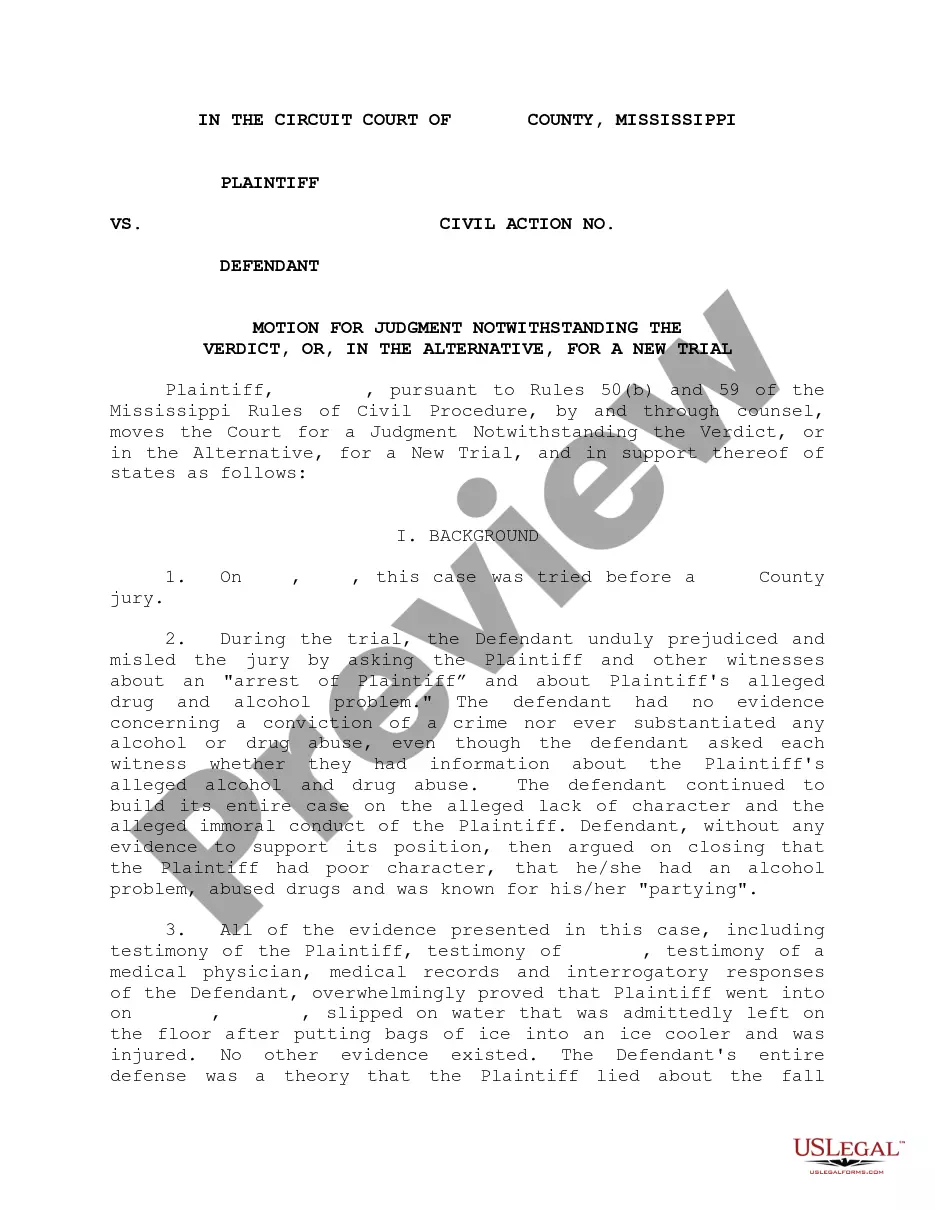
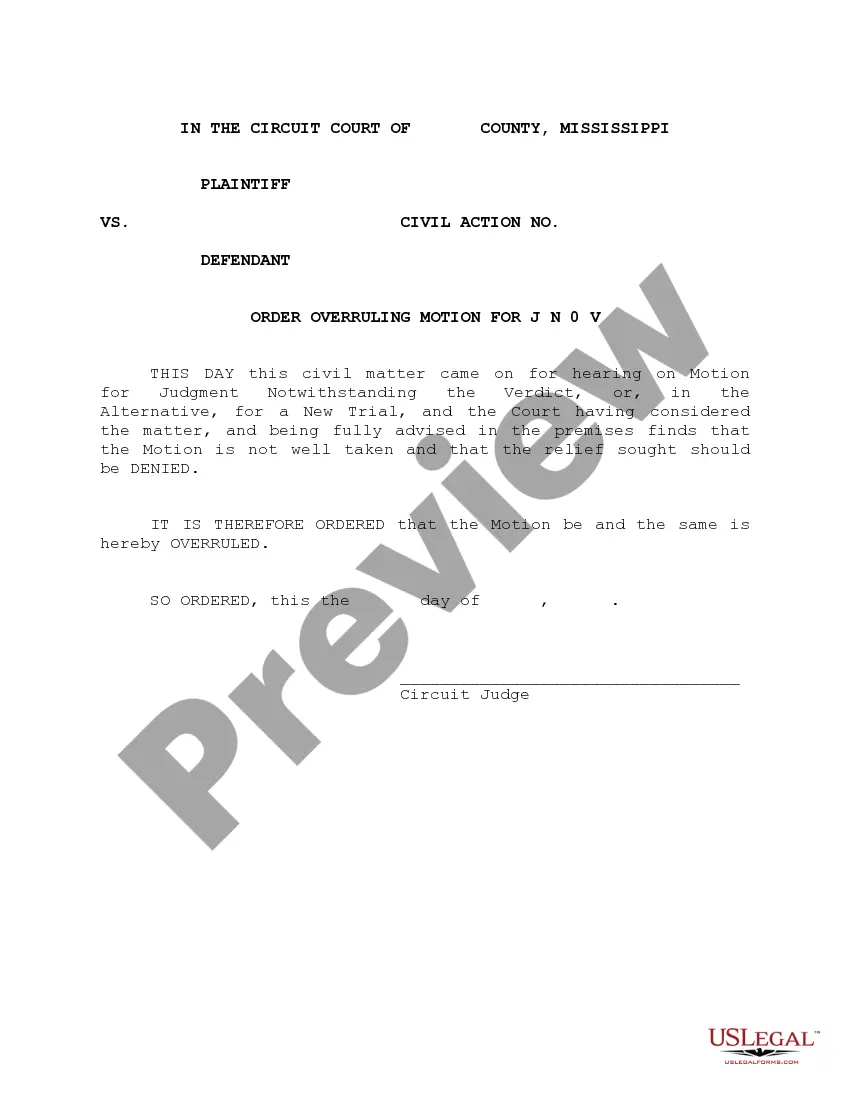
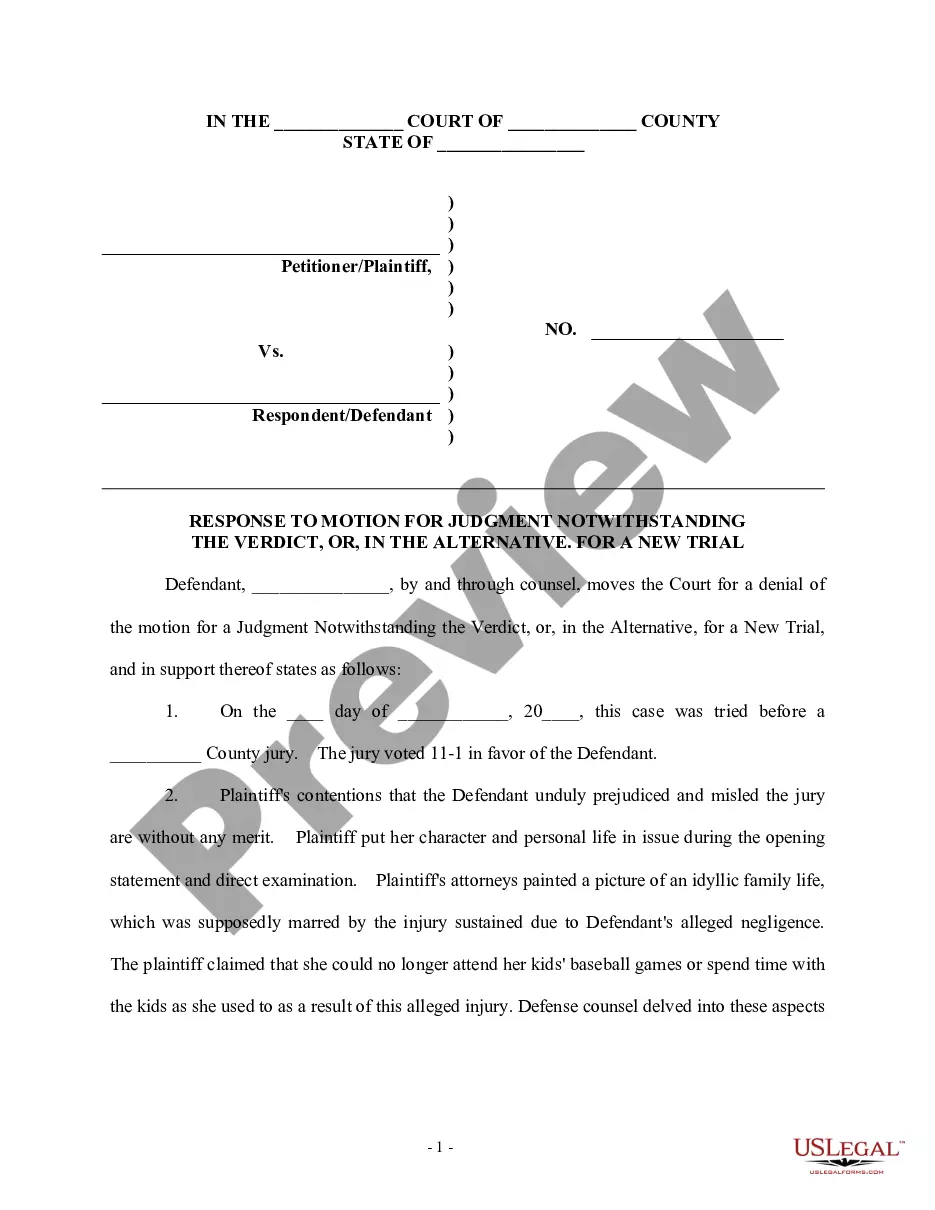
The Response to Motion for Judgment Notwithstanding the Verdict, or in the Alternative, for a New Trial is a legal document used by a defendant to formally respond to a plaintiff's request for the court to overturn a jury's verdict. The purpose of this form is to provide a structured format for defendants to assert their arguments against the motion, thus ensuring that the court considers the defendant's perspective before making a final decision. Unlike other motions or responses, this form specifically addresses requests for judgment despite a jury verdict or calls for a new trial.
Key parts of this document
- Case title, including parties involved and civil action number.
- Introduction stating the purpose and request to deny the plaintiff's motion.
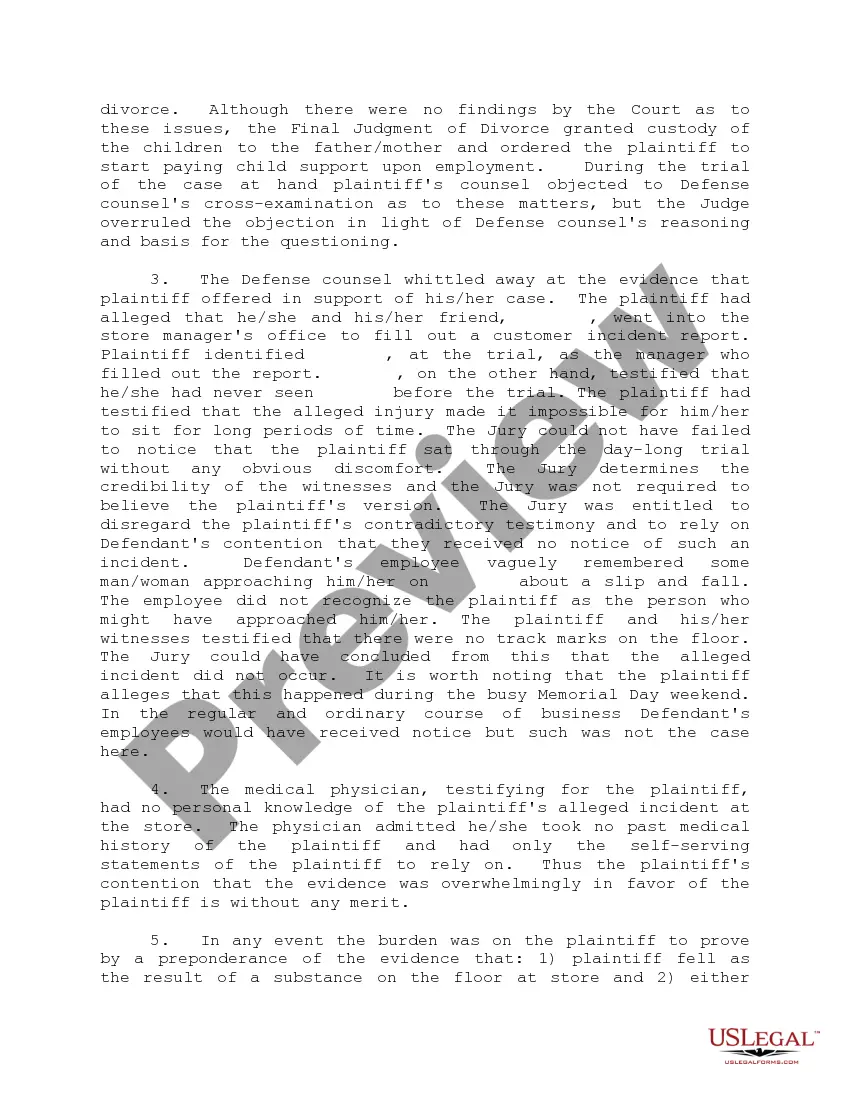
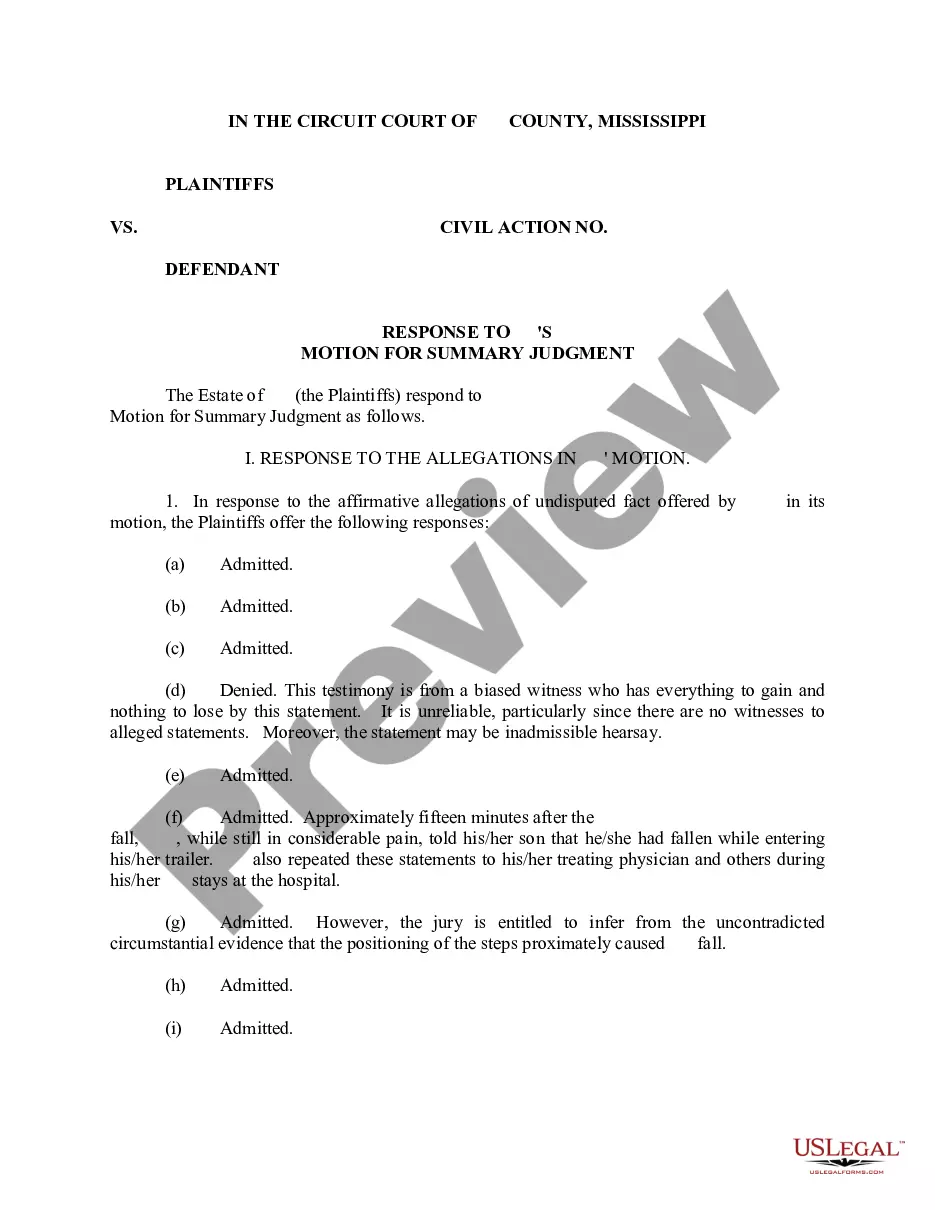
- Factual assertions supporting the defense's position, detailing trial events and jury deliberations.
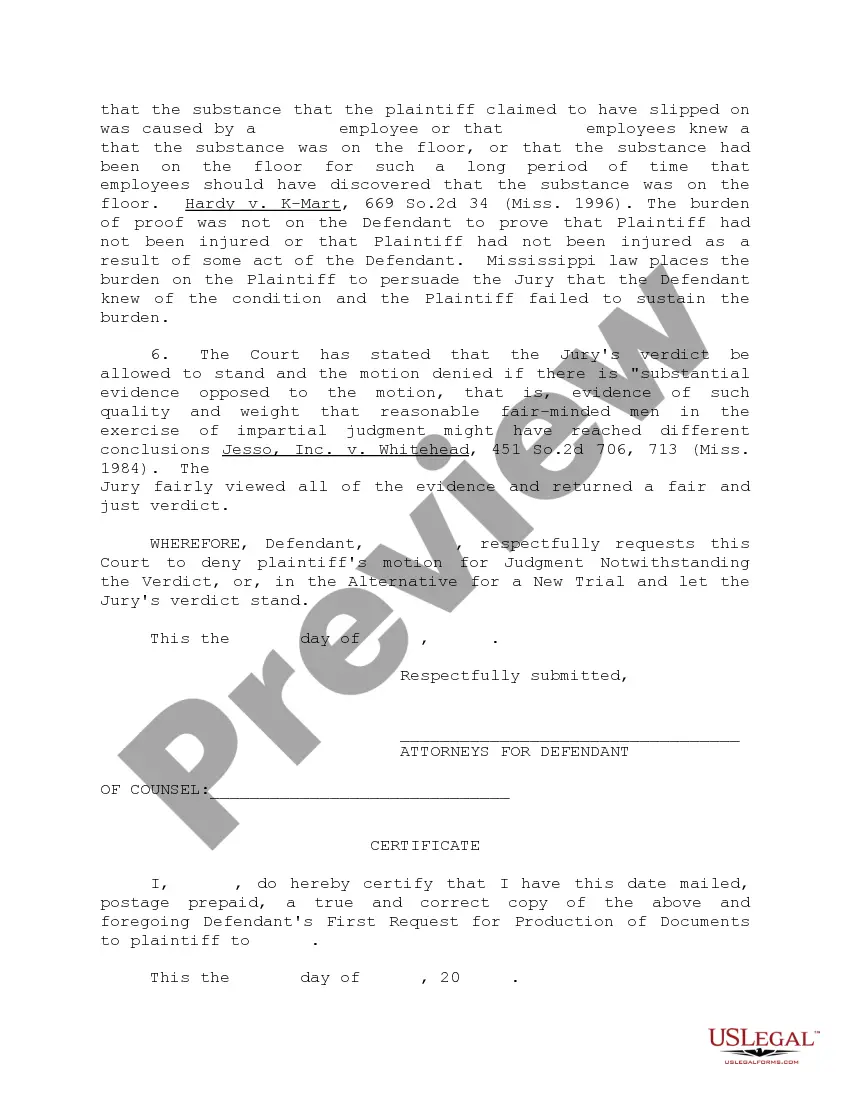
- Legal arguments referencing relevant case law and standards for judgment affirmations.
- A closing statement requesting the court to uphold the jury's decision.

When to use this document
This form is used when a plaintiff has filed a motion for judgment notwithstanding the verdict or alternatively for a new trial after a jury has delivered its verdict in favor of the defendant. It is specifically pertinent in civil cases where the defense wishes to refute the claims that would lead to altering the jury's decision. It can be essential in scenarios involving personal injury cases, contractual disputes, or any situation where a jury trial has concluded.
Intended users of this form
- Defendants in civil litigation who have received a motion from the plaintiff asking the court to overturn a jury verdict.
- Legal professionals representing defendants looking to formally respond to such motions.
- Individuals involved in lawsuits who wish to ensure their arguments are adequately represented in court filings.
Steps to complete this form
- Identify the parties involved and fill in the case title and action number at the top of the form.
- State the purpose of your response clearly in the introductory section.
- Outline the factual background and reasons for opposing the plaintiff's motion in the designated sections.
- Include specific legal citations that support your arguments against the motion.
- Conclude with a formal request asking the court to deny the motion and affirm the jury's verdict.
- Sign and date the form, including your contact information and that of your legal counsel where applicable.
Notarization guidance
This form does not typically require notarization unless specified by local law. Be sure to check your jurisdictionâs requirements to confirm whether notarization is necessary before filing.
Get your form ready online
Our built-in tools help you complete, sign, share, and store your documents in one place.
Make edits, fill in missing information, and update formatting in US Legal Forms—just like you would in MS Word.
Download a copy, print it, send it by email, or mail it via USPS—whatever works best for your next step.
Sign and collect signatures with our SignNow integration. Send to multiple recipients, set reminders, and more. Go Premium to unlock E-Sign.
If this form requires notarization, complete it online through a secure video call—no need to meet a notary in person or wait for an appointment.
We protect your documents and personal data by following strict security and privacy standards.

Make edits, fill in missing information, and update formatting in US Legal Forms—just like you would in MS Word.

Download a copy, print it, send it by email, or mail it via USPS—whatever works best for your next step.

Sign and collect signatures with our SignNow integration. Send to multiple recipients, set reminders, and more. Go Premium to unlock E-Sign.

If this form requires notarization, complete it online through a secure video call—no need to meet a notary in person or wait for an appointment.

We protect your documents and personal data by following strict security and privacy standards.
Typical mistakes to avoid
- Failing to include all required case details, such as civil action number and party names.
- Overlooking the need for legal citations to support arguments.
- Not addressing each argument made in the plaintiff's motion thoroughly.
- Submitting the form after the deadline for responses has passed.
Benefits of using this form online
- Immediate access to legally vetted templates drafted by licensed attorneys.
- Convenient downloading options available in multiple formats.
- Editability to customize the form according to specific case needs.
- Confidence in the quality and compliance of the form with relevant legal standards.
Legal use & context
- The form is a critical document in appellate and trial settings, providing an opportunity for defendants to assert their right to the juryâs verdict.
- It helps to clarify legal responsibilities and rights concerning the effective combat of motions that could overturn jury decisions.
Quick recap
- The Response to Motion for Judgment Notwithstanding the Verdict is essential for defendants in civil cases.
- Clear organization and strong legal arguments are crucial to the success of this form.
- Understanding local rules is vital for ensuring proper completion and submission.
Looking for another form?


Form popularity
FAQ
Contact the Criminal History Record Check Division at 601-364-1101, fax: 601-364-5056.
Resource: Mississippi Vital Records In order to access the records, one can either order online through mail, request online and pay via credit card, or book an in-person appointment at their physical offices in Ridgeland or Highland Colony Parkway.
If you are selected to serve on this Grand jury panel, you will serve approximately one to three days every month for an eighteen (18) month period.
The criminal statute of limitations requires prosecutors to file criminal charges against a suspect within two years for misdemeanors and within five years for certain felonies, but there is no time limit in Mississippi for charges of murder, kidnapping, rape, burglary, robbery, larceny, and several other serious
A charge is brought against someone by a prosecutor. But in an indictment, a grand jury brings the charges against the defendant. All indictments are charges, but not all charges are indictments.
Sixteen-year-old William Haymon has spent more than 500 days in an adult jail in rural Lexington, Mississippi. There are no state rules governing how long a person can be incarcerated without being formally charged with a crime.
In law, a verdict is the formal finding of fact made by a jury on matters or questions submitted to the jury by a judge. In a bench trial, the judge's decision near the end of the trial is simply referred to as a finding.
Unlike a criminal complaint which can only be filed 2 times without cause there is no limit on going to the grand jury. At some point there may come a time when the prosecutor decides there in not enough evidence to proceed.