Mississippi Answer and Counter Claim
What this document covers
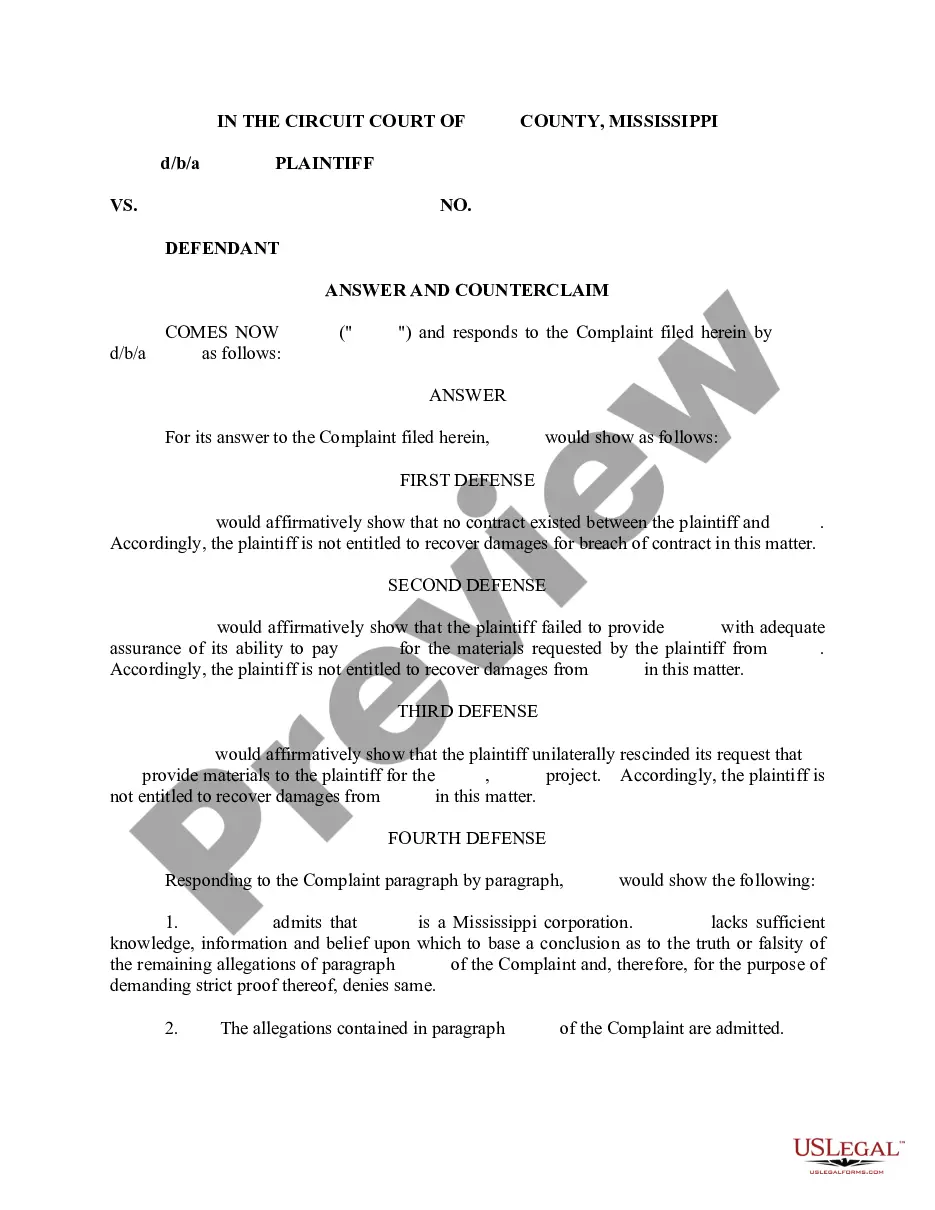
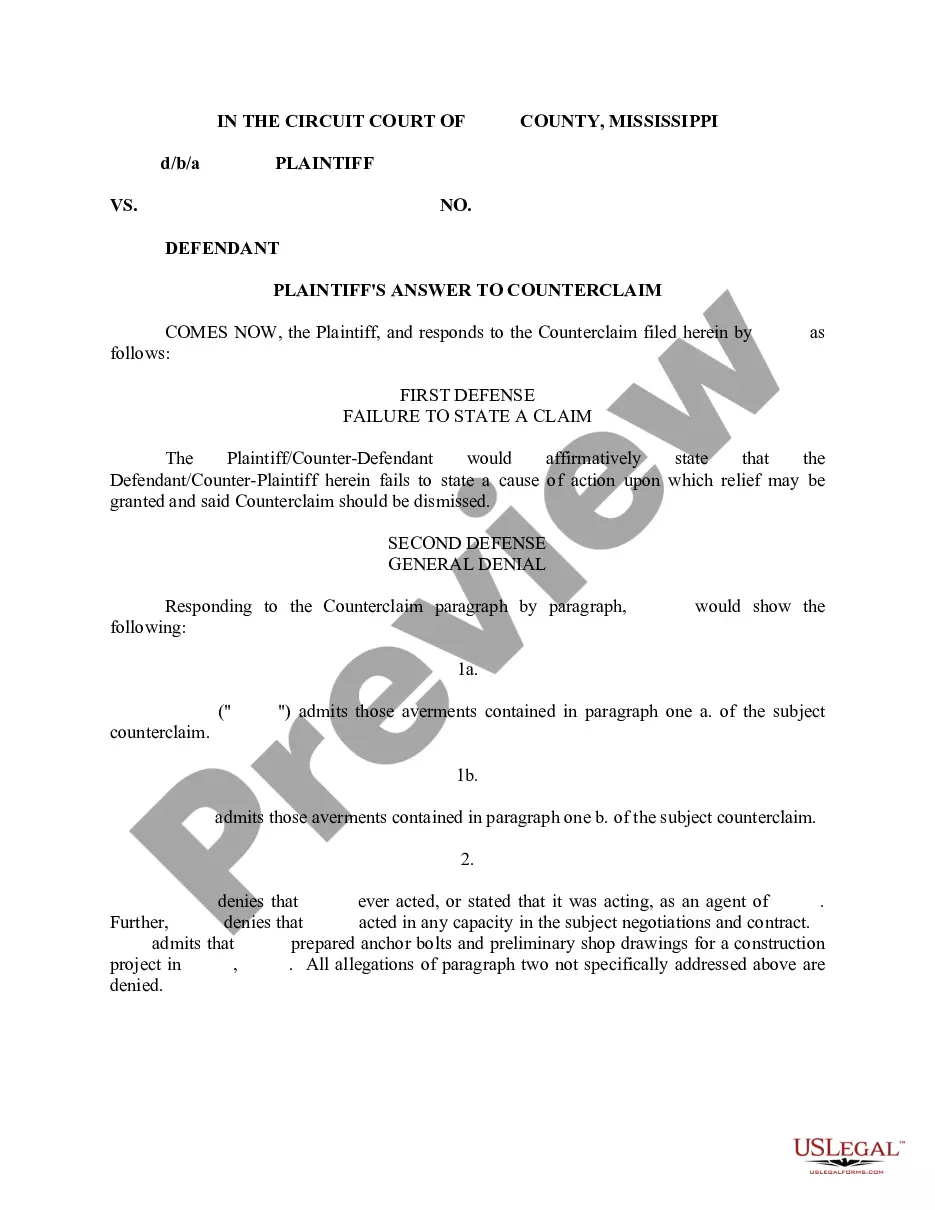
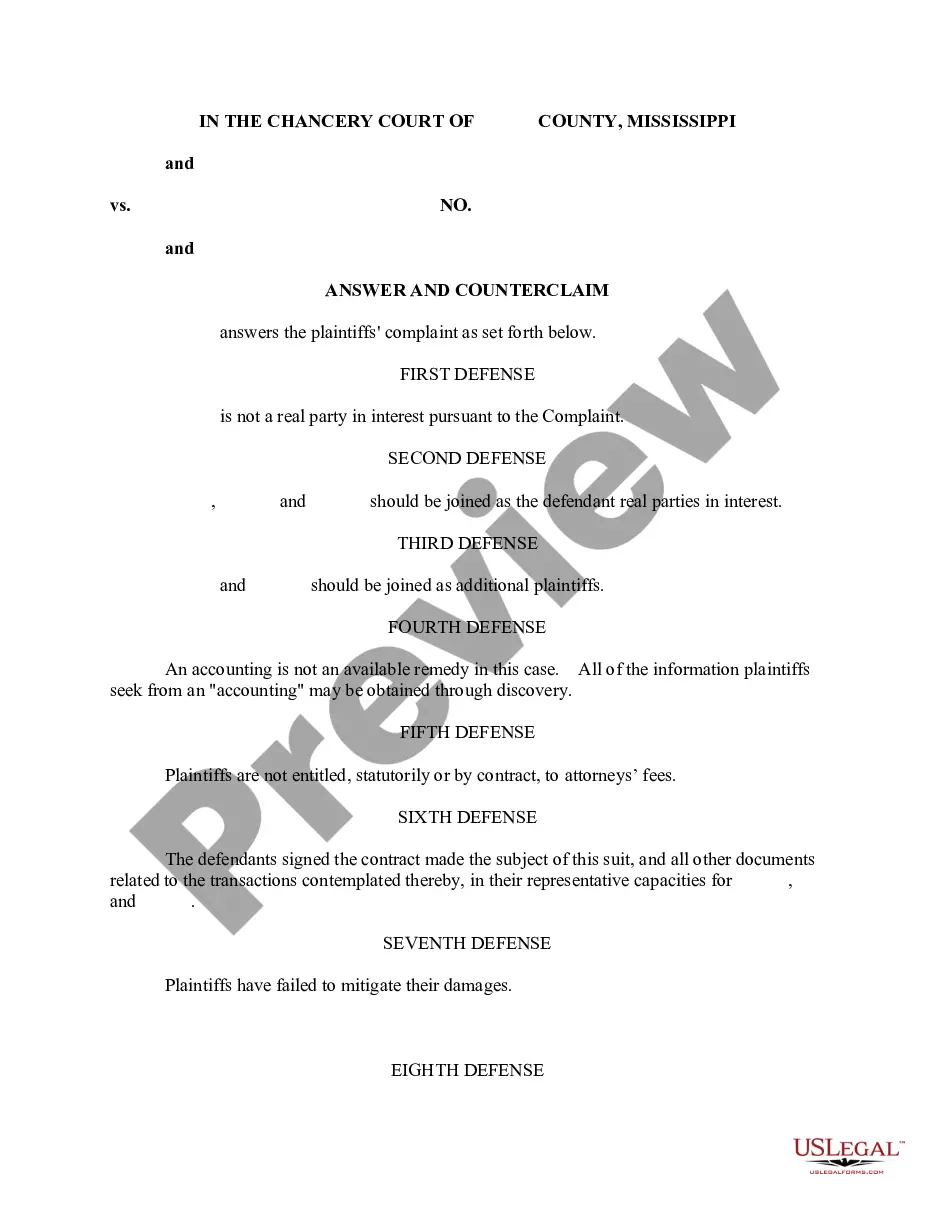
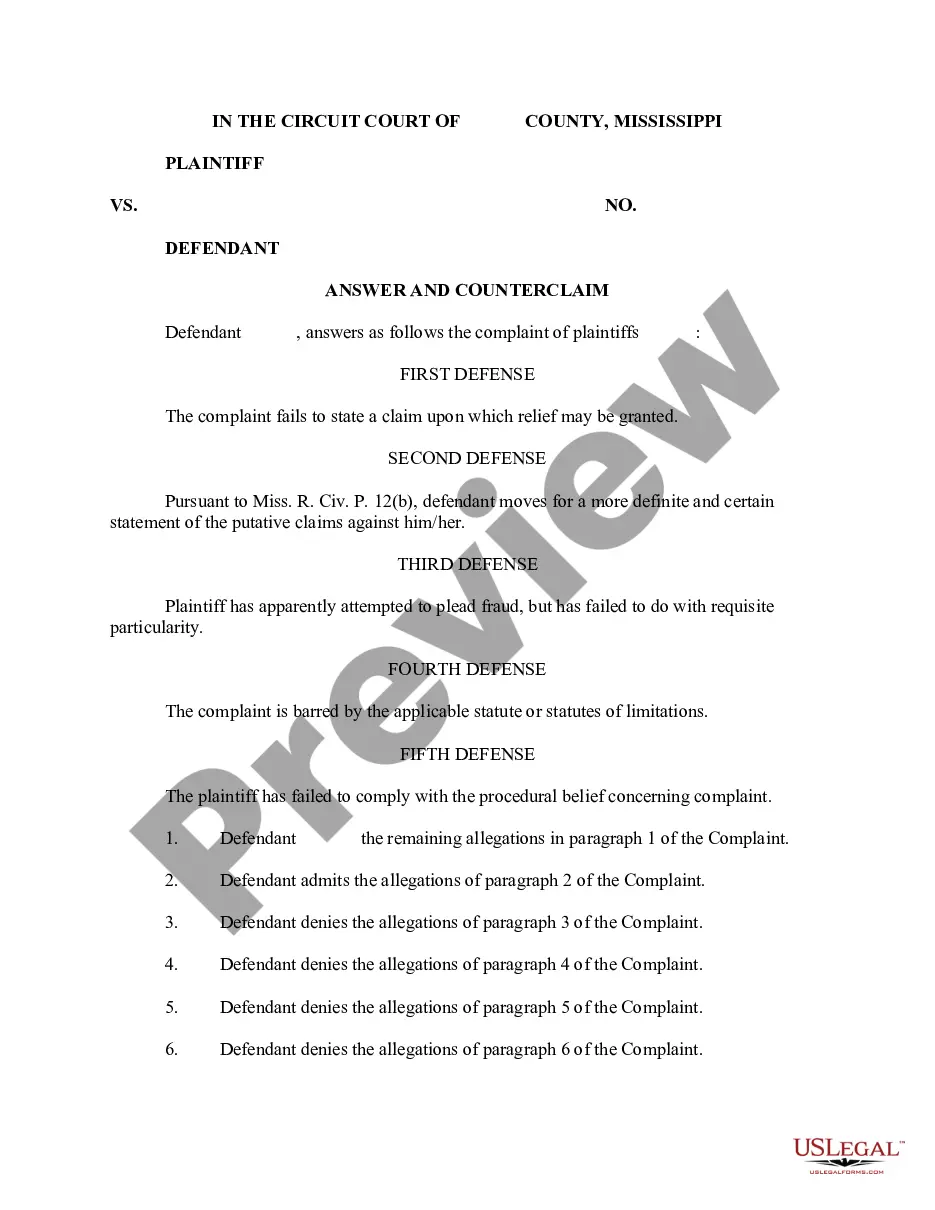
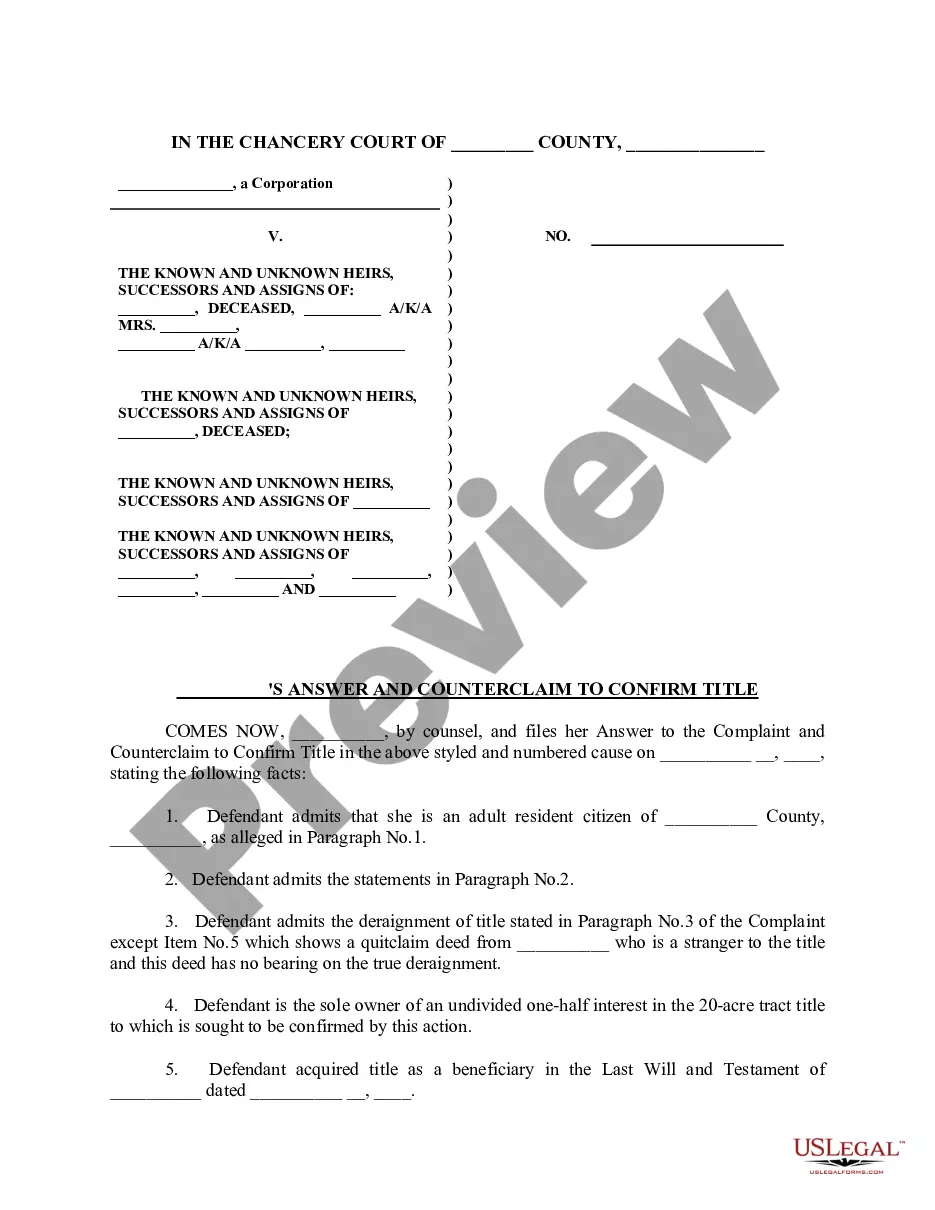
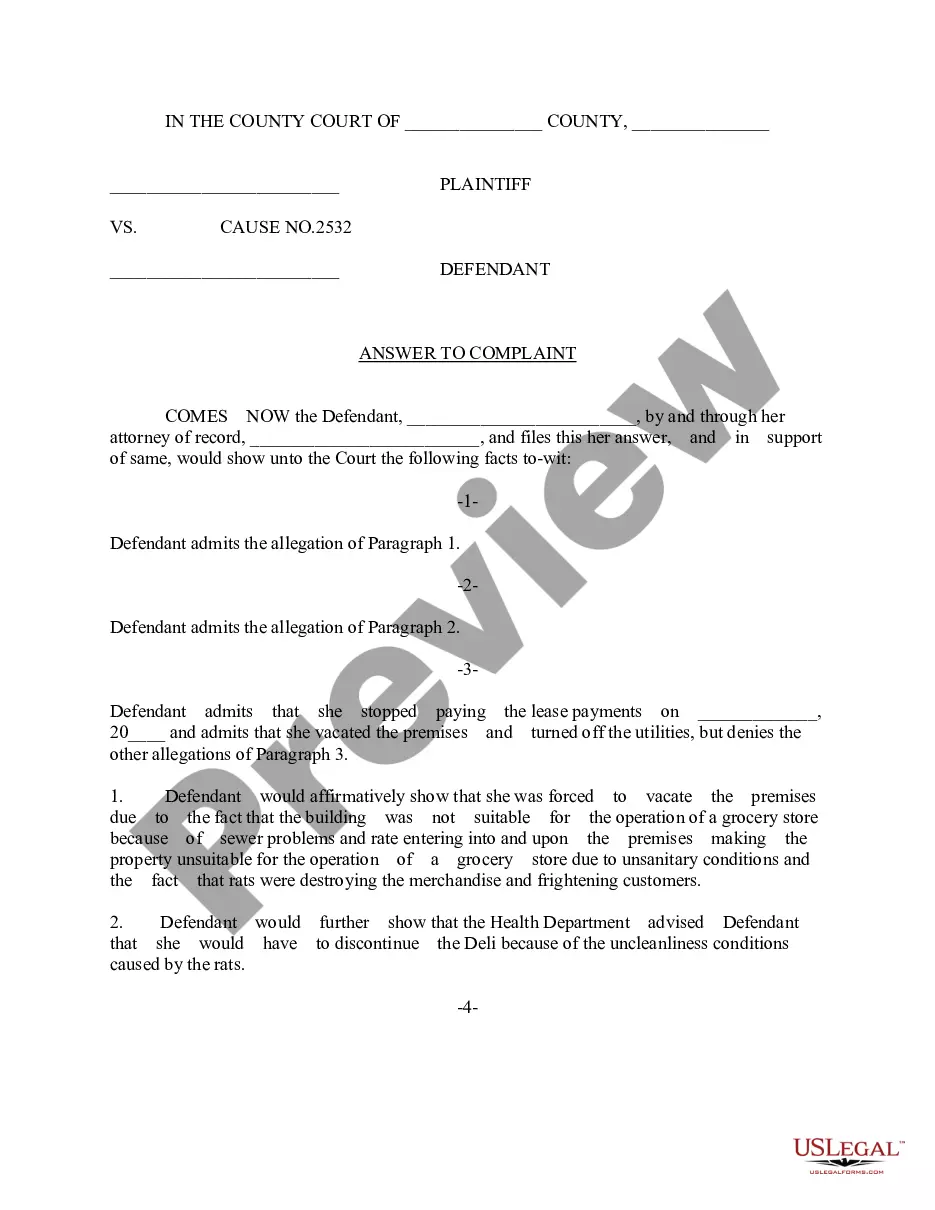
An Answer and Counter Claim is a legal document filed in response to a Complaint in a lawsuit. This document allows a defendant to not only respond to the claims made against them but also to assert their own claims against the plaintiff. This form is particularly relevant when the defendant believes they have been wronged through breach of fiduciary duties or misappropriation of trade secrets. It serves as a formal way to present these counterclaims alongside their answers to the original complaint, setting the stage for a comprehensive resolution of the issues at hand.
Key components of this form
- Title of the case and court details
- Caption identifying the parties involved
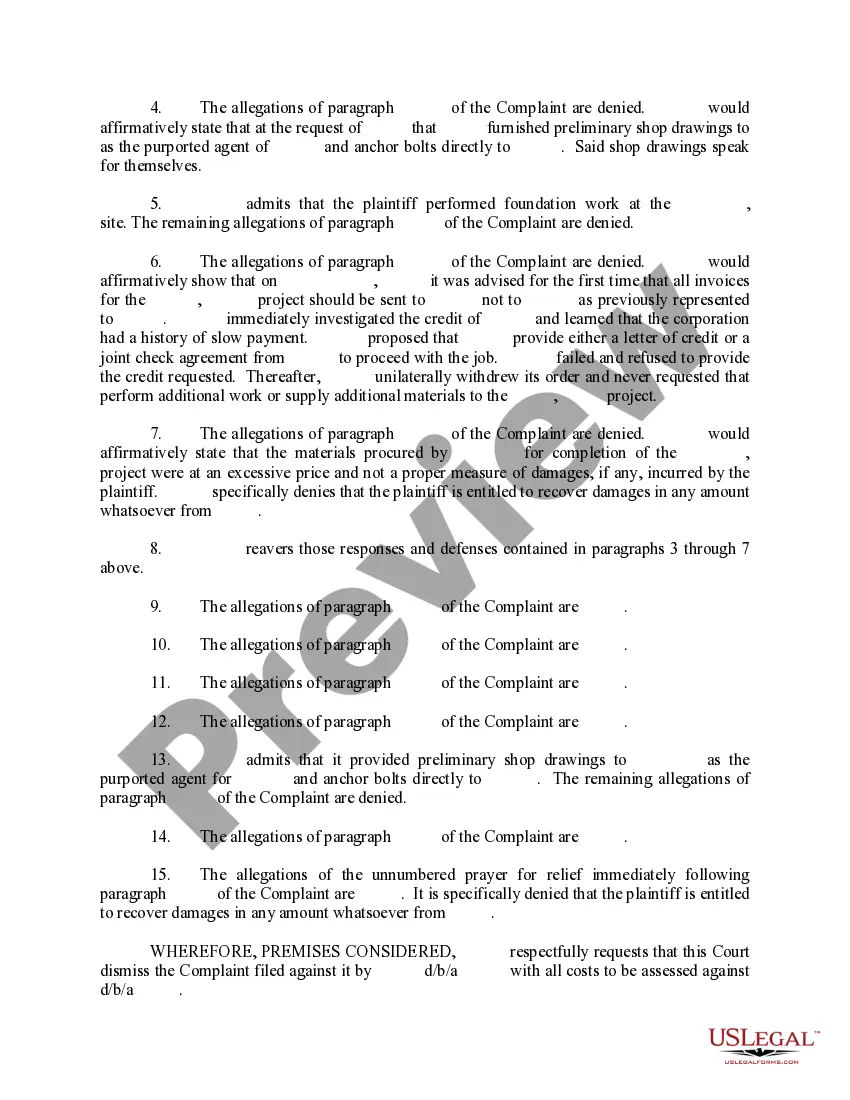
- Response to each allegation in the Complaint
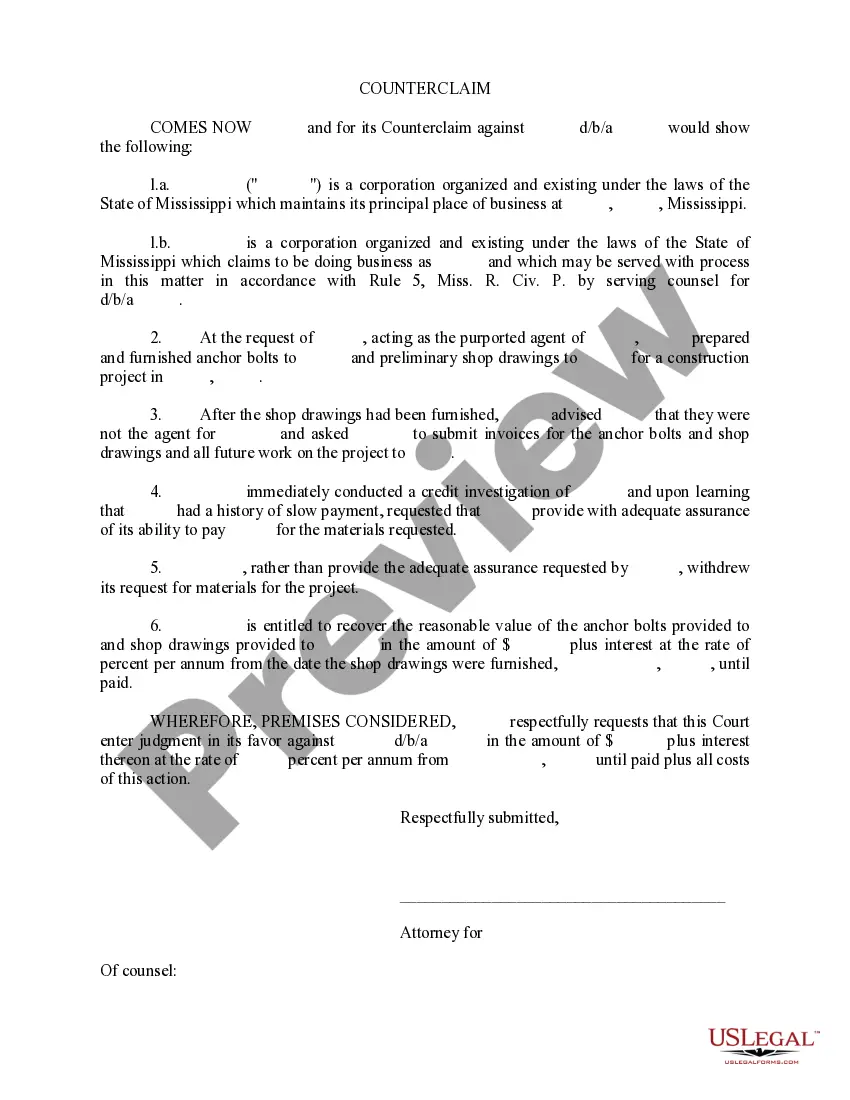
- Statement of facts supporting the counterclaim
- Legal basis for the counterclaims
- Signature and date fields for the respondent

When this form is needed
This form should be used when a defendant wishes to formally respond to a lawsuit while simultaneously bringing their own claims against the plaintiff. It is applicable in cases involving disputes over fiduciary duties or instances of trade secret misappropriation. If you find yourself in a legal situation where you need to defend against accusations and assert your own claims, this form is essential. It provides a structured approach to address all concerns in a single document, making the legal process more efficient.
Who should use this form
- Individuals or businesses being sued who wish to respond to the Complaint
- Defendants who have claims against the plaintiff related to the original lawsuit
- Parties involved in disputes over fiduciary responsibilities or trade secrets
Steps to complete this form
- Identify the case title and relevant court information at the top of the form.
- Clearly list the parties involved in the case, noting who is the plaintiff and who is the defendant.
- Respond to each allegation made in the Complaint, ensuring accuracy and clarity in your answers.
- Present the facts that form the basis of your counterclaims succinctly.
- Provide the legal grounds for each counterclaim to support your case comprehensively.
- Sign and date the form before filing it with the court and providing copies to all parties involved.
Does this form need to be notarized?
This form does not typically require notarization unless specified by local law. However, verify your state's requirements, as some jurisdictions may have different rules regarding the submission of legal documents.
Get your form ready online
Our built-in tools help you complete, sign, share, and store your documents in one place.
Make edits, fill in missing information, and update formatting in US Legal Forms—just like you would in MS Word.
Download a copy, print it, send it by email, or mail it via USPS—whatever works best for your next step.
Sign and collect signatures with our SignNow integration. Send to multiple recipients, set reminders, and more. Go Premium to unlock E-Sign.
If this form requires notarization, complete it online through a secure video call—no need to meet a notary in person or wait for an appointment.
We protect your documents and personal data by following strict security and privacy standards.

Make edits, fill in missing information, and update formatting in US Legal Forms—just like you would in MS Word.

Download a copy, print it, send it by email, or mail it via USPS—whatever works best for your next step.

Sign and collect signatures with our SignNow integration. Send to multiple recipients, set reminders, and more. Go Premium to unlock E-Sign.

If this form requires notarization, complete it online through a secure video call—no need to meet a notary in person or wait for an appointment.

We protect your documents and personal data by following strict security and privacy standards.
Mistakes to watch out for
- Failing to respond to each allegation in the Complaint.
- Neglecting to include sufficient facts to support counterclaims.
- Omitting signature or date, rendering the form incomplete.
Why complete this form online
- Convenient access to downloadable formats (Word and Rich Text).
- Editability allows for customization based on your specific case.
- Reliable content drafted by licensed attorneys ensures legal validity.
- This form is legally recognized in most jurisdictions when filled out correctly.
- It is advisable to consult with a legal expert to enhance enforceability.
- An Answer and Counter Claim is essential when responding to a Complaint and wanting to assert your own claims.
- Clear documentation of defenses and counterclaims boosts your legal position.
- Proper completion of this form is crucial for successful legal proceedings.
Looking for another form?

Form popularity
FAQ
In order to make a counterclaim, you first draft your response to the lawsuit. Then you need to describe the factual circumstances surrounding your claim and make a demand for compensation or other relief. Be sure you do not confuse counterclaims with cross-complaints.
A pleading may state as a counterclaim against an opposing party any claim that is not compulsory.A counterclaim need not diminish or defeat the recovery sought by the opposing party. It may request relief that exceeds in amount or differs in kind from the relief sought by the opposing party.
An answer to a counterclaim is a written response by a Plaintiff to a Defendant's counterclaim. The answer to counterclaim must also state defenses to each of the Defendant's counterclaims in short, plain statements.
The defendant may also raise counterclaims or affirmative defenses. If a defendant does raise counterclaims in her answer, the plaintiff must respond to those counterclaims with a pleading called an "answer to a counterclaim." The form and content of an "answer to a counterclaim" is similar to that of an answer.
TIME TO RESPOND In addition, a party must respond to a counterclaim or cross-claim within 21 days of being served with the pleading that states the claim(s) (FRCP 12(a)(1)(B)).
Counterclaim. A counterclaim is a claim by a defendant against a plaintiff. The responsive pleading to the complaint may include a counter-claim. There is no filing fee to file a counter-claim.
(B) A party must serve an answer to a counterclaim or crossclaim within 21 days after being served with the pleading that states the counterclaim or crossclaim. (C) A party must serve a reply to an answer within 21 days after being served with an order to reply, unless the order specifies a different time.
The responding party must serve its answers and any objections within 30 days after being served with the interrogatories. A shorter or longer time may be stipulated to under Rule 29 or be ordered by the court. (3) Answering Each Interrogatory.