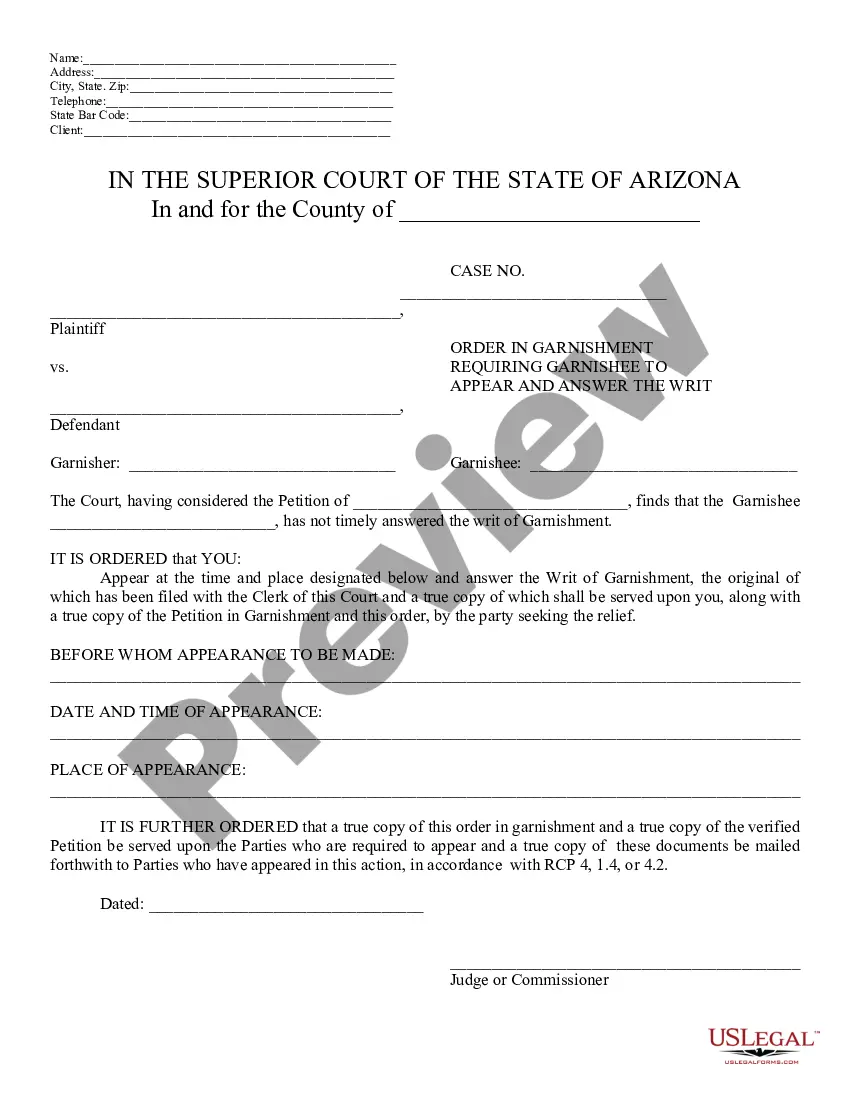
Mississippi Plaintiff's Answer to Counter Claim
What is this form?
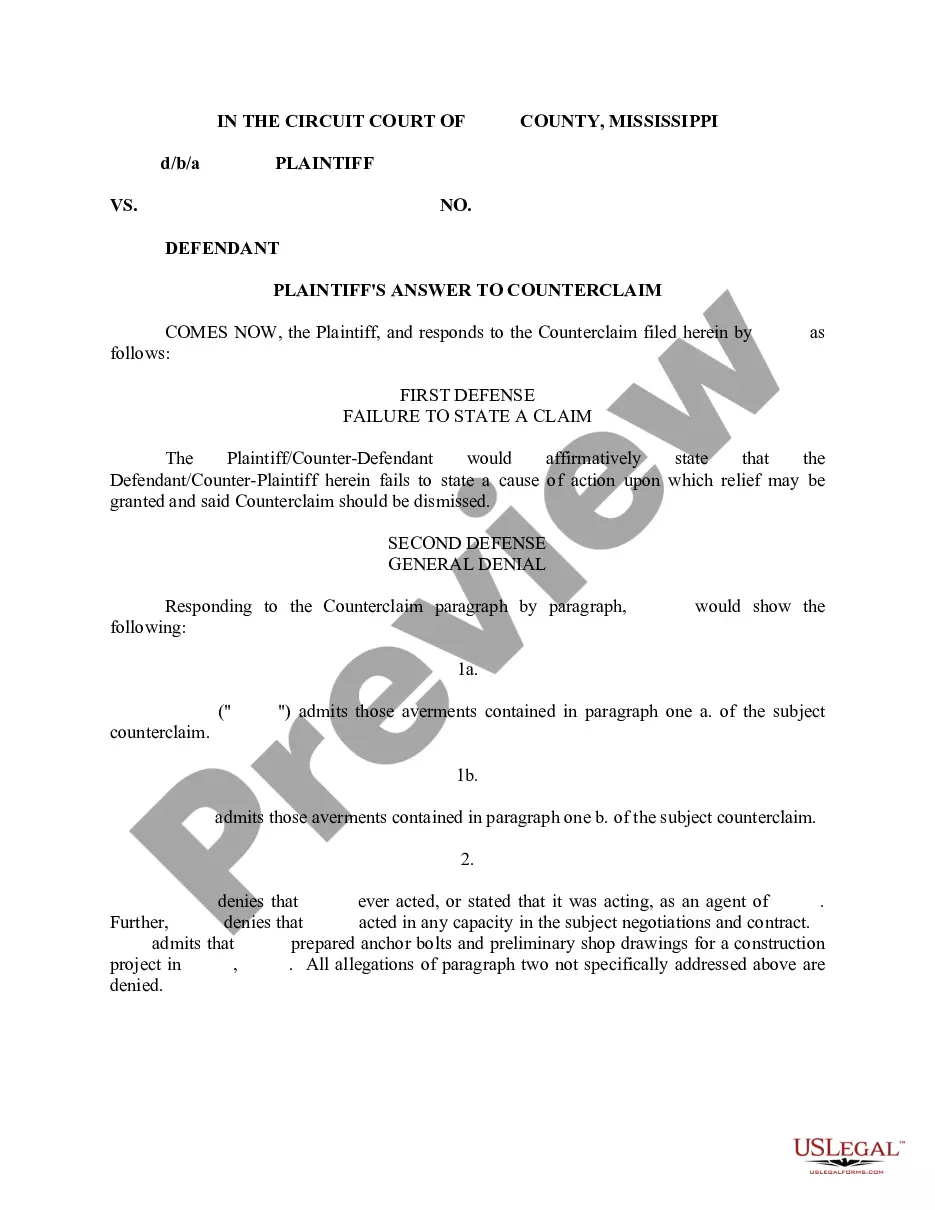
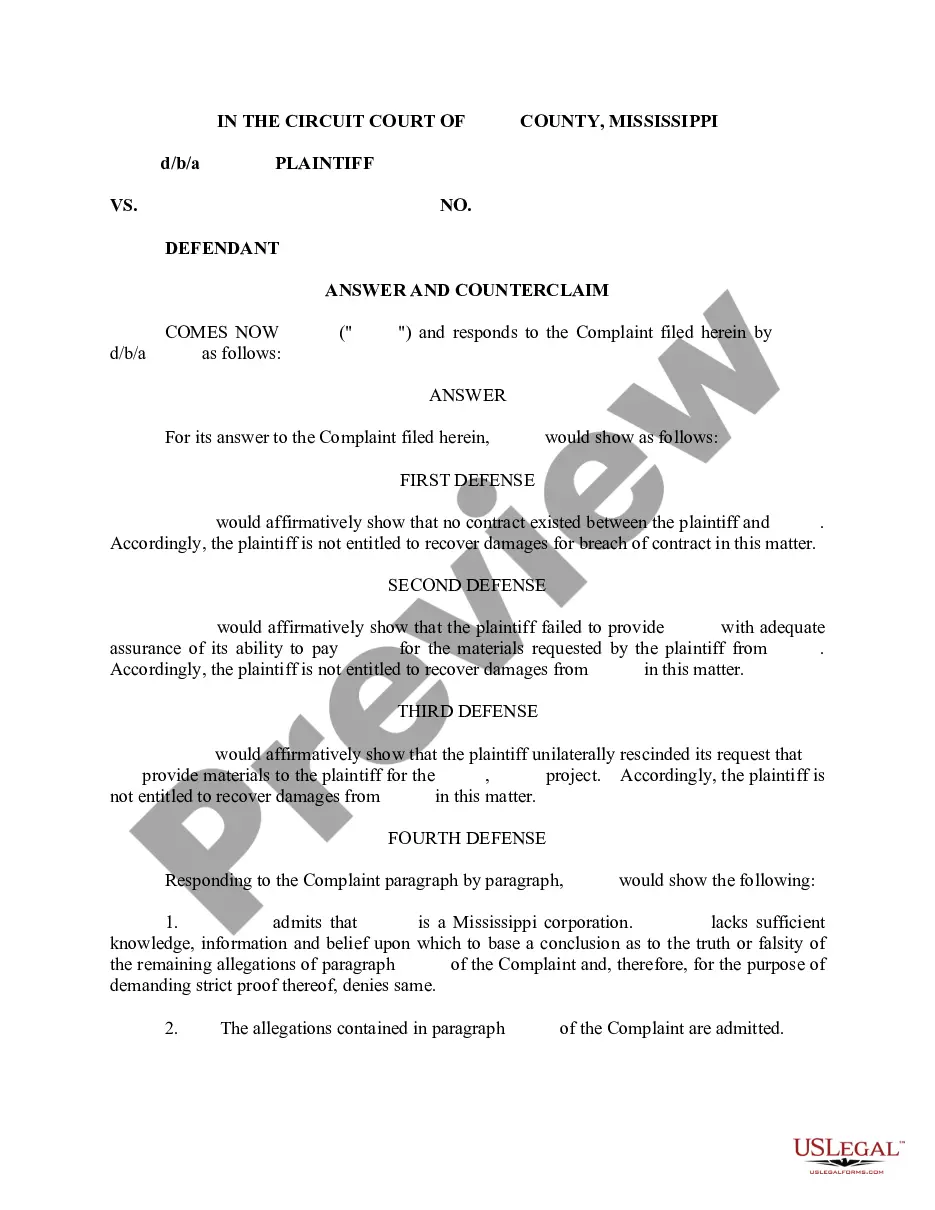
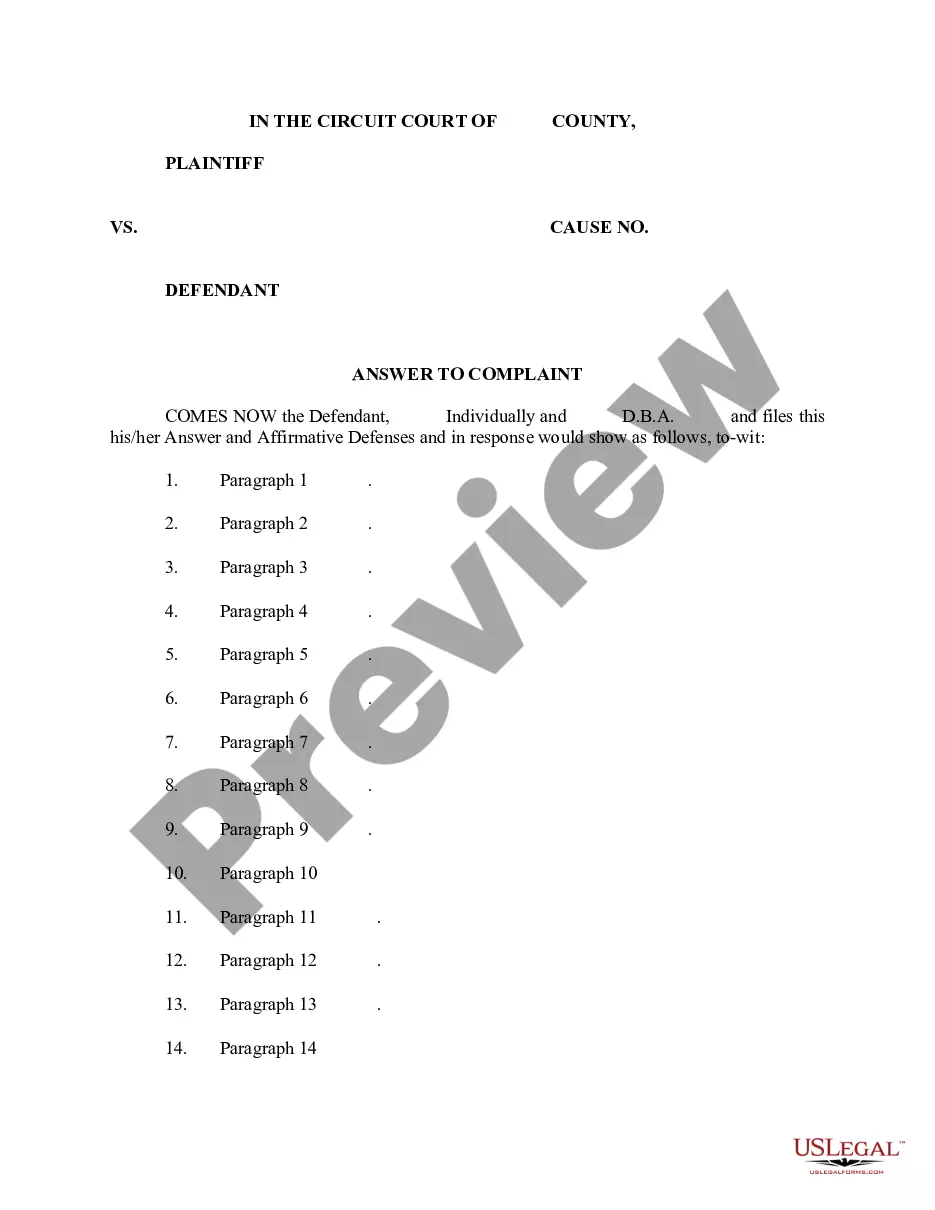
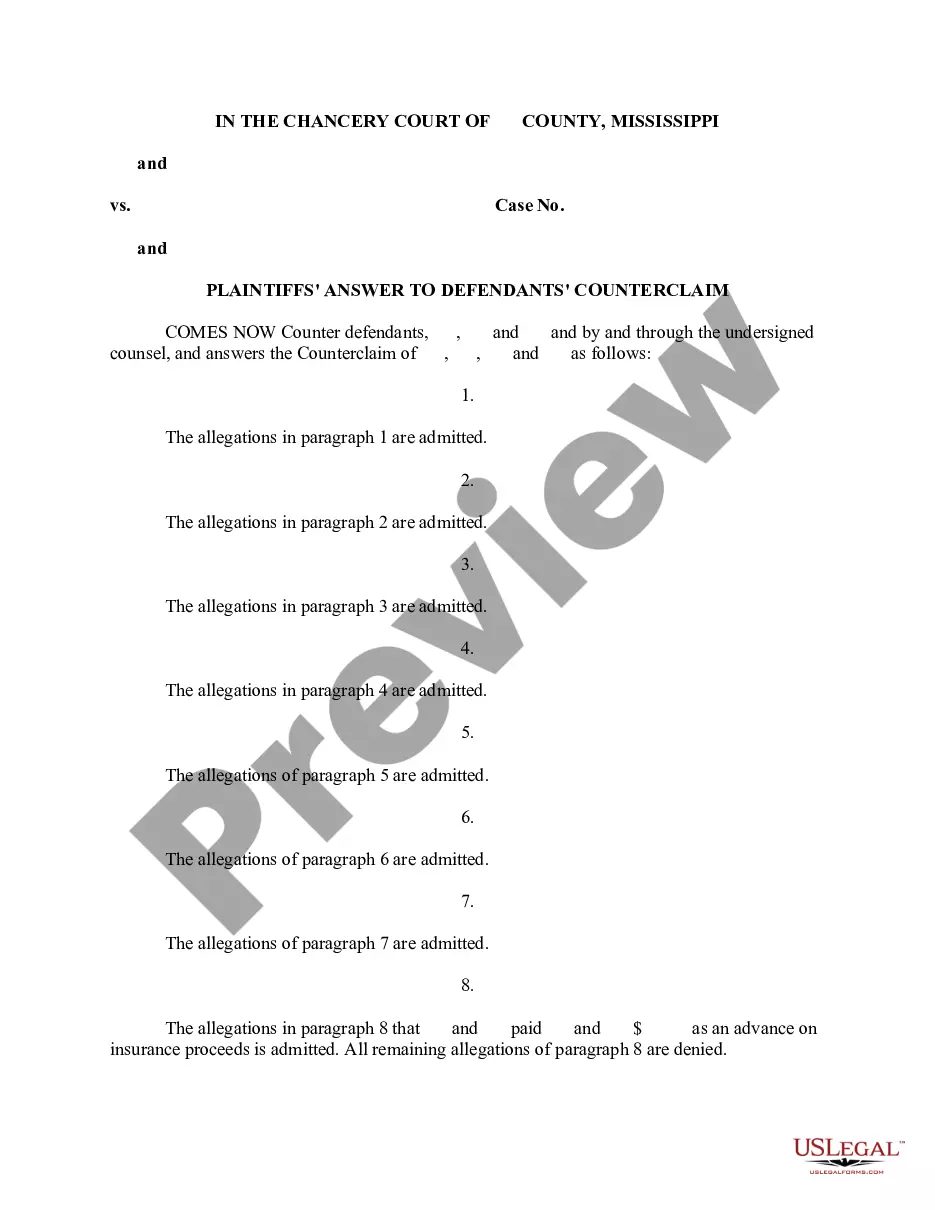
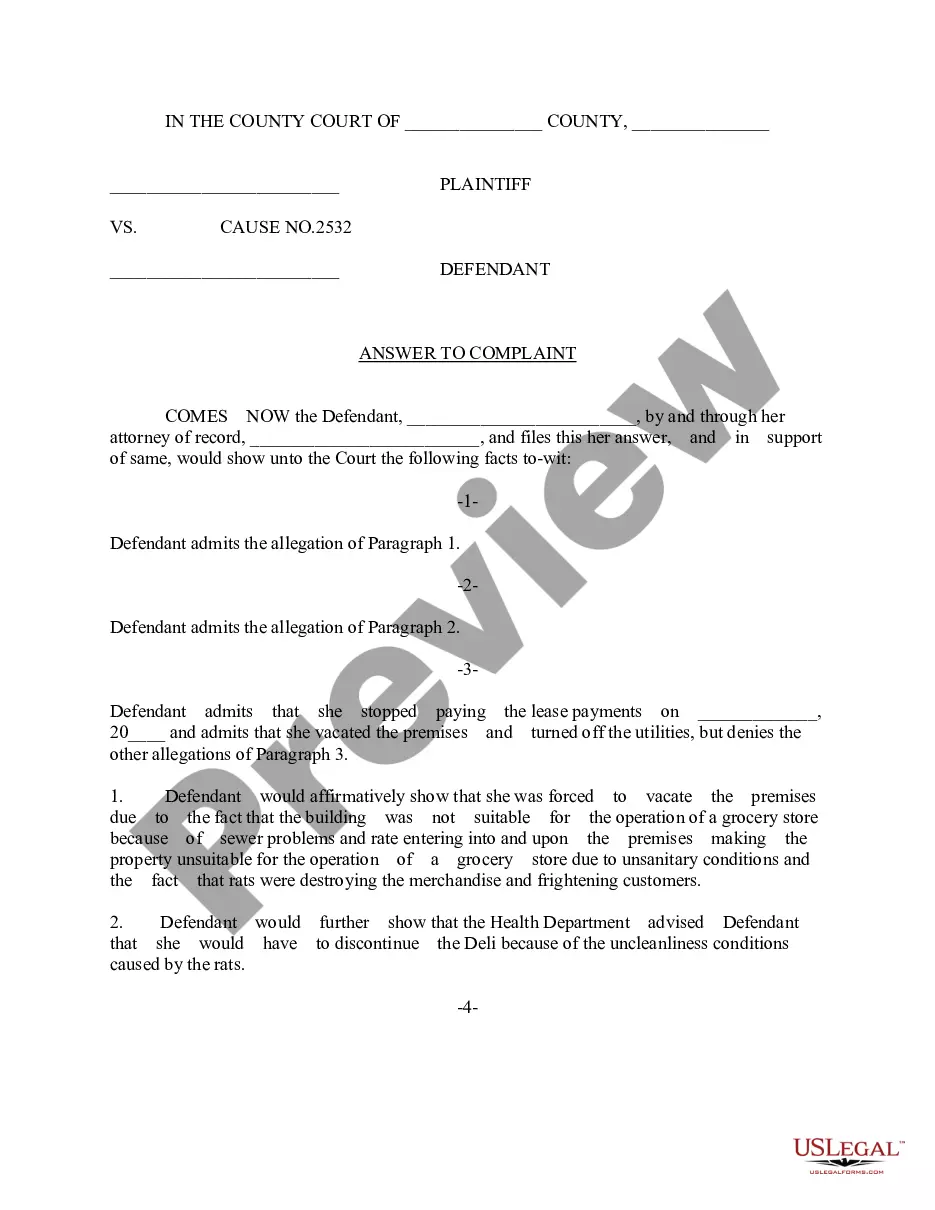
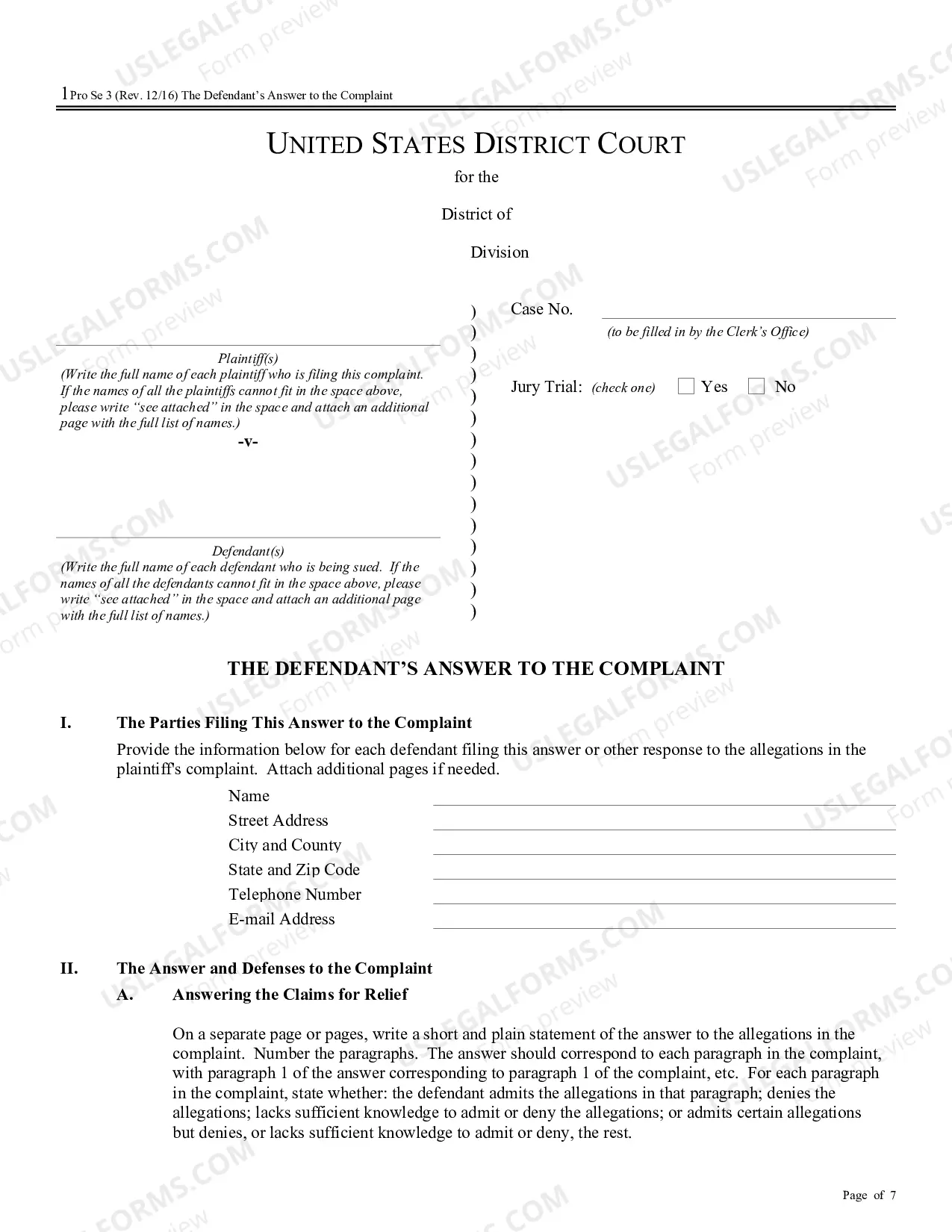
The Plaintiff's Answer to Counter Claim is a legal document used to respond to a Defendant's counterclaim in a civil lawsuit. This form specifically addresses situations where the defendant claims that the plaintiff has breached fiduciary duties or misappropriated trade secrets. It allows the plaintiff to assert defenses and clarify their position in the ongoing litigation, distinguishing it from other response forms by focusing on counterclaims specifically.
Key parts of this document
- Identification of the parties involved in the counterclaim.
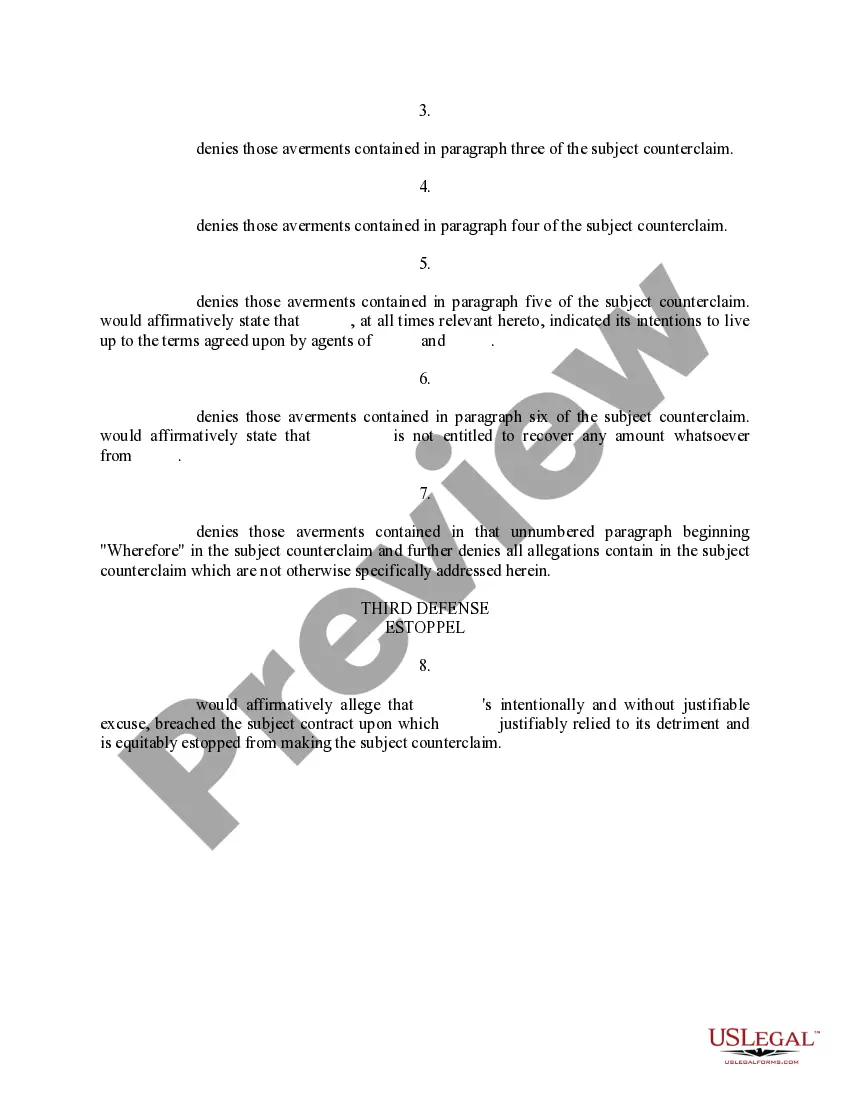
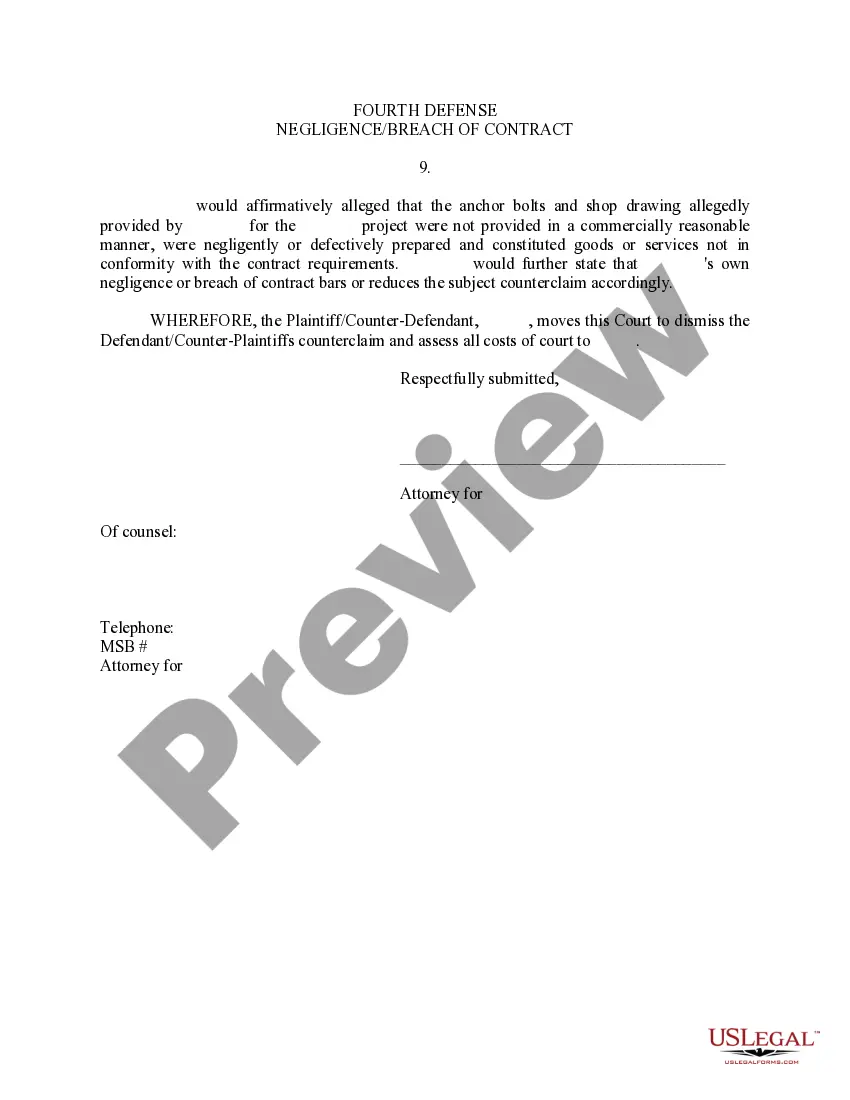
- Response to each allegation made in the counterclaim.
- Assertion of defenses, including estoppel and other relevant defenses.
- Signature and date fields to authenticate the document.
When this form is needed
This form should be used when a plaintiff needs to formally respond to a counterclaim filed by the defendant in a legal case. It is particularly useful in cases involving allegations of fiduciary breaches or misappropriation of trade secrets, ensuring the plaintiff can adequately defend against these claims in court.
Intended users of this form
This form is intended for:
- Plaintiffs in civil lawsuits who are facing counterclaims from defendants.
- Individuals and businesses who have been accused of breaching fiduciary duties or misappropriating trade secrets.
- Legal representatives acting on behalf of plaintiffs in such cases.
How to prepare this document
- Identify the parties by entering their full legal names and addresses.
- Read each allegation in the counterclaim carefully and respond to each one specifically.
- Include any defenses you intend to assert, such as estoppel.
- Review the completed form for accuracy and completeness.
- Sign and date the document in the designated areas.
Notarization guidance
Notarization is generally not required for this form. However, certain states or situations might demand it. You can complete notarization online through US Legal Forms, powered by Notarize, using a verified video call available anytime.
Get your form ready online
Our built-in tools help you complete, sign, share, and store your documents in one place.
Make edits, fill in missing information, and update formatting in US Legal Forms—just like you would in MS Word.
Download a copy, print it, send it by email, or mail it via USPS—whatever works best for your next step.
Sign and collect signatures with our SignNow integration. Send to multiple recipients, set reminders, and more. Go Premium to unlock E-Sign.
If this form requires notarization, complete it online through a secure video call—no need to meet a notary in person or wait for an appointment.
We protect your documents and personal data by following strict security and privacy standards.

Make edits, fill in missing information, and update formatting in US Legal Forms—just like you would in MS Word.

Download a copy, print it, send it by email, or mail it via USPS—whatever works best for your next step.

Sign and collect signatures with our SignNow integration. Send to multiple recipients, set reminders, and more. Go Premium to unlock E-Sign.

If this form requires notarization, complete it online through a secure video call—no need to meet a notary in person or wait for an appointment.

We protect your documents and personal data by following strict security and privacy standards.
Avoid these common issues
- Failing to respond to each allegation in the counterclaim.
- Omitting relevant defenses that could affect the outcome.
- Not signing or dating the document before submission.
- Using incorrect or outdated legal terminology.
Benefits of using this form online
- Convenient downloading options in Word and Rich Text formats.
- Editability allows users to tailor the form to their specific needs.
- Access to up-to-date templates drafted by licensed attorneys.
Legal use & context
- This form should be used in accordance with local court rules regarding the filing of responses to counterclaims.
- Timeliness is crucial; ensure you reply within the deadline set by the court.
- The validity of this form is based on its proper completion and adherence to procedural requirements.
Main things to remember
- The Plaintiff's Answer to Counter Claim is essential for addressing counterclaims in civil litigation.
- This form requires careful attention to detail when responding to allegations.
- Ensure all required fields are completed and the document is signed before submission.
Looking for another form?
Form popularity
FAQ
You have to answer the counterclaims. They have the same effect as your lawsuit. It is not wise to proceed with litigation without an attorney.
The answer to counterclaim must also state defenses to each of the Defendant's counterclaims in short, plain statements. Complete the top of the Answer to Counterclaim exactly as it appears in your, the Plaintiff's, complaint.
If you filed an answer and a counterclaim, the Plaintiff will likely file a response to your counterclaim.If you filed a motion, a hearing will be scheduled for the court to make a decision. After your motion is resolved (and assuming the case is not dismissed), the case will move forward from there.
An answer to a counterclaim is a written response by a Plaintiff to a Defendant's counterclaim. The answer to counterclaim must also state defenses to each of the Defendant's counterclaims in short, plain statements.
If a defendant does raise counterclaims in her answer, the plaintiff must respond to those counterclaims with a pleading called an "answer to a counterclaim." The form and content of an "answer to a counterclaim" is similar to that of an answer.
An answer to a counterclaim is a written response by a Plaintiff to a Defendant's counterclaim. The answer to counterclaim must also state defenses to each of the Defendant's counterclaims in short, plain statements.
Four fundamental rules of pleading are; (1) Pleadings should state facts and not law; (2) The facts stated in pleadings should be material facts; (3) Pleadings should not state the evidence; and (4) The facts in pleadings should be stated in a concise form.
The plaintiff must give you responses to your request for admissions within 30 days. You do not need to do anything if you do not get a response. The plaintiff has 30 days to deny or object to the statements.