Mississippi Answer and Counterclaim
What is this form?
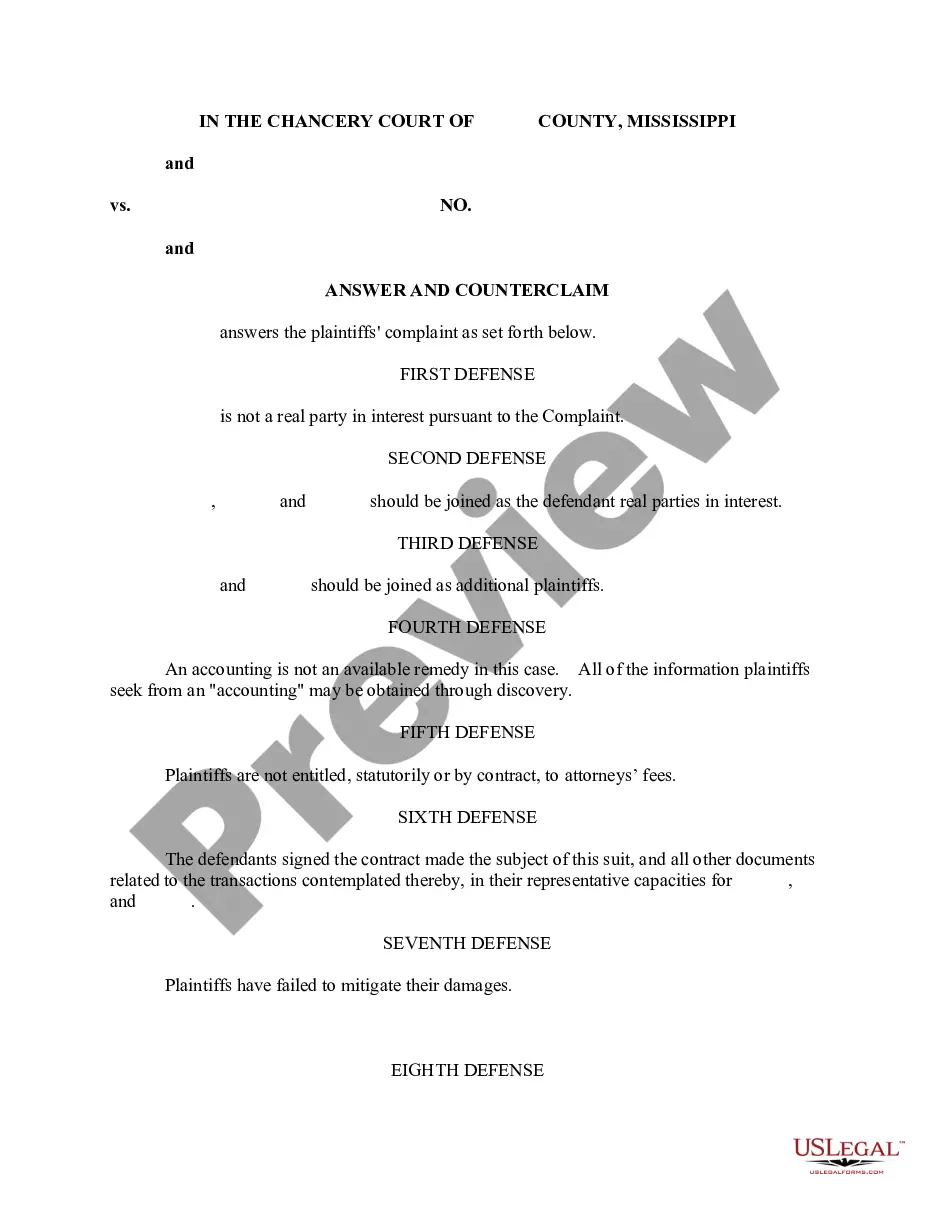
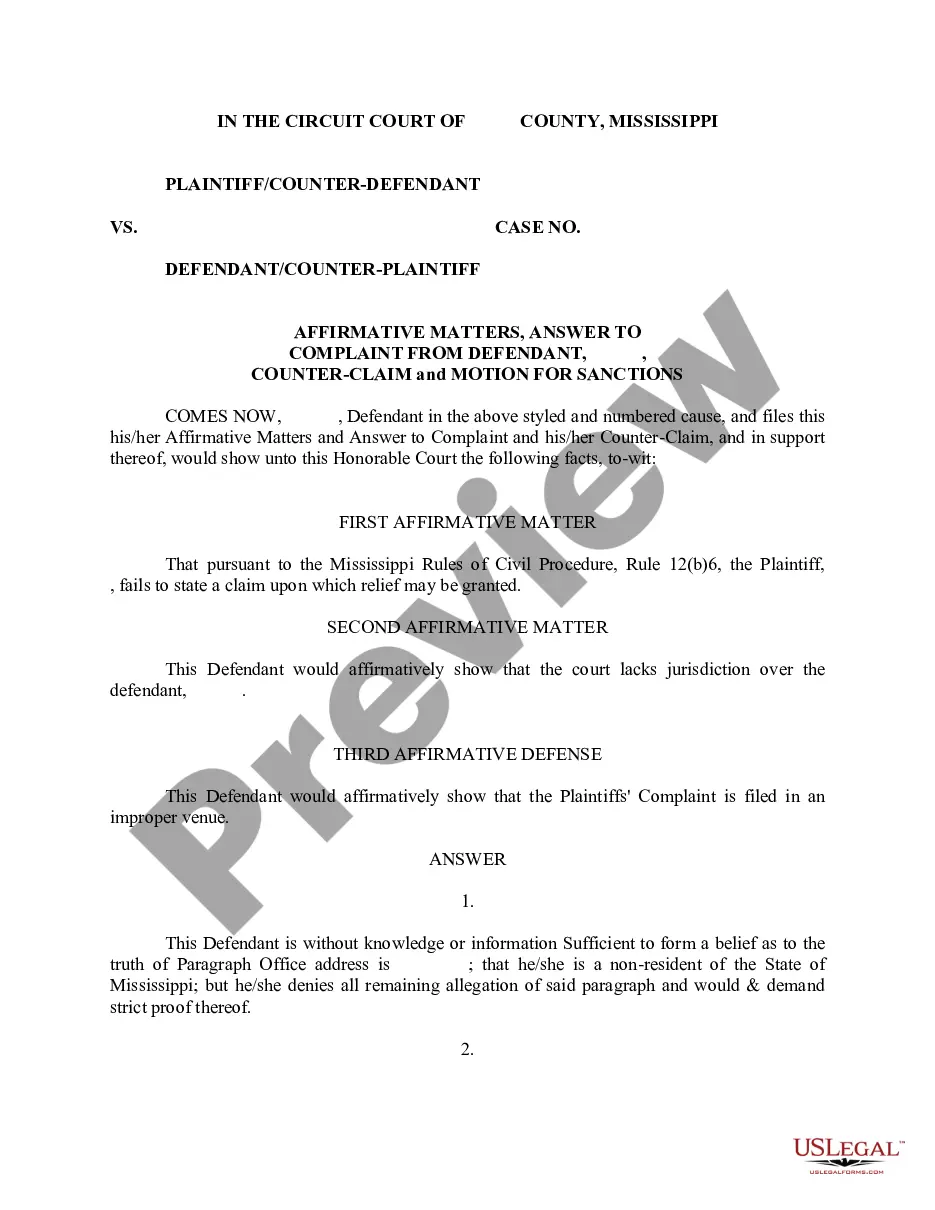
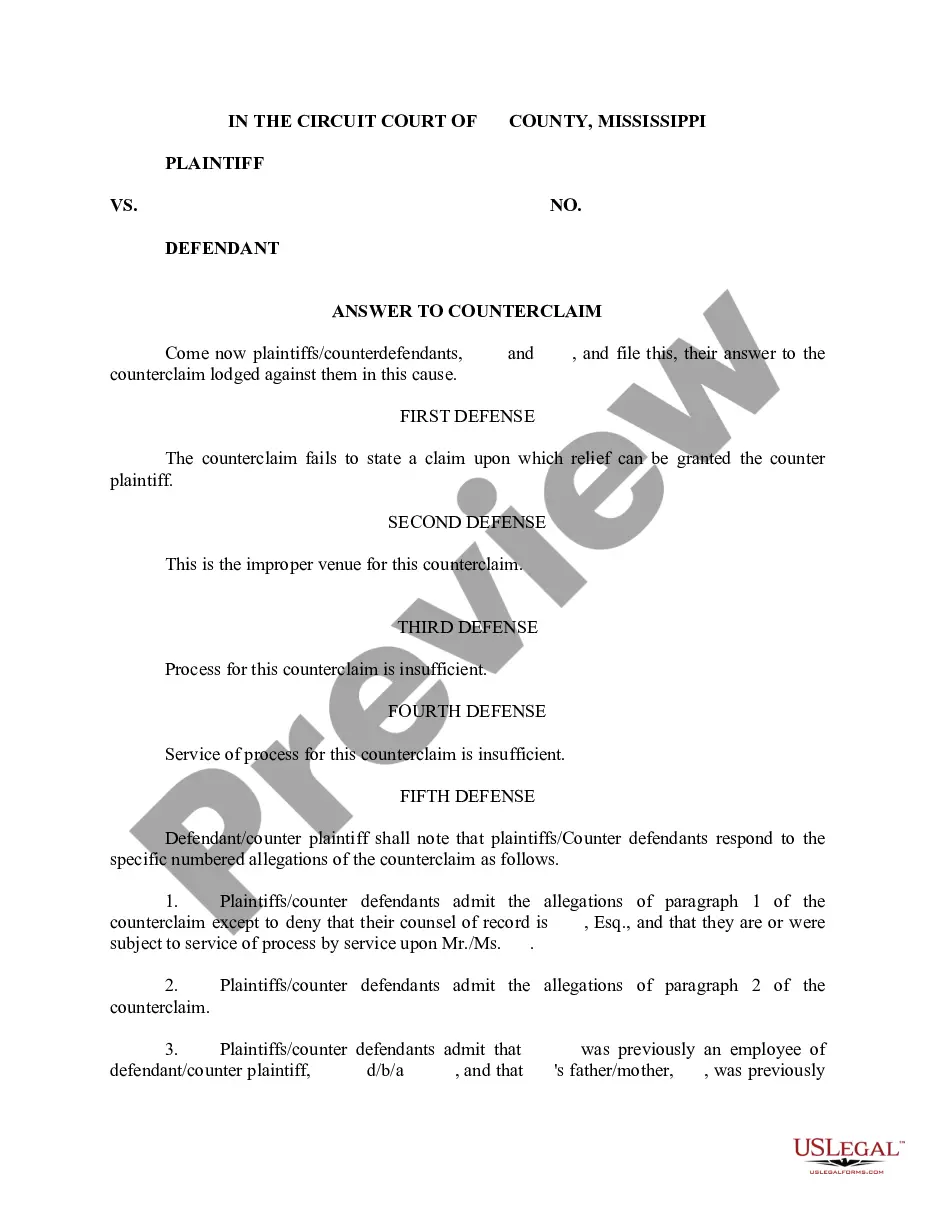
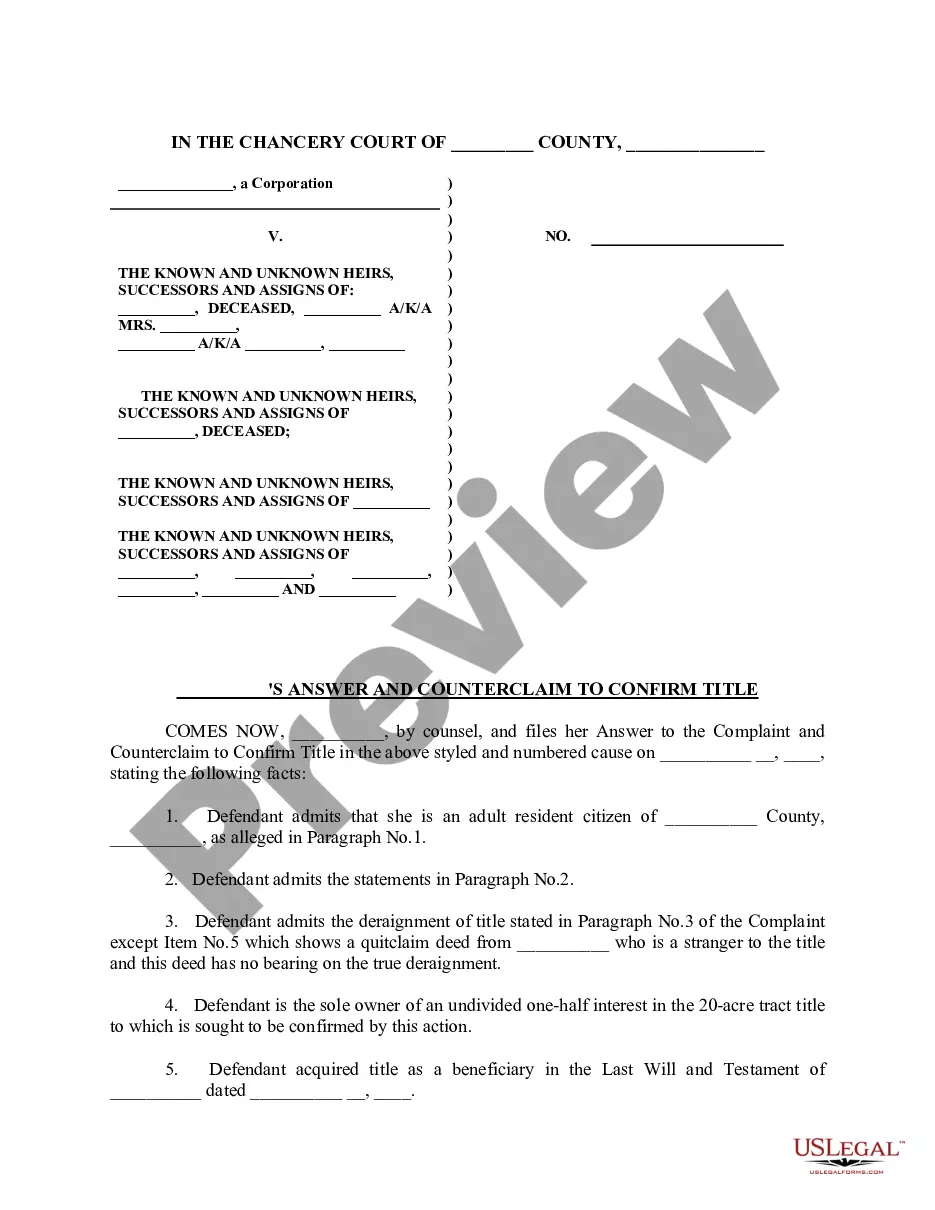
An Answer and Counterclaim is a legal document filed by a defendant in response to a Complaint, marking the formal beginning of a lawsuit. This form allows the defendant not only to respond to the allegations made by the plaintiff but also to assert their own claims against the plaintiff. It is essential for defendants seeking to defend against the suit while also pursuing their own legal remedies. This form is versatile and can be tailored for use in any type of lawsuit, ensuring comprehensive legal protection.
Key parts of this document
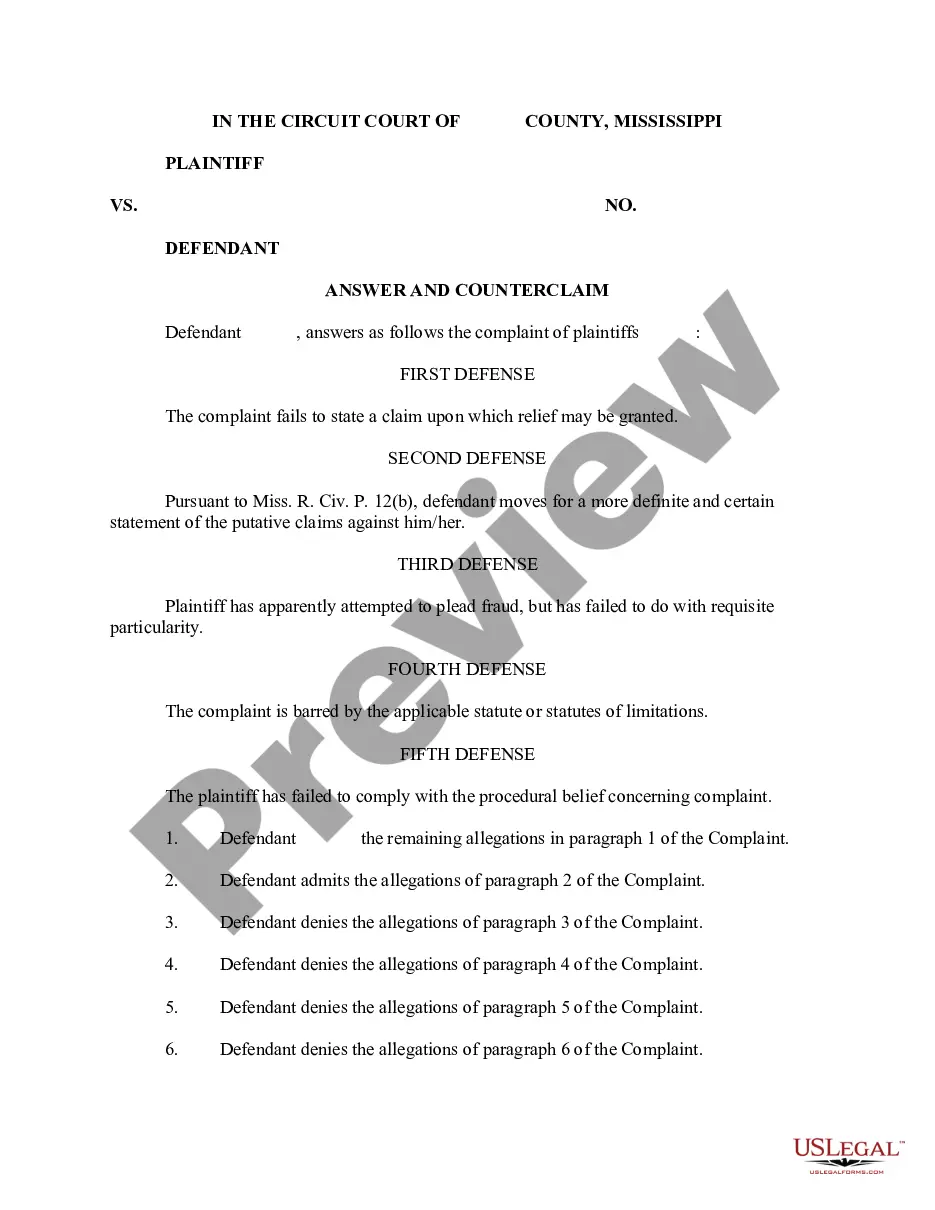
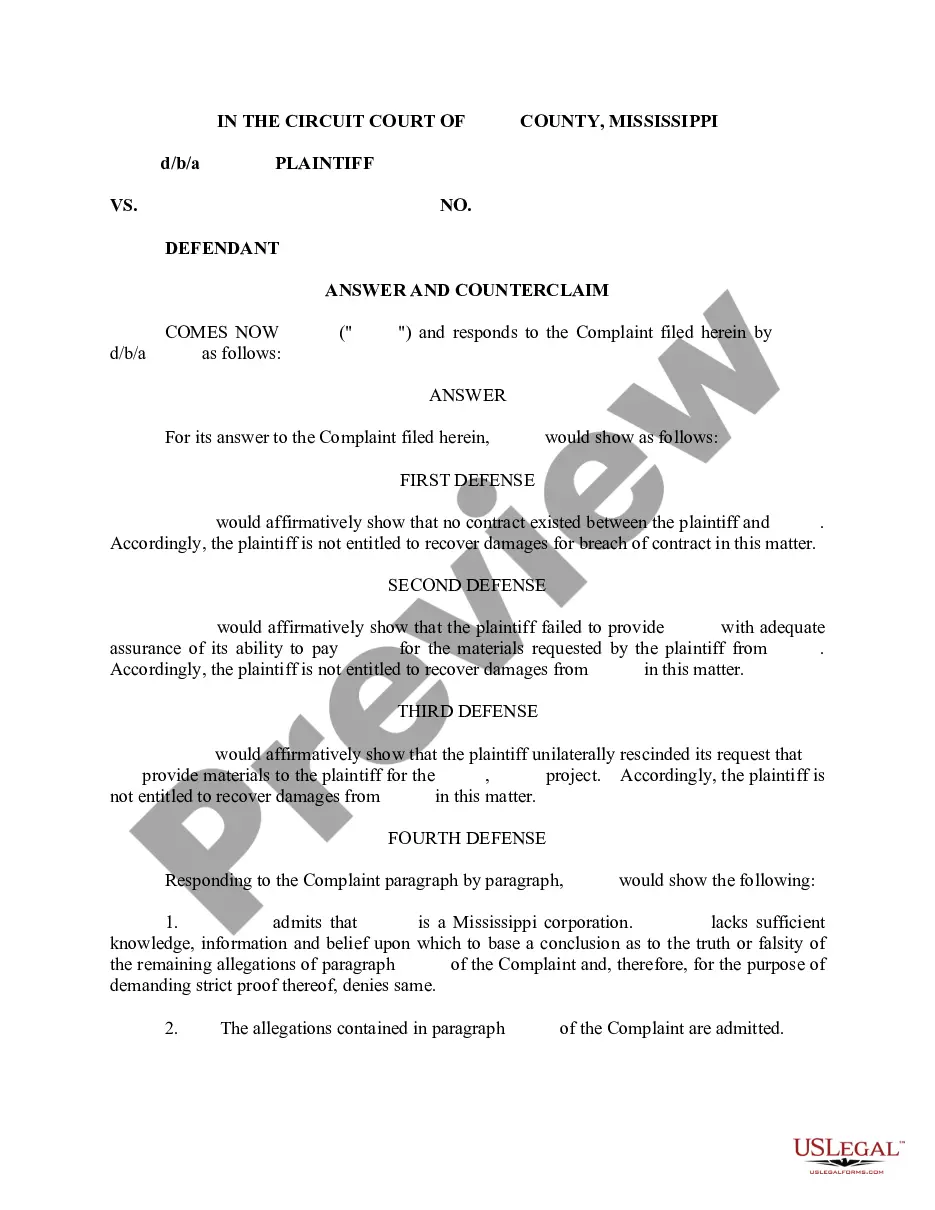
- Defendant's answer to the plaintiff's allegations.
- List of affirmative defenses raised by the defendant.
- Denials of specific allegations made in the Complaint.
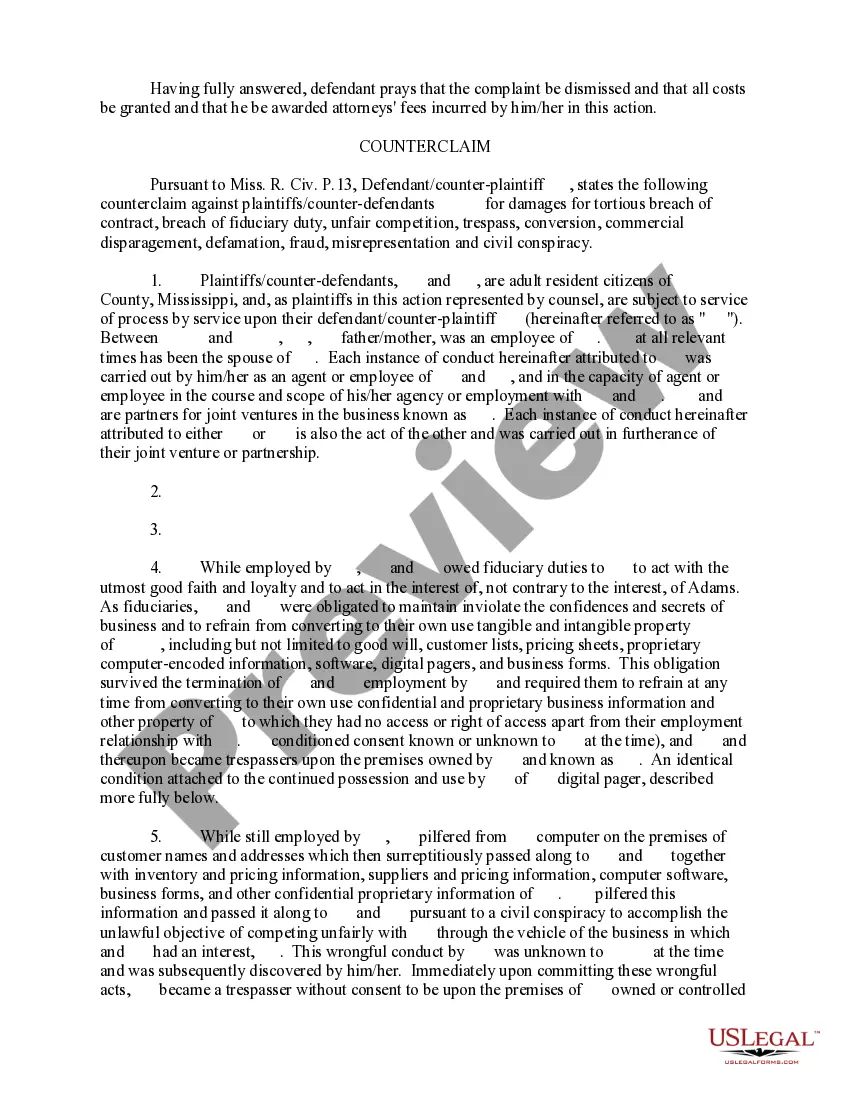
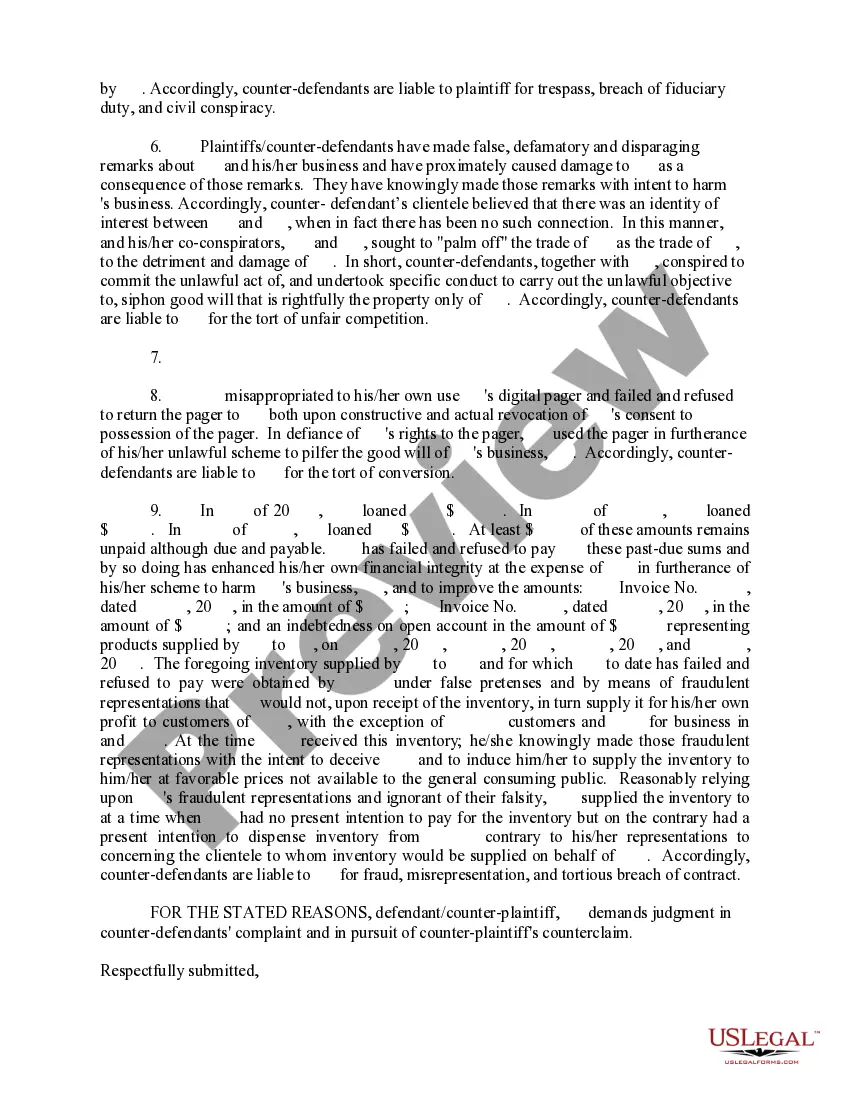
- Counterclaim section where the defendant can assert claims against the plaintiff.
- Signature line for the defendant or their attorney.

Common use cases
This form should be used when a defendant is responding to a lawsuit. It is necessary when the defendant wants to dispute the claims in the Complaint and also file their own claims against the plaintiff. This is particularly important in scenarios such as contractual disputes, tort claims, or business-related litigation where the defendant has valid counterclaims.
Who needs this form
Individuals or businesses who are defendants in a lawsuit may use this form. Specific users include:
- Defendants looking to provide a formal response to a lawsuit.
- Individuals or entities wishing to assert counterclaims against the plaintiff.
- Parties not represented by an attorney who need a structured way to present their defense.
Instructions for completing this form
- Identify the parties involved: Clearly name the plaintiff and defendant.
- Answer each allegation: Respond to each paragraph in the Complaint by admitting, denying, or stating insufficient information.
- Specify affirmative defenses: List any defenses you are raising against the plaintiff's claims.
- Draft your counterclaims: Clearly articulate any claims you are making against the plaintiff, including the facts supporting these claims.
- Sign and date the form: Ensure the defendant's signature is affixed along with the date of signing.
Notarization requirements for this form
Notarization is generally not required for this form. However, certain states or situations might demand it. You can complete notarization online through US Legal Forms, powered by Notarize, using a verified video call available anytime.
Get your form ready online
Our built-in tools help you complete, sign, share, and store your documents in one place.
Make edits, fill in missing information, and update formatting in US Legal Forms—just like you would in MS Word.
Download a copy, print it, send it by email, or mail it via USPS—whatever works best for your next step.
Sign and collect signatures with our SignNow integration. Send to multiple recipients, set reminders, and more. Go Premium to unlock E-Sign.
If this form requires notarization, complete it online through a secure video call—no need to meet a notary in person or wait for an appointment.
We protect your documents and personal data by following strict security and privacy standards.

Make edits, fill in missing information, and update formatting in US Legal Forms—just like you would in MS Word.

Download a copy, print it, send it by email, or mail it via USPS—whatever works best for your next step.

Sign and collect signatures with our SignNow integration. Send to multiple recipients, set reminders, and more. Go Premium to unlock E-Sign.

If this form requires notarization, complete it online through a secure video call—no need to meet a notary in person or wait for an appointment.

We protect your documents and personal data by following strict security and privacy standards.
Common mistakes to avoid
- Failing to respond to all allegations in the Complaint.
- Not stating sufficient facts to support counterclaims.
- Missing deadlines for filing the Answer and Counterclaim.
- Not signing the document properly.
Why use this form online
- Immediate access to a professionally drafted legal form.
- Easy customization to suit specific legal needs and jurisdictional requirements.
- Downloadable in various file formats for convenience.
- Guidance available to help navigate the legal process effectively.
What to keep in mind
- An Answer and Counterclaim allows defendants to respond to lawsuits while asserting their claims.
- This form includes both defenses against the plaintiff's allegations and counterclaims.
- Completing the form thoroughly and accurately is essential for ensuring a robust legal response.
Looking for another form?

Form popularity
FAQ
You can file an answer or a general denial. Filing an answer. You can file a motion In certain situations, you can respond to the lawsuit by filing a motion (a request) that usually tells the court that the plaintiff made a mistake in the lawsuit. Talk to a lawyer!
(B) A party must serve an answer to a counterclaim or crossclaim within 21 days after being served with the pleading that states the counterclaim or crossclaim. (C) A party must serve a reply to an answer within 21 days after being served with an order to reply, unless the order specifies a different time.
1 attorney answer It does not need to be notarized, but a copy must be mailed to every other party, in addition to being filed with the court. Be sure to put your name, address, and phone number on it.
TIME TO RESPOND In addition, a party must respond to a counterclaim or cross-claim within 21 days of being served with the pleading that states the claim(s) (FRCP 12(a)(1)(B)).
In order to make a counterclaim, you first draft your response to the lawsuit. Then you need to describe the factual circumstances surrounding your claim and make a demand for compensation or other relief. Be sure you do not confuse counterclaims with cross-complaints.
Provide the name of the court at the top of the Answer. You can find the information on the summons. List the name of the plaintiff on the left side. Write the case number on the right side of the Answer. Address the Judge and discuss your side of the case. Ask the judge to dismiss the case.
When drafting an answer, one must: (1) follow the local, state, and federal court rules; (2) research the legal claims in the adversary's complaint; (3) respond to the adversary's factual allegations; and (4) assert affirmative defenses, counterclaims, cross-claims, or third-party claims, if applicable.
Current filing fees are: In district court, the fee for defendant's first filing is typically $223.00, but that might vary depending on the type of case. To verify your filing fee, click to visit Filing Fees and Waivers. In justice court, the fee for defendant's first filing is typically $71.
Read the summons and make sure you know the date you must answer by. Read the complaint carefully. Write your answer. Sign and date the answer. Make copies for the plaintiff and yourself. Mail a copy to the plaintiff. File your answer with the court by the date on the summons.