Minnesota Fiduciary Deed for use by Executors, Trustees, Trustors, Administrators and other Fiduciaries
What this document covers
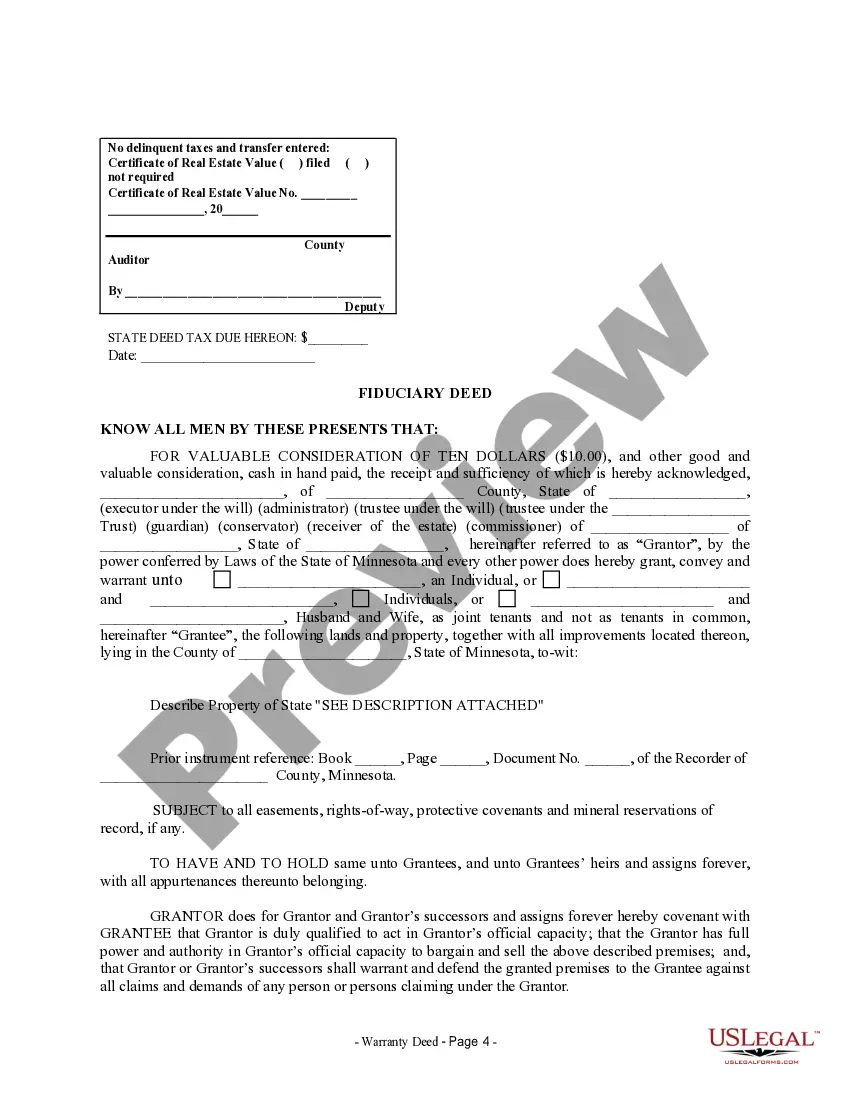
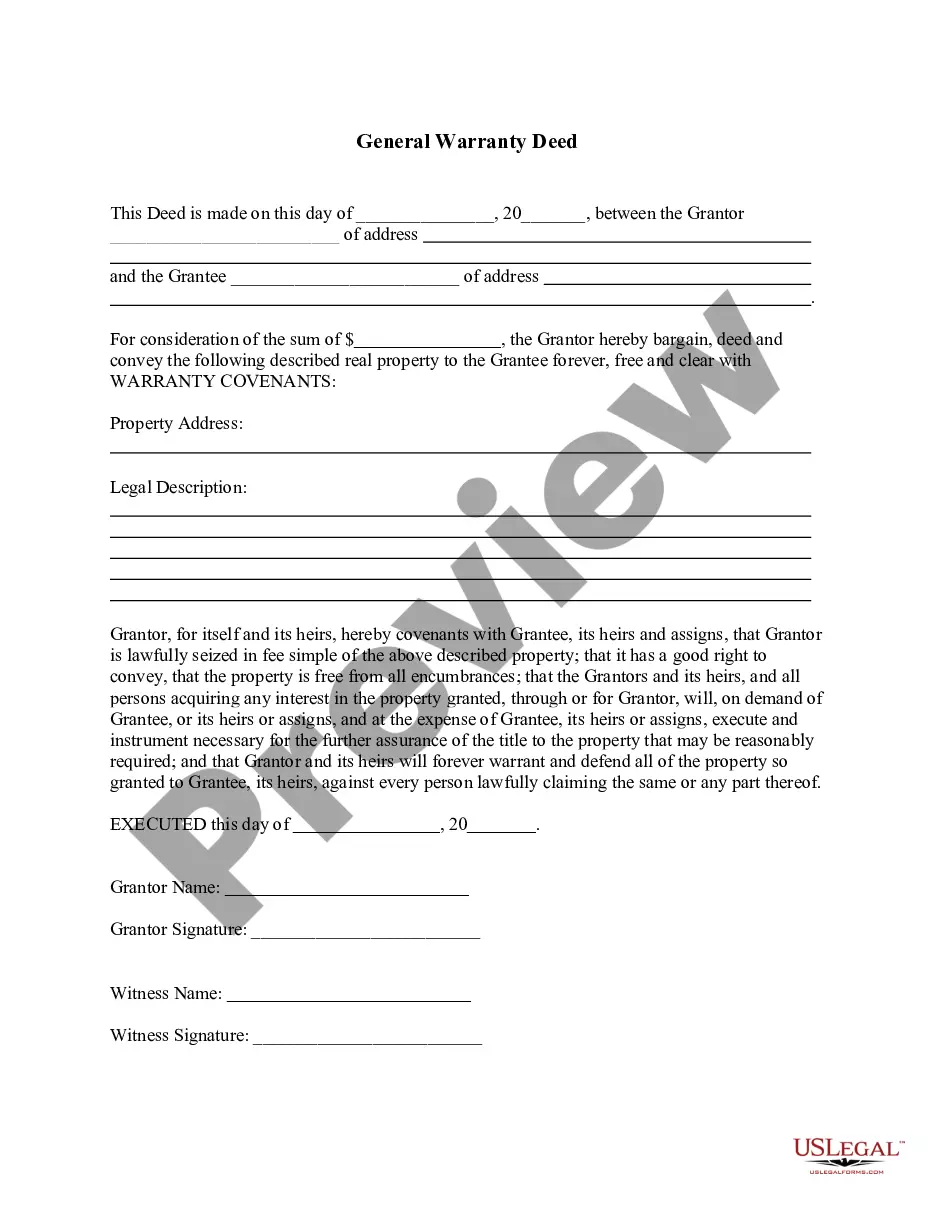
The Fiduciary Deed is a specific legal document used by individuals acting in fiduciary roles, such as executors, trustees, and administrators. This form allows the transfer of property from a fiduciary to a beneficiary or new owner, providing a clear record of the transaction. Unlike standard deeds, this form is tailored for those managing assets on behalf of others, ensuring legal protections for all parties involved.
Main sections of this form
- Identification of the Grantor and Grantee, including their roles (executor, trustee, etc.)
- Legal description of the property being transferred
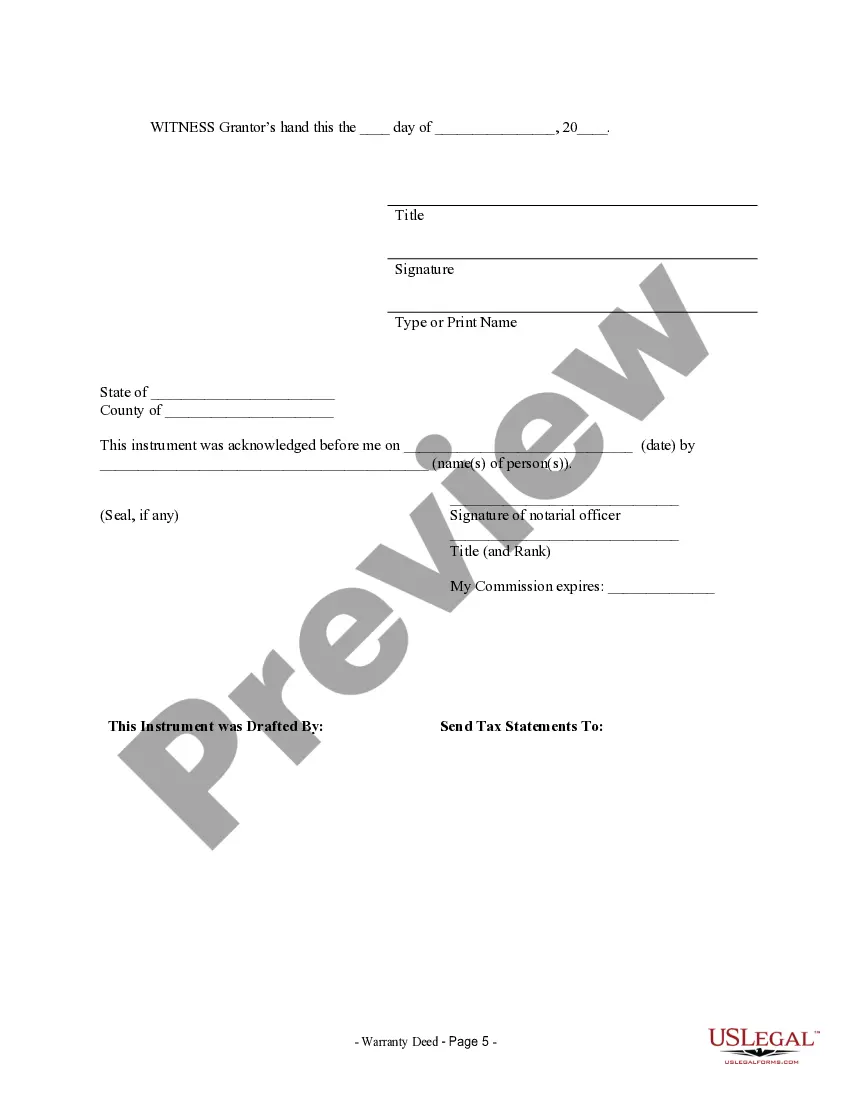
- Notarization and signing requirements
- Disclaimer regarding warranties and liabilities


Common use cases
This form is used when a fiduciary needs to convey property to another party. Examples include transferring real estate as part of settling an estate, managing a trust, or distributing assets to heirs or beneficiaries. It is essential for ensuring that the transaction complies with legal standards and protects the interests of all parties.
Who needs this form
- Executors of a will overseeing estate distribution
- Trustees managing a trust and its assets
- Administrators handling intestate estates
- Guardians or conservators overseeing the estate of a minor or incapacitated individual
How to prepare this document
- Identify the parties involved, including the Grantor and Grantee.
- Specify the legal description of the property being conveyed.
- Fill in the relevant dates and sign the document in the presence of a notary.
- Ensure all required fields are completed accurately for legal validity.
- Review the document for any applicable local laws or conditions.
Is notarization required?
Notarization is required for this form to take effect. Our online notarization service, powered by Notarize, lets you verify and sign documents remotely through an encrypted video session, available 24/7.
Get your form ready online
Our built-in tools help you complete, sign, share, and store your documents in one place.
Make edits, fill in missing information, and update formatting in US Legal Forms—just like you would in MS Word.
Download a copy, print it, send it by email, or mail it via USPS—whatever works best for your next step.
Sign and collect signatures with our SignNow integration. Send to multiple recipients, set reminders, and more. Go Premium to unlock E-Sign.
If this form requires notarization, complete it online through a secure video call—no need to meet a notary in person or wait for an appointment.
We protect your documents and personal data by following strict security and privacy standards.
Make edits, fill in missing information, and update formatting in US Legal Forms—just like you would in MS Word.
Download a copy, print it, send it by email, or mail it via USPS—whatever works best for your next step.
Sign and collect signatures with our SignNow integration. Send to multiple recipients, set reminders, and more. Go Premium to unlock E-Sign.

If this form requires notarization, complete it online through a secure video call—no need to meet a notary in person or wait for an appointment.
We protect your documents and personal data by following strict security and privacy standards.
Common mistakes
- Failing to accurately describe the property being transferred.
- Not properly identifying all parties involved in the transaction.
- Neglecting to sign or notarize the document correctly.
Benefits of completing this form online
- Convenience of downloading and completing the form at your own pace.
- Editability to ensure all information is accurate before printing.
- Access to forms drafted by licensed attorneys, ensuring legal compliance.
Quick recap
- The Fiduciary Deed is essential for transferring property by an executor, trustee, or guardian.
- It is crucial to fully complete the form, especially regarding the property description and parties involved.
- Filing the deed with the appropriate authorities is necessary to finalize the property transfer.
Looking for another form?
Form popularity
FAQ
Yes, trustees are considered fiduciaries because they hold and manage assets on behalf of another party, typically the trustor or beneficiaries. Their role involves a legal obligation to act in the best interest of the beneficiaries, adhering to the terms of the trust. This relationship highlights the importance of a Minnesota Fiduciary Deed for use by Executors, Trustees, Trustors, Administrators, and other Fiduciaries, as it ensures the proper legal framework is followed.
A fiduciary deed is a broad term that encompasses various deeds executed by fiduciaries, including trustees, executors, and administrators. In contrast, an executor deed specifically refers to a deed executed by an executor of an estate to transfer property as directed by the will. Understanding these distinctions can help you navigate the legal landscape more effectively. Using a Minnesota Fiduciary Deed for use by Executors, Trustees, Trustors, Administrators, and other Fiduciaries ensures you adhere to the necessary legal framework.
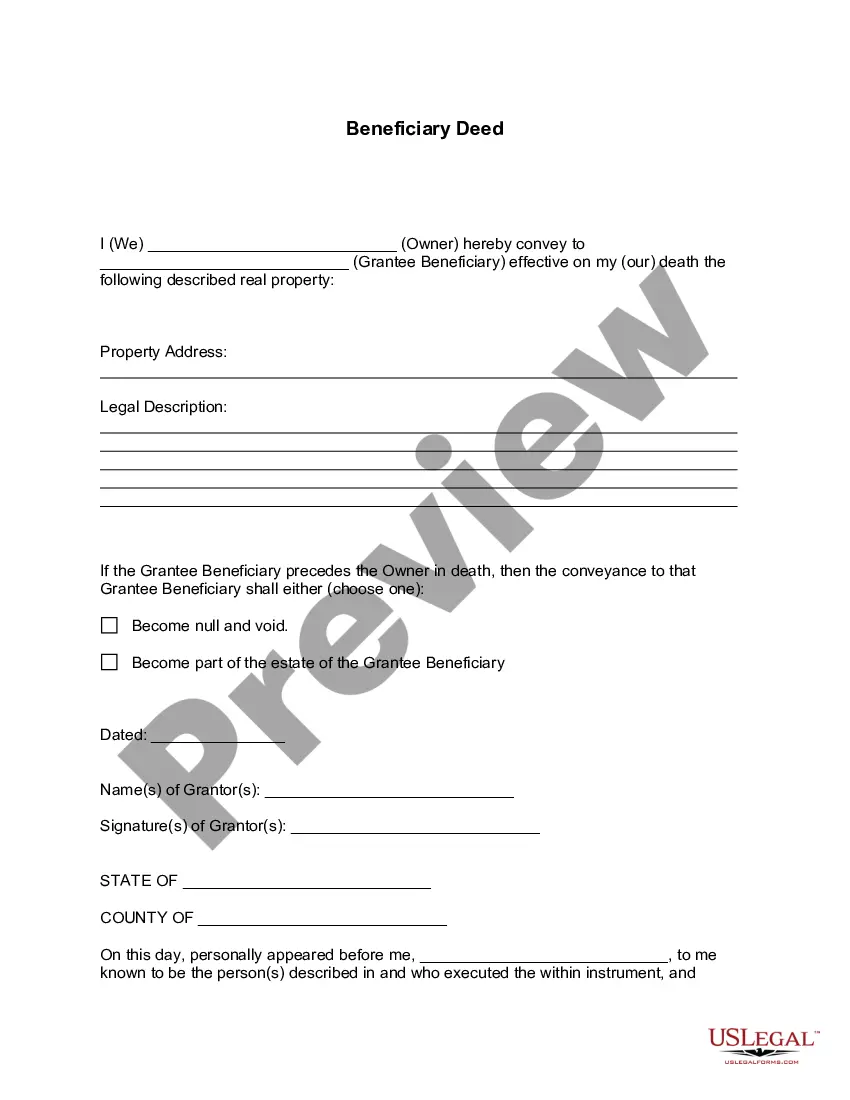
To file a transfer on death deed in Minnesota, you need to prepare the deed and ensure it meets state requirements. After completing the deed, you should sign it in front of a notary public. Finally, you must record the deed with the county recorder's office where the property is located. This process is crucial for establishing a Minnesota Fiduciary Deed for use by Executors, Trustees, Trustors, Administrators, and other Fiduciaries.
Three basic types of deeds commonly used are the grant deed, the quitclaim deed, and the warranty deed. A sample grant deed. the property he or she is transferring is implied from such language.
The words with fiduciary covenants means the seller promises to the buyer that he or she is duly appointed, qualified and acting in his or her fiduciary capacity, is duly authorized to make the sale and convey the property to buyer.
A fiduciary deed is for use by a fiduciary such as an executor or administrator of an estate or a trustee of a trust. In this type of deed there is a warranty, but only as a fiduciary. A fiduciary does not own the property, rather they essentially manage it for another.
The General Warranty Deed. A general warranty deed provides the highest level of protection for the buyer because it includes significant covenants or warranties conveyed by the grantor to the grantee. The Special Warranty Deed. The Bargain and Sale Deed. The Quitclaim Deed.