Louisiana Release and Indemnity Agreement
Understanding this form
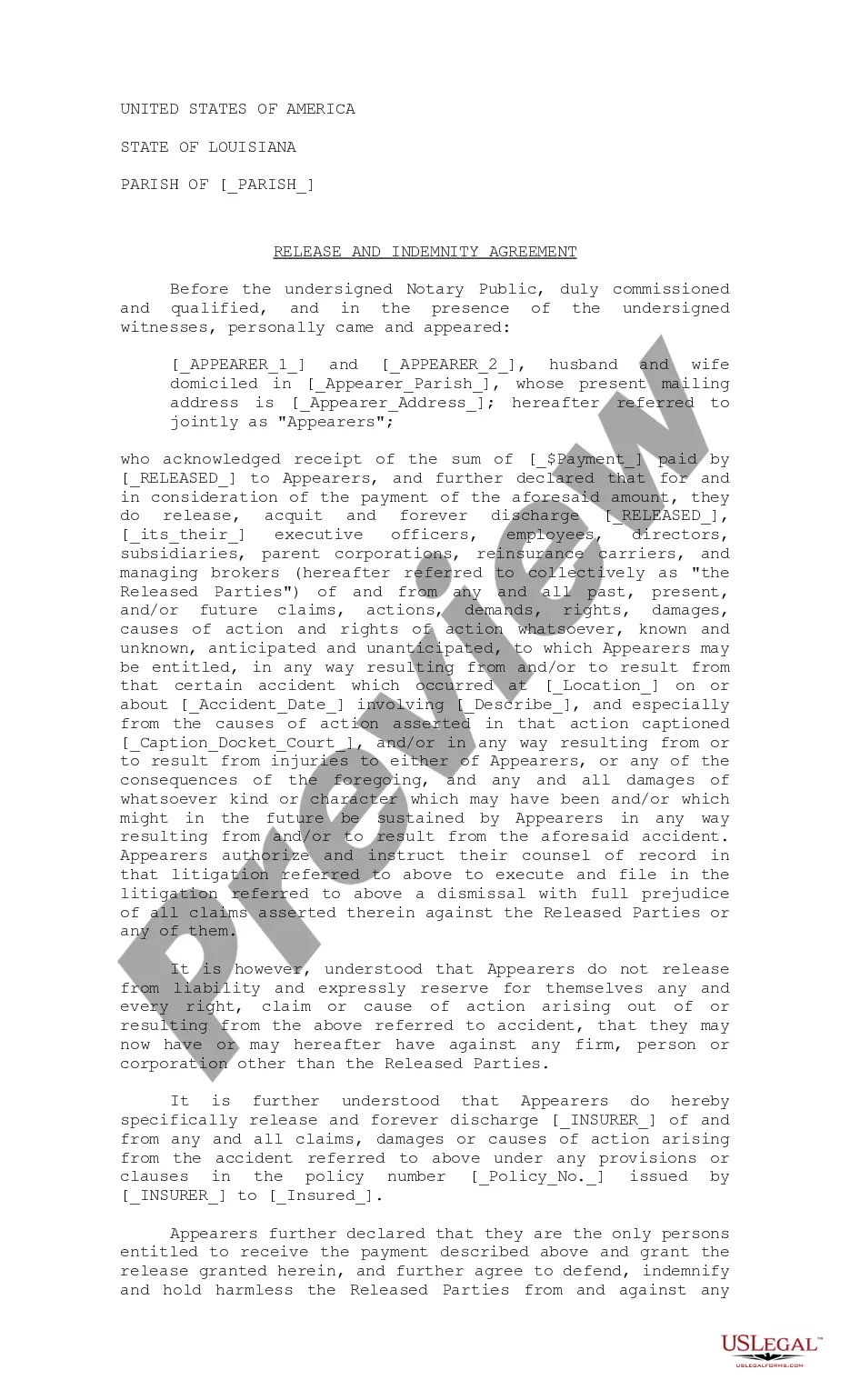
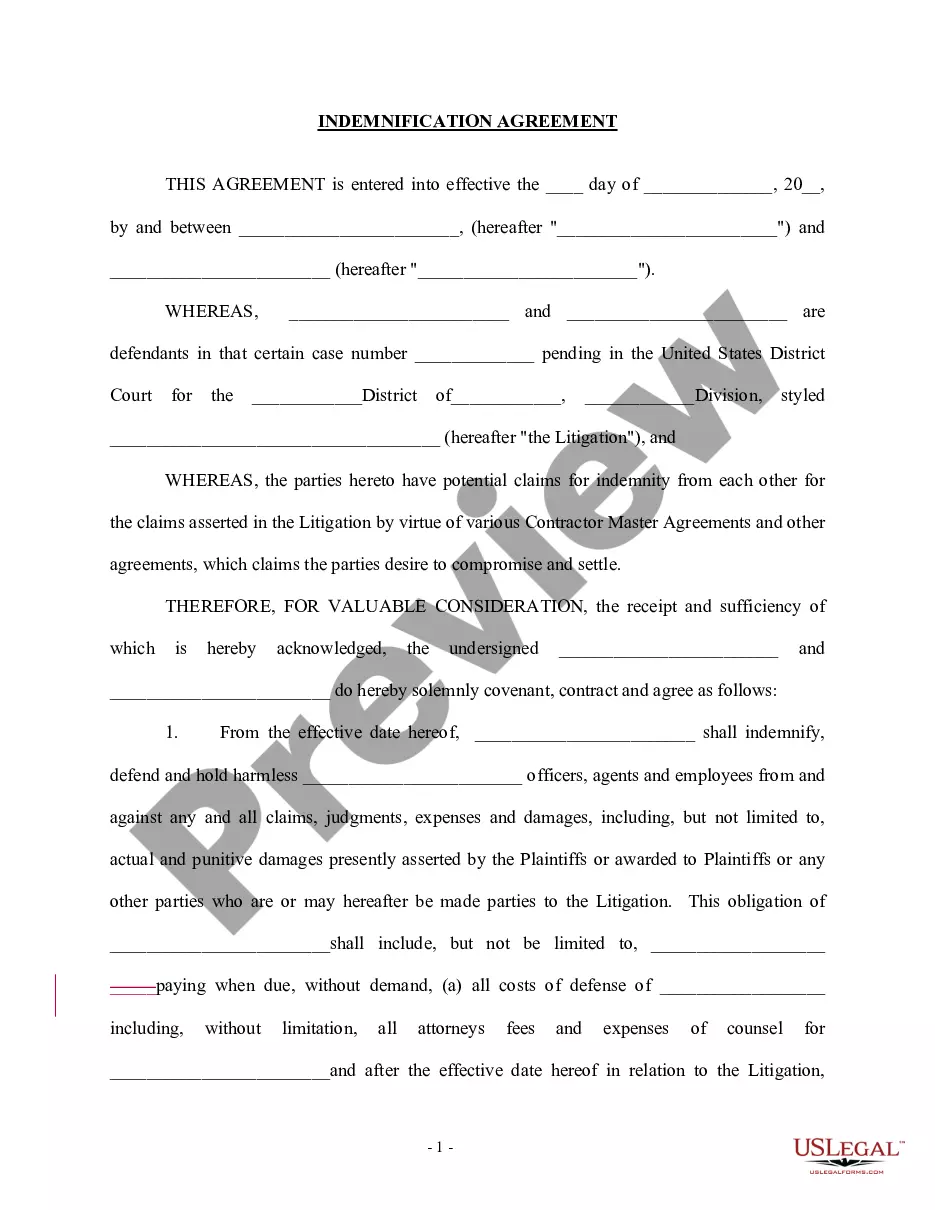
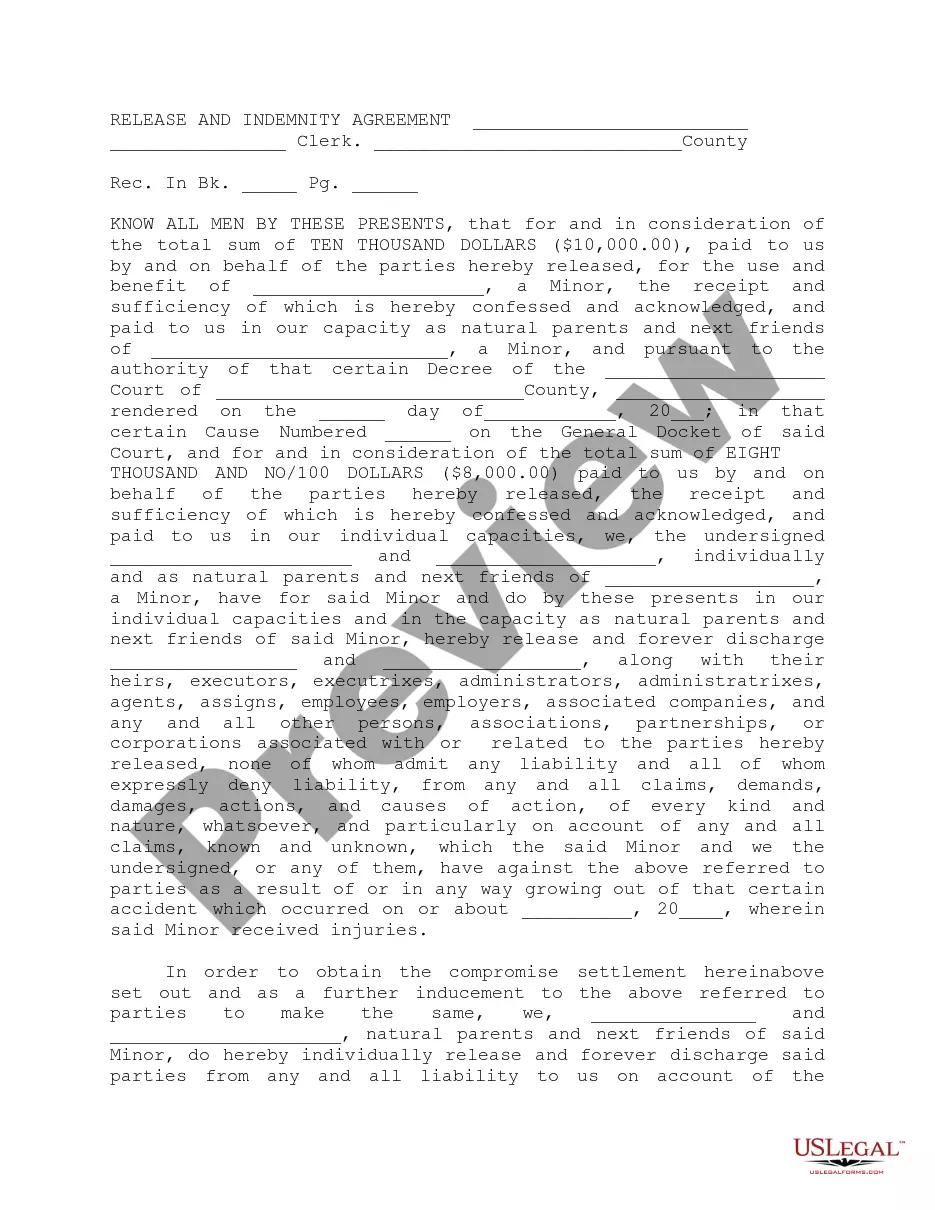
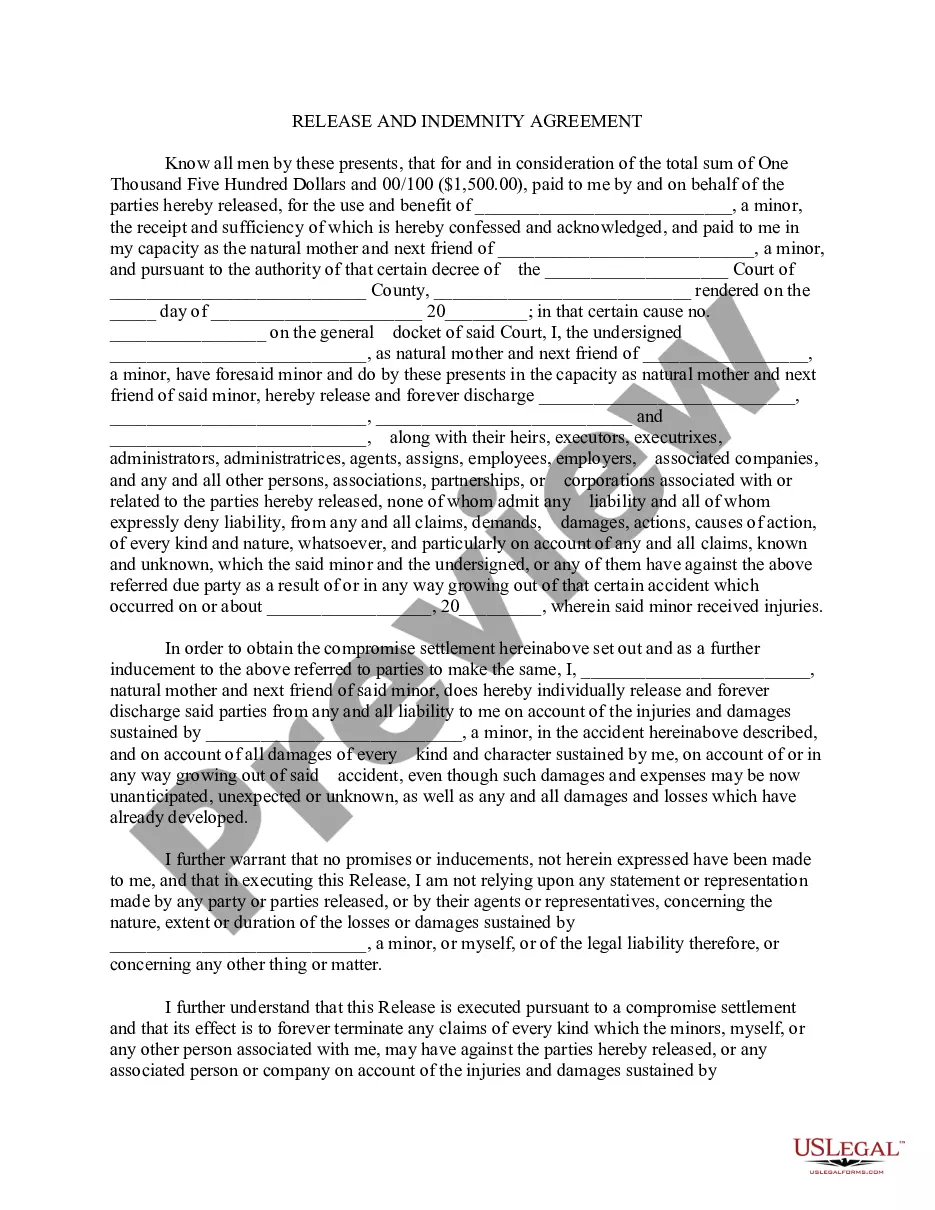
The Release and Indemnity Agreement is a legal document that formally releases one party from liability for certain claims, typically following an accident or injury. This form differs from other releases as it includes indemnity language, which protects the released party from future claims related to the incident. It is crucial for resolving disputes without further litigation.
Key parts of this document
- Details of the parties involved, including names and addresses.
- Specification of the accident or incident prompting the release.
- Amount paid for the release and indemnity agreement.
- Authorization for dismissal of claims related to the incident.
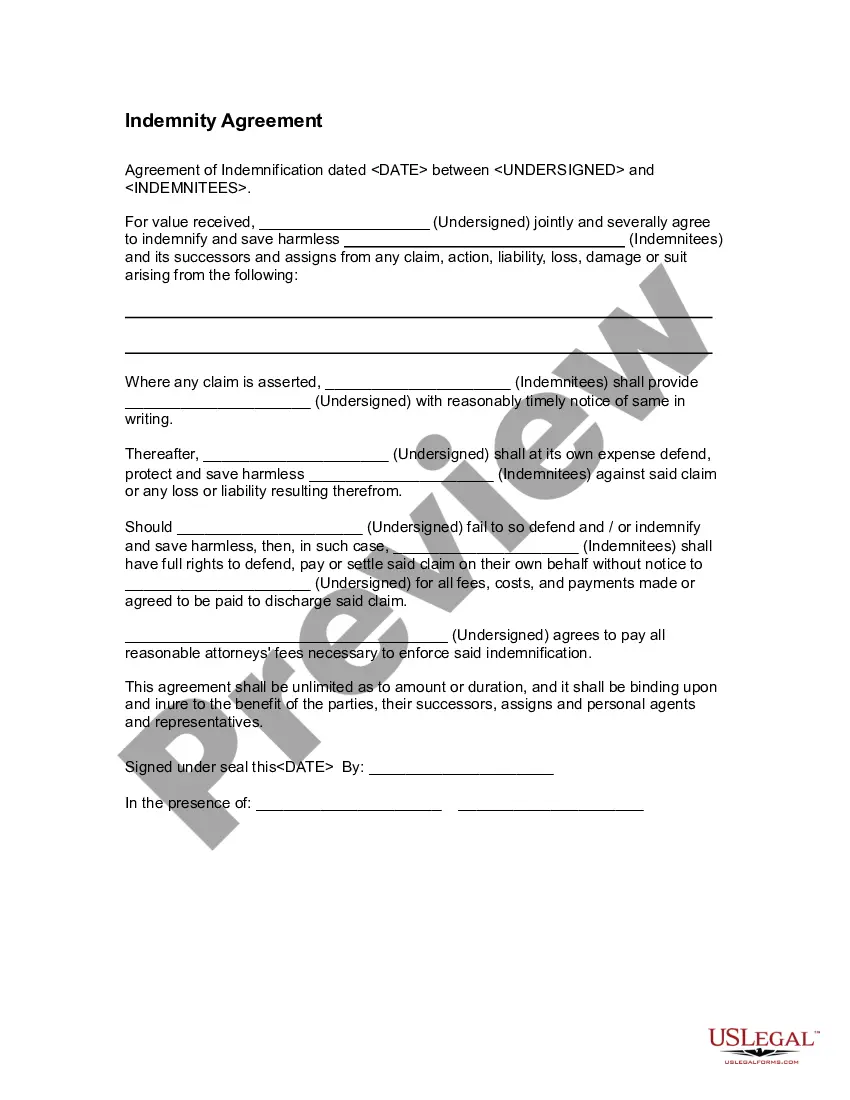
- Indemnification clause protecting the released parties from future claims.
- Notary acknowledgment section to verify signatures.


Situations where this form applies
This form is typically used when an individual has had an accident that has resulted in injury or damage and seeks to settle the matter with a payment. It is appropriate when both parties agree on the payment to resolve the claims and wish to avoid further legal action.
Intended users of this form
- Individuals who have been injured in an accident and have an active claim.
- Parties looking to settle a dispute without going to court.
- Those who want to protect themselves from future claims associated with the released party.
How to prepare this document
- Identify the parties involved, including their full names and mailing addresses.
- Provide details about the accident, including its location and date.
- Enter the settlement amount being paid for the release.
- Include the relevant litigation details, such as the case caption and court information.
- Have all parties sign the document in the presence of a notary public.
Does this document require notarization?
To make this form legally binding, it must be notarized. Our online notarization service, powered by Notarize, lets you verify and sign documents remotely through an encrypted video session.
Get your form ready online
Our built-in tools help you complete, sign, share, and store your documents in one place.
Make edits, fill in missing information, and update formatting in US Legal Forms—just like you would in MS Word.
Download a copy, print it, send it by email, or mail it via USPS—whatever works best for your next step.
Sign and collect signatures with our SignNow integration. Send to multiple recipients, set reminders, and more. Go Premium to unlock E-Sign.
If this form requires notarization, complete it online through a secure video call—no need to meet a notary in person or wait for an appointment.
We protect your documents and personal data by following strict security and privacy standards.

Make edits, fill in missing information, and update formatting in US Legal Forms—just like you would in MS Word.

Download a copy, print it, send it by email, or mail it via USPS—whatever works best for your next step.

Sign and collect signatures with our SignNow integration. Send to multiple recipients, set reminders, and more. Go Premium to unlock E-Sign.

If this form requires notarization, complete it online through a secure video call—no need to meet a notary in person or wait for an appointment.

We protect your documents and personal data by following strict security and privacy standards.
Avoid these common issues
- Failing to include all relevant parties involved in the agreement.
- Not providing a clear description of the accident and claims being released.
- Omitting signatures or failing to have the document notarized when required.
Why complete this form online
- Convenient access to legal form templates drafted by licensed attorneys.
- Easy download and customization to fit specific needs.
- Timely updates to legal language and requirements.
Quick recap
- This form effectively releases a party from liability following an accident.
- Indemnity language protects against future claims related to the incident.
- Completing this form involves clear identification of parties and circumstances surrounding the claim.
Looking for another form?
Form popularity
FAQ
The Anti-Indemnity Act in Louisiana prohibits certain types of indemnity agreements, especially those that impose liability on a party for the negligence of others. This law aims to maintain fairness in contractual relationships. It is essential to consider the implications of the Anti-Indemnity Act when drafting a Louisiana Release and Indemnity Agreement, ensuring compliance and protection.
The date of the agreement. The name of the person held harmless or protected, with their address. The name of the other party to the agreement, with their address. Details about the activity or event the agreement is about, such as horseback riding or country club membership.
Unlike a release, which suppresses a cause of action, an indemnity creates a potential cause of action between the indemnitee and the indemnitor.A release extinguishes any actual or potential claims the releasor may have against the releasee without regard to third parties.
In practice, a hold harmless and an indemnity are functionally equivalent in that both require a party to assume responsibility for losses incurred by another party in connection with certain acts and circumstances. Some argue that while an indemnity shifts losses, a hold harmless shifts both losses and liability.
It's still your business decision whether you sign them or not, but you should do so only where it is a critical contract that you have no way of modifying or negotiating changes. In contrast, the best kind of Indemnity Agreement is commonly called a Mutual Indemnity Agreement or a Mutual Hold Harmless Provision.
When the term indemnity is used in the legal sense, it may also refer to an exemption from liability for damages. Indemnity is a contractual agreement between two parties. In this arrangement, one party agrees to pay for potential losses or damages caused by another party.
Executing Your Hold Harmless Agreement Once the hold harmless agreement has been completed, simply have all parties sign and date to complete the document. Although not required, it is always a good idea to have the document notarized for extra protection.
This form of a Release Agreement, Indemnity Agreement and Hold Harmless Agreement releases a party from certain specified liabilities. Releases are used to transfer risk from one party to another and protect against the released party or reimburse the released party for damage, injury, or loss.
A Release of Liability, or 'Hold Harmless Agreement', is a legal document that indemnifies an individual or business entity from legal and/or financial responsibility.If the release is being signed after the event took place, such as a car accident, the releasor may be paid money to sign such an agreement.