Mississippi Jury Instruction - Burden of Proof
Overview of this form
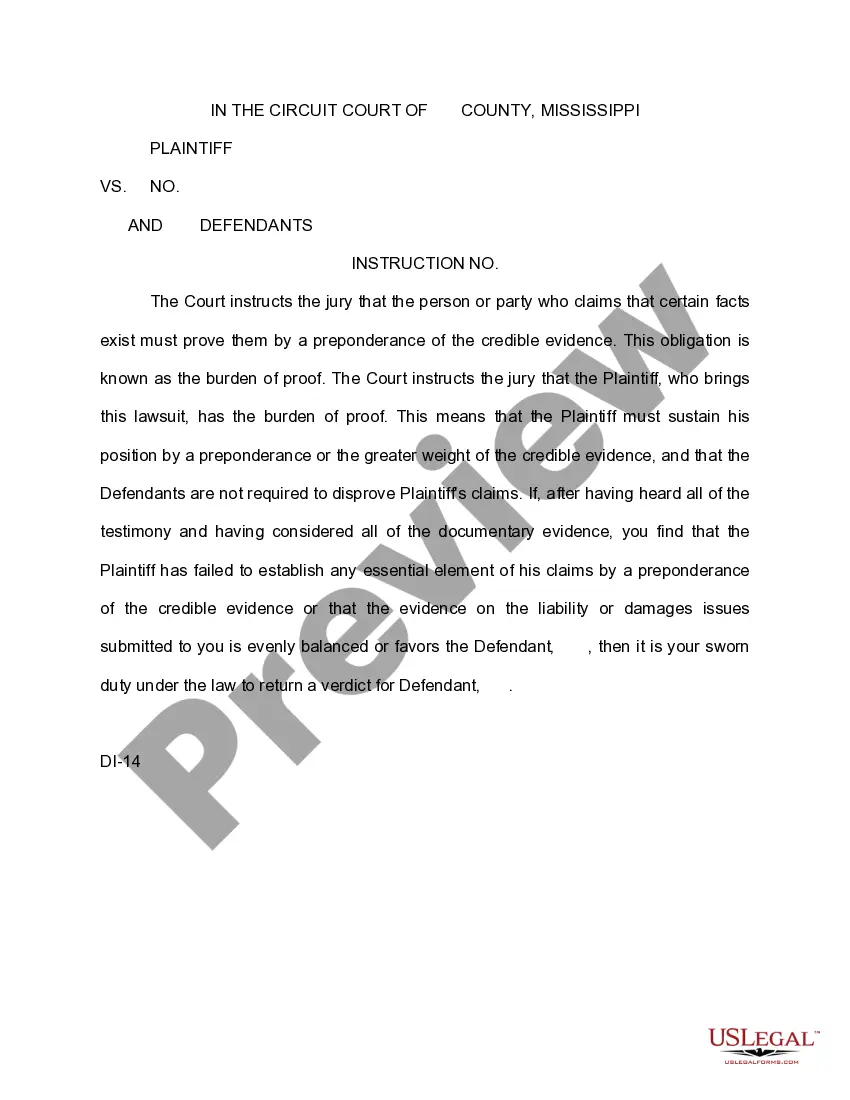
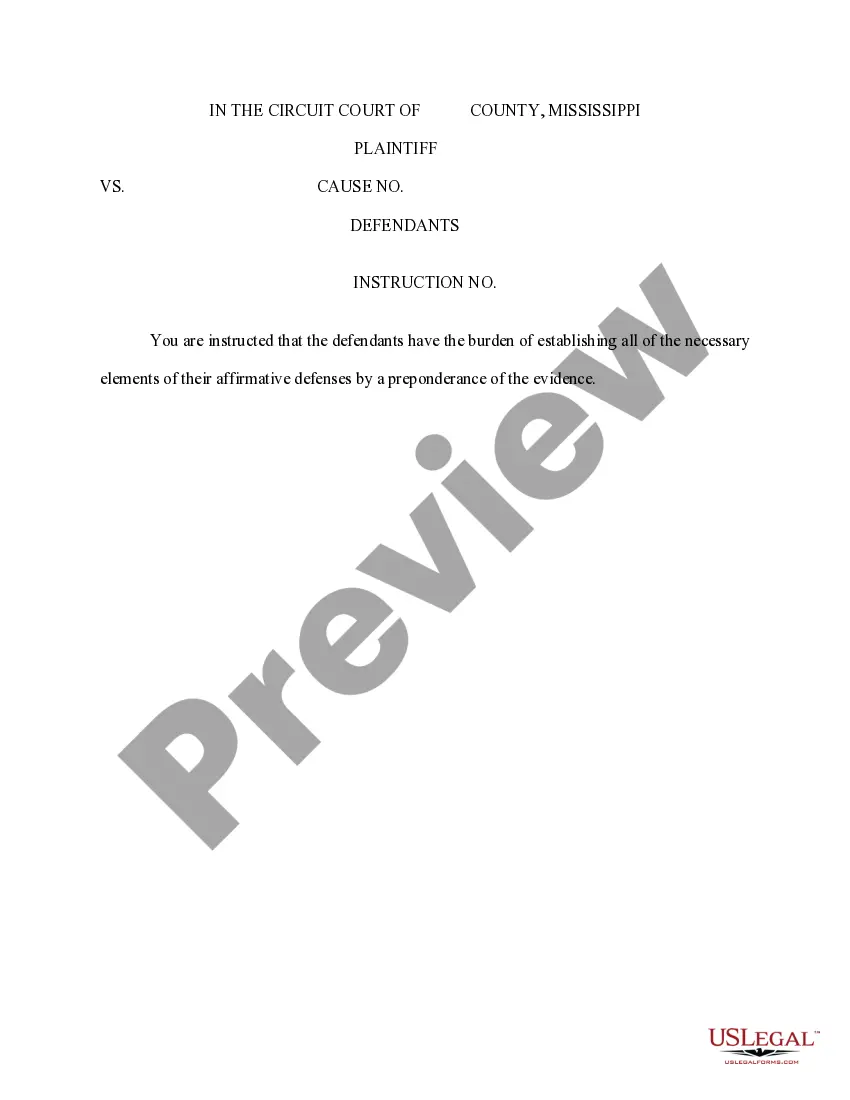
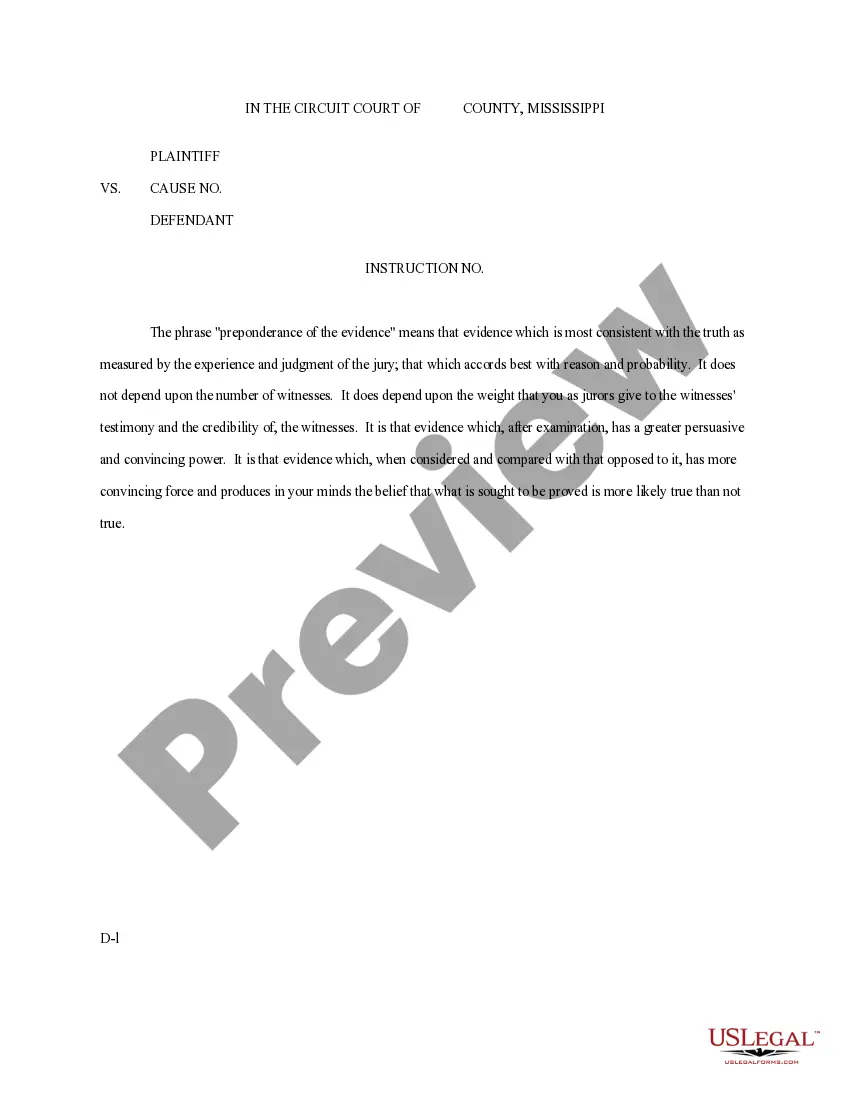
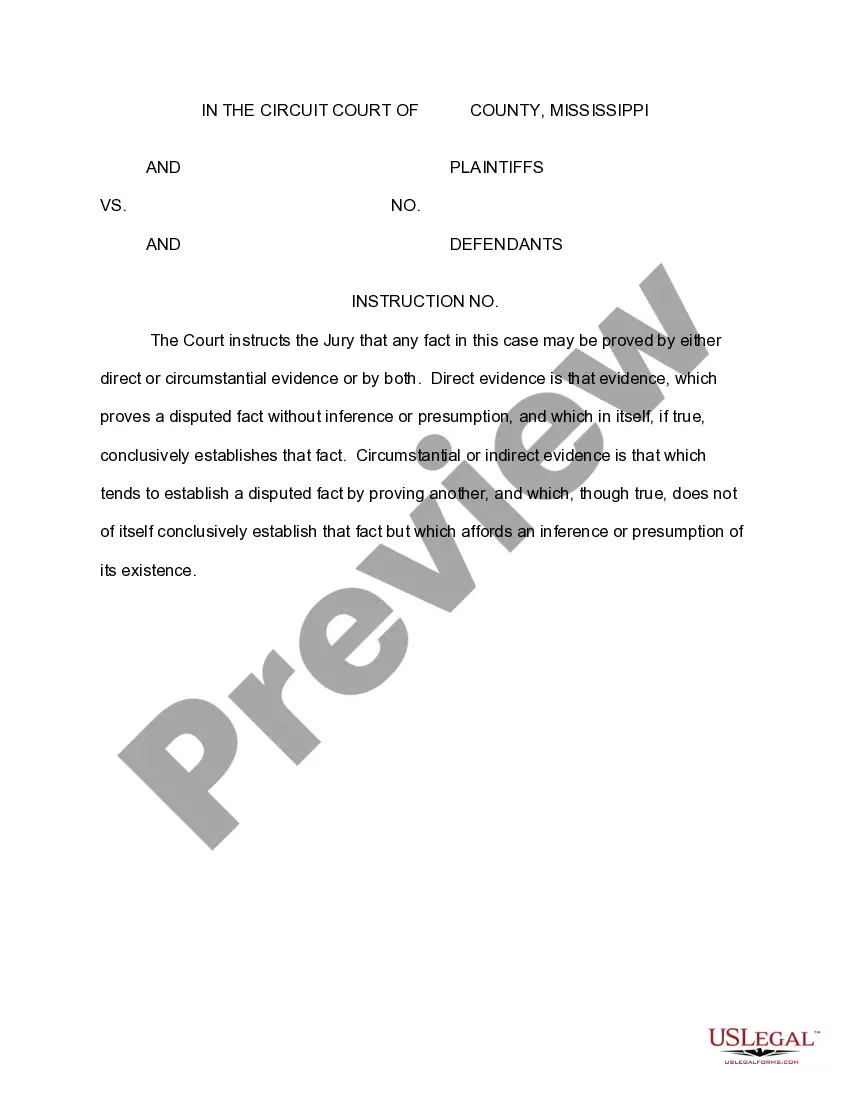
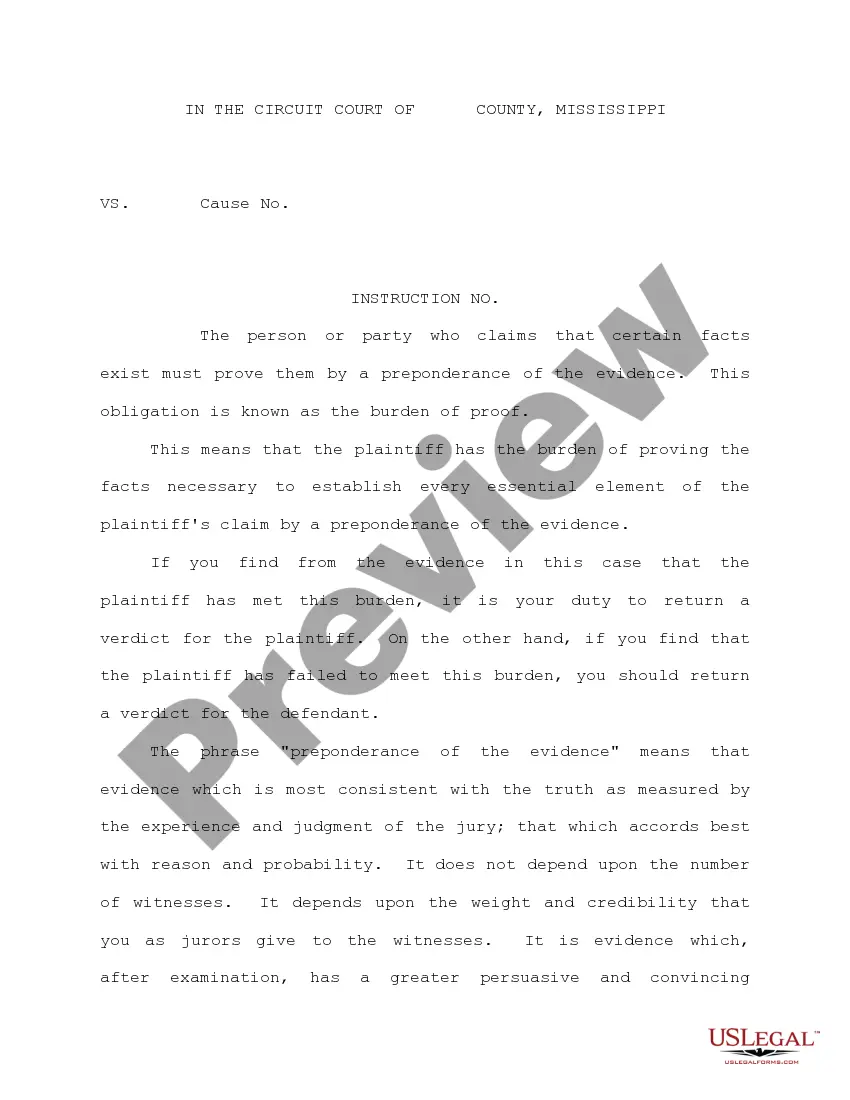
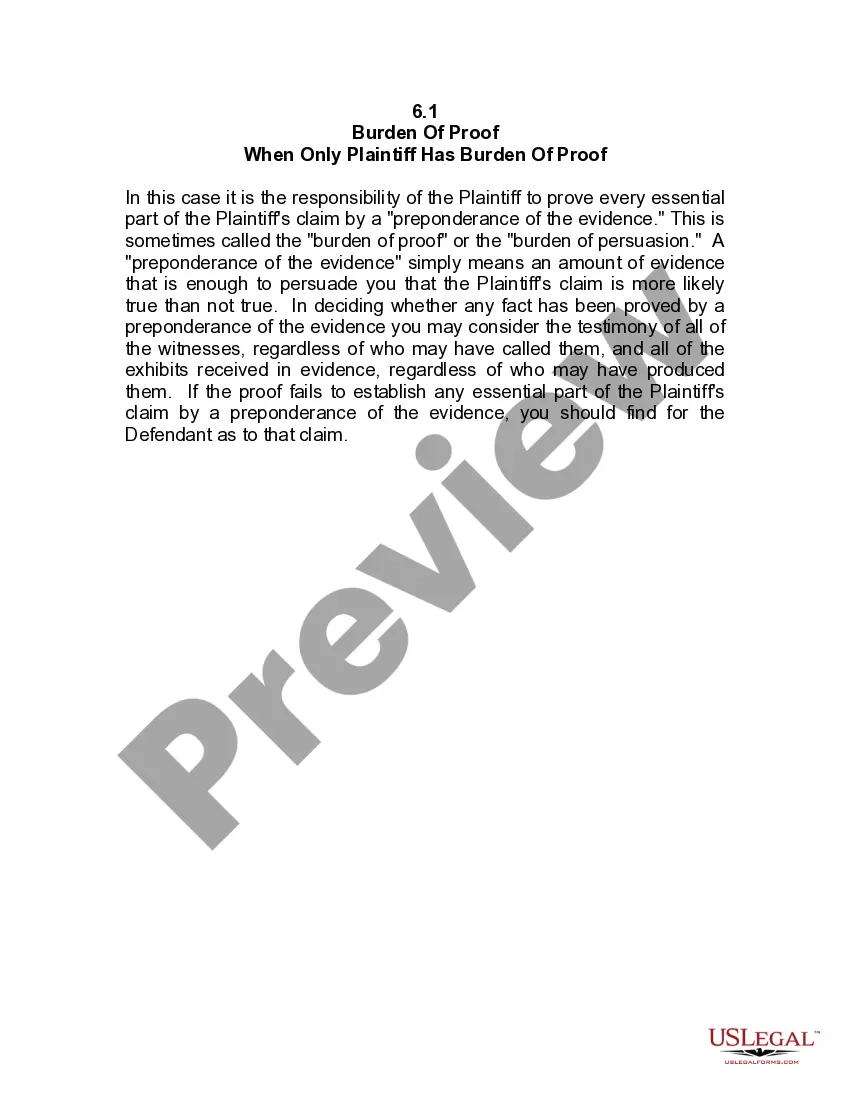
The Jury Instruction - Burden of Proof form is a sample instructional document used in Mississippi legal proceedings. It outlines the requirement for the plaintiff to prove the facts of their claim by a preponderance of credible evidence. This form is essential in guiding jurors on their responsibilities regarding the burden of proof, distinctly emphasizing that the defendants do not have to disprove the plaintiff's claims. Unlike other jury instructions, this form specifically addresses the fundamental principle of the burden of proof in civil cases.
Key parts of this document
- Identification of the parties involved in the lawsuit.
- Clear definition of the burden of proof obligation for the plaintiff.
- Explanation that the defendants are not required to disprove claims.
- Instruction that jurors must assess evidence and balance it accordingly.
- Direction for jurors to return a verdict for the defendant if the plaintiff fails to meet the burden of proof.
When this form is needed
This form is used during jury trials in civil cases where the burden of proof is a critical issue. It is particularly relevant when a plaintiff is making a claim against a defendant and it is essential to clarify the standard of proof required to support the plaintiff's case. Situations may include personal injury claims, breach of contract actions, or negligence cases.
Who should use this form
- Attorneys representing plaintiffs in civil trials in Mississippi.
- Legal professionals preparing jury instructions for courtroom use.
- Individuals involved in lawsuits who require understanding of the burden of proof standard.
How to prepare this document
- Identify and enter the names of the plaintiff and defendants involved in the case.
- Specify the instruction number as required by the court.
- Clearly articulate the burden of proof standard applicable to the plaintiff's claims.
- Outline the jurors' responsibilities in evaluating the evidence presented.
- Conclude with the directives for jurors to return a verdict based on the plaintiff's ability to meet the burden of proof.
Notarization requirements for this form
This form does not typically require notarization unless specified by local law. Ensure to consult local legal guidelines to verify any unique requirements that may apply in specific cases.
Get your form ready online
Our built-in tools help you complete, sign, share, and store your documents in one place.
Make edits, fill in missing information, and update formatting in US Legal Forms—just like you would in MS Word.
Download a copy, print it, send it by email, or mail it via USPS—whatever works best for your next step.
Sign and collect signatures with our SignNow integration. Send to multiple recipients, set reminders, and more. Go Premium to unlock E-Sign.
If this form requires notarization, complete it online through a secure video call—no need to meet a notary in person or wait for an appointment.
We protect your documents and personal data by following strict security and privacy standards.

Make edits, fill in missing information, and update formatting in US Legal Forms—just like you would in MS Word.

Download a copy, print it, send it by email, or mail it via USPS—whatever works best for your next step.

Sign and collect signatures with our SignNow integration. Send to multiple recipients, set reminders, and more. Go Premium to unlock E-Sign.

If this form requires notarization, complete it online through a secure video call—no need to meet a notary in person or wait for an appointment.

We protect your documents and personal data by following strict security and privacy standards.
Common mistakes to avoid
- Failing to clearly define the burden of proof for jurors.
- Not updating the form to reflect recent changes in law or case precedent.
- Omitting crucial details about the trial parties involved.
- Using ambiguous language that may confuse jurors about their responsibilities.
Why use this form online
- Convenience: Easily accessible and downloadable from any device.
- Editability: Customize the form to fit the specific case details.
- Reliability: Legal forms drafted by licensed attorneys ensure accuracy and professionalism.
Looking for another form?
Form popularity
FAQ
In a civil lawsuit, the burden of proof rests on the plaintiff or the person filing the suit. The plaintiff should prove that the allegations are true and that the defendant, or the other party, caused damages. When it comes to establishing a civil case, the plaintiff must usually do so by a preponderance of evidence.
The cardinal principle of the law is that he who alleges must prove. It was held in S v Mia 2009 (1) All SA 447 (SCA) that the proper approach in a criminal matter is that evidence must be considered in its totality.
There are different standards in different circumstances. For example, in criminal cases, the burden of proving the defendant's guilt is on the prosecution, and they must establish that fact beyond a reasonable doubt. In civil cases, the plaintiff has the burden of proving his case by a preponderance of the evidence.
The three primary standards of proof are proof beyond a reasonable doubt, preponderance of the evidence and clear and convincing evidence.
Burden of proof is one type of fallacy in which someone makes a claim, but puts the burden of proof onto the other side.For example, a person makes a claim. Another person refutes the claim, and the first person asks them to prove that the claim is not true.
The burden of proof in a criminal case rests on the prosecution, with no requirement that the defendant prove that he is innocent.In a criminal matter, the prosecution must prove, beyond a reasonable doubt, that the defendant did the deed.
For example, in criminal cases, the burden of proving the defendant's guilt is on the prosecution, and they must establish that fact beyond a reasonable doubt. In civil cases, the plaintiff has the burden of proving his case by a preponderance of the evidence.
The burden of proof determines which party is responsible for putting forth evidence and the level of evidence they must provide in order to prevail on their claim. In most cases, the plaintiff (the party bringing the claim) has the burden of proof. The burden of proof has two components.