Louisiana Petition in Suit for Interdiction
What is this form?
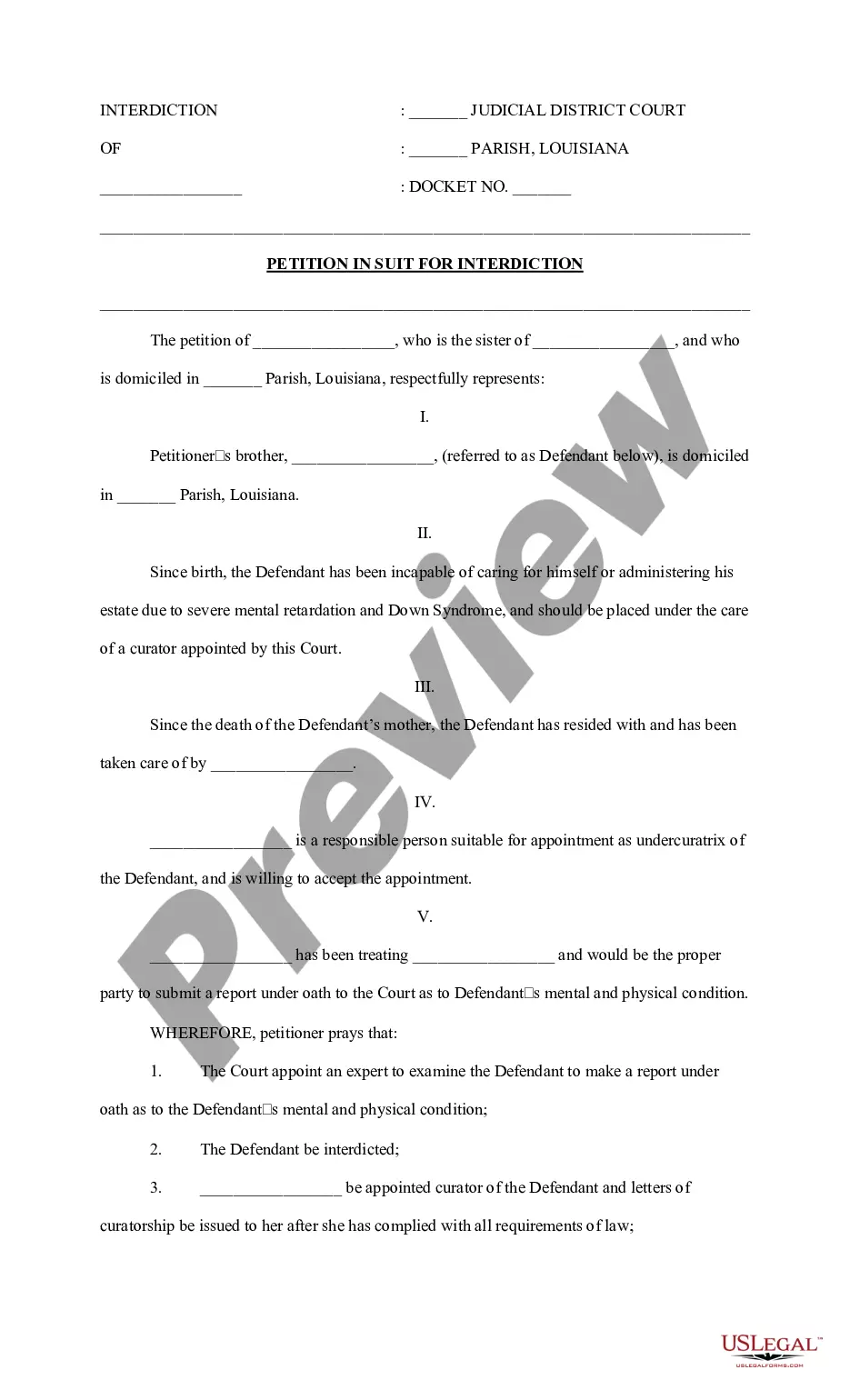
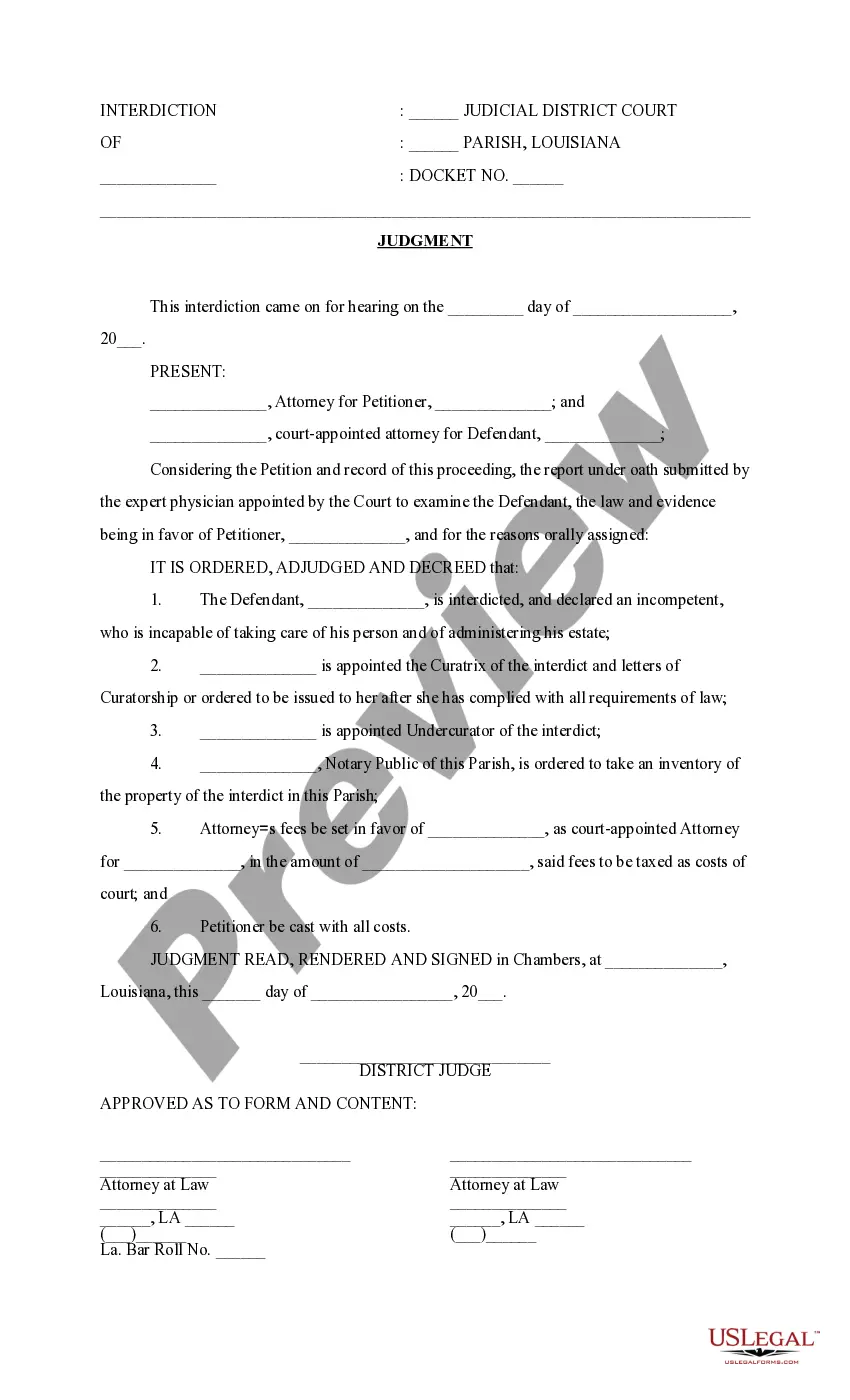
The Petition in Suit for Interdiction is a legal document used to request a court's declaration that an individual is incompetent to manage their personal and financial affairs. This petition specifically addresses situations where a person, often due to mental disabilities such as Down Syndrome, requires a curator to manage their estate and care. Unlike other forms used in guardianship cases, this petition entails requests for the appointment of experts and a detailed inventory of the individual's property.
Key parts of this document
- Name and residence of the petitioner and defendant.
- Statements concerning the defendant's mental incapacity.
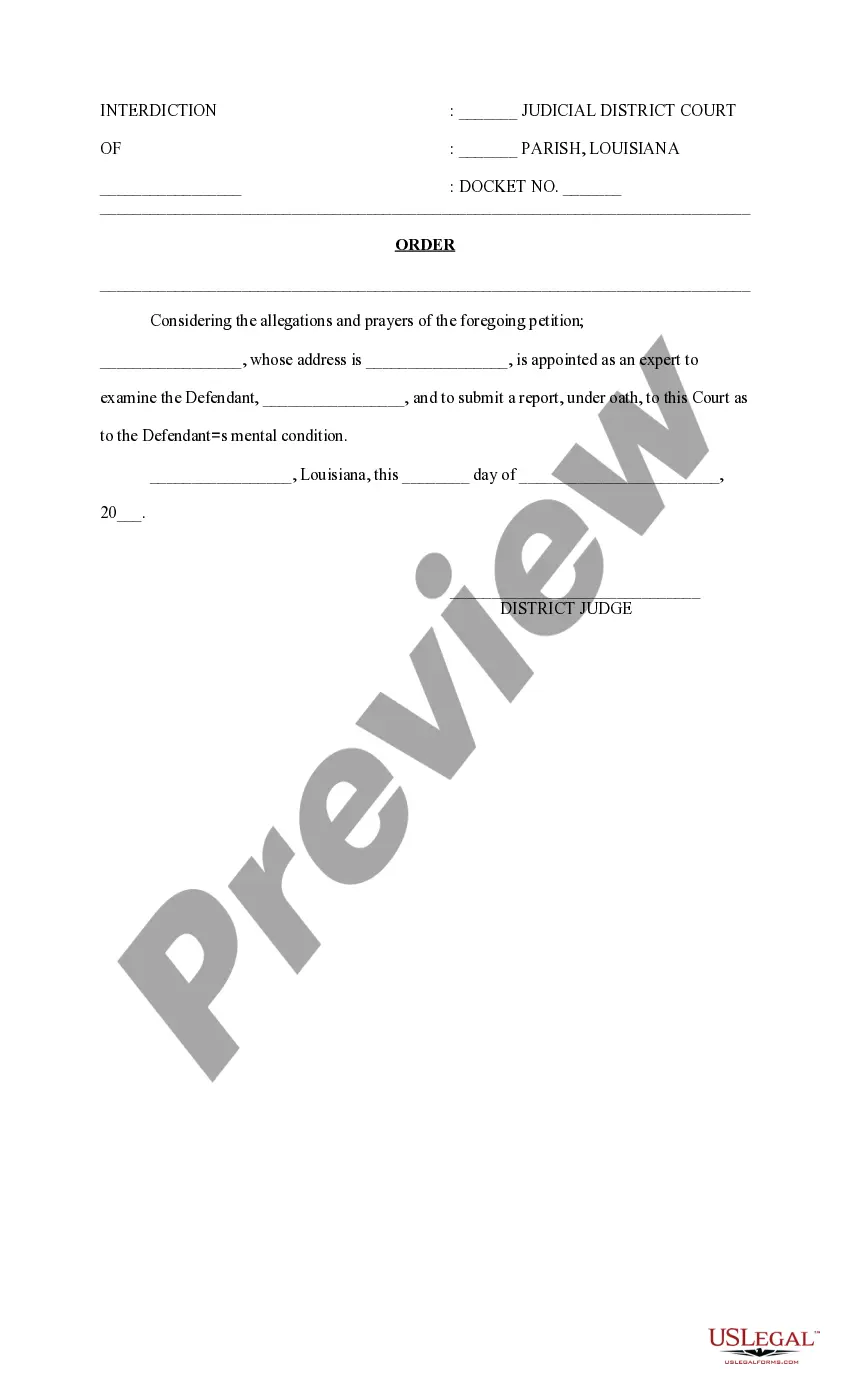
- Request for expert evaluations of the defendant's condition.
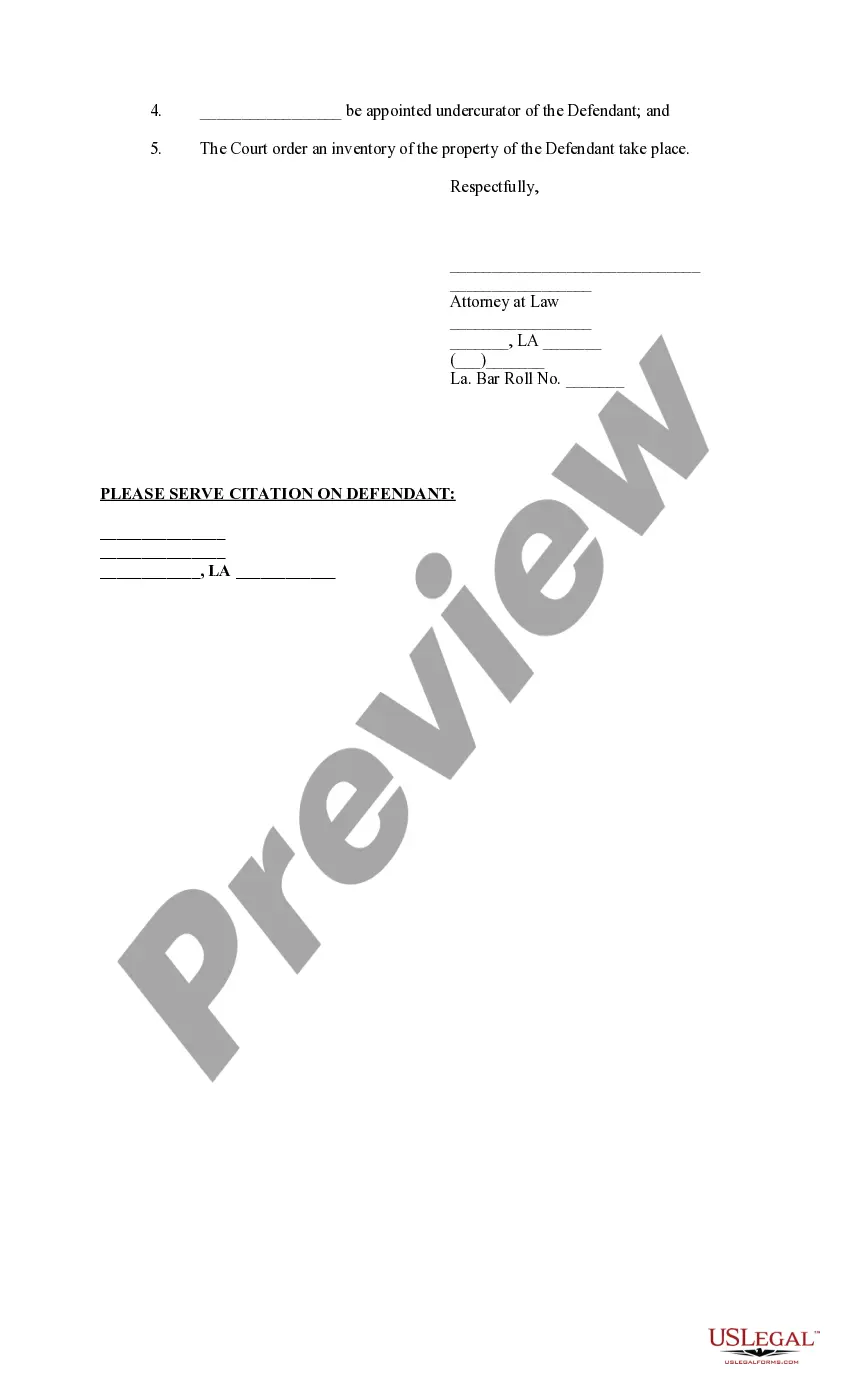
- Designation of a curator and undercurator.
- Request for an inventory of the defendant's property.
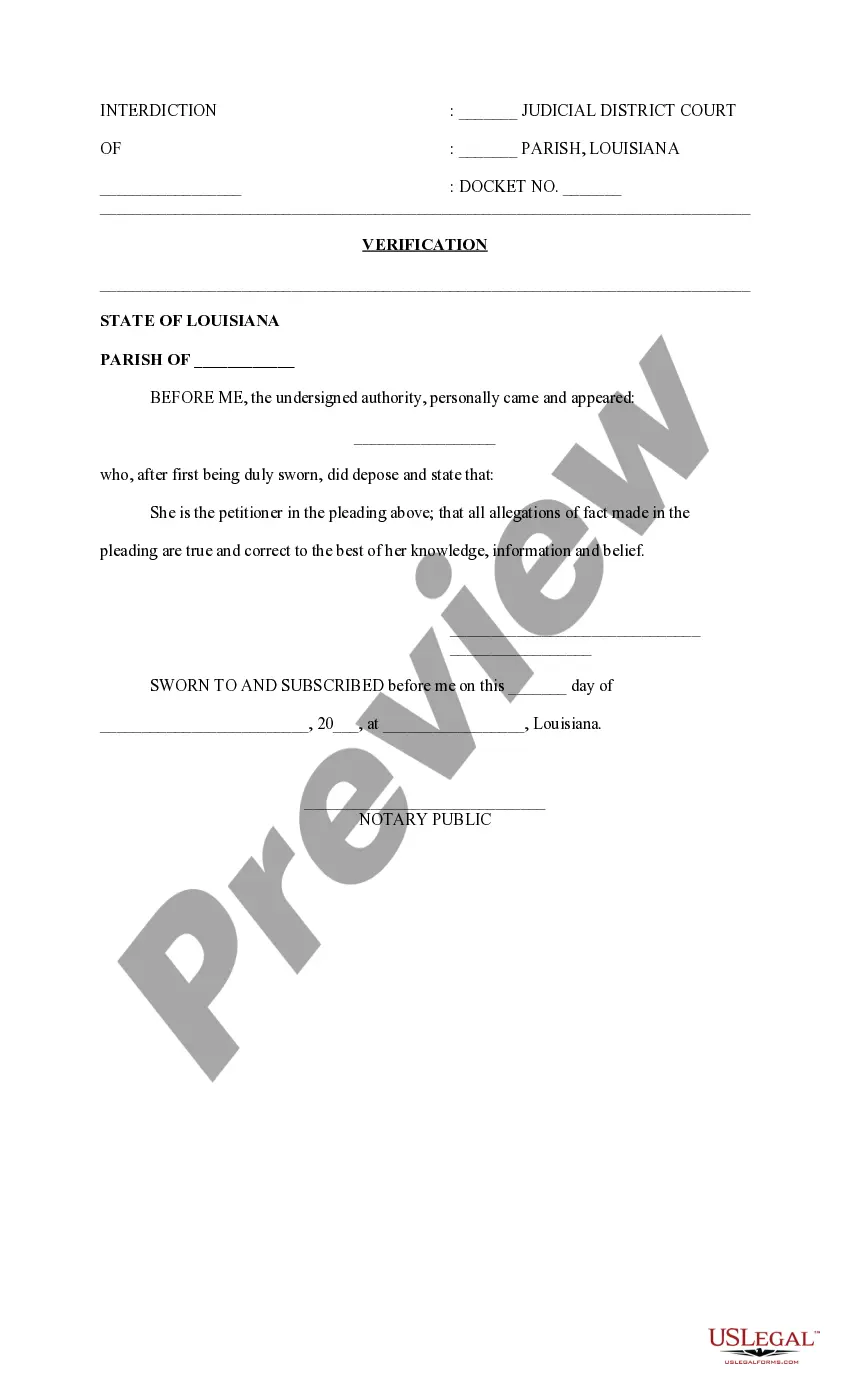
- Verification of the submission by the petitioner.
Common use cases
This form is used when a family member or guardian believes that an individual is incapable of managing their personal or financial affairs due to mental incompetence. Typical scenarios include cases involving severe mental disabilities, such as Down Syndrome or other cognitive impairments, where the individual requires supervision and management of their estate.
Who should use this form
- Family members seeking to protect a loved one who cannot care for themselves.
- Guardians responsible for the welfare of an individual with significant mental disabilities.
- Attorneys representing clients in cases of interdiction.
Completing this form step by step
- Identify the parties involved: Enter the names and addresses of the petitioner and defendant.
- Provide background information: Detail the defendant's mental incapacity and how it affects their daily life.
- Request an expert evaluation: Specify who will examine the defendant's mental condition and report to the court.
- Appoint a curator: Name the individual responsible for managing the defendant's affairs and outline their qualifications.
- Include a verification: The petitioner must affirm that all statements made in the petition are true to the best of their knowledge.
Does this form need to be notarized?
Notarization is required for this form to take effect. Our online notarization service, powered by Notarize, lets you verify and sign documents remotely through an encrypted video session, available 24/7.
Get your form ready online
Our built-in tools help you complete, sign, share, and store your documents in one place.
Make edits, fill in missing information, and update formatting in US Legal Forms—just like you would in MS Word.
Download a copy, print it, send it by email, or mail it via USPS—whatever works best for your next step.
Sign and collect signatures with our SignNow integration. Send to multiple recipients, set reminders, and more. Go Premium to unlock E-Sign.
If this form requires notarization, complete it online through a secure video call—no need to meet a notary in person or wait for an appointment.
We protect your documents and personal data by following strict security and privacy standards.

Make edits, fill in missing information, and update formatting in US Legal Forms—just like you would in MS Word.

Download a copy, print it, send it by email, or mail it via USPS—whatever works best for your next step.

Sign and collect signatures with our SignNow integration. Send to multiple recipients, set reminders, and more. Go Premium to unlock E-Sign.

If this form requires notarization, complete it online through a secure video call—no need to meet a notary in person or wait for an appointment.

We protect your documents and personal data by following strict security and privacy standards.
Typical mistakes to avoid
- Omitting necessary information about the defendant's condition.
- Failing to properly identify the proposed curator or undercurator.
- Not including the required verifications and signature from the petitioner.
Advantages of online completion
- Convenience of downloading and filling out the form at your own pace.
- Accessibility to guided instructions for completion.
- Ensures that you have the latest legal updates and formats.
Looking for another form?



Form popularity
FAQ
In other contexts, suspension is considered a neutral action taken to facilitate investigations whereas interdiction is a disciplinary penalty that can be coupled with the employee's salary being withheld. This is the position that was taken by the Court in the case of Teresia N.
Generally, the petition is filed in a civil district court in the parish in which the interdict is domiciled (permanent home). If the defendant does not have a permanent home, the petition is filed where he resides or where he is physically present if he is not a resident of the state.
Interdict, in Roman and civil law, a remedy granted by a magistrate on the sole basis of his authority, against a breach of civil law for which there is no stipulated remedy. Interdicts can be provisionary (opening the way for further action) or final.
INTERDICTION is the term used for the plan of having a Court declare a person is not competent to take care of his own affairs and appoints a Curator for that person. In addition to a curator, there will also be an Under-Curator appointed.
The latter, or judicial interdiction, is imposed by a sentence of a competent tribunal, which disqualifies the party on account of imbecility, madness, or prodigality, and deprives the person interdicted of the right to manage his affairs and receive the rents and profits of his estate.
An interdiction is a legal process where a court is asked to determine, from testimony and other evidence presented, whether a person is unable, due to an infirmity, to consistently make decisions regarding his person and/or his property, or to communicate those decisions.