Illinois Right-of-Way Easement
About this form
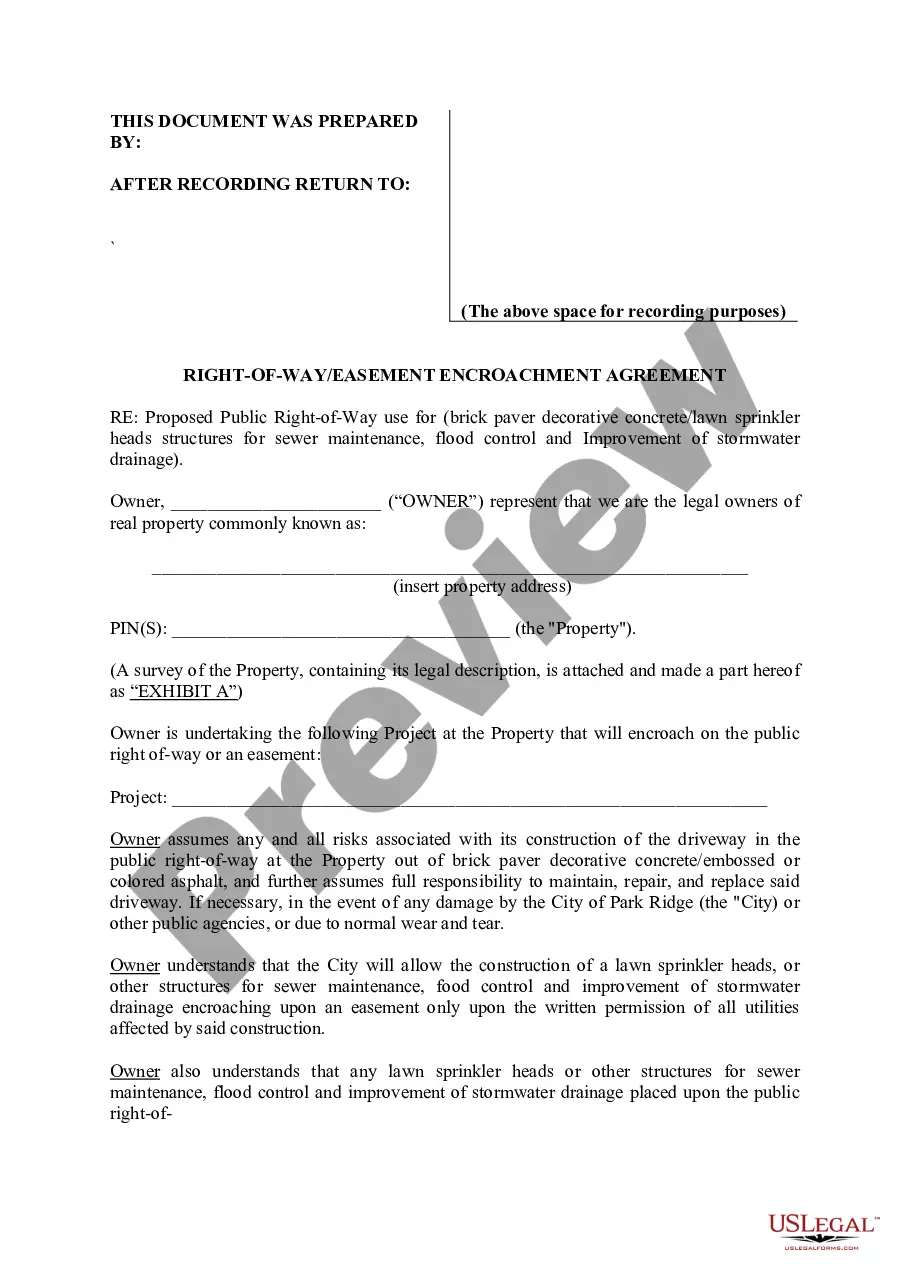
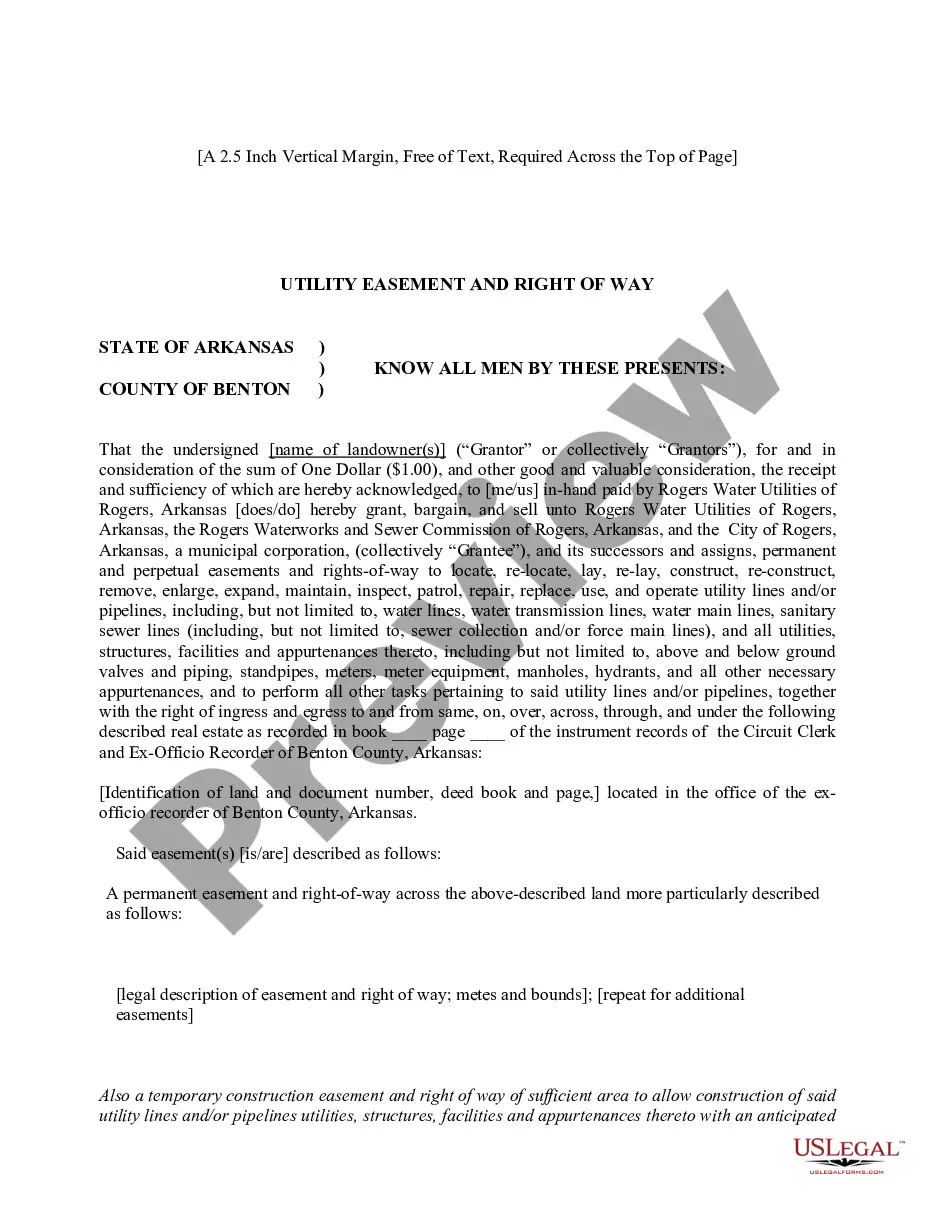
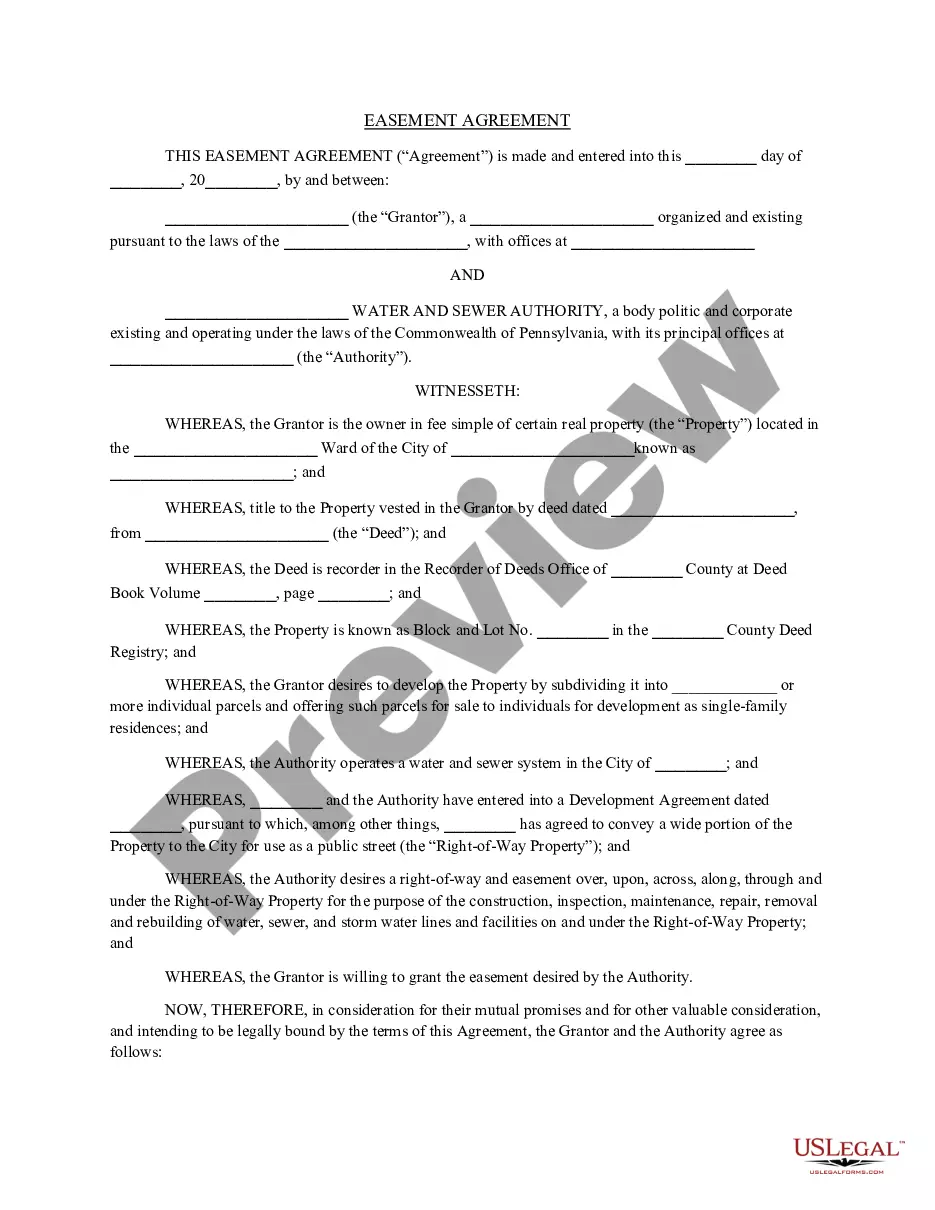
The Right-of-Way Easement is a legal document that grants permission for one party to use a portion of another party's land for a specific purpose. This form is primarily used when an owner wishes to construct structures, such as brick paver driveways or lawn sprinkler heads, that encroach on a public right-of-way or easement. It serves to clarify responsibilities and liabilities between the property owner and the municipality, ensuring compliance with local regulations.
Form components explained
- Identification of the property owner and the property address.
- Details of the proposed project and its relation to the public right-of-way.
- Assumption of risk and responsibility for maintenance and repair of the encroaching structures.
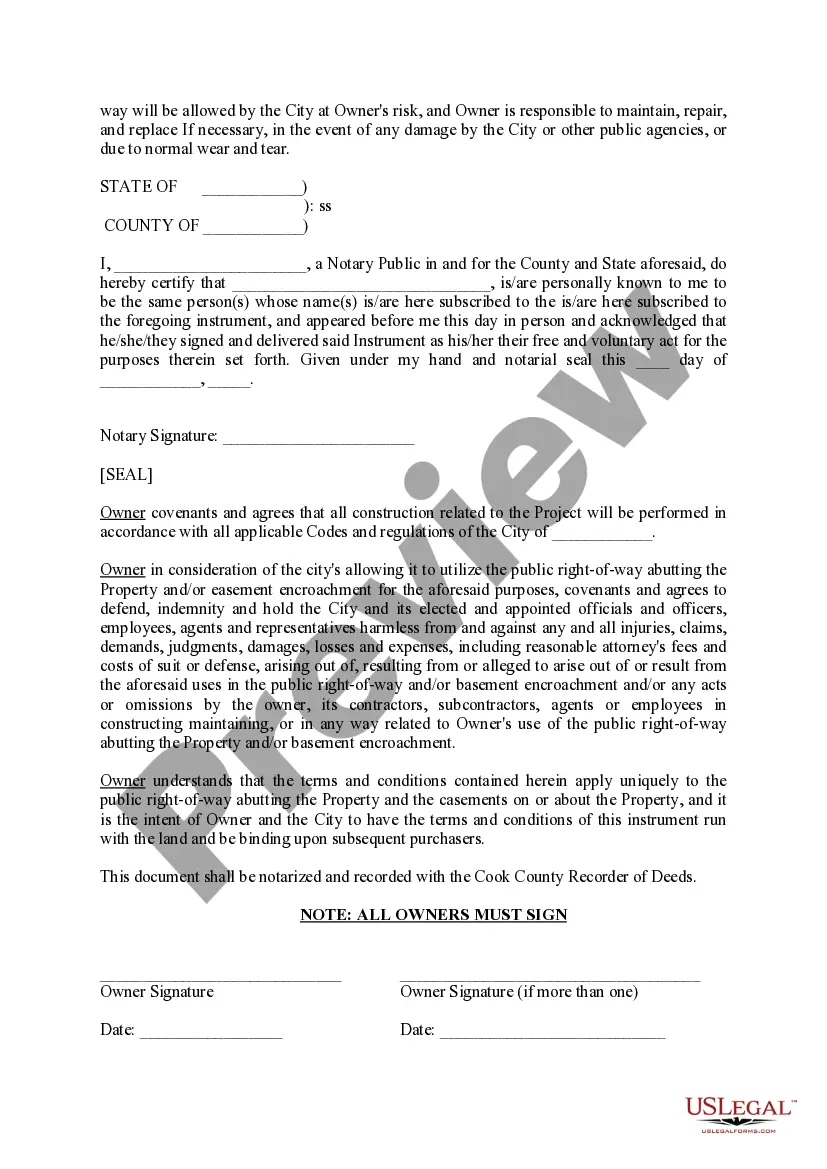
- Indemnification clause protecting the city from liabilities.
- Signature section for all owners and notarization requirements.

When to use this document
This form should be used when a property owner intends to undertake a construction project that will invade the public right-of-way or easement. Scenarios include adding driveways, landscaping features, or irrigation systems in areas where municipal approval is needed. The form helps protect both the property owner and the municipality by clearly outlining the terms of the easement use.
Who should use this form
- Property owners who wish to construct on or utilize public right-of-way space.
- Contractors working on behalf of property owners for such projects.
- Municipalities requiring documentation regarding easements and encroachments.
How to prepare this document
- Identify the property owner and enter the property address accurately.
- Describe the project that will encroach on the right-of-way.
- Include legal property description and PIN numbers as required.
- Sign and date the form in the presence of a notary public.
- Record the completed form with the local county recorderâs office.
Is notarization required?
Yes, this form must be notarized to be legally valid. US Legal Forms provides integrated online notarization services, allowing for secure video calls with notaries, making the process convenient and compliant with legal standards.
Get your form ready online
Our built-in tools help you complete, sign, share, and store your documents in one place.
Make edits, fill in missing information, and update formatting in US Legal Forms—just like you would in MS Word.
Download a copy, print it, send it by email, or mail it via USPS—whatever works best for your next step.
Sign and collect signatures with our SignNow integration. Send to multiple recipients, set reminders, and more. Go Premium to unlock E-Sign.
If this form requires notarization, complete it online through a secure video call—no need to meet a notary in person or wait for an appointment.
We protect your documents and personal data by following strict security and privacy standards.

Make edits, fill in missing information, and update formatting in US Legal Forms—just like you would in MS Word.

Download a copy, print it, send it by email, or mail it via USPS—whatever works best for your next step.

Sign and collect signatures with our SignNow integration. Send to multiple recipients, set reminders, and more. Go Premium to unlock E-Sign.

If this form requires notarization, complete it online through a secure video call—no need to meet a notary in person or wait for an appointment.

We protect your documents and personal data by following strict security and privacy standards.
Avoid these common issues
- Failure to accurately describe the encroaching project.
- Not having all property owners sign the form as required.
- Omitting necessary legal property descriptions or PINs.
What to keep in mind
- The Right-of-Way Easement allows property owners to utilize public space for specific projects.
- Completing the form correctly ensures both rights and responsibilities are clearly defined.
- Notarization is a necessary step in the validation of this document.
Looking for another form?
Form popularity
FAQ
Quiet the Title. Allow the Purpose for the Easement to Expire. Abandon the Easement. Stop Using a Prescriptive Easement. Destroy the Reason for the Easement. Merge the Dominant and Servient Properties. Execute a Release Agreement.
Rights of way (similar to the driveway example, but also including walkways or pathways); Public utilities, such as gas, electricity or water and sewer mains; Parking areas; Access to light and air; and. Shared walls.
One issue that comes up from time to time is whose responsibility it is to maintain an easement. The short answer is the owner of the easement is responsible for maintaining the easement.
When one of the owners of either the dominant estate which an easement benefits or the servient estate over which the easement runs becomes the owner of both properties, then there is a unity of the two titles, and since an owner does not need an easement over the owner's own property, according to Florida law, the
You can terminate an easement by release. A release is a surrender of a right or interest, such as an easement. Only the person holding the right can release it, such as the owner of the dominant estate in an easement appurtenant or the holder of an easement in gross.
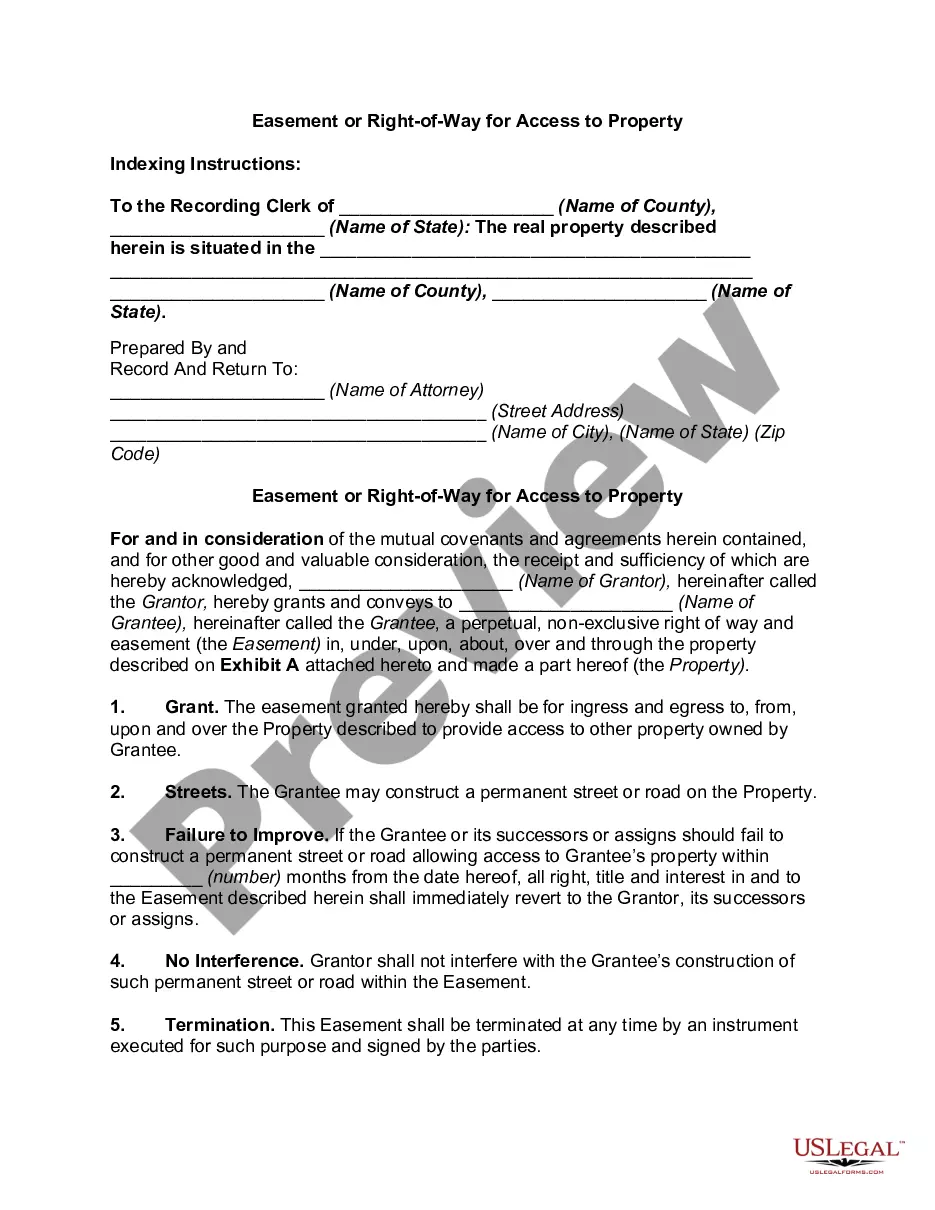
What are Easements and Rights-of-Way? Easements are nonpossessory interests in real property. More simply, an easement is the right to use another's property for a specific purpose. Rights-of-way are easements that specifically grant the holder the right to travel over another's property.
The party gaining the benefit of the easement is the dominant estate (or dominant tenement), while the party granting the benefit or suffering the burden is the servient estate (or servient tenement). For example, the owner of parcel A holds an easement to use a driveway on parcel B to gain access to A's house.
Courts generally assume easements are created to last forever unless otherwise indicated in the document creating the easement. Despite this, an individual granting an easement should avoid any potential problems by expressly providing that the easement is permanent.
An easement is extinguished when the dominant owner releases it, expressly or impliedly, to the servient owner. Such release can be made only in the circumstances and to the extent in and to which the dominant owner can alienate the dominant heritage.A, without the consent of B and C, release the easement.