Colorado Reciprocal Easement Agreement
Understanding this form
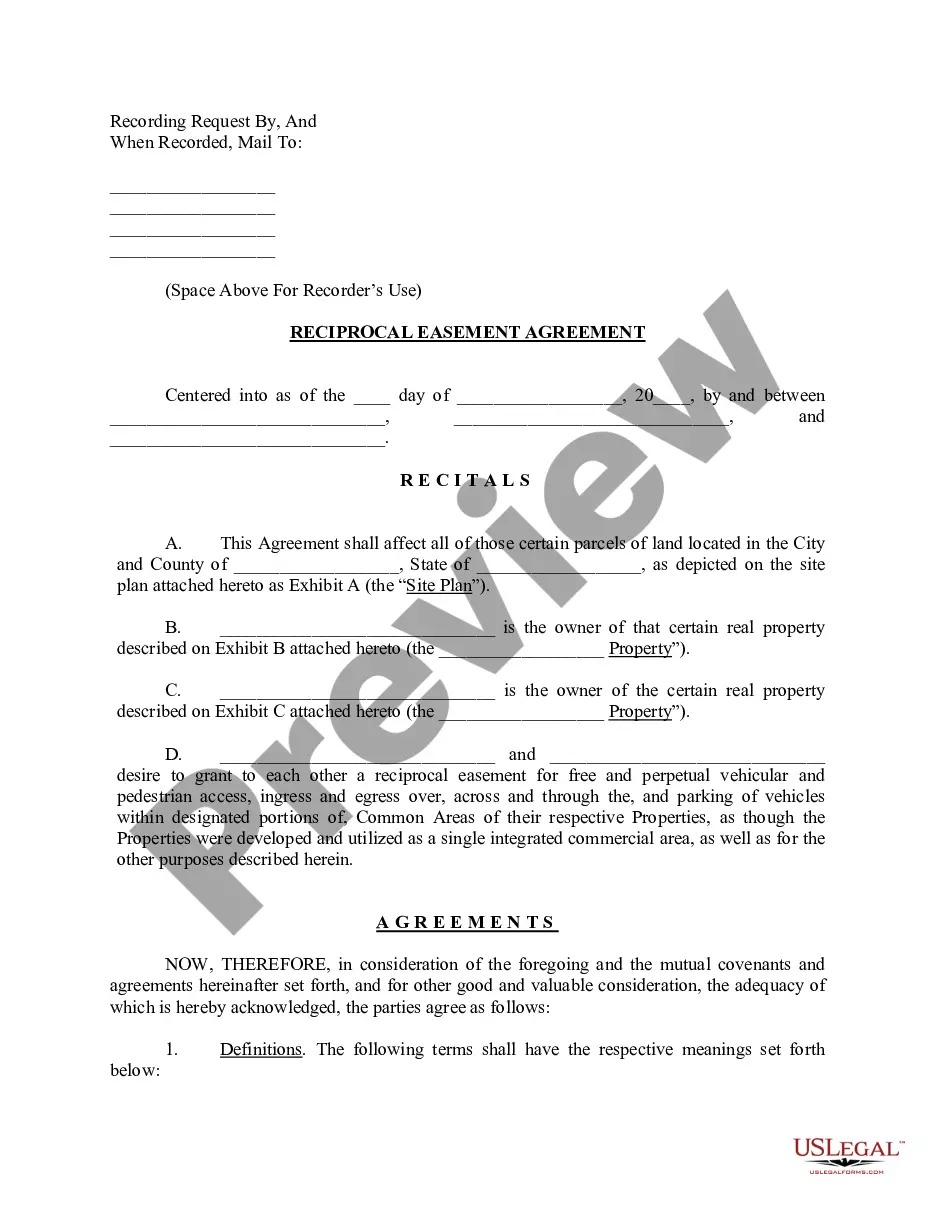
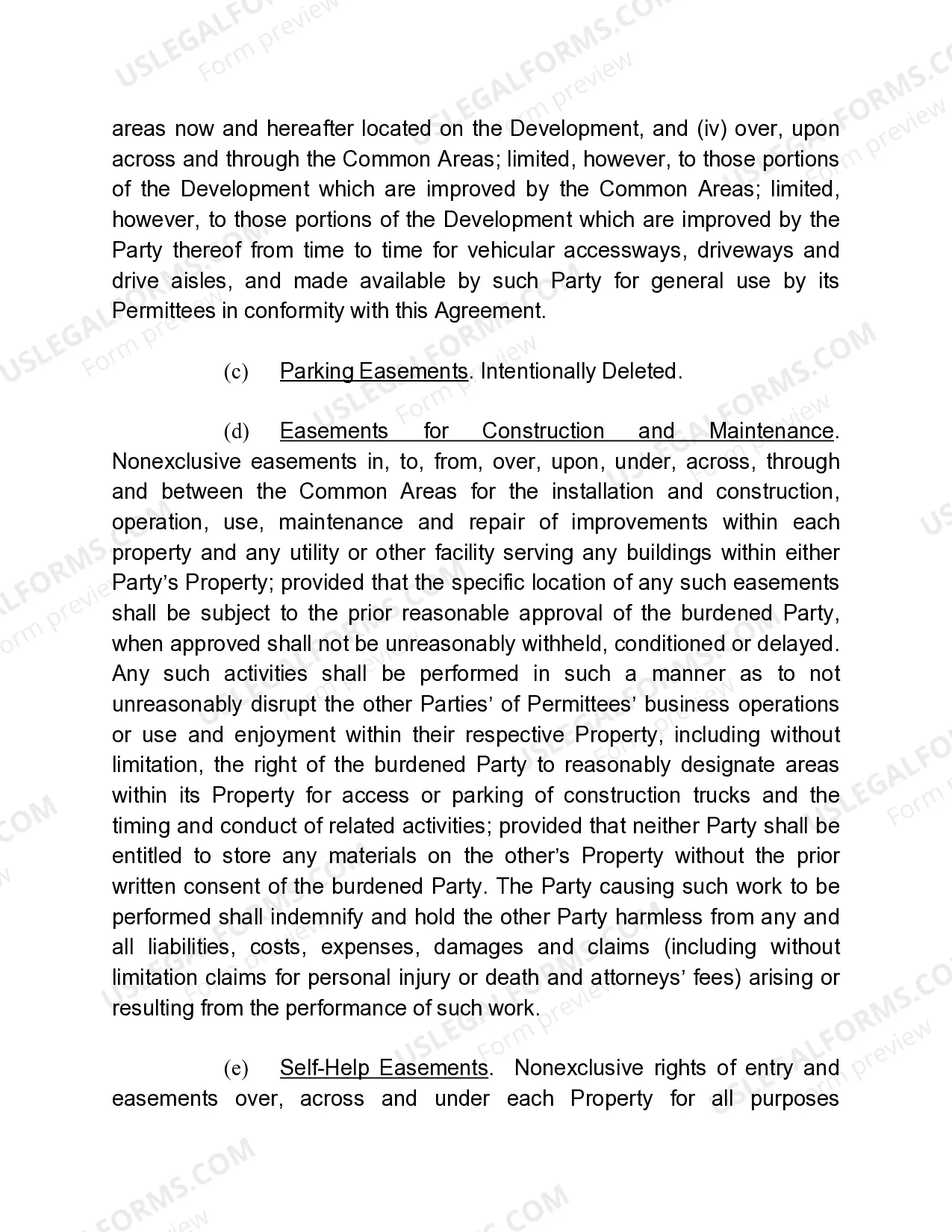
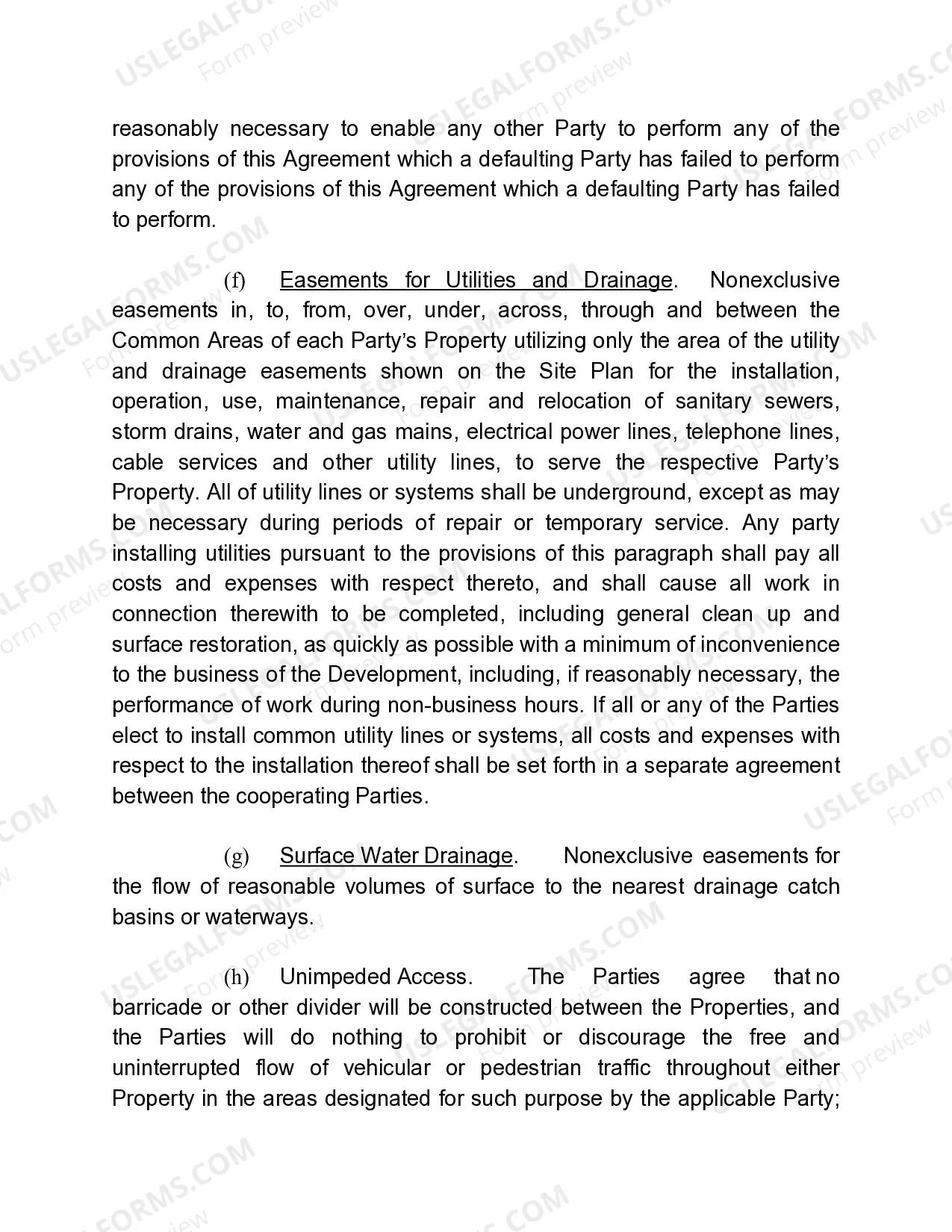
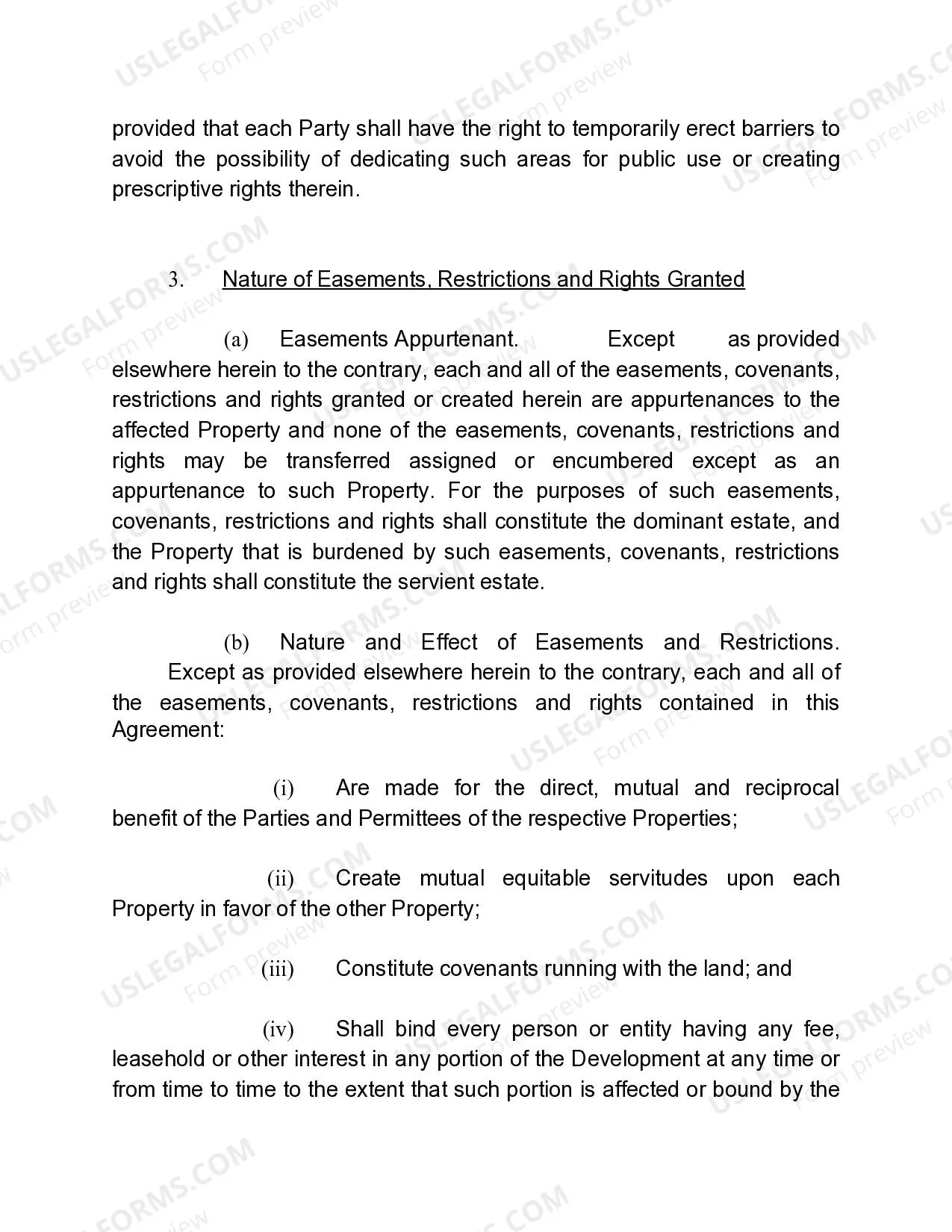
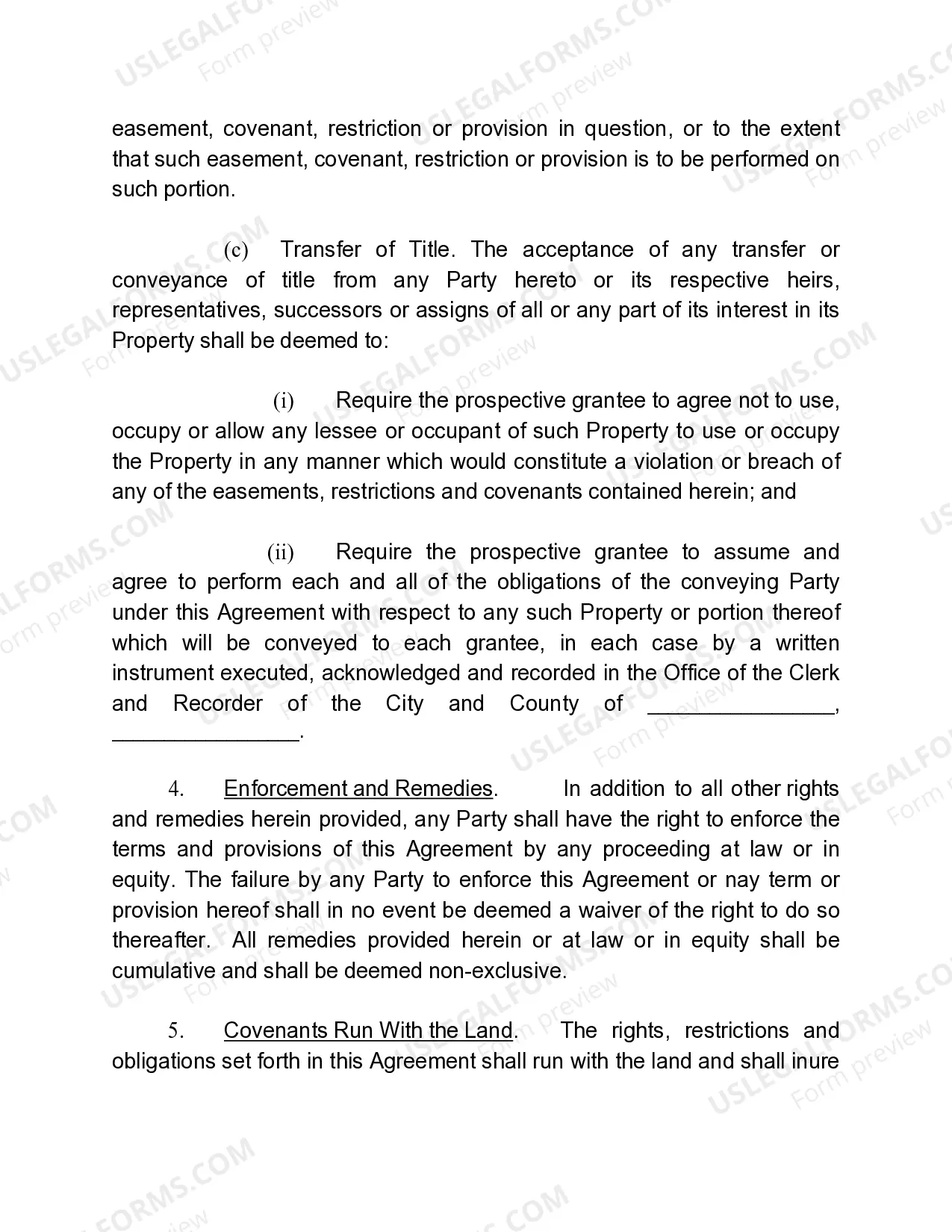
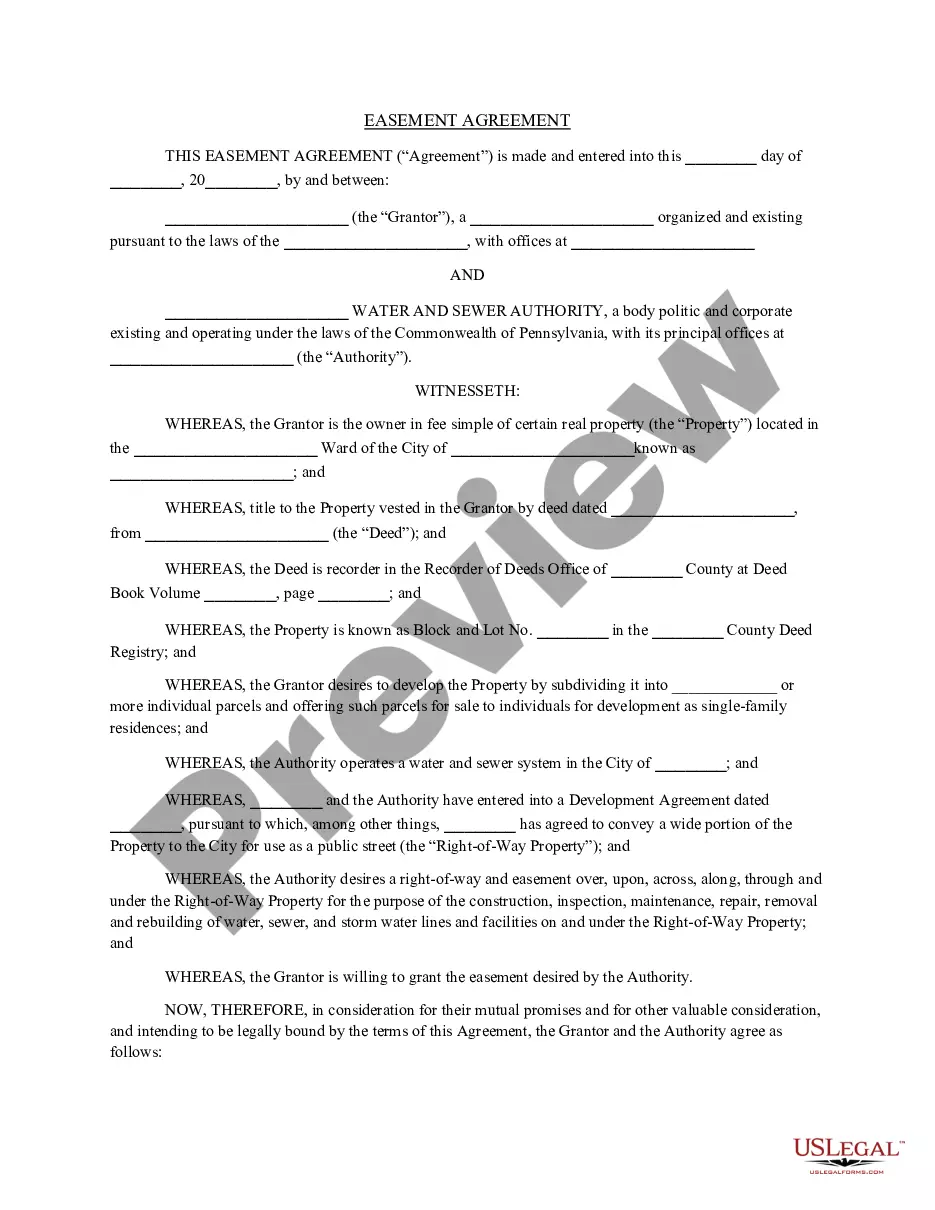
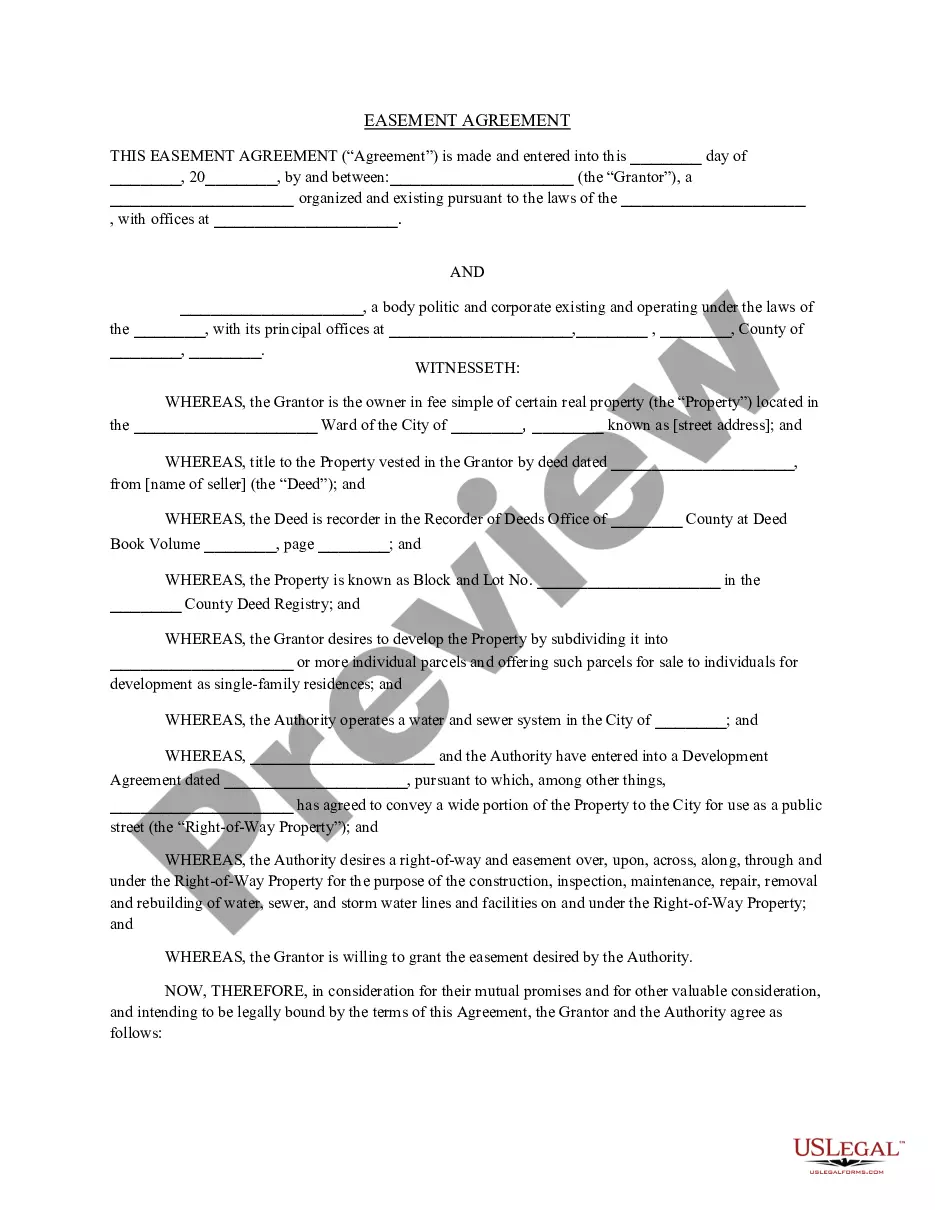
A reciprocal easement agreement (REA) is a legal document used when multiple property owners wish to allow each other access and use of shared areas in a development, such as a shopping center. This agreement facilitates cooperation between the parties, allowing for shared rights over pedestrian and vehicular access, parking, and common areas, ensuring that the properties operate as a cohesive unit. Unlike other easement agreements, an REA specifically outlines the mutual obligations and permissions of the parties involved, creating a framework for shared property use.
Form components explained
- Identification of the parties involved and properties affected.
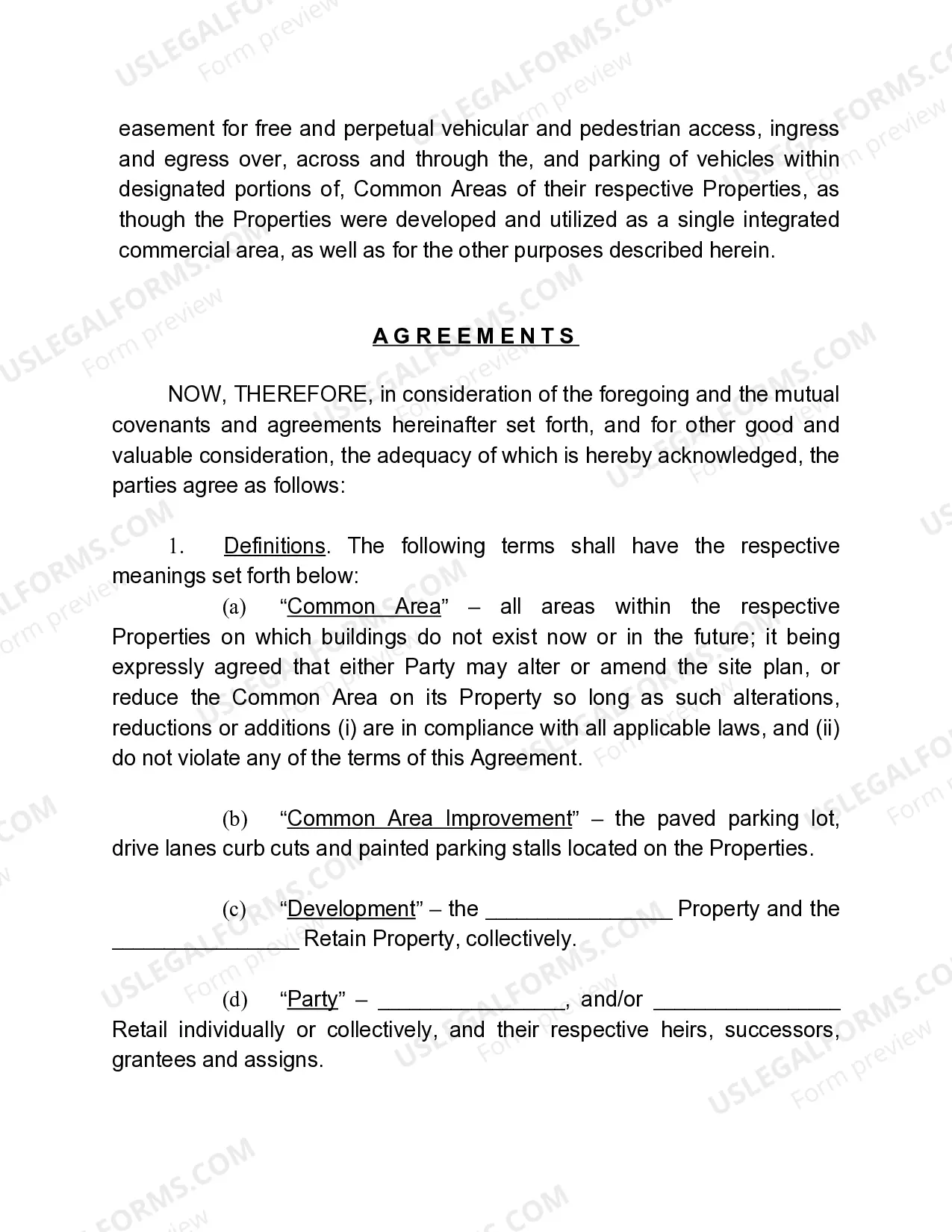
- Definitions of key terms, such as "Common Area" and "Development."
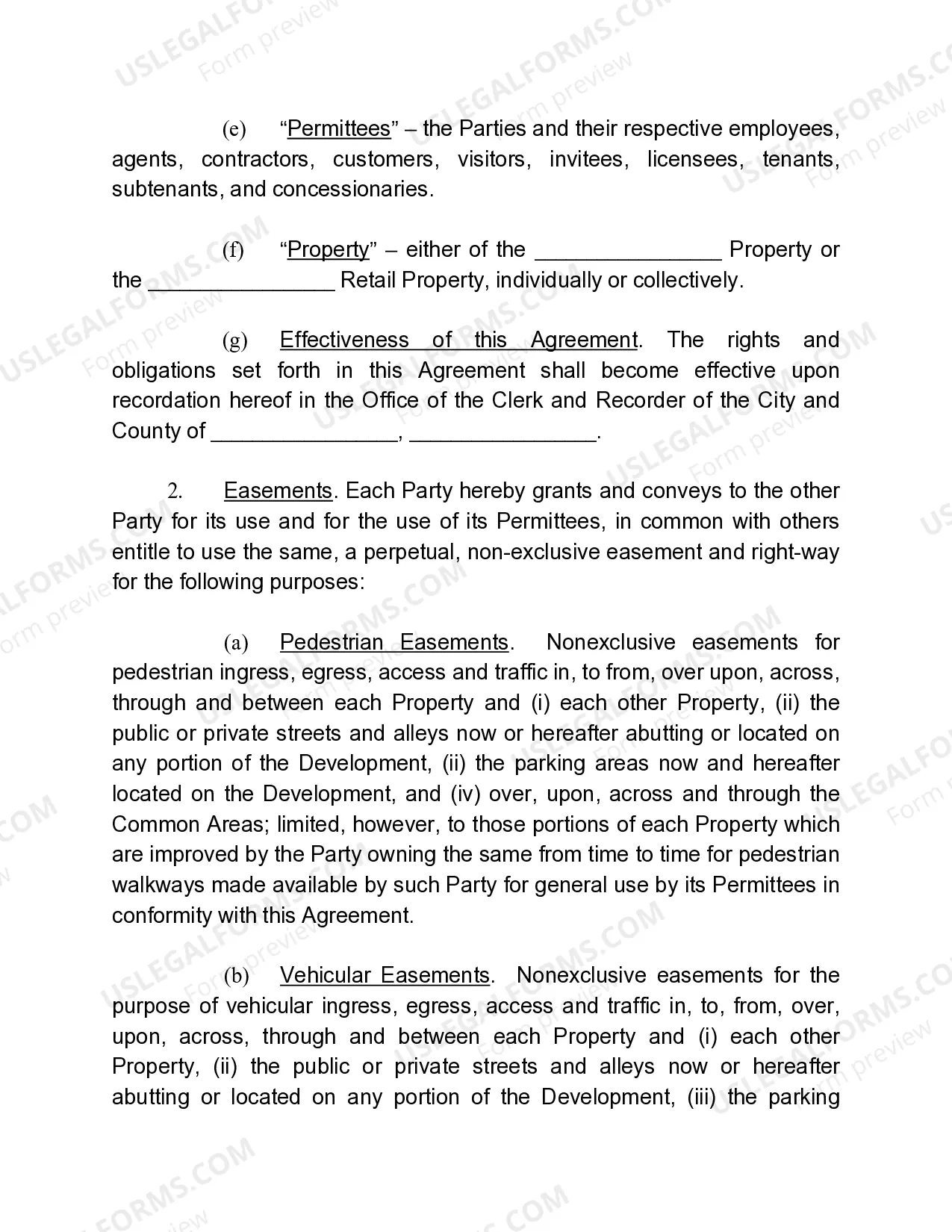
- Details on the specific easements granted for pedestrian and vehicular access.
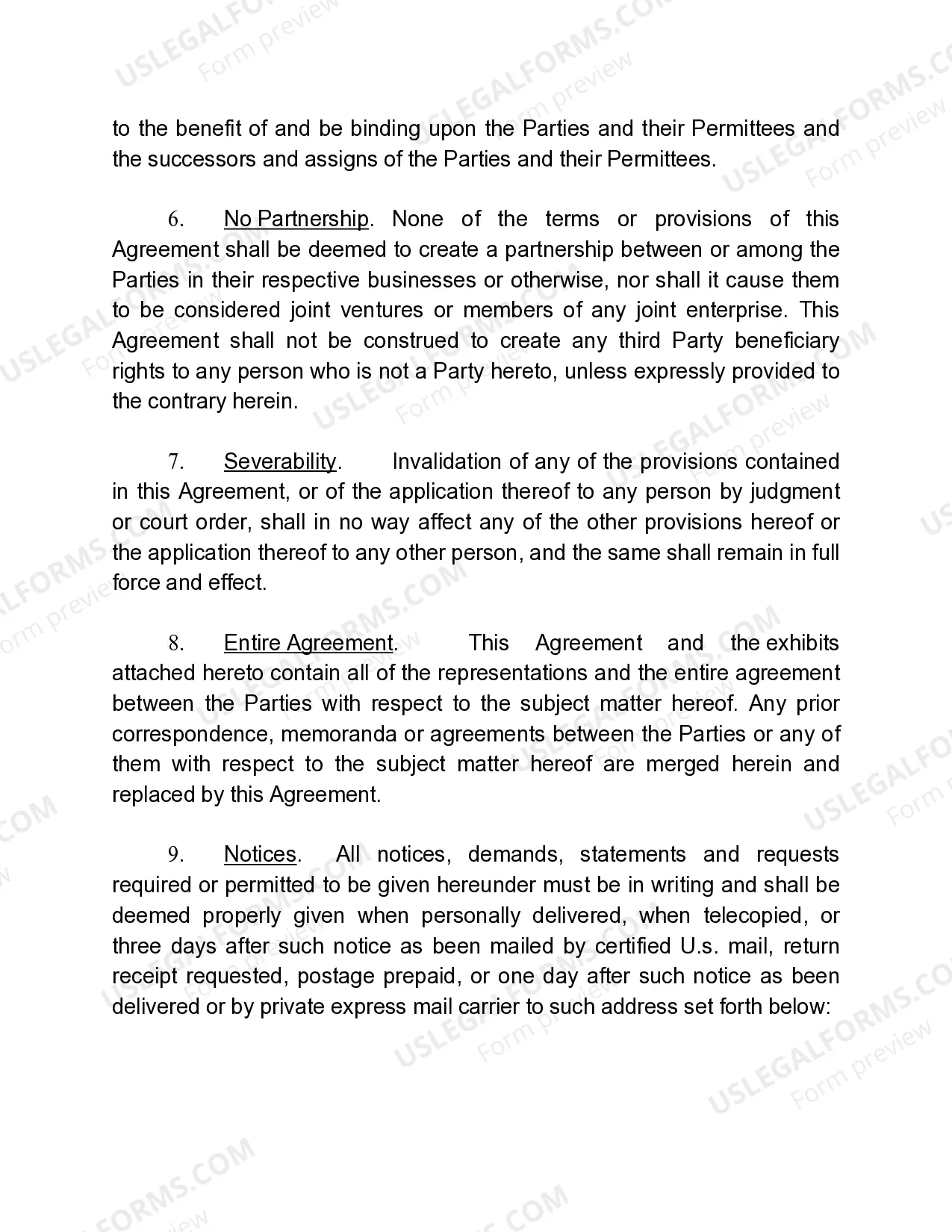
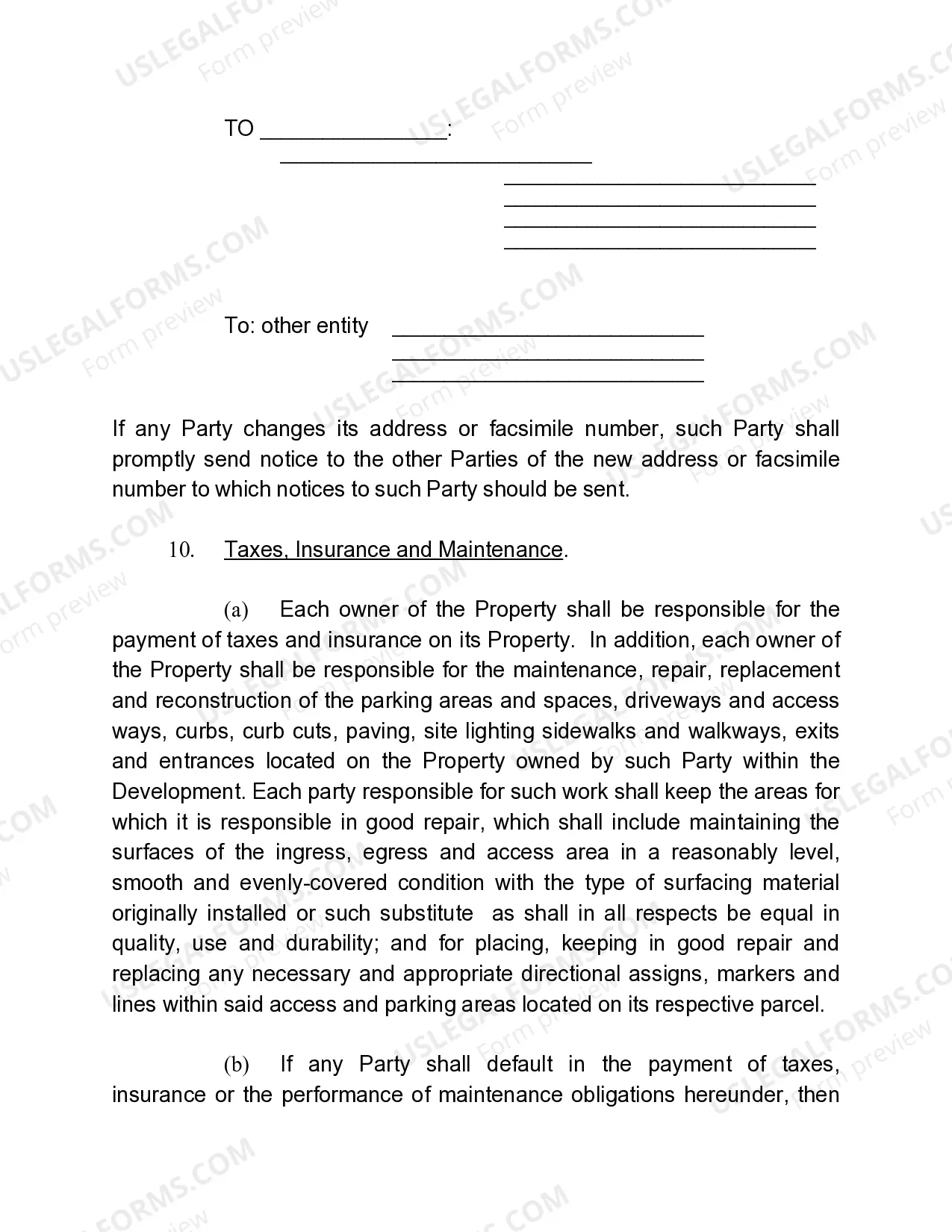
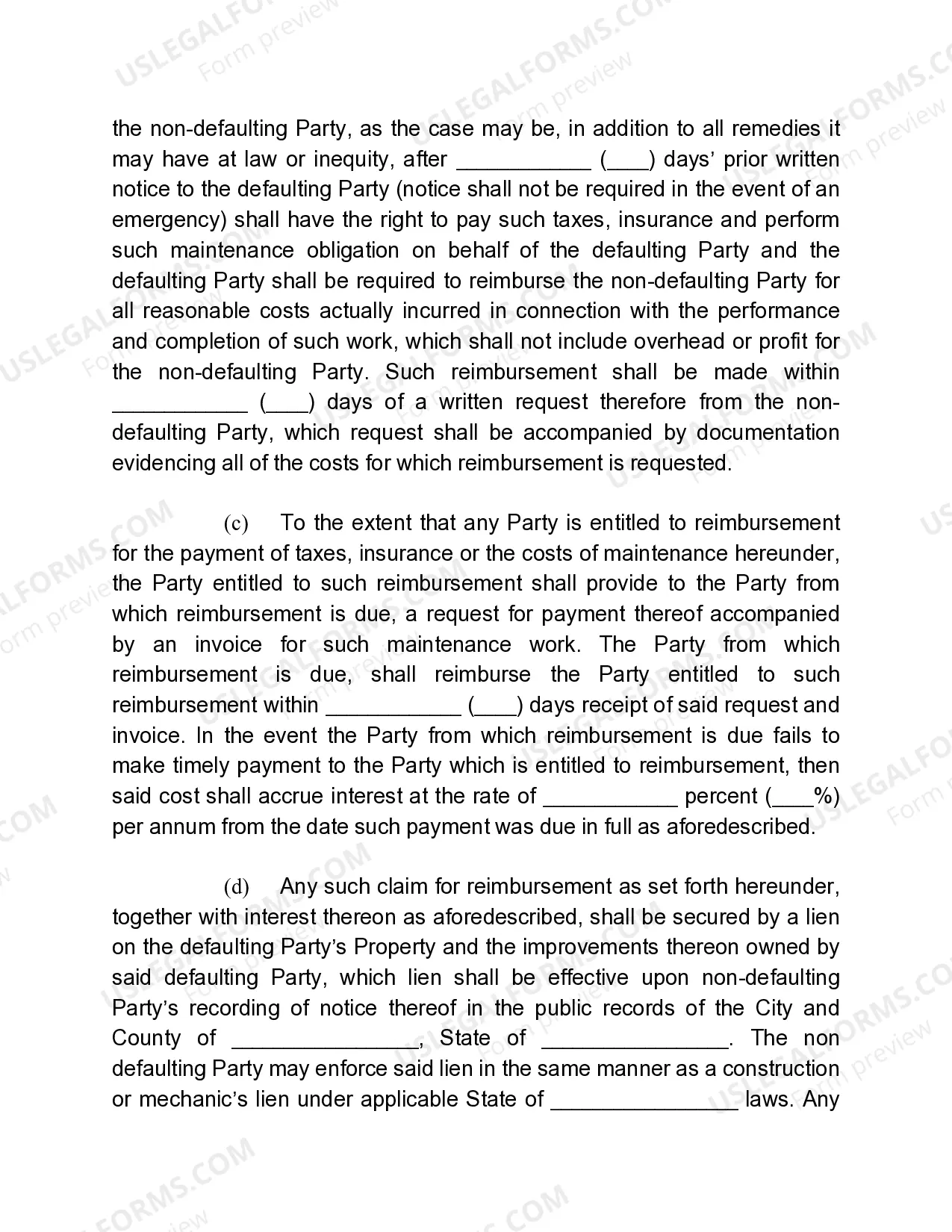
- Provisions for maintenance responsibilities and tax obligations.
- Enforcement rights and remedies for breaches of agreement.

Common use cases
This form is needed when multiple entities or individuals own neighboring properties and want to establish shared access rights. It is especially useful in scenarios where joint development of land is intended, such as for a shopping center or commercial complex, ensuring seamless interaction between the properties for both pedestrian and vehicular traffic.
Who can use this document
- Property owners who share adjacent lots and intend to develop them collaboratively.
- Real estate developers managing multiple properties within a commercial area.
- Entities looking to establish clear access rights to enhance property usability.
How to prepare this document
- Identify the parties involved and fill in their names and addresses.
- Specify the properties related to the easement and attach necessary site plans.
- Clearly define the mutual easements for pedestrian and vehicular access.
- Enter the agreed-upon terms regarding maintenance and responsibilities.
- Obtain signatures from all parties involved to finalize the agreement.
Notarization requirements for this form
This form does not typically require notarization unless specified by local law. Ensure that you check jurisdiction-specific requirements and consider optional notarization for added legal assurance.
Get your form ready online
Our built-in tools help you complete, sign, share, and store your documents in one place.
Make edits, fill in missing information, and update formatting in US Legal Forms—just like you would in MS Word.
Download a copy, print it, send it by email, or mail it via USPS—whatever works best for your next step.
Sign and collect signatures with our SignNow integration. Send to multiple recipients, set reminders, and more. Go Premium to unlock E-Sign.
If this form requires notarization, complete it online through a secure video call—no need to meet a notary in person or wait for an appointment.
We protect your documents and personal data by following strict security and privacy standards.

Make edits, fill in missing information, and update formatting in US Legal Forms—just like you would in MS Word.

Download a copy, print it, send it by email, or mail it via USPS—whatever works best for your next step.

Sign and collect signatures with our SignNow integration. Send to multiple recipients, set reminders, and more. Go Premium to unlock E-Sign.

If this form requires notarization, complete it online through a secure video call—no need to meet a notary in person or wait for an appointment.

We protect your documents and personal data by following strict security and privacy standards.
Avoid these common issues
- Failing to accurately identify all parties and properties involved.
- Neglecting to clearly define the easements being granted.
- Overlooking maintenance and insurance obligations.
- Not recording the agreement with the appropriate authority as required.
- Forgetting to obtain all necessary signatures before finalizing the document.
Why complete this form online
- Convenient access to professionally drafted legal forms that ensure compliance.
- Editable templates allow for customization to fit specific property needs.
- Quick download options enable immediate use after purchase.
- Secure storage options for completed documents.
Looking for another form?


Form popularity
FAQ
The Colorado Reciprocal Easement Agreement is a written real estate contract used in Colorado to create mutual easement rights between neighboring properties. It records each party’s right to access or use portions of the other property and outlines responsibilities like maintenance or repairs. Use it when both owners want reciprocal access or shared use and want the agreement recorded with the county.
A reciprocal easement is a mutual agreement that gives each property owner the right to use a portion of the other’s land for a stated purpose, such as access or utilities. It defines the scope, duration, maintenance duties, and any limitations. The Colorado Reciprocal Easement Agreement is one way to formalize these mutual rights in writing.
Generally, a property owner cannot unilaterally block an easement that has been properly created and recorded, including a Colorado Reciprocal Easement Agreement. If access is blocked, parties may need to enforce the agreement, pursue modification, or seek court relief. The form helps document the reciprocal rights to prevent disputes and clarify remedies.
Easements grant a non-possessory right to use part of someone else’s land for a specific purpose. They can be created by deed, agreement, or prescription and typically run with the land. The Colorado Reciprocal Easement Agreement formalizes mutual access rights, responsibilities, and limitations and is usually recorded to bind future property owners.
Property taxes usually remain with the burdened property owner—the land subject to the easement—unless the parties specify otherwise in the Colorado Reciprocal Easement Agreement. The easement itself does not typically create a separate tax bill, though the underlying property's assessed value and any changes in use may affect taxes.
It creates mutual, reciprocal rights and burdens for both property owners, rather than granting rights to only one party. The document clarifies each side’s access rights, maintenance responsibilities, and remedies for dispute or termination, helping prevent one-sided control. A standard easement often favors one owner and does not formally establish reciprocal duties.