Hold Harmless Agreement for Dogs
What is this form?
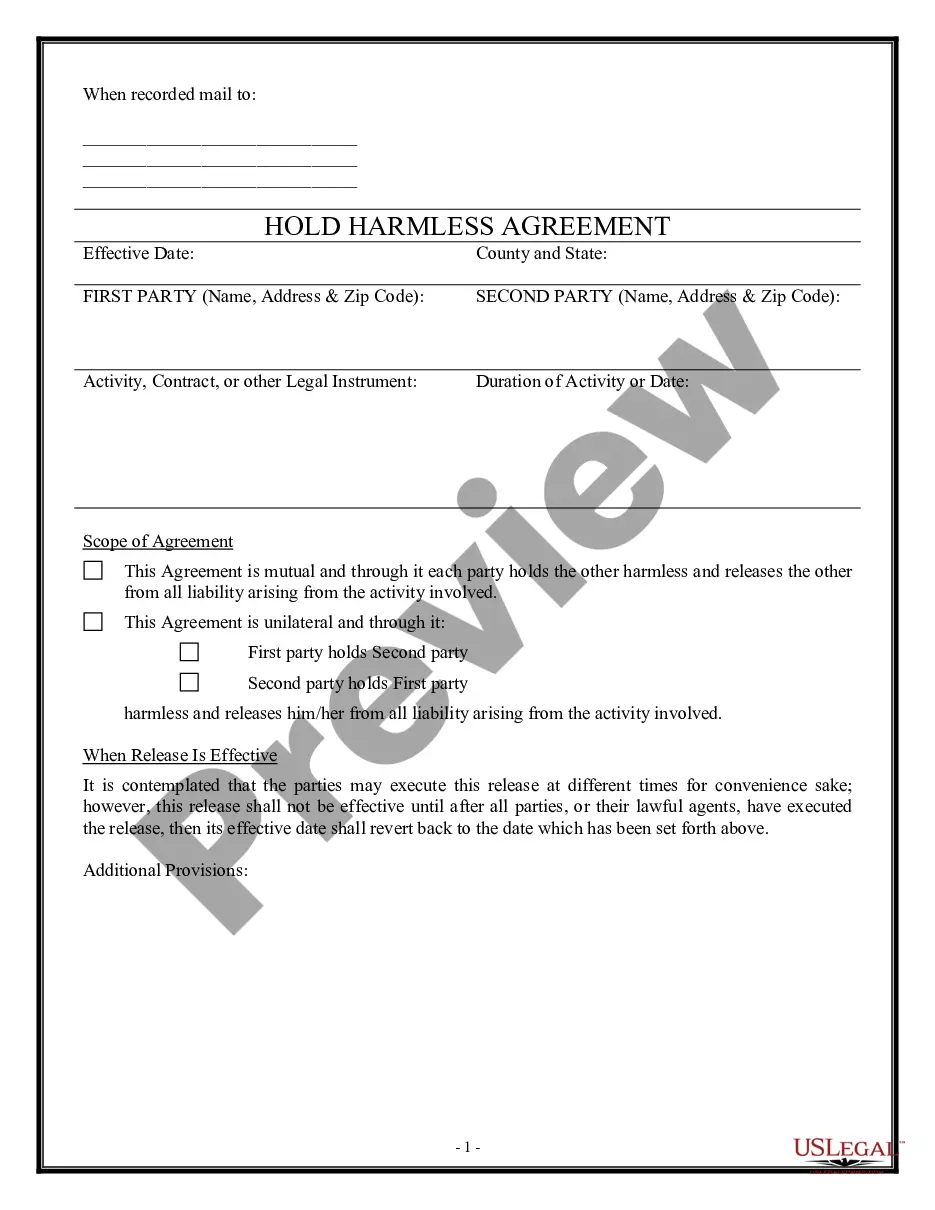
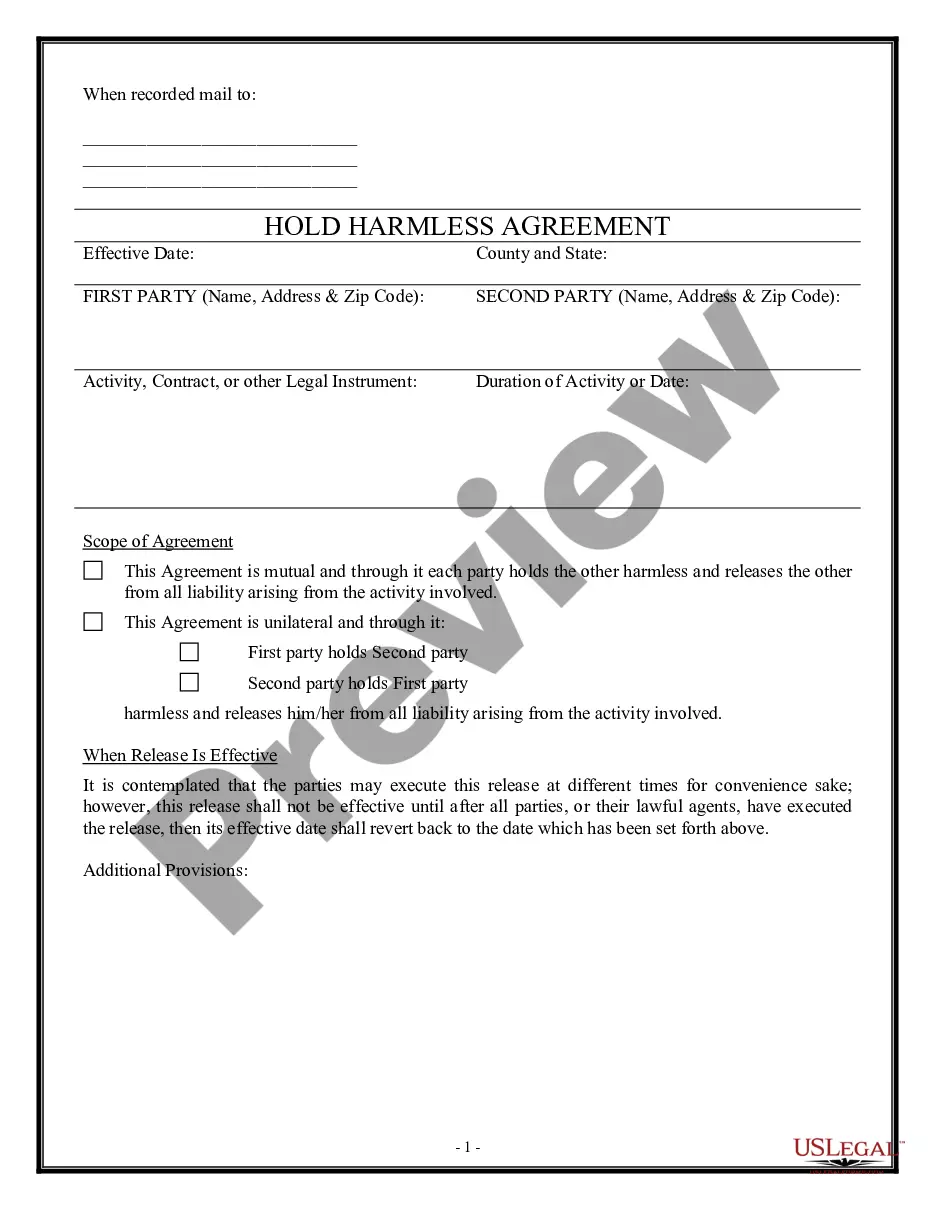
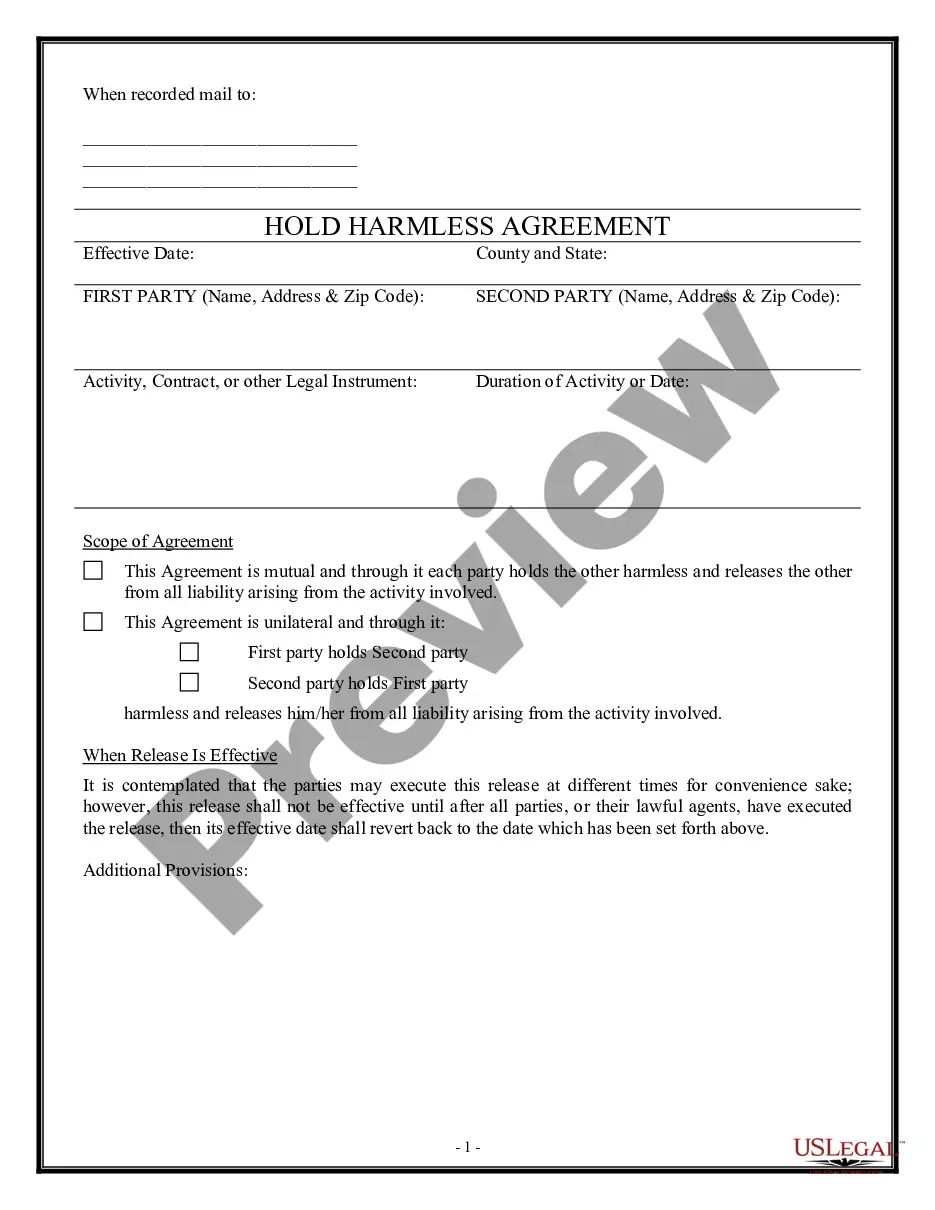
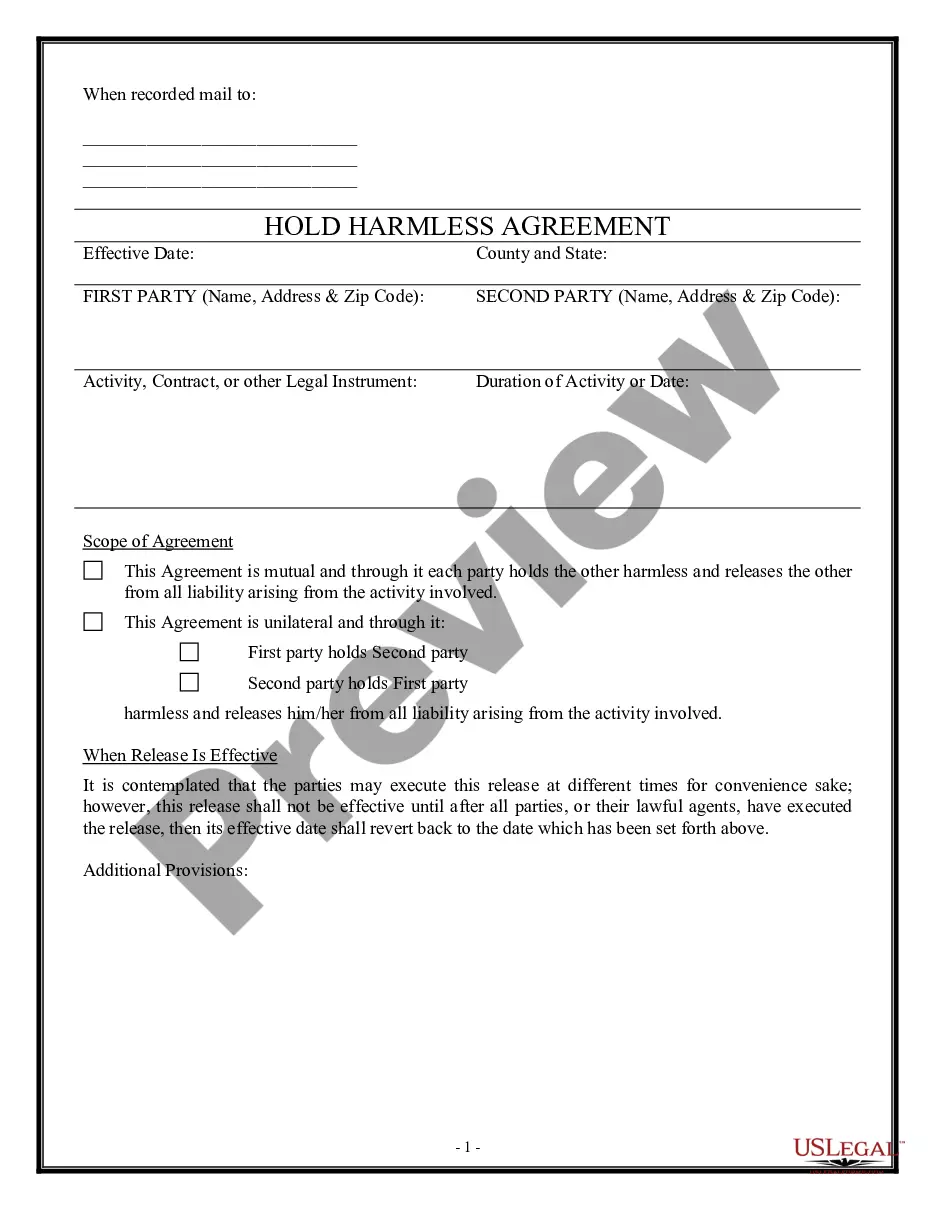
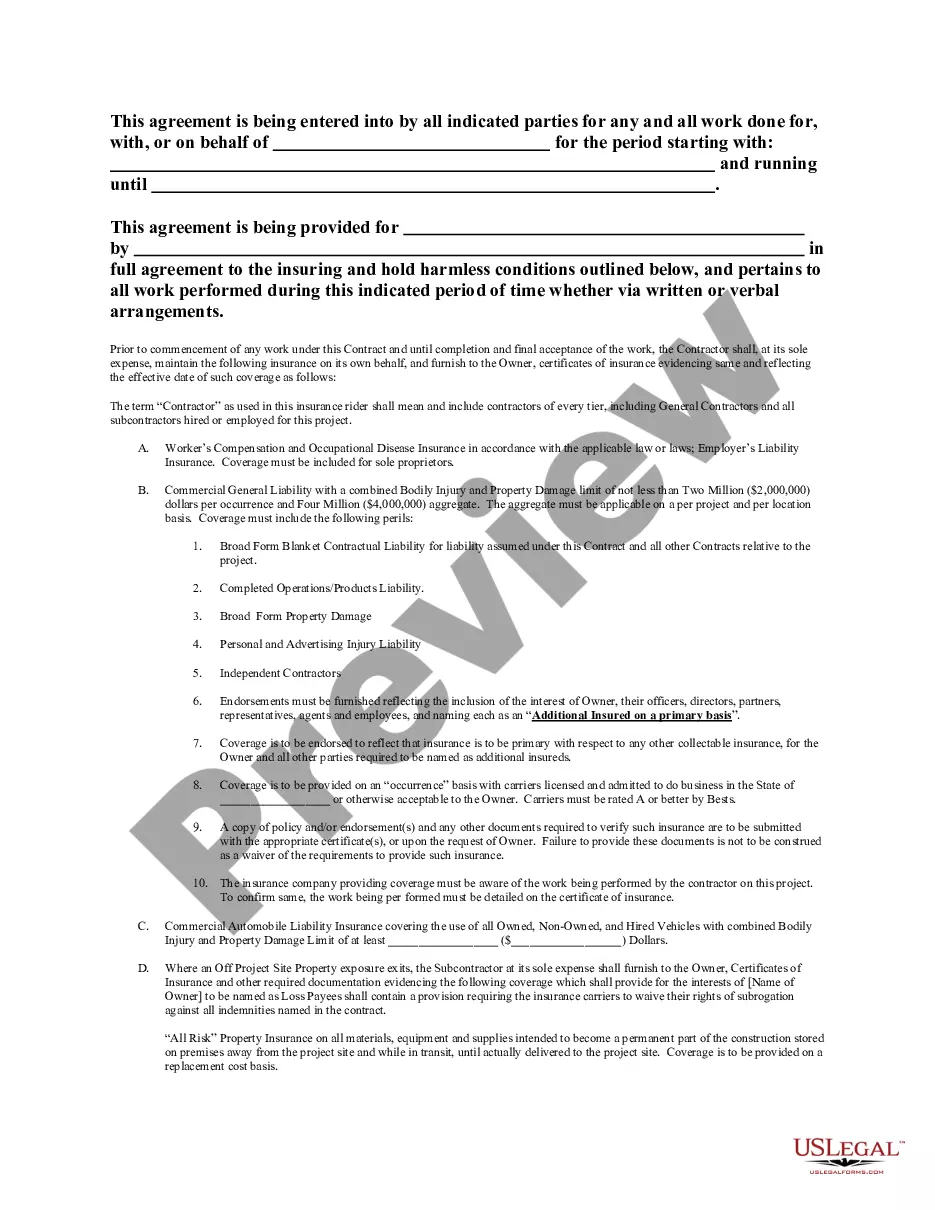
The Hold Harmless Agreement for Dogs is a legal document that protects both parties involved in an agreement regarding the care or handling of dogs. This agreement ensures that each party absolves the other from liability related to any accidents or injuries that may occur during the agreed-upon activity. Unlike other liability waivers, this form outlines mutual responsibilities and ensures both parties are protected.
What’s included in this form
- Identification of the parties involved in the agreement.
- A clear statement of the mutual hold harmless clause.
- Details on the specific activities or situations covered by the agreement.
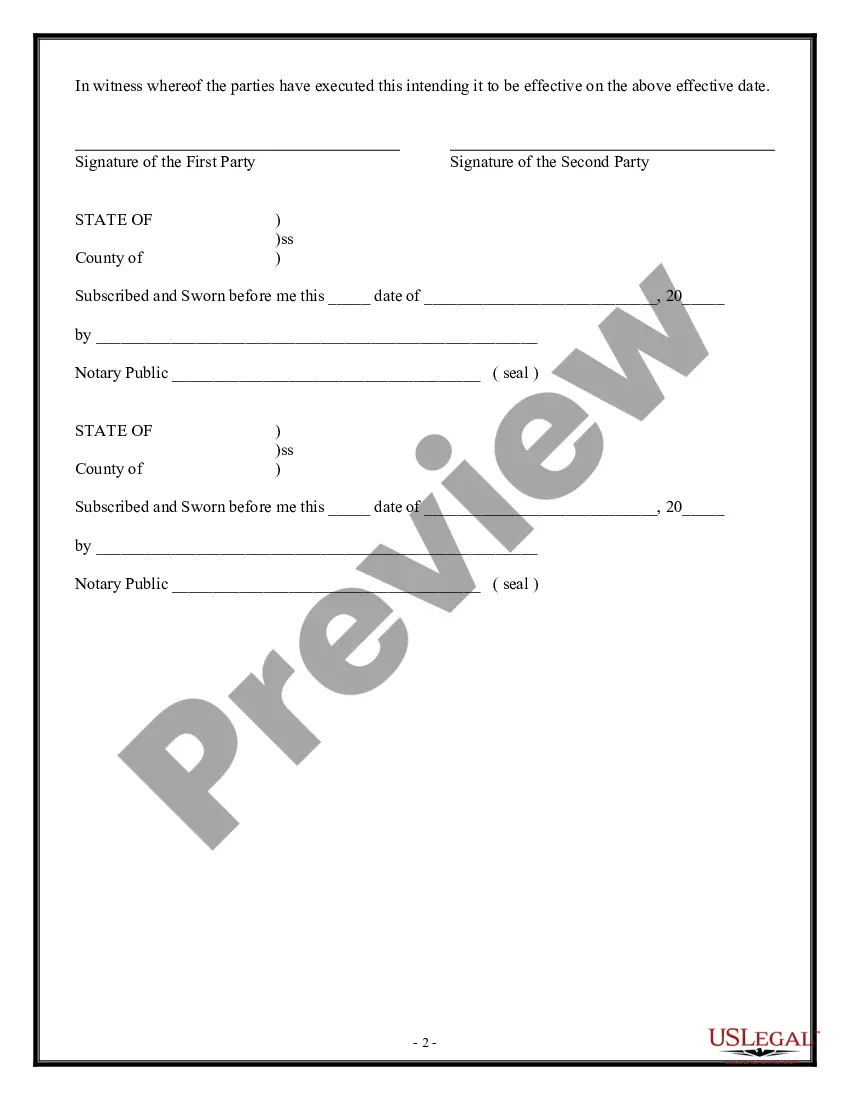
- Signatures of both parties to confirm acceptance.
- Notary acknowledgment, if required.
Situations where this form applies
You should use the Hold Harmless Agreement for Dogs when you are engaging in activities that involve the care, training, or handling of a dog, especially if there is a possibility of injury to people or pets. This includes dog training sessions, boarding, or dog walking services. This agreement is essential in situations where the dog owner wants to ensure they are not held liable for unforeseen incidents.
Intended users of this form
- Dog owners who are arranging services such as dog walking or daycare.
- Pet care providers who handle or train dogs.
- Individuals organizing dog-related events.
- Any party wanting to limit liability during activities involving dogs.
How to complete this form
- Identify and list the names of the parties involved.
- Clearly state the specific activity or event related to the agreement.
- Include details regarding the mutual hold harmless clause.
- Both parties should read and understand the terms before signing.
- Obtain the signature of a notary public, if required.
Notarization guidance
This form does not typically require notarization unless specified by local law. Ensure you check with local regulations to confirm if notarization is needed for validity.
Get your form ready online
Our built-in tools help you complete, sign, share, and store your documents in one place.
Make edits, fill in missing information, and update formatting in US Legal Forms—just like you would in MS Word.
Download a copy, print it, send it by email, or mail it via USPS—whatever works best for your next step.
Sign and collect signatures with our SignNow integration. Send to multiple recipients, set reminders, and more. Go Premium to unlock E-Sign.
If this form requires notarization, complete it online through a secure video call—no need to meet a notary in person or wait for an appointment.
We protect your documents and personal data by following strict security and privacy standards.

Make edits, fill in missing information, and update formatting in US Legal Forms—just like you would in MS Word.

Download a copy, print it, send it by email, or mail it via USPS—whatever works best for your next step.

Sign and collect signatures with our SignNow integration. Send to multiple recipients, set reminders, and more. Go Premium to unlock E-Sign.

If this form requires notarization, complete it online through a secure video call—no need to meet a notary in person or wait for an appointment.

We protect your documents and personal data by following strict security and privacy standards.
Typical mistakes to avoid
- Failing to include important details about the activities involved.
- Not having both parties sign the agreement.
- Neglecting to get the form notarized if required by law.
- Using vague language that may lead to misunderstandings.
Benefits of completing this form online
- Convenient access to the form from any device.
- Editable sections to tailor the agreement to your specific needs.
- Reliability, as the forms are drafted by licensed attorneys.
- Immediate download for quick use.
Legal use & context
The Hold Harmless Agreement for Dogs is legally enforceable as long as it is clear and both parties have mutually agreed to its terms. It serves to limit liability but should not be seen as absolving carelessness or negligence.
Quick recap
- The Hold Harmless Agreement for Dogs protects parties engaged in dog-related activities.
- It is essential for both dog owners and pet care providers.
- Ensure clarity and specificity to avoid misunderstandings.
- Review state-specific rules that may affect the agreement's enforceability.
Looking for another form?
Form popularity
FAQ
The main difference in this case is that hold harmless may require a party to protect against actual losses as well as potential losses while indemnification protects against actual losses only.
By signing a broad form hold harmless agreement you are possibly exposing your company to uninsurable risk. Contractual Liability Coverage for sole or gross negligent acts of your client is excluded is y most liability policies.As with all contracts, it is best to have legal counsel review prior to signing.
It's still your business decision whether you sign them or not, but you should do so only where it is a critical contract that you have no way of modifying or negotiating changes. In contrast, the best kind of Indemnity Agreement is commonly called a Mutual Indemnity Agreement or a Mutual Hold Harmless Provision.
When Is a Hold Harmless Agreement a Good Idea? A hold harmless agreement (also known as an indemnity agreement or waiver of liability) is a good idea any time you want to shift risk from one party to another. You can protect other people from being sued by taking on the liability yourself as well.
A Hold Harmless (Indemnity) Agreement is used between two parties (such as an employer and employee) to establish protection from liabilities, losses, claims, or damages for one of the parties during their involvement in an activity.
A Hold Harmless Agreement is a legal agreement that states that one party will not hold another party liable for risk, often physical risk or damage. The Hold Harmless Clause can be one-way (unilateral) or two-way (reciprocal) agreements and can be signed before or after an activity takes place.
A hold harmless clause is used to protect a party in a contract from liability for damages or losses. In signing such a clause, the other party accepts responsibility for certain risks involved in contracting for the service.