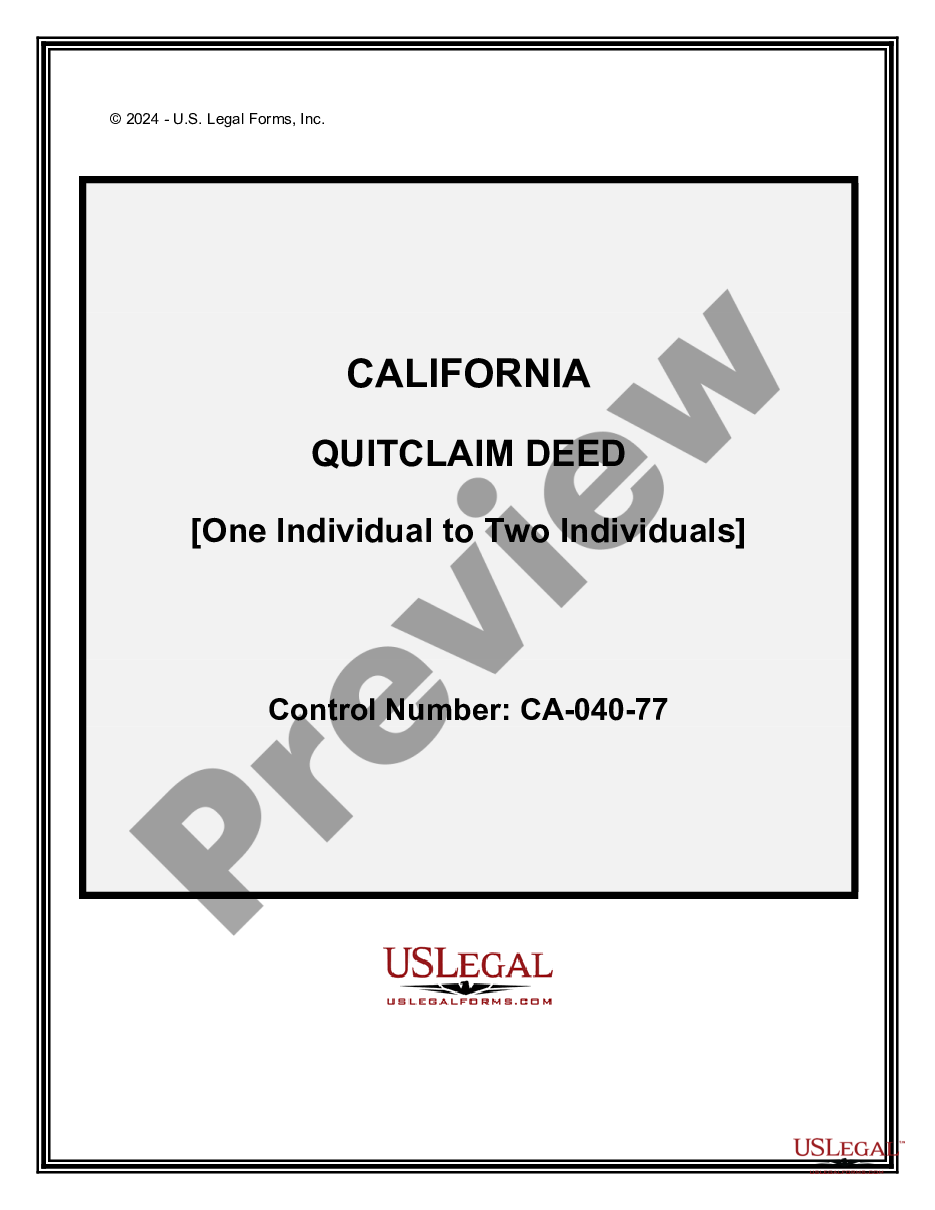
California Quitclaim Deed - Individual Grantor to Two Individual Grantees
Overview of this form
The Quitclaim Deed - Individual Grantor to Two Individual Grantees is a legal document used to transfer ownership of real property from one individual (the grantor) to two other individuals (the grantees). This type of deed conveys any interest the grantor may have in the property without guaranteeing that the title is clear or free of encumbrances. Unlike warranty deeds, quitclaim deeds offer no warranties or assurances about the property title, making them often used among family members or in situations where the parties know each other well.
Main sections of this form
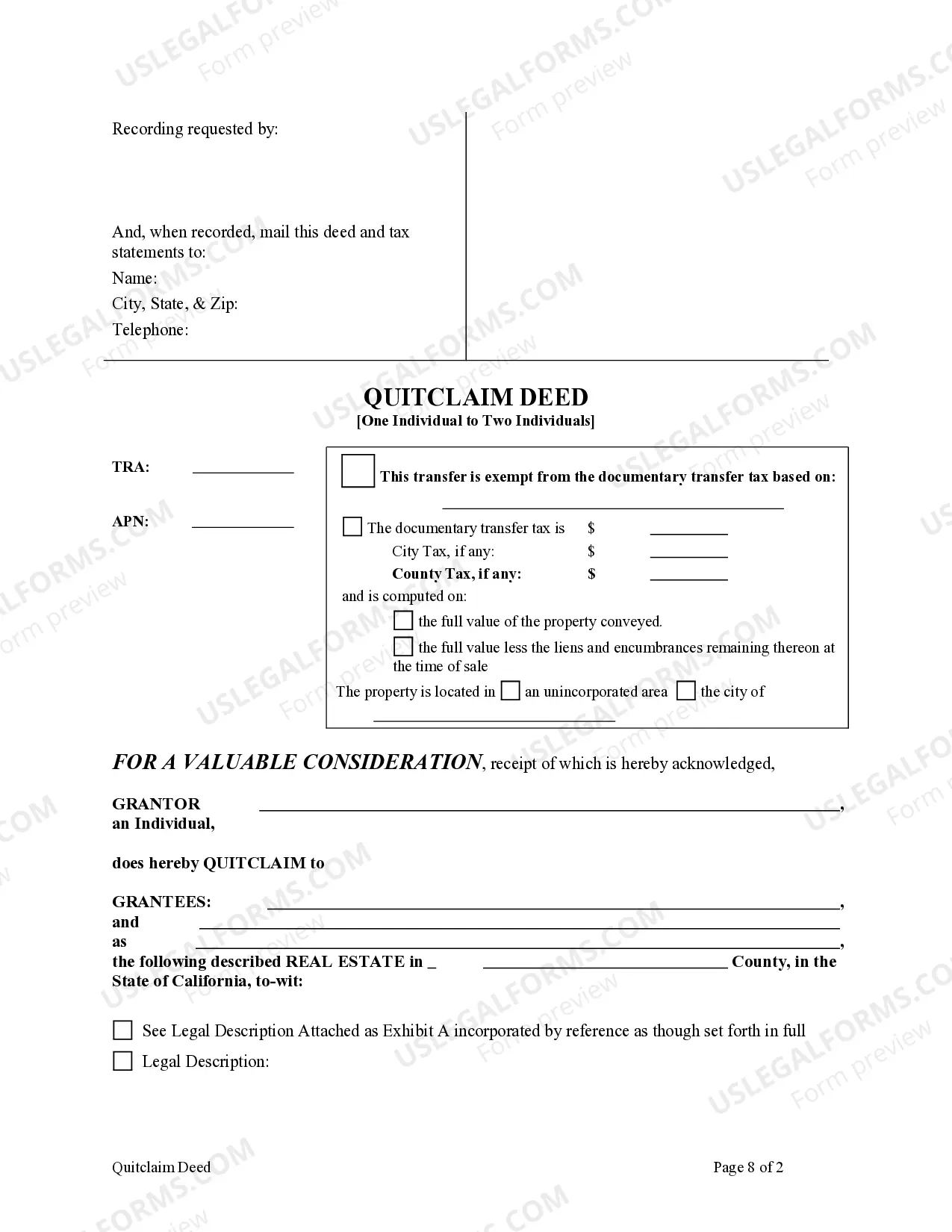
- Parties involved: The document identifies the grantor and the two grantees.
- Description of the property: A detailed description of the property being transferred is included.
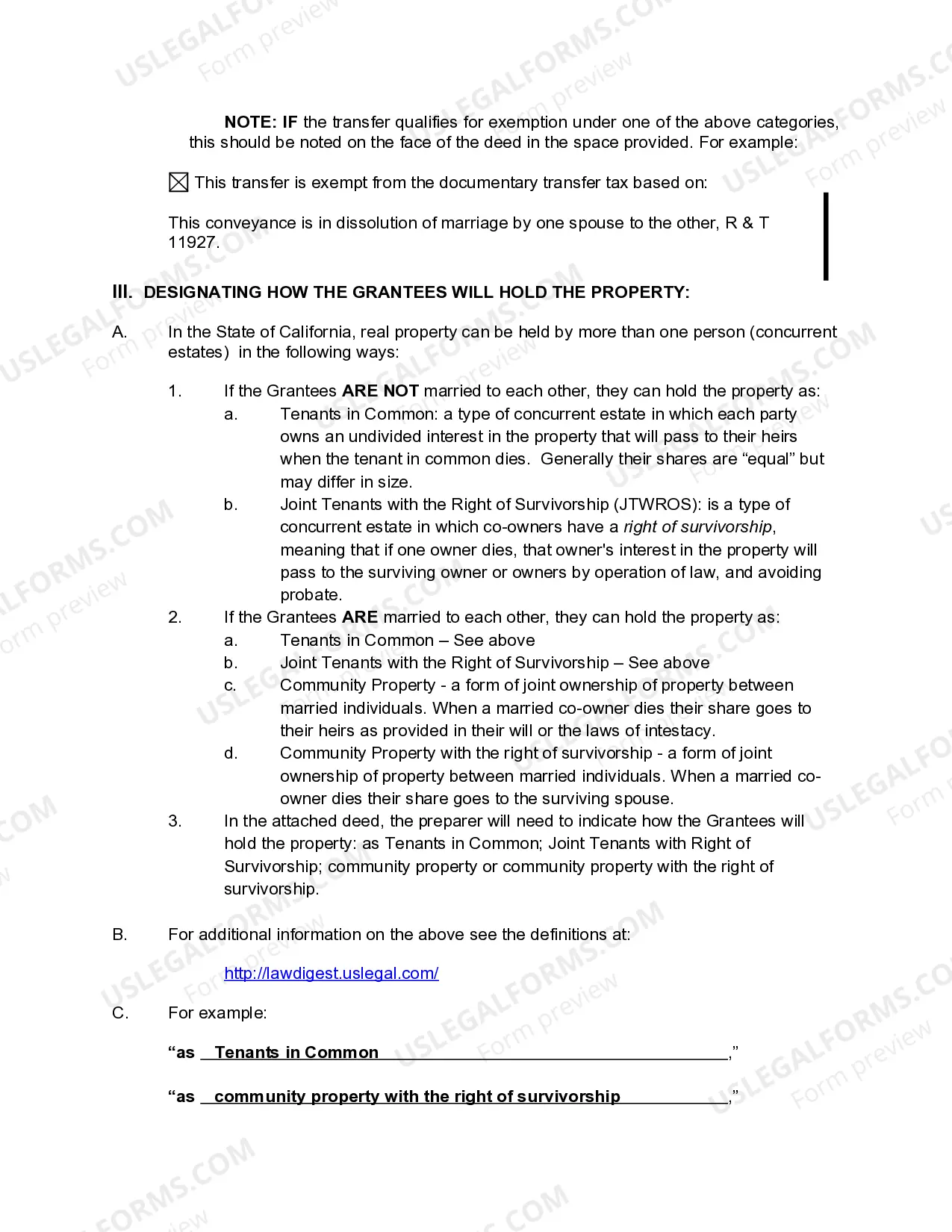
- Type of ownership: The form specifies whether the grantees will hold the property as tenants in common or joint tenants with right of survivorship.
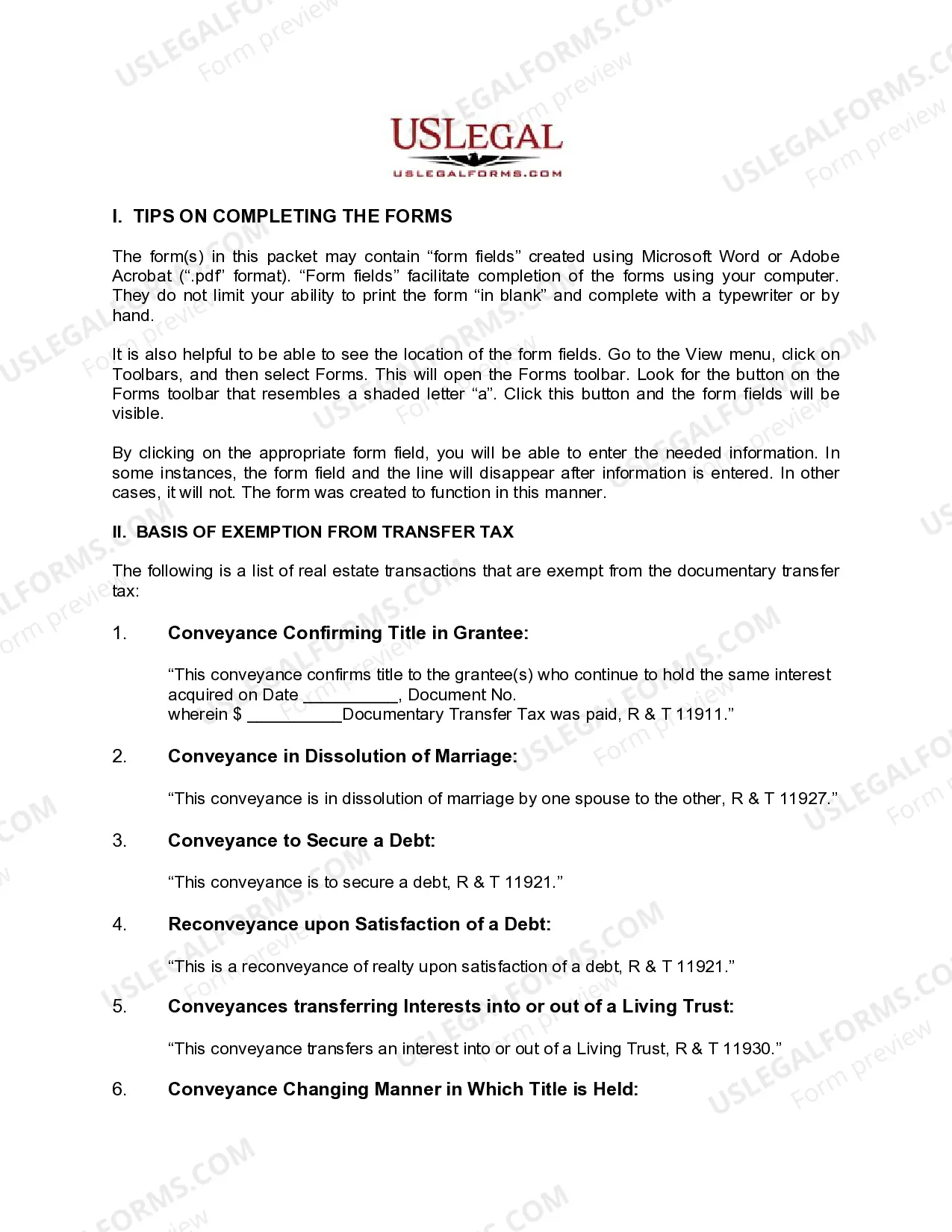
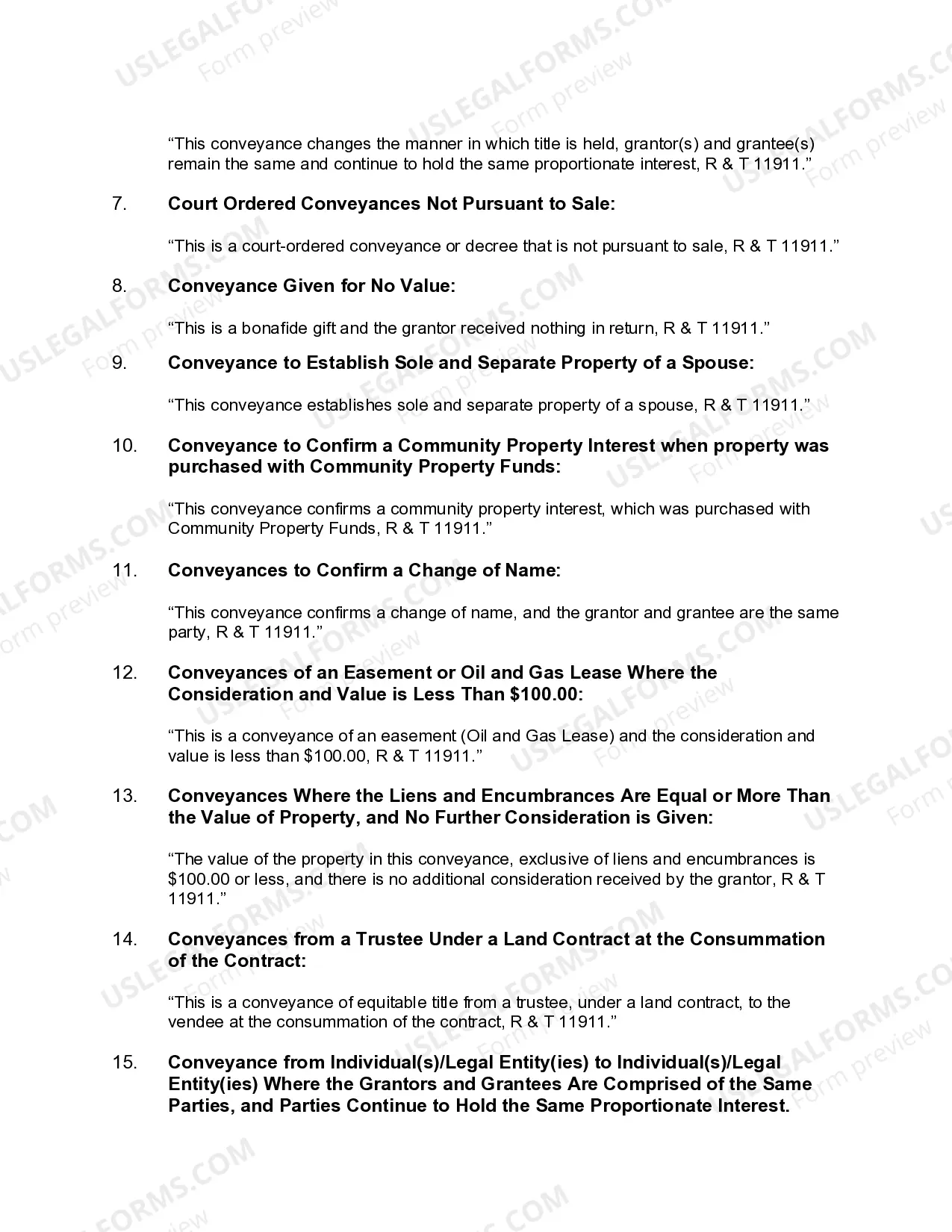
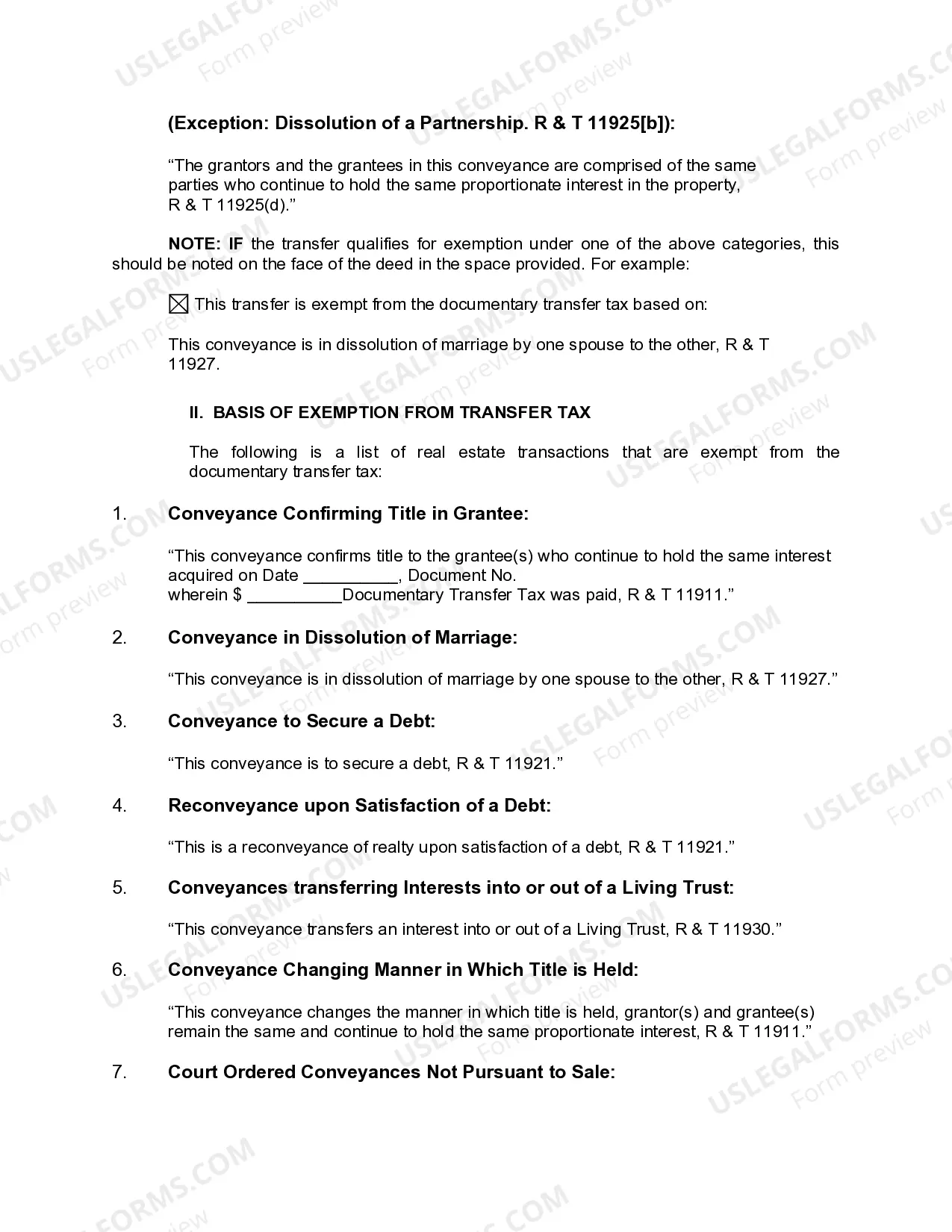
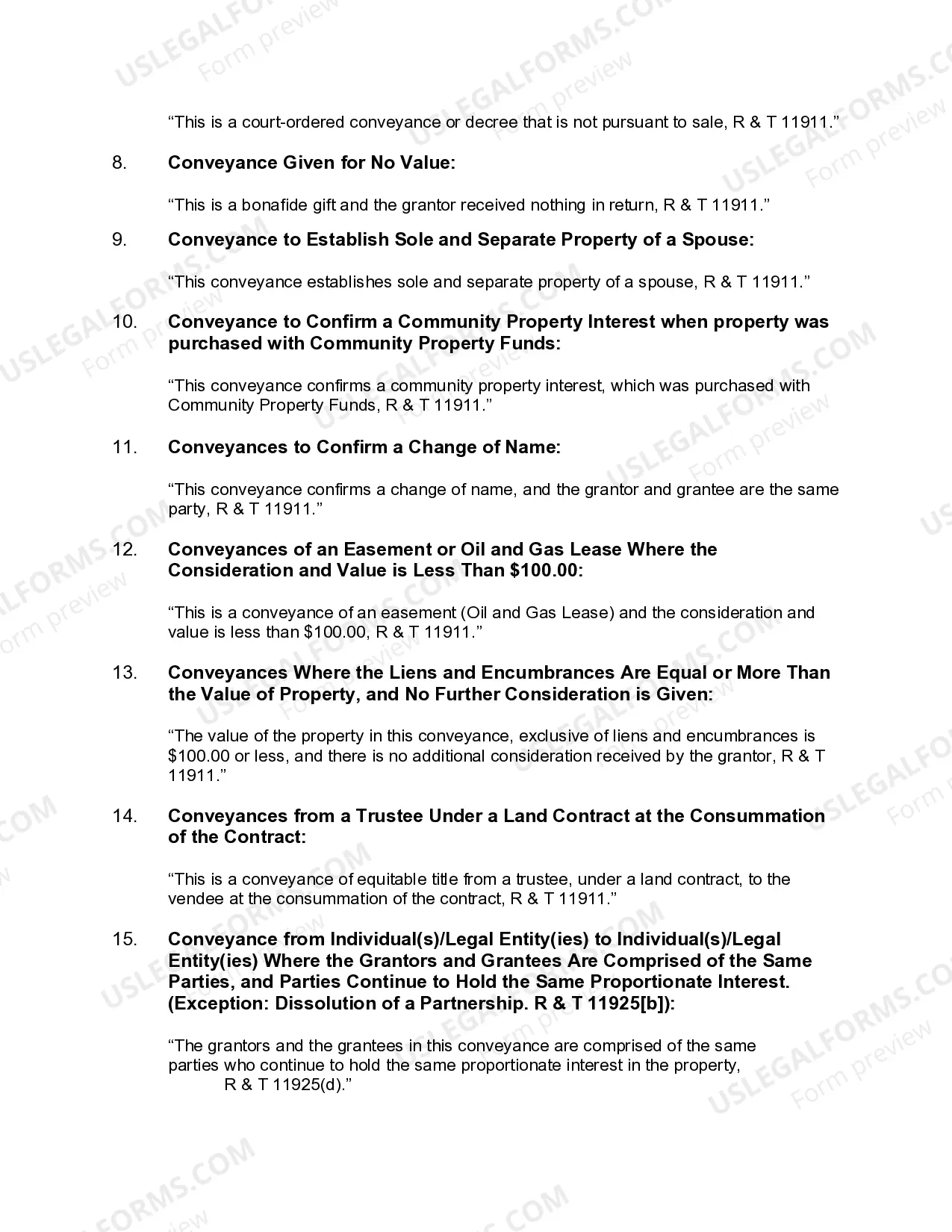
- Exemption from transfer tax: Space is provided to note any applicable exemption for the documentary transfer tax.
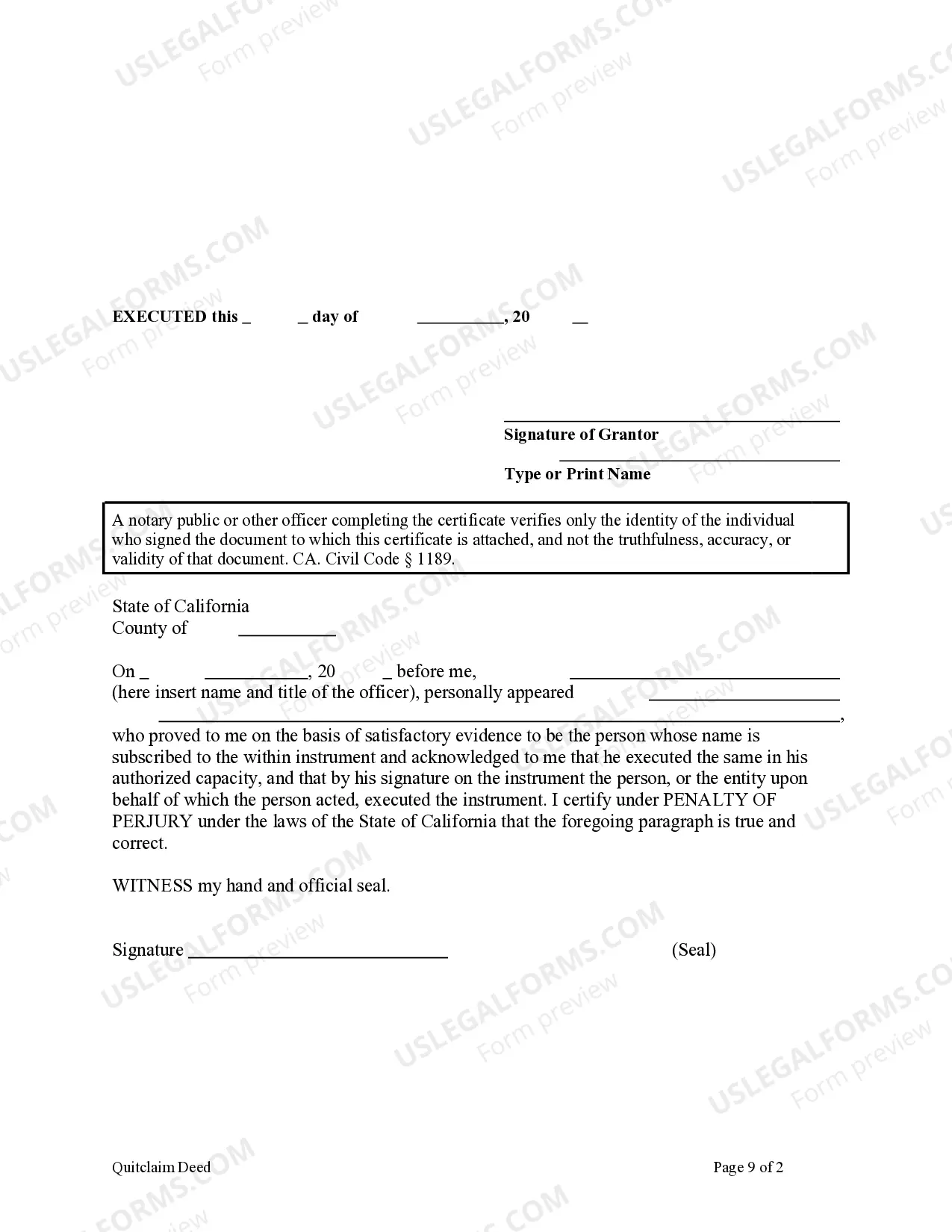
- Signatures: The document requires the signature of the grantor for validation.





Situations where this form applies
This quitclaim deed is typically used when an individual wants to transfer ownership of a property to two other individuals. Common scenarios include transferring property to family members, as part of an estate plan, or during a divorce where a spouse wishes to relinquish their interest in a property. It can also be employed when confirming a previous title transfer that was already made, ensuring all parties are recognized in the title of the property.
Who should use this form
- Individuals transferring property to two other individuals, such as family members, friends, or acquaintances.
- People involved in the dissolution of marriage who need to transfer property ownership as part of divorce proceedings.
- Anyone requiring a straightforward transfer of property ownership without extensive title guarantees.
- Individuals looking to consolidate or clear property interests among co-owners.
How to complete this form
- Identify the grantor: Enter the name of the individual transferring the property.
- Specify the grantees: List the names of the two individuals receiving the property.
- Describe the property: Provide a thorough description of the property being transferred, including its legal description.
- Indicate the type of ownership: Choose whether the grantees will hold the property as tenants in common or joint tenants with right of survivorship.
- Complete the exemption section: If applicable, cite any exemptions from the document transfer tax.
- Sign the document: The grantor must sign the deed, and it may need to be notarized depending on local requirements.
Notarization requirements for this form
This form does not typically require notarization unless specified by local law. However, notarization is generally advised for quitclaim deeds to enhance their legal validity in certain jurisdictions. If you choose to notarize, consider using US Legal Formsâ integrated online notarization services for a convenient and secure process.
Get your form ready online
Our built-in tools help you complete, sign, share, and store your documents in one place.
Make edits, fill in missing information, and update formatting in US Legal Forms—just like you would in MS Word.
Download a copy, print it, send it by email, or mail it via USPS—whatever works best for your next step.
Sign and collect signatures with our SignNow integration. Send to multiple recipients, set reminders, and more. Go Premium to unlock E-Sign.
If this form requires notarization, complete it online through a secure video call—no need to meet a notary in person or wait for an appointment.
We protect your documents and personal data by following strict security and privacy standards.

Make edits, fill in missing information, and update formatting in US Legal Forms—just like you would in MS Word.

Download a copy, print it, send it by email, or mail it via USPS—whatever works best for your next step.

Sign and collect signatures with our SignNow integration. Send to multiple recipients, set reminders, and more. Go Premium to unlock E-Sign.

If this form requires notarization, complete it online through a secure video call—no need to meet a notary in person or wait for an appointment.

We protect your documents and personal data by following strict security and privacy standards.
Common mistakes
- Failing to provide a complete legal description of the property.
- Not specifying how the grantees will hold the property.
- Misidentifying the grantor or granteesâ names.
- Overlooking the exemption clause for the documentary transfer tax.
- Not signing the deed or having it notarized where required by law.
Why complete this form online
- Convenience: Download and complete the form from anywhere at any time.
- Editability: Easy to fill out electronically, ensuring accuracy before printing.
- Compliance: Forms are designed to comply with current state laws.
- Access to guidance: Users can access instructions and legal definitions while completing the form.
Quick recap
- The Quitclaim Deed is a simple method to transfer property rights without warranties.
- Understanding tenancy types is crucial for determining property ownership rights.
- Ensure compliance with state-specific requirements to avoid legal issues.
- Online completion and notarization make the process straightforward and accessible.
Looking for another form?


Form popularity
FAQ
In a California Quitclaim Deed - Individual Grantor to Two Individual Grantees, the grantees are the individuals receiving the property transfer. This deed conveys whatever interest the grantor has in the property, making the grantees the new owners. Unlike some other deeds, a quitclaim deed does not guarantee the title's quality, so understanding the implications is crucial. Using platforms like USLegalForms can help you create a quitclaim deed tailored to your needs and ensure all details are accurate.
Adding someone to a deed in California can have tax implications, particularly regarding property taxes and potential gift taxes. The transfer may trigger reassessment of the property's value for tax purposes. It's advisable to consult a tax professional to understand the specific tax consequences tied to a California Quitclaim Deed - Individual Grantor to Two Individual Grantees before proceeding.
To execute a quitclaim deed in California, you need to fill out the California Quitclaim Deed - Individual Grantor to Two Individual Grantees form, providing necessary details such as the grantor and grantees’ names. After completing the form, you'll need to sign it in front of a notary public. Finally, file the deed with your county recorder's office to finalize the transfer and make it official.
The best way to add someone to a deed in California is by utilizing a California Quitclaim Deed - Individual Grantor to Two Individual Grantees. This form enables you to clearly name both the current owner and the new owner. Make sure to consult legal advice if you have concerns about implications before executing the deed.
You can add someone to your house deed in California using a California Quitclaim Deed - Individual Grantor to Two Individual Grantees. This process allows you to transfer a portion of your ownership to another individual. Ensure that you complete the deed form accurately and file it with the appropriate county office to make the change legally recognized.
Yes, you can have more than one grantee when using a California Quitclaim Deed - Individual Grantor to Two Individual Grantees. This deed allows you to transfer ownership to multiple individuals simultaneously, which can simplify property transfers among family members or friends. Just ensure that all parties involved understand their rights and responsibilities regarding the property.
To add a person to a deed in California, you would typically execute a new California Quitclaim Deed - Individual Grantor to Two Individual Grantees that specifies the additional owner. This process requires the current owner to agree, and it is essential to follow the appropriate legal procedures. Platforms like US Legal Forms provide templates and guidance to make this process simple and efficient.
A California Quitclaim Deed - Individual Grantor to Two Individual Grantees can include as many individuals as necessary. This feature is particularly helpful for families or groups sharing ownership of a property. However, consider that more grantees may lead to more complex ownership arrangements and responsibilities.
Removing a co-owner from a property deed in California typically involves drafting a new deed, such as a California Quitclaim Deed - Individual Grantor to Two Individual Grantees, which notes the current owner and excludes the co-owner. The process usually requires the consent of both parties to avoid legal disputes. Utilizing a reliable platform like US Legal Forms can help streamline this process and ensure all documentation meets legal standards.
In California, there is no strict limit on the number of individuals who can be named on a deed, including in a California Quitclaim Deed - Individual Grantor to Two Individual Grantees. This flexibility allows for various arrangements, whether you have family members or business partners involved. However, keep in mind that adding multiple parties may complicate decisions about the property in the future.