Statute Of Limitations Dwi Texas
Description
Get your form ready online
Our built-in tools help you complete, sign, share, and store your documents in one place.
Make edits, fill in missing information, and update formatting in US Legal Forms—just like you would in MS Word.
Download a copy, print it, send it by email, or mail it via USPS—whatever works best for your next step.
Sign and collect signatures with our SignNow integration. Send to multiple recipients, set reminders, and more. Go Premium to unlock E-Sign.
If this form requires notarization, complete it online through a secure video call—no need to meet a notary in person or wait for an appointment.
We protect your documents and personal data by following strict security and privacy standards.

Make edits, fill in missing information, and update formatting in US Legal Forms—just like you would in MS Word.

Download a copy, print it, send it by email, or mail it via USPS—whatever works best for your next step.

Sign and collect signatures with our SignNow integration. Send to multiple recipients, set reminders, and more. Go Premium to unlock E-Sign.

If this form requires notarization, complete it online through a secure video call—no need to meet a notary in person or wait for an appointment.

We protect your documents and personal data by following strict security and privacy standards.
Looking for another form?



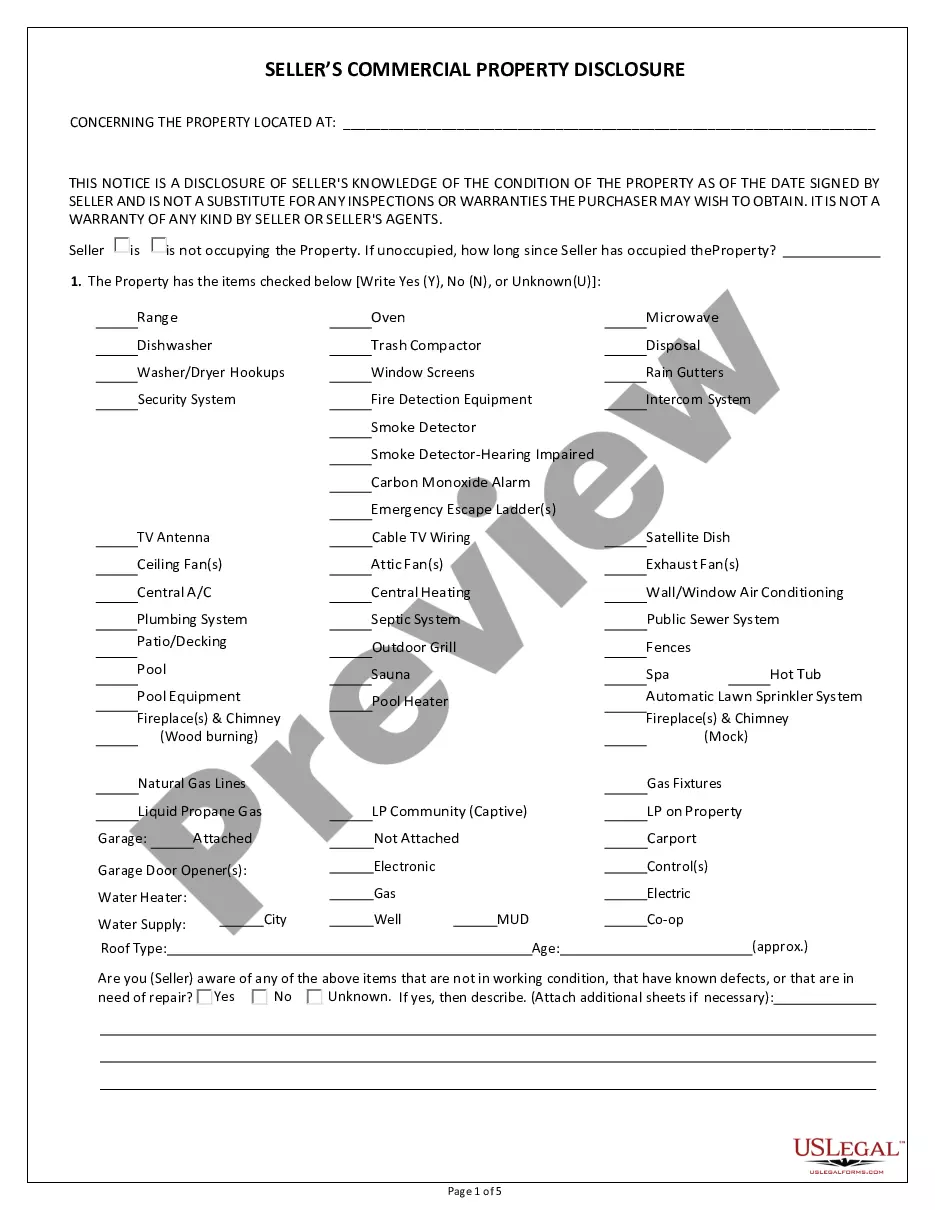

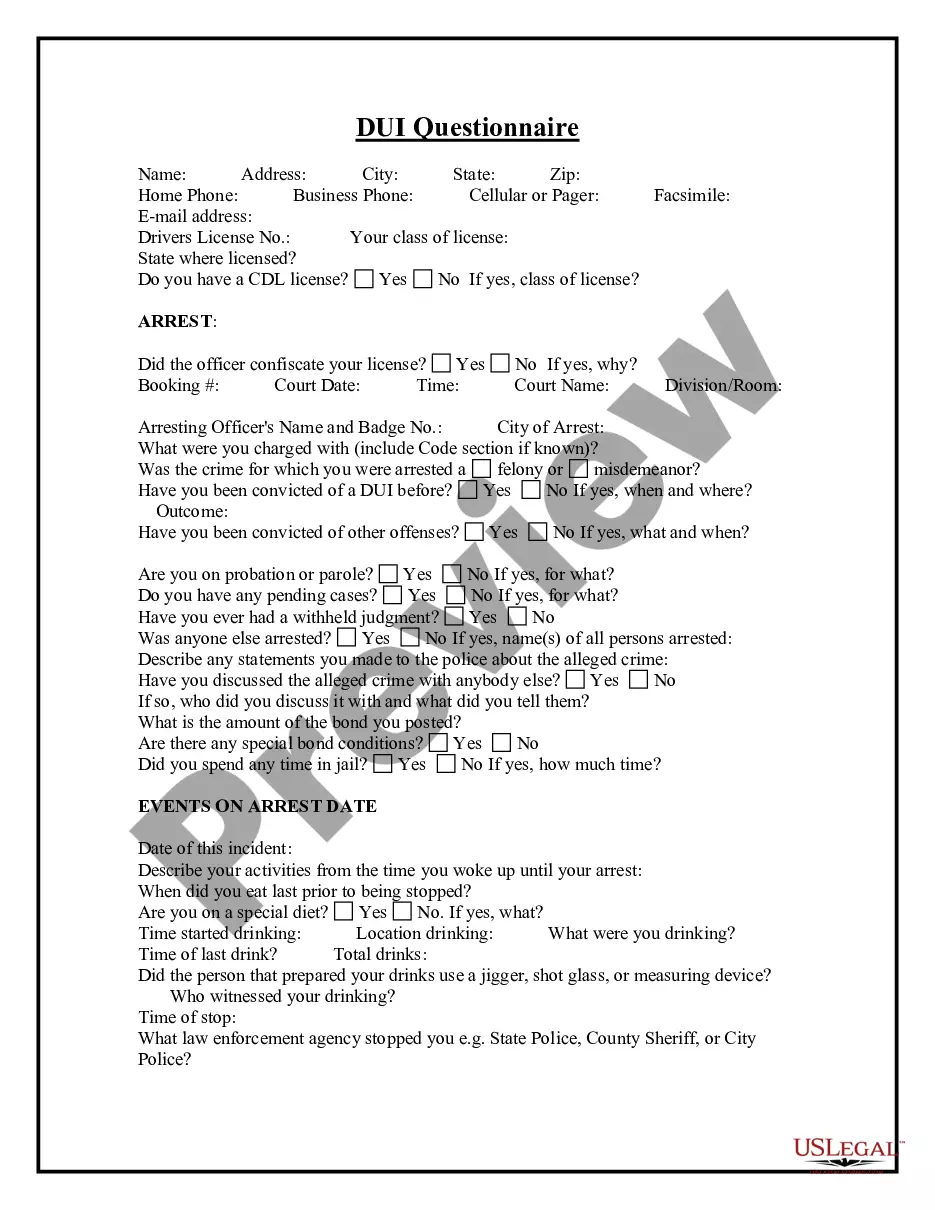
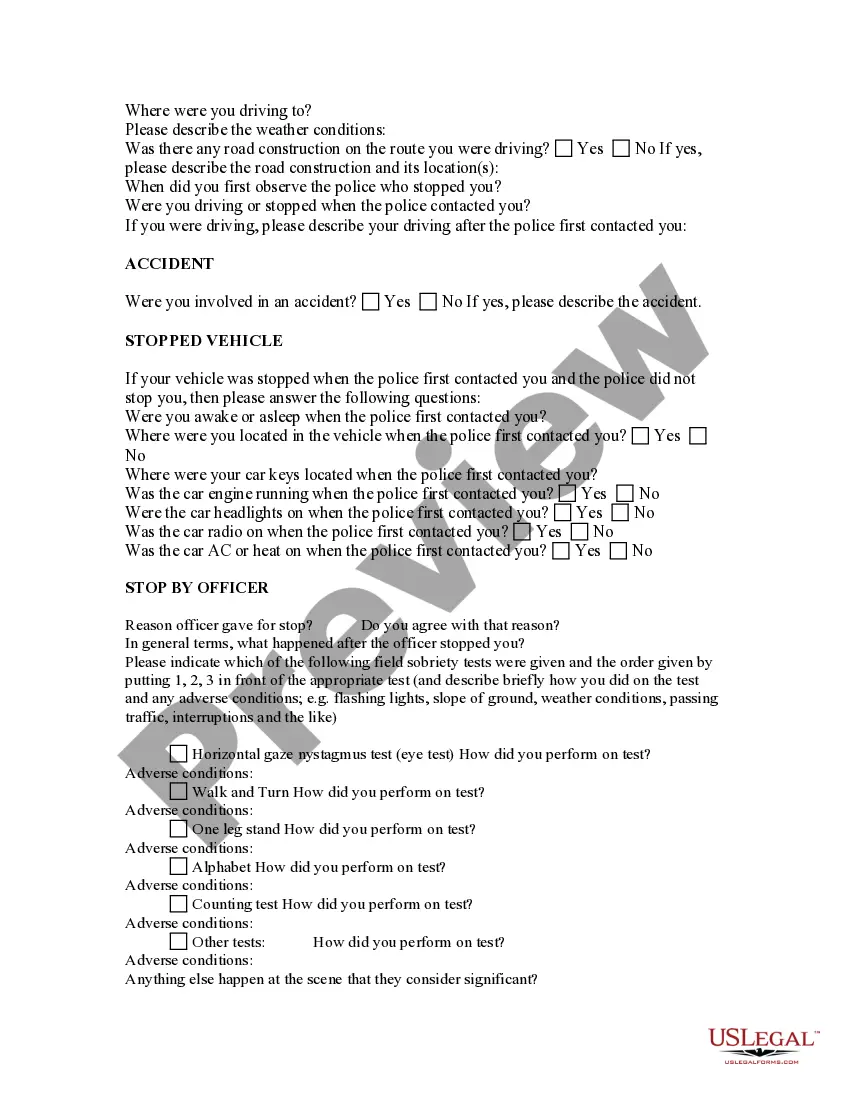
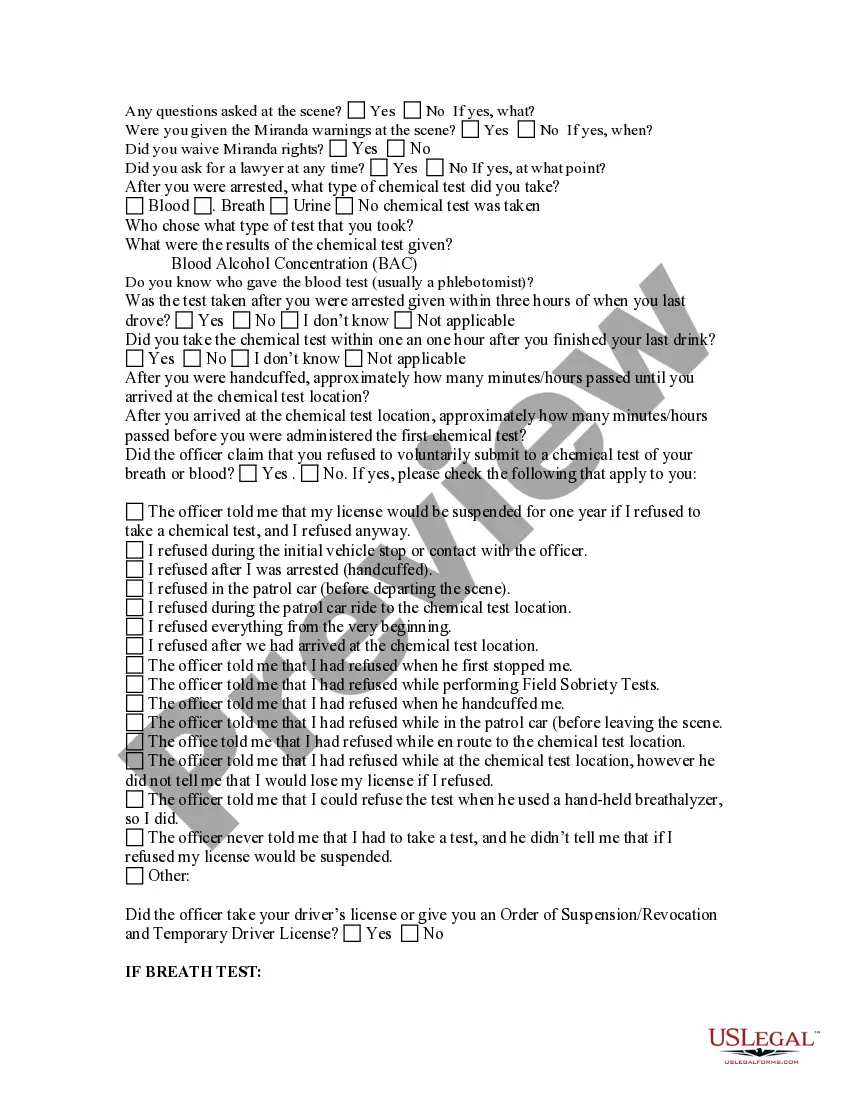
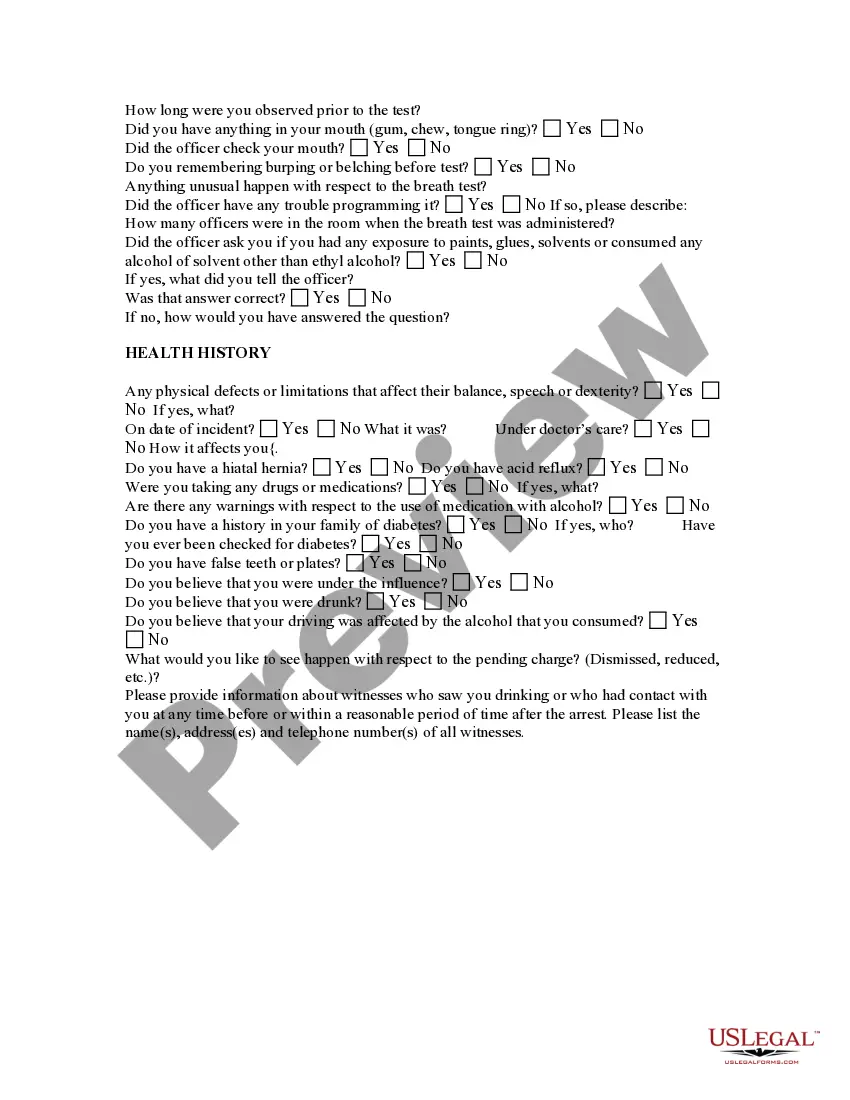
How to fill out Driving Under The Influence - DUI - Questionnaire?
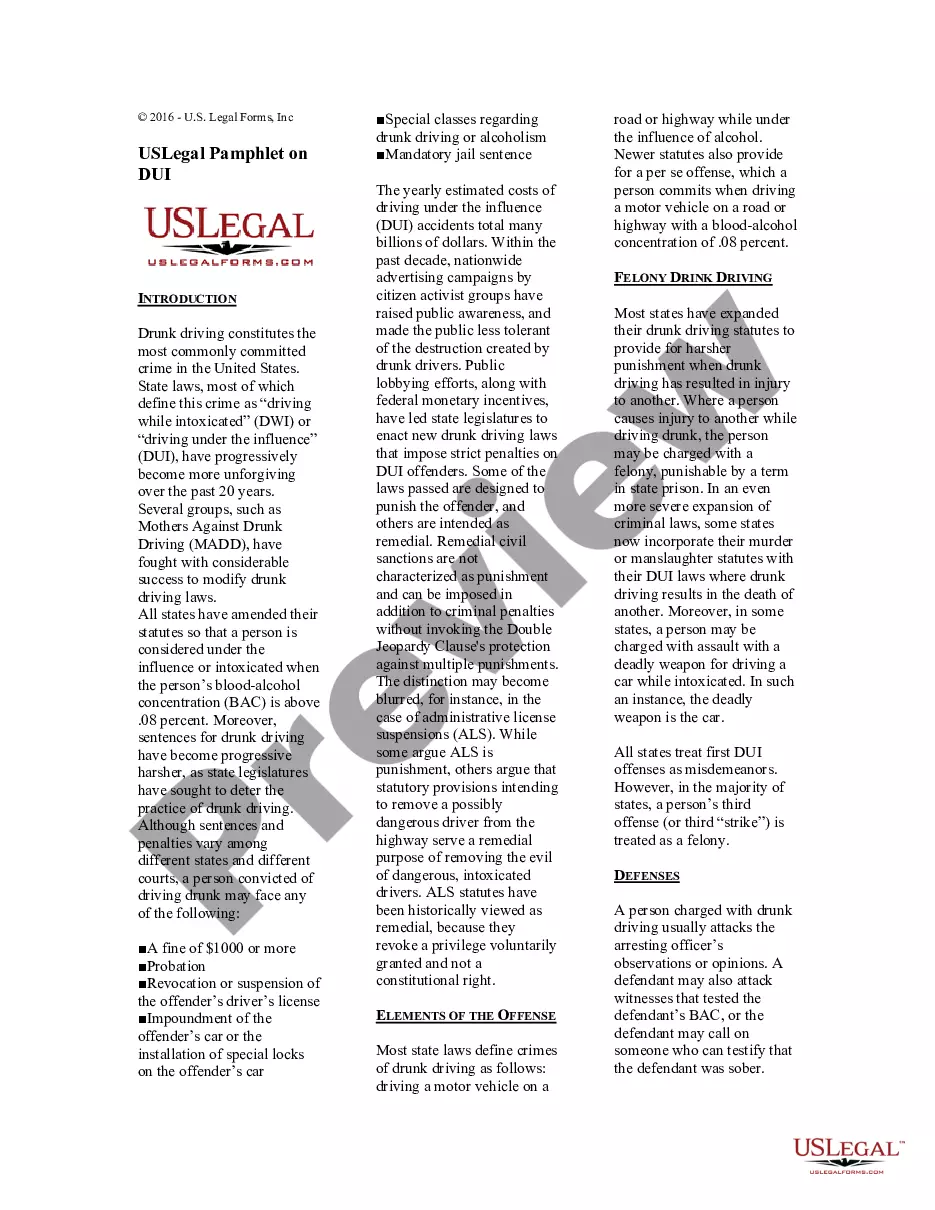
The Statute of Limitations DWI Texas you see on this page is a reusable formal template created by professional attorneys in accordance with federal and local laws.
For over 25 years, US Legal Forms has supplied individuals, organizations, and lawyers with more than 85,000 authenticated, state-specific documents for any business and personal event. It’s the quickest, simplest, and most trustworthy method to acquire the paperwork you require, as the service ensures bank-level data security and anti-malware safeguards.
Register with US Legal Forms to access verified legal templates for all of life's situations at your fingertips.
- Search for the document you need and review it.
- Browse through the file you searched and preview it or check the form description to confirm it meets your requirements. If it doesn’t, use the search box to find the correct one. Click Buy Now once you have found the template you need.
- Register and Log In.
- Choose the pricing plan that fits you and create an account. Use PayPal or a credit card for a quick payment. If you already have an account, Log In and check your subscription to continue.
- Obtain the fillable template.
- Choose the format you prefer for your Statute of Limitations DWI Texas (PDF, DOCX, RTF) and download the sample to your device.
- Fill out and sign the paperwork.
- Print the template to complete it manually. Alternatively, use an online multi-functional PDF editor to quickly and accurately fill out and sign your form with a legally-binding electronic signature.
- Download your paperwork once more.
- Utilize the same document again whenever necessary. Open the My documents tab in your profile to redownload any previously purchased forms.
Form popularity
FAQ
Yes, there is a statute of limitations on a DWI in Texas, which is set at two years. This timeframe applies to misdemeanor DWI charges, while felony DWI charges may have different limitations. If you or someone you know is facing DWI charges, understanding the statute of limitations DWI Texas can provide clarity on your legal standing.
In Texas, a DUI does not simply disappear after seven years. While certain offenses may be eligible for expungement or sealing after a set period, a DWI conviction remains on your record for life unless formally expunged. It is important to consult with a legal professional to understand your options and the implications of the statute of limitations DWI Texas.
In Texas, the statute of limitations for a DWI is typically two years. This means you have two years from the date of the alleged offense for the state to file criminal charges. After this period, you may have grounds to argue that the charges should be dismissed. Knowing the statute of limitations DWI Texas is crucial for your defense strategy.
Yes, there is a statute of limitations for DWI in Texas. This legal timeframe limits how long the state can wait to file charges against you for driving while intoxicated. Generally, this period is two years from the date of the offense. Understanding the statute of limitations DWI Texas can help you navigate your legal situation more effectively.
Texas's statute of limitations for a misdemeanor DWI charge is two years, while Texas's statute of limitations for a felony DWI charge is three years.
To beat a DWI charge in Texas, you must assert and protect your constitutional rights. You must utilize due process to confront all witnesses and challenge all evidence. This means disputing reasonable suspicion, probable cause, and all forensic evidence. You can't win if you don't fight.
A statute of limitation usually starts counting down on the date of the alleged crime. Exceptions include certain crimes against children, which start when the child turns 18. Also, the statute of limitation for lying about the identity of an egg or sperm donor starts at the time the crime is discovered.
In Texas, the statute of limitations for a DUI is two years, meaning that the DA has two years from the date of the incident to file charges. If the DA has not filed charges within two years, then the case is considered to be time-barred and the DA cannot arrest you.
Dismissal A dismissal is without question the best case scenario if you have been charged with DWI. Dismissal's don't just happen because of the sheer force of will of your attorney, though. There must be factors present that make prosecuting you futile.