Texas Seller's Commercial Property Disclosure Statement
About this form
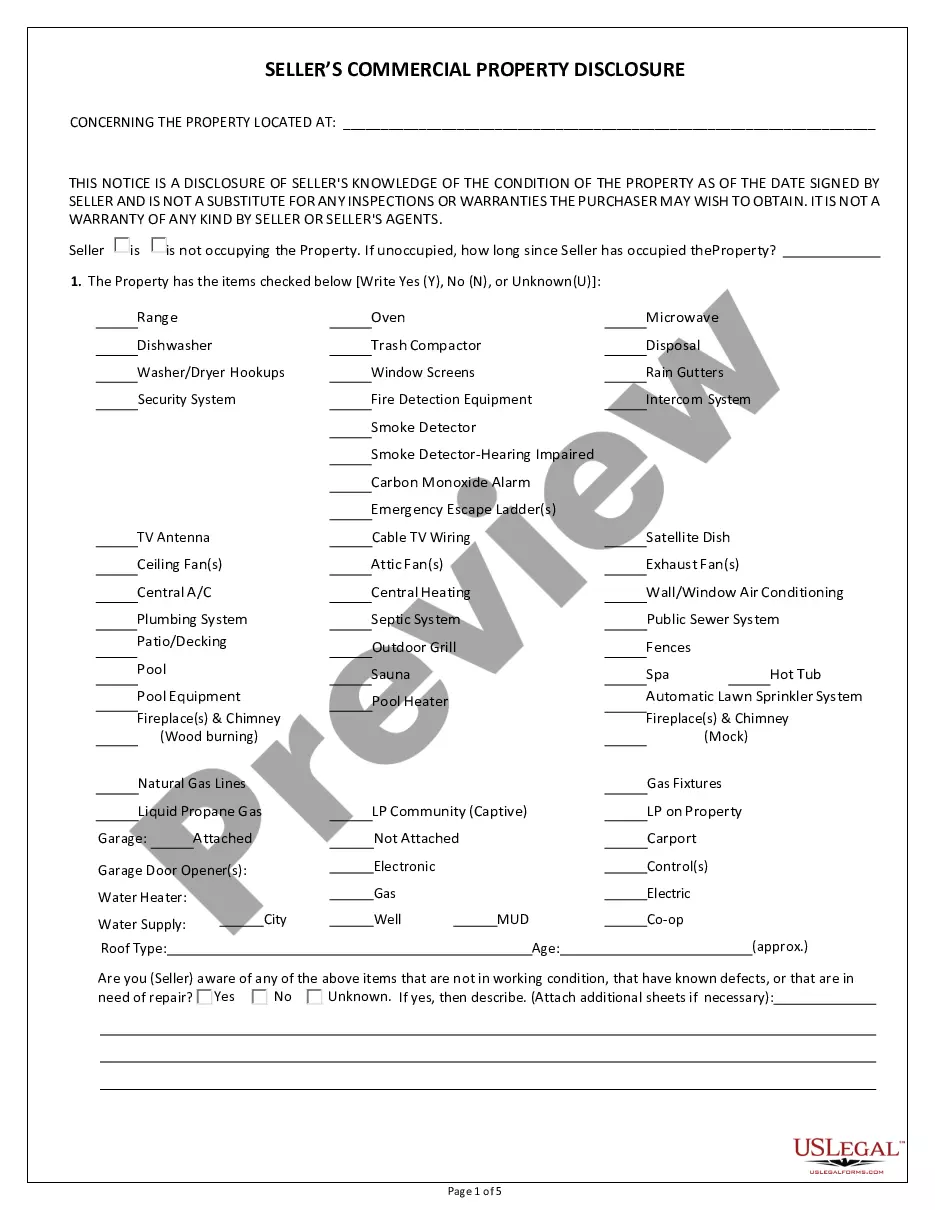
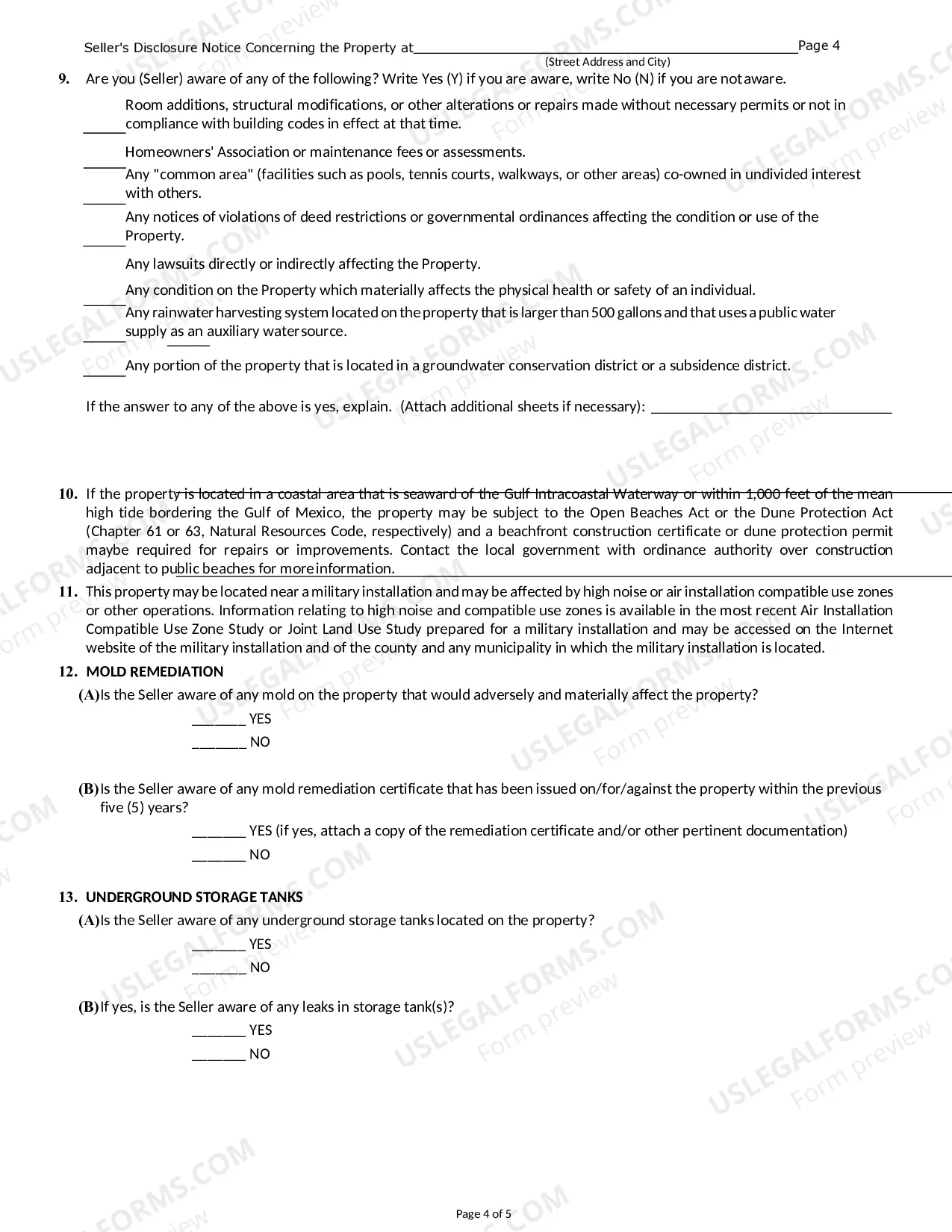
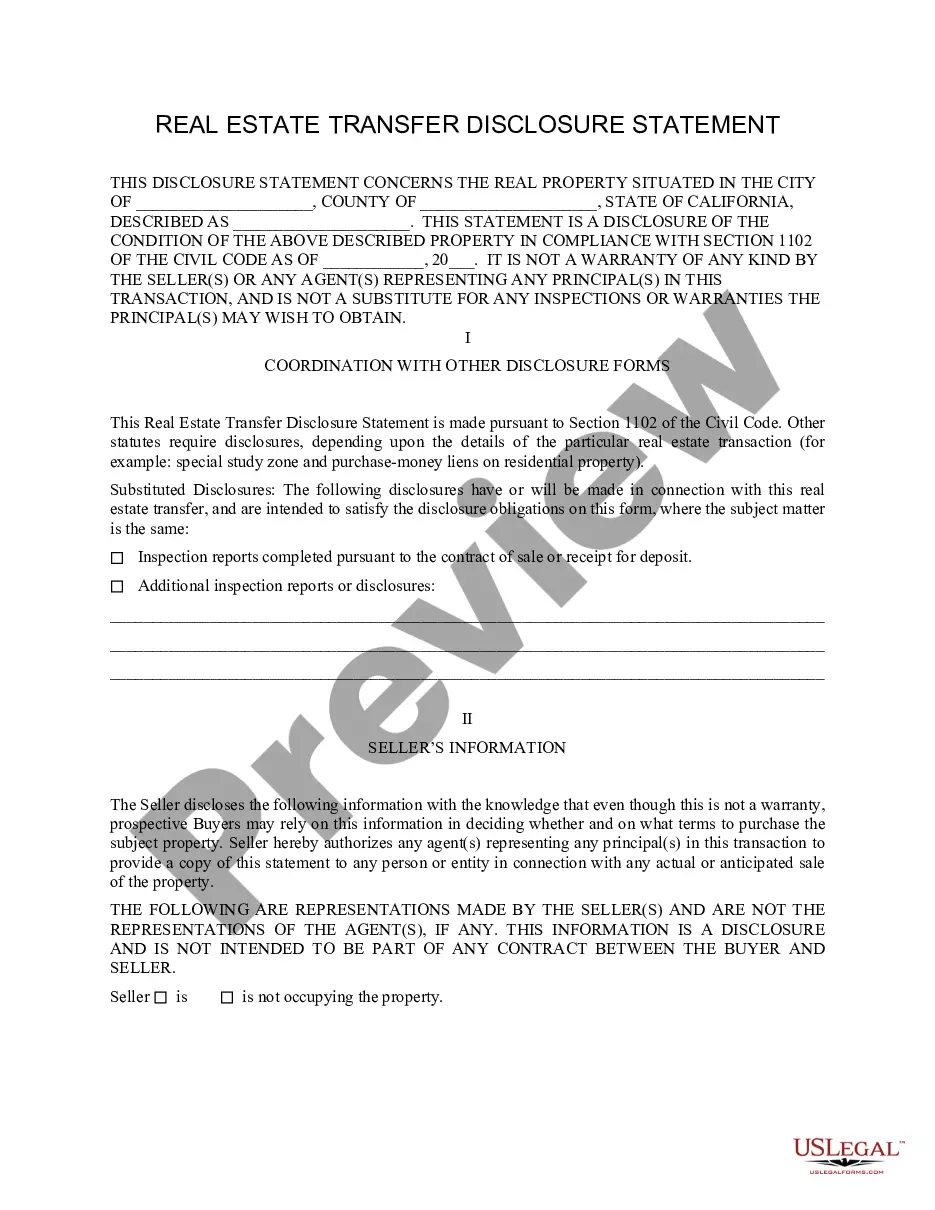
The Seller's Commercial Property Disclosure Statement is a legal document used in Texas to inform potential buyers about the current condition of a commercial property. This disclosure is essential for transparency between the seller and buyer, ensuring that buyers are aware of any known issues with the property prior to purchase. Unlike warranties or guarantees, this form serves solely as a declaration of the seller's knowledge and is not a substitute for a professional inspection.
Key parts of this document
- Property details: Identification of the property being sold.
- Occupancy status: Information on whether the seller is currently occupying the property.
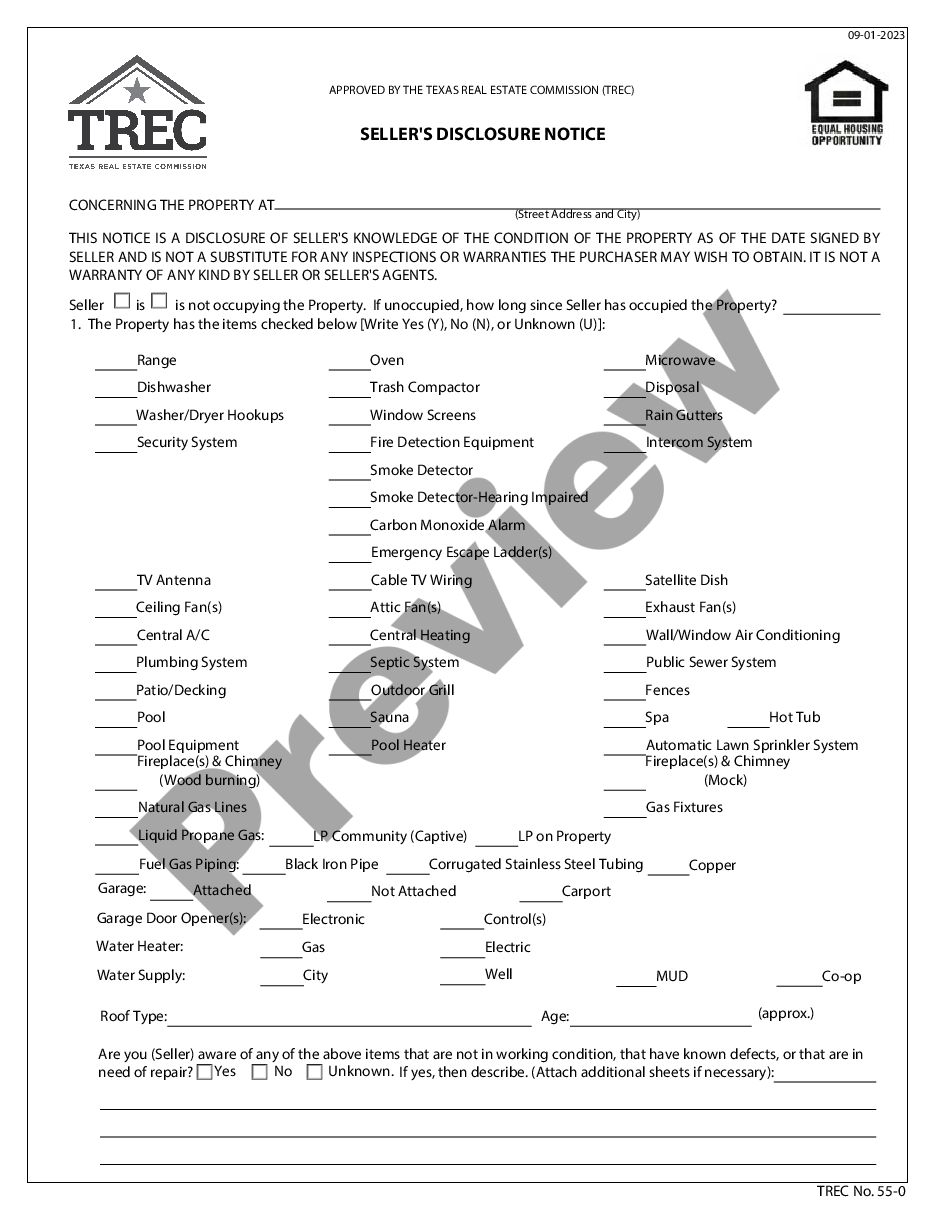
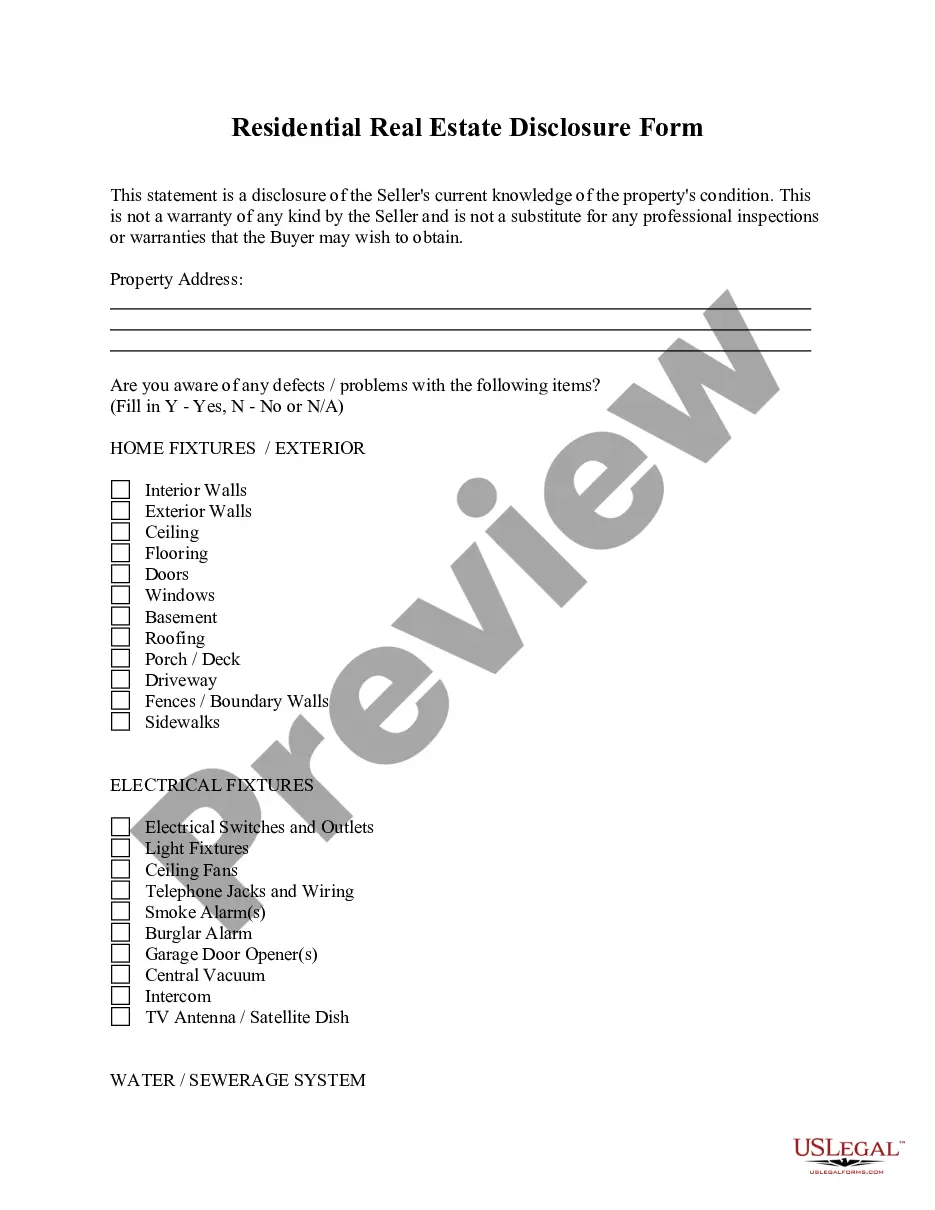
- Condition disclosures: A list of items and systems with checks for their condition (e.g., smoke detectors, heating systems).
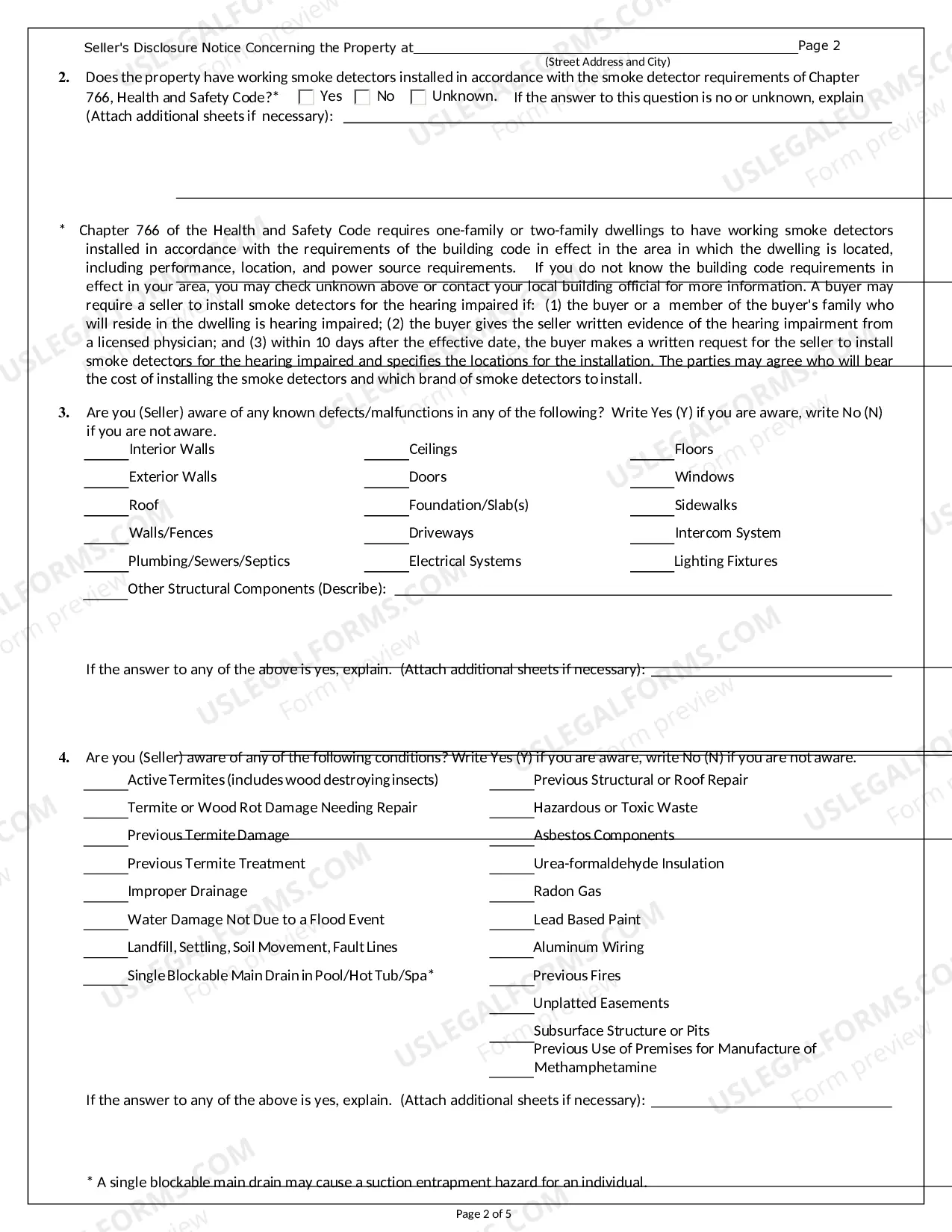
- Known defects: Sections to specify any known defects or repairs needed on the property.
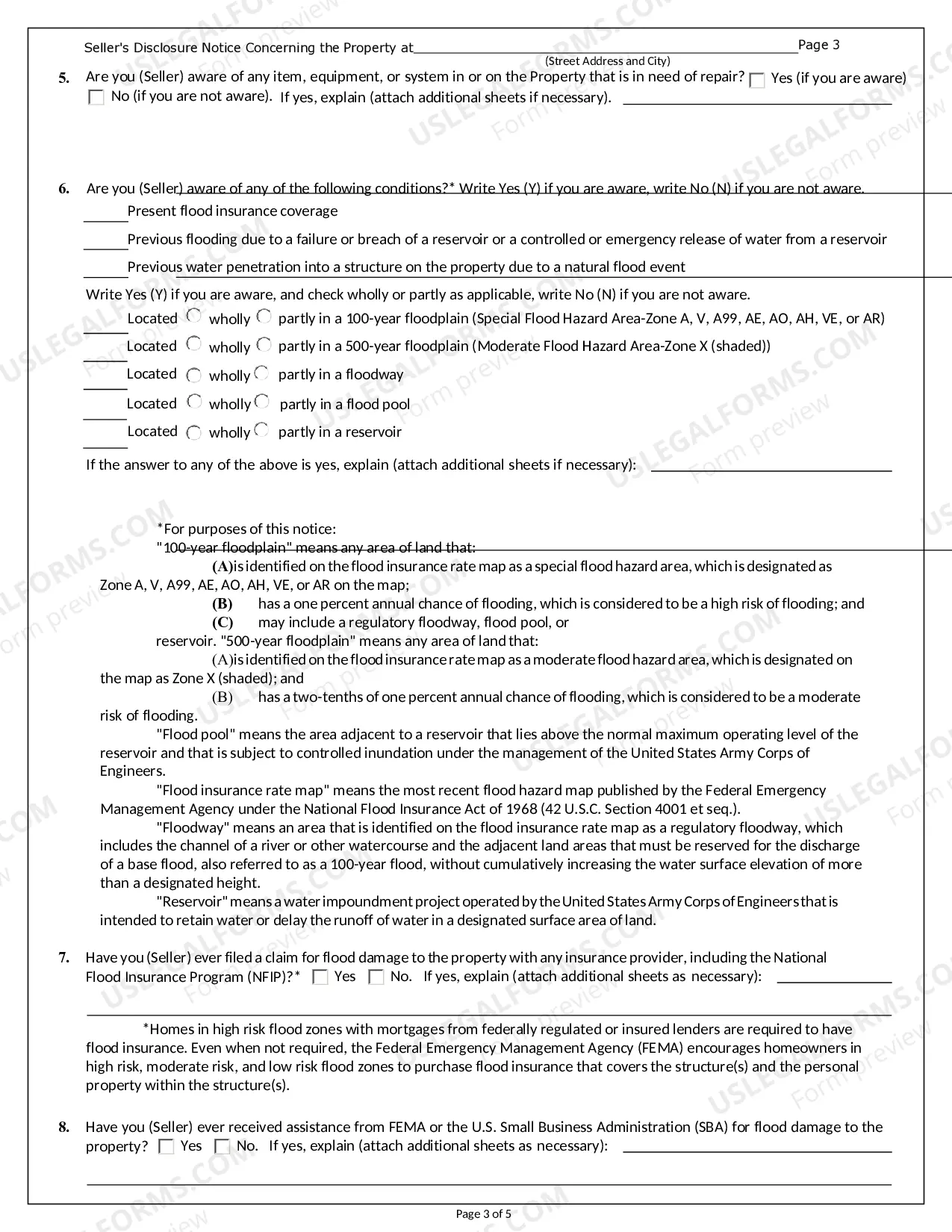
- Flood risk: Disclosures regarding flood zones and past flood claims.
- Legal conditions: Statements regarding any structural modifications or permits necessary.
When this form is needed
This form should be used during the sale of a commercial property in Texas to provide necessary disclosures to the buyer. It is particularly relevant when the seller is aware of any issues with the property, such as prior water damage, mold presence, or any renovations made without permits. Using this form can protect sellers from future legal disputes while helping buyers make informed decisions.
Who this form is for
- Commercial property sellers in Texas.
- Real estate agents representing sellers in commercial transactions.
- Buyers seeking important information about a commercial property before purchase.
How to prepare this document
- Fill in the property address at the top of the form.
- Indicate if you are currently occupying the property and provide details if unoccupied.
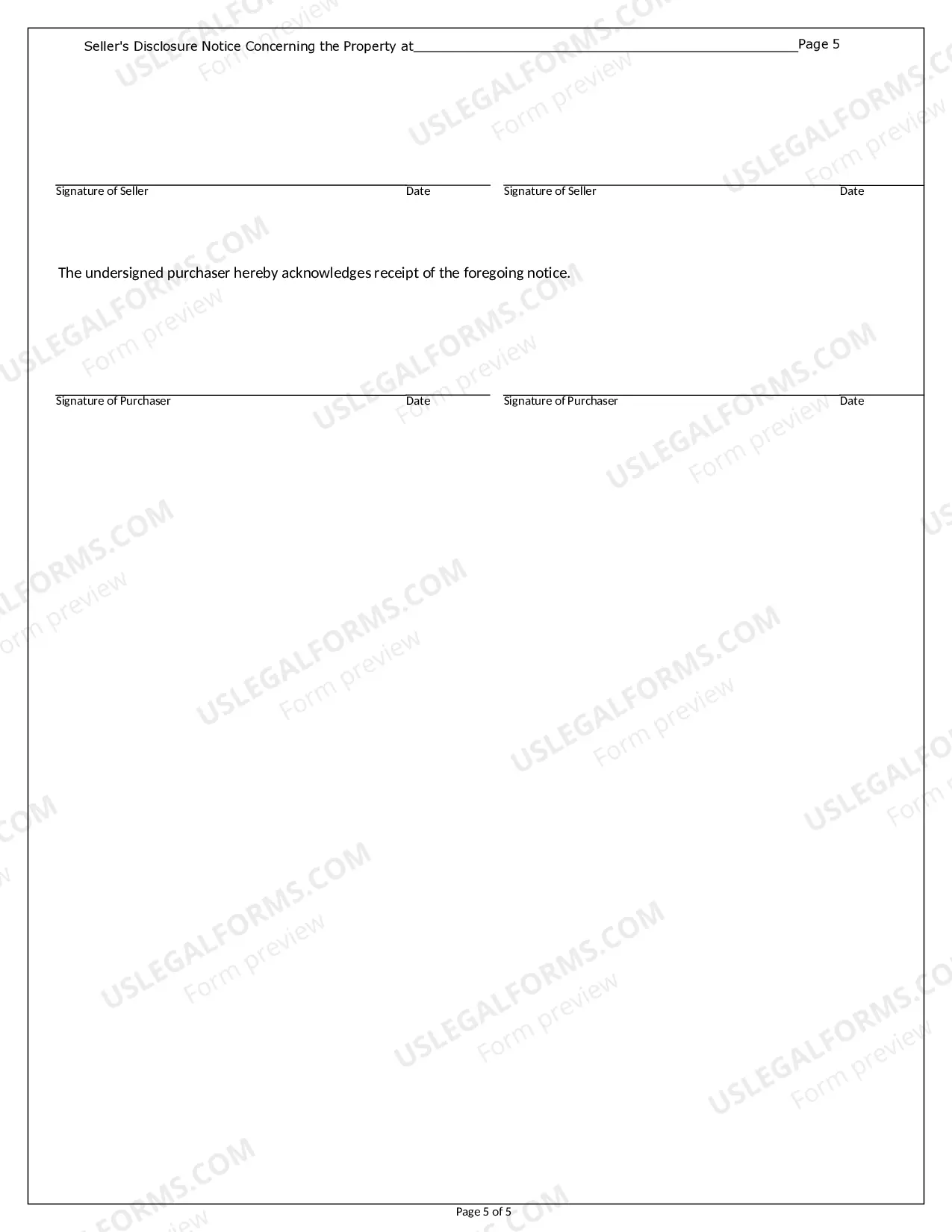
- Check the boxes for items and systems present on the property, indicating their condition as Yes, No, or Unknown.
- Answer questions about any known defects or repairs required, providing explanations where necessary.
- Sign and date the form to affirm the accuracy of the disclosures provided.
Is notarization required?
This form does not typically require notarization unless specified by local law. It is advisable to check with a local real estate professional for specific requirements in your area.
Get your form ready online
Our built-in tools help you complete, sign, share, and store your documents in one place.
Make edits, fill in missing information, and update formatting in US Legal Forms—just like you would in MS Word.
Download a copy, print it, send it by email, or mail it via USPS—whatever works best for your next step.
Sign and collect signatures with our SignNow integration. Send to multiple recipients, set reminders, and more. Go Premium to unlock E-Sign.
If this form requires notarization, complete it online through a secure video call—no need to meet a notary in person or wait for an appointment.
We protect your documents and personal data by following strict security and privacy standards.

Make edits, fill in missing information, and update formatting in US Legal Forms—just like you would in MS Word.

Download a copy, print it, send it by email, or mail it via USPS—whatever works best for your next step.

Sign and collect signatures with our SignNow integration. Send to multiple recipients, set reminders, and more. Go Premium to unlock E-Sign.

If this form requires notarization, complete it online through a secure video call—no need to meet a notary in person or wait for an appointment.

We protect your documents and personal data by following strict security and privacy standards.
Typical mistakes to avoid
- Providing inaccurate information about the condition of the property.
- Failing to disclose known defects or issues with major systems (e.g., plumbing, electrical).
- Not signing or dating the form, which may invalidate the disclosure.
- Overlooking specific state requirements related to disclosures.
Benefits of completing this form online
- Convenient access to purchase and download the form online, saving time.
- Editable templates allow sellers to complete the form at their own pace.
- Reliability in using forms drafted by licensed attorneys ensuring legal compliance.
Legal use & context
- This disclosure statement is a legal requirement in Texas and helps protect sellers from potential legal claims.
- Failure to provide a complete and accurate disclosure can lead to significant legal repercussions.
- This document serves as a formal record of the seller's knowledge regarding the property's condition.
Main things to remember
- The Seller's Commercial Property Disclosure Statement is crucial for transparency in real estate transactions.
- Sellers must accurately disclose known issues to mitigate future legal risks.
- Understanding the key components and proper completion of this form can facilitate smoother property sales.
Looking for another form?
Form popularity
FAQ
In short, you don't have to disclose a death in a house in Texas unrelated to the condition of the property, the HIV status of any occupants of the property, and won't be held responsible for any conditions that you are truly unaware of.
Texas is a non disclosure state meaning the sales price does not have to be disclosed to anyone. However, if you list a property on MLS, you must abide by the rules of the MLS ad must disclose. Disclosure has noting to do with government agencies only.
"No Seller Disclosures" means that the seller is selling the property without disclosing any defects or facts that might be necessary for a buyer to make an informed decision. A purchaser should get written permission to bring the purchaser's...
The Texas Disclosure (T-64) is an addendum to the new federal Closing Disclosure form.The Texas Disclosure requires settlement agents to separately itemize other fees and charges paid to the real estate agent that may have been aggregated on the Closing Disclosure.
Seller's Disclosure Notices are required in most Texas residential transactions. Many sellers mistakenly assume that if they never occupy the property, they are exempt from the disclosure requirement. Make sure your seller is truly exempt before deciding to omit the disclosure.
Presence of mold. Presence of lead paint. Structure, foundation and roof issues. Water damage. Previous renovations and additions.
Texas is a nondisclosure state, one of about a dozen in the U.S., in which the sales price of homes isn't required to be publicly disclosed.
You can find your state real estate agency at the Association of Real Estate License Law Officials website. Or search online for real estate disclosure, disclosure form, or disclosure statement and the name of your state.