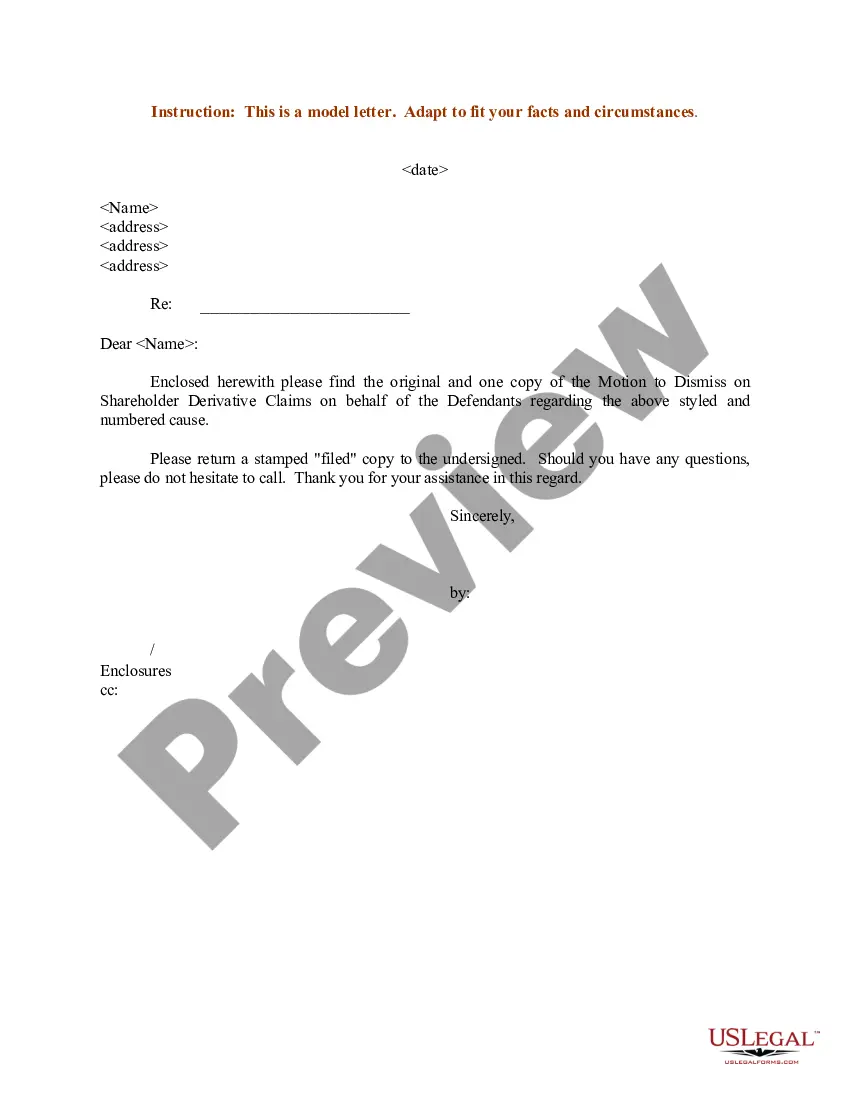
Derivative Claims In Llc
Description
Get your form ready online
Our built-in tools help you complete, sign, share, and store your documents in one place.
Make edits, fill in missing information, and update formatting in US Legal Forms—just like you would in MS Word.
Download a copy, print it, send it by email, or mail it via USPS—whatever works best for your next step.
Sign and collect signatures with our SignNow integration. Send to multiple recipients, set reminders, and more. Go Premium to unlock E-Sign.
If this form requires notarization, complete it online through a secure video call—no need to meet a notary in person or wait for an appointment.
We protect your documents and personal data by following strict security and privacy standards.

Make edits, fill in missing information, and update formatting in US Legal Forms—just like you would in MS Word.

Download a copy, print it, send it by email, or mail it via USPS—whatever works best for your next step.

Sign and collect signatures with our SignNow integration. Send to multiple recipients, set reminders, and more. Go Premium to unlock E-Sign.

If this form requires notarization, complete it online through a secure video call—no need to meet a notary in person or wait for an appointment.

We protect your documents and personal data by following strict security and privacy standards.
Looking for another form?





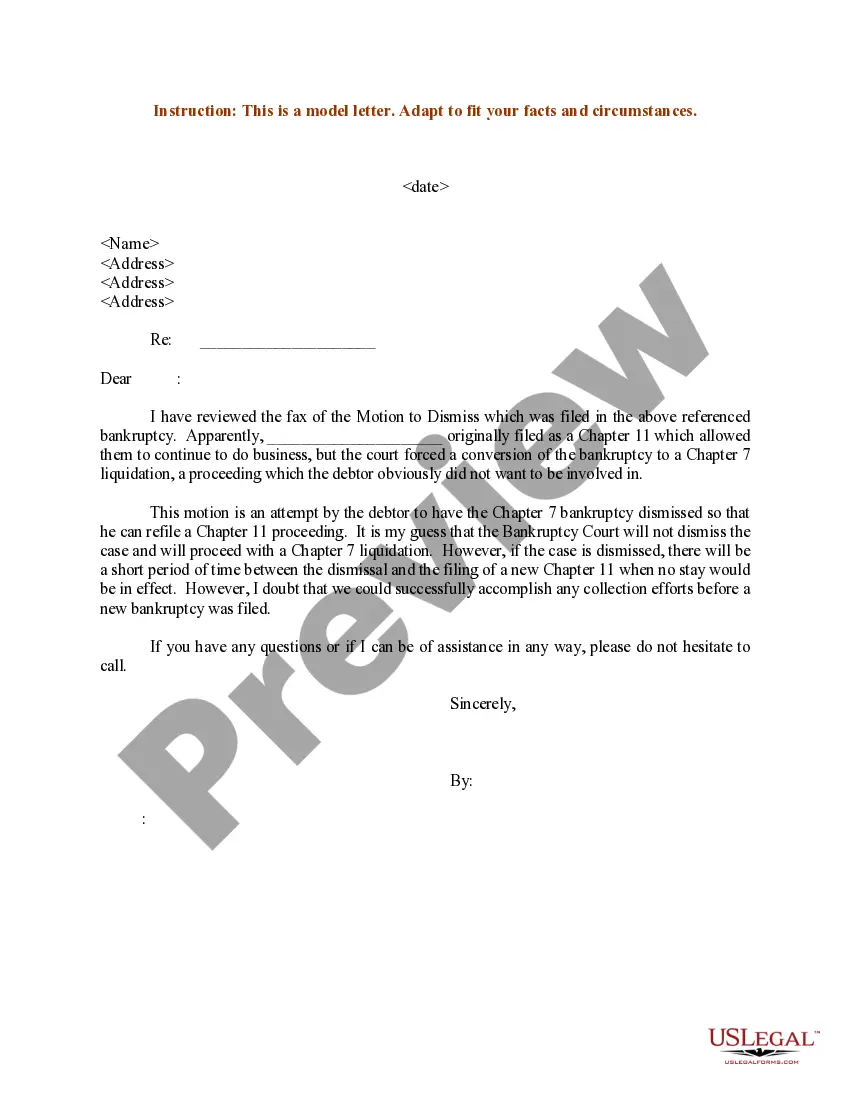
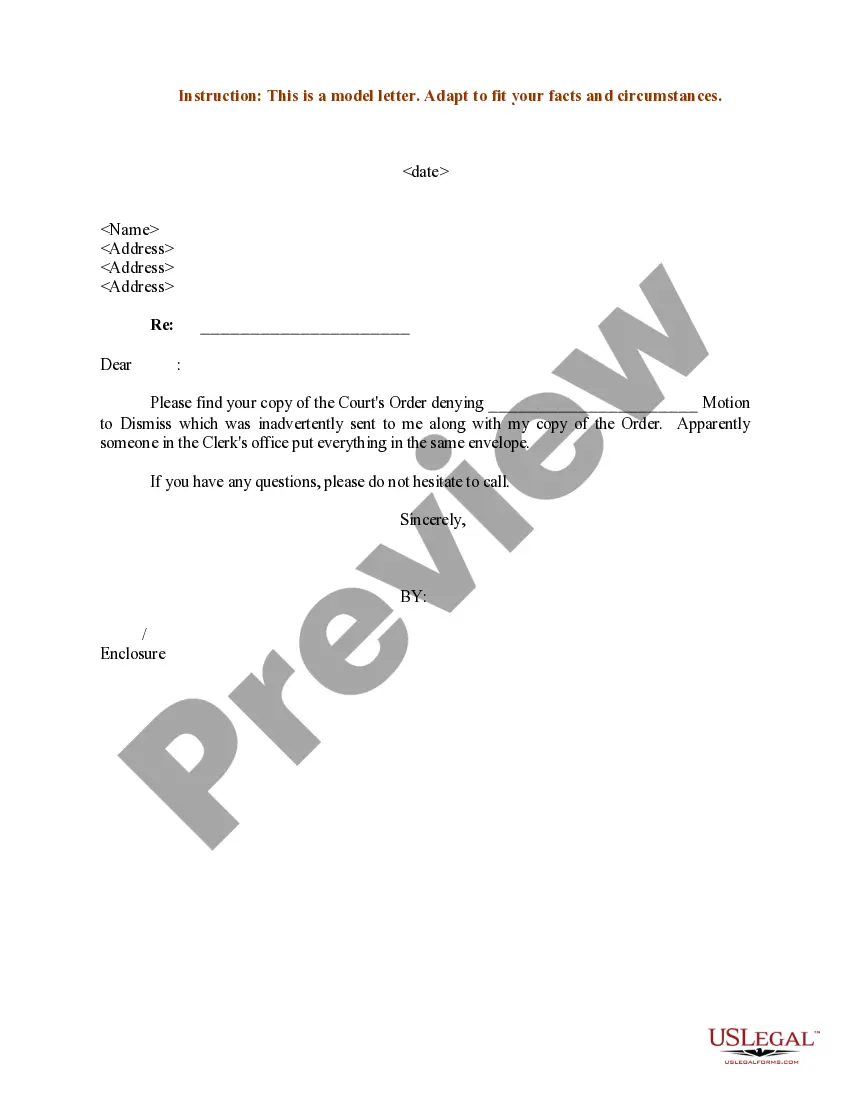
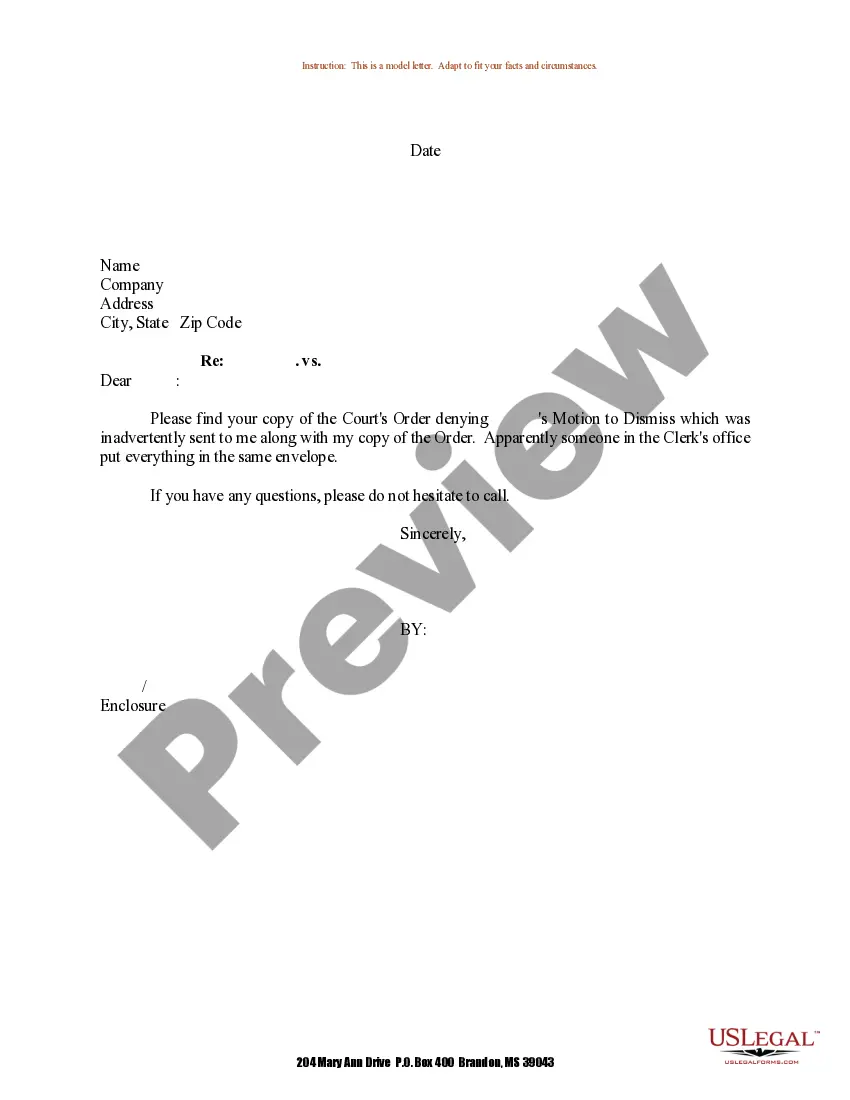
How to fill out Sample Letter Regarding Motion To Dismiss On Shareholder Derivative Claims?
Creating legal documents from the ground up can occasionally be daunting.
Certain situations may require extensive research and considerable financial investment.
If you’re looking for a simpler and more cost-effective method to generate Derivative Claims In LLC or any other documents without unnecessary complications, US Legal Forms is always available to assist you.
Our online catalog featuring over 85,000 current legal forms covers almost every facet of your financial, legal, and personal affairs. With just a few clicks, you can swiftly access state- and county-specific templates meticulously crafted by our legal professionals.
Examine the document preview and descriptions to ensure you are selecting the correct document. Verify that the form you select complies with the regulations and laws of your state and county. Choose the most appropriate subscription plan to acquire the Derivative Claims In LLC. Download the document, then complete it, sign it, and print it out. US Legal Forms boasts an impeccable reputation and over 25 years of experience. Join us today and simplify the form completion process!
- Utilize our site whenever you require trustworthy and dependable services to easily find and retrieve the Derivative Claims In LLC.
- If you’re already familiar with our platform and have created an account previously, simply Log In, find the template, and download it or retrieve it later in the My documents section.
- Don’t have an account? No problem. It requires minimal time to set it up and browse the library.
- However, before rushing to download Derivative Claims In LLC, adhere to these guidelines.
Form popularity
FAQ
Derivative action refers to a lawsuit initiated by a member of an LLC to address grievances on behalf of the company. When an LLC is harmed due to negligence or wrongdoing, a derivative action allows the member to step in and seek justice. This legal action is crucial for maintaining the integrity and accountability of the LLC structure. If you find yourself needing to understand or initiate a derivative action, platforms like UsLegalForms can provide essential resources and guidance.
A derivative claim is a lawsuit filed by a member of an LLC on behalf of the company against a third party or another member. This claim typically arises when the company itself has been harmed, but the management refuses to take action. By pursuing a derivative claim, the member aims to rectify the situation and recover losses for the LLC. It is an important mechanism for ensuring that all members' interests are protected.
An LLC derivative action is a legal procedure that allows a member to sue on behalf of the LLC when the company has been wronged. This action is essential when the management fails to address the issue, thus protecting the interests of all members. Through this process, the member seeks to hold the wrongdoer accountable and to recover damages for the LLC. It is a powerful tool for maintaining fairness and accountability in business practices.
Derivative claims in LLC arise when a member believes that the company has been harmed by the actions of another member or manager. Common grounds include breaches of fiduciary duty, misconduct, or violations of the LLC operating agreement. To succeed, the member must demonstrate that the company itself has suffered damages and that they are acting in the best interest of the LLC. Understanding these grounds is crucial for members considering a derivative claim.
Costs. A successful party will usually be awarded costs, and the unsuccessful party will have to pay such costs. The minority shareholder might seek an indemnity from the company when applying for permission to bring an application, on the basis that it is a company claim and the company should have bought the case.
Common law derivative claim process As mentioned above, a claimant must demonstrate a prima facie case and be granted permission from the court to pursue a common law derivative claim and further, the court will apply the same factors in exercising its discretion as for statutory derivative claims.
Derivative actions permit a shareholder to sue on behalf of the corporation or LLC where the corporation or LLC has been damaged.
A derivative action allows a member of the LLC to sue on behalf of the LLC when it refuses to act. The general rule is an individual member of an LLC cannot maintain a personal action against a manager or director or other third party whose action causes harm to the company.
A derivative action allows a member of the LLC to sue on behalf of the LLC when it refuses to act. The general rule is an individual member of an LLC cannot maintain a personal action against a manager or director or other third party whose action causes harm to the company.