Motion Garnishment File Format
Description
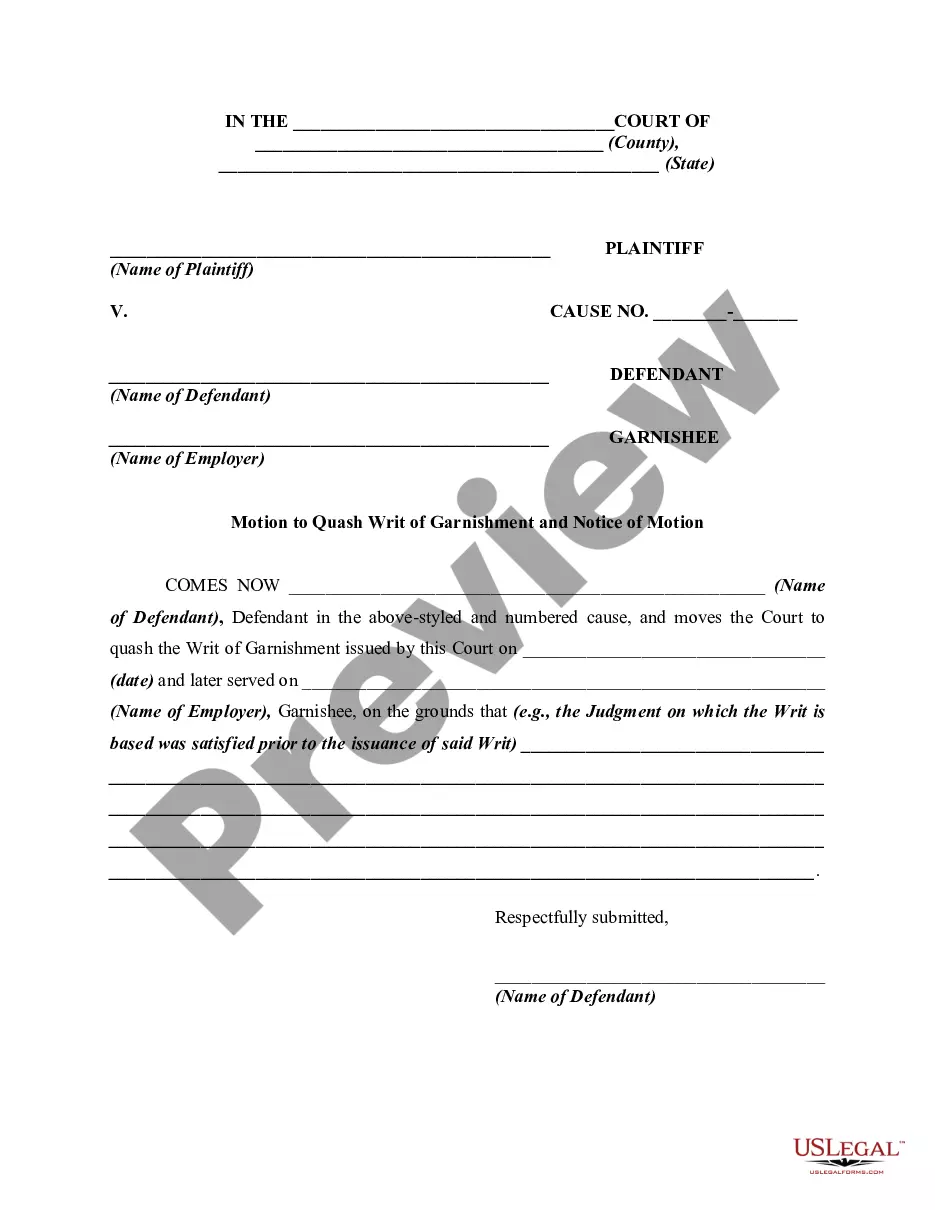
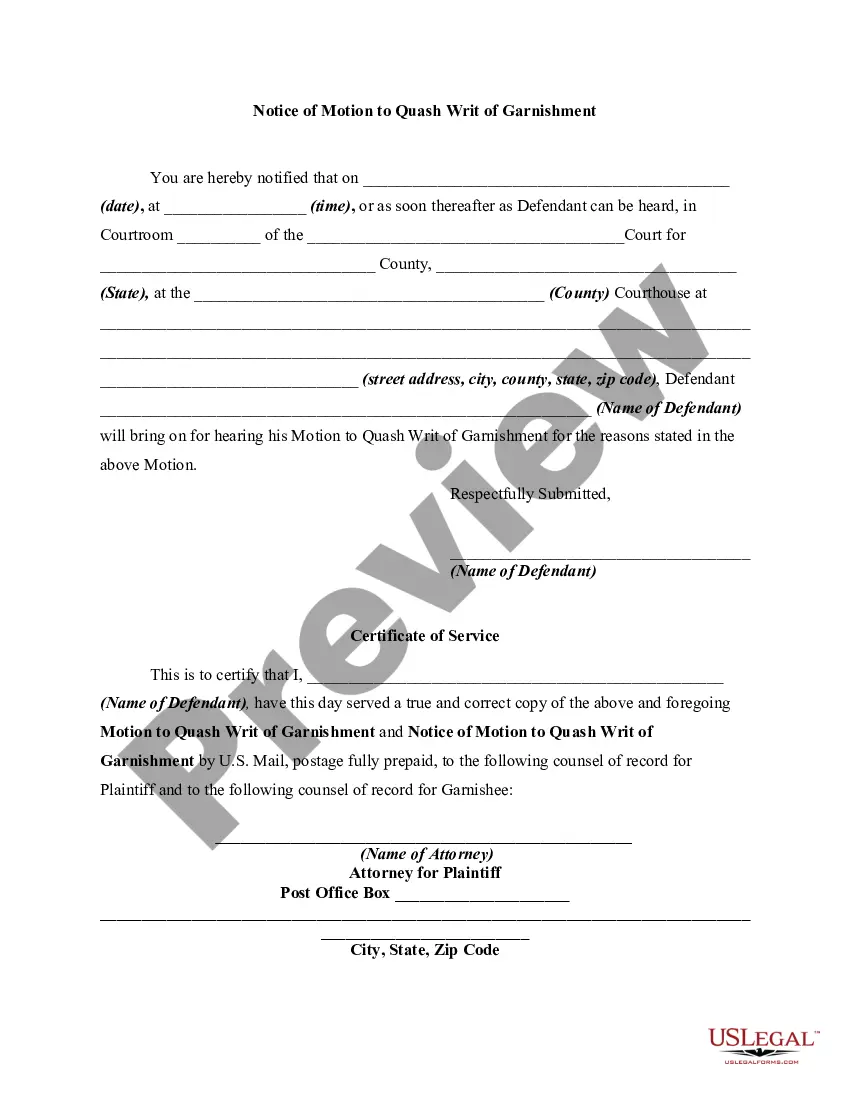
Get your form ready online
Our built-in tools help you complete, sign, share, and store your documents in one place.
Make edits, fill in missing information, and update formatting in US Legal Forms—just like you would in MS Word.
Download a copy, print it, send it by email, or mail it via USPS—whatever works best for your next step.
Sign and collect signatures with our SignNow integration. Send to multiple recipients, set reminders, and more. Go Premium to unlock E-Sign.
If this form requires notarization, complete it online through a secure video call—no need to meet a notary in person or wait for an appointment.
We protect your documents and personal data by following strict security and privacy standards.

Make edits, fill in missing information, and update formatting in US Legal Forms—just like you would in MS Word.

Download a copy, print it, send it by email, or mail it via USPS—whatever works best for your next step.

Sign and collect signatures with our SignNow integration. Send to multiple recipients, set reminders, and more. Go Premium to unlock E-Sign.

If this form requires notarization, complete it online through a secure video call—no need to meet a notary in person or wait for an appointment.

We protect your documents and personal data by following strict security and privacy standards.
Looking for another form?


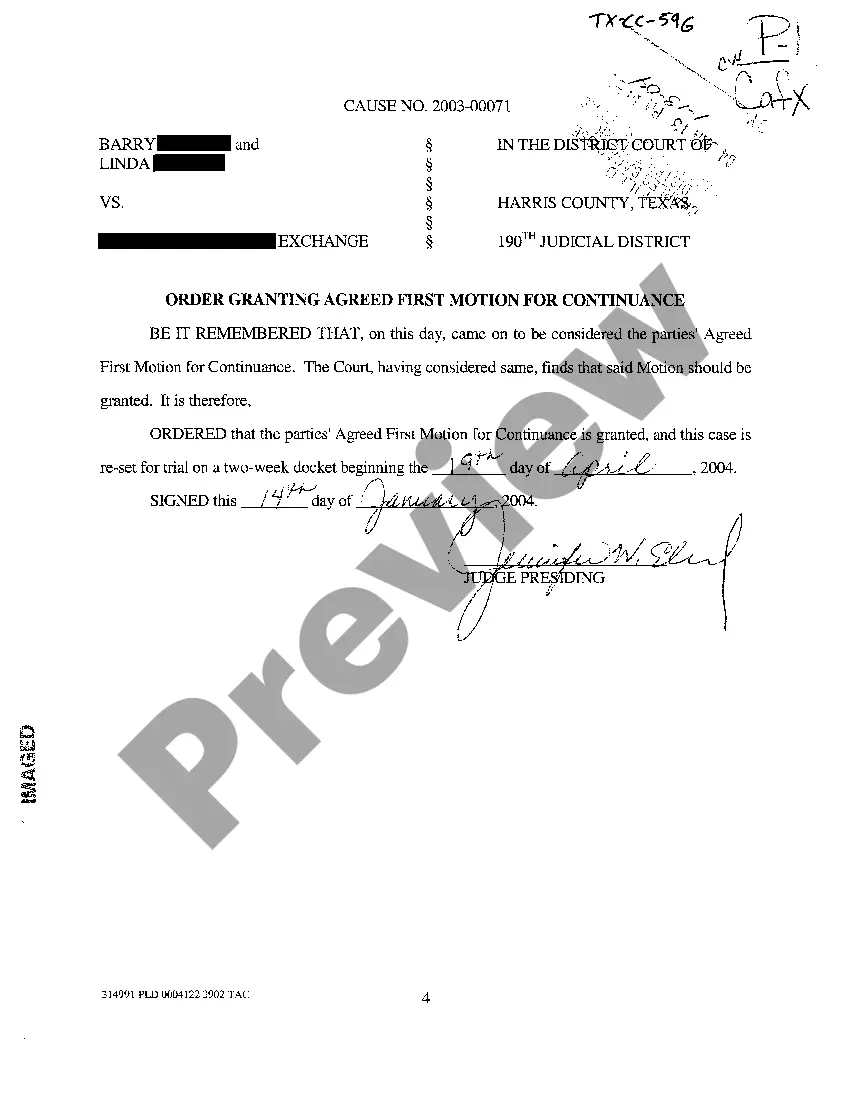

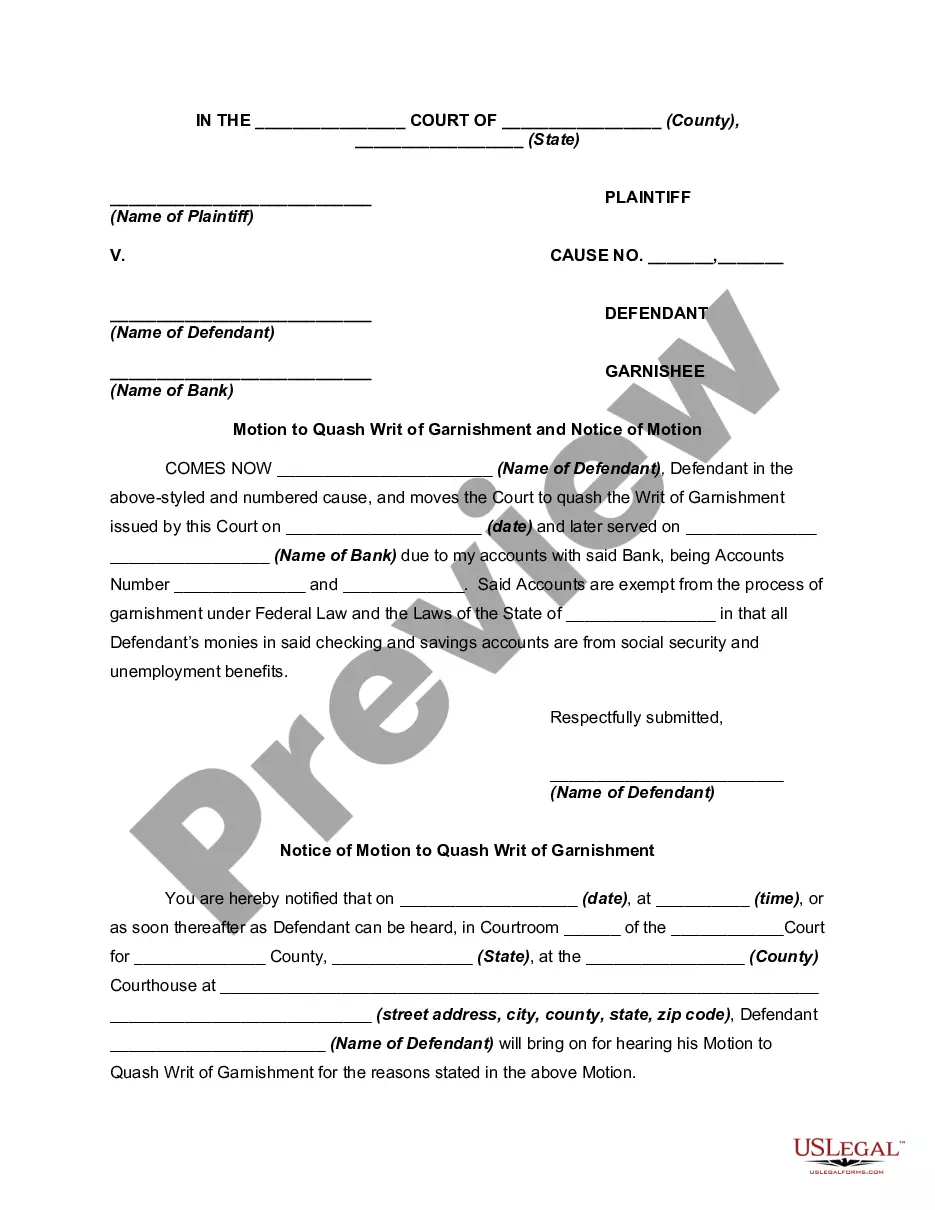
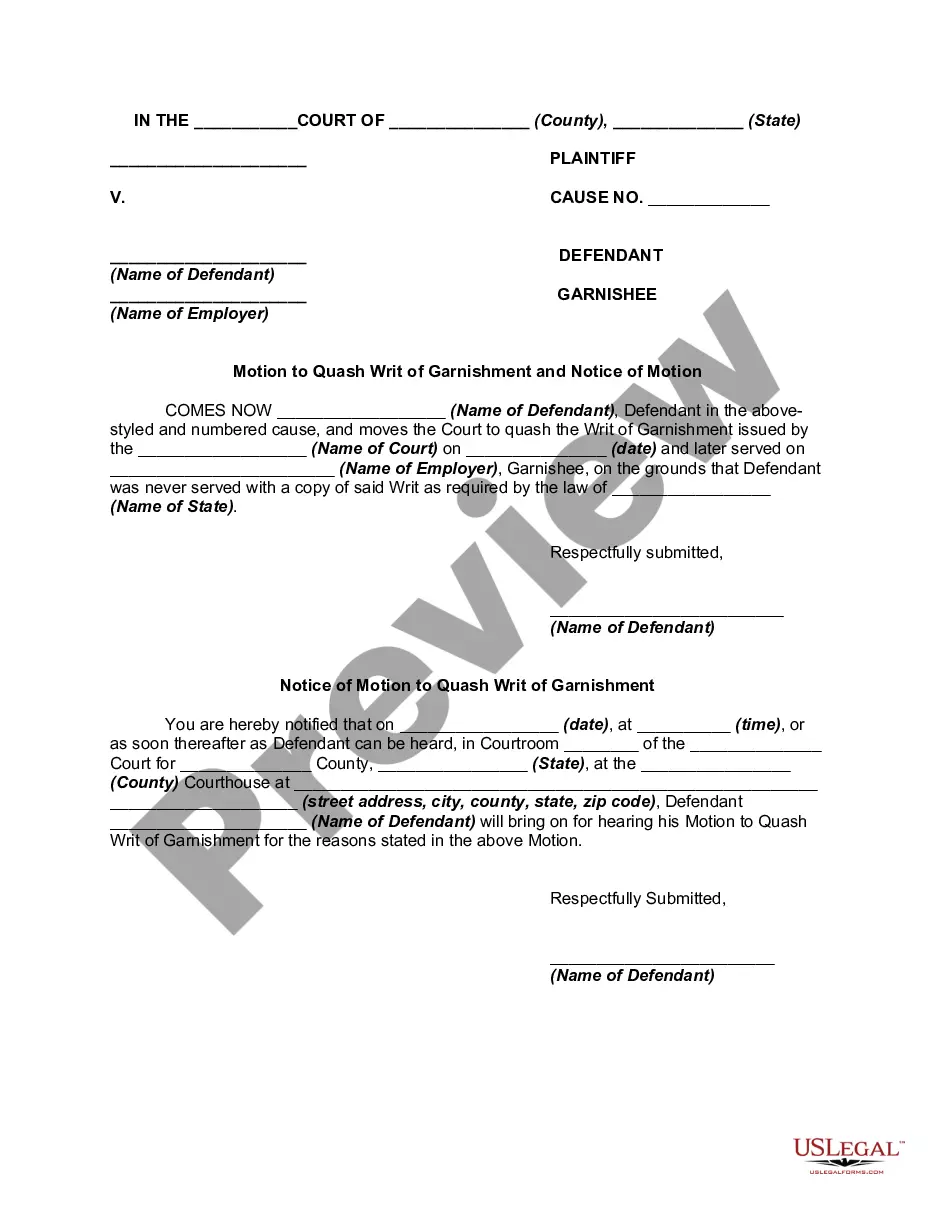
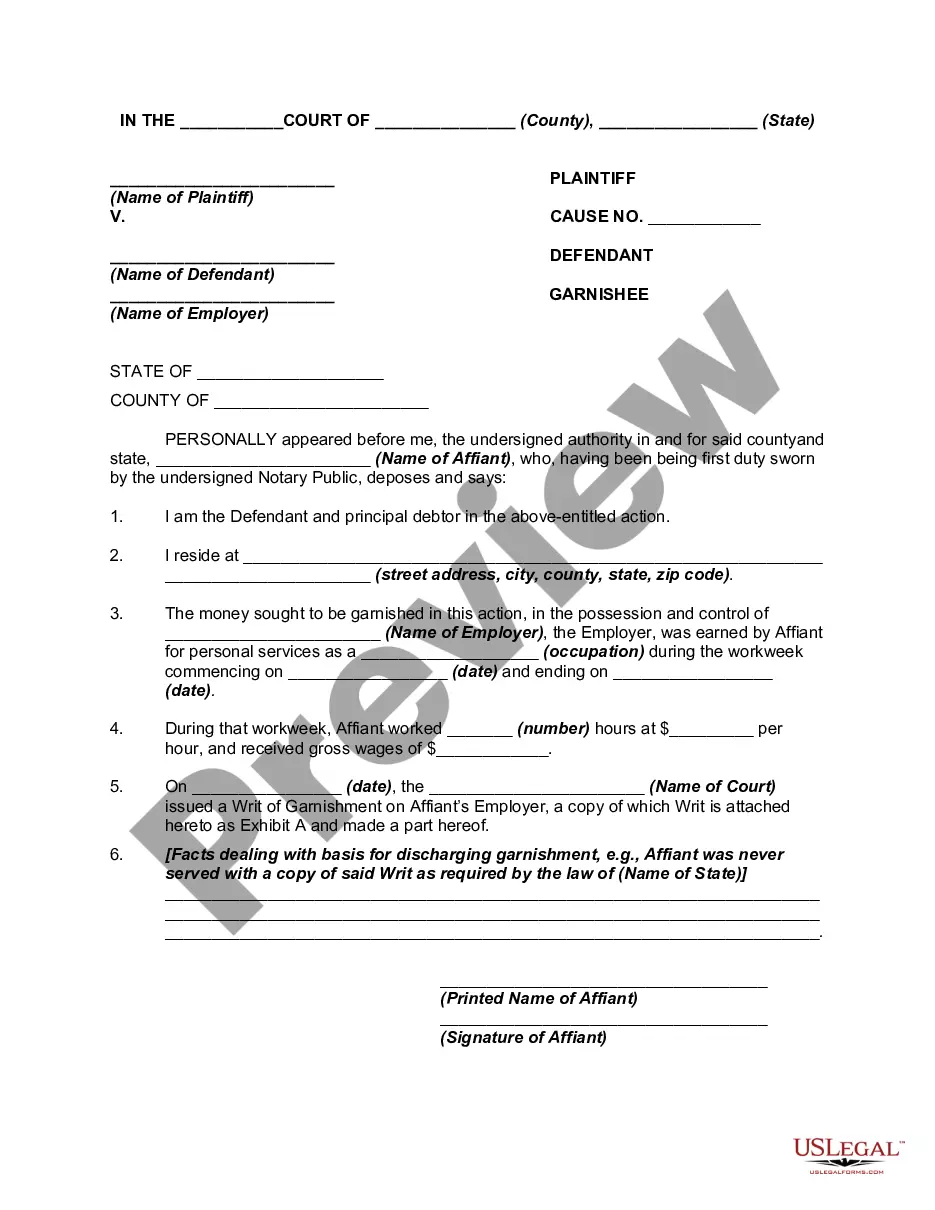
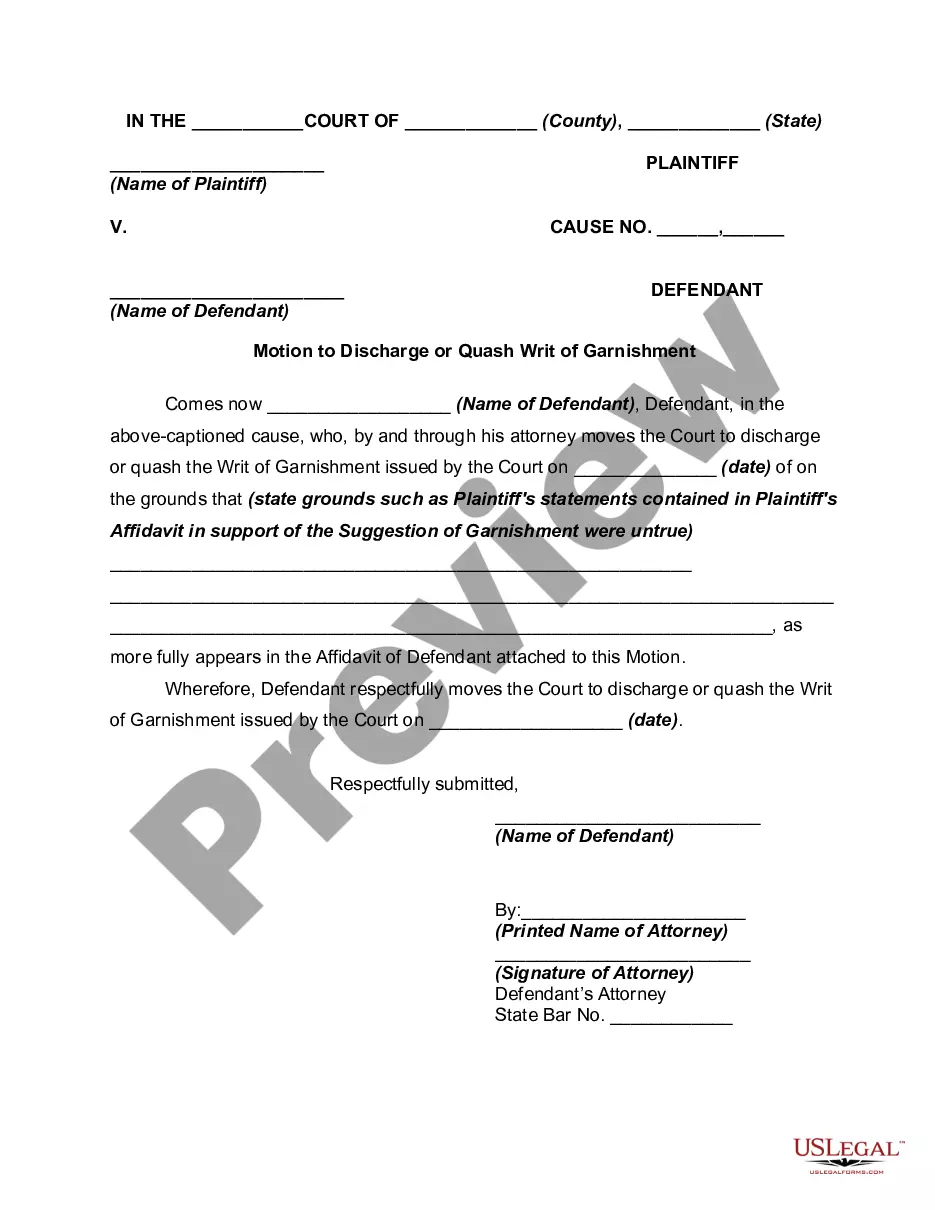
How to fill out Motion Of Defendant To Discharge Or Quash Writ Of Garnishment And Notice Of Motion?
The Motion Garnishment File Format presented on this page is a reusable legal template created by experienced attorneys in compliance with federal and local laws.
For over 25 years, US Legal Forms has supplied individuals, businesses, and legal practitioners with more than 85,000 validated, state-specific forms suitable for any commercial and personal scenario. It’s the fastest, most straightforward, and most dependable way to acquire the documents you require, as the service assures bank-level data protection and anti-malware safeguards.
Subscribe to US Legal Forms to access verified legal templates for all of life's situations at your convenience.
- Search for the document you need and review it.
- Sign up and Log In.
- Obtain the editable template.
- Complete and endorse the paperwork.
- Download your documents again.
Form popularity
FAQ
Filing a motion for wage garnishment involves several steps. First, you need to prepare the necessary legal documents, ensuring you use the correct motion garnishment file format. Next, submit these documents to the court along with any required fees. If you are unsure about the process, the US Legal Forms platform offers easy-to-follow templates and guidance to help you file your motion accurately.
To obtain information on a garnishment, you can start by checking court records or contacting the court clerk in your jurisdiction. They can provide details on any existing garnishment orders. Additionally, you can visit the US Legal Forms platform, where you’ll find resources and templates, including the motion garnishment file format, to help you understand the garnishment process and your rights.
Dear Sir/Madam, I am writing to request that you stop the wage garnishment that is currently being imposed on me. I am unable to make the payments at this time due to [insert reason, such as financial hardship]. I have attached documentation that supports my claim.
Complete the Garnishee order for debts form ???Your case number. Date of the judgment. Name and address of the other party. Name and address of the garnishee (the bank or third party who owes the other party money). Total amount of the judgment. Your contact details including address, telephone, fax and email.
By law, you are entitled to an exemption of not less than 80% of your disposable earnings. Your "disposable earnings" are those remaining after social security and federal and state income taxes are withheld.
The garnishment amount is limited to 25% of your disposable earnings for that week (what's left after mandatory deductions) or the amount by which your disposable earnings for that week exceed 30 times the federal minimum hourly wage, whichever is less. (15 U.S.C. § 1673.)
Wage Garnishment Order (SF-329B): This Wage Garnishment Order is to be completed by the Federal Agency issuing the Wage Garnishment Order, and must be included as part of the form mailed to employers.