Charitable Unitrust Trust Blank With A
Description
Get your form ready online
Our built-in tools help you complete, sign, share, and store your documents in one place.
Make edits, fill in missing information, and update formatting in US Legal Forms—just like you would in MS Word.
Download a copy, print it, send it by email, or mail it via USPS—whatever works best for your next step.
Sign and collect signatures with our SignNow integration. Send to multiple recipients, set reminders, and more. Go Premium to unlock E-Sign.
If this form requires notarization, complete it online through a secure video call—no need to meet a notary in person or wait for an appointment.
We protect your documents and personal data by following strict security and privacy standards.

Make edits, fill in missing information, and update formatting in US Legal Forms—just like you would in MS Word.

Download a copy, print it, send it by email, or mail it via USPS—whatever works best for your next step.

Sign and collect signatures with our SignNow integration. Send to multiple recipients, set reminders, and more. Go Premium to unlock E-Sign.

If this form requires notarization, complete it online through a secure video call—no need to meet a notary in person or wait for an appointment.

We protect your documents and personal data by following strict security and privacy standards.
Looking for another form?

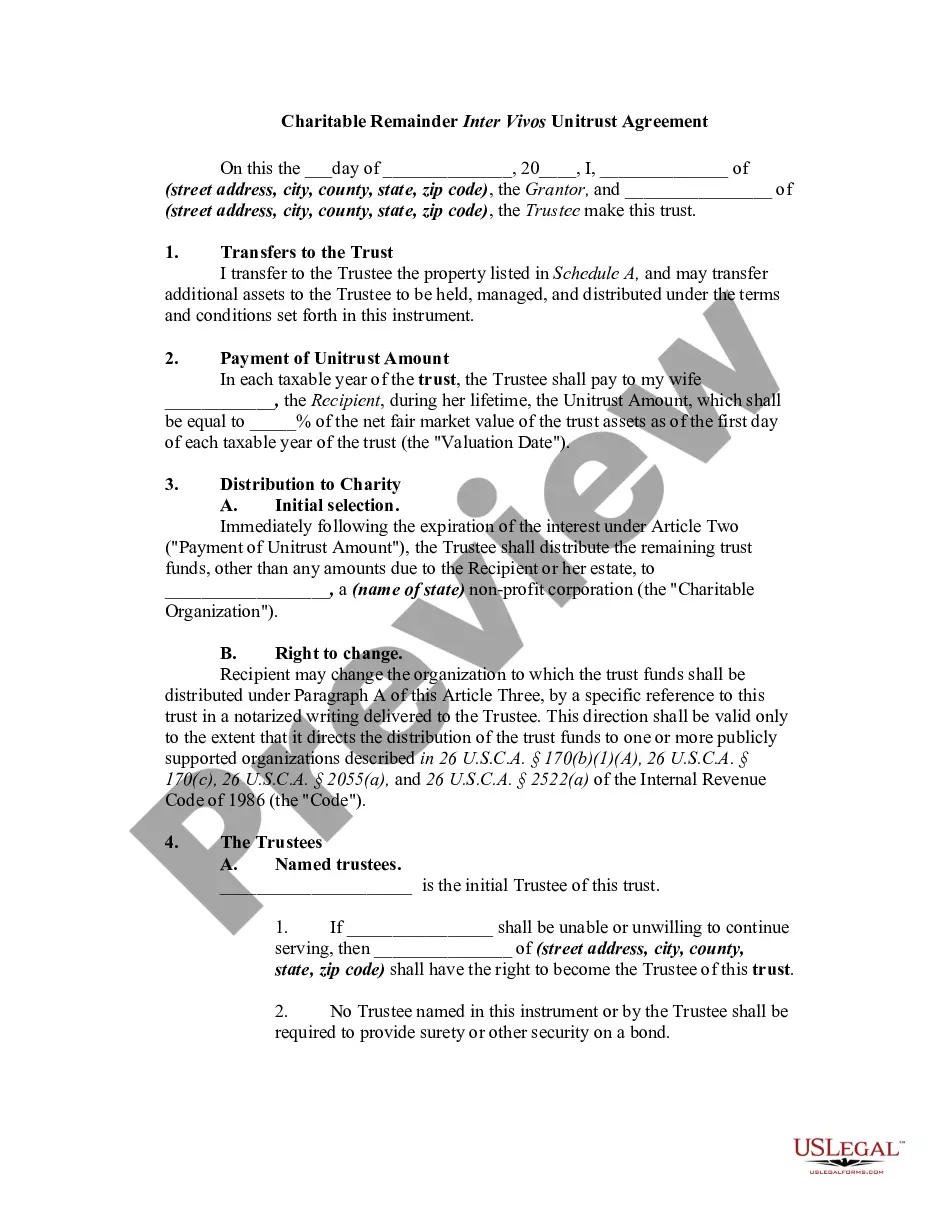
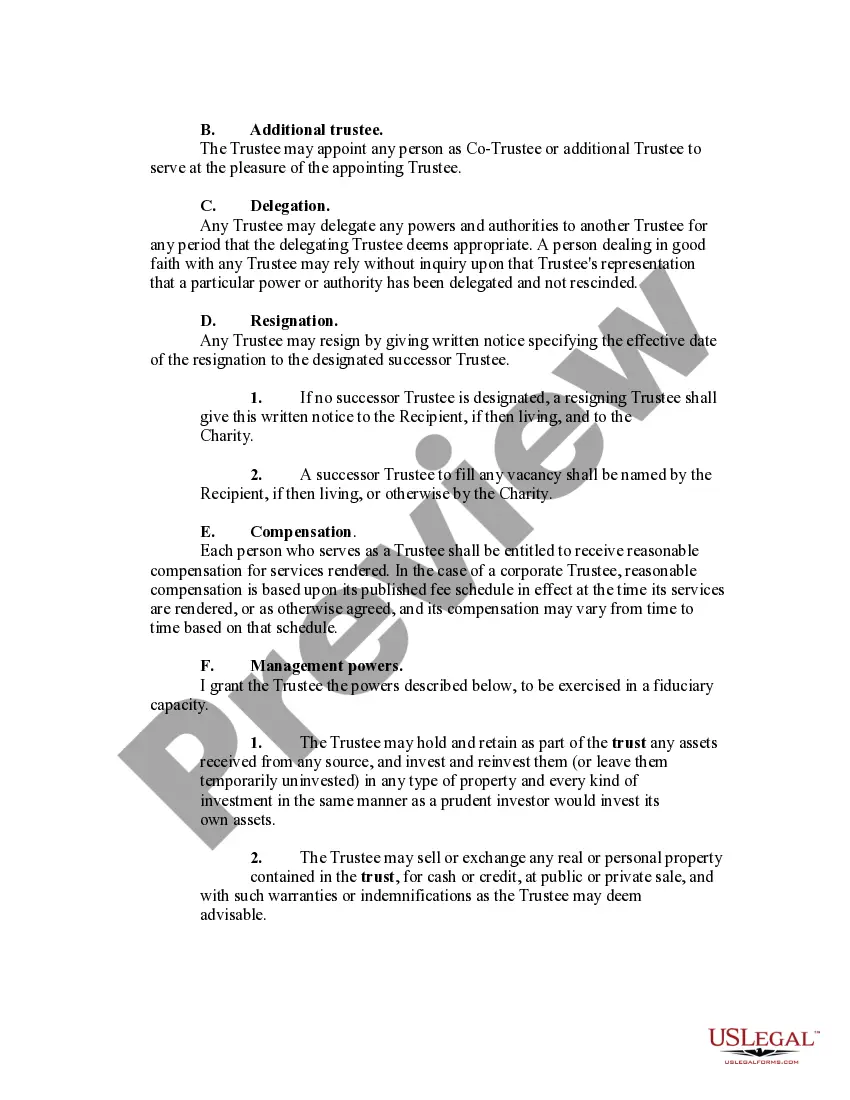
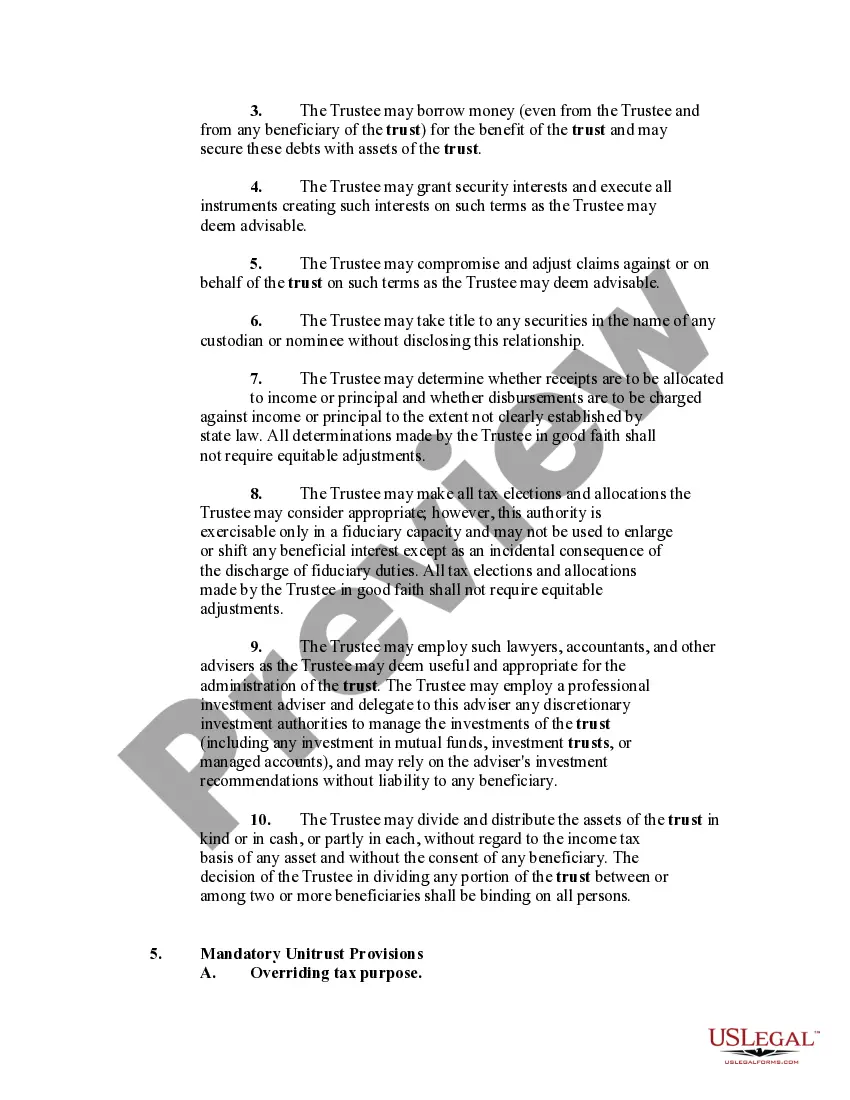
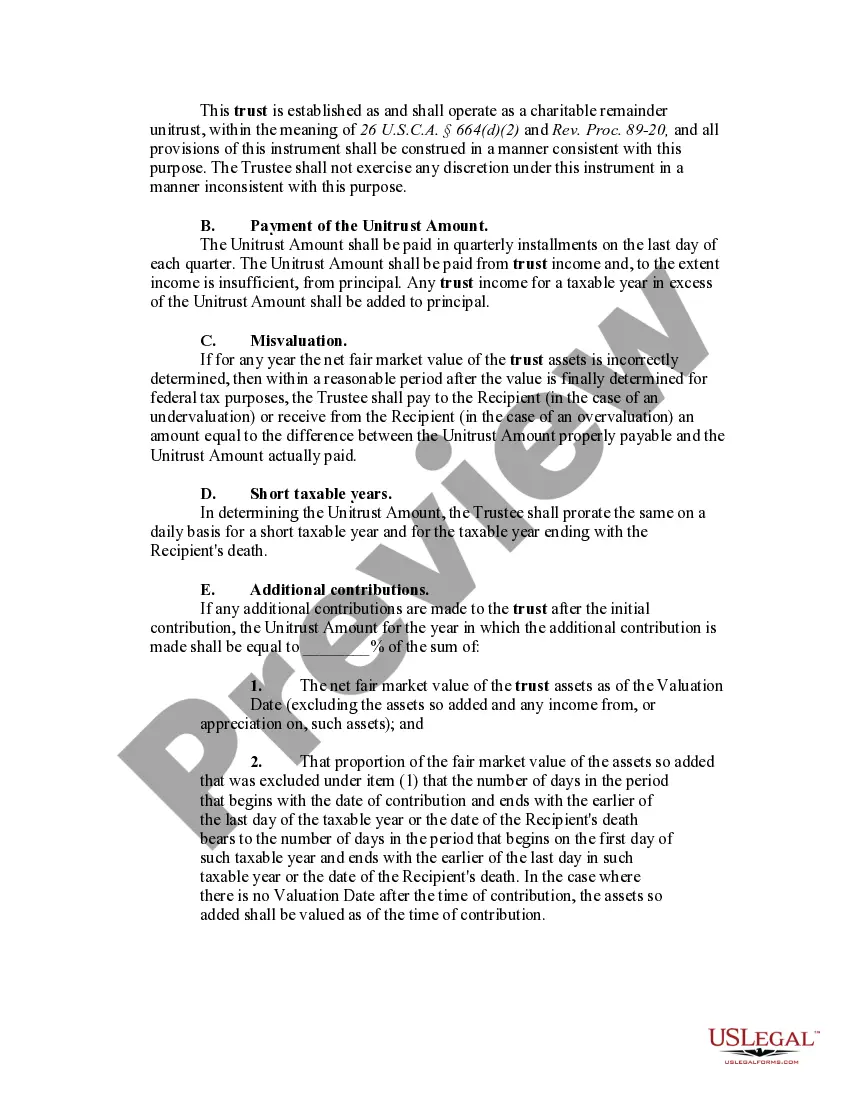
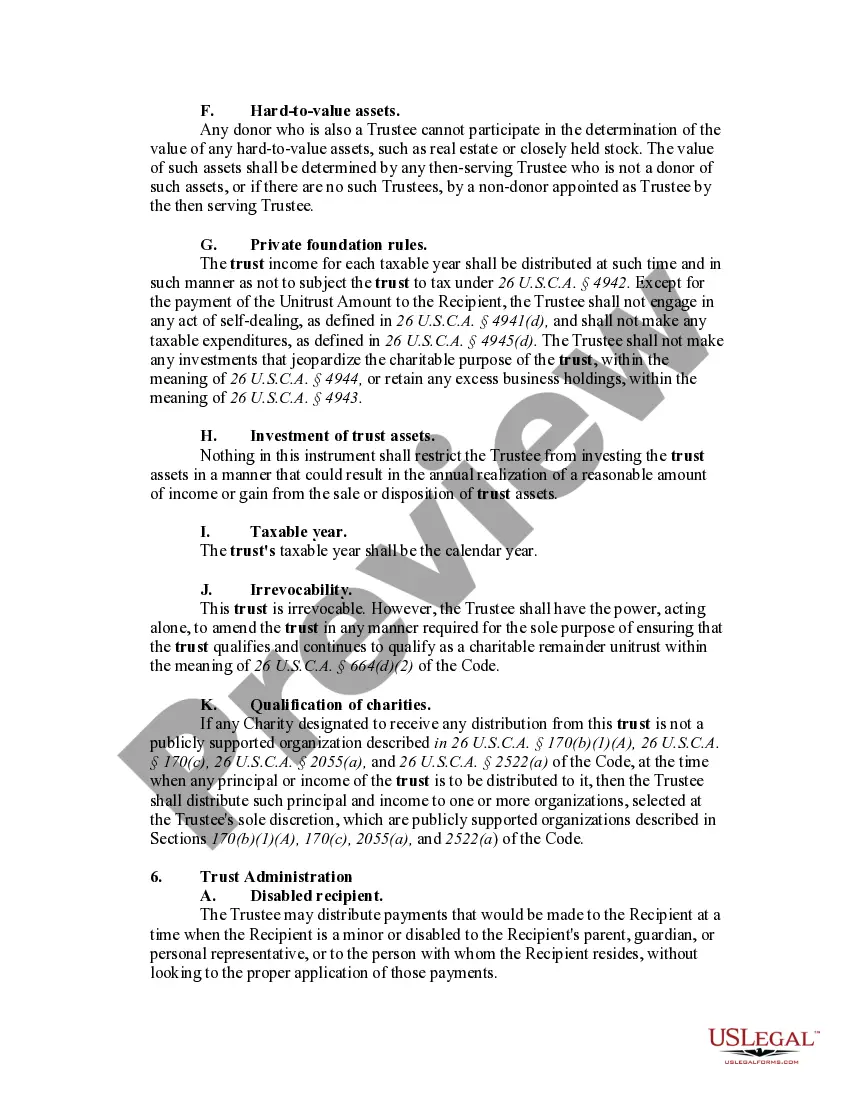
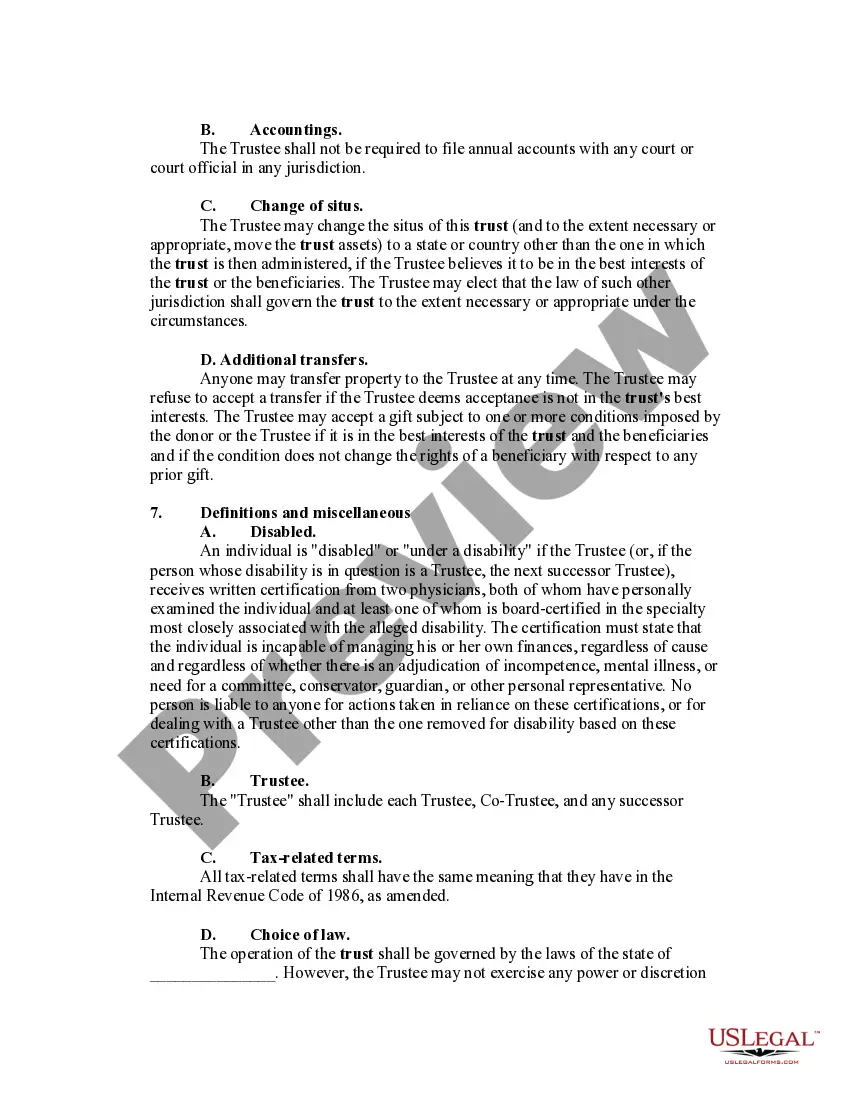
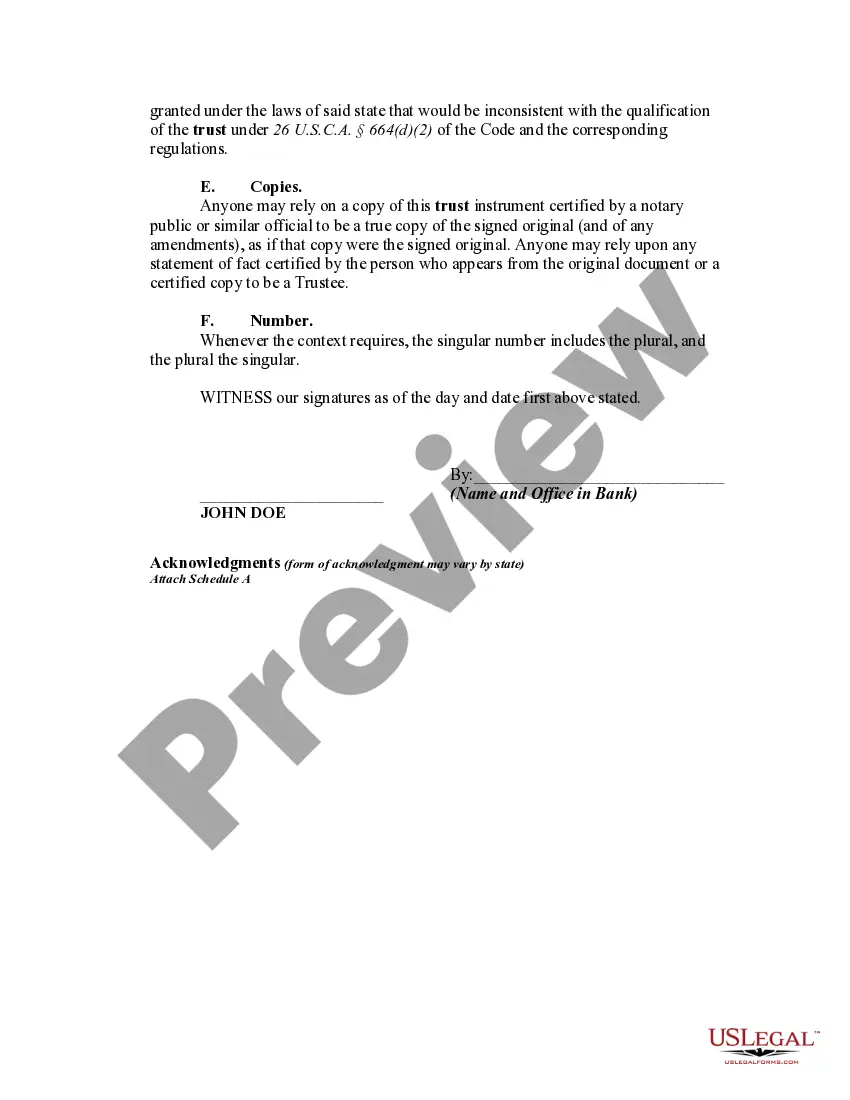
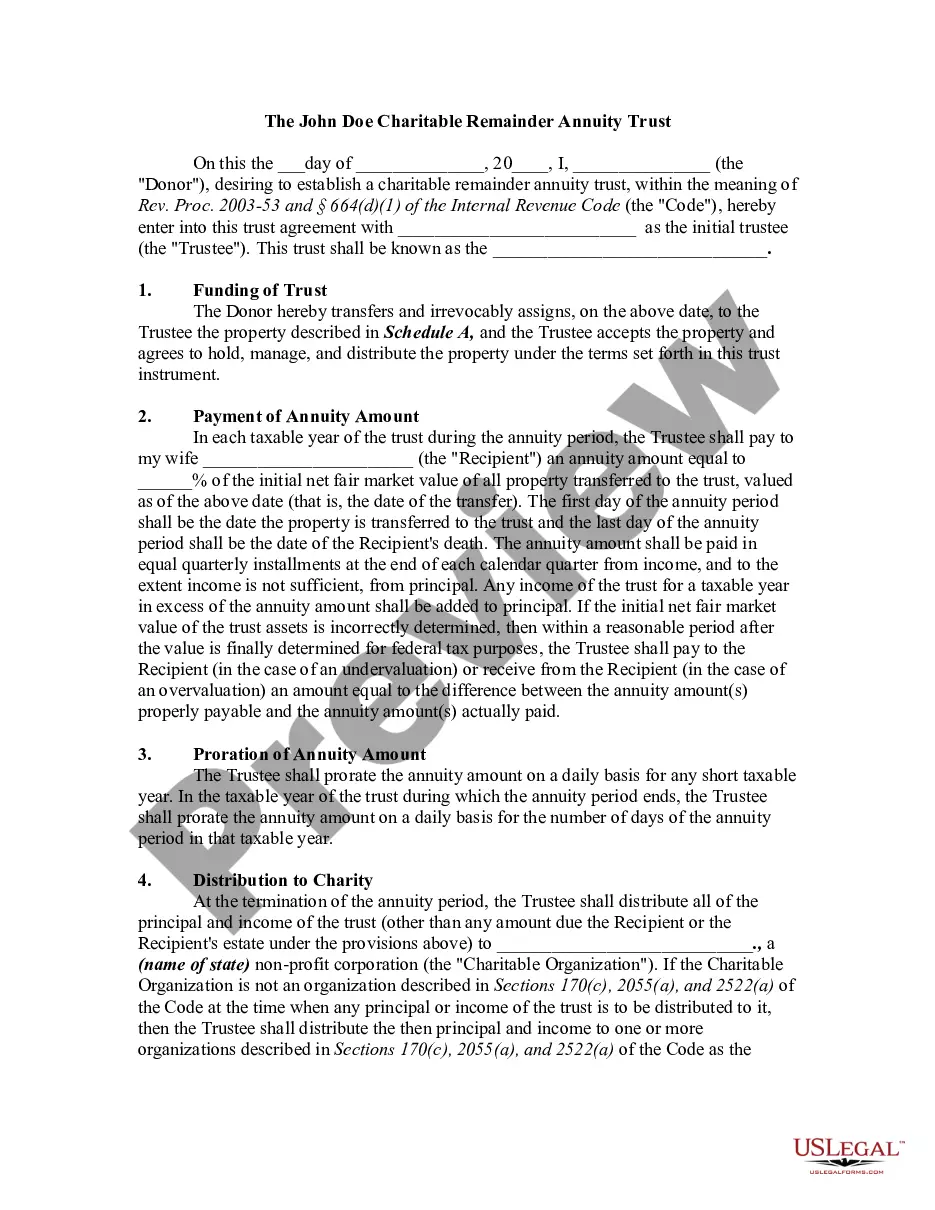
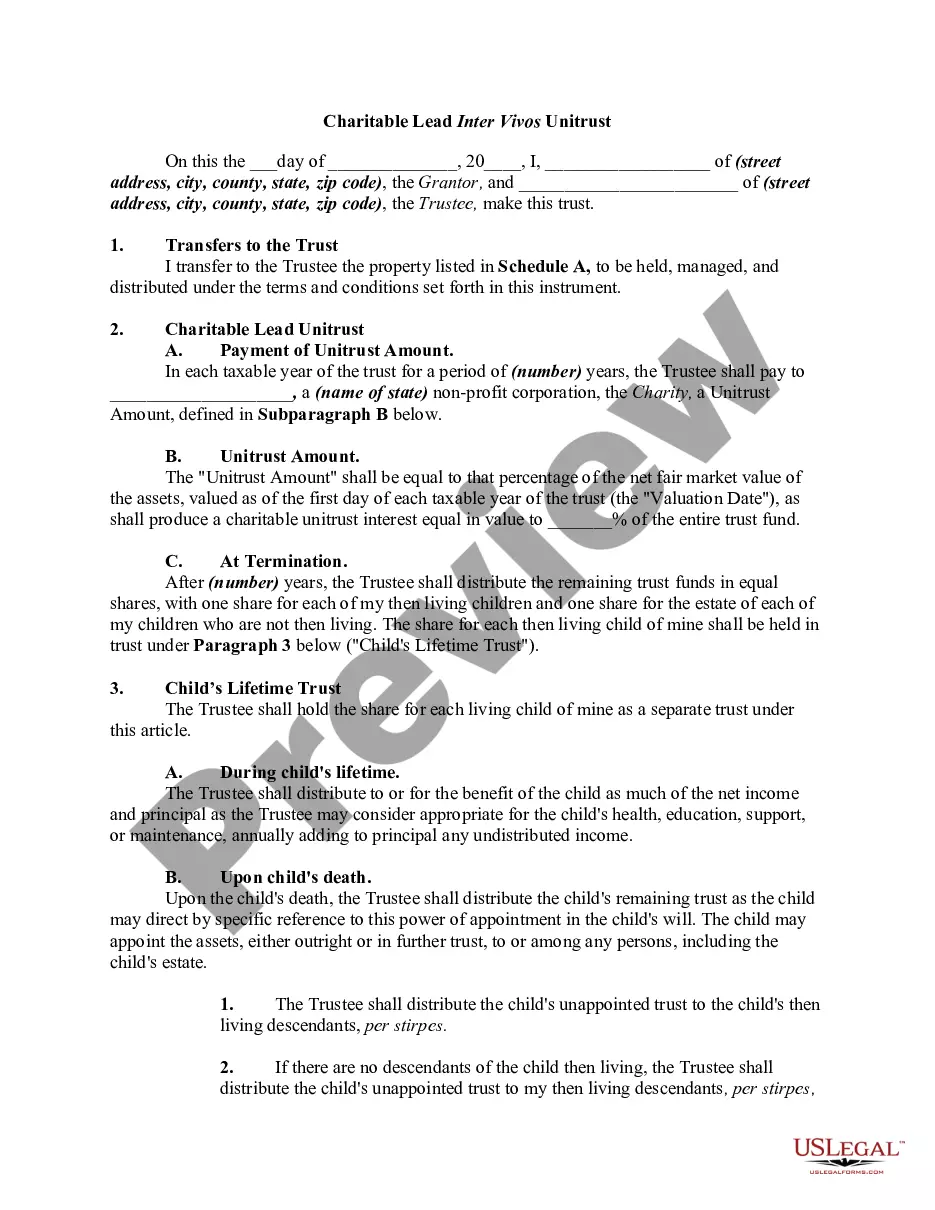
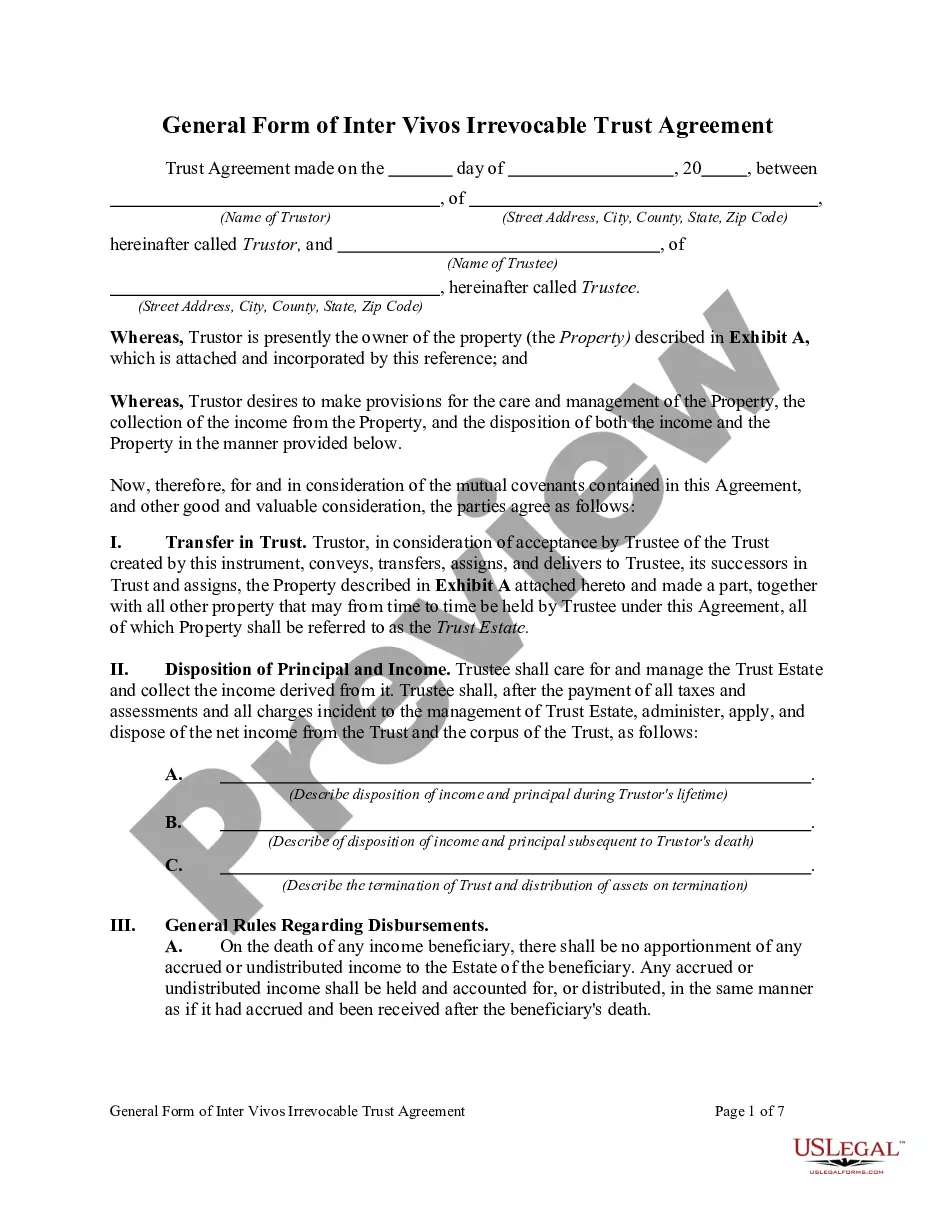
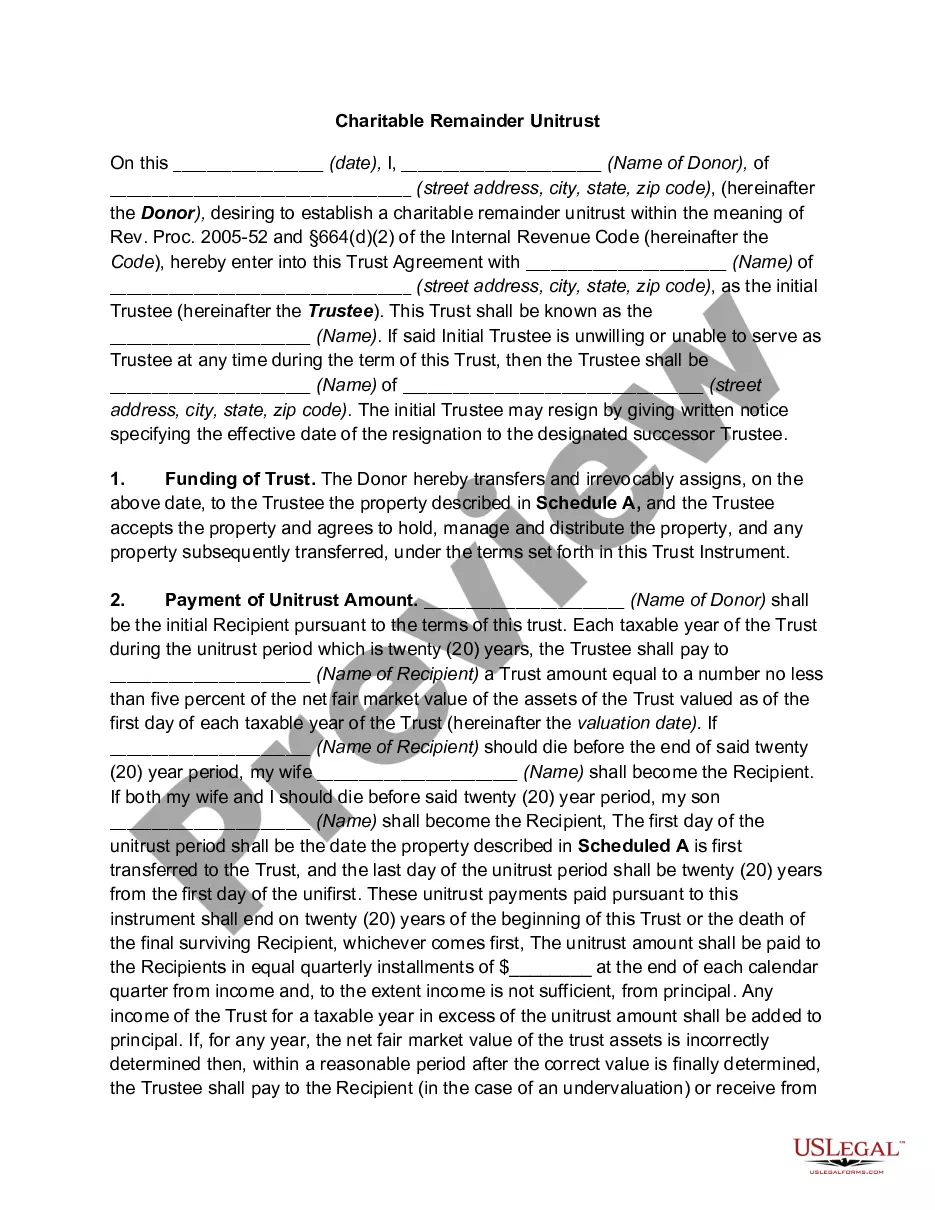
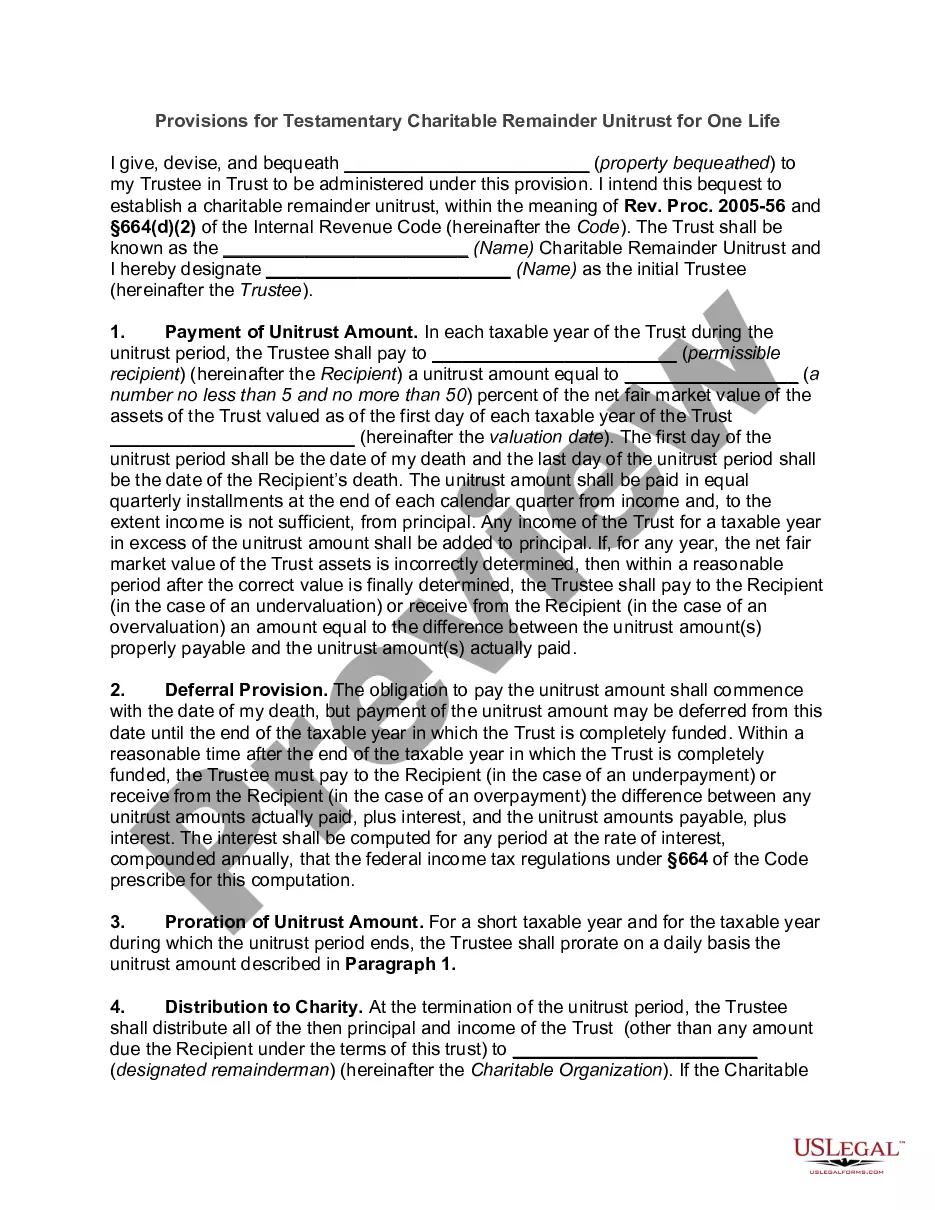
How to fill out Charitable Remainder Inter Vivos Unitrust Agreement?
- If you are a returning user, log in and download your required template directly from your account by clicking the Download button. Ensure your subscription is active; if it isn’t, simply renew it.
- For first-time users, start by browsing the form library. Use the Preview mode to check the form descriptions and make sure it aligns with your requirements and local jurisdiction.
- If you need a different template, utilize the Search tab to find alternative forms that suit your needs better.
- Once you identify the right document, click on the Buy Now button and select your preferred subscription plan. Registration is required for library access.
- Proceed to complete your purchase by entering either your credit card information or using your PayPal account for transactions.
- Finally, download your form and save it to your device. You can always access the document later from the My Forms section in your profile.
US Legal Forms enables individuals and attorneys to efficiently execute legal documents, ensuring access to a wide range of forms that exceed competitors’ offerings.
In conclusion, US Legal Forms provides the tools and resources necessary to create your charitable unitrust trust with ease. Start today to simplify your legal document needs!
Form popularity
FAQ
A charitable trust typically files Form 1041 if it generates income. However, Form 990 may be required for larger charitable organizations to provide detailed financial reporting. If you are working with a charitable unitrust trust blank with a, it's essential to understand which forms apply to your situation.
You need to file Form 1041 if your trust earns income during the tax year. This includes income generated by assets in a charitable unitrust trust blank with a. To determine your specific filing requirements, reviewing your trust's income and consulting a qualified tax advisor can be beneficial.
IRS Form 5227 is used to report information about charitable trusts. This form helps the IRS track distributions and ensures compliance with regulations. If you manage a charitable unitrust trust blank with a, this form is essential for reporting your financial activities.
Yes, a charitable trust must file a tax return to maintain its tax-exempt status. This usually involves IRS Form 5227 and potentially others depending on the income generated. For those overseeing a charitable unitrust trust blank with a, staying on top of these filings is crucial.
If your charitable trust generates income, you may need to file Form 1041 alongside Form 5227. Typically, the income should be reported to the IRS to ensure compliance. For detailed guidance tailored to your charitable unitrust trust blank with a, consulting a tax professional is wise.
Yes, charitable trusts typically must file a tax return annually. This filing helps maintain their tax-exempt status and ensures compliance with regulations. If you are working with a charitable unitrust trust blank with a, ensuring timely returns can preserve your tax benefits.
Not all trusts are required to file a tax return, but many must comply with IRS rules. If the trust generates income, it likely needs to file a tax return. For those managing a charitable unitrust trust blank with a, understanding these requirements can prevent unexpected penalties.
While charitable trusts, including the charitable unitrust trust blank with a, offer tax benefits, they also come with limitations. For instance, once assets are placed in a charitable trust, you generally cannot access them for personal use. Additionally, you may face higher administration costs and complex compliance requirements.
Yes, you can file Form 5227 electronically if you use the IRS Filing website. Using electronic submission ensures faster processing and often provides immediate confirmation of receipt. This method might be particularly useful for those managing a charitable unitrust trust blank with a.
CRAT stands for charitable remainder annuity trust, while CRUT refers to charitable remainder unitrust. Both are structures that provide income to the donor or other beneficiaries for a set period, with remaining assets going to charity afterwards. Exploring options like a charitable unitrust trust blank with a allows individuals to choose the best fit for their financial and philanthropic goals.