Restrictive Covenants In A Debt Contract In Illinois
Description

Get your form ready online
Our built-in tools help you complete, sign, share, and store your documents in one place.
Make edits, fill in missing information, and update formatting in US Legal Forms—just like you would in MS Word.
Download a copy, print it, send it by email, or mail it via USPS—whatever works best for your next step.
Sign and collect signatures with our SignNow integration. Send to multiple recipients, set reminders, and more. Go Premium to unlock E-Sign.
If this form requires notarization, complete it online through a secure video call—no need to meet a notary in person or wait for an appointment.
We protect your documents and personal data by following strict security and privacy standards.

Make edits, fill in missing information, and update formatting in US Legal Forms—just like you would in MS Word.

Download a copy, print it, send it by email, or mail it via USPS—whatever works best for your next step.

Sign and collect signatures with our SignNow integration. Send to multiple recipients, set reminders, and more. Go Premium to unlock E-Sign.

If this form requires notarization, complete it online through a secure video call—no need to meet a notary in person or wait for an appointment.

We protect your documents and personal data by following strict security and privacy standards.
Looking for another form?




Form popularity
FAQ
Restricting investment activities Negative debt covenants are in effect when a lender restricts the borrowing party from engaging in investment activities without their consent. It is done to lessen risks that may arise from substantial investment expenditure amounts.
Debt covenants are restrictions that lenders (creditors, debt holders, investors) put on lending agreements to limit the actions of the borrower (debtor). In other words, debt covenants are agreements between a company and its lenders that the company will operate within certain rules set by the lenders.
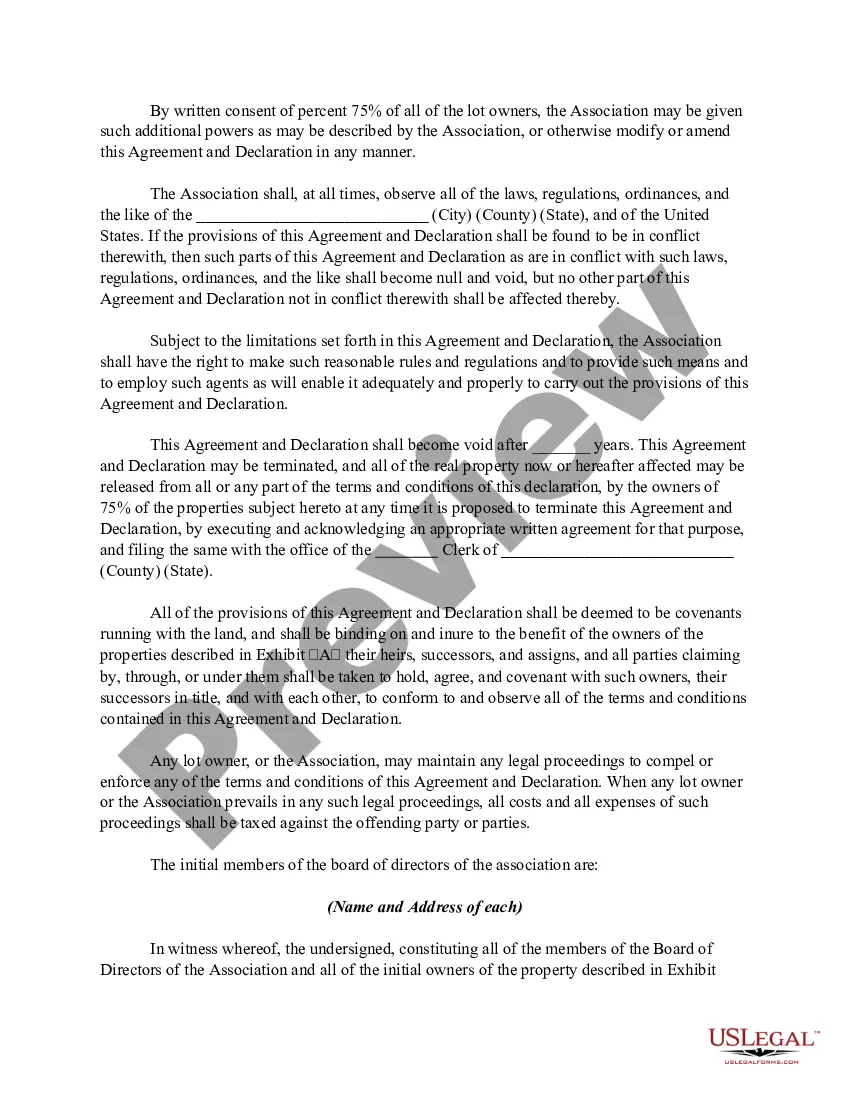
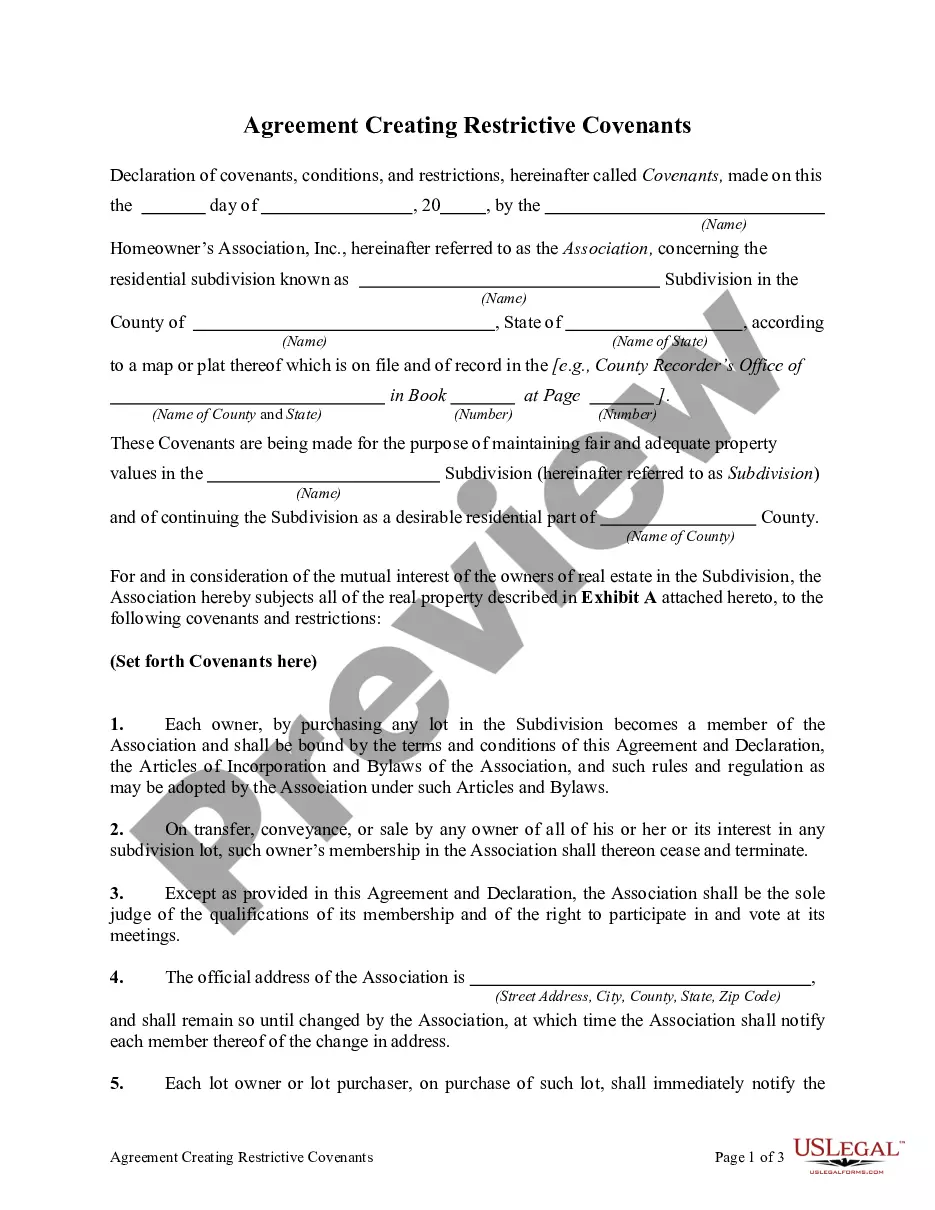
Restrictive Covenants, Explained This restricts how homeowners can manage and modify their land. Examples include restrictions on fence options, the type of animals allowed and the use of outbuildings, such as sheds.
Thus, to be enforceable under Illinois law, an employee restrictive covenant must be (1) necessary to protect a legitimate business interest, (2) limited in terms of duration, geographic scope, and prohibited activity, (3) supported by sufficient consideration, and (4) ancillary to a valid employment agreement or sale ...
There may be terms in your contract that says you can't work for a competitor or have contact with customers for a period of time after you leave the company. These are called 'restrictive covenants'. Your company could take you to court if you breach the restrictive covenants in your contract.
Restrictive covenants are commonly used to prevent a bond issuer from issuing more debt until one (or more) series of bonds mature. The issuer may also be restricted from paying dividends above a certain amount to shareholders.
Illinois prohibits non-compete agreements between an employer and low-wage employees, including non-competes that restrict a low- wage employee from performing work in a specified geographical area, and work for another employer that is similar to the employee's work for the employer that is party to the agreement (see ...
Affirmative (positive) covenants are legal promises to engage in certain activities or meet certain benchmarks added to a financial contract that an issuer must follow. Restrictive (negative) covenants instead restrict a company or issuer from engaging in certain actions.
