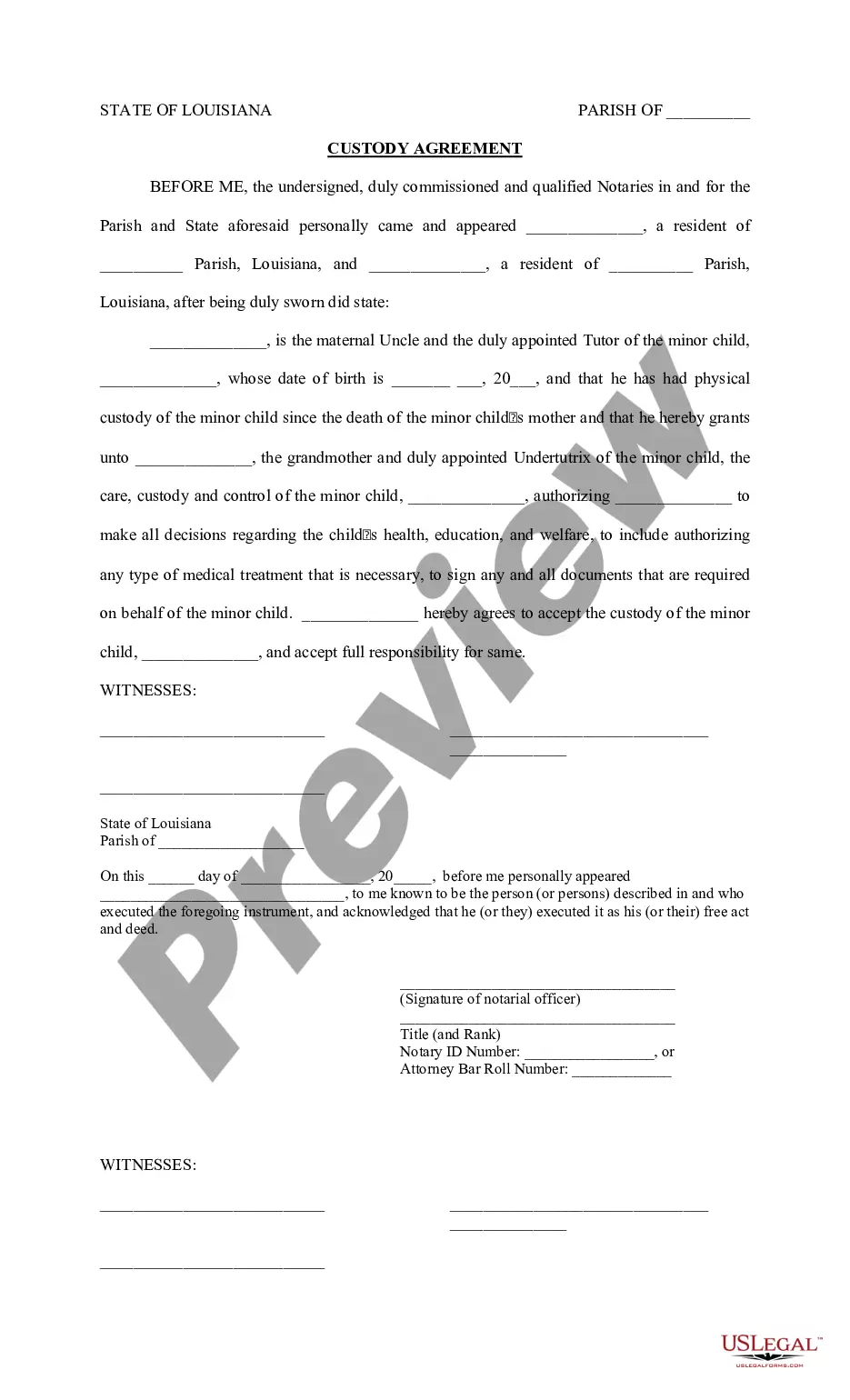
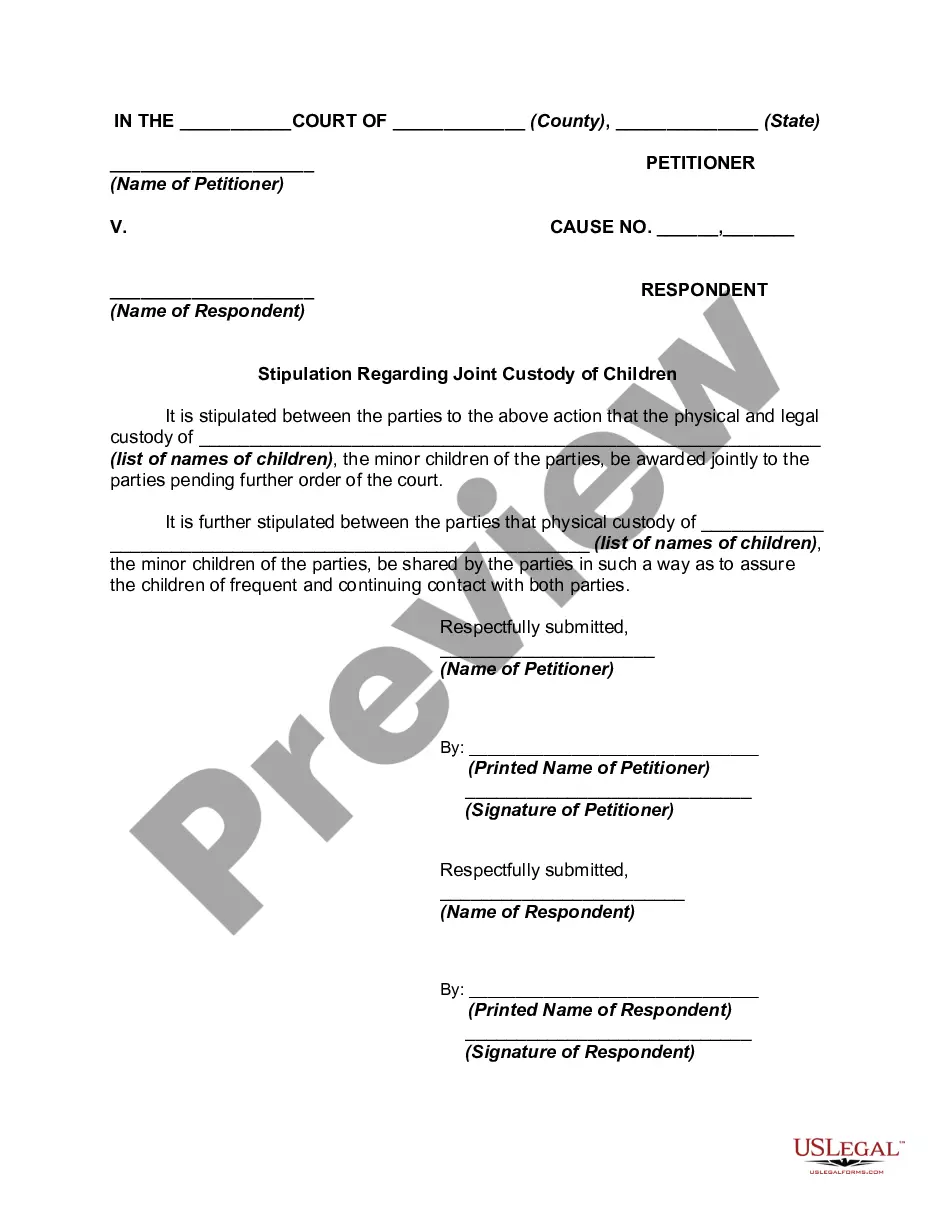
Joint Custody Examples
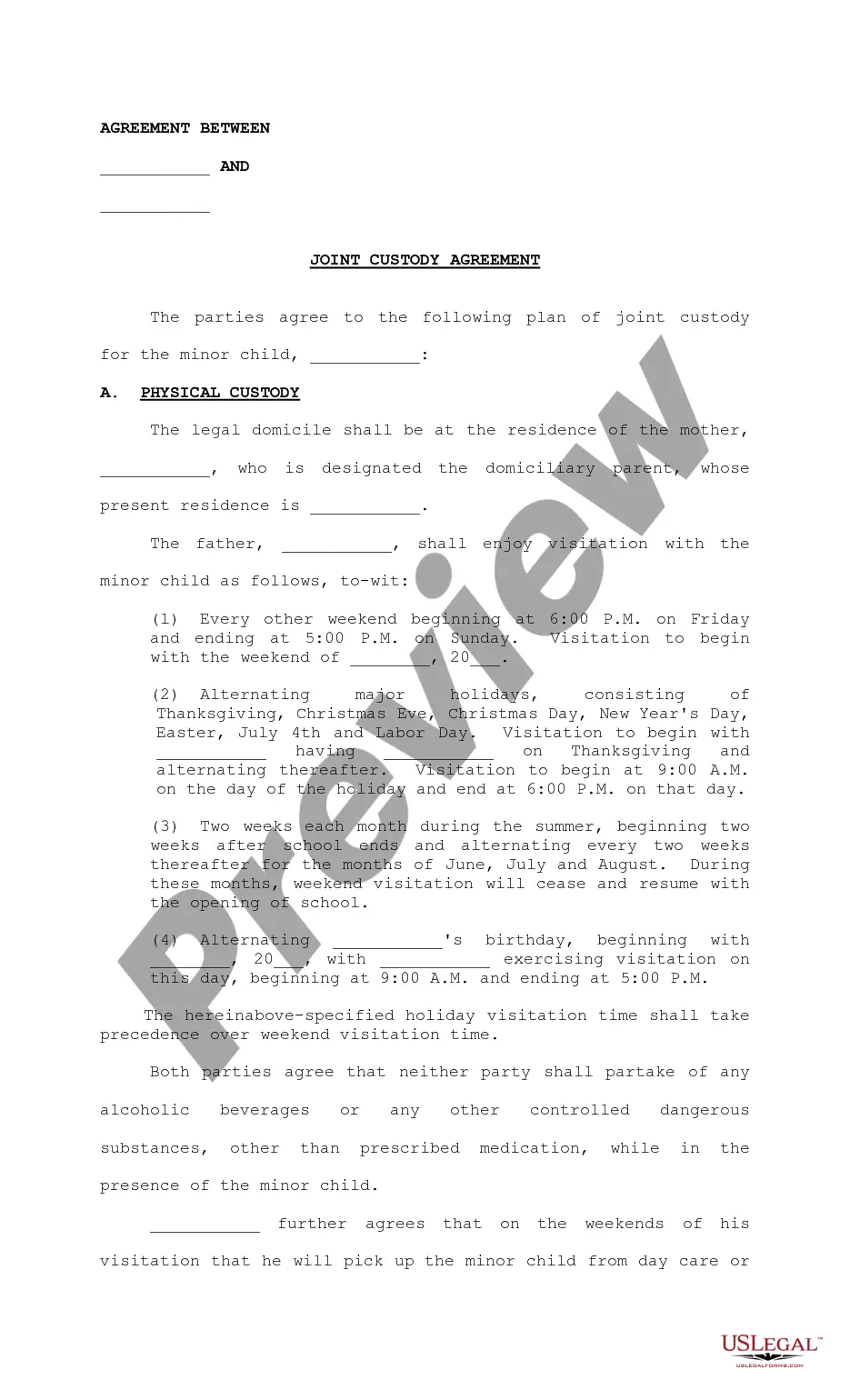
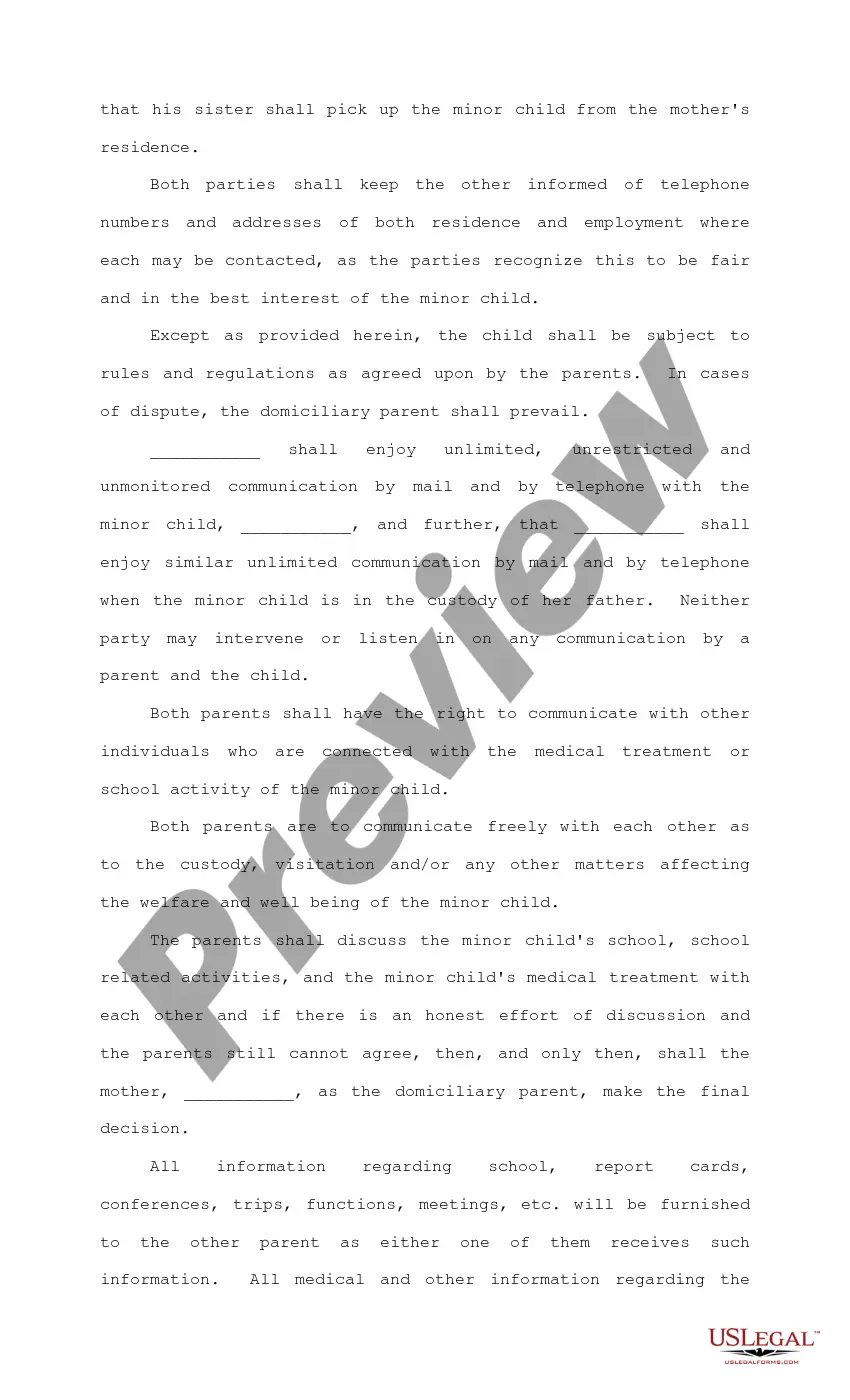
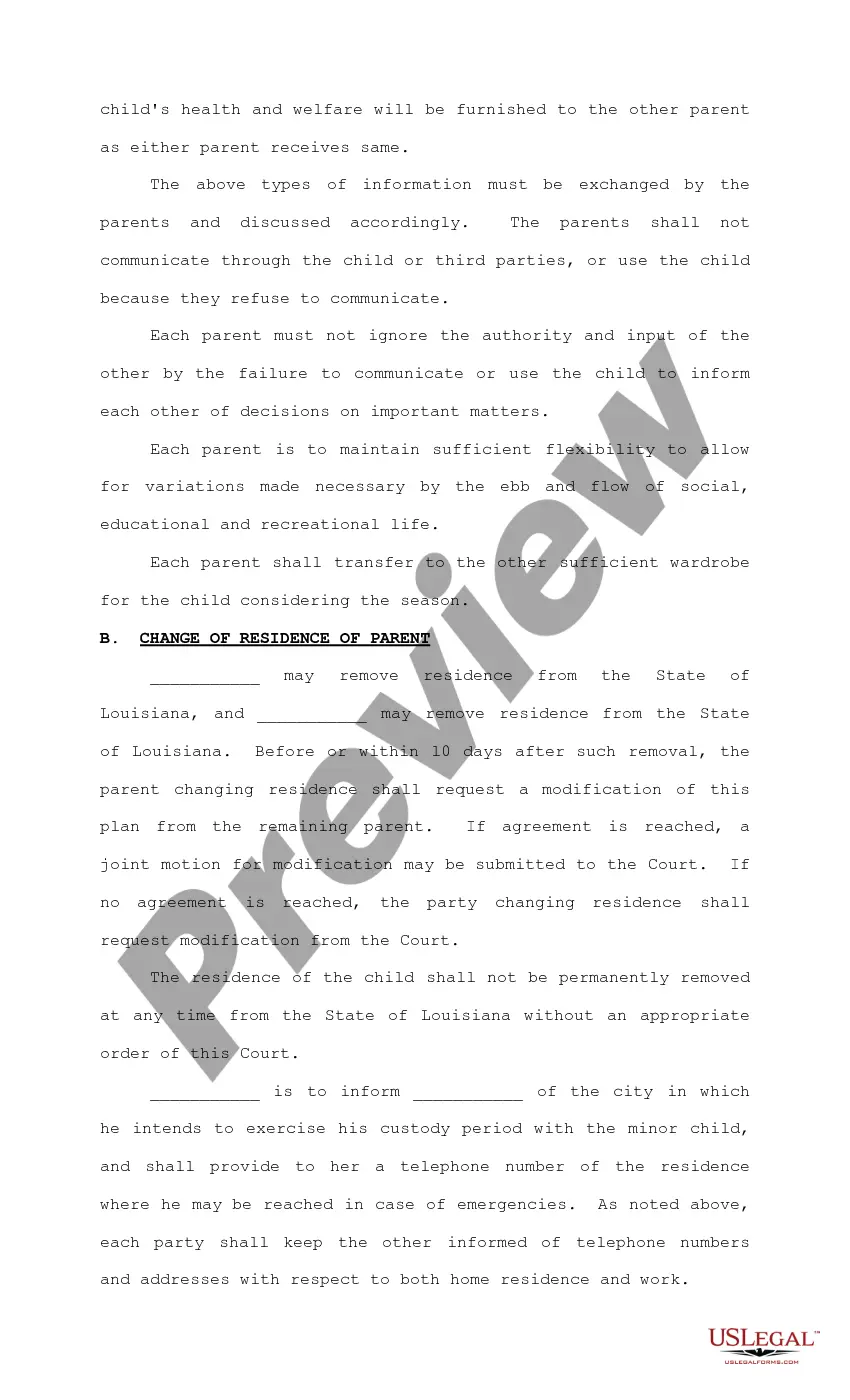
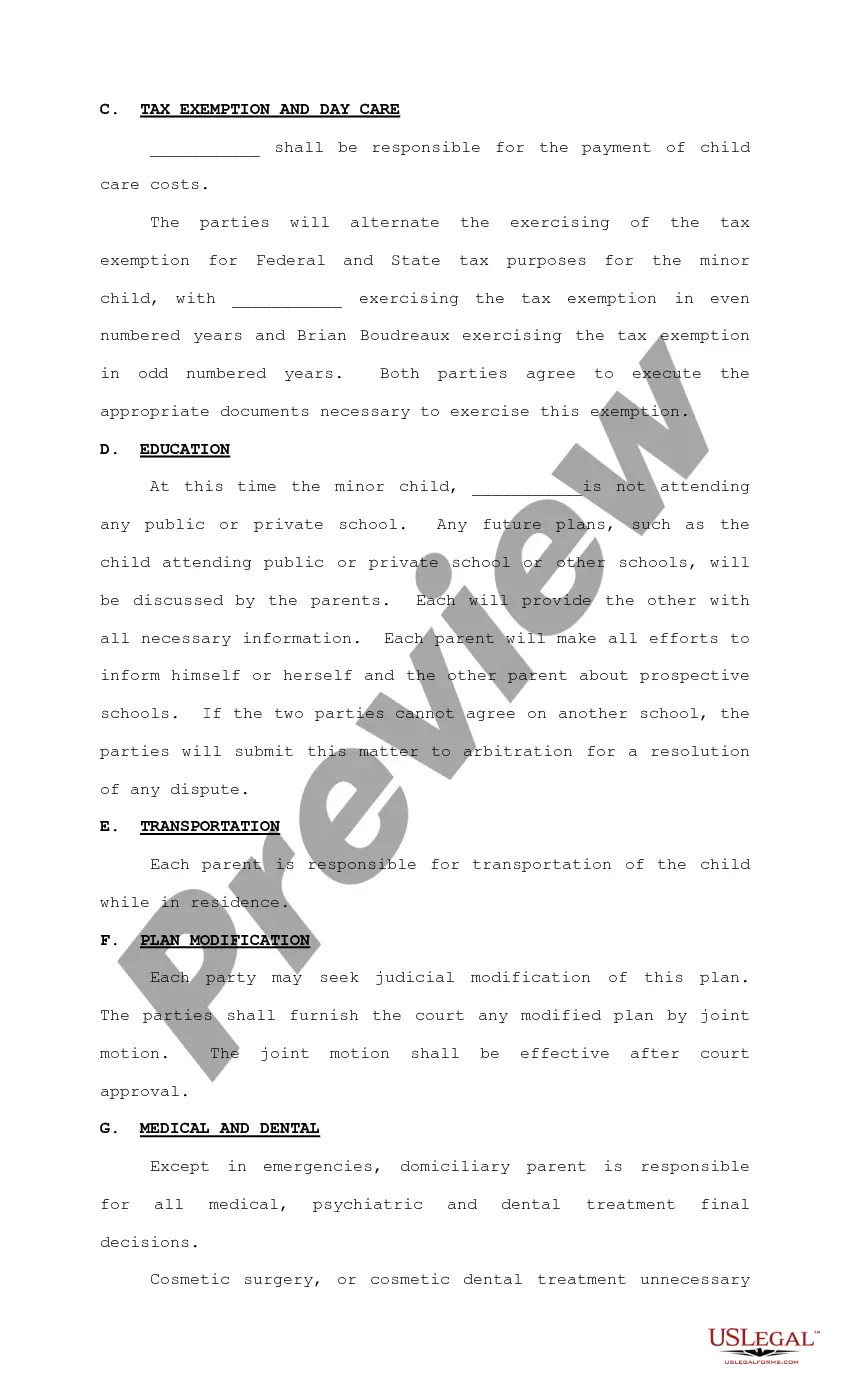
Description
Get your form ready online
Our built-in tools help you complete, sign, share, and store your documents in one place.
Make edits, fill in missing information, and update formatting in US Legal Forms—just like you would in MS Word.
Download a copy, print it, send it by email, or mail it via USPS—whatever works best for your next step.
Sign and collect signatures with our SignNow integration. Send to multiple recipients, set reminders, and more. Go Premium to unlock E-Sign.
If this form requires notarization, complete it online through a secure video call—no need to meet a notary in person or wait for an appointment.
We protect your documents and personal data by following strict security and privacy standards.

Make edits, fill in missing information, and update formatting in US Legal Forms—just like you would in MS Word.

Download a copy, print it, send it by email, or mail it via USPS—whatever works best for your next step.

Sign and collect signatures with our SignNow integration. Send to multiple recipients, set reminders, and more. Go Premium to unlock E-Sign.

If this form requires notarization, complete it online through a secure video call—no need to meet a notary in person or wait for an appointment.

We protect your documents and personal data by following strict security and privacy standards.
Looking for another form?

How to fill out Louisiana Joint Custody Agreement?
Managing legal documents can be exasperating, even for the most skilled specialists.
When you are looking for Joint Custody Examples and lack the time to search for the accurate and current version, the procedures can be taxing.
US Legal Forms fulfills any needs you may have, from personal to business papers, all in one location.
Utilize cutting-edge tools to complete and oversee your Joint Custody Examples.
Here are the steps to follow after downloading the form you need: Confirm that it is the right form by previewing it and reviewing its description.
- Access a valuable resource repository of articles, guides, manuals, and materials relevant to your needs and situation.
- Save time and effort searching for the documents you require, and use US Legal Forms’ advanced search and Preview feature to locate Joint Custody Examples and obtain it.
- If you possess a membership, Log In to your US Legal Forms account, find the form, and download it.
- Visit the My documents tab to view the documents you have previously downloaded and to organize your folders as you wish.
- If this is your first experience with US Legal Forms, create an account and enjoy unlimited access to all platform benefits.
- A comprehensive online form directory might be revolutionary for anyone who aims to handle these circumstances efficiently.
- US Legal Forms is a leader in web-based legal documents, offering over 85,000 state-specific legal forms accessible to you at any time.
- With US Legal Forms, you can access state- or county-specific legal and business documents.
Form popularity
FAQ
The most common co-parenting 50/50 plans include 2-2-3, 3-4-4-3, 2-2-5-5, and alternating weeks. However, some more uncommon arrangements also exist, like alternating custody every two weeks.
50/50 schedules can benefit a child because the child spends substantial time living with both parents. This allows him or her to build a close relationship with both parents, and to feel cared for by both parents. 50/50 schedules work best when: The parents live fairly close to each other, so exchanges are easier.
Common types of joint physical custody schedules include: 2-2-3 schedule. Parents alternate having physical custody for five or two days a week. ... 2-2-5-5 schedule. ... 3-4-4-3 schedule. ... Alternating weeks. ... 70-30 schedule (with alternating weekends and a weekday visit or overnight stay).
Cases may involve shared physical custody, whereby the child alternates living between both parent's homes, but critical decisions about the child's welfare (such as schooling and education) are the sole responsibility of one parent. The most common joint custody arrangements include the 2-2-3 plan and the 2-2-5 plan.
Some co-parenting rules may include: Making sure the kids follow similar routines at each respective home, as it relates to things like homework time, mealtimes, and bedtimes. Communicating and planning with one another to develop consistent routines for pickups, drop-offs, holidays, and vacations.